Fairy Eggs in Hens: Why They Happen and What to Do Next
One tiny egg in the nest can stop you cold. The practical answer is usually reassuring: a fairy egg is an unusually small hen’s egg, often with no yolk, and one isolated example is usually handled as a temporary laying glitch first, not as a diagnosis of disease.
Don’t judge the egg by size alone. Look at the shell, then look at the hen. Her appetite, posture, breathing, droppings, and laying pattern tell you more than the odd little egg on its own.
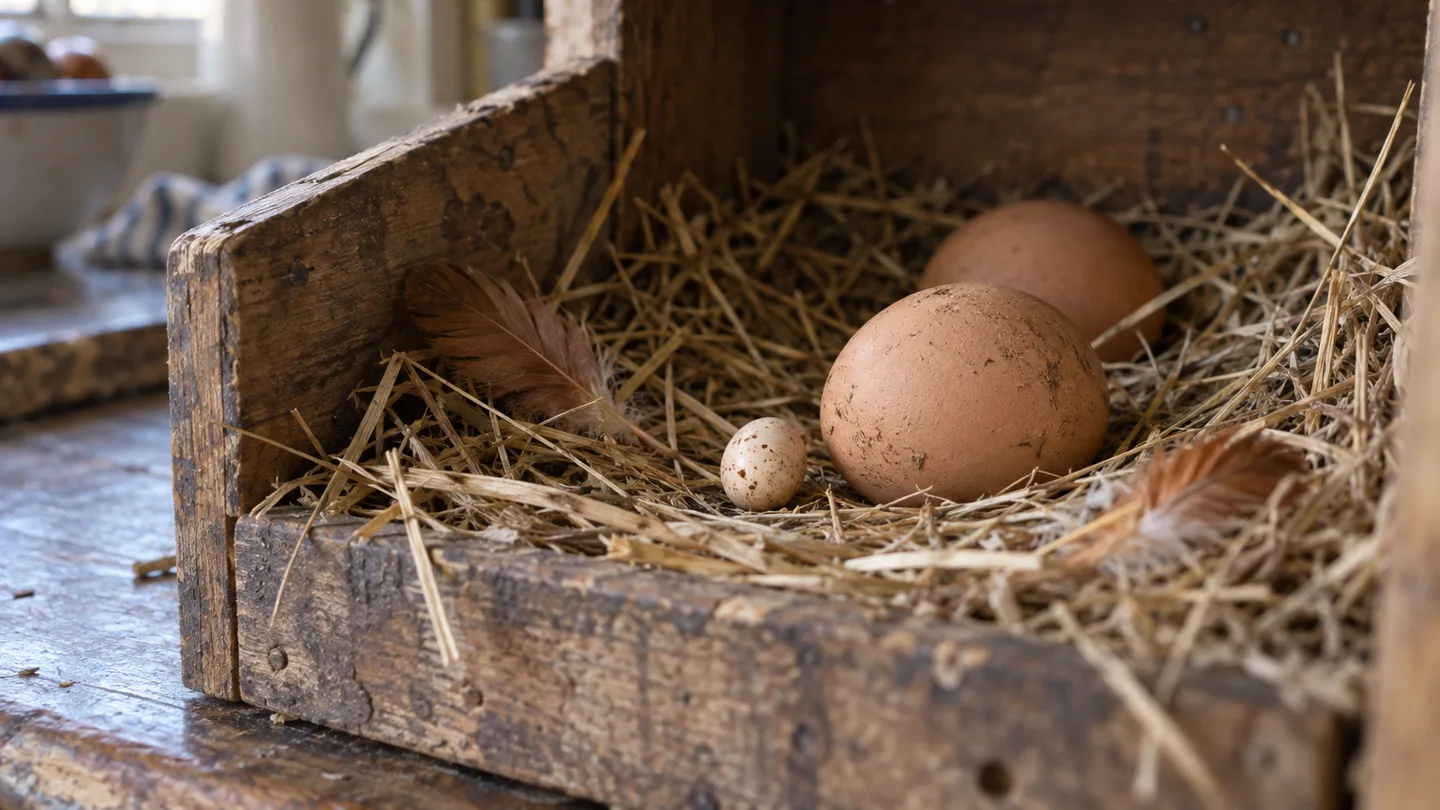
One tiny egg is usually a glitch, not an emergency
Keepers use fairy egg for an unusually small chicken egg that may contain no yolk or only a tiny amount of yolky material. You may also hear wind egg. There is no universal gram cutoff that separates a fairy egg from a merely small egg. Breed, age, body size, and laying stage all move the normal range.
That is why I don’t reach for a scale and treat one number as a diagnosis. In a backyard flock, the useful question is simpler: is this a one-off odd egg from a hen that otherwise looks normal, or is it part of a change in the hen’s health or laying routine?
A single fairy egg can appear while a pullet’s reproductive system is finding its rhythm, after a hen restarts laying, or during a brief interruption in the laying process. If the hen is walking normally, eating, drinking, and acting like herself, record what you saw and watch the next few eggs. Don’t turn one small shell into a whole-flock emergency.
Inside the oviduct: how a yolkless or miniature egg gets made
Egg making is a relay. In the normal sequence, an ovulated yolk enters the oviduct first. Albumen is added around it. Membranes form next, and the shell is laid down around the finished contents. Each stage depends on what arrived at the stage before it.
A fairy egg can begin with a very small piece of reproductive material, or with a laying cycle that proceeds without a normal yolk at its centre. The oviduct can still add albumen, membranes, and shell around that small centre. The result is a complete-looking shell that is much smaller than the eggs your hen normally lays. When you crack it, you may find no yolk, a tiny smear of yolk, or an unusual little mass instead.
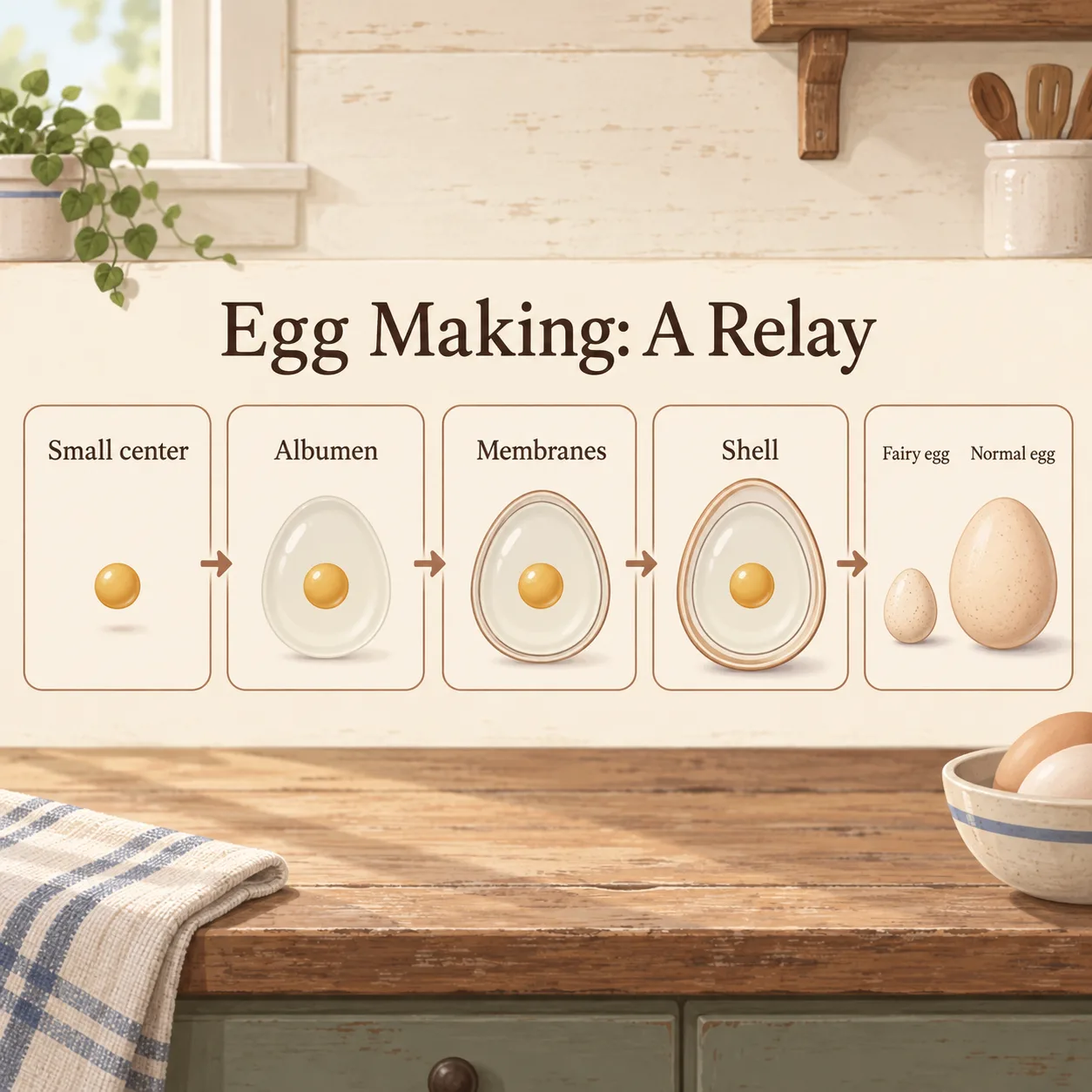
The exact trigger usually cannot be read from the shell. That matters because fairy eggs are easy to confuse with shell-quality problems. Calcium is part of the shell-building system. A calcium or nutrition problem can contribute to thin, rough, wrinkled, or soft shells. It does not supply a missing yolk. If the shell is tiny but firm, think first about the laying event. If it is rubbery, paper-thin, or breaking under light pressure, compare it with the guidance in soft shelled chicken eggs causes.
Timing is the clue: pullet first eggs, restart eggs, and repeat episodes
The pattern is more useful than the egg’s exact size. I would sort what you see into three practical groups:
- One isolated fairy egg: Record it, check the hen, and watch the next several eggs. A normal-looking hen with one odd egg usually needs observation rather than a sudden diet change.
- Two or three close together: Review what has changed recently. Note whether the hen is a pullet beginning to lay, returning after broodiness or another pause, or dealing with heat, a move, flock tension, or another stressor.
- A repeated pattern across laying cycles: Give the hen closer attention, especially if she is mature or has any other symptoms. Recurrent abnormal eggs are a reason to speak with a poultry-experienced vet or local extension office.
Here is a concrete example. Imagine a six-hen flock in which a young pullet lays a fairy egg on Monday, lays an ordinary egg on Thursday, and keeps eating and moving normally. I would leave the feed alone and log the event. If an established hen produces several tiny or yolkless eggs over the next two weeks, I would stop treating it as a curiosity and start looking for a broader reproductive or health problem.
If this is a new pullet, the wider question of at what age do chickens start laying eggs gives you useful context. Early laying can be uneven. A mature hen that keeps producing abnormal eggs is a different case from a young bird finding her rhythm.
The practical decision: keep it, eat it, discard it, or save it?
Being tiny does not automatically make a fairy egg unsafe. Shell condition and handling matter more than size. An intact, clean fairy egg that was collected promptly can be handled like another backyard egg under your local food-safety rules. The same questions covered in should you wash fresh eggs and how to store fresh eggs still apply.
- Inspect the shell. If it is intact and reasonably clean, set it aside with the date. If it is cracked, leaking, or coated with contamination that cannot be cleaned according to your local guidance, discard it.
- Crack it into a separate bowl. This keeps one questionable egg from spoiling other ingredients. A bad smell or clearly abnormal contents is a good reason not to use it.
- Use local handling guidance. Storage time, washing practice, and cooking advice vary by jurisdiction and by how the egg was collected. Check food-safety authority guidance on storing and cooking backyard eggs rather than relying on a blanket internet rule.
I would not save a true fairy egg as a special food item just because it is unusual. If it is clean and intact, you can use it if it suits your kitchen. If the shell is cracked or the handling history is uncertain, the sensible choice is to discard it. A tiny egg is not a bargain if it creates doubt about the rest of the meal.
No chick inside: why fairy eggs almost never belong in the incubator
A true fairy egg is not a realistic hatch candidate. Normal chicken incubation is planned around a roughly 21-day window because a fertile egg has a yolk to supply nutrients and an embryo with room to develop. A fairy egg that lacks a normal yolk lacks the central nutrient package needed for that process.
Even if the shell is perfectly formed, there may be no embryo to develop. Opening one may show an empty-looking interior, a small yolk fragment, or a little unusual material. That is interesting, but it is not the same as a viable hatching egg.
There is one useful distinction here. A small, yolked egg from a bantam, a young layer, or a small-bodied hen is not automatically a fairy egg. If it has a normal yolk and otherwise sound contents, size alone does not decide whether it belongs in an incubation plan. For a true yolkless fairy egg, though, remove it from the incubator and do not count it toward your expected hatch.
Before you add supplements, check the hen’s routine
One fairy egg is not a good reason to start mixing supplements into the whole flock’s feed. Before changing anything, check these five points:
- Complete layer ration: Make sure the laying hen can reach a complete feed suited to her age and production stage. Look at the label and check that stale, damp, or spoiled feed has not replaced the fresh ration.
- Clean water: Confirm that water is available, clean, and easy for every hen to reach. A bullied hen can have access on paper but not in practice.
- Laying stage: A pullet beginning to lay and a mature hen with a repeated pattern should not be treated as the same problem.
- Recent stress: Think back over heat, a predator scare, a move, a new flock member, a broody pause, or another change in the daily routine.
- General condition: Check appetite, water intake, posture, breathing, droppings, walking, and whether the hen is spending unusual time in the nest.
My own rule is to write down the date before I touch the feed bin. That pause keeps one strange egg from turning into a whole-flock diet experiment. If the hen is bright and the next eggs are ordinary, leaving a sound routine in place is usually more useful than chasing a missing yolk with random calcium or vitamins.
Calcium supports shell formation. It does not create the yolk that was absent earlier in the reproductive sequence. If you are seeing a soft shell, thin shell, repeated breakage, or rough shell texture, treat that as a separate shell-quality question and review the ration, water, flock access, and possible illness.
Red flags that move this from odd egg to veterinary problem
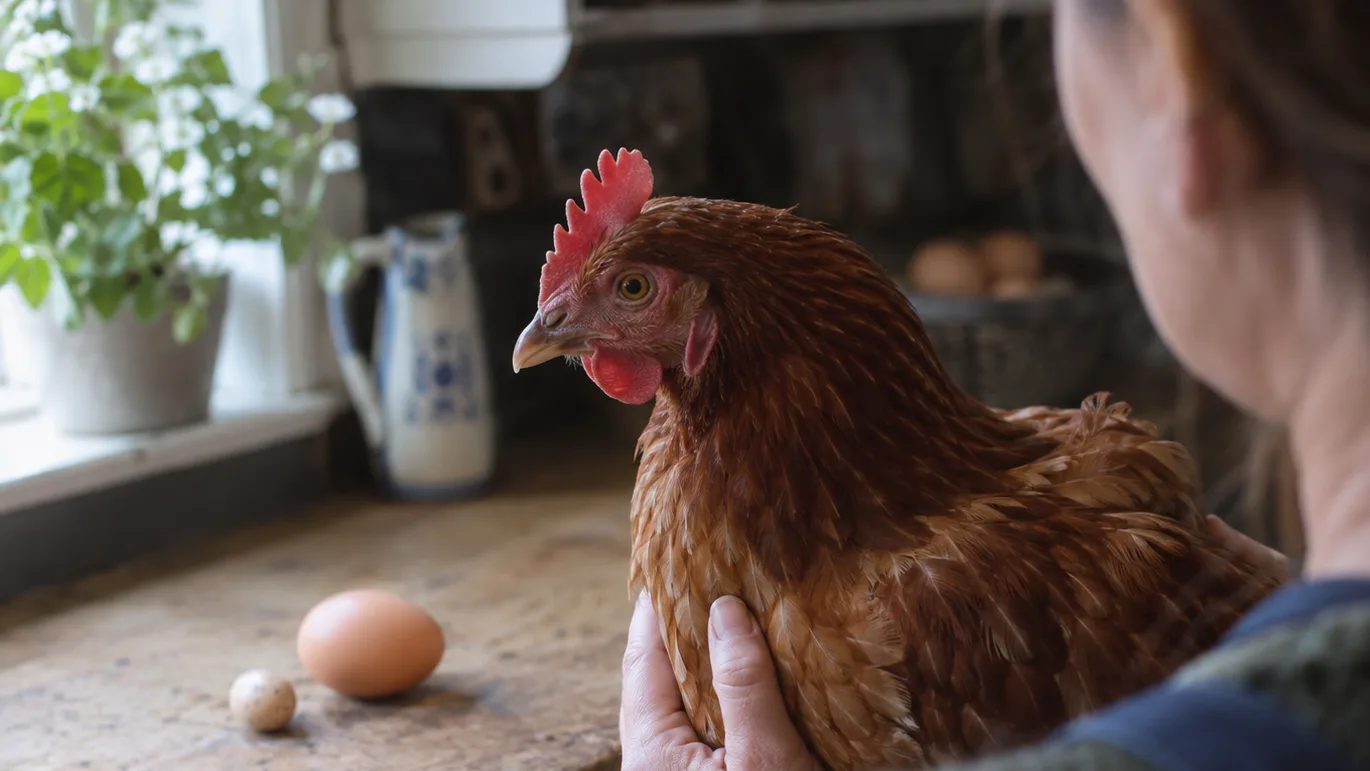
The odd egg itself is not the emergency. The hen’s condition is the deciding factor. A fairy egg from an alert, comfortable hen can be watched. A fairy egg alongside reproductive or whole-body symptoms needs professional advice.
| What you see | What to do |
|---|---|
| One fairy egg, with normal appetite, posture, movement, and behaviour | Record it and observe the hen and the next eggs. |
| Repeated fairy eggs or a clear drop in normal laying | Arrange advice from a poultry-experienced vet or local extension office. |
| Straining, tail pumping, repeated nest visits, or obvious discomfort | Seek veterinary advice promptly. Do not assume the problem is only the small egg. |
| Visible prolapse, collapse, severe straining, blood or foul discharge, marked lethargy, breathing trouble, or abdominal swelling | Treat this as same-day veterinary territory. |
Do not pull on a visible object and do not try to push prolapsed tissue back into place if you are not trained to do so. Keep the hen quiet, clean, and protected from flock mates that may peck her while you arrange care. If you are unsure how serious the signs are, compare your observations with veterinary guidance on egg binding, prolapse, and urgent red-flag symptoms.
A remote article cannot tell whether straining is caused by an egg, inflammation, injury, or another reproductive problem. That is why the decision rule is based on the hen’s condition rather than on a label for the egg.
A seven-day watch plan for the hen that laid it
Give yourself one short observation window. Seven days is long enough to see whether the laying pattern settles, without leaving a worsening problem undocumented.
- Today: Write down the date, the egg’s size relative to the hen’s usual eggs, whether the shell was firm, and whether it was clean or cracked. If possible, identify the hen without creating a stressful chase.
- Each morning and evening: Note appetite, water access, posture, breathing, droppings, walking, and time spent in the nest. You do not need a perfect chart. A few honest words are enough.
- Check the routine: Confirm that complete feed and clean water are available. Look for a recent heat spell, predator disturbance, flock change, or broody pause.
- At the end of the week: If the hen is well and ordinary eggs return, keep the routine and retain the note. If fairy eggs recur, normal laying drops, or any red flag appears, contact a vet or local extension office.
Your concrete action this week is simple: start that seven-day log before changing the feed. It will tell you whether you are watching a one-off laying glitch or a pattern that deserves help. If the notes point to a shell problem rather than a true fairy egg, use them alongside soft shelled chicken eggs causes before adding supplements. The useful diagnosis starts with the hen, not the tiny shell.