Can Chickens Eat Blueberries? Safe Serving Tips for Your Flock
Three blueberries per hen is a sensible first taste, not a magic safety limit. Yes, most healthy chickens can have ripe, plain blueberries occasionally; keep their regular complete feed available and count berries alongside every other treat.
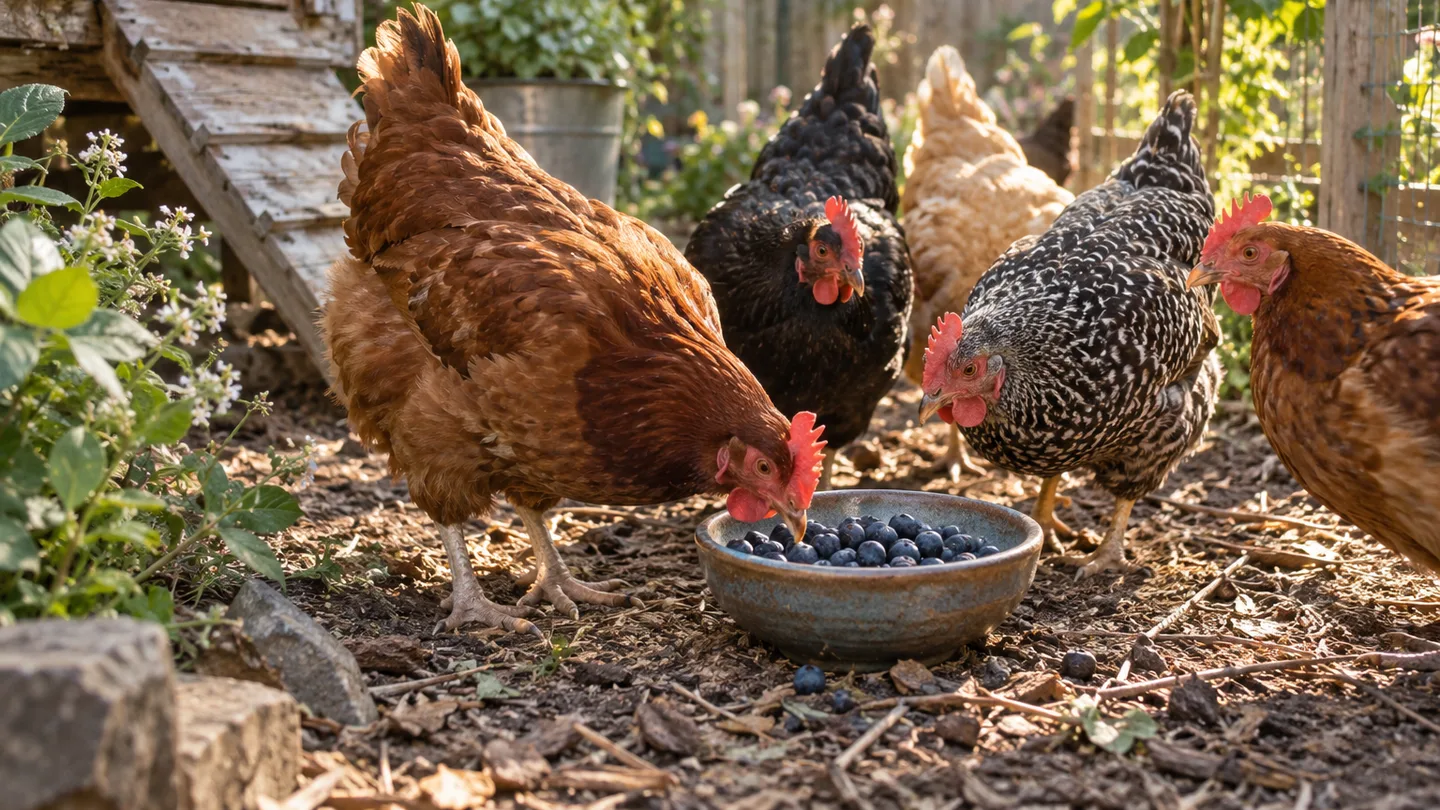
Here are eight practical checks, from choosing fruit to deciding when to stop. The useful measure is how the berries fit into the day’s menu, not whether your flock reaches a particular berry count.
Yes—blueberries are safe for most chickens as an occasional treat
For a healthy adult hen, a few ripe blueberries are a reasonable treat. Choose plain fruit, wash away dirt or residue, and offer it while the regular feeder remains available. A blueberry can add variety and interest to the feeding routine, but it doesn’t provide the balanced mix of nutrients your birds get from a complete poultry ration.
That distinction matters most in a small flock. A handful of treats can look minor beside a full feeder, yet repeated extras may take the edge off a bird’s appetite. If hens fill up on fruit and scraps, they may eat less of the feed designed to supply their everyday needs. Treats should be the side dish.
Keep the answer bounded: this is guidance for plain, ripe fruit and otherwise healthy birds. Don’t use it to justify feeding moldy berries, sweetened products, or fruit that has been sitting around. If a bird has a health condition or a special diet, ask your poultry veterinarian before changing its food.
Start with 2–3 berries per adult hen—not a magic maximum
Try two or three medium blueberries per adult hen the first time. That’s a cautious starting portion, not a researched safe limit or a number every bird must receive. Berries vary in size, and so do hens’ appetites. If your birds are small, reduce the amount; if they’re large, don’t treat that as permission to replace more of their ration with fruit.
Here’s the example I’d use for a six-hen backyard flock: set aside 12 to 18 medium berries, then offer them where the birds can share access. For three hens, that arithmetic gives six to nine; for 12, it gives 24 to 36. These totals help you prepare a small serving. They don’t certify that every hen will eat an equal share, or define a maximum safe dose.
Watch the flock’s response over the next feeding. If the fruit disappears and the birds still come back to their regular feed, keep the portion modest and occasional. If they crowd the dish and lose interest in their ration, cut back or skip treats that day. For your baseline ration, the guide to how much feed per chicken per day for laying hens can help you think through the amount your flock normally needs.
One more guardrail: keep all extras together to roughly 10% of the diet as a planning rule of thumb. That allowance is shared by berries, kitchen scraps, scratch grains, and other treats. It isn’t a blueberry-specific safety threshold. If you’re already offering several extras, there may be little room for berries.
Fresh, thawed, or spoiled? Sort the berries before they reach the run
Fresh blueberries are straightforward: pick out damaged or moldy fruit, rinse the rest, and serve them plain. You don’t need to add sugar, oil, or seasoning. If the berries are very large, mash or cut them so they’re easier for smaller birds to handle.
Frozen berries can be offered too, but thaw them first. Soft fruit is easier to peck apart, and thawing avoids putting hard, icy berries straight into a treat dish. Drain excess liquid if the fruit has become wet and messy. Plain fruit is the aim; check the package if you’re unsure whether a product includes syrup or other additions.
Pass over berries that smell fermented, feel unusually slimy, or show mold. Don’t try to salvage a moldy portion by rinsing it. Also avoid syrup-packed or heavily sweetened berries as a routine treat. Their added ingredients make them a poor substitute for the simple fruit serving you intended.
Put out only what the flock is likely to eat during that feeding session. Once the birds have moved on, clear away leftovers rather than leaving soft fruit in the run. That keeps the area tidier and makes it less inviting to insects and other visitors. If you wouldn’t want the fruit sitting on your kitchen counter, don’t leave it in the run for hours.
The 10% treat rule is about the whole menu, not just berries
Think of the rough 10% allowance as one shared budget. Blueberries don’t get their own separate quota. If your hens have already had kitchen scraps or scratch, count those too. The rule is useful because it reminds you to protect the main ration; it cannot calculate the exact right amount for every flock.
A fixed “berries every Friday” plan can mislead. One week you might offer no other extras; another week, a neighbour’s garden produce or a handful of scratch may already have used up your treat allowance. Flock size matters, but so does how much complete feed the birds actually eat. A serving that’s modest for a dozen hens could be generous for three.
My practical preference is to make treats occasional and easy to skip. If you can’t remember what else the flock has eaten, leave the berries for another day. That’s simpler than trying to calculate a precise percentage from a bowl of mixed scraps. It also keeps you from turning a pleasant snack into a daily expectation.
Notice the feeder, too. If it’s still full at the end of a usual feeding period, pause the extras and check whether feed access, freshness, or a health issue might be affecting appetite. A treat shouldn’t distract you from a change in ordinary eating.
Chicks and small birds need smaller pieces—and a complete feed first
Bird size matters more than a birthday when you decide how to offer a berry. Keep chicks on an appropriate chick starter as their main food. If you choose to introduce fruit, use a tiny piece that a small bird can peck and swallow comfortably. Don’t offer a whole large berry simply because adult hens manage one.
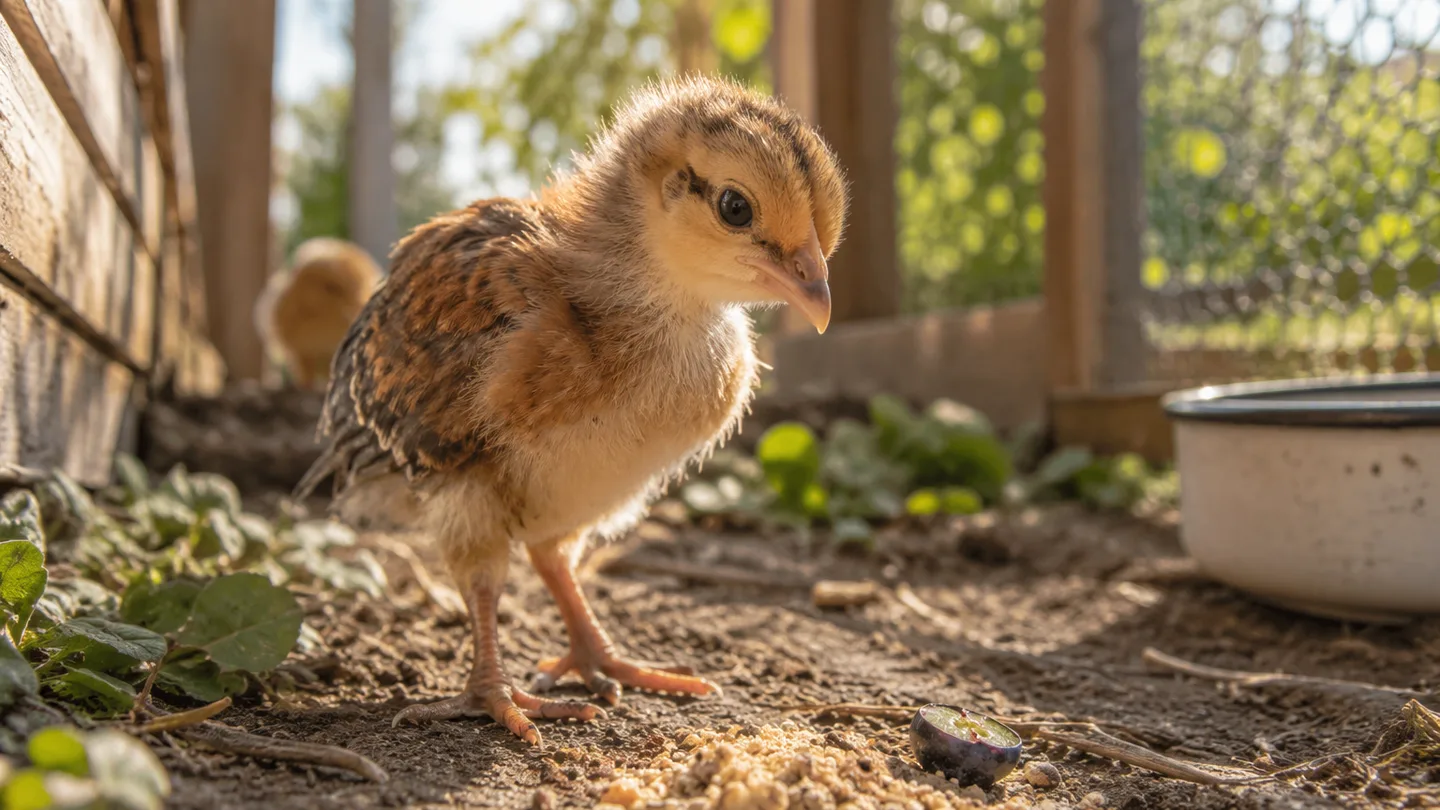
For chicks and bantams, watch a few pecks before adding more. A piece that gets pushed around or repeatedly dropped is a cue to make it smaller or stop. For a bantam, a “couple of berries” may be more than you intended if the fruit is large. A rooster can share the same occasional treat; there’s no need to prepare a separate blueberry ration, though smaller birds may need smaller pieces.
When birds eat foods beyond their complete feed, make sure they have access to appropriate insoluble poultry grit. Grit helps grind food in the gizzard; it isn’t the same thing as oyster shell, which is a calcium source. The practical details are covered in grit for chickens. Keep the starter feed available, and don’t let fruit crowd it out.
There’s no need to force a treat on a chick that ignores it. The payoff is small, while the starter ration is the dependable foundation. If you have questions about a chick’s growth, eating, or health, contact a poultry veterinarian rather than trying to solve the problem with extra fruit.
Serve them where every bird can reach the portion
A shallow dish makes the serving easy to see and remove. For a flock that tends to crowd one spot, divide the berries among two or three accessible places. Keep the regular feeder open, and avoid tossing fruit into deep bedding where you can’t tell what was eaten or left behind.
Watch the group for a moment. If one confident hen guards the dish while quieter birds hover at the edge, spread the pieces farther apart. A whole berry can roll away under a beak; split berries stay easier to spot, though they can also get messy. The goal is simple access, not a contest for the first peck.
For a six-hen flock, the 12-to-18-berry example above gives you a portion to divide between dishes. You don’t have to count out a perfectly equal share for each bird. You do want to see that more than the boldest hen gets a chance to eat, then clear whatever remains after the flock loses interest.
Keep the offering brief and ordinary. There’s no need to train birds to wait for berries or to hand-feed every hen. If treats make your flock difficult to manage around the feeder, skip them and stick with the routine that keeps feed access calm.
When to stop: spoiled fruit, feed refusal, or signs your bird is unwell
Stop serving any fruit that looks moldy or smells fermented. If the birds are filling up on extras instead of eating their usual ration, reduce the treats and return attention to their normal feed. That’s a useful first adjustment when the problem is simply an oversized snack portion.
A bird that seems persistently off its food deserves more attention than a change in treat menu. Don’t try to diagnose illness from droppings alone, and don’t assume blueberries caused a symptom just because they were the newest food. If a bird is weak, unusually inactive, or has ongoing trouble eating, contact a poultry veterinarian. Severe or persistent signs call for professional assessment rather than a home experiment.
The MSD Veterinary Manual is a named veterinary reference you can consult while preparing questions, but general reading can’t examine your bird or replace advice from a clinician who sees it. If the concern involves several birds, mention how many are affected, when you noticed the change, and what they’ve been eating.
For a bird that stays bright and eats normally, the sensible response to a questionable serving is usually to stop offering that food, make fresh water and the usual ration available, and observe. If the bird’s condition changes or doesn’t improve, call your vet. Keep notes rather than adding more treats in an attempt to fix an unexplained problem.
A simple first serving to try this week
Pick one day this week. Offer two or three medium, washed blueberries per adult hen, or a smaller amount if your birds are small. Keep their regular complete feed available, and put the fruit in a shallow dish or spread it across spots where the flock can reach it.
Stay nearby long enough to see whether quieter birds get access. Remove leftovers when the flock moves on. At the next regular feeding, check that the birds still take their usual feed. If they do, you’ve tried a modest treat without making it the centre of the menu. If they don’t, skip extras and reassess before offering berries again.
That’s all the experiment needs: one small serving, an available feeder, and a quick check on the flock’s normal appetite. For another fruit comparison, read can chickens eat strawberries. You can use the same approach with any treat: start small, keep the ration central, and let your birds’ ordinary eating guide what you do next.
Do you need to remove blueberry seeds?
No. You can offer the berry whole, including its small seeds. There’s no practical need to deseed a normal serving.
Can chickens eat blueberry muffins?
A crumb of muffin is different from a serving of plain fruit. Baked goods can include added sugar, salt, and fat, so don’t make them a routine treat. Check the ingredients and choose plain fruit instead.
Can chickens eat blueberry leaves?
Blueberry leaves aren’t a standard feed item. Don’t deliberately offer them, especially if the plant may have been treated with garden chemicals. Stick with washed berries.
Frequently Asked Questions
Do you need to remove blueberry seeds before feeding them to chickens?
No. The seeds in a blueberry are small and are normally offered as part of the whole fruit; there’s no need to deseed it.
Can chickens eat blueberry muffins?
A small crumb isn’t the same as a serving of plain fruit, but muffins can contain added sugar, salt, and fat. Don’t make baked sweets a routine treat, and check ingredients before offering any.
Can chickens eat blueberry leaves?
Blueberry leaves aren’t a standard chicken feed. Don’t deliberately offer them, especially if the plant may have been treated with garden chemicals; stick to washed fruit.