Can Chickens Eat Cabbage? Safe Portions and Serving Tips
A cabbage leaf can turn into a flock-wide tug-of-war—or sit untouched beside the feeder. Yes, your hens can eat plain cabbage, but keep it in treat territory: start with a small serving, watch whether it displaces their regular ration, and clear away leftovers before they get dirty.
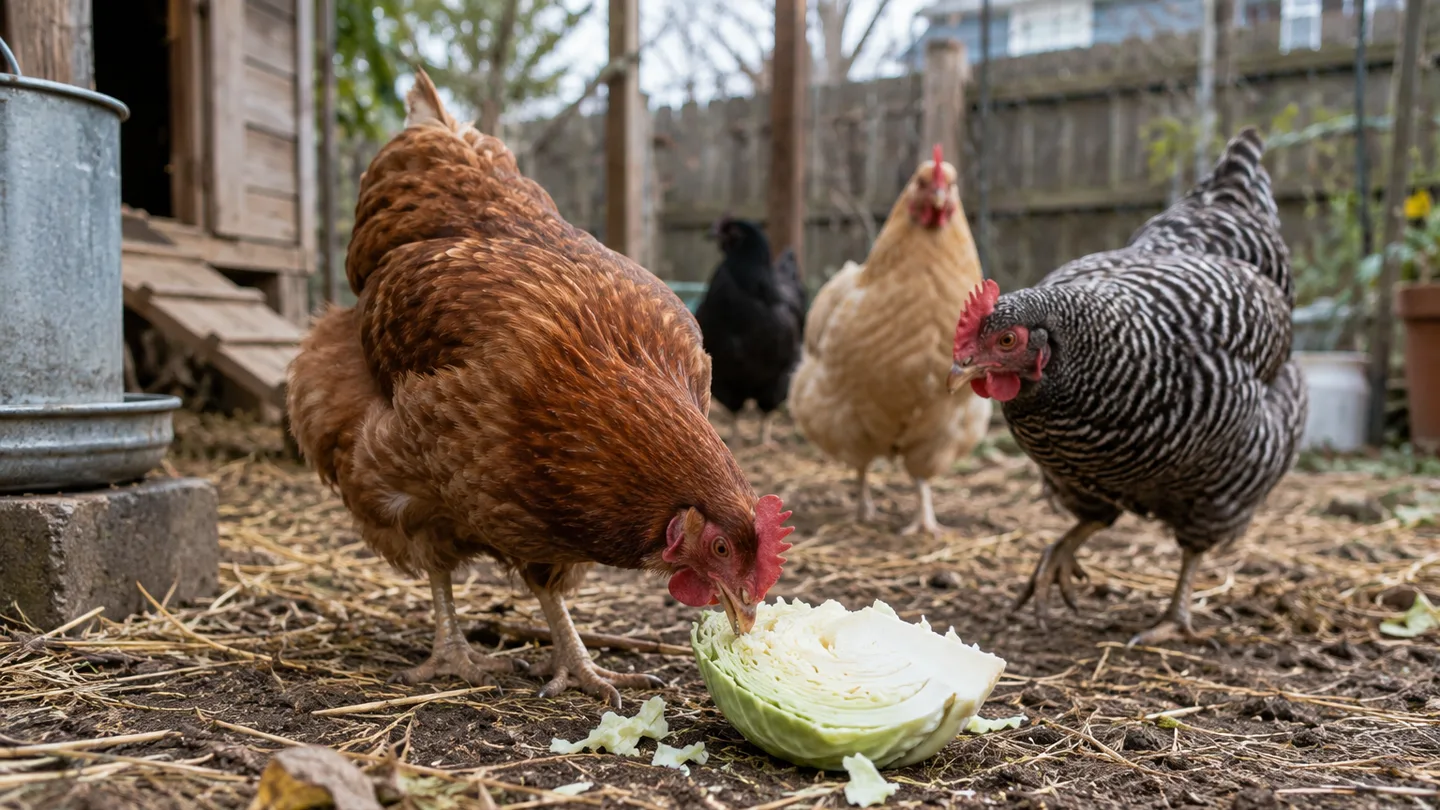
Yes—your hens can eat cabbage, but it’s a treat, not feed
For a healthy backyard flock, plain cabbage is a reasonable occasional treat. Raw or cooked, leaves or chopped ribs, it can offer something different to peck at. It doesn’t replace a complete ration, though. Your layer feed is the dependable daily food; cabbage belongs on the side.
I don’t have a validated cabbage-specific cutoff to offer, so I wouldn’t call any serving a proven maximum or a guaranteed safe limit. The useful boundary is practical: offer a little, keep the normal feed available, and check that your birds still eat their usual ration. If you’re reviewing what makes up that ration, start with poultry extension guidance on complete feed.
In my own small backyard flock, a new leafy treat has drawn a few cautious pecks before one hen tugs at it and gets the others interested. I learned to start with a few pieces in a dish rather than making a whole head the first introduction. You get a clearer look at who’s eating and what’s left.
Portion size has no cabbage-specific cutoff—protect the feed bowl first
A sensible serving depends on the bird and the rest of the day’s menu. A large adult hen and a small pullet don’t need identical pieces. Nor does a bird that has already filled up on its ration need a treat just because cabbage is available. For chicks, keep the focus on age-appropriate starter feed; don’t use cabbage to bulk out a meal.
Think about the feed bowl before the cabbage. Your goal is not to replace a measurable scoop of ration gram for gram. Cabbage is bulky and moist, so its weight alone doesn’t tell you how much of a balanced meal it supplies. The practical test is whether the flock continues eating its usual feed and whether scraps are being left behind.
If you’re adjusting a daily routine, compare the treat with your usual amount of how much feed per chicken per day. Keep that regular ration available, and treat the cabbage as an extra rather than a planned share of the meal. That’s a more useful safeguard than trying to calculate a cabbage allowance from the birds’ body weight.
A cautious first serving: 5–10 g per adult hen, then check what’s left
As a conservative starting suggestion, try about 5–10 g of finely chopped cabbage per adult hen. That range is a practical trial portion, not a researched maximum or a cabbage-specific safety threshold. It gives you a small amount to observe without setting out a large pile that may compete with feed.
| Adult hens | Starting amount for the flock |
|---|---|
| 3 | 15–30 g |
| 6 | 30–60 g |
| 12 | 60–120 g |
The totals are simple multiplication of the per-hen suggestion. If you want to repeat the serving without guessing, weigh one small portion once and use that as your visual reference. You don’t need to weigh every treat forever; the point is to learn what a modest portion looks like in your own kitchen.
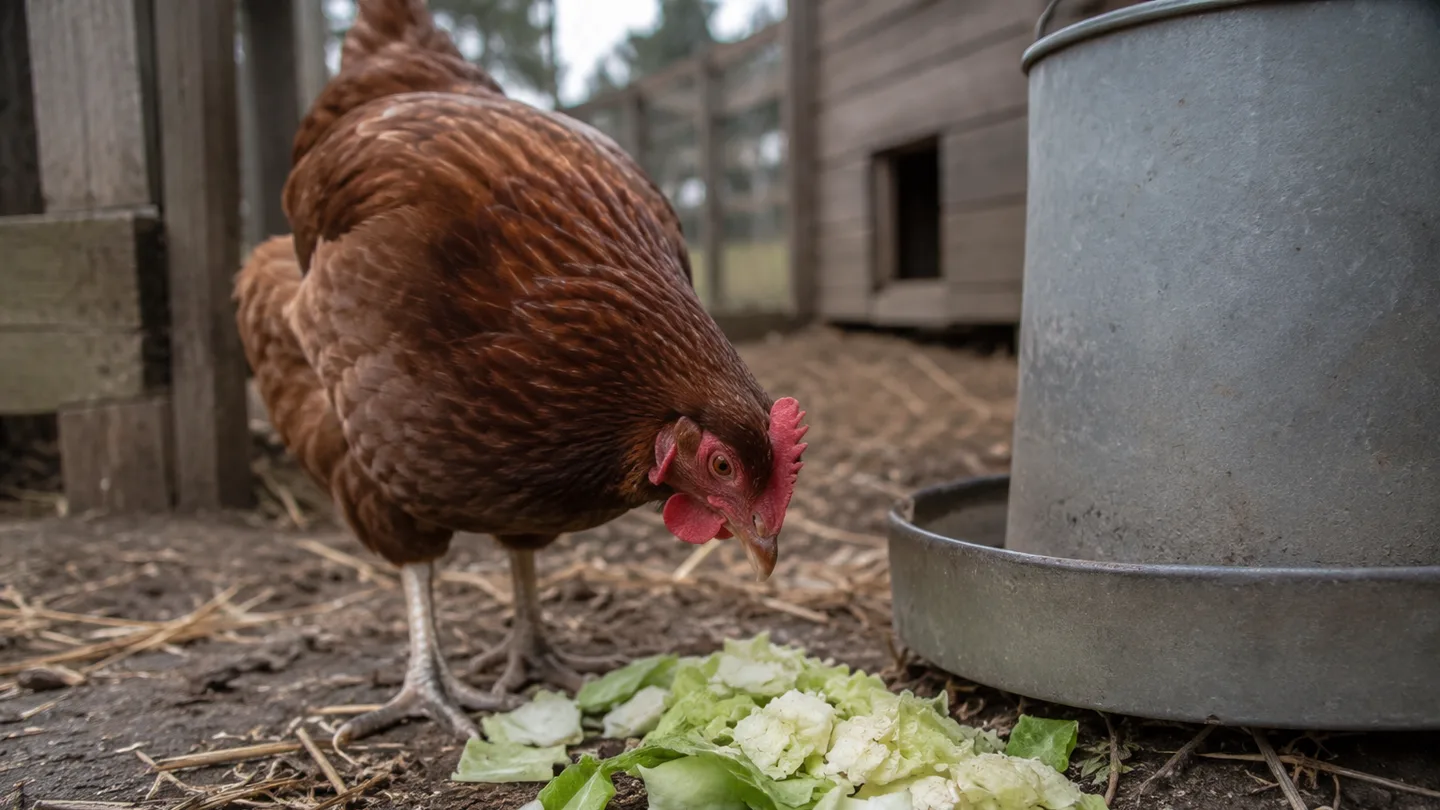
Put the portion where all birds can reach it, then check what remains. If cabbage is still sitting there while the feed is being ignored, offer less next time or skip it. With a three-hen flock, for example, start near the lower end of the table if one bird is much smaller or tends to dominate the dish. Adjust to what your birds actually eat, not to a target they have no reason to finish.
Raw or cooked? Keep it plain either way
You can offer cabbage raw, or use plain cooked cabbage that has cooled. Cooking isn’t required. Raw leaves give the flock something firm to peck and pull apart; cooked cabbage is softer and may be easier to portion, but it can also become messy if it’s wet or mashed.
Skip salt, oil, sauces, and seasoning. They don’t make the cabbage a better chicken treat, and a seasoned leftover brings extra ingredients you may not want to feed. When you’re unsure what went into a dish, don’t use it as flock food. Save a plain portion before you season the human meal instead.
Rinse fresh cabbage under clean running water, remove damaged outer pieces, and cut it with a clean knife or board. If you’re serving cooked leftovers, check that they’re plain and haven’t been mixed with other ingredients. Cooking doesn’t rescue cabbage that is already spoiled, so inspect it before it goes in the pan or the feeder.
Leaves, ribs, and core: cut the firm parts small enough to peck
Leaves and ribs can be chopped or shredded for your flock. The dense core is firmer than the leafy parts, so cut it into small pieces instead of leaving a hard chunk for a bird to wrestle with. Around 1–2 cm is a practical preparation guide for adult hens, not a guaranteed choking-prevention size. Make pieces smaller for pullets or any bird that struggles with larger food.
For a mixed-age flock, prepare the core for the smallest birds that will share the serving, or set aside the larger pieces. Don’t assume every hen will peck food into a manageable size before swallowing. If a piece is awkward to pick up or looks like a mouthful, chop it again.
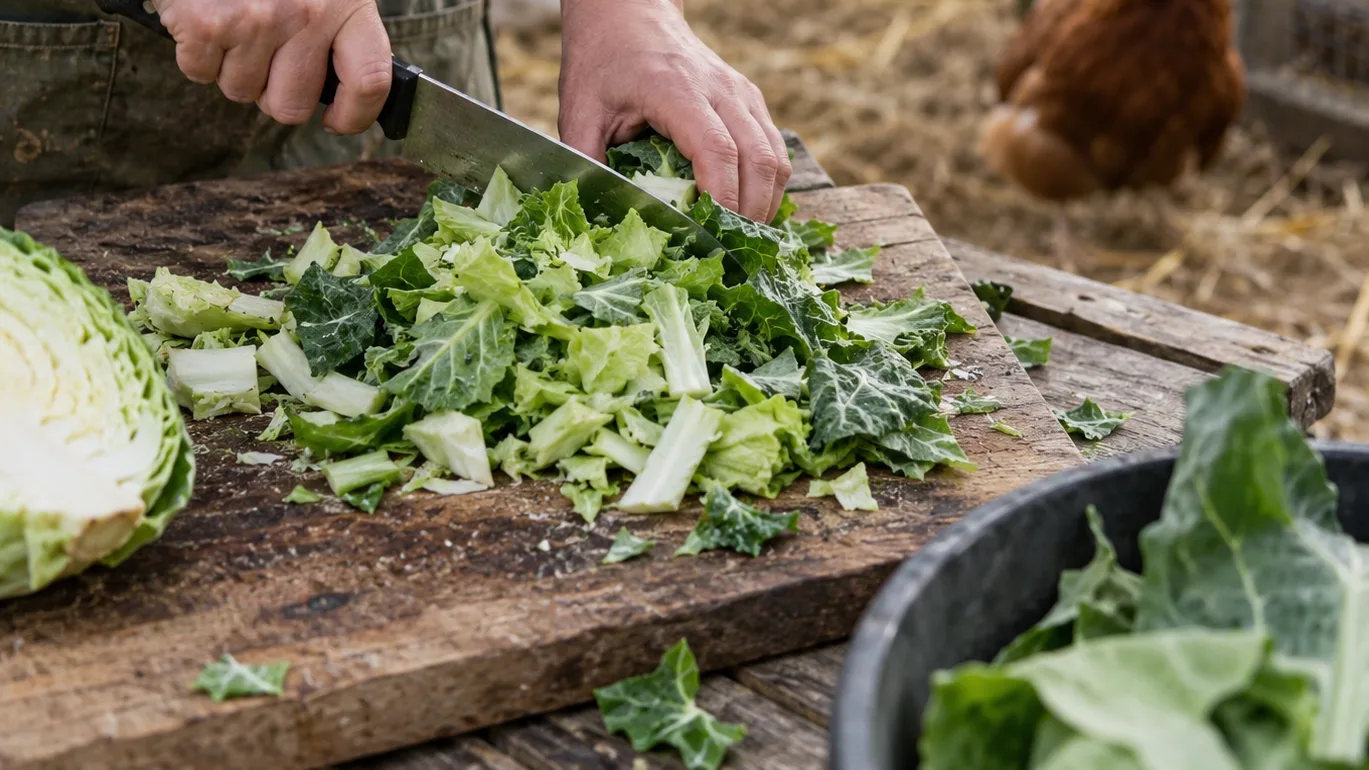
Shredding is handy when you’re portioning a little for several birds; chopping works well when you want to use the firm center too. Keep the pieces loose rather than pressing them into a dense clump. The goal is easy access, not a particular kitchen technique.
Fit cabbage into the week without crowding out layer feed
Offer cabbage occasionally, not as a daily staple. Once or twice in a week is a conservative routine you can use as a starting point, not a medical threshold or a schedule every flock needs. If your birds already get several treats, make cabbage one of the options rather than adding it on top of everything else.
The reason to keep treats modest is simple: if hens fill up on extras, they may eat less of the complete ration intended to be their main food. That matters especially for laying hens, because a treat-heavy routine can turn the feed bowl into the side dish. Keep the ration available, and pay attention to whether the flock returns to it after the cabbage is gone.
My preference is to use cabbage as a small, occasional change of texture, not as a way to stretch feed. If you’re serving treats on the same day, there’s no need to offer a full helping of each. A small portion that disappears while the regular ration stays in use is a better fit than a pile of scraps left in the run.
Green, red, savoy, or napa: variety changes texture, not the basic rule
Green, red, savoy, and napa cabbage can all be handled with the same plain, modest-serving approach. The color isn’t a reason to make red cabbage a separate category in your treat routine, and no variety turns cabbage into a complete ration.
Texture is the practical difference to watch. Thick ribs and firm leaves may need finer chopping; soft leaves can be torn or shredded. Napa leaves can be floppy, while a dense outer leaf may need more work with the knife. Prepare each piece so your smallest intended bird can manage it.
Don’t choose a variety on the assumption that its color will improve egg quality or provide a special health effect. For this decision, pick fresh plain cabbage you already have, prepare it so it’s easy to peck, and keep the serving small. Variety can make the treat less monotonous for you; it doesn’t change the feed-bowl rule.
A whole cabbage can occupy a flock—but make the setup easy to reach
A whole head gives your hens something to work at over time, but it makes the portion harder to judge and may be awkward for small birds. Chopped cabbage is easier to share and remove. A whole cabbage is more of an enrichment choice than a precise serving method.
If you offer a head, set it in a stable holder or mount it securely at a height your birds can reach without jumping or stretching awkwardly. Avoid loose cord or wire that could catch a foot, toe, or head. Check the setup after hanging it; a holder that tips, swings too freely, or puts the cabbage out of reach isn’t doing the job.
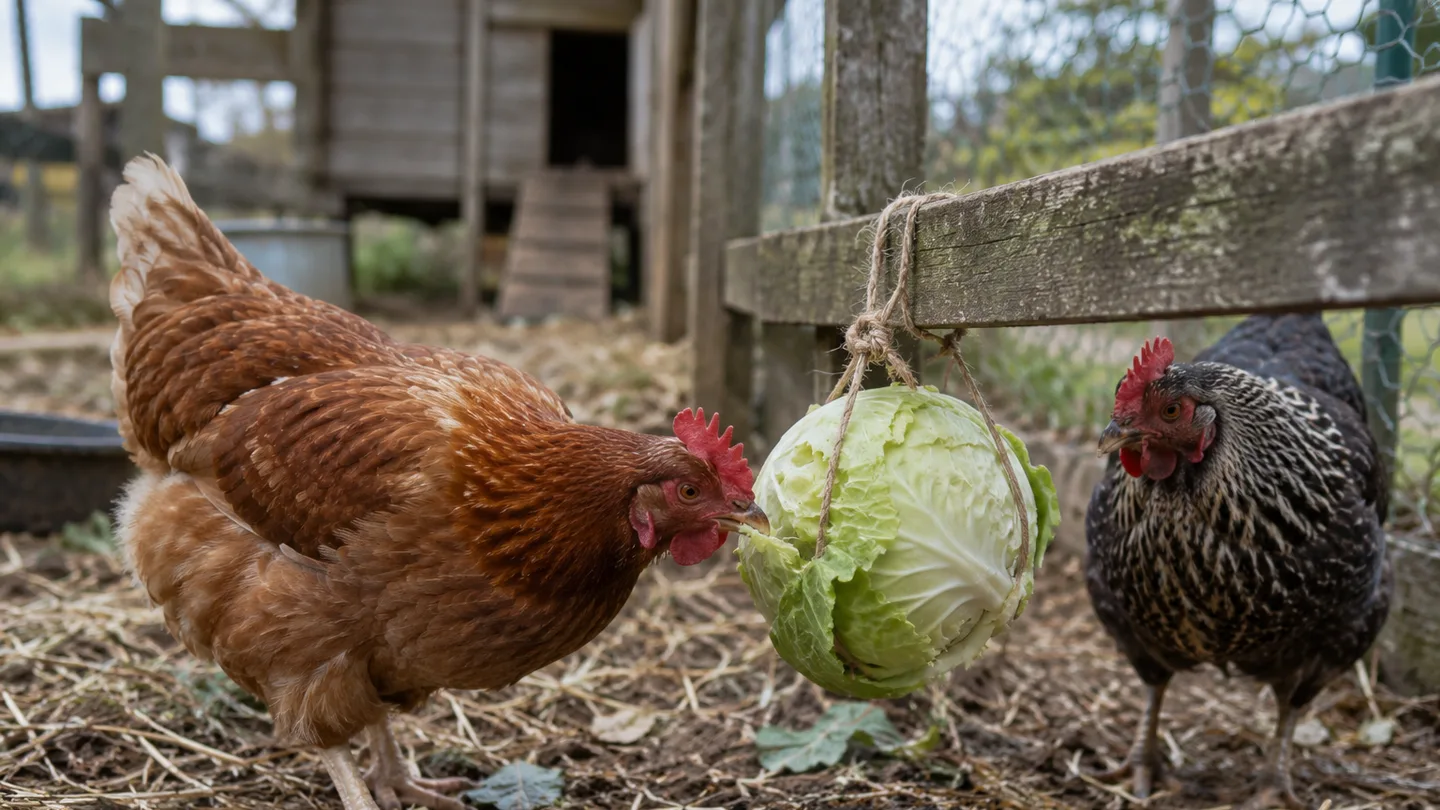
Stay nearby for the first few minutes and see whether the birds can peck pieces off comfortably. Remove the cabbage if it gets soiled or starts to spoil. If you’d rather keep the serving easy to measure, chop a small amount into a dish instead. Foraging treats don’t have to be elaborate to give your flock something new to investigate.
Freshness matters: don’t serve moldy, slimy, or seasoned leftovers
Start with cabbage that looks and smells fresh. Discard pieces that are moldy or slimy, and don’t trim around obvious spoilage to save a treat. If the cabbage has been cooked, check the recipe: plain leftovers are different from a dish containing salt, sauce, oil, or other ingredients.
After serving, look at the scraps and the conditions in the run. Pick up uneaten pieces before they become dirty, wet, or unpleasant. There’s no single room-temperature clock that suits every run, because sun, rain, shade, and temperature change how quickly food deteriorates. Use the condition of the food, not a guessed number of hours, to decide when it needs to go.
Rinse the dish or holder after use and return it clean. If you serve cabbage in a feeder, keep that setup separate from the birds’ regular ration so wet scraps don’t end up mixed through the feed. A small amount is easier to inspect and clean up than a large head left unattended.
If droppings or feed intake change, pause the treat and reassess
If your birds stop eating their usual ration, scraps build up, or droppings look persistently abnormal after a treat, pause the cabbage and return to the normal feed routine. Once behavior and droppings are back to their usual pattern, you can decide whether to try a smaller portion another time. Don’t keep adding more cabbage to see whether it fixes an unexplained change.
A single unusual dropping doesn’t tell you what caused it. Look at the whole picture: whether the flock is active, drinking, eating its ration, and behaving normally. Ongoing diarrhea, lethargy, or other persistent signs of illness deserve advice from a poultry veterinarian rather than an assumption that cabbage is to blame. For individual birds or a worsening problem, contact a vet promptly.
This week, weigh or estimate one small serving, offer it beside the regular ration, and check what remains. If you’re refining the daily menu, read how much feed per chicken per day next; if your birds get other whole treats, check whether they need grit for chickens as well.