Grit for Chickens: Which Type to Buy and When to Offer It
Two containers belong beside a small backyard flock: one for insoluble grit, one for oyster shell. They do different jobs. Grit is a hard mineral tool for the gizzard. Oyster shell is a calcium source for hens making eggs. Buying one and calling it the other is the mistake to avoid.
For a flock of 3–12 birds, you don't need a measured scoop of grit for each hen. You need the right material, the right particle size, and a dry place where every bird can choose it when the menu calls for it.
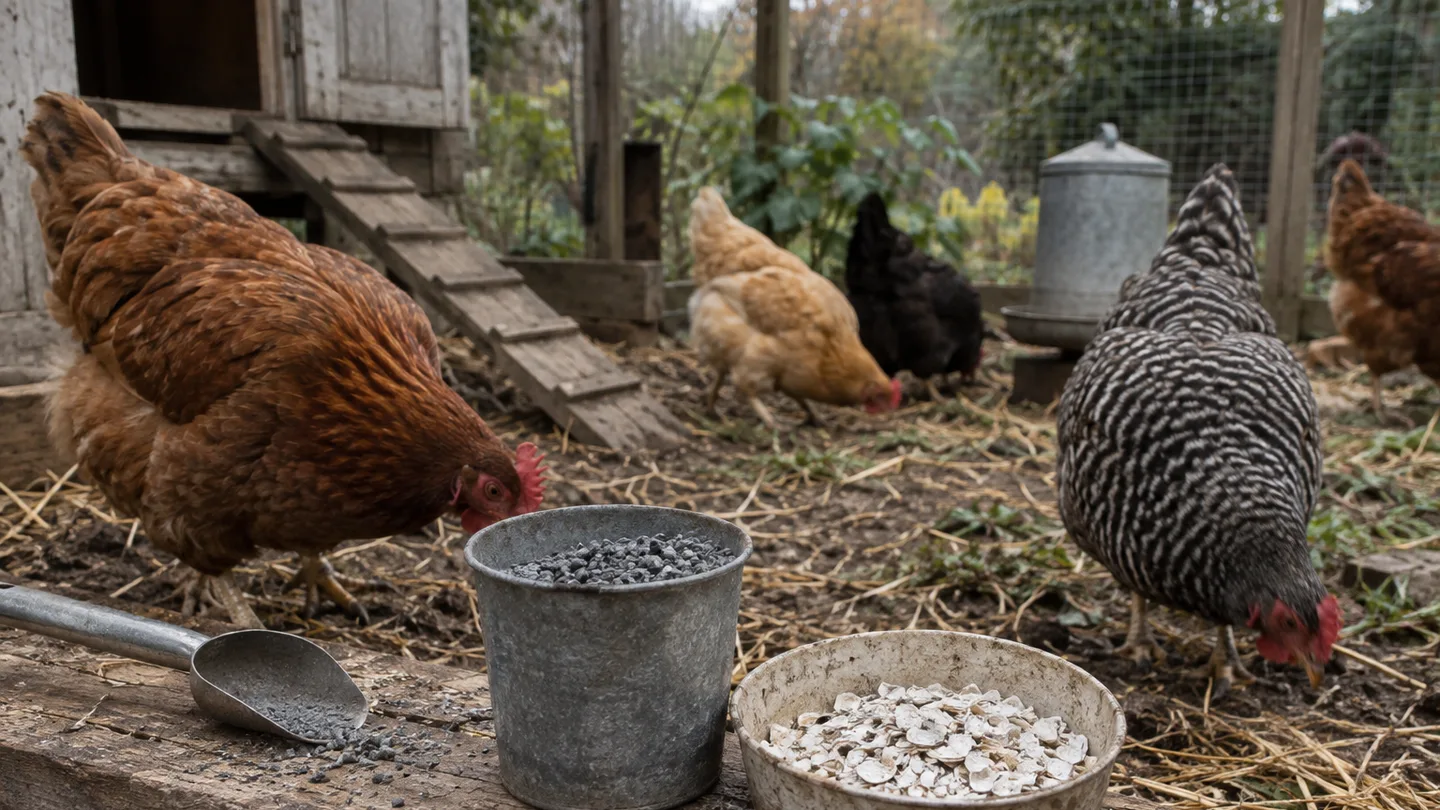
The two-bin answer: insoluble grit for digestion, oyster shell for calcium
Look for insoluble grit made from hard mineral such as granite or flint. Chickens swallow food without teeth, so coarse food is worked mechanically in the gizzard. Durable mineral particles give that process something hard to work against. The grit itself is not a vitamin, a tonic, or a cure for every digestive problem. It is a tool matched to the food your birds are eating.
- Insoluble grit: the stone-like material used with scratch, whole grains, fibrous greens, and forage.
- Oyster shell: a soluble calcium source for laying hens. It belongs in a separate container and does not replace grit.
There is no universal grams-per-hen daily dose for grit. A hen eating only complete crumble has a different need from a hen eating whole corn, weeds, and a handful of garden greens. Natural stones in the run change the picture again. A fixed ration would look precise while ignoring the menu and the ground beneath your birds.
In my own small setup, I once bought a bag simply labelled chicken grit and put it beside the feeder without checking what job the product was meant to do. The container sat untouched, and I had created more confusion rather than a useful backup. I replaced it with clearly labelled insoluble grit and kept oyster shell in its own dish. Since then, I buy by function first, particle size second, and brand last. That order prevents most shopping mistakes.
If you want another reference point, University extension guidance on poultry grit, chick treats, and whole-grain feeding is useful for comparing the menu-based distinction. It is less useful as a hunt for one magic spoonful that fits every backyard flock.
Grit follows the menu, not the calendar
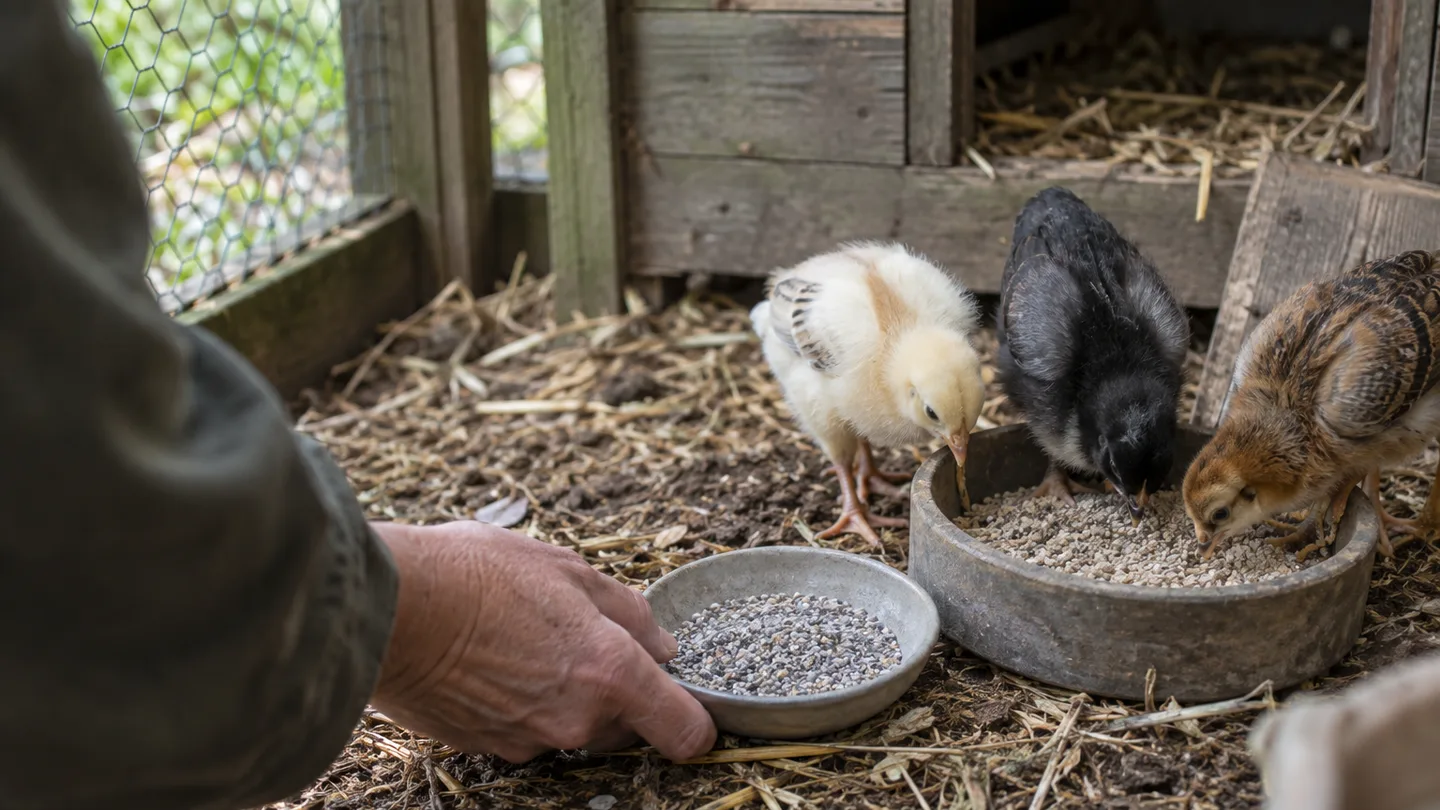
Age matters less than what your birds are swallowing. A chick eating only complete starter feed is not in the same situation as a chick that is already chasing grasshoppers, pecking at weeds, or receiving scratch grain.
Complete starter feed is already a uniform ration. If that is all your chicks eat, supplemental grit is usually unnecessary during the early starter period. Many backyard keepers plan around roughly 6–8 weeks of starter, but the feed label should decide when you change rations. Don't add grit just because a chick has reached a certain birthday if its food has not changed.
The trigger is the first coarse food. That might be whole oats, cracked corn, a scratch blend, tough leafy material, or regular access to forage. A soft piece of cucumber or a little fruit does not automatically create the same need as a dish of whole grains. The question is not simply whether a treat was offered. Ask whether the food adds hard, fibrous, or coarse material that needs mechanical grinding.
A practical flow looks like this:
- Complete starter only: keep the diet simple and follow the feed label. You can buy chick-sized grit before the next menu change, but there is usually no reason to mix it into the starter.
- Starter plus scratch, whole grains, or forage: place chick-sized insoluble grit in a separate dish before those foods become a regular part of the routine.
- Growing birds with a wider menu: move to the size recommended for their bird size as they grow. Keep the dish available rather than trying to calculate a daily dose.
- Adult layers receiving coarse feed or free-range time: offer adult-sized insoluble grit. Keep oyster shell separate if you have laying hens.
This approach also gives you a clean decision rule for treats. If your birds eat complete feed and an occasional soft treat, your grit dish may barely be used. If they spend the afternoon working through scratch and weeds, the dish becomes more relevant. The supply should follow that change instead of following the calendar alone.
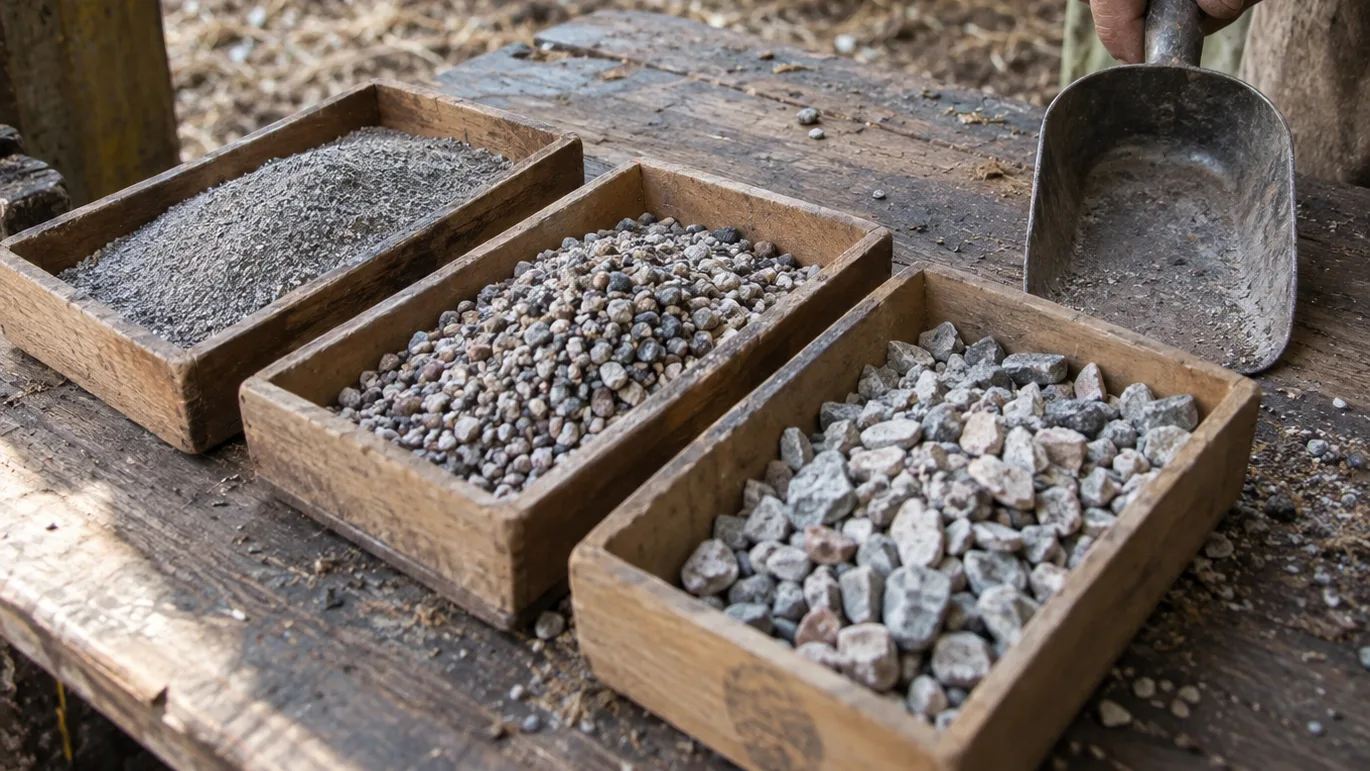
The size ladder: about 1–2 mm for chicks, 2–4 mm for growers, and 4–6 mm for adults
Common retail starting bands are about 1–2 mm for chicks, 2–4 mm for growers, and 4–6 mm for adult birds. Treat those figures as buying bands, not a law of nature. Retail bags overlap. One supplier may call a product chick grit while another uses a number or a broader age range.
Retail bags use overlapping names for similar products, so read the whole label. Look for insoluble mineral grit, then check the stated bird age or size. If the manufacturer gives a range that differs from the bands above, use the manufacturer's guidance. The safest particle is small enough for the bird to swallow comfortably but coarse and durable enough to remain useful in the gizzard.
Oversized grit is a poor choice for small chicks because a chick may struggle to swallow it or simply reject it. Watch what happens when you offer a new size. A chick that picks up a piece, drops it repeatedly, or cannot swallow it comfortably needs a smaller product. Don't solve that problem by crushing a random bag of landscaping stone. Buy a product made and labelled for the bird size you have.
As birds grow, the size can move upward with them. You don't need to change bags on a single exact day. Make the change when the label's size range and your birds' body size line up. If you keep mixed ages, a second dish with the smaller size may be easier than asking very young chicks to share an adult product.
One useful detail is often missed: grit should be hard and insoluble, not merely rough. A soft material that breaks down quickly is less useful as a durable grinding particle. If the bag does not clearly identify the material and intended bird size, put it back on the shelf and choose a clearer label.
Free-ranging can supply grit—until the ground doesn't
Free-ranging birds may pick up small mineral particles from exposed soil. That can reduce how much they use from a supplied dish. It does not prove that they have reliable access every day.
Grass alone is not a reliable grit plan. Dense grass, mulch, deep litter, damp earth, frozen ground, and a run covered in wood chips can hide or limit the small stones your birds need to find. Concrete, paving, and wire provide no natural soil source. A clean patch of bare ground is a better clue than the label free-range.
My practical rule is simple: if you cannot point to accessible soil containing small, hard mineral particles, keep a separate grit supply available. This applies to hens that roam part of the day but spend mornings in a covered run, too. Natural access can remain a bonus. It should not be your only plan when weather or ground cover changes.
That is also why a grit dish can make sense for a flock on grass. You are not claiming the birds will empty it. You are removing the guesswork when the pasture is wet, the soil is frozen, or the flock has eaten down every visible patch of ground.
Offer it free-choice, not by the spoon
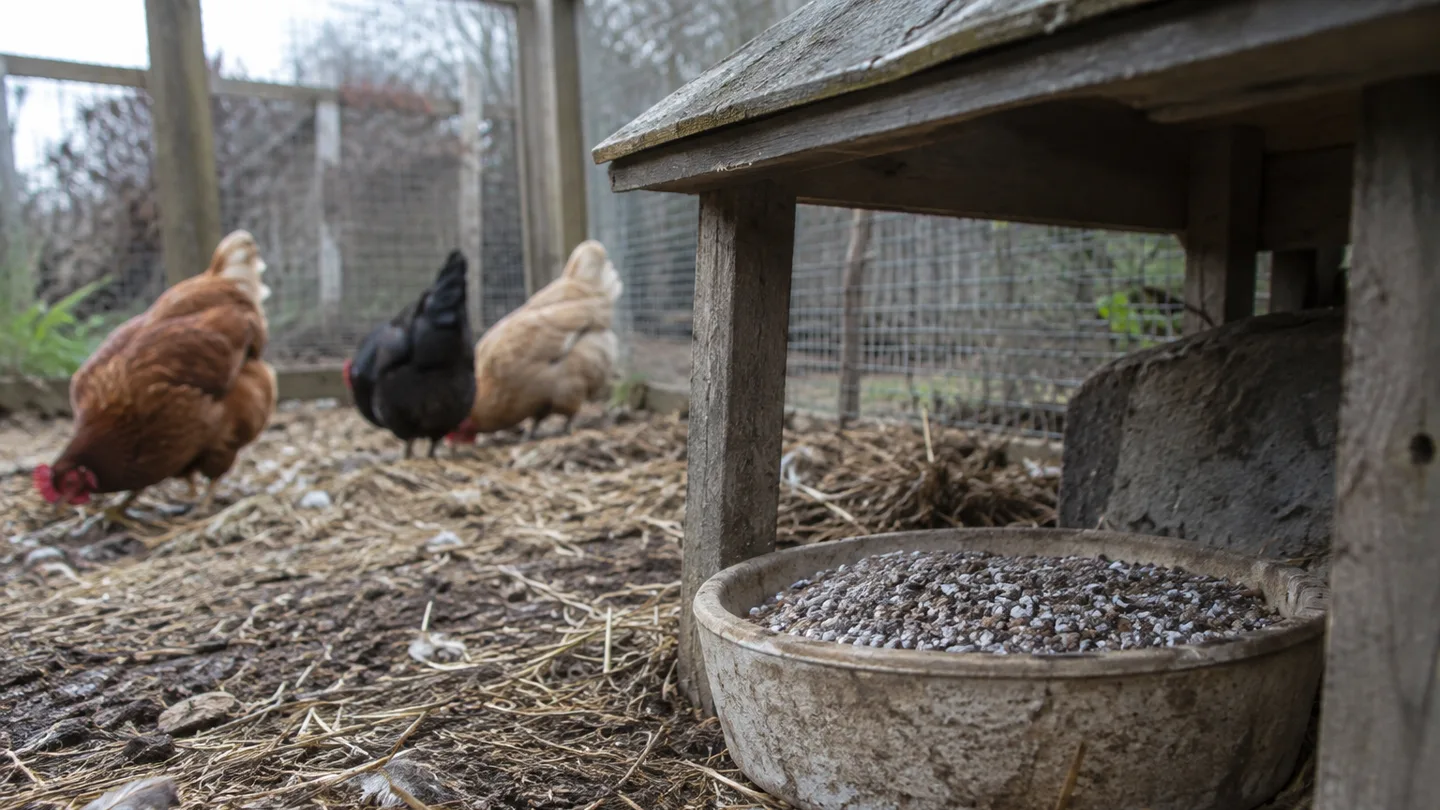
Offer grit free-choice. Put it in a shallow, weather-protected container where all birds can reach it, and let them take what fits the food they are eating. Mixing grit into feed sounds tidy, but it hides intake and makes it harder to tell whether the container is empty because birds used it or because feed and litter have filled it.
A shallow dish is enough for most small flocks. For three to twelve birds, start with one container if it is easy to reach from the main run and there is no obvious bullying. Add a second dish if the run is long, the flock is split between housing areas, or one assertive hen guards the first location. Access matters more than making the dish large.
Keep the grit separate from oyster shell and separate from the main feeder. That lets a laying hen choose calcium without treating calcium shell as a substitute for hard mineral grit. It also keeps you from confusing an untouched dish with a failed product. Your birds may ignore grit for several days when their menu is mostly complete feed. That is not automatically a problem.
Inspect the container about every seven days. Top it up when it is low. Tip out material that is wet, fouled, or packed with bedding, then refill with clean dry grit. A roof or covered corner helps. A dish sitting under a leaking drinker quickly becomes a small bowl of mud.
Don't measure a daily ration unless you are tracking a specific veterinary or nutrition issue. For ordinary backyard keeping, the useful measurement is whether the right product is present, dry, accessible, and matched to the menu. If the dish disappears unusually fast, review the amount of scratch and forage, check whether birds are spilling it, and look at the ground conditions before simply buying more.
Before you buy: read the label, skip the substitutes, and know when grit is not the fix
Use this shopping list for the three common backyard situations:
- Chicks on complete starter: no routine supplemental grit is usually needed while starter is the only food. Buy chick-sized insoluble grit before you introduce scratch, whole grains, or regular forage.
- Growing birds receiving scratch or forage: choose insoluble grit labelled for chicks or growers, depending on the birds' size. Offer it separately as soon as coarse food becomes part of the menu.
- Adult laying hens: choose adult-sized insoluble grit if they eat coarse feed or forage. Add a separate oyster-shell dish for calcium, following the feed and flock setup you use.
A bag should identify insoluble grit such as granite or flint and give an age or size range. Oyster shell is not grit. It is a calcium source that dissolves rather than acting as a long-lasting grinding particle. Crushed eggshell can also be used by some keepers as a calcium material, but it is not a direct substitute for insoluble grit. Fine sand is not equivalent either; it may be too small or pass through too quickly to serve the same role. Landscaping gravel is a gamble because its size, hardness, sharpness, and material are not controlled for chicken use.
If you are also checking what not to feed chickens, keep the same principle in mind: a varied menu changes the management decision. For the wider ration, compare your grit plan with how much feed per chicken per day rather than treating treats and scratch as invisible extras.
Grit is not the right fix for every crop or digestive sign. Persistent crop enlargement, repeated regurgitation, inability to eat, or marked lethargy deserves veterinary advice, especially when more than one bird is affected or the problem continues after the diet is corrected. Adding extra grit to a bird that cannot swallow normally can delay the help it needs. If thin or soft shells are the concern, read soft shelled chicken eggs causes and review calcium, feed balance, age, and illness rather than assuming the answer is more grit.
For a second check on the ration, veterinary or extension guidance on complete poultry rations and calcium sources for laying hens is more useful than a generic social-media scoop. Your feed label, local conditions, and the actual menu belong in the decision.
Your action this week: inspect the foods your birds will receive over the next seven days. If scratch, whole grains, greens, or forage are on the list, buy the correctly sized insoluble grit and place it in a dry separate dish before the next treat feeding. Then check the dish after one week. That small habit turns grit from a vague extra into a clear part of your flock routine.