Soft-Shelled Chicken Eggs Causes: 7 Reasons and Fixes
One soft egg in the nest can be a blip; a second one tomorrow deserves a check. The practical answer to soft shelled chicken eggs causes is usually in your hen’s recent routine—age, ration, water, heat, stress, or health—not in the egg alone.
In my own backyard-flock checks, I start at the drinker rather than the supplement bin. I write the likely hen, date, weather, feed, water status, and defect in one line before changing anything. That pause helps keep one odd egg from turning into several new variables.
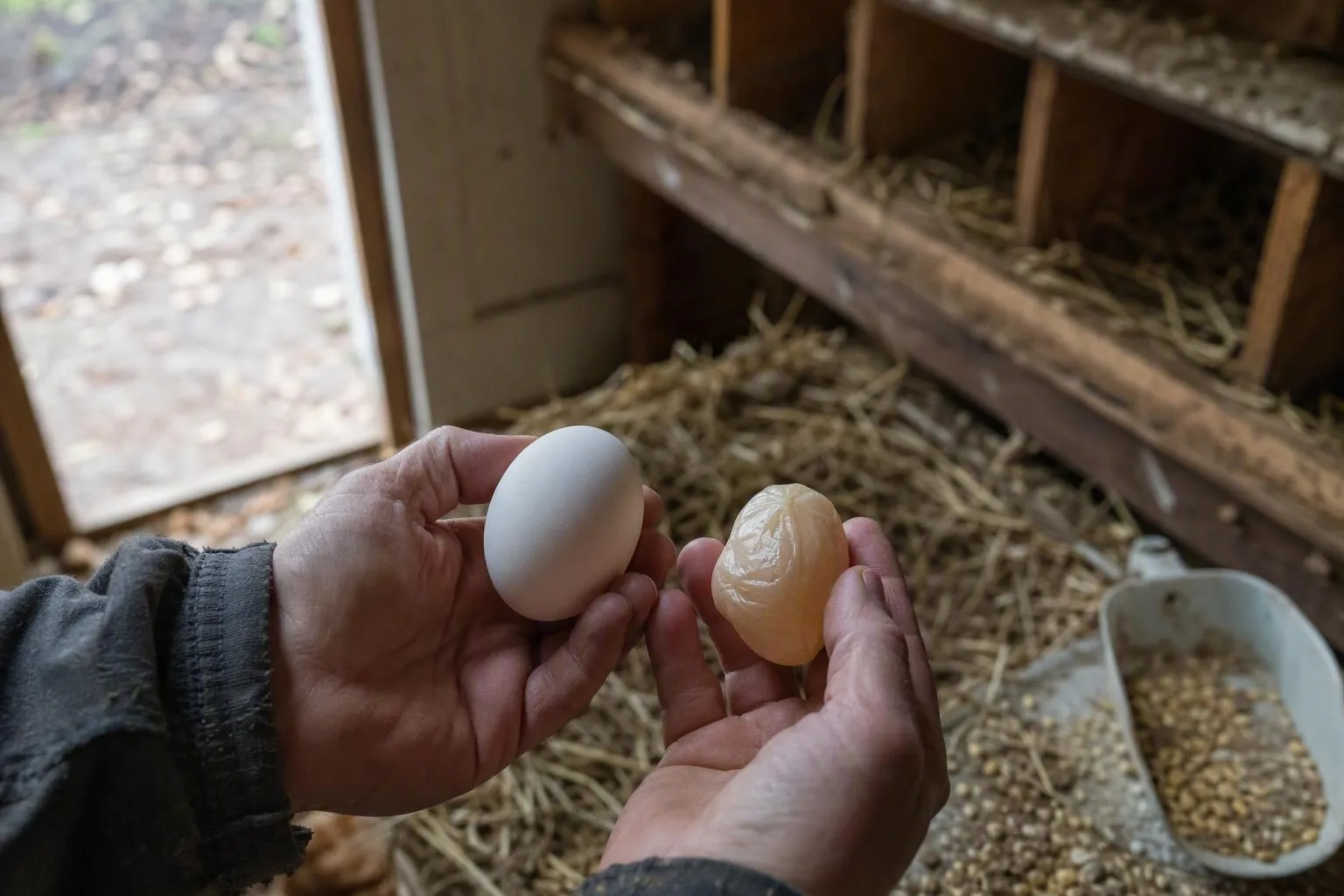
A soft egg once is different from a soft egg every day
Start by identifying the hen if you can. A pullet that has just begun laying may produce an imperfect egg while her system settles. A healthy hen that lays one soft egg after a hot afternoon or a stressful night may also return to normal without treatment.
Use recurrence as your practical alarm. If the same hen produces soft, rubbery, or shell-less eggs for 2–3 days, or if eggs from 2 or more hens change at once, check the flock now. Look at the basics in this order:
- Is every bird reaching fresh, clean water?
- Is a complete layer feed the main ration?
- Do your birds have shade and moving air?
- Was there a predator, flock change, confinement, or other obvious stress?
One egg gives you a clue. A pattern gives you a direction.
Thin, rubbery, or shell-less? Identify the defect before choosing a fix
Not every abnormal egg points to a calcium shortage. The outside tells you which part of shell formation deserves attention first.
| What you see | What it means for your first check |
|---|---|
| Thin or brittle shell | A mineral shell formed, but it may be too weak or uneven. |
| Rubbery egg | A flexible membrane is present with little hard shell over it. |
| Shell-less egg | The membrane arrived without a usable mineral shell. |
| Rough or porous hard shell | Shell was deposited, but the surface or timing was irregular. |
For a practical visual yardstick, I think of a normally hard chicken eggshell as roughly 0.3–0.4 mm thick, with breed and hen-to-hen variation around that range. Don’t use that figure as a pass-or-fail test. A membrane-only egg is a different problem from a shell that is merely thin, so adding oyster shell should not be your automatic first response.
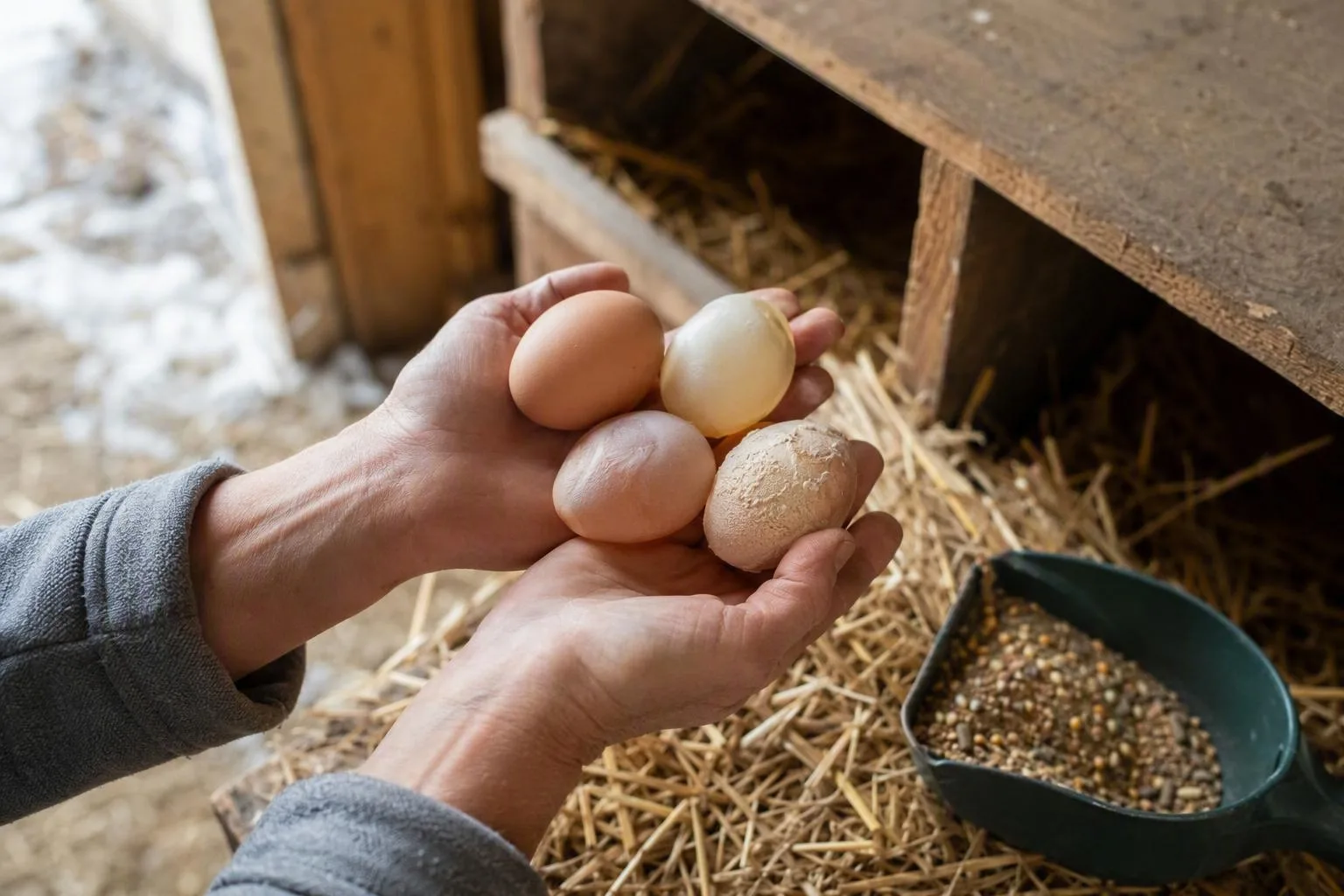
Reasons 1 and 2: first eggs and aging layers can miss the shell-making rhythm
Many pullets begin laying at roughly 18–24 weeks, but breed, daylight, body development, and individual condition move that timetable. Early eggs can be small, oddly shaped, thin, or shell-less. If the pullet is eating, drinking, moving normally, and laying only occasional problem eggs, keep her on a complete ration and watch the next eggs rather than piling on supplements.
An older hen deserves a different question. Shell quality can become less consistent after about 2–3 laying years, but age alone doesn’t identify the cause. Look at her body condition, appetite, production pattern, and droppings. A sudden decline, weight loss, or repeated abnormal eggs needs a health assessment, not a campaign to force more calcium into the feeder.
My judgment call is simple: treat a new layer as a bird to monitor, and an older layer with a new change as a bird to assess. The same egg defect can call for observation in one hen and a veterinary conversation in another.
Reason 3: the daily ration is short on calcium—or diluted by too many extras
Read the feed label before reaching for a supplement. As a backyard screening range, I’d look for about 3.5–4.5% calcium on a complete layer-feed label. The bag’s directions still matter because feeds differ, and your birds may waste part of what you offer.
Here is the useful arithmetic. At 100–120 g of feed per hen per day, a ration containing 4% calcium supplies about 4.0–4.8 g of calcium before waste and individual variation. That calculation helps you spot a feed mismatch. It isn’t a promise that every gram will reach the shell gland.
Grower feed, scratch, table scraps, and a treat-heavy menu can dilute a complete layer ration. Keep layer feed as the main food. Offer clean oyster shell separately so a hen can take more when she needs it, but remember the central rule: a calcium supplement is a tool, not a diagnosis. Before expanding the treat menu, check what not to feed chickens and how much of the daily ration those extras are replacing.
Reason 4: calcium is present, but vitamin D, phosphorus, or absorption is out of balance
Calcium in the feeder is not the same as calcium used to build a shell. Vitamin D supports calcium use, while phosphorus needs to be balanced with the rest of the ration. That is why a complete commercial layer feed is a safer foundation than mixing separate minerals by guesswork.
Keep grit and oyster shell in different mental boxes. Insoluble grit helps a bird grind feed in the gizzard; it is not a substitute for a calcium source. Check that feed is fresh, dry, and within the manufacturer’s stated storage guidance. Damp or stale feed can create a nutrition problem even when the label looks right.
Don’t add concentrated calcium, vitamin D, or phosphorus simply because one egg looks wrong. If the ration is appropriate and soft eggs keep returning, move from home supplementation to a poultry veterinarian or local extension office. The next useful step may be an examination or testing, not another mineral.
Reason 5: heat, panting, and an empty drinker shorten the shell-building window
The heat-watch point I use is about 85°F (29°C). It is a prompt to inspect the setup, not a universal cutoff. Humidity, breed, shade, airflow, stocking density, and access to water determine how hard a warm day hits your birds.
Panting increases water loss, and a hot hen may eat less. Less feed and poorer hydration can leave less material available for shell production. For planning, a laying hen commonly drinks about 1.5–2 times her feed intake by weight in ordinary conditions. A hen eating 100–120 g may therefore need roughly 150–240 mL of water in a normal day, with more available during heat.
Give your birds shade that moves with the sun, open up safe ventilation, and check drinkers at least morning and afternoon. For more than a few hens, use more than one drinker so a dominant bird cannot control the water point. Clean water is often a better first intervention than a new powder in the feed.
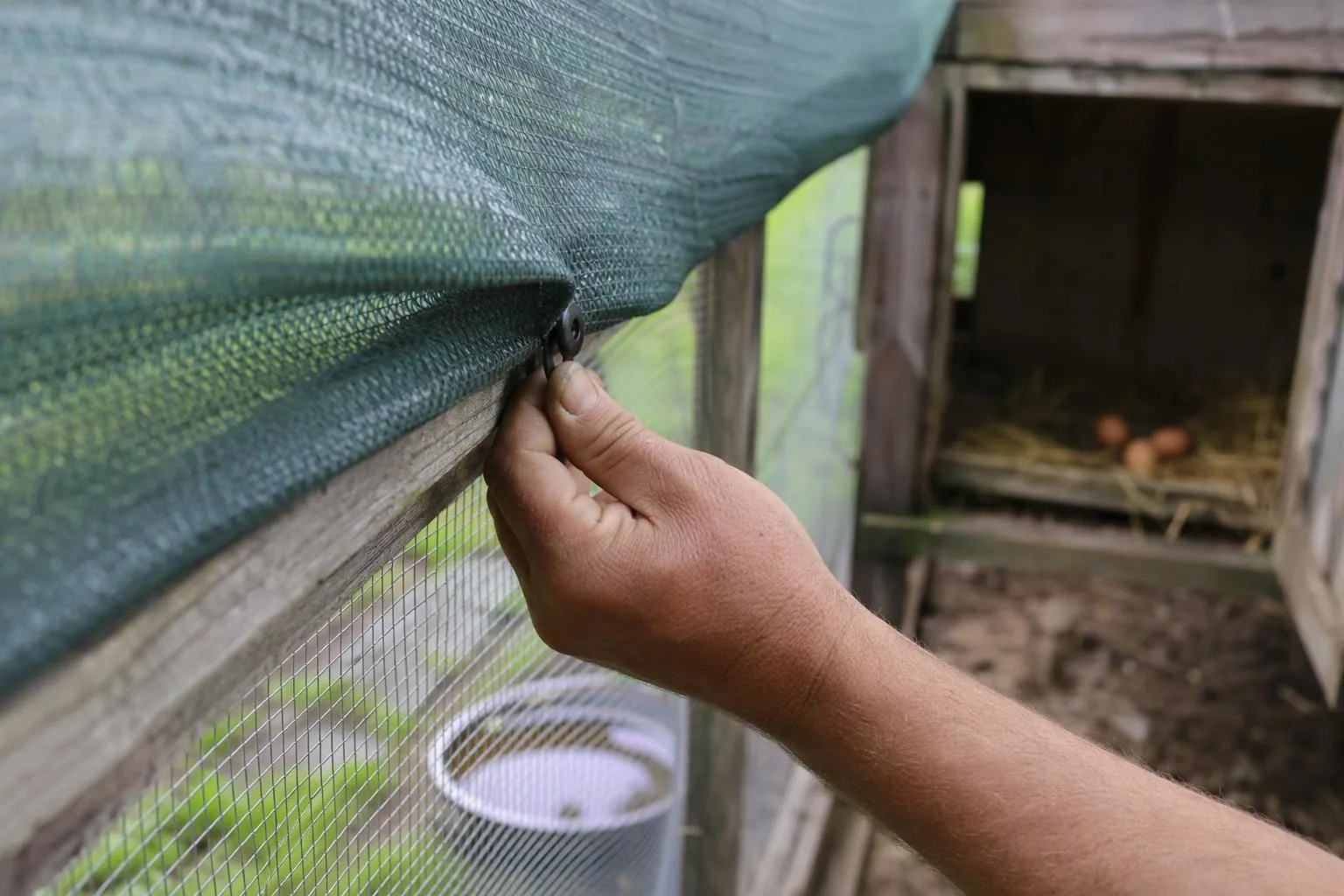
Reason 6: a sudden stressor disrupts an otherwise normal laying routine
A predator near the run, a new bird, a coop move, dog pressure, crowding, abrupt confinement, or a sudden feed or light change can disrupt a laying routine. Inspect your chicken predator protection as part of this check; a bird can be stressed by repeated pressure even when nothing has physically entered the run.
An egg laid today has usually spent roughly 24–26 hours moving through the laying process. That means today’s defect may reflect yesterday’s heat, fright, feed interruption, or water shortage. Restore the familiar routine, inspect roost space, remove the immediate pressure, and watch the next 3–7 laying cycles.
Stress is a reasonable explanation after feed, water, heat, and illness have been checked. It is a poor explanation when it is being used to avoid looking at those basics.
Reason 7: an oviduct problem or flock disease is interfering with shell formation
Keep this possibility in view when the pattern is persistent or spreads through the flock. Reproductive problems or a flock disease can interfere with shell formation and may produce soft, misshapen, watery, or shell-less eggs alongside a production drop.
A respiratory infection can sit on a veterinarian’s differential when abnormal eggs come with respiratory signs or a sudden production change. One abnormal egg cannot identify the cause. You need the hen’s condition, the flock pattern, the timing, and sometimes diagnostic testing.
Contact a poultry veterinarian or local extension office if 2 or more hens are affected, the whole flock changes suddenly, or abnormalities continue for 3–5 days. Escalate sooner for respiratory signs, diarrhea, weight loss, marked lethargy, labored breathing, blood, or a prolapse. Veterinary reference guidance on abnormal eggs can help you prepare questions, but it cannot replace an examination of your birds.
Don’t guess at antibiotics or supplement dosages. A product’s label, local rules, egg-withdrawal requirements, and the actual diagnosis all matter. If one hen is clearly ill, ask the professional you contact how to handle separation and the rest of the flock.
The fix plan: check the flock in 48 hours, reassess after 3–7 days, and know when to stop troubleshooting
Use the next 48 hours to remove the common, reversible problems. Change one major thing at a time where you can, so you still know what helped.
- Identify the likely hen and record the egg’s appearance, date, weather, and flock conditions.
- Replace questionable feed, read the calcium percentage, and make complete layer feed the main ration.
- Fill and clean the drinkers. Add shade, airflow, or a second water point if access is poor.
- Inspect the run, roost, and flock routine for predator pressure, crowding, recent moves, or abrupt changes.
Over the following 3–7 days, record shell quality, egg count, appetite, droppings, energy, and whether another hen is affected. Don’t stack several supplements onto the ration at once. If the eggs improve, you have a useful lead; if they don’t, the failed home fix is information that helps your vet.
A soft or shell-less egg has less physical protection than a fully shelled egg. Follow current local food-safety guidance for handling, refrigerate promptly, and discard eggs that are dirty, cracked, or otherwise compromised. I would not set a soft or shell-less egg for hatching. For storage details, use how to store fresh eggs rather than treating a membrane-only egg like an ordinary shelled one.
This week, put a one-line log beside the coop and check the feed label and drinkers before buying another supplement. If the ration is the weak point, compare your portions with how much feed per chicken per day for laying hens. If red flags appear or the pattern lasts, make the veterinary call.