How to Store Fresh Eggs: Fridge Rules That Matter Most
Set a clean carton marked “June 6” on an inside refrigerator shelf, and you’ve already made the most useful storage decision: keep it at 40°F (4°C) or colder. If you’re asking how to store fresh eggs, start with a cold, dated, consistent routine.
Clean, unwashed eggs may fall under different room-temperature rules depending on where you live. If you use the fridge, though, use it as a system: collect, inspect, carton, chill, and rotate. The problem isn’t a carton being moved once. It’s the repeated warming and cooling that makes your routine harder to judge.
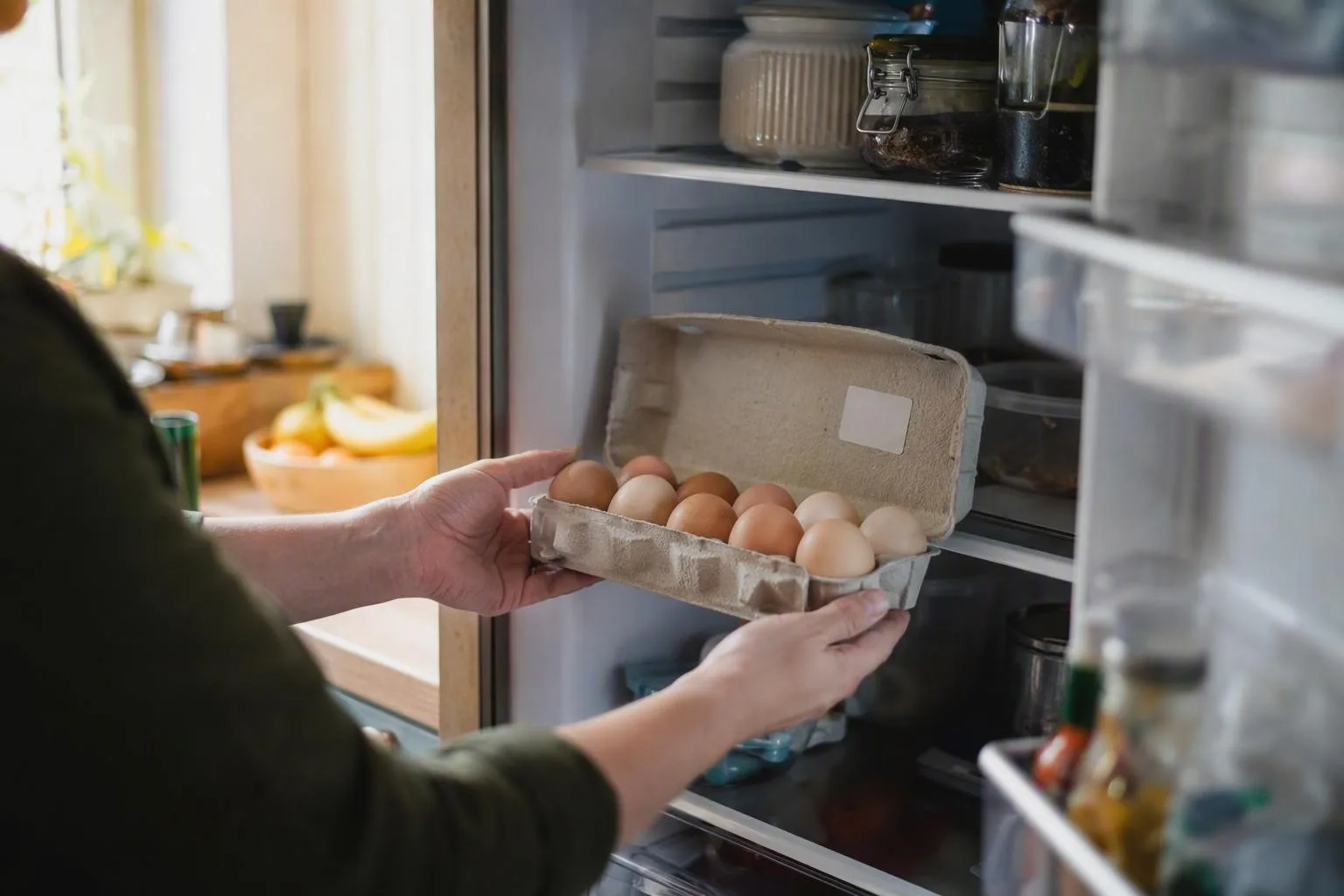
Start with the safe default: 40°F (4°C) or colder
Use 40°F (4°C) or colder as your household target if you’re storing backyard eggs in a refrigerator. Washed eggs and eggs that have already been chilled should stay in that cold routine rather than moving back to a counter.
Clean, unwashed eggs may be covered by different local rules. Some small-flock keepers store them at room temperature, but that approach depends on local food-safety guidance, washing history, room temperature, and how steady your handling is. For three to twelve hens, refrigeration is the simpler default because every carton follows the same rule.
Once you choose refrigeration, don’t shuttle eggs in and out each day. Put a thermometer on an interior shelf and check the actual reading instead of trusting the dial setting. If the shelf stays warmer than your target, adjust the fridge or move the carton before building a longer storage plan.
Nest to carton: collect, inspect, and cool in the right order
With three to twelve hens, collection is a rhythm rather than a weekend chore. Start with at least one collection each day. If you keep free range chickens, check favourite outside laying spots too. An egg left in an exposed place has had more opportunity to get dirty, warm up, or be cracked underfoot.
- Collect the eggs and put cracked ones aside immediately.
- Inspect each intact shell for manure, mud, wet patches, or hairline damage.
- Leave clean, dry eggs unwashed unless your local guidance says otherwise.
- Use a clean carton and write the collection date on it.
Twice-daily collection is the more cautious routine during hot weather, with exposed nest boxes, or when several hens lay at different times. A washed or wet egg should be dried fully and refrigerated promptly. An egg that has already been in your refrigerator should go straight back after a short handling session.
Washing changes the storage decision
The bloom, also called the cuticle, is a thin outer coating on an eggshell. Treat it as a useful speed bump, not a force field. It can help slow moisture loss and movement across the shell surface, but it doesn’t make a dirty egg safe or guarantee that bacteria cannot enter.
Don’t wash a clean egg merely because it came from the coop. Washing removes part of that natural surface barrier and puts the egg into a different storage decision. If an egg needs washing, or your local rules require washing, follow that guidance, dry the shell completely, and refrigerate it promptly. Keep washed eggs separate from unwashed eggs so you don’t forget which handling rule applies.
I avoid soaking eggs in a bowl of cold water. It’s an improvised method that leaves the shell wet and can move dirty water around the surface. A dedicated dry brush or disposable towel is the better first response to a small mark.
Choose an inside shelf, keep the carton closed
An interior shelf gives you a steadier home for eggs than the refrigerator door. The door warms and cools every time it opens, and its narrow shelves also make cartons easier to knock over. Keep eggs in their original carton when it is clean, or use a clean carton reserved for eggs.
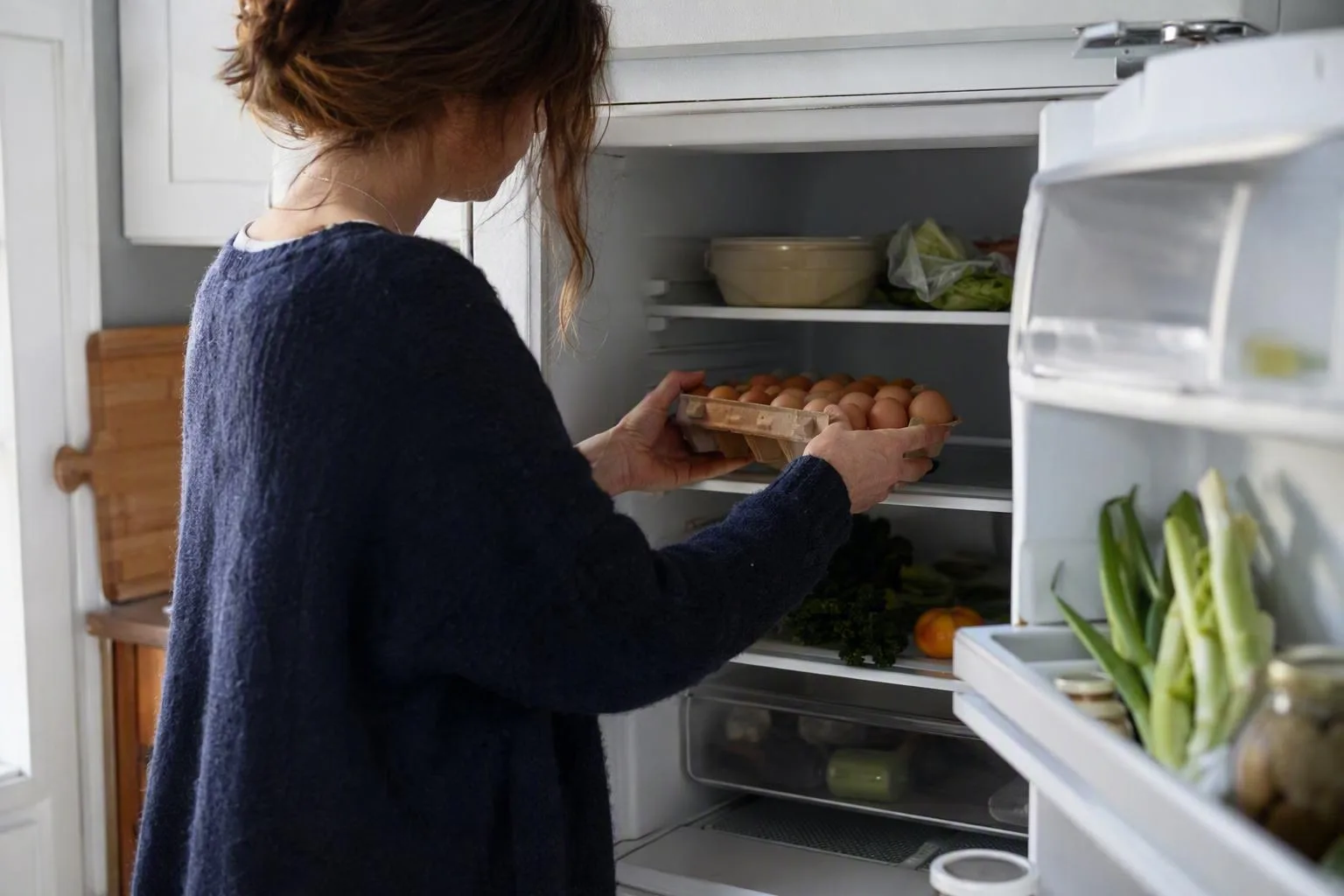
The carton does several quiet jobs. It keeps shells from rubbing against other food, reduces exposure to strong odors, and slows moisture loss from the shell. Leave the carton closed except when you’re taking eggs out. Keep it away from raw meat, leaking packages, and ready-to-eat food. If the back wall is cold enough to freeze part of an egg, move the carton forward to a stable shelf rather than accepting cracked shells from partial freezing.
Pointy end down helps quality, but it will not rescue bad storage
If your carton allows it, place eggs with the pointed end down and the broad end up. The broad end contains the air cell, so this orientation leaves that pocket at the top and may help the yolk remain more centered as the egg sits.
That is a quality habit, not a safety system. A sound carton sitting flat and steady is more useful than chasing a perfect angle in a carton that tips over. Cold storage, intact shells, clean handling, and rotation matter first.
Date every carton before it goes into the fridge
Your date system should survive a busy week. Write the collection date, or the oldest collection date, on every carton before it enters the refrigerator. Don’t pour new eggs into a carton that already contains older ones. Keep washed and unwashed cartons separate, even if both are cold.
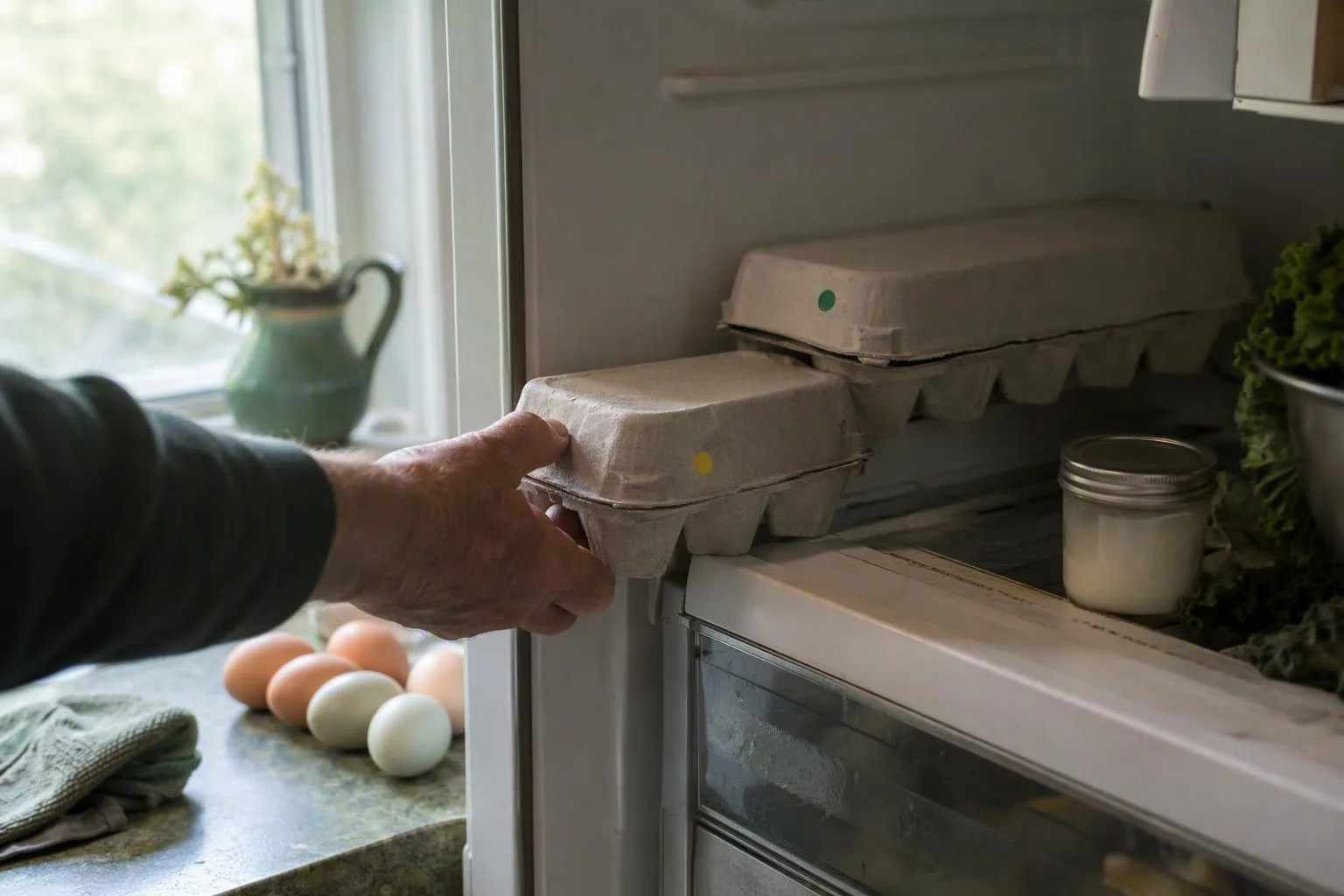
My small-flock rule is one carton in use and one carton filling. For example, if six hens give you four eggs on a day, a twelve-egg carton fills in three such days. Mark the carton with the first date, or write a short range such as “June 6–8.” When the first carton is empty, bring forward the next oldest one.
A written date is more useful than memory and more useful than a float test for managing a flock. It tells you how long the eggs have been in your care and whether the cold chain was continuous. The float test can suggest age, but it cannot reconstruct storage history.
A practical time window: aim for 3–5 weeks refrigerated
For clean, intact eggs that have stayed continuously refrigerated, plan to use them within roughly three to five weeks from collection for better quality. Treat that as a conservative planning window, not a promise that every egg is safe until a particular day or unsafe the next morning.
The useful window gets shorter when the temperature has been uncertain, the shell is heavily soiled, the egg was washed or wet, the carton has been warmed repeatedly, or the collection date is unknown. Use older cartons first. If an egg’s handling history is unclear, choose a fully cooked use or discard it rather than trying to recover certainty with a freshness trick.
Commercial guidance may count from a pack date or purchase date rather than your nest-box collection date. That is one reason you should check current local rules instead of copying a supermarket label onto backyard eggs. A small flock gives you a better tool: you can record the date the egg actually entered your care.
Use the float test as an age clue, then crack separately
An egg floats because its air cell grows as moisture and gases leave through the shell over time. That makes floating an age clue. It does not make floating a complete spoilage test, and it cannot detect every food-safety problem.
If you use the test, do it before cooking and treat the result as a prompt to inspect the egg more carefully. Crack each egg into a separate small bowl before adding it to a recipe. Stop if you notice an abnormal smell, an unusual colour, or a strange appearance. Never use a float test to approve an egg for raw batter, homemade mayonnaise, or another uncooked recipe.
I’d rather waste one questionable egg than mix it into six good eggs. That is not because a float automatically means “bad.” It’s because separating the test egg protects the rest of the bowl if the decision goes against it.
Cracked, heavily soiled, or wet: do not store them like clean eggs
Sorting at collection is kinder to your future self. A clean carton should contain clean, intact, dry eggs. Don’t seal a cracked egg in a bag or tuck it behind newer eggs for later. A carton cannot repair a broken shell.
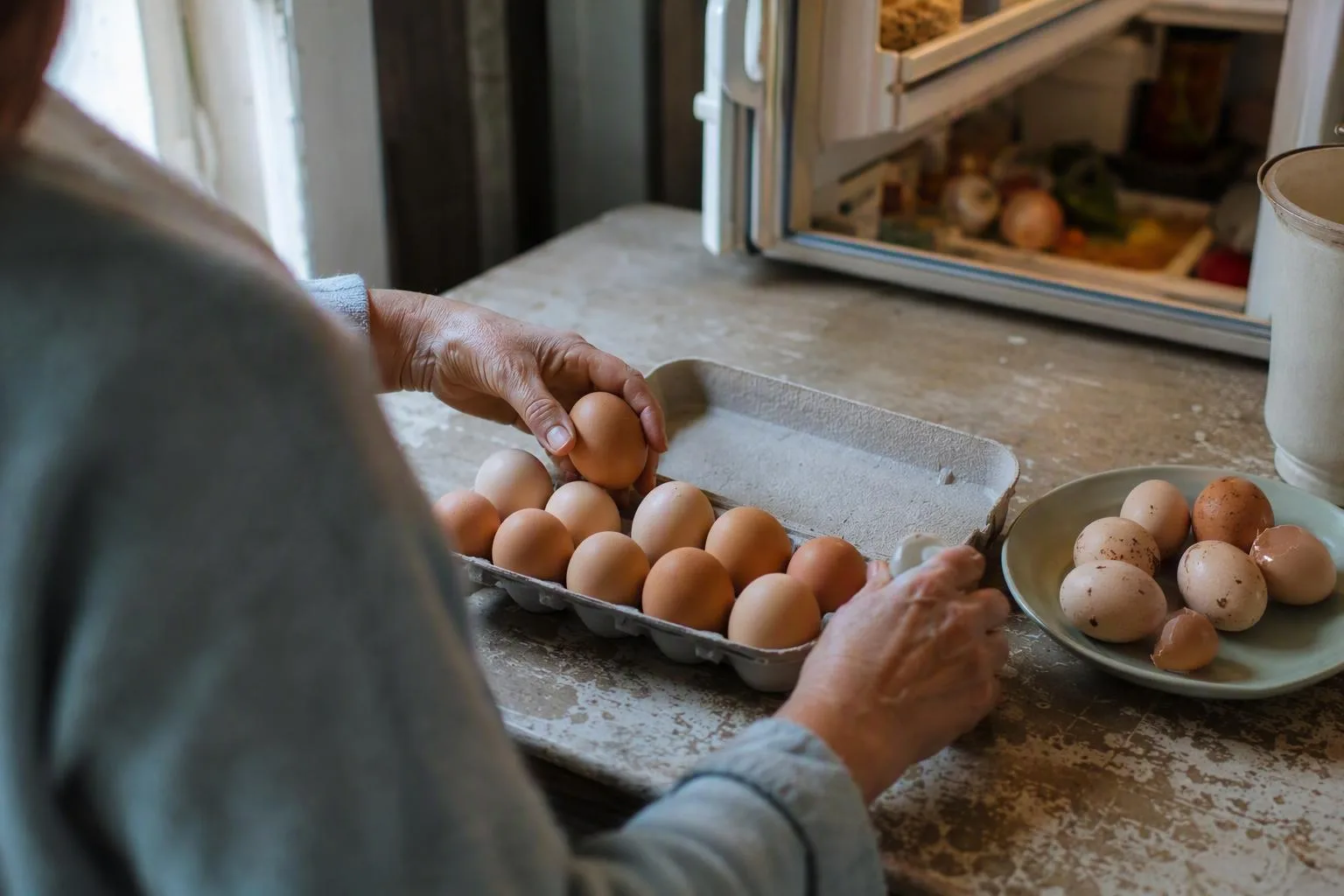
- Cracked shell: discard it rather than storing it for later.
- Light dirt on an intact, dry shell: dry-clean it with a dedicated brush or disposable towel.
- Heavy manure or mud: take the conservative route and discard it instead of trying to wash contamination inward.
- Washed or wet shell: follow the applicable local washing rule, dry it fully, and refrigerate it promptly.
Condensation is a warning that an egg has crossed between warmer and colder air. Don’t move a cold carton onto a warm counter and then return it after droplets form. Take out only what you’ll use, and leave the rest of the carton closed and cold.
If a cold egg sat on the counter, count hours—not days
For an egg that was previously refrigerated, use a conservative two-hour counter limit. Shorten that to one hour when the room is above 90°F (32°C). This is a time-and-temperature rule for an egg that started cold, not a universal answer for clean, unwashed eggs that have never entered a refrigerator.
A brief absence followed by prompt refrigeration is different from an overnight counter stay. If a chilled egg sat out overnight, my conservative call is to discard it. Don’t put it back into the carton and hope the refrigerator erases the uncertainty. For never-chilled, unwashed eggs, check your local food-safety guidance before choosing a room-temperature routine.
Before cooking, keep storage and cooking safety separate
Refrigeration slows unwanted growth; it doesn’t sterilize an egg or repair a cracked shell. Wash your hands after handling shells, use clean bowls and utensils, and keep raw egg away from raw meat and ready-to-eat food. Wipe up spills before preparing the next part of the meal.
My conservative house target for egg dishes is 160°F (71°C). Check current USDA/FDA guidance for the cooking-temperature rule that applies where you live and for the recipe you’re making. For raw or lightly cooked recipes, choose pasteurized eggs, especially when serving someone more vulnerable to foodborne illness.
If an egg has an unusual smell or appearance, stop using it. If someone becomes ill after eating eggs, contact a healthcare professional or local health authority rather than trying to diagnose the cause from shell appearance. Food safety questions tied to selling eggs, local washing requirements, or a suspected outbreak also belong with your local agriculture or public-health office.
For current wording, compare the USDA Food Safety and Inspection Service egg guidance with FDA egg safety guidance. Local agriculture or Cooperative Extension guidance is the better place to check rules that apply specifically to unwashed backyard eggs.
This week, put a refrigerator thermometer on the shelf you actually use, mark one carton with its collection date, and write this four-word routine on the coop door: collect, inspect, date, chill. Once that habit is steady, work out how much feed per chicken per day for laying hens so your egg routine covers both food safety and the running cost of the flock.