Can Chickens Eat Apples? Safe Portions, Seeds, and Prep
Yes—healthy adult chickens can eat fresh apple, but keep it to a small, occasional treat. Start with about 1–2 tablespoons of chopped apple per hen, remove the core and seeds, and let their complete feed remain the main event.
That portion is a practical starting point, not a magic safety line. Your birds’ size, flock dynamics, and what else they’ve eaten today all matter.
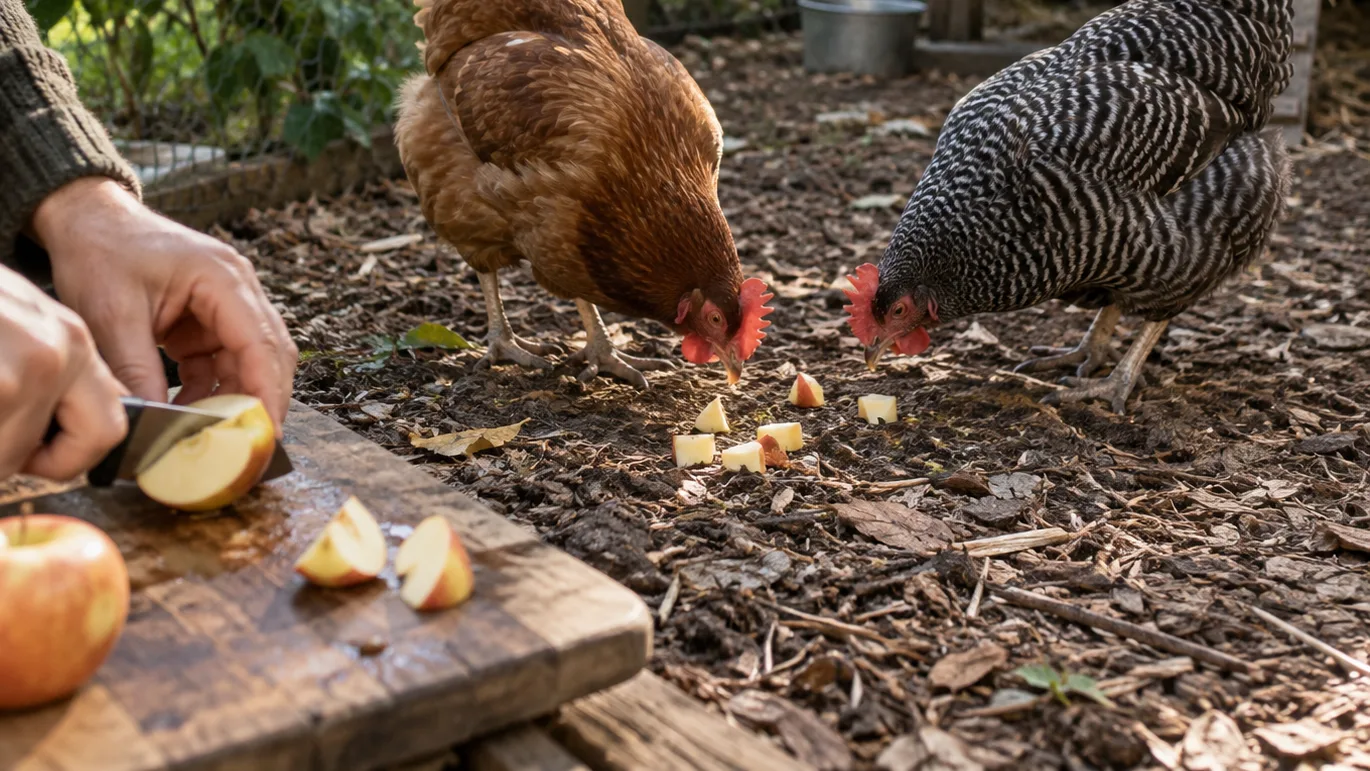
Yes—apples are an occasional treat, not a replacement for layer feed
Apple flesh is fine to offer as a snack to healthy adult hens. It brings moisture and sweetness, but it doesn’t supply the balanced protein, calcium, vitamins, and minerals your birds rely on in a complete layer ration. Think of it as a little variety, not a way to stretch the feeder.
A useful rule of thumb for treats is to keep them to a small share of the day’s food, often described as around 10% or less. Treat that as a broad feeding guide, not a precise apple allowance. If your hen fills up on fruit, she may eat less of the balanced ration that’s designed to cover her regular needs.
That matters most when treats become a habit. A few apple bits after you’ve finished cooking are different from a bowl of fruit scraps offered every afternoon. The second routine can quietly crowd out feed even if the birds still rush over when you arrive.
My practical preference is to offer treats after your birds have had access to their regular ration, rather than using fruit to tempt them away from it. You can still enjoy watching them peck and investigate; you’re simply keeping the snack in its proper place.
A useful serving starts small: roughly 1–2 tablespoons of chopped apple per hen
For an adult hen, begin with about 1–2 tablespoons of chopped apple, roughly 15–30 g. Those measures are a convenient starting range, not a tested safe limit. Use the lower end for a small bird, a flock that gets other treats, or a hen that tends to fill up quickly. You can offer a little more occasionally if the birds are larger and the rest of the day’s diet is on track.
For context, you can use about 100–120 g of layer feed per hen per day as a rough planning comparison, then check the guidance on your own feed and watch what your flock actually eats. That comparison helps explain why a few spoonfuls of fruit is plenty: apple is an extra, while the feed is meant to do the nutritional heavy lifting. For more on adjusting a ration to your flock, see how much feed per chicken per day for laying hens.
Here’s an easy sharing example. Chop one small apple and offer a modest handful to four to six adult hens. Don’t assume each bird gets an equal share. A bold hen can sweep up the best pieces while a shy one hangs back. Scatter a few pieces across a clean area or make two small piles several feet apart so more birds get a chance.
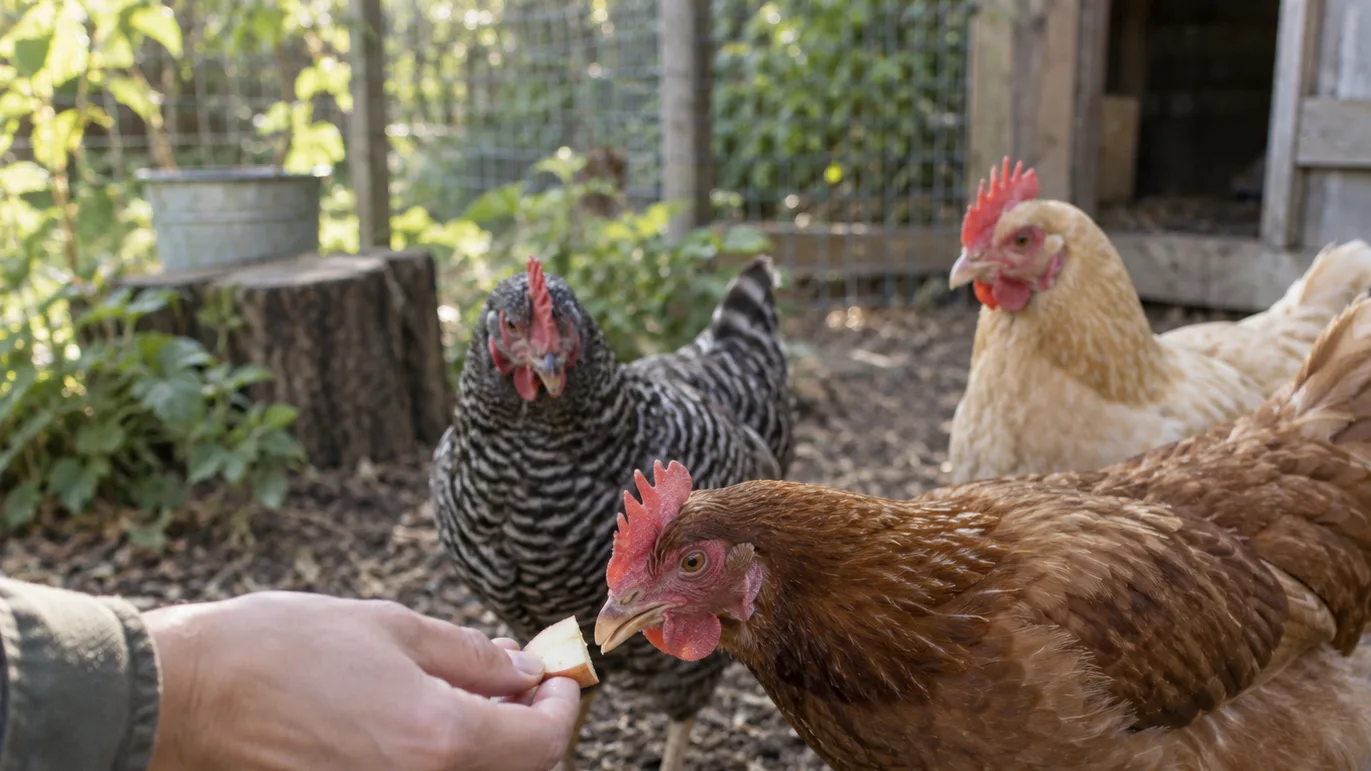
Watch the flock rather than trying to calculate a perfect gram amount. If the birds leave their normal feed, or the apple turns into the main attraction at every feeding, scale the treat back. I’d rather see a small snack that disappears quickly than a full dish that changes the rhythm of the day.
Seeds and cores: remove them for routine feeding, but don't panic over one stray seed
The seed warning is usually discussed in terms of amygdalin and cyanide. That is a reason to core apples before routine feeding, not a reason to panic if you spot one stray seed after the fact. There isn’t a seed count here that I can responsibly label safe or dangerous for every chicken.
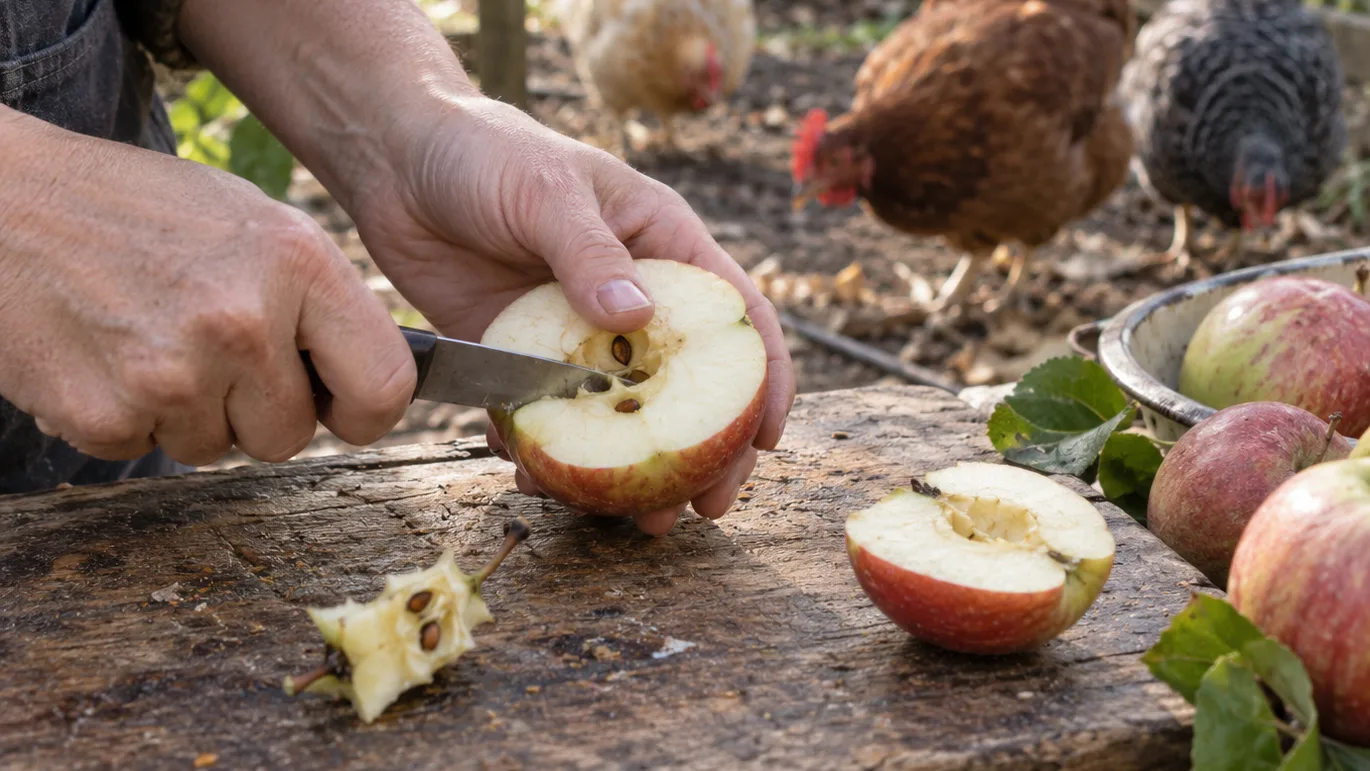
Remove the core and seeds when you prepare the apple. Don’t save up a pile of cores for the flock, and don’t crush seeds into scraps. The practical choice is simple: there’s no benefit to including them, and coring takes only a moment.
Keep the different risks in perspective. A large, firm chunk may be awkward for a bird to peck and swallow; a generous serving can displace feed; a core with seeds brings an avoidable exposure concern. Those aren’t interchangeable problems, so solve each one directly: cut the flesh small, keep the portion modest, and discard the core.
If a hen has eaten a seed or two, don’t try to diagnose poisoning from that detail alone. Remove any remaining seeds and observe the bird. If you see weakness, unusual breathing, or another concerning change, contact a poultry or avian veterinarian promptly rather than trying a home treatment. A veterinary toxicology reference discussing amygdalin and cyanide can help you understand the general concern; it can’t tell you what happened to one particular bird.
Wash, core, and cut it small enough for your birds to peck safely
Prep takes less time than cleaning up a bowl your hens have ignored. Wash the apple, remove the stem and core, and chop the flesh into pieces around ½ inch across for adult hens. Go smaller for bantams or birds that struggle with larger pieces. That size is a practical cutting guide, not a guarantee against choking; watch how your own flock handles food.
Clean, intact peel is fine to leave on. You don’t need to peel a sound apple just for the chickens. Skip added syrup, salt, and heavily sweetened desserts. If you want to offer apple, plain fresh fruit gives you a simpler snack with fewer unknown ingredients.
With chicks, keep an age-appropriate complete starter feed at the center of the diet. Once they’re eating well, a tiny taste can be finely chopped, but treats shouldn’t crowd out starter. For foods other than their complete starter, provide chick-appropriate grit; the practical guide to grit for chickens explains why access to grit matters when birds eat foods that need grinding.
Don’t confuse a small piece with a whole apple left in the run. A whole fruit encourages pecking and may be fun to watch, but it makes portioning harder, leaves the core available, and can sit around after the birds lose interest. Chopped pieces let you see what’s being eaten and remove what’s left.
Skip fruit that's moldy, fermented, or making your flock ignore its feed
Don’t serve an apple with visible mold or signs of fermentation. A bruise or a soft spot isn’t automatically the same thing as mold, but if you can’t confidently sort the fruit, discard it. Fruit that smells off or has begun to ferment belongs in the compost or rubbish, not the run.
Once chopped, apple has exposed flesh and can get messy in warm weather. For a small serving, use about 10–15 minutes as a practical check-in: if pieces are still sitting there, pick them up. That’s a simple cleanup routine, not a universal spoilage timer. Heat, shade, damp ground, and how much you put out can all change how quickly scraps become unappealing.
After a treat, ordinary variation in droppings isn’t enough on its own to diagnose a problem. Look at the whole bird: appetite, energy, and whether the change continues. If a hen has persistent appetite changes, weakness, or other worrying signs, call a poultry or avian vet. Don’t keep testing different foods while a bird’s condition is getting worse.
If apple keeps tempting your flock away from its feed, stop offering it for a while. That’s a useful signal about your routine, even if the fruit itself is perfectly sound. A treat should fit around the ration, not compete with it.
Three quick edge cases
Can chicks eat apples?
Keep chicks on their age-appropriate complete starter as their main food. If you decide to offer a taste once they’re eating well, make it tiny and finely chopped, and provide chick-appropriate grit for foods other than starter. Stop if the snack distracts them from their normal feed.
Can chickens eat crabapples?
You can treat sound, ripe crabapple flesh like other apple flesh: offer a small portion, remove the core and seeds, and cut it so your birds can peck it easily. Skip fruit that is moldy or has started fermenting, including fallen fruit in poor condition.
Can chickens eat applesauce?
Plain, unsweetened applesauce can be offered in a tiny, occasional amount, but it has no special role in a hen’s diet. Check the ingredient list and avoid products with added sugar, sweeteners, or other additions you can’t identify. Keep it off the menu if it starts replacing balanced feed.
This week, wash and core one apple, chop a small serving, and offer it after your hens have access to their regular feed. Notice which birds get a share, then pick up leftovers. For a different kind of flock snack, compare your routine with how much feed per chicken per day for laying hens and the basics of grit for chickens.
Frequently Asked Questions
Can chicks eat apples?
Keep chicks on an age-appropriate complete starter feed; if offering a tiny taste after they are eating well, finely chop it and provide chick-appropriate grit for foods other than starter feed. Don't let treats displace starter.
Can chickens eat crabapples?
A sound, ripe crabapple can be offered like other apple flesh in a small portion; core it and remove seeds, and skip fruit that is moldy or has fallen and started to ferment.
Can chickens eat applesauce?
Plain, unsweetened applesauce is not inherently a special chicken food; if offered, keep the amount tiny and occasional. Avoid products with added sugar, sweeteners, or other ingredients, and don't let it replace balanced feed.