Can Chickens Eat Strawberries? Safe Portions and Prep
Yes: healthy adult chickens can have plain, ripe strawberries as an occasional treat. Start with one small berry per hen, prepare it in small pieces, and keep the flock’s complete feed at the center of the day’s menu.
The useful question isn’t whether a strawberry looks harmless; it’s whether the treat leaves your birds eating their regular ration normally. Here’s a simple way to offer one and judge what to do next.
Yes—ripe strawberries are an occasional treat, not a replacement for feed
Strawberries can be a small extra for healthy adult hens. Think of the fruit as a taste and a bit of variety. Your layer feed is designed to provide a more complete ration, while a berry is one ingredient with a much narrower nutritional job. If fruit starts taking the place of feed, the balance of the diet shifts in the wrong direction.
That’s why the portion matters more than whether the berry is red or particularly sweet. Offer plain fruit, keep the amount modest, and make sure your birds still have access to their normal feed and clean water. If they rush the berries and leave the feeder, scale the treat back or skip it next time.
There’s no need to turn a strawberry into a daily ritual. A small flock can have one now and then, alongside other appropriate extras. Keep the overall treat habit in view: scraps, scratch, and fruit all draw from the same small allowance. If you’re deciding what belongs in that rotation, the practical question can chickens eat apples is a useful comparison, but the same portion principle applies.
I’d rather offer a little fruit and see your hens return to the feeder than make treats the event they wait for. That’s a judgment call about keeping a simple routine: the more predictable the complete ration remains, the easier it is to spot when a bird’s appetite changes.
For a look at what strawberries contain, you can check USDA FoodData Central’s strawberry records. The nutrition entry can help you understand the fruit itself; it doesn’t turn strawberries into a complete chicken ration.
Portion by hen: a small berry to start, with all treats kept in check
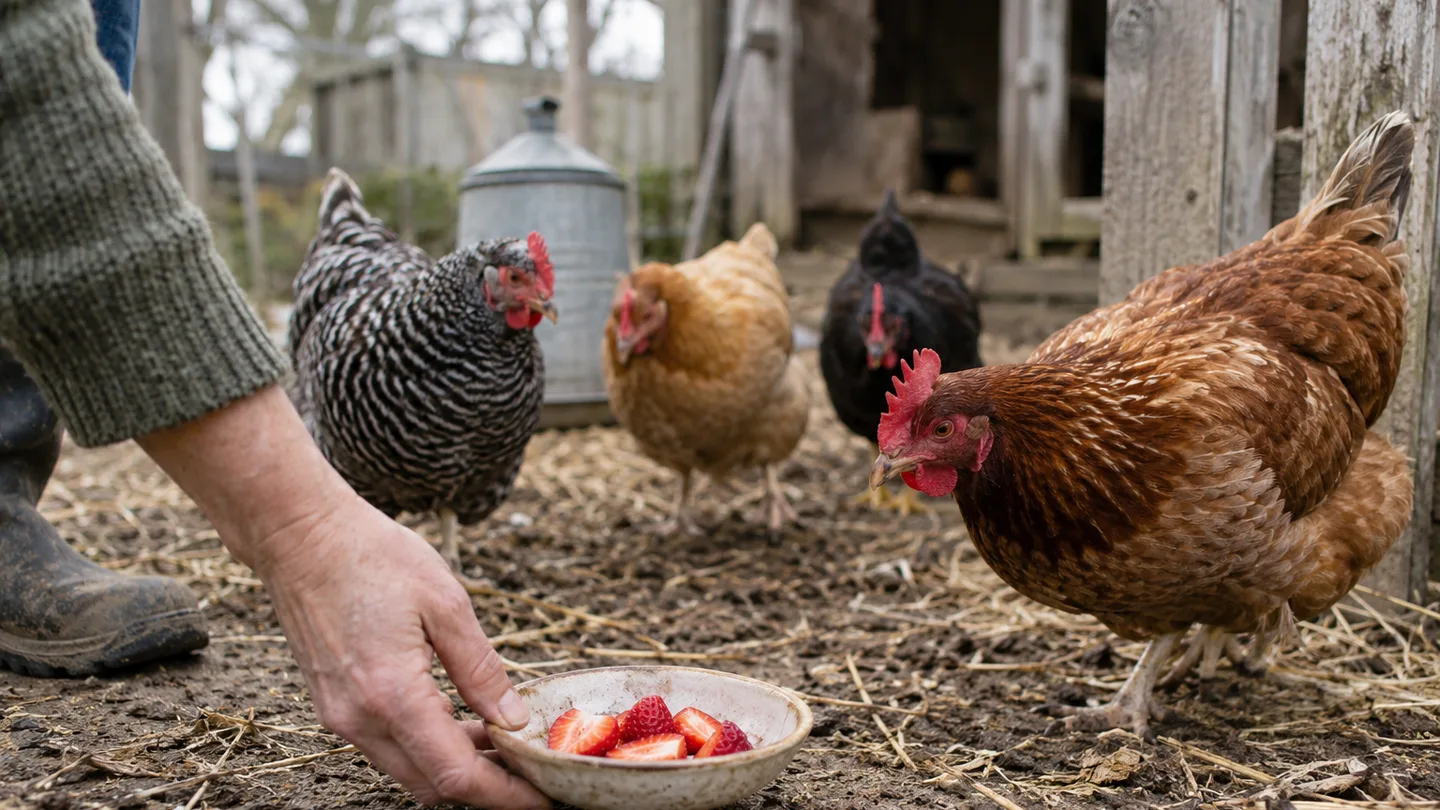
For a first taste, offer one small strawberry per healthy adult hen. Treat that as a conservative keeper’s starting rule, not a tested strawberry dose or a maximum safe amount. A large berry can be shared between birds; a small one can be left whole for a hen that pecks rather than gulps. Watch what your flock actually does, because bird size, confidence at the feeder, and the way you cut the fruit all affect how quickly it disappears.
A useful household boundary is to keep all treats together to about 10% or less of the diet. Use that as a broad rule of thumb, not a strawberry allowance. It covers the extras you offer across the day, including scratch and leftovers. It also isn’t a calculation to convert directly into grams of berries: fruit and complete feed don’t have the same role in the ration, and a kitchen scale can make a rough rule look more exact than it is.
For planning arithmetic, my working rule of thumb is roughly 100–120 g of complete feed per adult laying hen per day. Treat that as a starting estimate, not a promise of what every hen will eat. Body size, breed, weather, laying status, access to forage, and the feed’s own directions can all shift the amount. If you’re building a daily routine, compare your setup with how much layer feed per chicken per day, then follow the instructions on your particular feed and pay attention to whether it’s being eaten.
Here’s a concrete example. Picture four adult hens and four small strawberries. Cut the berries into pieces, scatter them so one bold bird can’t claim the whole serving, and offer them after the hens have had access to their normal ration. If the flock finishes the fruit but leaves feed behind, make the next serving smaller or skip it. If they eat their regular ration as usual, keep fruit occasional and don’t add a second round just because the first one vanished quickly.
That’s the difference between a starting portion and a maximum: a starting portion is a small, cautious introduction; a maximum would imply a reliable limit that this simple rule doesn’t establish. You don’t need to find a precise berry weight. A small serving, followed by a quick check of normal feeding, gives you a usable decision without false precision.
For a mixed flock, let the smallest or least assertive bird set your serving style. Pieces spread over a shallow dish or clean ground give more birds a chance to peck. If one hen guards the treat and the others hang back, divide the serving into several small spots rather than adding more fruit.
Wash, trim, chop: three checks before strawberries reach the feeder
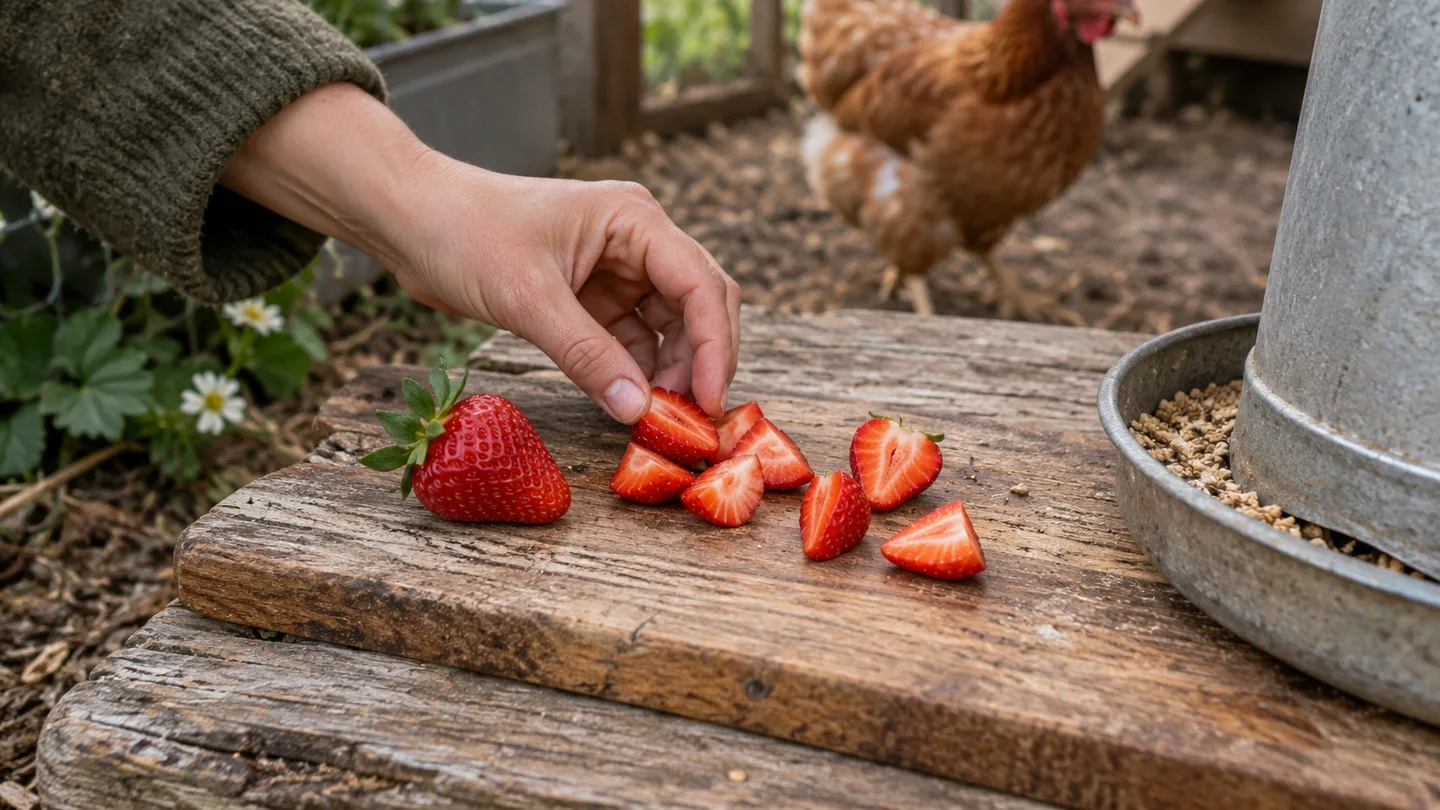
Preparation can be simple. Rinse the berry under cool running water, inspect it, then cut it into pieces your birds can pick up easily. You don’t need soap or household cleaner on the fruit. If there’s a soft, spoiled, or moldy patch, discard the berry rather than trying to salvage it by trimming around the damage.
For a small berry, a few peck-sized pieces are enough. For a large one, cut it smaller so the flock can share it without one bird carrying off the whole piece. The green leafy top is optional: remove it if that makes the fruit easier to portion or lets you inspect the berry. I wouldn’t turn removing the cap into a poison warning; the practical job is to offer clean, manageable pieces.
When I picture a four-hen backyard flock at the feeder, the part I’d keep deliberately uncomplicated is cleanup: put out only what they’re likely to finish, then check the spot again. Wet fruit left in a feeder or on the ground can get dirty and spoil, especially in warm weather, so remove leftovers before the next feeding and sooner if the weather is hot. A little extra effort at the start is easier than guessing later whether a forgotten scrap is still fit to offer.
One practical sequence is: rinse, inspect, cut, scatter, and clear away what remains. You can use a plate or shallow dish if it helps you see leftovers. If you feed fruit in the run, choose a spot where the pieces won’t be mixed into bedding or manure, since that makes cleanup harder to judge.
For a first try, serve the pieces after your birds have had access to their regular feed. Then observe whether they go back to the feeder and whether any fruit is left behind. This gives you a clear read on both the serving size and the cleanup, without changing the rest of the flock’s routine.
When to skip the berries: mold, syrup, and a hen leaving her regular feed
Keep the offer plain. Skip moldy or spoiled fruit, berries that smell fermented, syrup-packed products, jam, and sweetened desserts. Those foods bring ingredients and spoilage questions that aren’t part of a simple fresh-fruit treat. If a berry is past its best, compost it or discard it rather than asking your hens to use it up.
Homegrown fruit needs one more check: what was used on the plants? If you don’t know whether a berry or its foliage was exposed to a garden chemical, leave it out. Follow the product label and any stated waiting instructions before considering treated plants or fruit for your flock. The easiest low-guesswork choice is fruit from a source whose handling you understand.
After a serving, look at the normal routine. Your birds should still show interest in their complete ration. If treats are displacing feed, reduce the treat portion or pause it. A strawberry is easy to remove from the menu; it shouldn’t become a way to distract from an appetite problem.
If one hen keeps eating less, seems unusually quiet, or shows other signs of illness, contact a poultry veterinarian for advice. Persistent appetite changes deserve attention beyond changing snacks. Don’t try to fix a sick bird with fruit, supplements, or a guessed medication dose; a vet can help decide what is actually going on and whether treatment is needed.
It also helps to keep a quick mental note of what else the flock received that day. If they had scratch, table scraps, or another fruit, count those as treats too. That small habit makes it easier to tell whether the strawberry was a tiny extra or part of a larger pattern that has begun crowding out feed.
Strawberries can fit into a backyard flock’s routine, but your birds’ everyday ration is the anchor. If you’re comparing fruit treats, can chickens eat grapes is another useful question to consider; each food still needs its own preparation and portion judgment.
Can baby chicks eat strawberries?
Keep chick starter as the main food for growing chicks. If you choose to offer fruit, make it a tiny, finely chopped taste rather than a routine meal, and make sure the pieces are manageable for their size. Young birds have different feeding needs from adult hens, so use age-appropriate chick-feeding guidance before adding extras. If there’s any doubt, stick with the starter feed.
Can chickens eat frozen strawberries?
Plain frozen strawberries can be thawed and chopped before serving. Check the package for added syrup or sweeteners, and don’t put out hard, frozen chunks that are difficult for your birds to peck apart. Offer a small amount and clear away leftovers as you would with fresh fruit.
Can chickens eat strawberry leaves and garden plants?
Remove the leafy cap if it helps you portion the berry, but don’t treat that step as proof that the green top is poisonous. The more important question for garden plants is chemical exposure. If you can’t tell what was sprayed or applied, don’t feed the plant material. When you try strawberries this week, start with one small berry per adult hen, watch that your birds return to their regular feed, and clear away any leftovers.
Frequently Asked Questions
Can baby chicks eat strawberries?
Chick starter should remain their main diet. If a keeper offers fruit, explain why it should be a tiny, finely chopped extra rather than a routine meal, and point readers to age-appropriate chick-feeding guidance.
Can chickens eat frozen strawberries?
Plain frozen strawberries can be offered after thawing and chopping; avoid syrup-added products and large hard pieces.
Can chickens eat strawberry leaves and garden plants?
Distinguish strawberry foliage from plants treated with garden chemicals. Advise against feeding material when pesticide exposure is unknown.