Can Chickens Eat Grapes? Safe Portions and How to Serve Them
Yes—adult chickens can eat fresh grapes as an occasional treat. Start with 1–2 grapes per hen, cut them to a manageable size, and keep their complete feed at the center of the menu; grapes are a snack, not a substitute for a balanced ration.
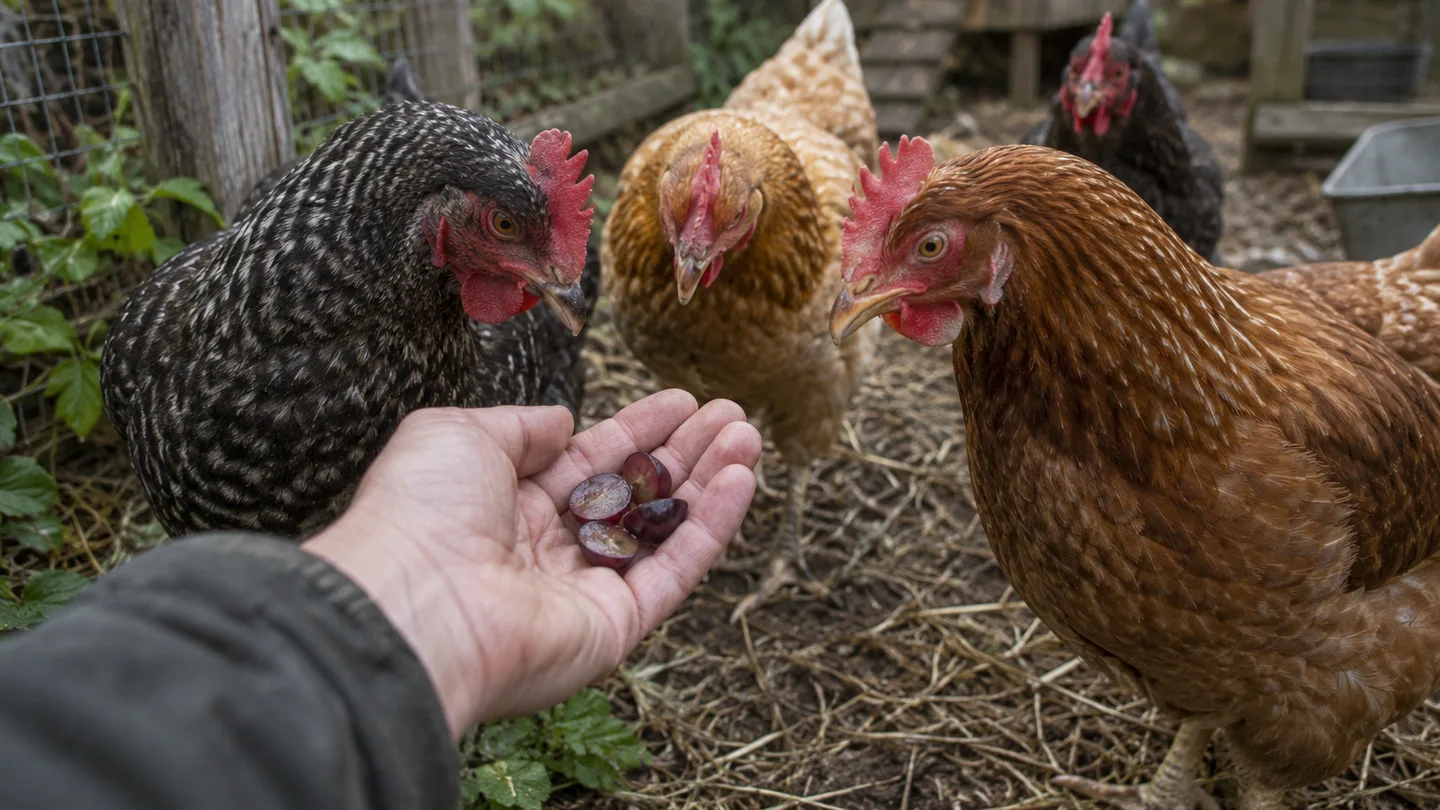
Yes, adult chickens can eat fresh grapes—but treat them as a snack
Fresh grapes are fine to offer your adult flock in modest portions. The useful distinction is between sound, fresh fruit and grapes that are spoiled, slimy, or moldy. If a grape looks or smells off, discard it rather than asking your birds to clean it up. A treat doesn’t need to be rescued from the compost pile.
Your hens need their usual complete feed available, too. That feed is formulated to supply the nutrients their life stage requires. Grapes bring variety, but they don’t provide the same balanced ration. If a bird fills up on fruit and leaves feed behind, the treat has started doing the wrong job.
Think of grapes as a brief bonus, not a daily menu item. That distinction matters most in a small flock, where one enthusiastic bird can eat a noticeable share of a handful. Serve a little, watch how your birds respond, and let their regular ration do the nutritional heavy lifting.
One practical judgment call: I’d rather offer a smaller portion and have the hens finish it than scatter a large amount and let fruit sit around. Leftovers can attract pests or get dirty, and they make it harder to tell whether your birds are eating their normal feed.
Start with 1–2 grapes per adult hen; keep all treats near 10% of the diet
For a first serving, use 1–2 grapes per adult hen as a cautious starting suggestion, not a proven maximum or a veterinary dose. Grape size varies, and a bantam and a large laying hen don’t need identical pieces. If the fruit is unusually large, or your birds already get kitchen scraps and other snacks, start at the low end—or offer less.
A simple backyard rule is to keep all treats together near 10% of what your flock eats, with complete feed making up the rest. Treat that as a planning guide, not a precise biological cutoff. It isn’t a reason to calculate a pretend-exact allowance by weighing every crumb. The useful point is that grapes, scratch, vegetables, and other extras share the same small treat budget.
Here’s the arithmetic for a flock of three: 1–2 grapes per bird gives a starting serving of 3–6 grapes total. For 12 hens, the same starting range works out to 12–24 grapes. Those totals are only a way to plan how much to prepare. They don’t guarantee every hen gets her share; a confident bird may grab several while a shy one hangs back. Chop the fruit and scatter the pieces across a few spots so more birds can reach it.
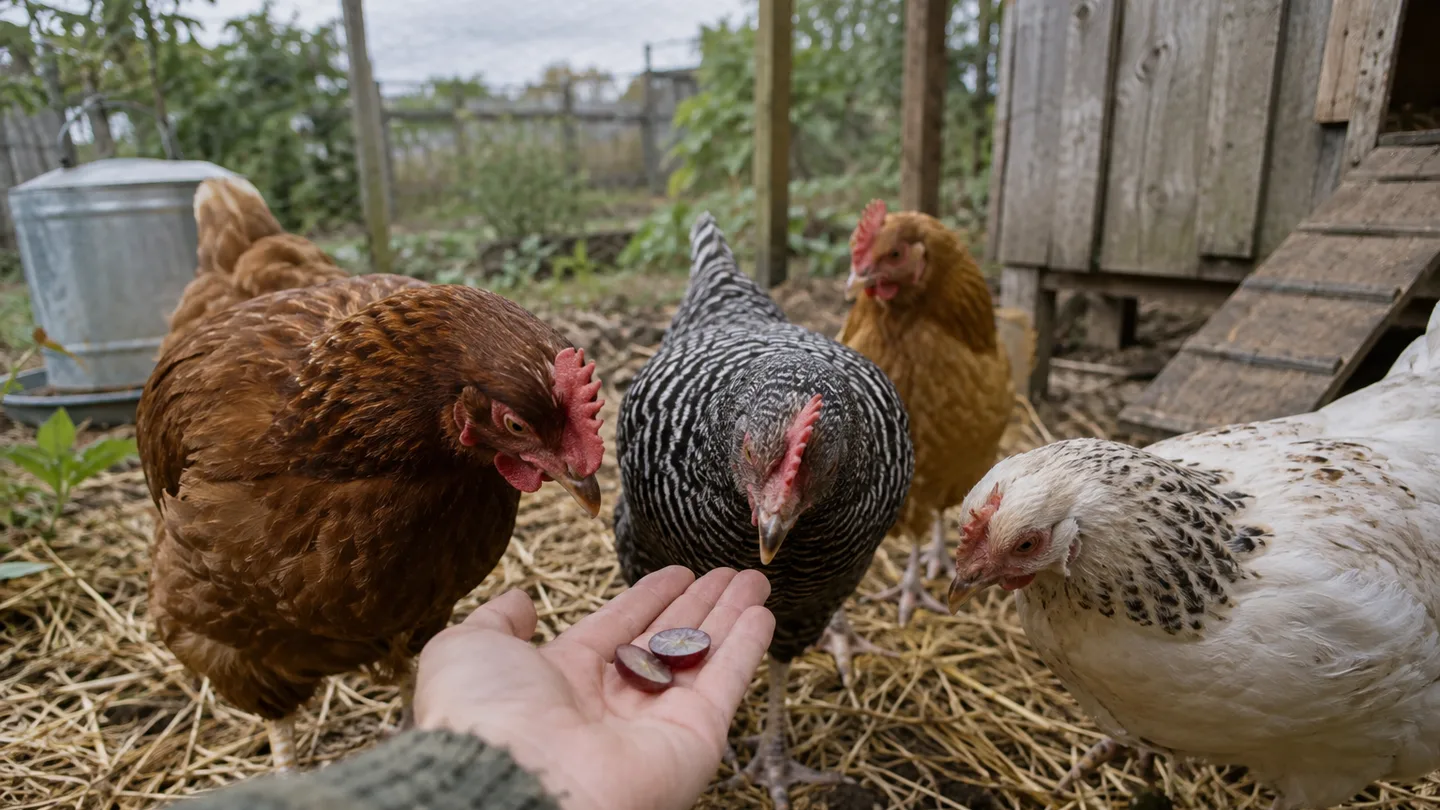
Then adjust to your actual flock. If you’ve already offered scraps that day, reduce the grape portion. If your birds rush the fruit and then ignore feed, serve fewer treats next time and offer them after the hens have had access to their ration. For a closer look at the daily baseline, compare your routine with how much feed per chicken per day for laying hens; the number changes with feed, bird size, and conditions, so use it to check your setup rather than as a reason to top up with fruit.
The trade-off is straightforward: a generous snack can be fun to watch, but a small serving makes it easier to protect feed intake and avoid waste. I’d choose the small serving.
Wash the fruit and cut larger grapes into halves or quarters
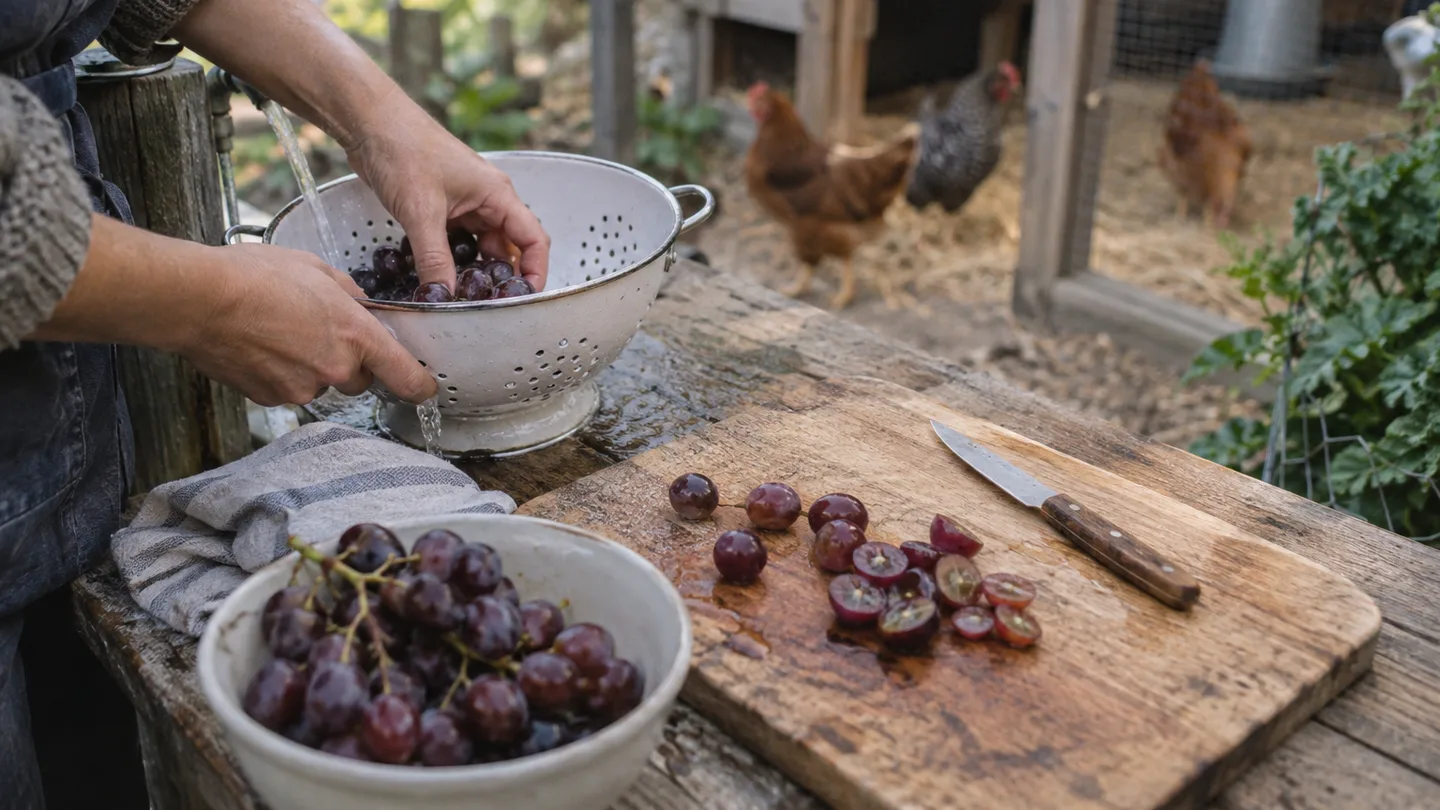
Prep takes a minute. Rinse the grapes under clean running water, remove the stems, and set aside any fruit that’s damaged or moldy. Use clean hands and a clean dish. If you want general produce-handling advice beyond the chicken run, check reliable food-safety advice for washing produce.
Cut grapes so your birds can pick up and swallow the pieces comfortably. Halves are a sensible choice for many ordinary grapes; quarters are the more cautious option for bantams or fruit that’s especially large. The aim isn’t to make every piece identical. It’s to avoid handing a small bird a whole, oversized grape and hoping it manages it.
For example, if you have four hens, including a bantam, rinse four grapes, remove the stems, and quarter them. Scatter the pieces rather than dropping them all in one pile. That gives the smaller bird accessible bites and makes it less likely that one hen will guard the whole treat. If a piece is still too big for your smallest bird, cut it again.
Seeded and seedless fresh grapes can both be offered. You don’t need to turn serving a grape into a kitchen project by picking out every seed; just cut the fruit to a suitable size. This advice is for the fruit itself, not for grape leaves, vines, or garden clippings, which have different questions around plant identity and possible spray exposure.
Frozen grapes are best thawed before serving, then cut if they’re large. Thawing makes the size easier to judge and keeps you from offering a hard, whole piece. Don’t leave a bowl of thawed fruit sitting in the run as a standing food source. Offer what your flock will eat during that snack, then pick up what remains.
Use frequency—not a fixed weekly quota—to protect feed intake
There isn’t a universal weekly grape quota that fits every flock. A hen that gets no other extras is in a different situation from one that also receives scratch, vegetable trimmings, or fruit from the kitchen. Keep the total treat share modest instead of treating grapes as if they have a separate allowance.
Make your routine simple: let the birds have access to their usual feed, offer grapes occasionally after they’ve had a chance to eat, and count the grapes alongside every other snack. If you gave scratch in the morning, a smaller grape treat later is the sensible adjustment. If you’re trying to judge the role of other extras, can chickens eat apples is a useful neighboring question: apples still belong in the treat category, not in place of complete feed.
Some keepers like frozen fruit on a warm day. If you try frozen grapes, thaw them first and serve a modest portion as described above. They’re still treats; freezing doesn’t turn fruit into a ration. Fruit left in a feeder or on damp ground should be removed rather than allowed to become a regular, self-serve supply.
My rule of thumb is to make treats an event, not a feeding system. That keeps the routine easy to remember and makes appetite changes easier to notice. There’s no need to put grapes on a fixed Tuesday-and-Friday calendar. The amount of other treats that day matters more than a rigid weekly count.
For practical background, look up your local extension’s guidance on complete poultry rations. Use it to understand what your main feed is meant to provide, then keep extras in their proper, smaller role.
After serving, watch appetite and behavior—and stop if anything seems wrong
You don’t need to hover over the flock after one small grape snack. Do notice whether your birds return to their usual feed and behave normally for them. If a hen has a persistent change in appetite, seems unusually subdued, or shows another concerning change, stop offering grapes and pay attention to the broader picture: what else she ate, whether she can reach feed and clean water, and whether any flock mates look unwell.
Breathing difficulty is a reason to contact a poultry-savvy veterinarian promptly, not to experiment with a home remedy. The same goes for ongoing or worsening symptoms. A treat question can’t diagnose a sick bird, and removing grapes doesn’t replace veterinary care when a bird needs it.
Keep the response proportionate. One bird turning away from a piece of fruit doesn’t by itself prove the grape caused a problem; hens have preferences, and appetite can vary. But if a change continues, stop the new treat and seek advice rather than repeatedly offering it to test the theory. Your birds should always have their usual ration and clean water available.
Quick questions about grapes
Can baby chicks eat grapes?
Keep chick starter as the main feed. If chicks are already eating starter reliably and you choose to offer fruit, use a tiny amount chopped into very small pieces and supervise them. There isn’t one age-based grape portion that fits every chick. For young birds, skipping grapes is an entirely reasonable choice.
Can chickens eat raisins?
Raisins are dried grapes: they’re more concentrated and less hydrating than fresh fruit. Fresh grapes are the simpler choice. If you offer a raisin, keep the amount very small and count it with all the other treats that day.
Can chickens eat grape leaves or vines?
This serving advice covers washed grape fruit, not garden clippings. Don’t feed leaves or vines if you aren’t sure what the plant is or whether it has been exposed to garden chemicals. When in doubt, leave the clippings out of the feed bucket.
This week, rinse and cut a small serving—1–2 grapes per adult hen is a cautious place to start—and offer it after your birds have had access to their normal feed. Keep the leftovers out of the run, then carry on with the ration that keeps the flock well fed.
Frequently Asked Questions
Can baby chicks eat grapes?
Keep chick starter as their main feed. If offering fruit to chicks that are already eating starter reliably, use only a tiny, finely chopped amount and supervise; there is no universal age-based grape portion.
Can chickens eat raisins?
Raisins are dried grapes, so they are more concentrated and less hydrating than fresh fruit. Prefer fresh grapes; if raisins are offered, keep the amount very small and count them with all other treats.
Can chickens eat grape leaves or vines?
This article's safe serving advice is for washed grape fruit, not garden clippings. Avoid feeding leaves or vines when their plant identity or pesticide exposure is uncertain.