Should You Wash Fresh Eggs? The Safe Answer for Backyard Hens
Two eggs sit in your hand: one clean, one with a dry fleck of bedding. Should you wash fresh eggs? Usually, no, not before storage, if local rules allow you to keep unwashed backyard eggs. Keep a clean, intact shell dry; dry-clean a small mark; wash a visibly dirty egg immediately before cooking or discard it; discard cracked or heavily manure-covered eggs.
In my own small-flock routine, I once picked up an egg with a thumb-sized patch of dried nest litter. My first instinct was to scrub it at the sink. Instead, I set it aside, cleaned the nest box, and washed that egg just before cooking. The useful result wasn’t a magic rescue. I simply knew which egg had been wetted, and it never went back into the clean storage carton.
This is a backyard default, not a license to ignore your local food-safety rules. Requirements can change if you sell, gift, or transport eggs, so local guidance wins.

Start with the shell in your hand: clean, intact eggs usually stay unwashed
The safest simple routine for a small flock starts before the sink. If an egg is clean, dry, and uncracked, leave it unwashed until you need it, provided that approach is allowed where you live. Washing a clean egg creates another handling step without solving a visible problem.
Check the nest boxes at least once each day. During hot weather, muddy weather, or a spell when hens are tracking more litter into the nests, make collection part of each visit you already make to the run. More frequent checks also give you a chance to remove wet bedding before it sticks to the next shell.
- Clean and intact: put the egg into a clean carton and keep it on your unwashed-egg route.
- A few dry specks: try a dry paper towel or soft, dry brush. Stop if the mark does not lift easily.
- Wet or visibly dirty: separate it. Either wash it immediately before cooking or discard it if the contamination is heavy.
- Cracked or heavily covered in manure: discard it rather than trying to scrub it into a storage egg.
For a backyard flock, the collection routine is a form of quality control. Clean bedding, sensible nest design, and good chicken coop ventilation make it easier to keep shells dry. They do not make every egg clean, though, so inspect each one before it joins the carton.
If your local rule requires washing, follow that rule even if your neighbour stores eggs differently. The same applies to eggs you sell or give away. Home use and regulated sales are different situations.
The bloom is a barrier, not a guarantee: what washing changes on a porous shell
The shell is not a plastic capsule. It has tiny openings and an outer coating commonly called the bloom or cuticle. That surface is part of the egg’s first line of protection, but it is not a sterilizing seal.
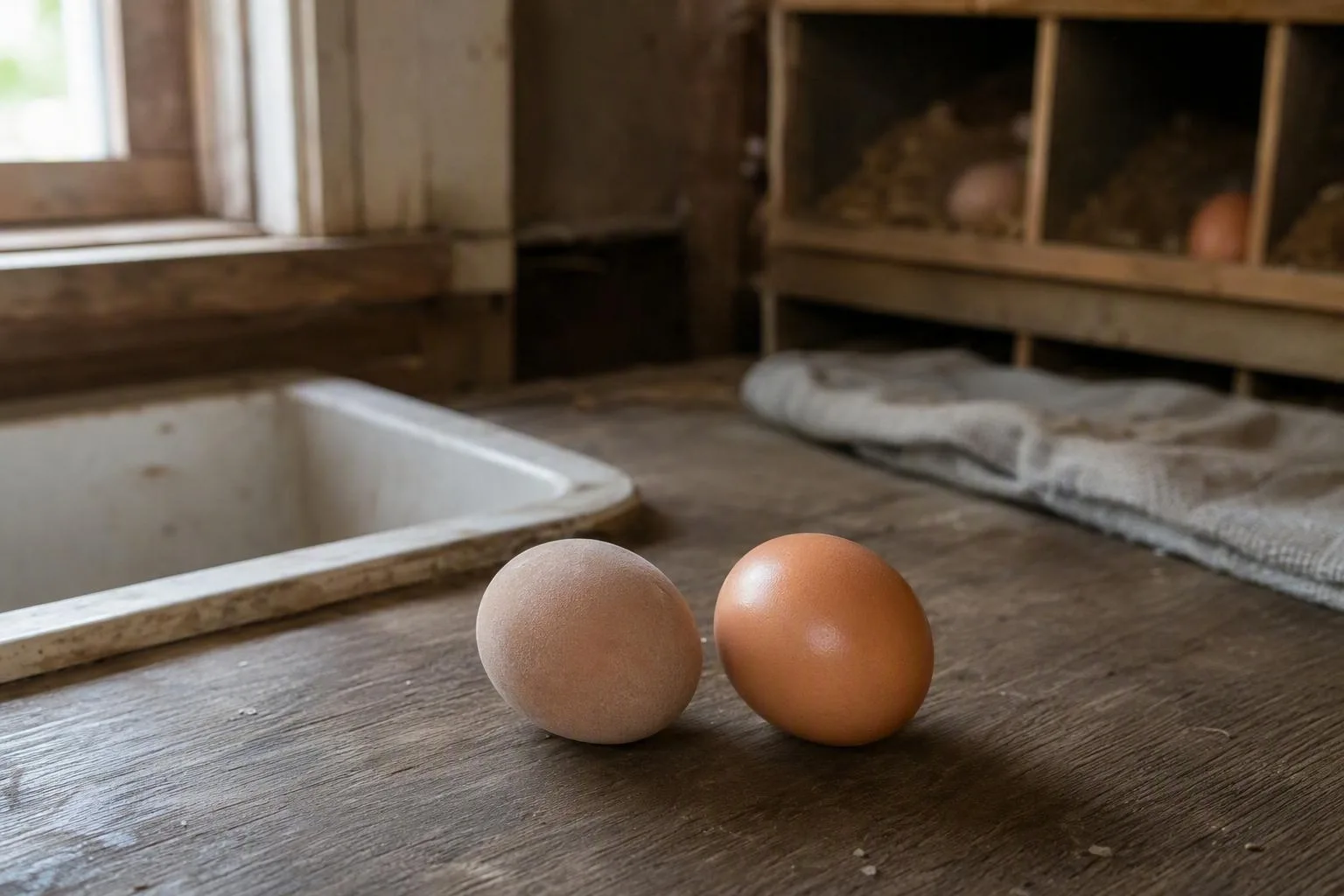
Think of the bloom as a thin layer that helps slow movement of moisture and contaminants across the shell. When you wash or rub the shell, you can remove some of that layer. The egg may look cleaner afterward, but clean-looking is not the same as sterile.
Water temperature matters because the egg’s contents and the shell respond to temperature changes. If wash water is colder than the egg, the contents can contract as the shell cools. That pressure difference can encourage liquid at the surface to move inward through shell openings. The practical rule is to use water noticeably warmer than the egg, not colder.
I’m leaving the familiar degree figures out here rather than copying an old chart without a live check. Before washing, use the current USDA FSIS egg safety guidance for its exact wash-water wording. The direction that matters at your sink is still the same: warmer than the egg, gentle contact, and no soaking.
Washing also does not replace clean hands, clean nest material, refrigeration where required, or proper cooking. A bloom is one layer of the handling system. Treating it as a guarantee is the wrong trade-off for a backyard flock.
Three shell conditions, three calls: a decision tree for dirt, cracks, and stains
Here is the rule I use at the nest box. Decide the egg’s route while the shell is in your hand, not after it has been mixed into a carton.
- Clean, dry, and intact? Leave it unwashed if local guidance permits. Date the carton and store it according to that guidance.
- Dry mark that lifts with light contact? Dry-clean it. A soft brush or dry towel is enough for a small patch of bedding.
- Wet, sticky, or clearly contaminated? Keep it separate. If the mess is light, wash it for immediate cooking. If manure is thick, spread over much of the shell, or difficult to remove without hard scrubbing, discard the egg.
- Any crack? Discard it. Washing cannot close the opening or restore the shell’s original barrier.
Do not turn dry-cleaning into a sanding project. Aggressive rubbing can abrade the shell surface and remove more of the bloom than the original speck required. If you are still scrubbing after a few gentle passes, the egg has told you it is not a good storage candidate.
Keep questionable eggs out of the clean carton. A dirty shell can rub against clean shells, soil the carton, and make it harder to remember which eggs need prompt use. For a six-hen flock, a small separate bowl marked for cook-first eggs is often enough. It costs nothing and removes a surprising amount of guesswork.
Washing the outside will not remove an internal blood spot. That mark is inside the egg, so it becomes a cooking decision after cracking, not a shell-cleaning problem. A shell stain, a blood spot, and a crack are three different conditions.

When washing is the right trade-off, use warmer-than-egg water and no soak
If an egg is worth keeping but too dirty for dry cleaning, wash it as a preparation step, not as a way to create a long-storage egg. Washing immediately before cooking is the simplest route for most small-flock keepers.
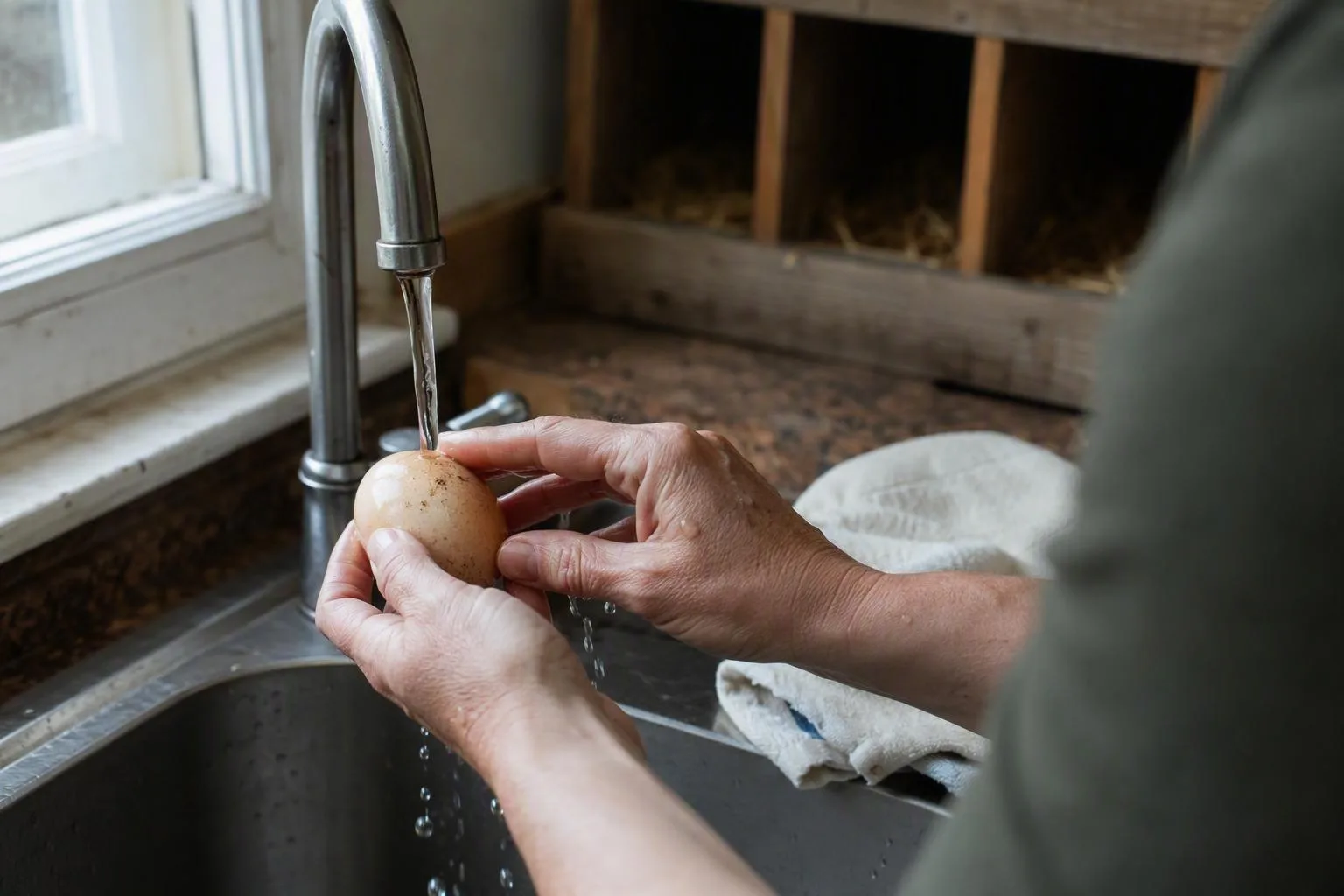
- Prepare the area. Clear a clean section of the counter. Have a clean towel ready, and keep the egg away from ready-to-eat food.
- Check the shell. If you find a crack while handling the egg, stop and discard it. Do not wash first and inspect later.
- Use warmer-than-egg water. Run the water or fill a clean container with fresh water that is noticeably warmer than the egg. Don’t rely on a cold rinse just because it feels comfortable on your hands.
- Clean one egg at a time. Hold it under the running water or use fresh water for a quick wash. Do not leave eggs sitting in a basin. Soaking gives surface water more time to contact the shell.
- Use gentle friction. Your fingers, a soft clean brush, or a disposable towel can loosen a light smear. Skip scouring pads and hard scraping. Household dish soap and detergent are unnecessary for this job and can leave residues you did not intend to put on a food shell.
- Dry and separate. Dry the shell completely. If you are storing the washed egg, put it into its own clean carton and refrigerate it promptly under your local guidance.
Before you wash, look at the current USDA FSIS egg safety guidance for the exact water and refrigerator figures. I’m not turning an unchecked number into a permanent rule. The important sequence is warmer water, brief contact, gentle friction, complete drying, and prompt refrigeration when the washed egg is being kept.
An egg sanitizer is a different product from household cleaner. If you choose to use one, it should be approved for eggs in your area and used exactly as its label and local guidance direct. More chemical is not a substitute for sorting out a heavily contaminated egg.
Wash your hands after handling dirty shells. Clean the sink, counter, brush, and towel that touched contamination. If you wash eggs only when needed, this cleanup is small. If you wash every egg as a habit, it becomes a daily chore and removes a useful layer of protection before you have gained anything.
For cooked eggs, use the current USDA holding-time guidance rather than letting a clean shell decide how long a dish can sit out. I treat a cooked egg dish left warm as its own handling problem. For quiche, custard, casseroles, and other mixed dishes, look up the current USDA cooking-temperature chart for the exact internal target. A washed shell does not set a safe cooking temperature.
If you want the local side of this decision, compare the USDA FSIS egg safety guidance with state or provincial agriculture and cooperative-extension guidance. The advice may be written for graded or commercially handled eggs, so read the scope before applying it to your nest boxes.
Once the shell is wet, the storage clock changes
Washing changes which storage route makes sense. It does not mean the egg has suddenly become unsafe, and it does not mean it should return to the same carton as clean, unwashed eggs. Dry the shell, keep the carton clean, and be consistent about which eggs were washed.
| Egg condition | Storage route | Practical call |
|---|---|---|
| Clean, intact, unwashed | Clean dated carton under local guidance | Keep dry and separate from washed eggs |
| Washed and intact | Dry fully, then refrigerate promptly | Use the current local storage window |
| Dirty but lightly contaminated | Wash for prompt cooking | Do not return it to long-term storage by habit |
| Cracked or heavily manure-covered | Do not store | Discard rather than scrub and save |
For U.S. storage, the current FSIS consumer page is the reference I’d use for the refrigerator target. I’m omitting the familiar number because an unverified figure copied into a backyard article can outlive the wording that supported it.
The same caution applies to storage length. USDA consumer guidance provides a refrigerated window for shell eggs, but I would check the live page for the current wording instead of treating a fixed number as a promise for every backyard egg. Washing history, warm storage, condensation, climate, and local rules all change the decision.
Write the collection date on the carton. Use a clean carton rather than one with old shell dust or dried manure. Put eggs in the coldest stable part of the refrigerator rather than the door, and avoid moving them repeatedly between warm and cold spots. Condensation is a sign that moisture has formed on the shell, so let a carton stay in one stable environment.
This week, clean the nest boxes, replace damp bedding, and put a pencil beside the carton. Choose one rule you can follow every time: clean eggs stay dry and unwashed, questionable eggs go into a separate cook-first group, and cracked or heavily contaminated eggs are discarded. Once that system is working, check how much feed per chicken per day for laying hens so the eggs at the end of the routine start with a sensible flock budget.