Fermented Chicken Feed: Benefits, Risks, and a Safe Method
Short answer: fermented chicken feed can be a useful preparation method for a small flock, but it isn’t a miracle feed. You soak a complete ration in clean water, let it ferment briefly, and serve the portion by its original dry-feed amount.
For 3–12 hens, the possible upside is softer, less dusty feed that some birds eat more readily. The cost is extra handling, closer inspection, and a much shorter window before leftovers spoil. Keep the dry ration the same while you test the method.
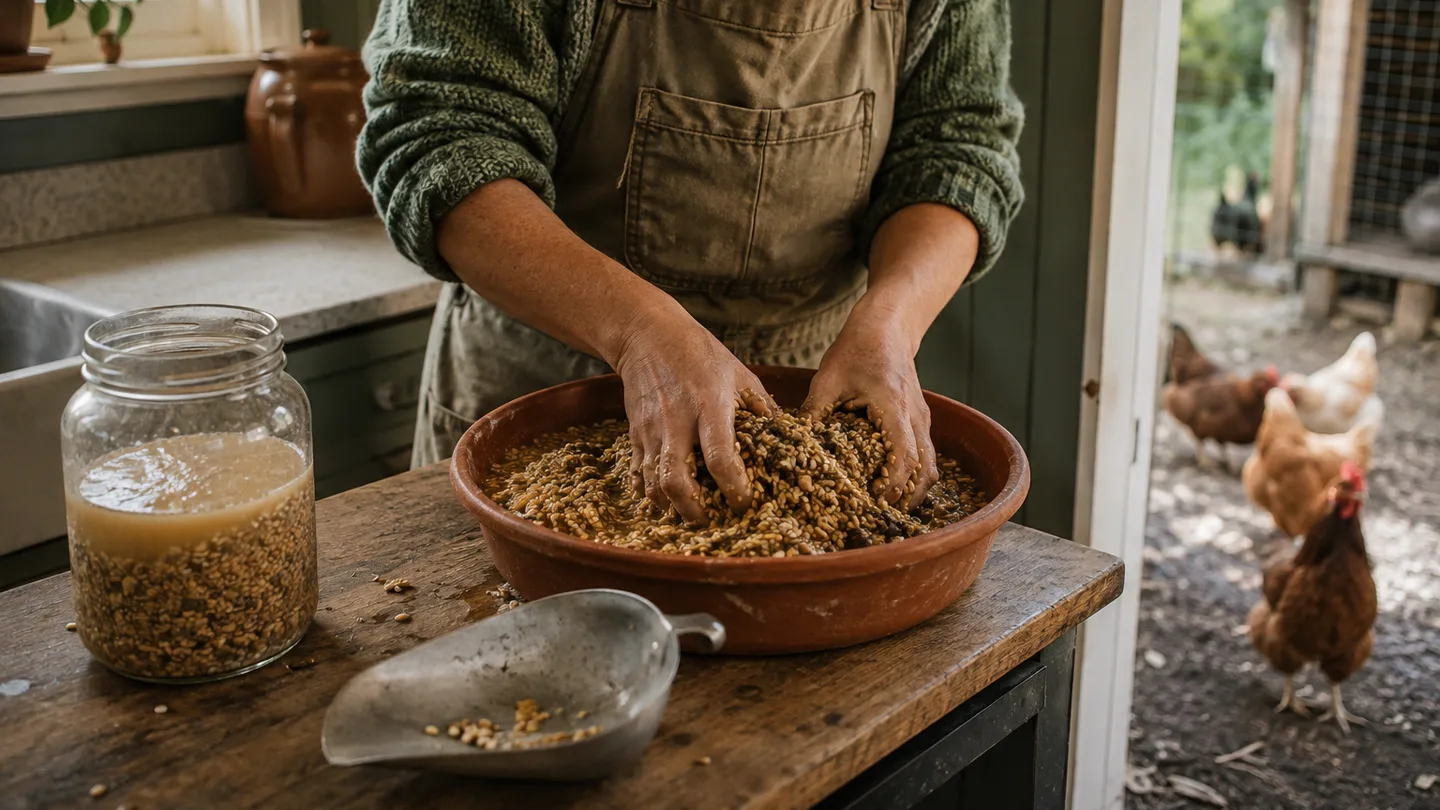
The bottom line for a 3–12-hen flock: useful option, not a miracle feed
Fermentation changes the texture and handling of your birds’ ration. It does not create a new nutrient formula. If you begin with a complete layer feed, the pellets or crumble still provide the base ration after water is added. Each wet scoop weighs more, but that extra weight is mostly water.
That distinction matters. You aren’t supposed to feed a larger wet weight just because the portion looks bigger. Measure the dry feed first, then add water. Otherwise, it’s easy to mistake hydration for extra food and lose track of what your hens are actually eating.
Fermented chicken feed makes the most sense when dust, sorting, or fussiness is your practical problem. It makes less sense as an egg-production promise. Fermentation won’t turn scratch grain into a balanced layer diet, repair a poor-quality ration, or guarantee more eggs. Keep add-ins conservative, and use the what not to feed chickens guide before putting kitchen scraps into the bucket.
My judgement is simple: try it if you enjoy a small daily routine and can remove leftovers promptly. Skip it if your current dry-feeding system is clean, reliable, and already working well.
Possible gains over 7–14 days: palatability and less dust, not guaranteed extra eggs
Give your flock roughly 7–14 days of observation before deciding whether fermented feed earns a permanent place in the routine. That isn’t a controlled trial. It’s long enough to notice obvious problems with appetite, droppings, waste, or body condition without pretending that one week of eggs proves a nutritional effect.
- Appetite: Do your birds approach the pan and eat normally, or do they pick around it?
- Droppings: Are they broadly consistent with your flock’s usual droppings, without persistent watery manure?
- Feeder waste: Is there less powder and fewer rejected pieces, or is the wet feed being smeared and wasted?
- Body condition: Do the hens maintain their usual weight and activity?
- Eggs: Record production if you like, but don’t credit every change to the feed. Day length, molt, heat, stress, age, and illness can all move the number.
| What you notice | A reasonable reading | What not to claim |
|---|---|---|
| Softer feed and less dust | Water has changed the physical texture. | It automatically contains more nutrition. |
| Less sorting in the feeder | Some birds may find the mixed texture easier to eat evenly. | Every flock will waste less. |
| Egg numbers change | It’s an observation worth recording. | Fermentation caused the change by itself. |
The chemistry may matter too. Fermentation can make the feed more acidic and may change how some nutrients are presented to the bird. That is biologically plausible, but it is not a reason to treat wet feed as a supplement or to crowd out a complete ration. If you want a second check on the base diet, compare the feed label with University extension guidance on complete layer rations.
The safety gate at 24–48 hours: clean sour smell, no mold, no slime
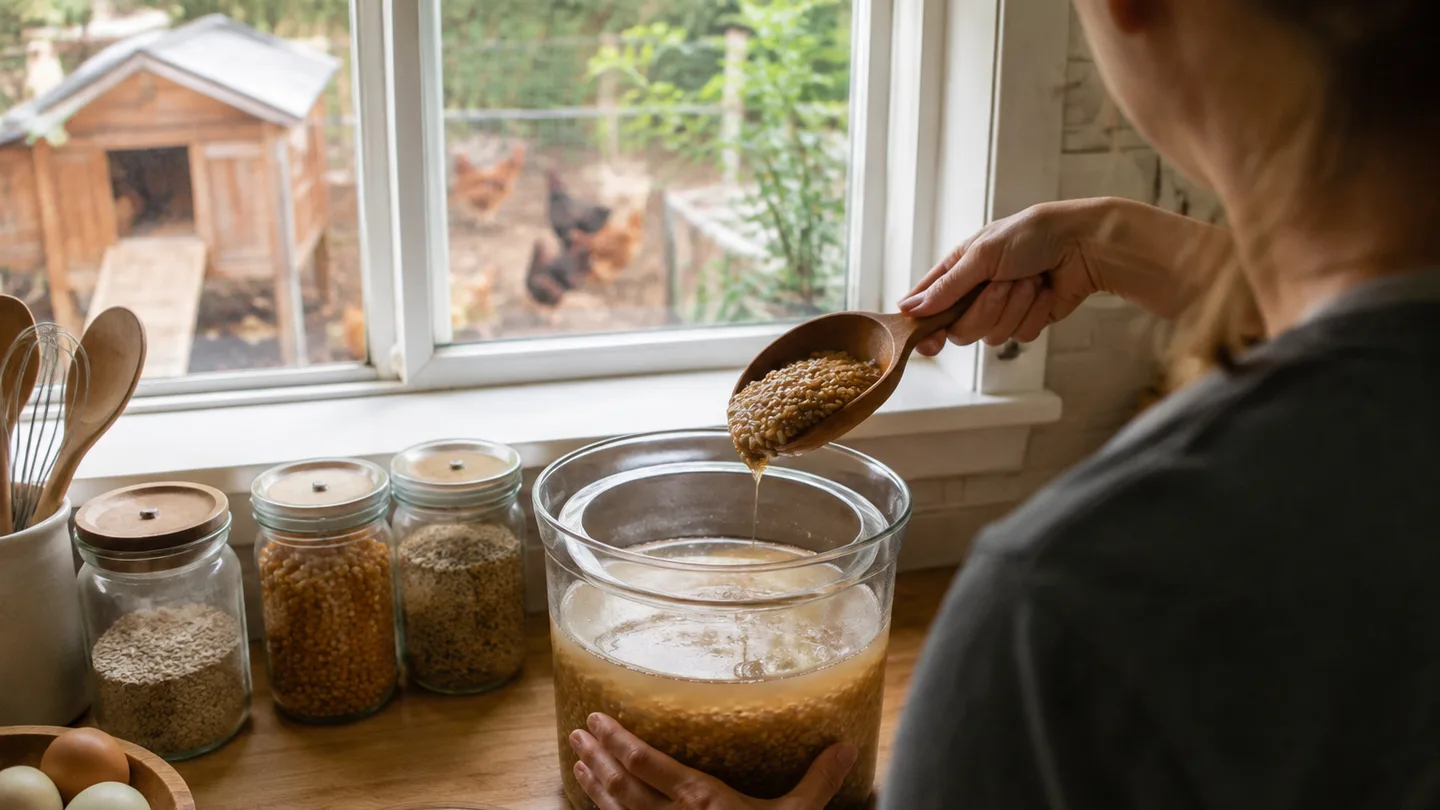
Check the batch at about 24 hours before you think about feeding it. In an ordinary indoor room around 18–24°C, I’d treat 24–48 hours as a cautious working window, not as an automatic expiration schedule. Warm weather speeds the process and shortens your margin. A cool room may slow visible change, but it doesn’t grant permission to hold an uncertain batch indefinitely.
A usable batch should look like soaked feed, not like a science project you’re trying to rescue. The smell may be mildly sour and grain-like. It should not smell putrid, rotten, solvent-like, or strongly alcoholic. A clean smell is only one part of the check. It never overrides visible spoilage.
Discard the entire batch if you find any of these:
- Fuzzy growth or colored mold on the surface or around the container.
- A foul, rotten, sewage-like, or otherwise abnormal odor.
- Unexplained ropiness, heavy slime, or a texture you cannot confidently identify.
- Insects, rodent contamination, feathers, droppings, or other foreign material.
- A long or uncertain storage history, especially after the container was left warm.
- Dry crusts or separated layers that make it impossible to assess the whole batch properly.
Don’t dilute questionable feed with more water. Don’t scrape off mold and serve the rest. Don’t ferment a bad batch again. A pH strip can help you observe a process, but it cannot make visibly spoiled feed safe.
Build a 1–2-day batch: 1 part feed to 1.5–2 parts water
Start small. A batch that disappears in one day is easier to judge than a large tub that sits around while you debate its smell. Your goal is to keep the solids wet, leave room for expansion and stirring, and make the inspection step routine.
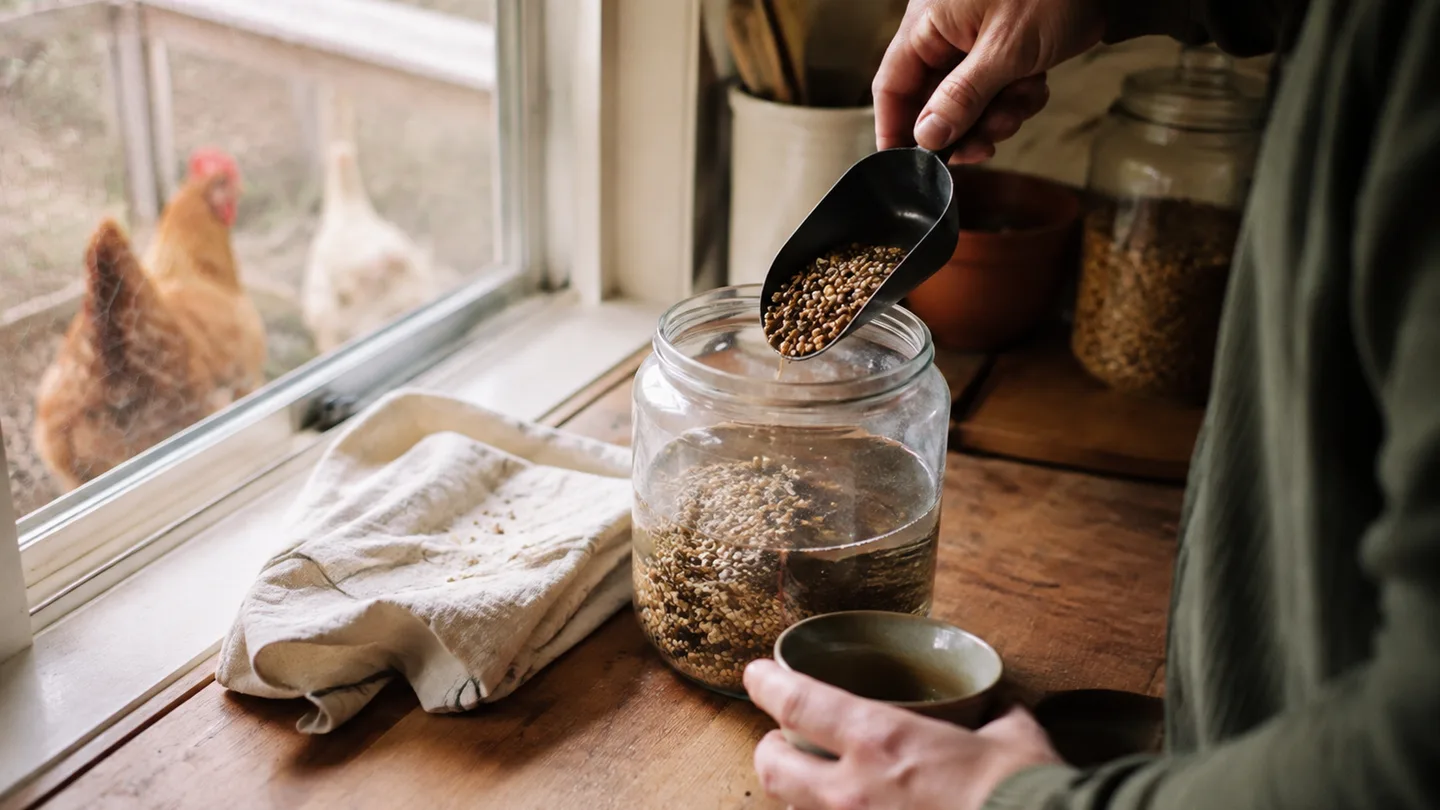
- Choose the container. Use a clean food-grade bucket, tub, or jar with plenty of headspace. Wash it between batches. Avoid containers with old feed residue, rust, cracks, or a smell you cannot remove.
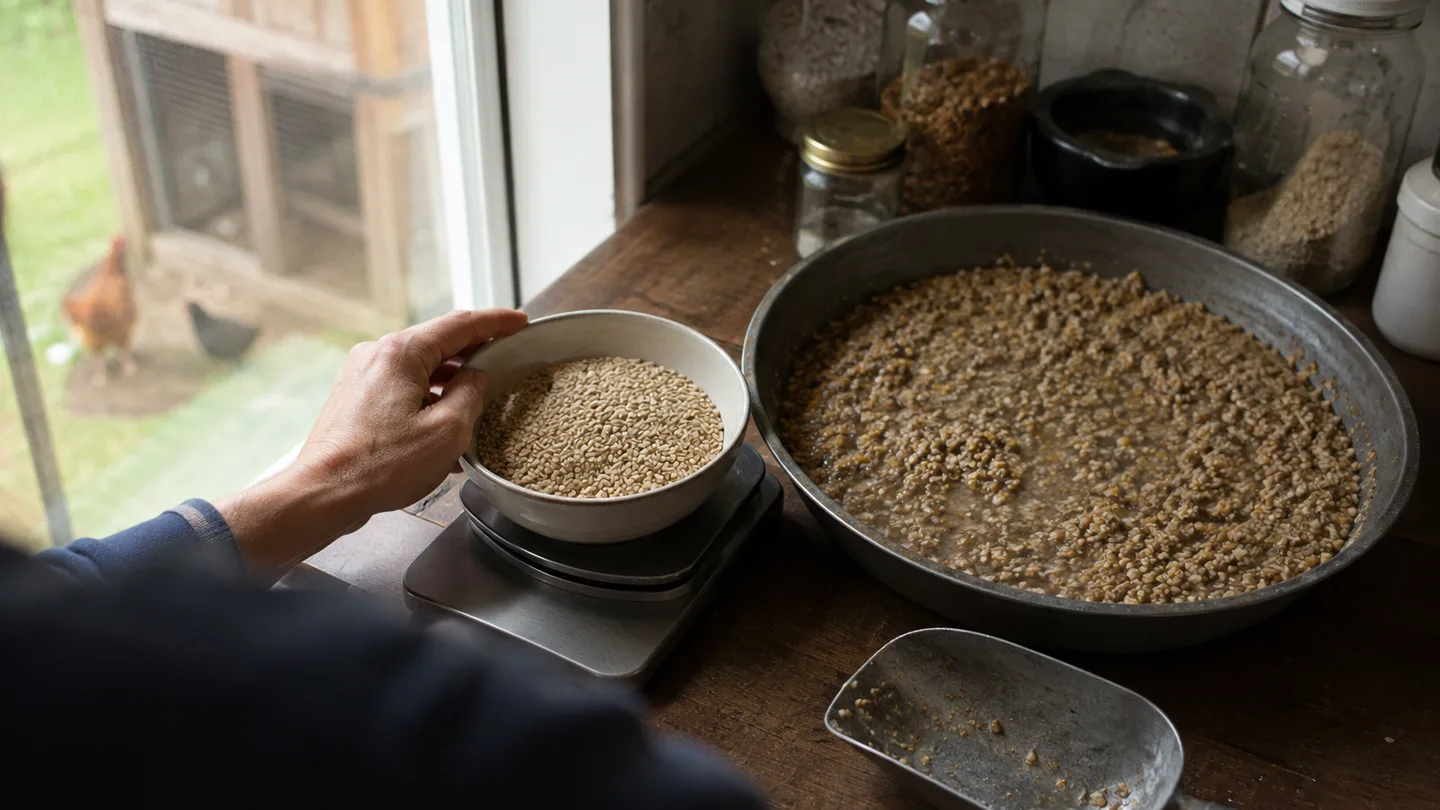
- Measure the dry ration. Work from the amount your flock normally eats in one or two days. For a six-hen example, if your starting daily target is 540–720 g of dry feed, a one-day batch is that amount and a two-day batch is 1.08–1.44 kg.
- Add clean water. Begin with 1 volume of dry feed to approximately 1.5–2 volumes of potable water. Pellets and crumble behave differently, so add enough water to keep the solids covered without turning the container into a full, sloshing bucket.
- Leave headspace. Don’t fill the container to the rim. The feed will swell, and you need room to stir without spilling onto the ground.
- Cover loosely. Use a lid that keeps out dirt and insects but is not sealed airtight. The container should not be pressurized. Keep it out of direct sun and away from household chemicals.
- Stir and inspect. Stir at least once during the fermenting period, then check at 24 hours. This exposes dry pockets and gives you a chance to notice an off smell, mold, or unusual texture before feeding.
Pellets usually soften and break apart as they absorb water. Crumble can turn into a thick mash faster. Neither response is automatically a problem; the decision is whether the batch remains clean, identifiable, and acceptable to your birds. Scratch grain can be included as part of a mixed ration, but scratch alone should not replace complete layer feed.
You usually don’t need apple cider vinegar or a commercial starter culture to begin. Clean equipment, potable water, a sensible temperature, and timely feeding are the controls that matter most in a backyard setup. An additive is not a rescue treatment for moldy or foul-smelling feed.
Serve the dry equivalent: about 90–120 g per adult layer per day
Serve fermented chicken feed by the dry equivalent, not by the swollen wet weight. As a practical starting range, I use about 90–120 g of dry complete layer feed per average adult hen per day. A smaller bantam, a large-bodied breed, a bird in heavy production, a cold-weather flock, and a flock that free-ranges heavily may need a different starting point.
Use this calculation:
Daily dry feed target = number of adult hens × your chosen grams-per-hen target.
- 3 hens: about 270–360 g of dry feed per day.
- 6 hens: about 540–720 g of dry feed per day.
- 12 hens: about 1.08–1.44 kg of dry feed per day.
Weigh or measure that dry amount before adding water. The finished portion will weigh more because it contains absorbed water, so a wet scoop is not interchangeable with a dry scoop. If you’re comparing routines, the phrase how much fermented feed per chicken per day should always be answered in dry-feed terms first.
If your birds are new to wet feed, replace part of the normal ration over several days: roughly 25% fermented on day one, 50% on day two, 75% on day three, then the full prepared portion if appetite and droppings remain normal. Those percentages refer to the dry ration, not the much heavier wet serving.
Keep clean water available. Keep the normal calcium source available for laying hens, and don’t let a pan of wet feed crowd out the complete ration. Free-ranging can reduce how much commercial feed a bird chooses, while cold weather, growth, large body size, and egg production can push intake the other way. Watch your birds rather than forcing one number.
Your stop-rule checklist: discard the batch or call a vet when the flock changes
Your stop rule should be easy to remember: if you can’t confidently identify clean feed, it isn’t feed. Discard the batch when there is mold, a foul smell, abnormal slime, pests, contamination, or uncertain storage. Adding water, stirring harder, or fermenting longer does not turn questionable feed into a safe ration.
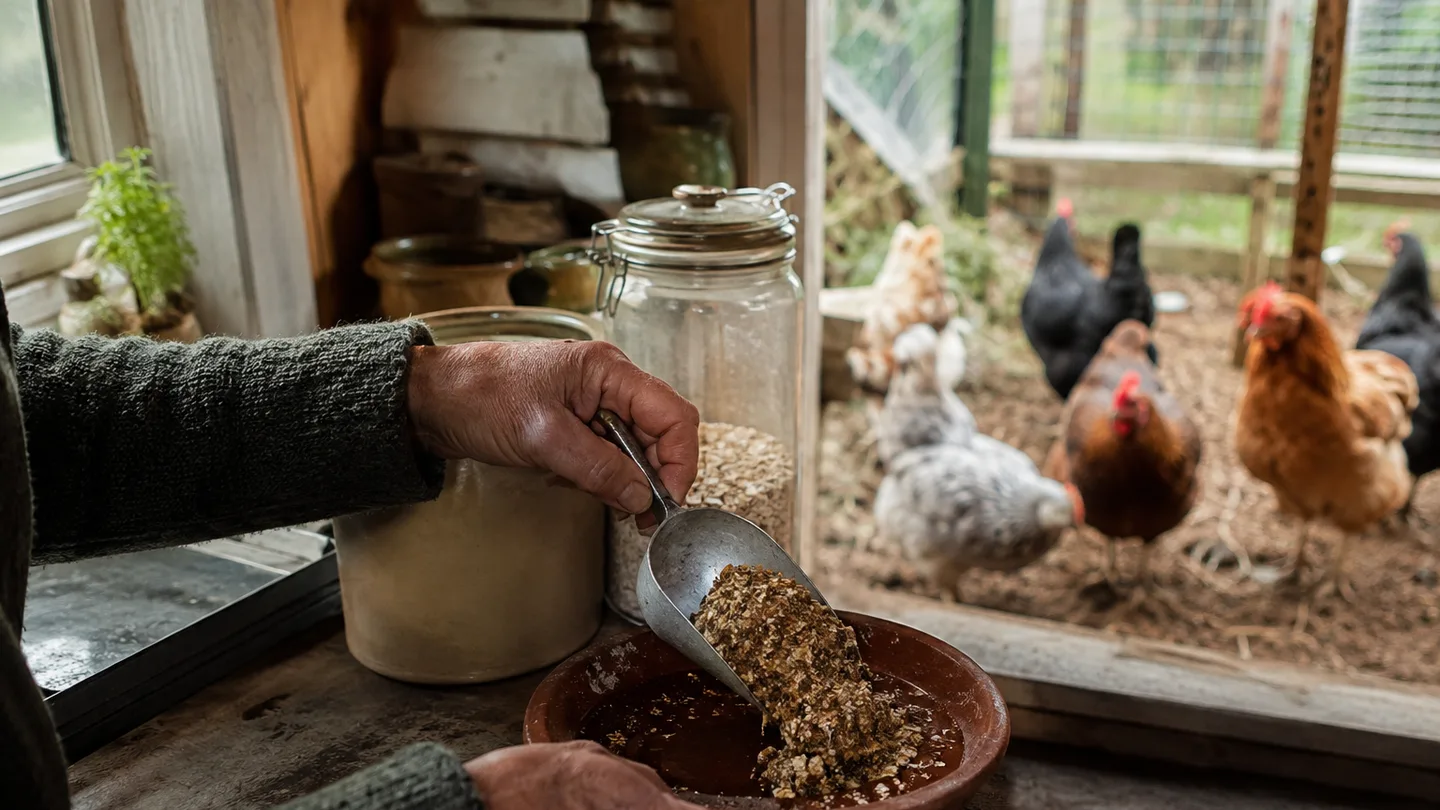
Pause the fermented feed and return to a known-good complete ration plus clean water if one or more birds develop persistent diarrhea, marked appetite loss, unusual lethargy, or a clear change that began after the feeding routine changed. If several birds become unwell at once, treat that as a flock-level problem rather than assuming one hen simply disliked the texture.
Home care is not the right line for weakness, inability to stand or swallow, breathing trouble, neurologic signs, rapid deterioration, or symptoms affecting multiple birds. Contact a poultry veterinarian or local extension office. Veterinary or extension guidance on moldy feed and urgent poultry symptoms can help you prepare the details they’ll ask for, including the feed type, start time, storage temperature, and which birds were exposed.
Remove uneaten wet feed the same day. In hot weather, shorten the feeding window and make a smaller batch instead of hoping the shade will protect it.
Quick questions keepers ask
Can you ferment layer pellets, crumble, and scratch grain in the same way?
You can prepare pellets and crumble with the same basic water method, but they absorb water and break down at different speeds. Pellets may soften into pieces, while crumble can become mash quickly. Scratch grain may be included, but it should not displace a nutritionally complete layer ration.
Do you need apple cider vinegar or a commercial starter culture?
I’d begin without either one. Clean water, a clean container, suitable temperature, and timely feeding give you a simpler process to monitor. Follow the label if you do use a commercial product, and never use vinegar or starter culture to disguise spoiled feed.
Is fermented feed safe for chicks?
Only consider it with an age-appropriate complete chick starter, in smaller batches and with stricter hygiene. Adult layer feed is not a substitute for chick starter because the intended nutrient balance is different. Young birds also make smaller, less forgiving batches, so dry starter is the easier baseline if you’re still learning the routine.
This week, weigh one day’s dry ration for your flock, mix only one day of feed, write the start time on the container, and check it at 24 hours. Then compare your number with how much feed per chicken per day for laying hens and adjust for your birds’ size, weather, and free-ranging. That small log will tell you more than an egg-count promise.
Frequently Asked Questions
Can you ferment layer pellets, crumble, and scratch grain in the same way?
Pellets and crumble can both be fermented, but they absorb water and break down differently; scratch grain may be included but should not replace a nutritionally complete layer ration.
Do you need apple cider vinegar or a commercial starter culture to ferment chicken feed?
Not usually. Clean water, a clean container, suitable temperature, and timely feeding are the core controls; vinegar is not a rescue treatment for spoiled feed, and any commercial product should be used only according to its label.
Is fermented feed safe for chicks?
Only consider age-appropriate complete chick starter, with stricter hygiene and smaller batches; never substitute adult layer feed for chick starter because the nutrient balance is different.