How Much Fermented Feed Per Chicken Per Day: Step-by-Step
How much fermented feed per chicken per day? Six ordinary laying hens can turn a neat scoop into a wet guessing game. If each bird gets 100 g of dry complete feed, your starting allocation is 600 g for the day, not a fixed number of cups.
For a standard adult laying hen, start with about 90–120 g of dry complete ration per day, then adjust from leftovers, body condition, laying rate, weather, breed and access to forage. Weigh the dry feed first. Fermentation changes moisture and texture. It doesn’t remove the need for a properly formulated ration.
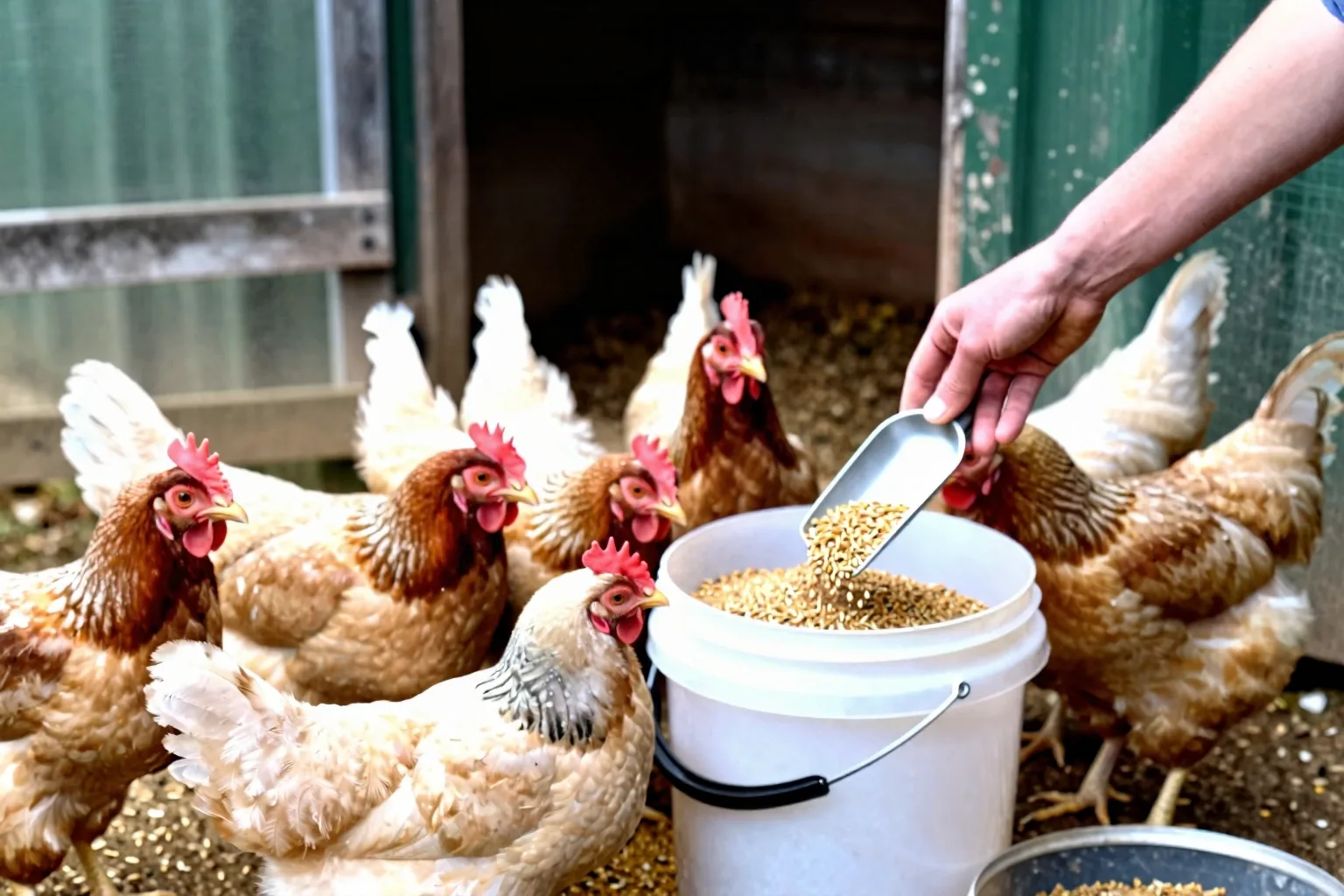
Start with the dry ration: the answer for one adult hen
The useful unit is the dry-feed equivalent. That means the weight of complete feed you put into the batch before water goes in. A reasonable planning point for a medium-sized adult layer is 100 g per bird per day, with 90–120 g as the working range around it.
Use the lower end as a starting point for smaller hens, birds eating substantial forage, or a flock that regularly leaves feed behind. Move toward the upper end for large, productive hens, colder weather or a flock that finishes its measured ration and maintains good body condition.
- Measure feed offered, not the swollen wet mixture.
- Count clean leftovers when deciding whether tomorrow’s amount is right.
- Use your product’s label as the first reference for a particular complete feed.
Fermenting a layer ration doesn’t turn it into a treat. It also doesn’t correct an unsuitable protein, mineral or calcium balance. The feed formula still matters more than the sour smell or soft texture.
The scale test: turn a daily ration into a wet serving
Set your calculation in grams. Cups and scoops are poor guides here because a scoop of crumble, pellets and whole grain can contain different amounts of dry material. Use a kitchen scale, a clean container and one repeatable tare setting.
| Flock size | At 100 g dry feed per bird | Three-day dry batch |
|---|---|---|
| 3 hens | 300 g per day | 900 g |
| 6 hens | 600 g per day | 1.8 kg |
| 12 hens | 1.2 kg per day | 3.6 kg |
That six-hen example is the anchor: 6 birds × 100 g = 600 g each day. Multiply 600 g by three and you have 1.8 kg of dry ration for a three-day batch. Add water after weighing. The finished batch might weigh much more, and there is no universal wet-gram answer because different feeds absorb different amounts of water.
Keep the soaking liquid with the feed. Pouring it away removes part of what you measured and makes the portion harder to calculate. If the mixture is too loose, use less water in the next batch rather than guessing how much extra dry feed to add.
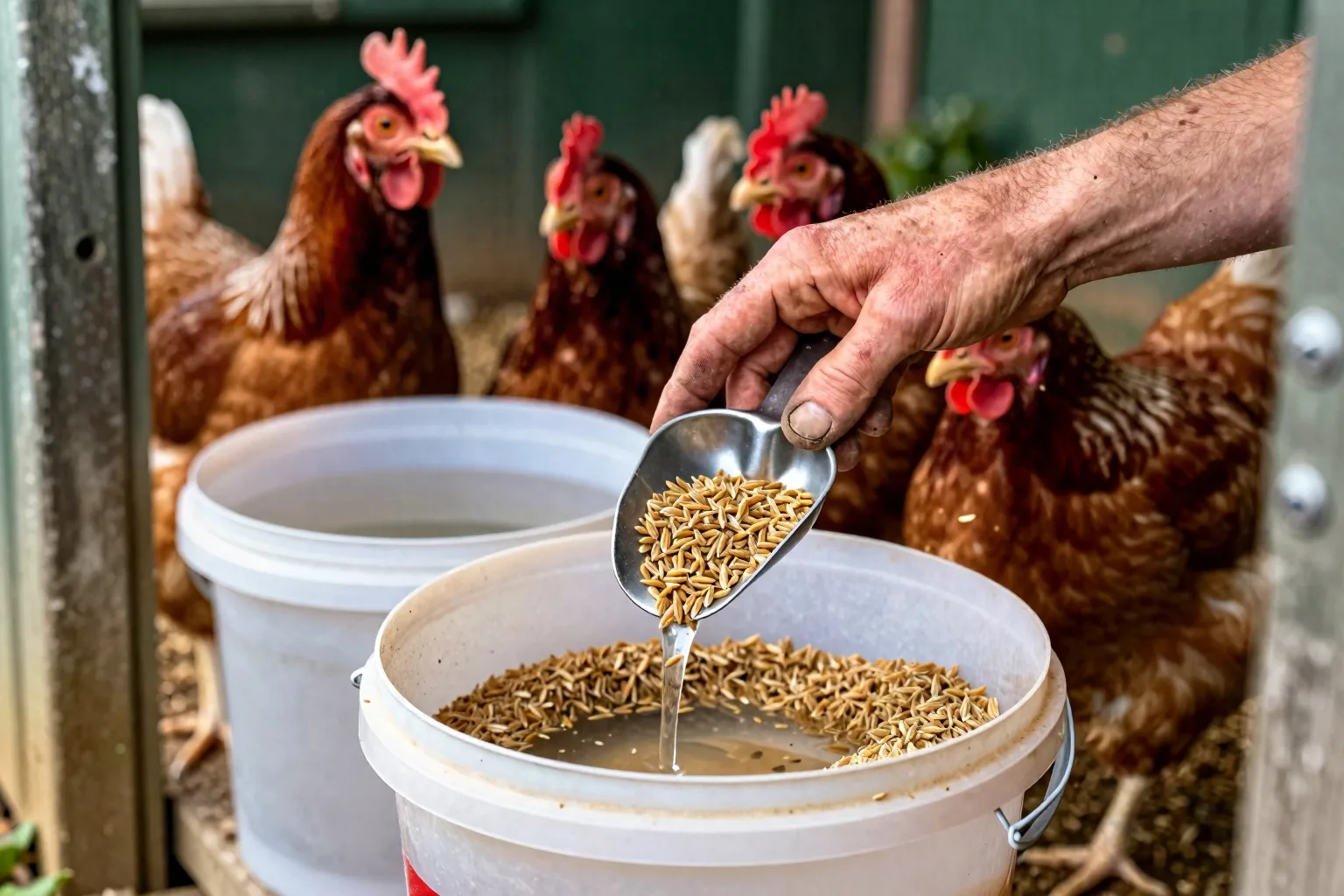
Day 0—mix only what your flock will eat
For your first attempt, make one day of dry ration. A small batch is easier to inspect, discard and adjust than a full week’s supply. Once the routine is working, a three-day batch is practical for a small flock.
- Weigh the dry complete feed. Write the number on a note or your phone.
- Put it in a clean food-safe container. A wide container makes stirring and inspection easier.
- Add clean water gradually. Stir until every piece is wet and the surface no longer has dry feed hiding underneath.
- Aim for a thick, spoonable mixture. It should be moist throughout, not a dry pile with a puddle underneath.
- Cover the container loosely. Active fermentation needs a way for gas to escape, so don’t clamp an actively fermenting batch into an airtight jar.
Keep it out of direct sun. A warm container can move through the process faster than a cool one, so the water amount and the clock both need watching. You’re looking for consistent wetting, not a magic water ratio.
Leave out kitchen scraps, extra corn, scratch grains, oil, vinegar and dairy products unless a qualified nutrition plan specifically calls for them. Additions change the ration you just measured. If treats are part of your flock’s routine, use What Can Chickens Eat as Treats Without Diluting Their Ration? as a separate decision rather than folding extras into the ferment.
At 24 to 72 hours, judge the ferment before feeding it
At about 24 hours, stir and inspect. The feed may be softened, and it may have a clean sour or mildly yeasty smell. In a warm room, you may see small bubbles. In cooler conditions, the same stage can take longer.
At 48 hours, repeat the smell and texture check. At 72 hours, use the batch only if it still looks and smells clean. The clock is a guide. Temperature, container depth, feed type and water content change the pace, so a batch is not safe merely because it reached a particular hour.
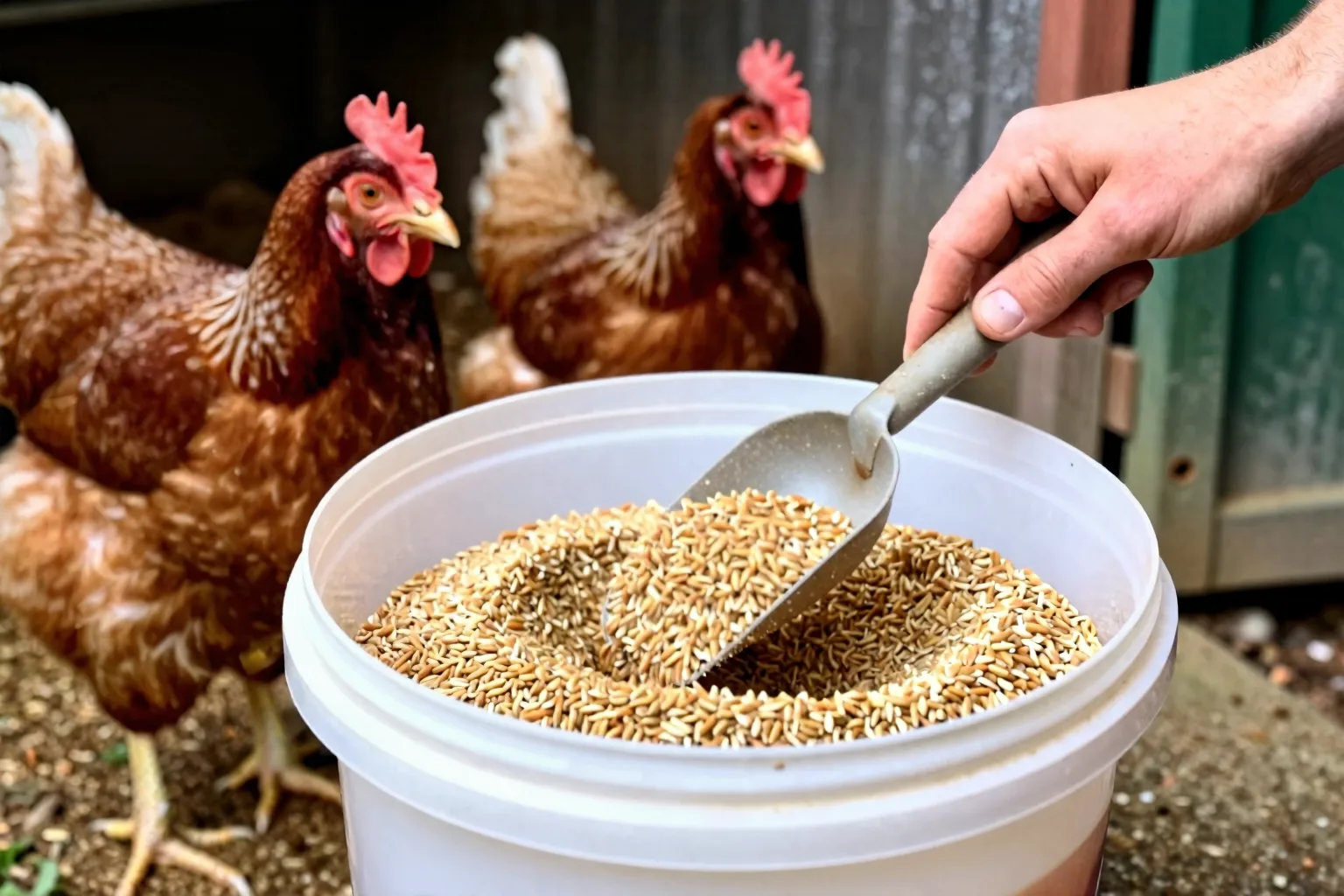
Fuzzy mold, a rotten or putrid odor, unusual colored growth or unexplained spoilage are discard signs. Throw out the whole batch. Skimming the top leaves the questionable material that has already contacted the rest of the feed, and fermentation is not a rescue step for contaminated ingredients.
A clean sour smell is not a guarantee of nutritional quality, either. It is one observation in a short inspection. If the smell is difficult to describe or the texture has changed in a way you can’t explain, the inexpensive choice is to discard it and mix a fresh, smaller batch.
Serve it in portions, then let leftovers set tomorrow’s amount
Offer fermented feed in a shallow, washable feeder. Don’t place the entire three-day container in the run. Start with a portion you expect the flock to finish promptly, then serve the remainder later. Two meals, morning and afternoon, make leftovers easier to see.
In warm weather, use a short trial feeding window of about 20–30 minutes and remove wet residue rather than leaving it in a hot feeder for hours. That window is a conservative working rule, not a measurement of what every flock can finish. Heat, shade and feeder access all matter.
Record leftovers for two or three days. If a six-hen flock leaves about 40 g of dry-equivalent feed each day, reduce the next daily allocation by roughly 5–10 g per bird instead of making a large cut. If the feeder is repeatedly cleaned out and the birds remain in good condition, increase by the same small step. Check the flock before changing the scale.
Keep fresh drinking water available. If whole grains or substantial forage are part of the diet, provide suitable insoluble grit separately. Fermented feed does not replace either water or the practical support birds need to process coarse material.
The number moves with age, weather, breed, and forage
The 90–120 g starting range is for planning an adult layer ration. It isn’t a universal allowance for every bird in your yard.
A bantam or other small breed may need less dry feed than a large, highly productive hen. A rooster has a different job and nutrient profile from a laying hen. Pullets need a grower ration suited to their stage. Chicks need an age-appropriate starter feed. Fermenting layer feed doesn’t remove its calcium level or repair a protein level that doesn’t suit a chick.
Meat birds also belong on a feeding program designed for growth, not on an adult-layer estimate copied into a wet bucket. Follow the label for the specific starter, grower or finisher product. For a broader comparison of flock formulas, see Layer Feed vs All-Flock Feed: Which Should You Buy?
Temperature shifts the calculation. Cold weather can raise the energy demand of maintaining body heat, while heat can reduce appetite. Free-ranging can lower the amount of purchased feed birds take from the feeder, but it doesn’t prove that each bird has eaten enough complete ration. Forage varies by season, yard and bird.
Use four checks together: body condition, appetite, laying pattern and leftovers. A flock that eats every crumb but loses condition needs a closer look. A flock that leaves feed while maintaining condition may be receiving more than it needs. Molting birds can also change their eating and laying pattern, so adjust gradually rather than applying a seasonal multiplier by habit.
A seven-day switch keeps the change manageable
Move from dry feed to fermented feed by dry weight. The percentages below describe how much of the day’s dry-equivalent ration arrives fermented. The balance remains dry feed during the changeover.
- Days 1–2: 25% fermented dry-equivalent and 75% dry feed.
- Days 3–4: 50% fermented and 50% dry.
- Days 5–6: 75% fermented and 25% dry.
- Day 7: the full planned amount fermented, if appetite and droppings remain normal.
For six hens planned at 600 g per day, the first two days would contain 150 g of fermented dry-equivalent and 450 g of dry feed. The bowl will not weigh 600 g after water is added. The dry-equivalent total is what stays steady.
If droppings become persistently abnormal, appetite falls or birds look unwell, hold at the last tolerated step and return to the previous form of feed. A feed transition is not a treatment.
Safety rules for water, utensils, storage, and discard
Treat fermented feed as wet food, not as indefinitely preserved grain. Wash the container and utensils before each batch. Use clean water. Keep the container loosely covered during active fermentation, and make smaller batches when your weather is warm or your flock eats slowly.
- Plan to use a room-temperature batch within roughly one to three days, not over an open-ended storage period.
- Keep the feeder shaded and washable. Remove wet residue before it sits warm for hours.
- Refrigerate a sound batch only as a way to slow the process and buy handling time.
- Discard any batch with fuzzy mold, a putrid smell or clear unexplained spoilage. Don’t skim and serve the remainder.
Refrigeration can slow fermentation, but it doesn’t make a questionable batch safe. It cannot reverse spoilage or make visible mold worth salvaging.
For product-specific cautions, read the feed label and the directions for medicated or specialty feeds before changing how you prepare them. You can also compare your plan with university extension guidance on poultry feed intake, complete rations, and age-specific feeding. Those references won’t replace the label for your exact product.
Stop experimenting and contact a veterinarian or local extension office if a bird is lethargic, persistently off feed, losing weight or showing ongoing abnormal droppings. Those signs can have causes that a change in feed texture cannot identify or fix.
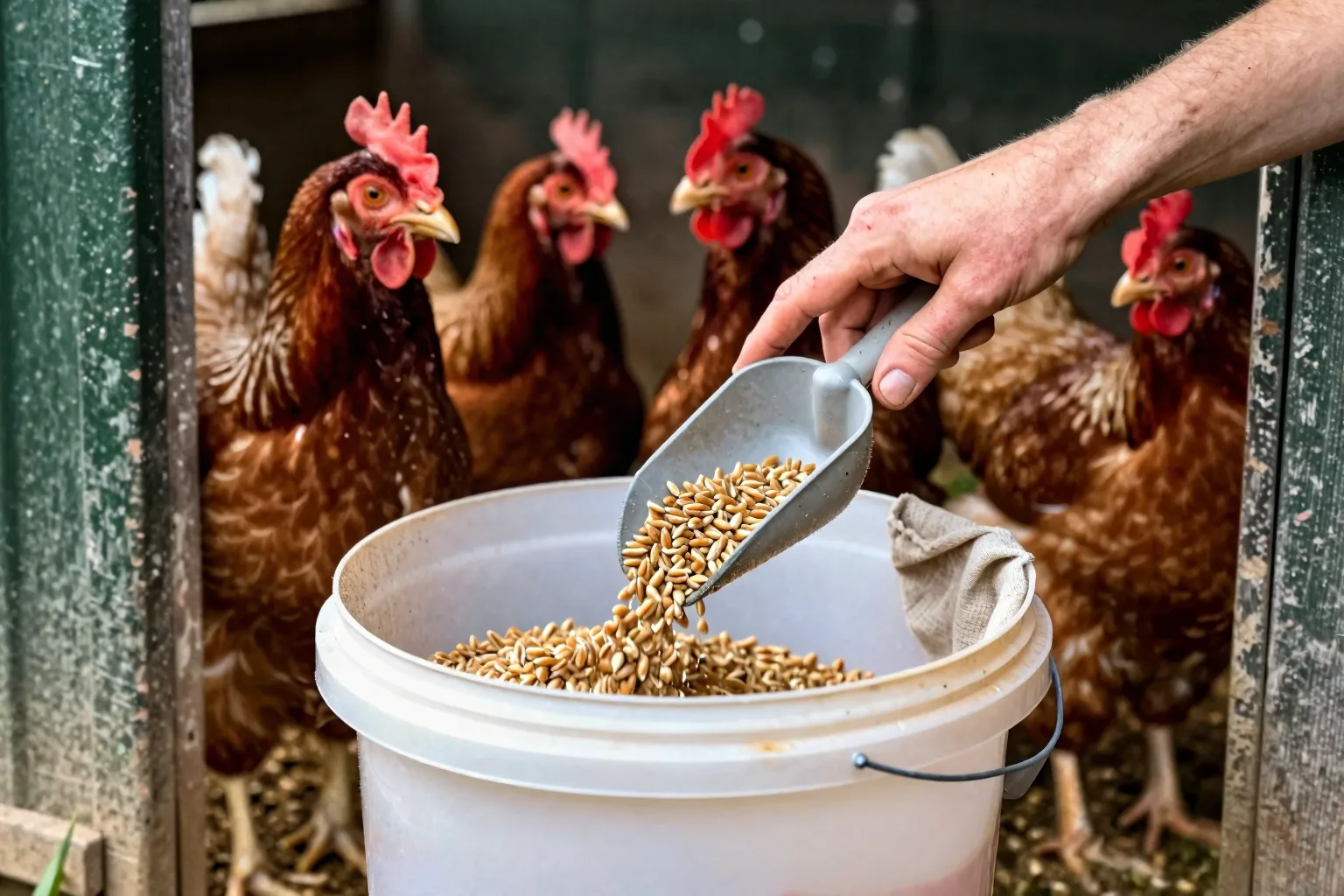
Your repeatable three-day routine—and when to stop
Once the first batch behaves consistently, use this routine:
- Multiply the number of hens by the chosen dry grams per hen.
- Multiply that daily dry total by three.
- Mix the measured dry feed with enough clean water to wet it fully.
- Inspect the smell, texture and surface before every serving.
- Serve a portion, then write down what remains.
For six hens at 100 g each, weigh 1.8 kg of dry complete feed for three days. After fermentation, divide the batch by dry-equivalent planning: about 600 g of dry ration per day, split into meals as needed. If the feed is too wet, add less water next time. If it is too dry, add water in small increments and stir before adding more. If birds finish it unusually fast, check body condition and leftovers for several days before increasing. If they leave it repeatedly, lower the next allocation by roughly 5–10 g per bird or reduce the later meal.
Fermentation is a preparation method, not a cost-cutting switch. It may reduce waste if your flock eats more of the measured ration, but it can cost more if batches spoil or if the process encourages you to serve extra. That is a result to measure, not a saving to assume.
This week, weigh one full day of your flock’s current dry ration. Use that number to make a small batch, inspect it at 24, 48 and 72 hours, and record feed left after each meal for three days. Then plug your actual dry-feed use and local bag price into How Much Does It Cost to Feed Six Chickens per Month? That comparison will tell you whether fermentation changes waste or expenses in your own backyard.