Do Hens Lay Eggs Every Day? A Realistic Hen-by-Hen Guide
No—not as a reliable promise. A mature hen in a strong laying spell may give you four to six eggs in a week, yet her nest box can still be empty on Tuesday and hold an egg late on Wednesday. The useful unit is eggs per hen per week, not whether your flock supplies one neat breakfast egg every morning.
For a backyard flock, that distinction affects feed buying, egg storage, and how quickly you decide that something is wrong. Count each bird separately, then look at the flock total.
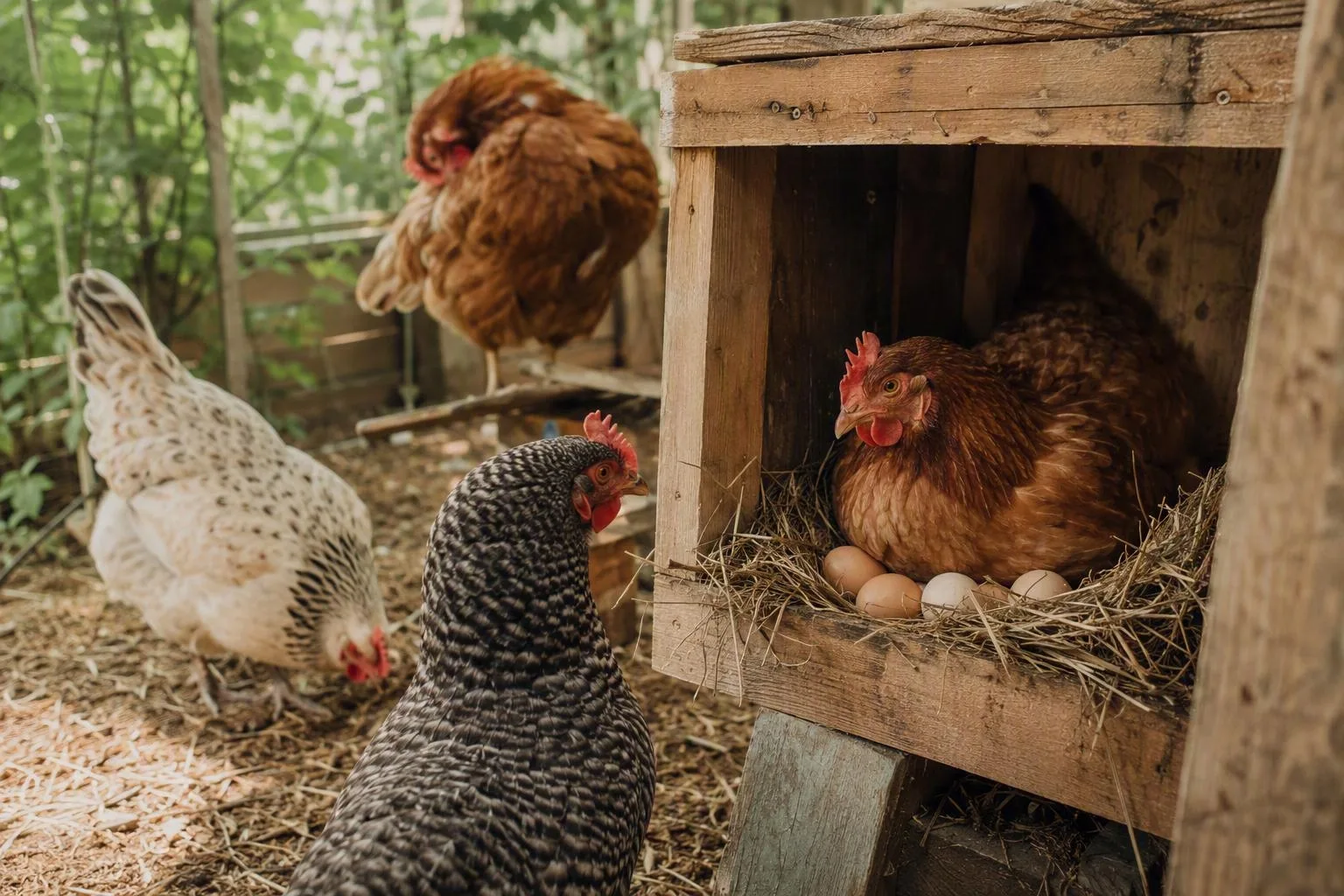
Count by week, not by wish: 4–6 eggs from a peak-season backyard hen
A practical planning range for a healthy, mature hen in peak laying season is about 4–6 eggs per week. Some high-output breeds can exceed that for a stretch. A heritage hen, bantam, broody hen, molting hen, or older hen may produce fewer. Those are useful expectations, not guarantees for a named breed or an individual bird.
Pullets often start laying around 18–24 weeks, but breed, body development, daylight, and nutrition can move that window. Early eggs may be small or oddly shaped. The first few weeks can also be uneven as a young hen’s reproductive rhythm settles.
| Hen or phase | Useful planning view | What can move the number |
|---|---|---|
| Young pullet | Expect a start around 18–24 weeks, then irregular output at first. | Breed, body condition, season, and maturity. |
| Mature hen in a strong season | About 4–6 eggs in seven days is a sensible household range. | Breed, daylight, health, and ration quality. |
| Broody or molting hen | Expect a sharp drop or a temporary pause. | Broodiness redirects behaviour; molt redirects resources toward feathers. |
| Older hen | Plan from the lower end and accept more variation. | Age-related changes and the bird’s individual history. |
Here’s the small-flock habit I use: I write each hen’s name on the left side of a scrap card and put seven dates across the top. If one row falls blank while the other rows look normal, I inspect that bird. If every row dips together, I check daylight, feed, water, weather, and recent disturbance before blaming one hen.
For example, four hens that contribute 6, 5, 3, and 2 eggs give you 16 eggs that week. The flock is productive, but it won’t behave like four machines producing four eggs every morning.
The 24–26-hour clock is why daily laying eventually skips a day
Egg production works on a rolling cycle. A yolk is released first. As it travels through the reproductive tract, albumen, membranes, and the shell are added in sequence. The completed egg is then laid, and the next cycle begins.
For planning purposes, use a cycle of roughly 24–26 hours. A 25-hour example makes the pattern easy to see: if a hen lays at 7 a.m. on Monday, the next egg may arrive around 8 a.m. on Tuesday, then around 9 a.m. on Wednesday. The laying time keeps sliding later. Eventually, the next cycle falls outside the hen’s usual daytime window, so a day is skipped.
That skipped day can be normal when the hen is otherwise bright, eating, drinking, and behaving normally. It is different from a flock-wide fall that continues after a feed change, a heat spell, a predator disturbance, or the arrival of short winter days. One empty nest is a clue to watch. A pattern plus physical signs deserves a check.
Daylight is a major seasonal signal for laying. A rooster is not what starts an ordinary egg cycle, and an empty nest does not make a hen hurry through one. Light, body condition, age, and health have more practical importance than whether another bird is present in the coop.
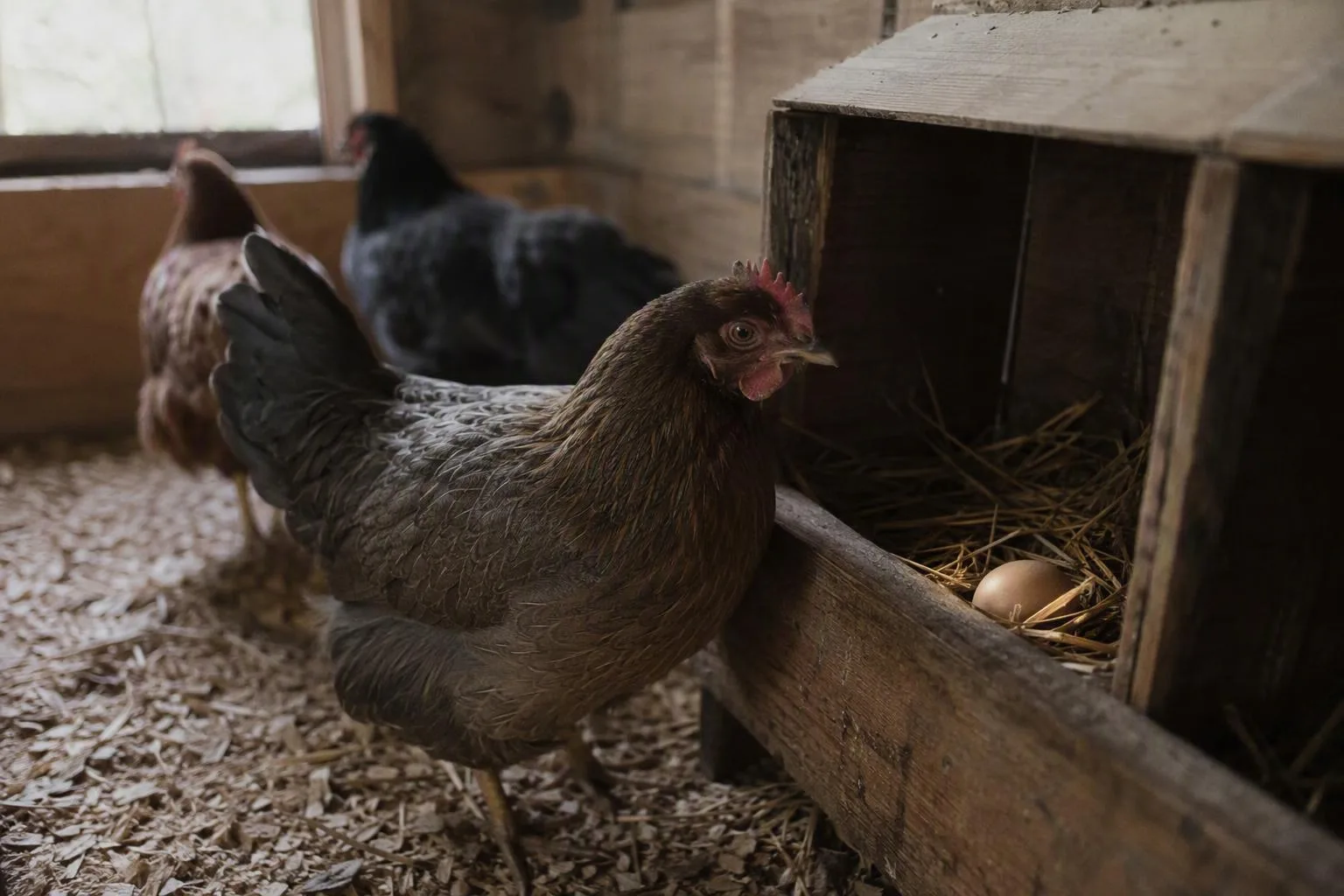
Think of the cycle as a clock that drifts, not a switch that turns on every morning. That is why a flock can look steady across seven days while its daily totals bounce from none to several.
When yesterday’s four eggs become today’s one: a hen-by-hen diagnostic grid
Start with the simplest split: did every hen slow down, or is one bird missing from the count? That decision keeps you from treating a normal broody or molting hen with a flock-wide supplement.
- Confirm the count. Check that every bird is present. Look behind shrubs, under decks, and in quiet corners for a hidden nest. If eggs are disappearing, inspect for cracked shells or egg-eating before calling it a production drop.
- Check the complete ration. An average laying hen may eat roughly 100–130 grams of feed per day, with body size, breed, weather, free-ranging, and feed quality shifting that amount. Four hens would therefore use about 400–520 grams daily as a starting estimate, not a compulsory quota. For the longer calculation, see how much feed per chicken per day for laying hens.
- Check water and access. Your birds need clean water available through the day. In freezing weather, confirm that the drinker is not iced over and that a timid hen can reach it.
- Look for a recent change. Note a new feed, an empty feeder, a heat spell, shorter days, a predator visit, unusual noise, molt, or a hen spending long periods in the nest box.
| Pattern you see | Check first | Next move |
|---|---|---|
| Several hens drop together as days shorten | Seasonal daylight and body condition | Record the lower output; don’t call one hen sick from this pattern alone. |
| Output falls after a feed change or empty feeder | Ration availability, freshness, and access | Restore a consistent complete layer ration and monitor the next several days. |
| One hen stops while eating and acting normally | Hidden nest, broodiness, molt, age, and body condition | Observe that bird separately and inspect her rather than dosing the flock. |
| Shells become thin, rough, or soft | Feed, water, stress, and reproductive health | Use the guide soft shelled chicken eggs causes as a separate shell-quality checklist. |
| Hen stays fluffed in the nest and objects when moved | Broodiness | Decide whether you want chicks; use a broody-hen plan rather than expecting normal eggs. |
| Straining, prolapse, breathing difficulty, severe weakness, marked weight loss, or inability to stand | The bird’s immediate condition | Call a poultry veterinarian promptly. Home feed adjustments are not enough for these signs. |
Don’t try to repair a flock-wide slump with a bowl of scratch or treats. I’d rather find the missing input first. Extra calories may fill crops while diluting the complete ration that supplies protein, minerals, and energy for laying. The mechanism is simple: if lower-density extras take up crop space, your birds may eat less of the formulated ration that was meant to cover laying needs.
Soft shells deserve the same caution. A calcium source may be relevant, but a soft or misshapen shell can also appear alongside poor intake, dehydration, stress, illness, or reproductive trouble. Don’t use one shell as proof of one cause.
For regional seasonal advice, compare your notes with husbandry material from your state or county extension office. Treat that as a suggested source for local daylight, weather, and feed context, not as a diagnosis of your individual hen. When a bird is straining, prolapsed, very weak, or unable to stand, a poultry veterinarian or veterinary manual guidance on avian reproductive emergencies is the right category of help.
Make your own flock forecast with one seven-day count
Seven days of notes will tell you more than one unusually good morning. It gives each hen time to show her normal skips and lets you separate a flock average from an individual problem.
- Make one row for each hen. Record age, breed type, molt, broodiness, and any health concern.
- Mark each egg on the date it was found. Add a note if the egg was soft-shelled, cracked, unusually small, or found outside the nest.
- Add each hen’s row. That is her eggs-per-hen-per-week figure.
- Add the flock total and divide by seven for a daily average. Remember that this is a weekly average, not a promise about tomorrow morning.
Take the four-hen example from above. If each bird produces somewhere between 4 and 6 eggs, the flock yields 16–24 eggs per week. Dividing by seven gives about 2.3–3.4 eggs per day averaged across the week. The actual collection might be one egg on Monday, five on Tuesday, two on Wednesday, and a different pattern after that.
For budgeting, I use the lower end when winter, molt, broodiness, or a second laying year is in the picture. That choice may leave you with extra eggs in a good week, but planning from the best week can leave you short when the flock’s biology changes. A flock of 3–12 hens is still small enough to assess bird by bird, so don’t hide one sick hen inside a reassuring average.
Once you know the likely weekly surplus, decide how you’ll handle it. Use how to store fresh eggs for the storage side, and use how much layer feed per chicken per day when you turn your flock count into a feed estimate. For cold-season decisions, keep daylight, water, and ventilation in the same notebook; a production dip is easier to interpret when the surrounding conditions are dated.
Can hens lay eggs without a rooster?
Yes. A hen can ovulate and lay without a rooster. The rooster affects whether an egg is fertilized, not whether the ordinary laying cycle can happen. Eggs from a rooster-free flock are therefore unfertilized, but they are still eggs.
Can a hen lay two eggs in one day?
It can happen occasionally, especially around an irregular young-hen cycle or in a very productive bird. It is unusual enough that you shouldn’t use it as a daily production expectation. A double-yolk egg is not proof that two normal laying cycles occurred; two yolks can be released into one developing egg.
Does leaving an egg in the nest make a hen lay more?
No. Leaving or removing an egg does not make an individual hen produce on demand. A full nest can encourage nesting behaviour or broodiness in some hens, so collect regularly if you want to reduce that trigger.
Your next action this week: tape a seven-day chart beside the nest box today. Record each hen, each egg, feed access, water, daylight conditions, molt or broodiness, and any unusual symptom. At the end of the week, plan from the lower reasonable number—not from the fullest morning.
Frequently Asked Questions
Can hens lay eggs without a rooster?
Yes. A rooster is needed to fertilize an egg, not to make a hen ovulate and lay; eggs from a rooster-free flock are unfertilized.
Can a hen lay two eggs in one day?
It can happen occasionally, especially in young or highly productive hens, but it is unusual and should not be used as a daily production expectation. A double-yolk egg is not proof that two normal laying cycles occurred.
Does leaving an egg in the nest make a hen lay more eggs?
No. Removing or leaving eggs does not make an individual hen produce more on demand. A full nest can encourage nesting or broodiness in some hens, so collect eggs regularly if you want to discourage that behaviour.