Chickens Eating Their Own Eggs: Practical Ways to Stop It
One clean peck can turn a nest into a self-serve snack bar. To stop chickens eating their own eggs, first find out whether a hen is pecking a sound egg or whether a weak shell breaks first. Then block access for 48 hours before you change the whole flock’s routine.
This is a behaviour problem, a nest problem, or both. The fix depends on which one you actually have.
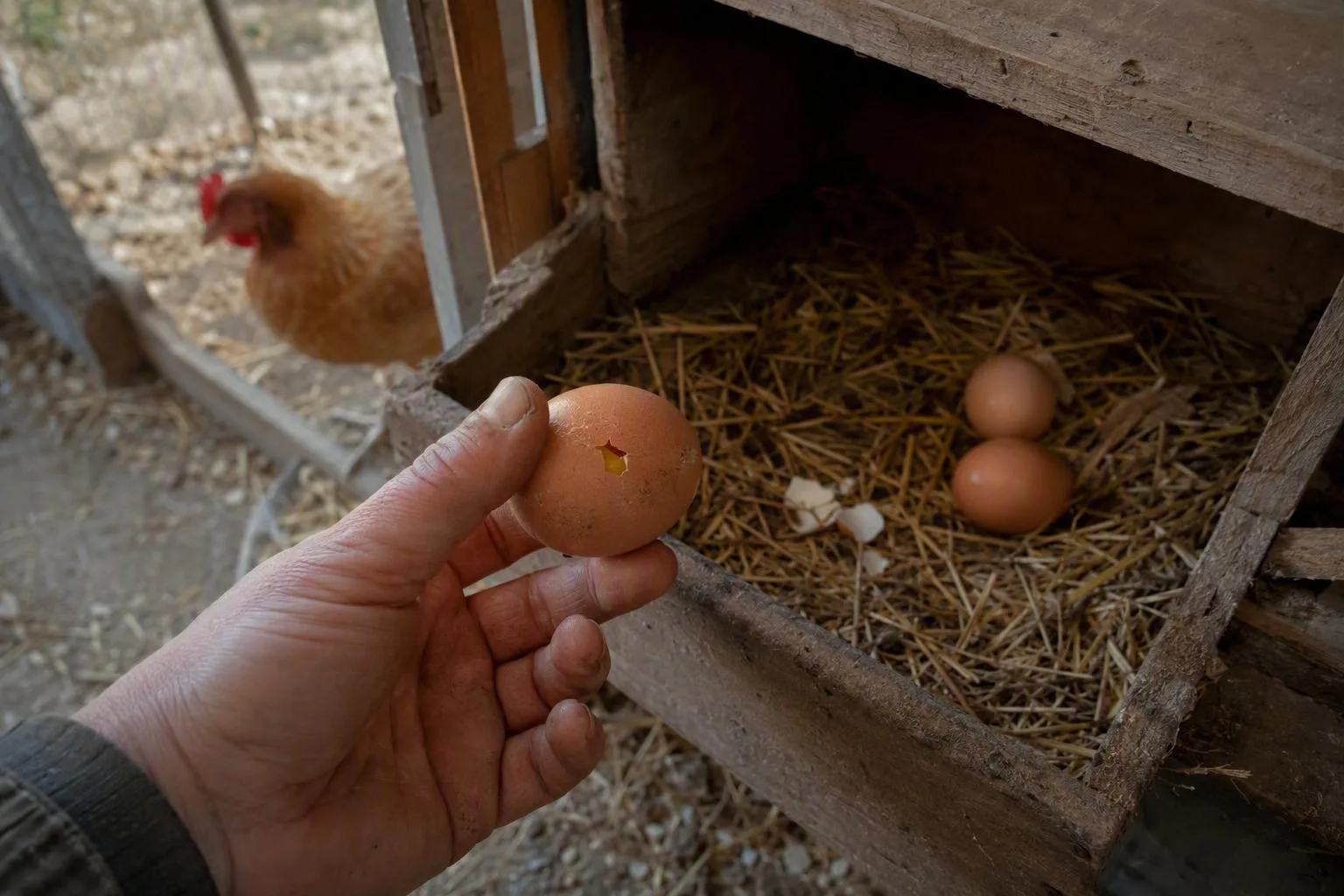
Start with a 24-hour check: is a hen eating eggs, or are the eggs breaking first?
Don’t begin by isolating the boldest hen. Begin with a short log. Use one 24-hour record on each of two consecutive laying days. At every check, write down how many eggs are present, how many are cracked, whether you see yolk on the bedding, and which nest held each egg. If your hens use several nesting spots, note those too.
A deliberate peck often leaves a neat hole, a missing section of shell, or a fresh yolk smear around the bird’s beak. Those are clues, not proof. A hen can get yolk on her face after another bird breaks an egg. Thin, soft, or wrinkled shells point you toward shell quality. Jagged fragments pushed into the bedding point toward an impact or a hen stepping on the egg.
| What you find | Check first | What it suggests |
|---|---|---|
| Clean hole and yolk residue | Check the nest again soon | Possible pecking after a break |
| Jagged shell in deep bedding | Inspect shell strength and box floor | Accidental breakage is possible |
| Egg missing with little residue | Check rodents, alternate nests, and access points | The egg may not have been eaten by a hen |
| Damage concentrated in one box | Watch that box or aim a camera at it | The nest setup may be creating the opportunity |
On my own small backyard setup, I once treated a yolk smear as proof that the hen nearest the nest was guilty. I moved that bird, but the next inspection showed another broken egg in the same poorly padded box. The useful lesson was simple: a bad nest can manufacture suspects. Fix the breakage site before you build a case against a bird.
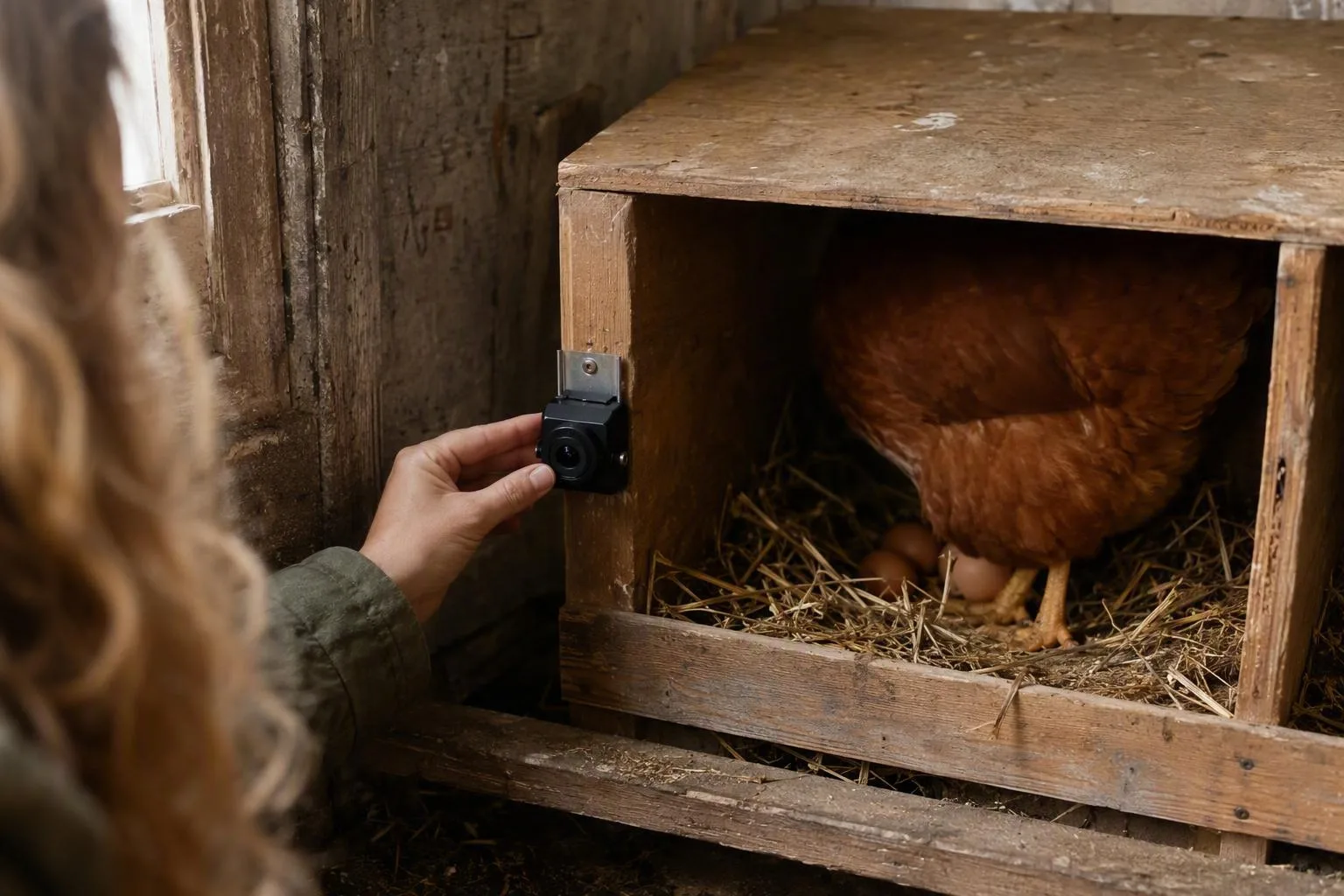
A small coop camera aimed at the nest entrance is more useful than watching the flock at random. If you don’t have a camera, make timed nest checks just after the period when your hens usually lay. A missing egg is a clue. Seeing a bird strike an intact shell is evidence.
Run the 48-hour access-blocking reset before changing the whole flock
The first job is to make the reward disappear. While the habit is active, collect eggs three to five times a day. You don’t need to hover in the coop. A morning check, a midday check, an afternoon check, and an evening check will shorten the time a broken egg sits in front of your birds. Clear broken eggs and wet bedding as soon as you find them.
If your workday means you can check only morning and evening, improve the nest so an egg is harder to reach. A covered nest hides the egg from casual pecking. A roll-away box moves it out of the bird’s reach after it is laid. Both designs need inspection. A roll-away tray with a hard edge can create a new crack, and a covered box can conceal a dirty or broken egg until later.
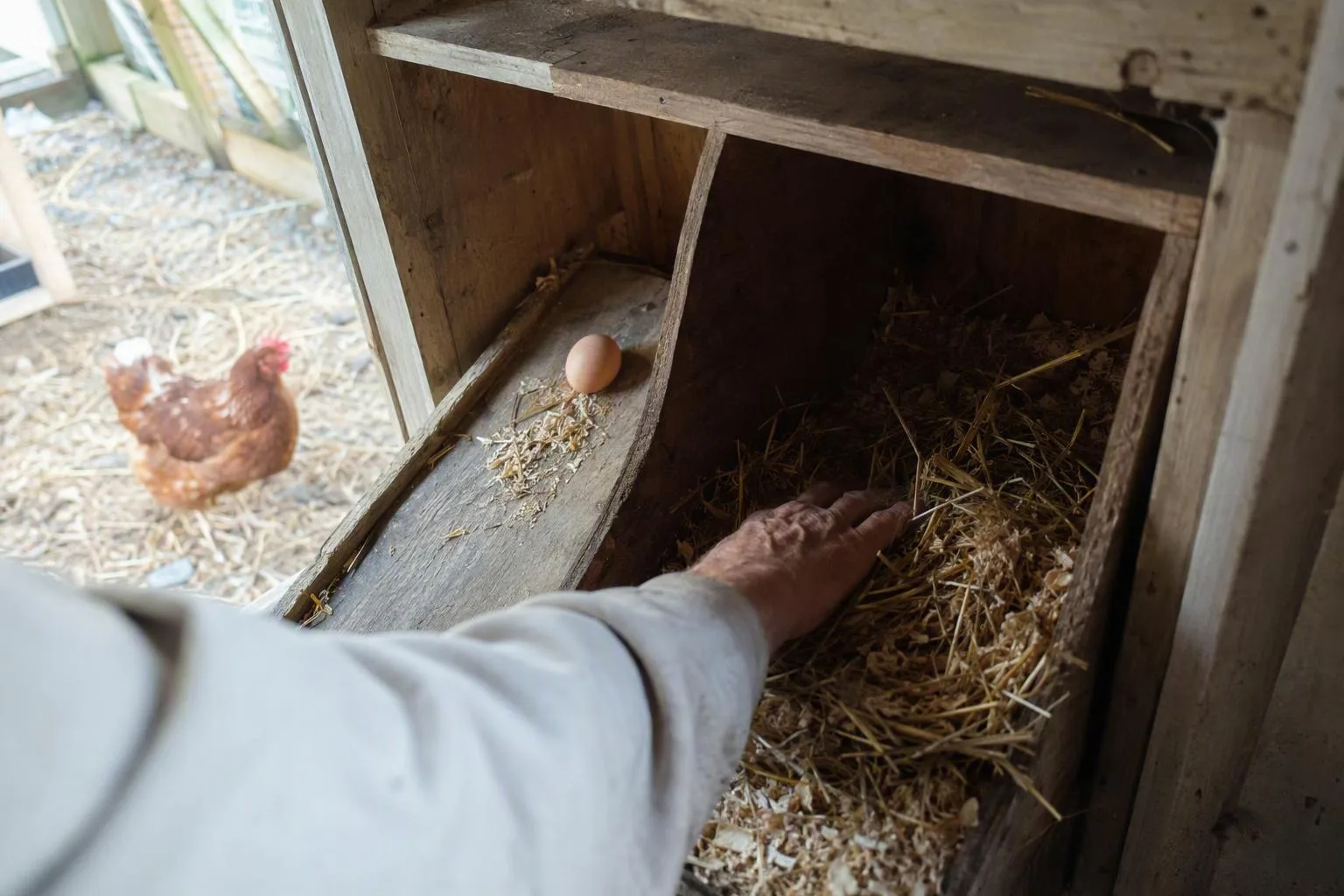
A useful backyard baseline is one 12 x 12 x 12-inch nest box for every three to four hens. That is a starting point, not a capacity guarantee. Large breeds need more elbow room. A hot, crowded flock needs more choice and better airflow. If hens queue, shove each other out, or lay on the coop floor, add another box or make the existing boxes easier to use.
Put 2 to 4 inches of clean, dry bedding in each box. The bedding should cushion the egg rather than let it hit bare wood, metal, or a thin plastic base. Replace damp or compacted material. A little extra bedding is cheaper than repeatedly asking a hen to ignore a yolk-covered breakfast.
Keep nests dimmer than the active part of the coop, but not sealed or stuffy. Padding reduces the chance that a normal step becomes a cracked shell. A lower, covered entrance can also make it harder for birds outside the box to see and reach an egg. The mechanism matters more than the label: less visibility and less impact mean fewer chances for the habit to pay off.
Run this access-blocking reset for 48 hours before you judge it. You’re testing whether removing the reward changes the pattern. You’re also testing whether the nest itself was the trigger. Don’t add five new deterrents at once. If the eggs improve, you won’t know which change earned the credit.
Put the ration back on layer numbers: roughly 16-18% protein and 3.5-4.5% calcium
Nutrition belongs in the check, but don’t assume every egg eater is calcium-deficient. Poor shell quality can create the first break. The broken egg then creates the behaviour. Those are two linked steps, not one diagnosis.
Use a complete feed labelled for laying hens. As a practical planning range, look for about 16-18% protein and 3.5-4.5% calcium on the label. The label for your actual product wins. A complete ration is easier to control than trying to repair an unbalanced mix with kitchen scraps.
For feed budgeting, use 90-120 grams per laying hen per day as a working range. The arithmetic matters: over a 30-day month, that is about 2.7-3.6 kilograms per hen. For three hens, it becomes roughly 8.1-10.8 kilograms per month. An 8-11 kilogram figure is therefore a reasonable small-flock total for three hens, not for one hen. Add waste, wild-bird access, and weather effects to your own estimate.
Keep treats near 10% of daily intake. A large amount of corn, scratch, table food, or fruit can dilute the complete ration. It can also make it harder to tell whether a bird is actually eating enough layer feed. If you’re unsure about a scrap, check what not to feed chickens before it goes into the run.
Offer oyster shell in a separate dish rather than mixing extra calcium into every bird’s feed. That lets laying hens use the supplement while you avoid turning the whole ration into a guess. A mixed flock with pullets, roosters, or non-laying birds needs more care. Follow the feed label for age and flock type, and consider whether one shared ration is serving every bird well.
Check water before blaming behaviour. A blocked nipple, frozen drinker, dirty container, or dominant hen guarding the only feeder can reduce intake even when feed is technically available. Use more than one feeding point if a timid bird is being pushed aside. If shell quality stays poor, compare your notes with extension guidance on layer-hen nutrition and ask a poultry veterinarian or local extension office for help.
For a longer shell-quality checklist, see soft shelled chicken eggs causes. The useful question is not simply whether your hen has calcium. It is whether she is getting a complete ration, enough water, and a shell that can survive the nest she is using.
If one hen is doing it, prove it with a 3-7 day separation test
If one hen is doing it, don’t accuse the bird that looks guilty. Use a camera first if you can. Aim it at the nest entrance, not at the whole coop. You’re looking for the sequence: a fresh egg appears, a particular bird enters, and the shell is pecked before another bird has a chance to break it.
If you still can’t tell, run a short separation test. Move the suspected hen to a secure pen for 3 to 7 days. Keep her within sight and sound of the flock if practical. Give her normal feed and water, shade, ventilation, dry footing, and enough room to stand, turn, walk, perch, and rest normally. This is a test, not a punishment.
- Record the condition of fresh eggs in the main coop each day.
- Remove cracked eggs immediately, so the remaining flock has no reward to investigate.
- Keep the nest arrangement and feed routine steady during the test.
- Compare the result with what happens when the hen returns.
If eggs stay intact while she is away and damage returns after reintroduction, she becomes the leading suspect. That result is stronger if your camera also captured her pecking. If eggs keep breaking without her, return to nest padding, shell quality, rodents, and feed competition instead of isolating more birds.
Reintroduce her only when you can observe the next laying period. If the behaviour returns, repeated flock-wide changes may not be worthwhile. A separate pen beside the flock can preserve social contact while blocking access. If you can’t maintain that arrangement, humane rehoming may be the more honest option. A persistent repeat offender is not a reason to neglect the rest of the flock or to keep exposing every fresh egg.
Use decoys and boredom fixes as a layer, not as the whole cure
A smooth commercial nest egg or wooden or plastic decoy can be placed in each active nest for a 7-14 day trial. The idea is to remove the satisfying yolk reward when a hen pecks. Choose a solid, smooth object made for this purpose. Leave glass, sharp objects, and anything that can splinter out of the nest.
Golf balls and mustard-filled eggs are popular keeper suggestions. Their results are anecdotal, not guaranteed. I’d treat them as optional experiments after access has been controlled, not as the main plan. A decoy cannot repair a thin shell, a hard nest floor, or a hen that has learned to search every box.
Give birds confined for much of the day a practical starting point of about 8-10 square feet of outdoor run space per bird. More room helps in hot weather, in mixed-size flocks, and where the run has little usable ground. Add perches at different heights, dry material to scratch through, and safe opportunities to forage. Rotate a simple pecking area rather than piling in treats.
This is where boredom fixes earn their place. A bird with room to move and something safe to investigate has fewer idle minutes at the nest. But enrichment is a second layer. Removing the egg reward and preventing accidental cracks are the parts that attack the habit directly.
Read the result after seven full days—and know when this is no longer a home fix
Give the combined plan seven full days: protected or better-padded nests, corrected feed access, frequent collection, and prompt removal of cracks. Improvement means fresh eggs remain intact, yolk smears disappear, and cracked shells become less common. That’s the result I’d expect when the seven-day protocol removes the reward window and reduces the number of opportunities for a bird to peck a broken egg.
If pecking or missing eggs continues for 7-14 days, go back to the order of checks rather than adding another internet trick. Inspect shell strength. Watch the busiest nest. Check whether a bird is being blocked from feed or water. Look for rodents and alternate laying spots. Then use the camera or separation test to identify the culprit.
A confirmed persistent egg eater may need long-term separation with social contact or a new home. Make that decision after you have addressed breakage and access. Don’t keep the entire flock in a cycle of blocked nests, changed feed, and repeated isolation if one bird is responsible.
Stop treating this as a simple behaviour project and contact a poultry veterinarian or local extension office if you see weight loss, marked lethargy, persistent diarrhea, a facial or beak injury, vent bleeding, or repeated abnormal shells. Those signs need a health assessment. Don’t guess at medication or use a human product; follow a poultry product label or a professional’s direction.
Three side questions worth settling
Can you eat an egg after a chicken has pecked it?
My conservative house rule is to discard a pecked or cracked egg rather than wash it and store it. The shell is no longer an intact barrier, and washing won’t restore the damage. Keep intact eggs according to your local food-safety rules, including prompt refrigeration where those rules require it. For the storage side, read USDA egg-safety guidance and compare it with your local requirements.
Should you feed eggshells back to chickens that are eating eggs?
Don’t offer recognisable whole shells while the habit is active. They can keep the egg association obvious. Use commercial oyster shell separately. If you later reuse clean shells, dry them thoroughly and crush them finely so they don’t look like an intact egg. This supports calcium access without putting a bowl of familiar shell pieces beside the feeder.
Will one chicken eating eggs teach the rest of the flock?
Don’t assume every bird is involved, but don’t leave a broken egg available for everyone to investigate. Any hen that pecks at the exposed contents gets the same opportunity to repeat it. Remove the reward quickly, watch the nest entrance, and work on the confirmed bird first. A camera or short separation test is better than blaming the whole flock.
Your action this week: count your hens and nest boxes, read the protein and calcium figures on the feed bag, and start a two-day log of intact eggs, cracks, yolk residue, and nest location. Once the eggs are staying intact, make the next step how to store fresh eggs so your new routine protects quality after collection too.
Frequently Asked Questions
Can you eat an egg after a chicken has pecked it?
Treat a pecked or cracked shell as compromised and discard it rather than washing it for storage. Handle intact eggs according to current local food-safety guidance, including prompt refrigeration where required.
Should you feed eggshells back to chickens that are eating eggs?
Avoid offering recognizable whole shells while the habit is active because they can reinforce the egg association. Use commercial oyster shell free-choice; if you reuse shells later, clean, dry, and crush them finely so they do not resemble an intact egg.
Will one chicken eating eggs teach the rest of the flock?
Other hens can learn the behavior when broken eggs remain available, but you should not assume every bird is involved. Remove the reward quickly, monitor with a camera or short separation test, and address the confirmed bird first.