Can Chickens See in the Dark? Their Night Vision Has Limits
At dusk, a hen may still pick out the familiar ramp to her roost. In a coop with the lights out, though, you shouldn’t count on her finding a new perch or stepping around a changed obstacle. So, can chickens see in the dark? They can manage twilight and some dim light, but a completely dark coop is a different problem.
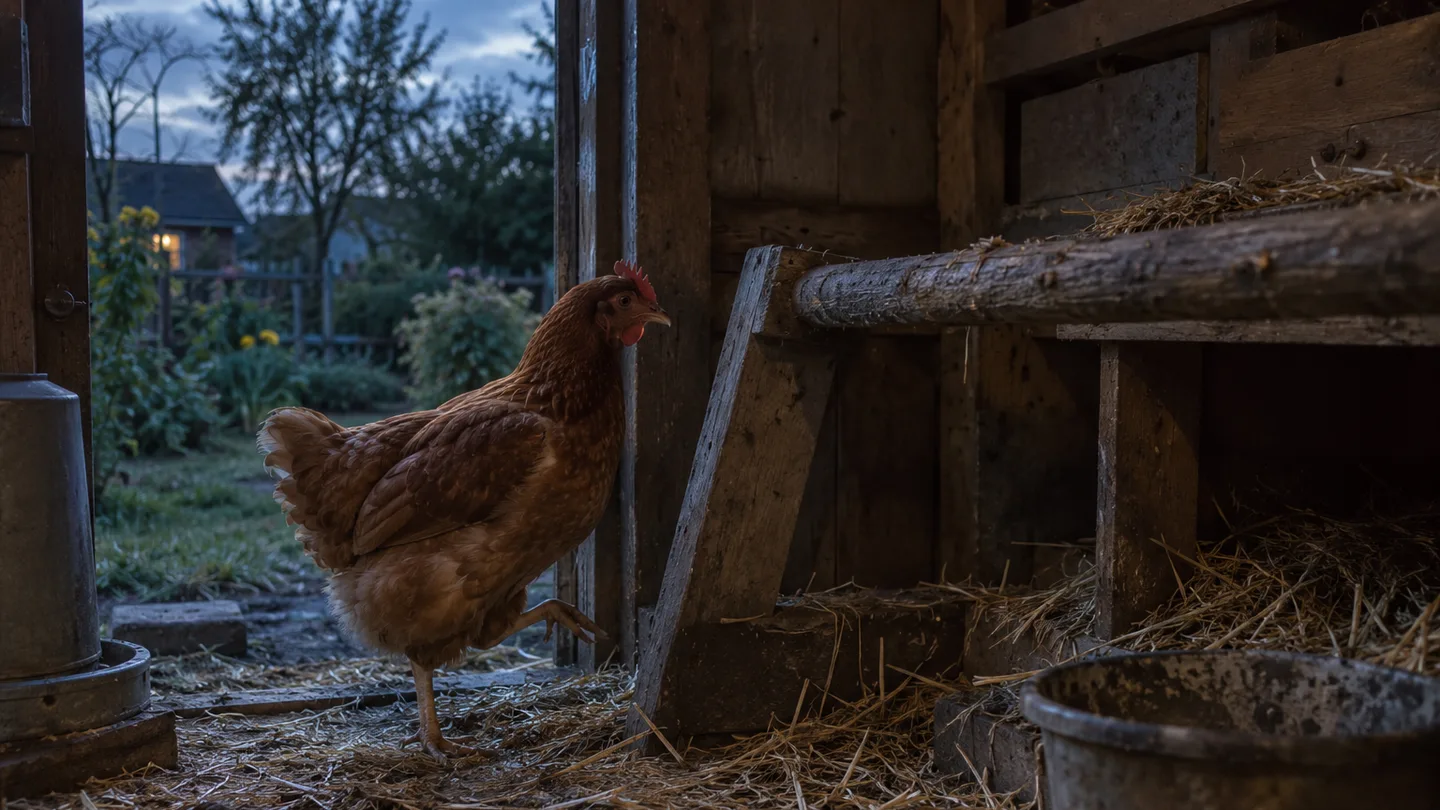
That distinction matters more than a single “night-vision” number. Your flock’s route, the season, and how quickly the light fades all affect what you see at bedtime. The useful goal isn’t to make your birds see in the dark; it’s to give them a familiar, clear path and notice when one bird needs help.
Can chickens see in the dark? Twilight gives you a short window
There isn’t one light level at which every chicken suddenly goes blind. A hen may keep moving as daylight fades, especially along a route she knows, while another hesitates at the same spot. Breed, age, health, eye condition, and the layout of your coop can all influence what you observe. That variation is why a universal lux cutoff for “chickens can see” would be misleading.
Think of visibility as a sliding scale, not an on-off switch. In the last part of the evening, you may still see your birds walking toward the roost, but their confidence can fall as edges and obstacles become harder to distinguish. Once the coop is truly dark, don’t assume a hen can safely locate an unfamiliar perch, feeder, or doorway just because she managed the same route a few minutes earlier.
For a small backyard flock, that gives you a useful rule: let the birds settle before the light disappears, and don’t redesign the roost after bedtime. If you’re wondering do chickens sleep, they do settle down to rest, but that normal routine doesn’t mean they need a lamp left on overnight. A dark, familiar roost is different from asking a bird to navigate a dark, unfamiliar space.
What a chicken eye is built to do
Chicken eyes contain rods and cones, the light-sensitive cells involved in seeing. In broad terms, cones support color and detail in brighter conditions, while rods help with vision in dimmer conditions. That basic arrangement helps explain why a hen can keep moving as dusk arrives, but it doesn’t make her a night hunter or guarantee clear vision in a pitch-black building.
There’s a practical difference between “there’s still enough light to make out that shape” and “I can judge the edge of this narrow perch.” Walking a familiar route relies partly on memory: the bird has learned where the ramp, doorway, and roost are. A new barrier or an unfamiliar landing asks more of her vision, balance, and judgment. In dim light, that’s a poor time to expect her to improvise.
Bright-to-dark transitions can make the job harder, too. A hen coming in from a brighter yard may pause when she reaches a darker coop, even if you can see the doorway just fine. Give her a moment rather than shooing her forward. My practical preference is to make the path predictable, not to try to train birds to cope with a darker and darker obstacle course.
It’s also worth keeping ordinary changes in mind. A new perch, a feeder moved into the route, bedding piled against a ramp, or a partly closed door can turn a familiar trip into a different one. If a hen starts hesitating, first look at what has changed around her before deciding that she needs extra light.
Lux puts the coop on a scale, not a hen’s vision cutoff
Lux describes how much light falls on a surface. It’s a way to compare the brightness of places, not a direct test of what your chicken can see. As rough environmental reference points, full moonlight is often placed around 0.1–1 lux, a typical indoor room around 100–500 lux, and bright daylight at 10,000 lux or more. These broad examples help show the scale; they are not tested chicken-vision thresholds.
That last distinction is essential. A phone’s light-meter app can give you a rough comparison between your run and coop, but its reading depends on the phone, app, angle, and where you hold it. It can help you notice that one area is much darker than another. It cannot tell you, “Your hen can see safely at this reading.”
If you check, compare the spots that matter: the entrance, the first step or ramp, and the roost itself. Hold the phone where a bird would be, point it toward the path, and take readings at about the same time on successive evenings. Treat the numbers as clues about your setup, not a pass/fail score for chicken eyesight. A clear route and a gradual dusk routine are more actionable than chasing a precise cutoff that doesn’t account for your bird.
For a more technical comparison, look up a lighting-engineering illuminance reference and check lighting guidance from a local extension office. Use those references to understand light in a space; don’t mistake general lighting figures for a prescription for your flock.
Three evenings at dusk: map your flock’s routine
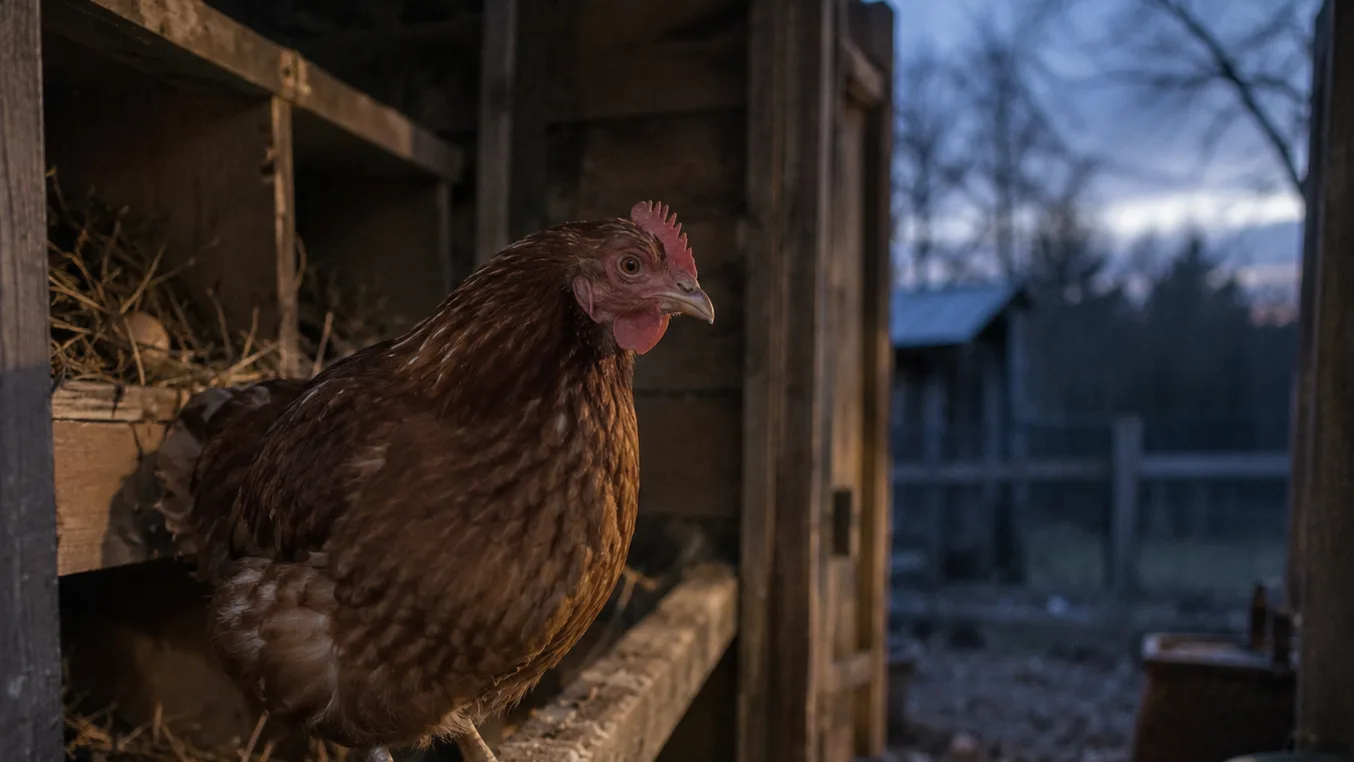
Try a simple three-evening check rather than guessing how many minutes before sunset your coop should be ready. On each evening, note when the first hens head toward the roost, when the last bird settles, and whether the route stays clear as the light fades. You don’t need a stopwatch or a spreadsheet. A few notes on your phone are enough to reveal whether your flock tends to settle before the path gets hard to see.
Choose ordinary evenings if you can. A cloudy day, a sudden storm, or a change to the coop can alter the scene, so note those conditions rather than treating that evening as your flock’s usual pattern. The season matters as well: sunset shifts through the year, and the angle of the light around your yard changes. Your hens may also differ in age, confidence, or pace.
Here’s a worked example, not a report from a particular author’s flock: imagine four hens, one low ramp, and a roost inside a shaded coop. On the first evening, three birds go up while it’s still easy to see the ramp; the fourth takes longer. On the second, you notice the last bird pauses where the ramp meets the doorway. On the third, you watch from the same spot and see the same hesitation. That repeated detail gives you something to fix: check the doorway and ramp rather than adding an all-night bulb.
The point is to learn your own flock’s sequence. I’d rather adjust a doorway, clear bedding, or start the evening check earlier than set a universal “X minutes before sunset” rule. Your notes tell you when the birds are comfortable on their familiar route; the clock alone can’t account for shade, weather, or coop design.
Familiar roost, unfamiliar perch: why the route matters
A bird that reaches her usual roost at dusk may still struggle with a new perch in low light. Keep the route open, leave the roost where the flock expects it, and move new equipment in daylight. If you’re planning perch height or layout, the guide to how high should roosting bars be is a useful next read; whatever the height, birds need a route they can approach without squeezing past clutter.
If you must guide a bird after dark, use a brief, low beam aimed at the floor or ramp, not a flashlight pointed into her face. The aim is to show a path, then stop moving the light once she’s safely inside. A sudden glare can make it harder to see what she’s doing and may send her turning away; flooding the whole coop with light also makes it harder to distinguish the actual obstacle from the surrounding space.
My checklist is short: find the hen, light the ground between her and the door, move slowly, and let her pause. If she doesn’t follow, pick her up calmly rather than repeatedly urging her toward a route she can’t see clearly. Keep the beam steady and out of her eyes, and avoid waving it across the flock while other birds are settling.
Afterward, put the flashlight down and check why the situation happened. Was a gate left open? Did a bird get pushed away from the entrance? Has the roost or ramp changed? This is where chicken coop requirements can help you review the layout more broadly. A light is a tool for a one-off pickup; it isn’t a substitute for an accessible route.
Should you leave a coop light on? Two jobs, two decisions
For normal roosting, a night-light isn’t necessary. Leaving a bright light on all night doesn’t give your birds better night vision; it changes the light conditions in the coop and can interfere with a clear dark period. If your hens are already using a familiar roost safely, adding a lamp just to make the room brighter is solving the wrong problem.
Supplemental light to influence winter laying is a separate decision. Keepers commonly discuss a total day of about 14–16 hours of light as a planning range, not a promise that every hen will lay more eggs. Breed, age, health, and the season all matter, and a lighting routine isn’t a way to override every natural pause in laying. Check current local extension guidance before you set up a timer.
If you do choose supplemental light, consider adding it in the morning so natural dusk still gives your flock a gradual cue to roost. Make changes gradually rather than switching abruptly from short days to a much longer lit period. The trade-off is straightforward: a timer can make your schedule more consistent, but it adds equipment and a management task; it doesn’t improve visibility after the lights go out.
That distinction is the part I’d keep taped beside the timer: laying light is for managing the length of the day, not for night navigation. Decide whether winter egg production is worth the routine for your flock, then keep bedtime itself calm and predictable. If you’re not aiming to influence laying, you don’t need to install a night-light just because the coop looks dark to you.
One hen outside after dark: a quiet pickup checklist
If a hen is still outside when the yard is dark, use enough light to locate her, approach without rushing, and pick her up if she can’t find the entrance. Carry her into the coop and set her down near the roost. Don’t expect her to learn a new route in the dark while the rest of the flock is settling.
When it happens more than once, treat it as a clue rather than a character flaw. Check whether the doorway is easy to reach, whether another bird is blocking the route, whether the ramp or roost has changed, and whether your hen appears unsteady or reluctant in daylight too. A repeated problem can point to access, flock dynamics, or a health issue; this simple dusk check cannot diagnose which one.
If you see persistent changes in vision, an eye injury, unusual swelling, or other signs of illness, contact a poultry veterinarian. Don’t try to solve an eye problem by increasing the coop’s night lighting. For the general layout, how to build a chicken coop can help you review the structure, but a vet is the right person for ongoing eye or mobility concerns.
Your next action this week is easy: watch dusk for three evenings, write down when the last hen settles, and clear the path from entrance to roost in daylight. You’ll learn more from that small routine than from guessing whether your coop is “dark enough.”