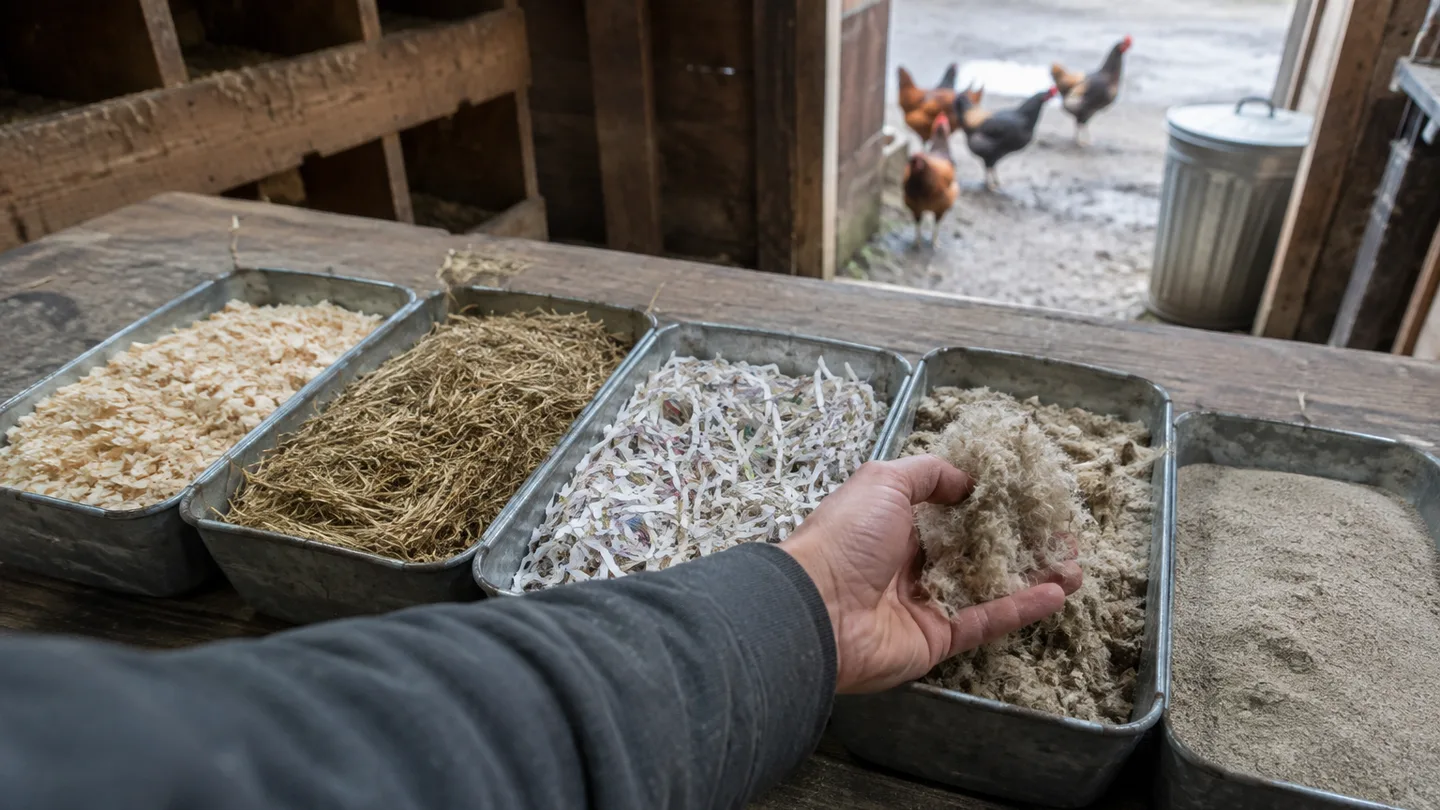
Best Bedding for Chicken Coop: 5 Options, Costs and Trade-Offs
A 4-by-6-foot coop floor takes about 6 cubic feet of bedding at 3 inches deep. That number is the useful starting point for choosing the best bedding for chicken coop use: measure the floor, price the material by usable volume, then judge how it handles scratching, droppings, and routine clean-outs.
For most small backyard flocks, my default is 2 to 4 inches of large-flake, kiln-dried pine shavings on a dry floor. Straw, hemp, sand, and pellets can all work, but each asks more of your storage, floor, climate, or cleaning routine.
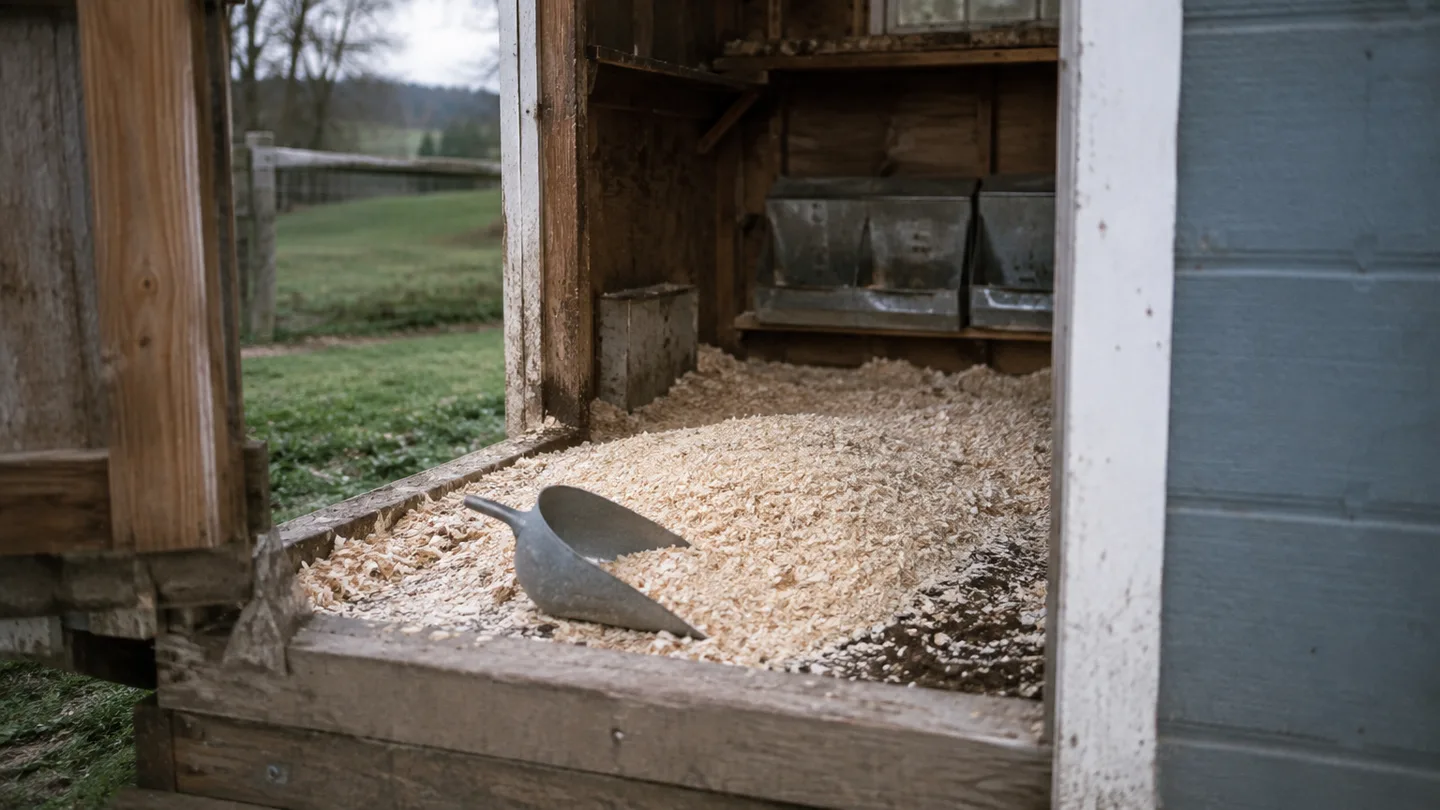
The floor test first: 2–4 inches underfoot, 1–2 inches in nest boxes
Start with the floor, not the brand name on the bag. In an ordinary small coop with a solid, dry floor, a 2- to 4-inch layer gives your birds enough loose material to scratch through while still letting you see wet patches and remove soiled areas. At 3 inches, a 4-by-6-foot floor needs about 6 cubic feet. At 2 inches, it needs about 4 cubic feet; at 4 inches, about 8.
A built-up deep-litter system is a different routine. If you choose the deep litter method chicken coop approach, the layer may build toward roughly 4 to 8 inches, but only when the floor stays dry, air moves above the birds, and you turn or remove material as needed. More bedding will not fix a leaking drinker, wet floor, or bad roof. Repair that source first.
Nest boxes need less. I usually aim for 1 to 2 inches of clean, springy material so an egg has a soft landing without the box becoming overfilled. A high layer can reduce usable space and gets kicked out more easily when a hen turns around.
In my own backyard setup, I once left the drinker just inside the door because it was convenient to refill. The shavings under it became a dark, sticky patch while the rest of the floor stayed loose. I moved the drinker onto a paver, removed that patch, and stopped trying to solve a placement problem with extra bedding.
- Working litter: loose enough to rake or fork apart.
- Too wet: clumps, dark patches, or material stuck to the floor.
- Too dusty: a visible haze when birds scratch or you turn the layer.
- Too dirty: a sharp smell at bird-head height or bedding that no longer dries between clean-outs.
Why large-flake pine shavings are the safest default for most small coops
Large-flake, kiln-dried pine shavings are where I would start with a three- to twelve-hen backyard flock. Look for a package sold as animal bedding, with loose flakes rather than a fine sawdust texture. The larger pieces leave air space, are easier to rake through, and make spot-cleaning visible instead of turning the whole floor into powder.
Fine sawdust can be harder to handle because it moves into corners, clings to damp spots, and creates more airborne dust during spreading. I also do not treat cedar shavings or strongly scented wood products as interchangeable with plain pine. If the package is heavily fragranced, dyed, or vague about its intended use, I leave it on the shelf.
Pine works well for a simple winter routine: start at the chosen depth, remove obvious wet or heavily soiled patches, then add a thin layer of fresh material. That is different from blindly piling bedding higher each week. Ventilation still matters, especially when windows are closed and birds spend more time indoors.
Price it by usable cubic foot, not bag count. Divide the package price by the loose volume you can spread after opening. A small bag with generous packaging can cost more than a larger-looking bag once both are measured on the floor.
Straw wins on bale price only when you can keep it dry
Straw often looks like the low-cost option because it is sold by the bale, but bale size and compression vary widely. A bale that is easy to carry may provide much less usable floor coverage than a dense bale from another supplier. The fair comparison is bale price divided by the volume you can actually loosen and spread.
Long stalks are inexpensive but can twist into a mat under busy feet. Shorter, looser straw is easier to turn and remove, though it may cost more at the point of purchase. Damp straw compacts around droppings, becomes harder to fork apart, and can hold a wet layer against the floor. I store it off the ground under cover, with enough airflow that the outside of the bale is not taking on moisture.
Straw and hay are not the same purchase. Hay is a feed crop and usually contains more leafy material. I reserve it for feeding rather than bedding because leafy pieces break down into a messier layer and are harder to keep clean in a small coop. If you use straw for deep litter, turn the top layer periodically and remove sections that have lost their loose texture.
Straw is a sensible choice when you have dry storage, a fork or rake that can handle it, and a local supplier selling consistent bales. It is a frustrating choice when you have nowhere to store spare material or need a fine, easily sifted surface.
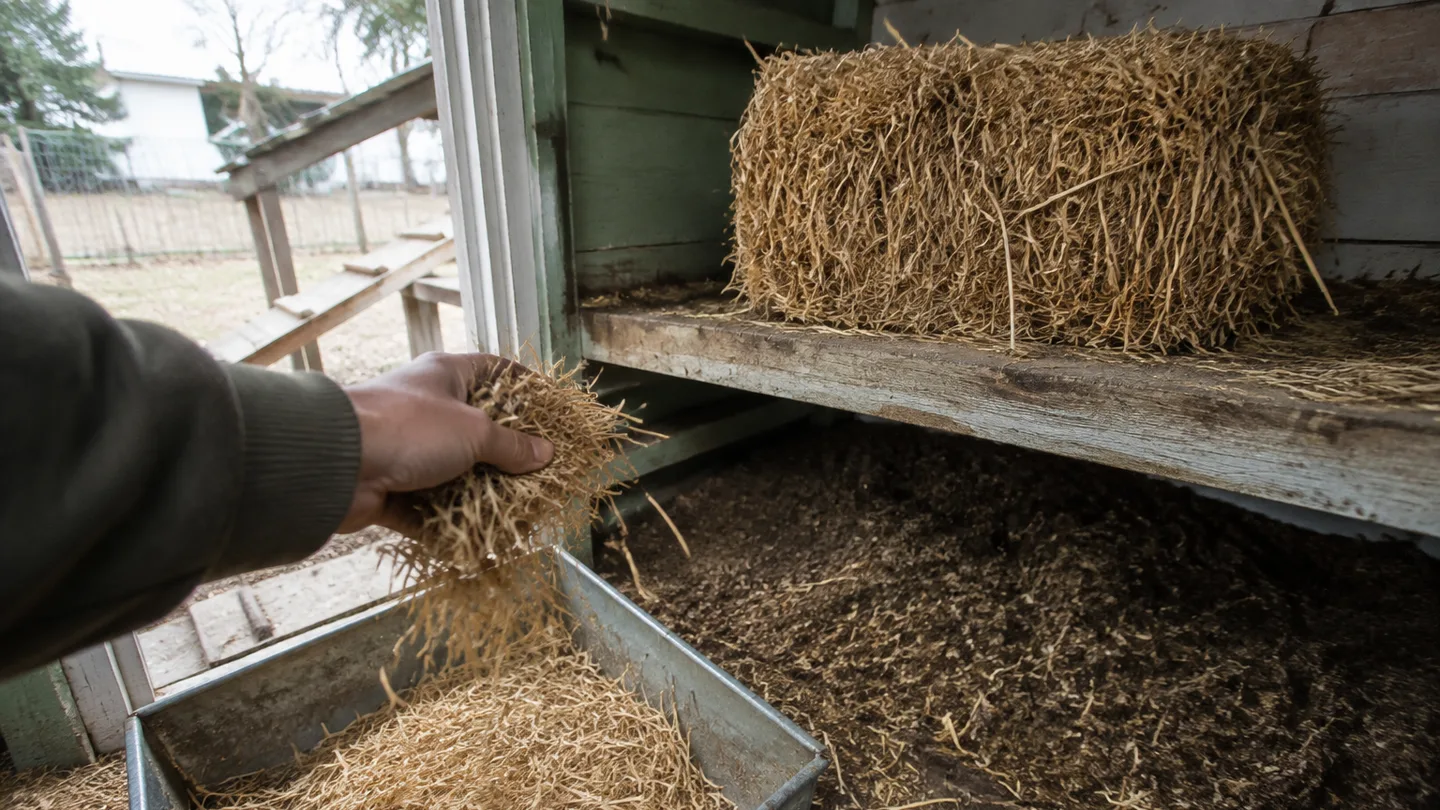
Hemp bedding: lower-dust feel, higher upfront cost
Hemp hurd bedding is the premium option I would consider when handling comfort and dust matters more than the lowest starting price. Its texture is usually coarser than sawdust and can feel less dusty during routine spreading, but that is not a guarantee across every brand or bag.
Compare the package volume after opening. Some products are tightly packed, while others are already fluffed. A large-looking bag is not automatically better value. Divide the price by the loose cubic feet you can put on the floor, then compare that result with pine.
For a small coop, hemp can begin at the same 2- to 4-inch floor depth as pine. Its handling advantage is more convincing when you can buy it locally and the packaging is consistent. High shipping charges, limited suppliers, or a product that arrives compressed into hard blocks can erase the convenience before your birds ever use it.
I would choose hemp when the keeper values a cleaner-feeling material and is willing to pay for that preference. I would not choose it simply because a product page promises fewer clean-outs. Your floor area, bird count, drinker placement, and maintenance routine still decide how long any bedding remains useful.
Sand can work—if your floor, climate, and back can handle it
Sand is not a universal best bedding. It is a system that suits a dry, well-drained coop with a solid floor, easy access for removal, and a keeper willing to sift regularly. I would look for a coarse, screened material rather than dusty fine fill. The goal is a stable surface that can be sifted, not a powdery indoor beach.
Weight is easy to overlook until you do the math. A 24-square-foot floor covered 3 inches deep needs about 6 cubic feet. If your supplier’s specification is near 100 pounds per cubic foot, that load would be roughly 600 pounds before adding birds, framing, roosts, and nest boxes. Use the supplier’s actual weight data, and make sure the floor and supports are suitable before bringing the material inside.
Sand changes the clean-out job. You can remove droppings with a scoop or sifter instead of lifting whole armfuls of fluffy litter, but the tool must fit the mesh and the coop door. Fine material can create dust during filling and sifting. In a damp winter climate, sand can also become cold, heavy, and difficult to move if the setup is not protected from rain and runoff.
Transport is part of the cost. A nearby aggregate or landscape supplier may make sand practical; a long delivery distance can turn a seemingly cheap material into an expensive one. Before using it, check how much space do chickens need and whether the floor is designed for the added load.
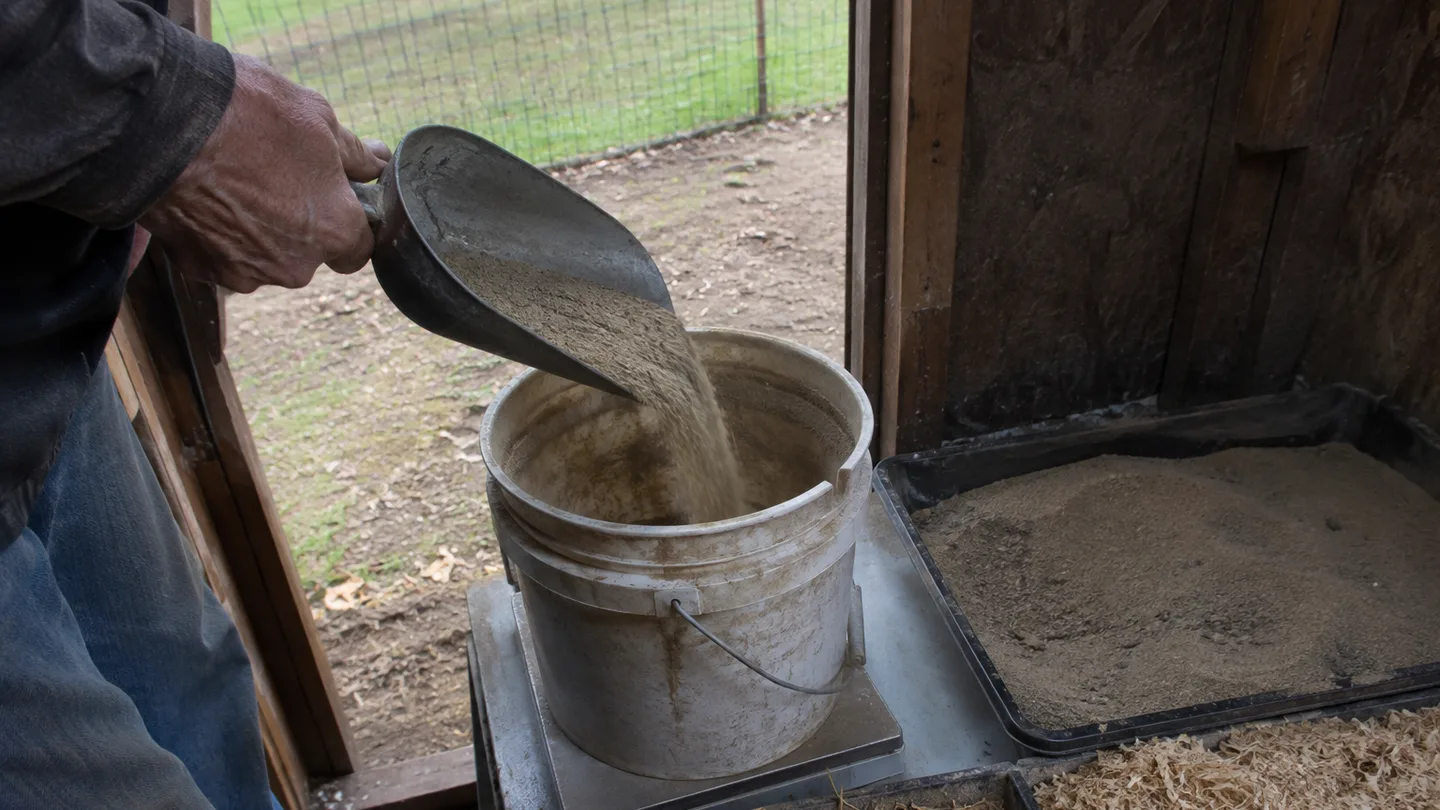
Wood pellets: compact to store, easy to misjudge by the bag
Compressed wood pellets appeal to keepers with limited storage. A small package can be easier to stack than a bulky bale or loose bag, and the material is tidy to carry before it is opened. I buy only products clearly labeled for animal bedding and do not assume fuel-pellet packaging means the same thing.
Read the instructions before the birds enter. Some bedding pellets are used dry; others are conditioned with water so they expand and soften. The label’s method matters because the usable volume after expansion is the number you need for cost comparison, not the compact volume printed on a tightly packed bag.
Pellets can be a good fit when your storage is cramped and you prefer removing damp sections rather than handling long straw. They are less attractive when the expanded material is difficult to spread evenly or when you dislike checking the floor for hard, compacted spots. Start with the package directions, fluff the material as instructed, and watch how it behaves under your flock before buying a large supply.
For a fair price check, divide the bag price by the conditioned cubic feet it produces. Then compare that result with pine or hemp, not with the unexpanded bag size.
The cost table that settles it: dollars per usable cubic foot, clean-out time, and best fit
The honest cost unit is usable cubic feet. Price the bedding you can spread, not the package you can lift. Use this table as a shopping worksheet, then fill in the current local price from two feed stores, farm suppliers, garden retailers, or online sellers.
| Option | Cost comparison | Clean-out pattern | Best fit |
|---|---|---|---|
| Pine shavings | Bag price divided by loose floor volume | Spot-clean and top up | Most forgiving starting point |
| Straw | Bale price divided by measured usable volume | Turn, fork out mats, replace sections | Dry storage and low local bale cost |
| Hemp | Package price divided by fluffed volume | Top up according to texture and cleanliness | Keepers willing to pay for handling comfort |
| Sand | Delivered material cost divided by cubic feet | Sift droppings and remove wet patches | Dry floors that can carry the load |
| Wood pellets | Bag price divided by expanded volume | Remove damp clumps and recondition as labeled | Compact storage and tidy handling |
Do not let headcount replace floor measurements. On the same 4-by-6-foot floor, a 3-inch starting fill is still about 6 cubic feet whether three, six, or twelve birds are present. That is a bedding calculation, not a housing recommendation. The flock size changes how quickly the layer becomes soiled, while floor area sets the amount needed to fill it. Check chicken coop requirements before treating a particular floor size as suitable for your birds.
To build a monthly planning range, record the initial fill cost, each top-up, and every full replacement for one month. Divide those costs by the number of months represented. That gives you a local planning figure without pretending a national price applies to every town. For a second check on airflow and moisture management, use extension guidance on poultry-house bedding and ventilation. For pellets, follow current manufacturer labels for bedding-grade wood pellets rather than relying on a general-purpose fuel-pellet description.
My conditional picks are straightforward: choose pine for the most forgiving default, straw when dry storage keeps bale costs low, hemp when its texture justifies the premium, sand only for a suitable floor and climate, and pellets when compact storage is the main constraint. In my view, the best bedding for chicken coop use is the material that fits your floor, storage, cleaning tools, and local supply chain without asking you to ignore wet patches or dust.
This week, measure your coop floor, calculate the cubic feet needed at 3 inches, and price two local options by usable volume. If you are considering a deeper layer, read the deep litter method chicken coop guidance before buying enough material to fill the space.