Can Chickens Eat Sweet Potatoes? Cooked vs. Raw, Explained
Yes—your chickens can eat plain sweet potato, raw or cooked. The practical difference is texture, not a rule that raw flesh is poisonous: grate or finely chop it raw, or cook it until soft and cool it before serving. Keep it a treat, with complete feed making up the main part of the diet.
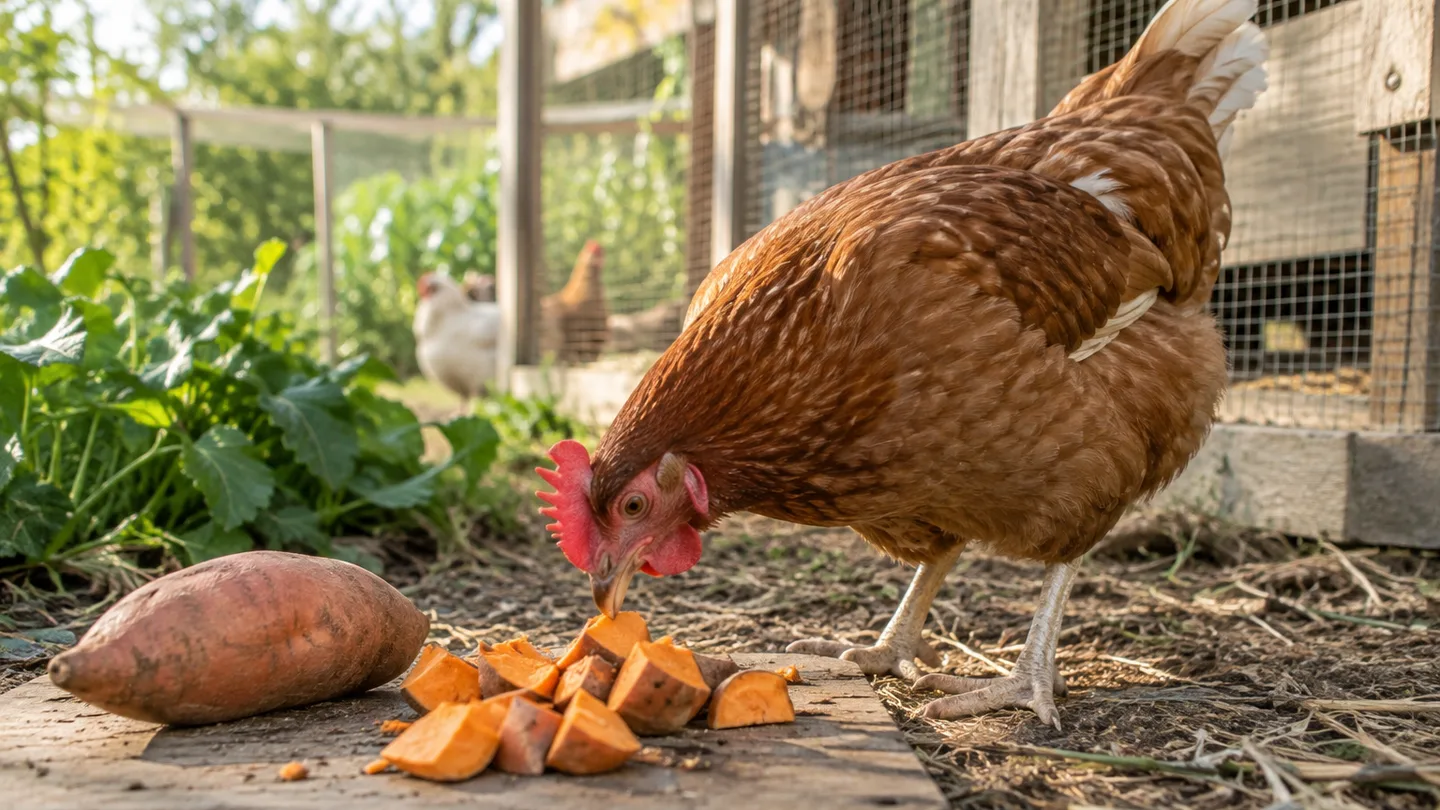
Yes—your flock can eat sweet potato, but it stays a treat
Offer the edible root in a small portion, then go back to the feeder. Sweet potato can add variety, but it isn’t formulated to replace a complete ration for laying hens, growers, or chicks. Treats take up room in the diet. If they crowd out the feed designed for your birds’ age and purpose, you lose the balance that feed is meant to provide.
A useful backyard rule is to keep all treats together at roughly 10% or less of what your flock eats, leaving about 90% or more for complete feed. That’s a practical ceiling, not a sweet-potato allowance. It includes scraps, fruit, scratch grains, and anything else you offer outside the regular ration. A bowl of sweet potato doesn’t get its own separate 10% budget.
Here’s a concrete way to think about it. If you keep six adult hens, offer a modest shared portion once, rather than putting a pile in front of every bird and topping it up whenever they finish. If they already had other extras that day, make this one smaller or skip it. I’d rather leave the flock curious for another time than turn a useful treat into a second ration.
My preference for a small backyard flock is to use extras as occasional enrichment, not as a way to stretch the feed bag. Sweet potato is filling enough to distract from the feeder, and its soft, moist texture can make a generous serving disappear quickly. The birds’ enthusiasm is not a reliable portion guide.
Raw or cooked? Choose for texture, not because raw is poisonous
Raw sweet potato is firm. Chickens don’t have teeth to grind a large chunk down, so make raw flesh easy to pick up: grate it, shave thin pieces, or chop it finely. Don’t toss a whole hard root into the run and expect your hens to manage it. Smaller pieces also make it easier to see how much the flock is actually eating.
Cooking changes the texture. Once the flesh is fork-soft and fully cooled, it’s easier for birds to peck and swallow than a dense raw chunk. There isn’t one useful cooking time for every root: a thin slice and a large whole sweet potato won’t soften at the same speed. Check the thickest part with a fork instead of following a fixed number of minutes.
Either choice can work for healthy adult chickens when the flesh is plain and offered in a small amount. I’d choose cooked pieces for a mixed group if I wanted the easiest texture to scatter. For raw, I’d grate a little over a clean surface so the pieces are fine rather than lumpy. That’s a serving preference, not a claim that cooking is required to make sweet potato safe.
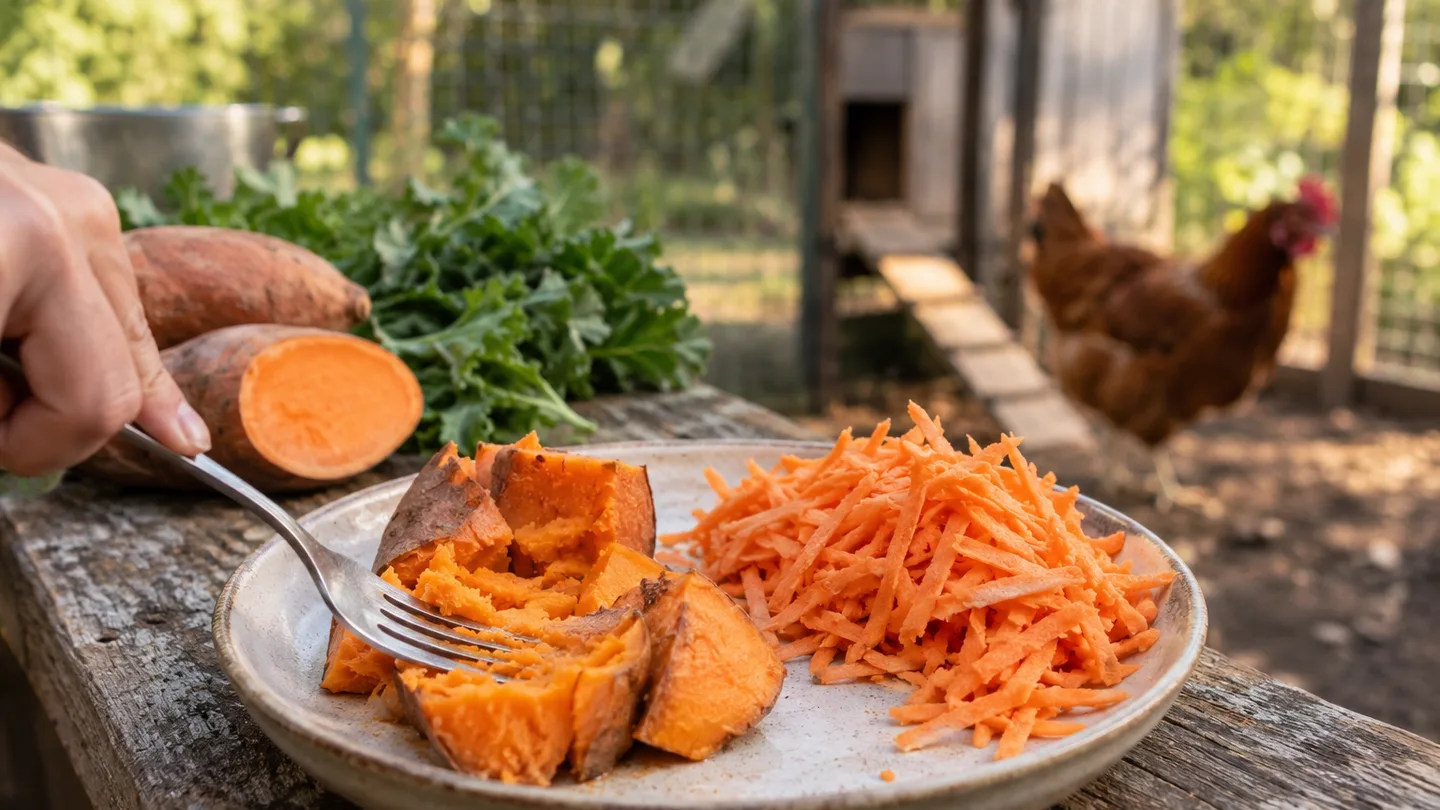
Picture six hens coming over to a small dish. With grated raw flesh, they can pick at separate fine shreds; with cooked flesh, you can break the soft portion into small bits before setting it down. Either way, watch the first few minutes. If pieces are too large to manage, take them away and cut them smaller. Don’t leave a heap in the run just because the birds haven’t finished it yet.
Scrub the root; serve the skin if clean, and keep the portion plain
Rinse and scrub the root to remove visible soil. You can leave the skin on if it’s clean and intact; peeling is a practical choice if the skin is caked with dirt, damaged, or difficult to clean. The flesh and skin should both be offered in pieces your birds can pick up, not as a large, slippery slab.
Keep the preparation boring. Skip butter, cooking oil, salt, sugar, syrup, and seasoning. Those additions don’t make the treat more useful to your flock, and they make it harder to judge what the birds are eating. If you’re cooking sweet potato for people, set aside a plain piece for the hens before adding toppings.
Stick to the root when the identity of a scrap is uncertain. Don’t serve parts from an unknown plant, or garden produce with pesticide exposure you can’t assess. If you’re unsure what a piece is or how it was treated, discard it rather than asking your birds to test it for you.
One small handling detail matters: let cooked pieces cool completely. Warm food can be awkward to handle, and a hot center may remain even when the outside feels cool. Break a thick piece open and check it before offering it. Then provide clean water as usual and remove what the flock leaves behind.
Use the 10% treat ceiling across the whole flock—not for sweet potato alone
The 10% rule is easiest to use as a check on the whole day, not as a scale reading for one ingredient. Your complete feed is the dependable base; sweet potato and other extras share the smaller remainder. A local university extension’s guidance on complete poultry rations can help you compare that principle with the feed and bird type you keep.
For a rough planning reference, 100–120 g of complete feed per adult layer per day is a range keepers commonly cite. Treat it as a starting point for checking your own flock, not a guaranteed requirement or a direct gram allowance for sweet potato. A six-hen flock multiplied by that reference would be 600–720 g of complete feed across the group in a day, but the arithmetic doesn’t tell you how many grams of moist treat to serve.
Why not? The sweet potato’s water and texture make it a poor one-for-one substitute for dry complete feed, and the treats you offer may vary from day to day. Flock size, body size, breed, laying stage, access to forage, weather, and the amount of other food all affect how much feed your birds use. Keep the feed available as appropriate for your setup, notice whether the flock is still eating its ration, and adjust treats before cutting the complete feed.
For example, if your six hens have already had a handful of scratch and some garden greens, don’t calculate a fresh 10% allowance just for sweet potato. Count those extras as part of the same small slice. If the regular ration is being left uneaten after treats, pause the extras and see whether normal feed intake returns. That’s a more useful signal than trying to convert a soft, wet piece of root into an exact feed-equivalent weight.
If you’re reviewing the base ration itself, our guide to homemade chicken feed is a related read; it’s worth understanding the limits of mixing a complete diet at home before changing what goes in the feeder. For another treat comparison, see can chickens eat carrots or can chickens eat pumpkin. Keep the same rule in mind: a safe extra still needs to stay an extra.
Wet leftovers have a clock; moldy scraps belong in the bin
Cooked sweet potato is moist, so don’t leave it sitting around in the run. My cautious rule is not to leave cooked scraps out for more than a couple of hours, and to shorten that window on a hot day. That’s a conservative backyard habit, not an official food-safety limit. Heat, shade, the size of the serving, and how clean the dish was all affect how quickly leftovers become unappealing.
Remove uneaten pieces promptly, especially in warm weather or if they’ve been trampled into litter. A food-safety guide to handling cooked leftovers is useful background for people, but the run is not a refrigerator: scraps can pick up dirt and moisture from bedding and feet. If the food smells off, looks moldy, has an unusual slimy surface, or seems fermented, throw it away. Don’t trim mold from a portion and feed the rest.
Sweet potato and white potato are different plants, so don’t transfer every warning about one to the other without checking what food the warning names. That distinction isn’t a reason to feed questionable scraps. Keep the offering to clean, plain sweet potato flesh, and discard anything green, spoiled, or uncertain rather than trying to salvage it for the flock.
Frequently asked questions
Can chicks eat sweet potatoes?
Chick starter should remain the main food for young chicks. Treats aren’t necessary while they’re learning to eat a balanced starter. If you decide to offer a taste after they’re eating well, keep it tiny and finely chopped, and make sure they have access to appropriately sized chick grit when they’re eating foods other than their complete feed. If you’re unsure whether your chicks are old enough or eating confidently, wait.
Can chickens eat canned sweet potatoes?
Read the ingredient list. A plain product packed in water is different from one packed in syrup or prepared with salt, sugar, or flavorings. If the label lists additions, choose another treat. Drain and rinse a plain product if needed, and offer only a small amount.
Can chickens eat sweet potato fries?
Plain, fully cooked sweet potato pieces can fit the same small-treat approach. Skip fries that are oily, salted, coated, or seasoned. If they came from a shared human meal, don’t assume the visible coating tells you everything; set aside a plain piece before cooking instead.
This week, check your feed label, pick a day when you haven’t offered other extras, and try a small serving of plain, finely chopped or fork-soft sweet potato. Watch how your birds handle it, clear away leftovers, and keep their complete feed as the main course.
Frequently Asked Questions
Can chicks eat sweet potatoes?
Complete chick starter should remain their main food. Explain that treats are unnecessary for young chicks; if a keeper offers any, it should be a tiny, finely chopped amount after chicks are eating starter well, with appropriate chick grit available.
Can chickens eat canned sweet potatoes?
Check the ingredient list. A plain product packed in water is different from syrup-packed or candied sweet potatoes; recommend avoiding added sugar, salt, and flavorings.
Can chickens eat sweet potato fries?
Plain, fully cooked pieces can fit the same small-treat rule, but skip fries that are oily, salted, or seasoned.