Homemade Chicken Feed: The Nutrients Your Recipe Must Cover
A bucket of corn, oats, and kitchen scraps can look like a recipe, but it doesn’t become complete chicken feed just because your hens eat it. A dependable homemade chicken feed ration has to cover energy, protein and amino acids, calcium, phosphorus, vitamins, and trace minerals in proportions suited to the birds eating it. For a small flock, that usually means working from a poultry-specific formulation and a premix label—not guessing at a universal mix.
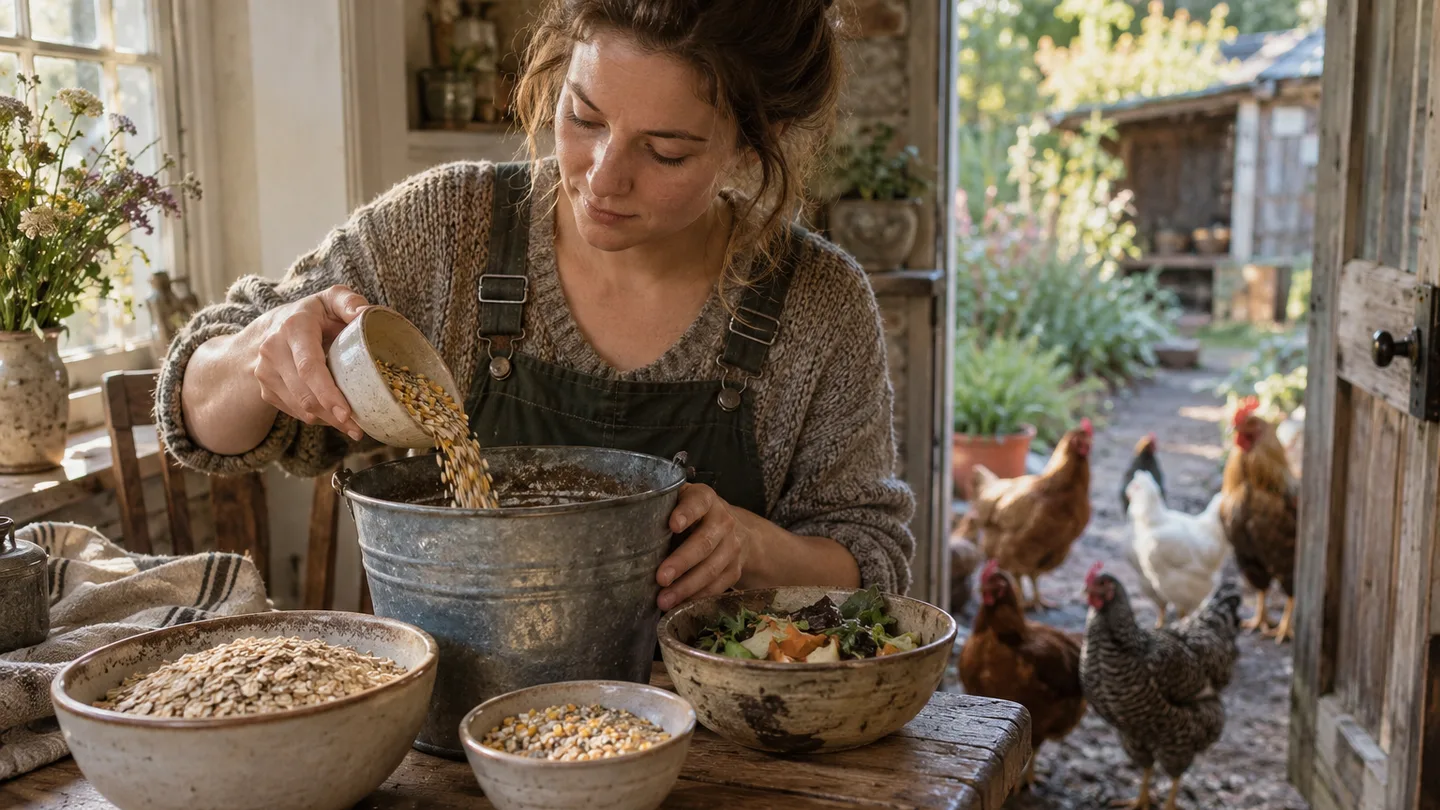
I won’t dress up an invented thin-shell rescue as a story from my own flock. The walkthrough below is clearly illustrative; it shows the checks I’d make before changing a ration.
A homemade ration has to be complete—not just a good mix of grains
Grain is useful feed, but it mostly gives you energy. A protein ingredient can raise crude protein without supplying every amino acid in the right balance. And neither tells you whether a growing pullet is getting an appropriate amount of calcium.
That’s the central distinction: a complete ration is formulated to meet the needs of a particular kind of bird at a particular stage. A handful of ingredients that sound nutritious is simply a blend until the numbers are checked. Breed, body size, weather, laying status, and how much feed each bird actually eats can all affect whether a formula works in your yard.
Homemade feed can make sense if you can source consistent ingredients, weigh accurately, and follow a formulation reviewed for your birds. If you have chicks, growers, and active layers sharing one feeder, the problem gets harder: one mix has to suit birds with different calcium needs. For a few backyard hens, a reputable complete ration is often the simpler baseline. That’s a judgment about workload and error risk, not a promise that one option is cheapest.
Start with the bird’s life stage: starter, grower, or layer
Use life stage to choose the target before you choose ingredients. The figures below are approximate formulation benchmarks, not a recipe or a substitute for a current poultry nutrition reference. Check the bird type, product directions, and formulation standard before mixing.
| Bird stage | Crude protein reference | Calcium reference | What to keep in mind |
|---|---|---|---|
| Starter chicks | About 18–20% | Use a chick-appropriate ration; not layer-level calcium | Growth and a balanced amino-acid supply matter. |
| Growing pullets | About 15–18% | Many grower formulas are around 0.9–1.0% | They aren’t building eggshells yet. |
| Active layers | Often about 16–18% | Often about 3.5–4.5% | Egg production raises the demand for calcium. |
Those ranges are useful for spotting a mismatch, not for declaring a homemade batch complete. A layer ration carries several times the calcium used in many growing-bird diets. That makes feeding layer feed to chicks or young pullets a poor shortcut: the ration is designed around egg production, not their growth stage. If ages are mixed, ask a poultry nutrition source how to manage the groups rather than assuming one bag or one homemade formula suits every bird.
One practical first step is to write each bird’s age and laying status beside the feeder you intend to use. The list often reveals that you’re trying to solve two different feeding problems with one recipe.
Energy and protein set the base, but ingredient names don’t guarantee the result
For a layer ration, a commonly used starting reference for metabolizable energy is roughly 2,700–2,900 kcal per kilogram. Treat that as a formulation benchmark to verify, not a target you can hit by adding a particular number of scoops of corn. A bird eats to meet energy needs, but daily intake shifts with body size, weather, activity, and the energy density of the feed. If a ration is less energy-dense, a hen may need to eat more of it; if she doesn’t, her intake of other nutrients can fall short too.
Protein percentage has a similar limitation. Two ingredients can both be described as protein sources while differing in amino-acid profile, digestibility, and nutrient content. Lysine and methionine matter because crude protein alone doesn’t tell you whether the ration supplies them adequately. Ingredient specifications, rather than their names on a sack, are what let a formulator calculate the result.
That’s why swapping wheat for corn, or changing the amount of soybean meal by eye, can change more than flavor or texture. It alters the nutrient math. Keep the formula tied to the actual ingredient analysis and weigh each component. A substitution should be recalculated, not treated as an equivalent cup-for-cup swap.
Calcium, available phosphorus, and vitamin D3 must work as a set
Eggshells make calcium visible, but calcium is only one part of the system. Active layers need a higher-calcium ration than growing birds. Available phosphorus and vitamin D3 also matter to how the bird uses calcium, so adding a calcium source by itself cannot confirm that the complete ration is balanced.
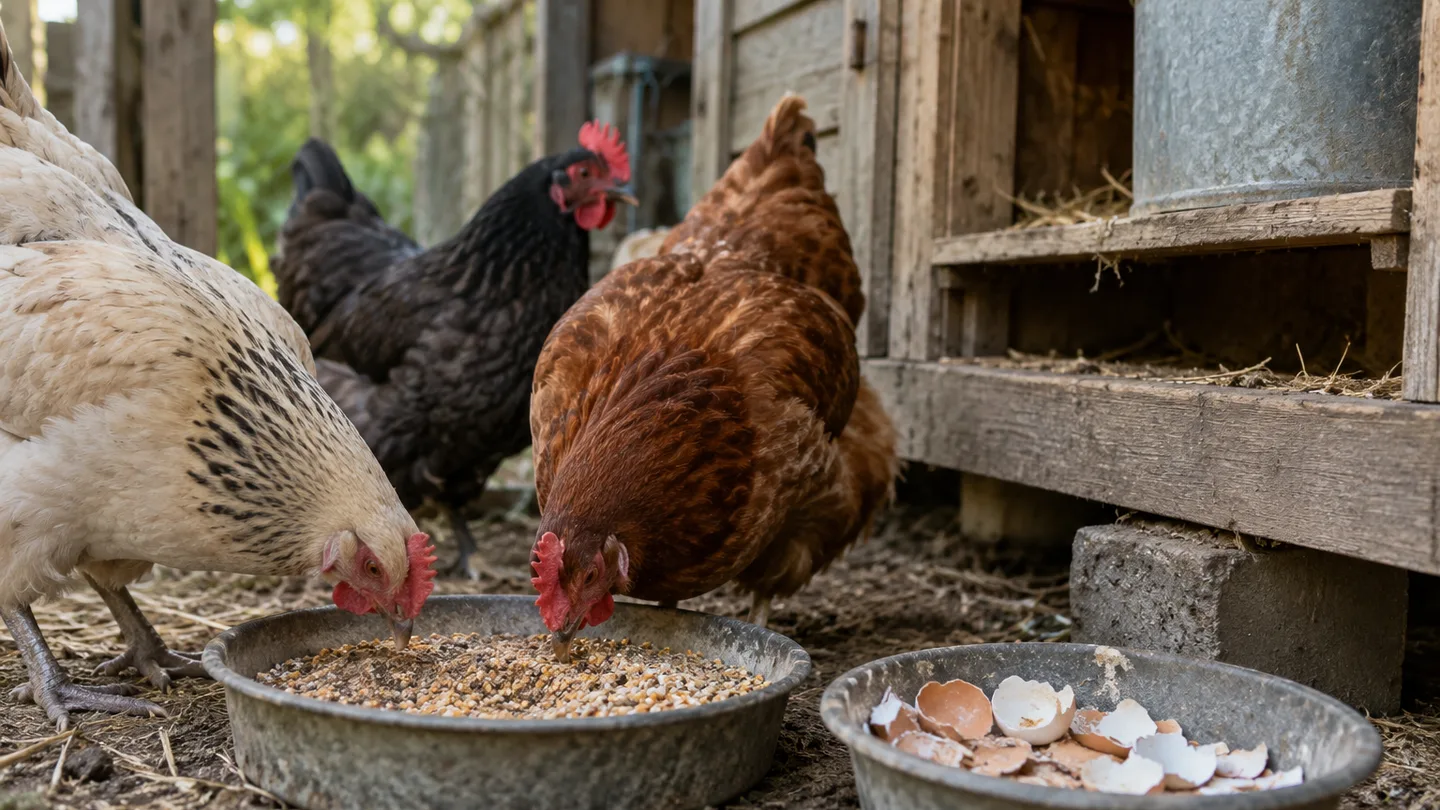
For layer formulations, approximate reference bands often used for comparison are 3.5–4.5% calcium and 0.35–0.45% available phosphorus. These are not universal instructions: age, feed intake, ingredient sources, and the chosen formulation standard can move the target. Confirm them for your flock and the specific premix or ration you plan to use.
Oyster shell offered separately can be a practical calcium source for laying hens, but it doesn’t turn a poorly balanced base feed into a complete ration. Nor should you use a layer-level calcium target for every bird in a mixed-age flock. For background on the separate role of insoluble grit, see grit for chickens; grit helps grind feed in the gizzard, while oyster shell supplies calcium. They answer different needs.
My practical preference is to treat shell quality as a clue to investigate, not an invitation to pour in more calcium. That avoids correcting one visible sign while overlooking feed dilution, an age mismatch, or another cause.
Check the amino acids and micronutrients a grain mix can quietly miss
A ration can show a plausible crude-protein number and still miss important details. For layer diets, approximate comparison ranges sometimes used for formulation are 0.70–0.80% lysine and 0.30–0.40% methionine. Verify the right targets for your birds and the formulation you’re using; these ranges don’t certify a mix made from ingredients with unknown nutrient values.
Salt, trace minerals, and vitamins need attention as well. A poultry-specific vitamin-mineral premix can be part of a formulated ration, but the product’s inclusion rate is specific to that product. Read its label and follow its stated rate. Don’t translate instructions into a generic scoop, pinch, or homemade micro-dose.
When you compare references, look for a current poultry nutrition reference that identifies species, age, and production stage. For practical storage and small-flock context, check local university extension feed guidance. A reference can help you frame questions; the exact premix label still governs how that product is used.
Build and mix by weight; tiny premix errors can unbalance a whole batch
Start with the bird and the target, then collect the nutrient specifications for every ingredient. Have the complete formula checked before buying a large quantity. Use a scale suited to the amounts you’re weighing, especially for small ingredients, and follow the premix maker’s inclusion rate rather than borrowing a rate from another product.
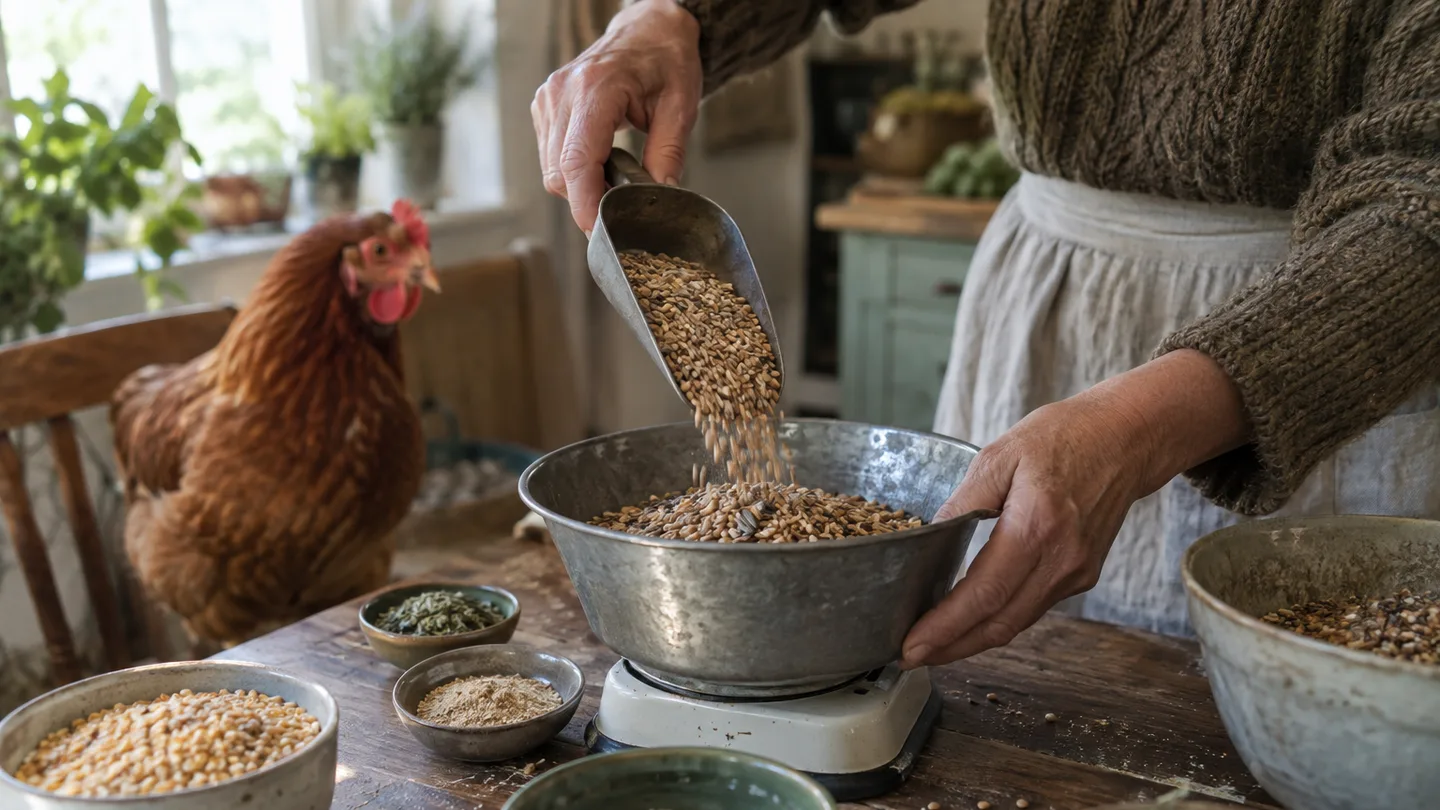
When the premix amount is small compared with the finished batch, distribute it in stages. First blend the premix thoroughly into a modest amount of a carrier ingredient. Then add that pre-blend to a larger portion, mix again, and incorporate it into the full batch. The point is to spread a small amount through the feed instead of leaving concentrated pockets. A careful mixing sequence reduces one avoidable source of unevenness; it doesn’t correct an unbalanced formula.
- Choose one life stage. Don’t start with a “one mix for every bird” assumption.
- Write down the target and ingredient analyses. If a value is missing, ask the supplier or choose an ingredient with usable specifications.
- Calculate the full ration. Include the premix, salt, minerals, and any other specified components.
- Weigh, pre-blend, and mix. Record the batch ingredients and date so you can trace what went into the bin.
Don’t scale a formula up or down by casual volume measures. Cups of two different ingredients can weigh differently, and even the same ingredient can settle differently in a scoop. If you can’t weigh and mix reliably, a complete commercial ration is the safer practical choice for a small flock.
Use egg and flock clues as a check, not as a nutrient test
Illustrative walkthrough—not a report from a particular flock: imagine a keeper with six hens, including two pullets that haven’t started laying, notices several thin-shelled eggs. First, they check the feed label and confirm the ration is intended for active layers. Next, they estimate how much of the daily intake is coming from scraps and scratch grains. Those extras can dilute a complete ration if they displace too much of it.
Then the keeper checks flock age and access to feed and water, and notes whether the change is occasional or recurring. They review whether a separate calcium source is available to the laying hens, while keeping the younger pullets’ needs in view. Finally, they ask a qualified poultry nutrition source to review the base feed and any proposed changes. Each step narrows the question; none of the visible signs alone proves a particular deficiency.
That sequence is useful because shell changes can have more than one explanation. Feed refusal, slow growth, or a change in body condition also deserves attention, but those observations don’t identify a single nutrient problem on their own. Keep notes on what changed and when. Persistent poor condition, illness, or a bird that stops eating is a reason to contact a poultry veterinarian rather than keep adjusting ingredients at home.
I don’t regard a glossy-looking egg or a tidy ingredient list as proof that a ration works. A formula should stand on its nutrient calculations; the birds’ condition and eggs are checks that may prompt a closer look.
Before you replace a bagged ration, compare cost, storage, and the safer first step
Homemade feed is not automatically cheaper. Price every ingredient, the premix, any suitable storage containers, and the amount you’ll actually use before deciding. Work out the cost per kilogram of finished feed from current local prices, then compare it with the complete ration available near you. Ingredient costs vary by location and season, so check current prices rather than relying on someone else’s old shopping list. For the wider budget, see cost of chickens.
Storage is part of the formula’s practicality. Keep feed dry and protected from pests, use containers that close securely, and check the feed regularly for changes in smell, appearance, or condition. Make only an amount you can store and use responsibly. A big batch can look efficient on paper and still be the wrong choice if your ingredients vary or the feed sits too long in poor conditions.
My take: for three to twelve hens, the best first experiment is often not replacing the whole ration. Record what your flock eats, check whether treats are displacing complete feed, and price out the ingredients and premix. If you still want to formulate your own, have a qualified source review the complete calculation before you mix a full batch.
This week, write down each bird’s age, whether she’s laying, and how much feed the flock uses. Take that list and your proposed ingredient labels to a poultry nutrition reference or qualified adviser before making a batch.
Quick questions
Can chickens eat homemade feed without a vitamin-mineral premix? A grain-and-protein blend isn’t automatically complete. A premix is commonly part of a formulated ration, but its label and the full formula determine whether and how it belongs.
Can I feed layer pellets to my whole mixed-age flock? Don’t assume a layer ration suits chicks or growing pullets. Its calcium target is intended for laying birds; ask a poultry nutrition source how to feed a mixed-age group.
Do chickens need grit with homemade feed? Birds eating whole grains or other substantial particles generally need access to insoluble grit. Oyster shell supplies calcium and is not a substitute for grit.
Can I use the same homemade ration for ducks? Not by assumption. Formulate for the species and life stage rather than carrying a chicken ration over automatically.
Frequently Asked Questions
Can chickens eat homemade feed without a vitamin-mineral premix?
A grain-and-protein blend is not automatically complete; a suitable poultry premix is usually part of a formulated ration, and its label determines the inclusion rate.
Do chickens need grit when they eat homemade feed?
Birds eating whole grains or other substantial feed particles generally need access to insoluble grit; oyster shell is a calcium source, not a substitute for grit.
Can the same homemade ration be fed to ducks?
Not by assumption: ducks have different nutrient needs and life-stage requirements, so use a ration formulated for the species and age.