Can Chickens Eat Carrots? Raw, Cooked, and How to Serve Them
A carrot can be a perfectly sensible treat for your hens, raw or cooked, as long as it stays a side dish. The practical difference is texture: grate or finely chop a firm raw carrot, and serve cooked pieces plain and cooled. Keep their complete feed in the lead.
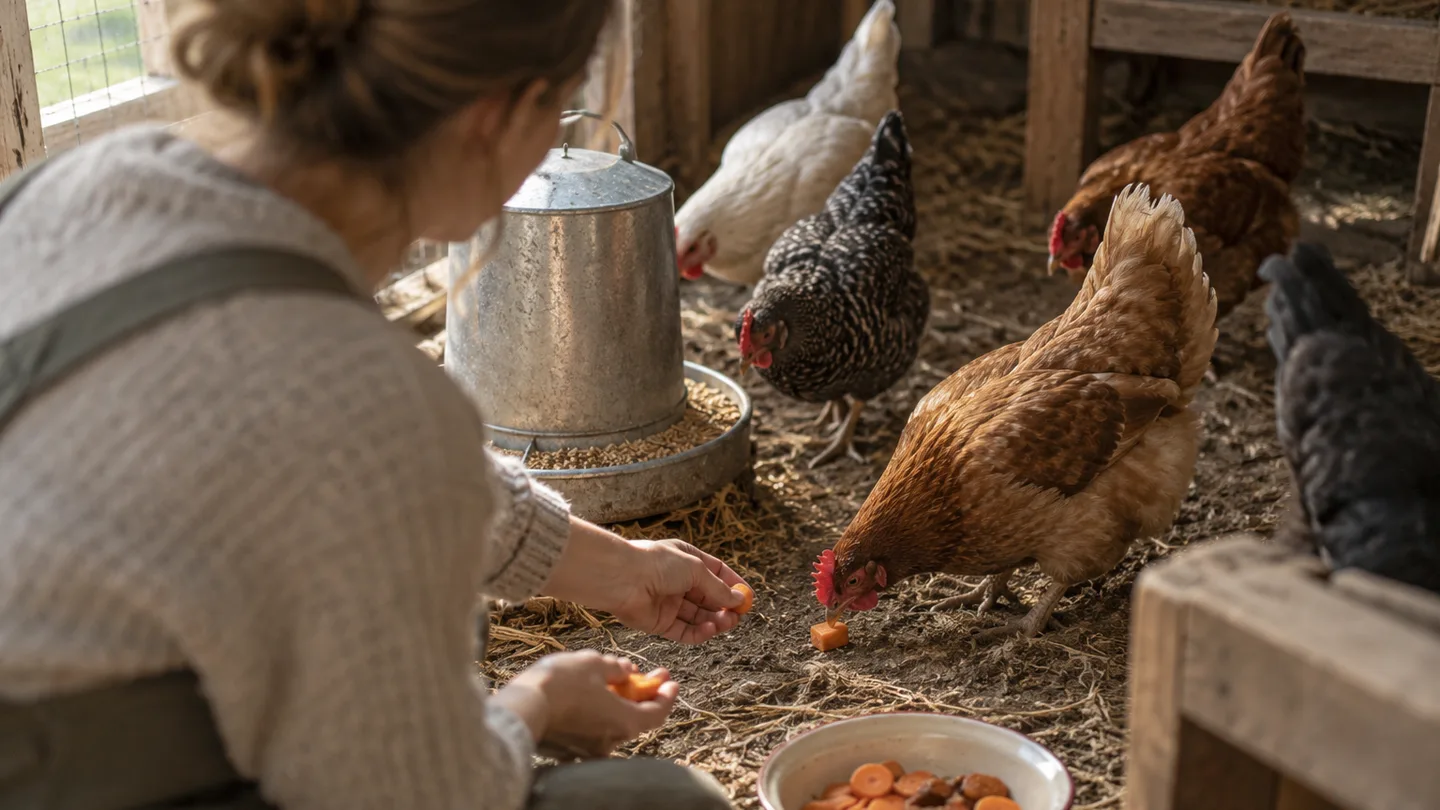
Yes—your chickens can eat carrots, but carrots aren’t chicken feed
For a healthy backyard flock, my practical answer is yes: carrots are suitable as an occasional treat. Raw and cooked carrots offer a change from the usual ration, but they don’t replace the balanced feed you choose for laying hens or growing chicks. A bird filling up on extras has less appetite for the food designed to cover its everyday nutritional needs.
That’s the distinction to keep in mind. A few carrot pieces alongside the normal ration are one thing; a bowl of scraps standing in for feed is another. Treats can also include whatever else you’ve tossed into the run that day, such as fruit, greens, or kitchen scraps. Count the whole lot together rather than treating each item as if it had its own allowance.
A useful planning rule is to keep all treats to about 10% or less of the daily diet. Think of that as a cautious ceiling, not a carrot-specific serving size or a promise that every flock will eat exactly that amount. If your birds are leaving their regular ration, cut back on extras first.
Raw carrots: make the hard root easy to peck
Raw carrots are firm. That’s the main serving issue: a large, hard piece can be awkward for a bird to manage, especially if smaller or lower-ranking hens don’t get a chance to work at it. Grating or finely chopping the carrot makes it easier for the flock to peck at manageable bits.
You don’t need a ruler or a special chicken-carrot cutter. Aim for pieces that are small and loose rather than a hard chunk or a long, stiff strip. If you’re unsure, grate the carrot. That gives several birds access at once and avoids leaving one large piece for a hen to tug at while others wait.
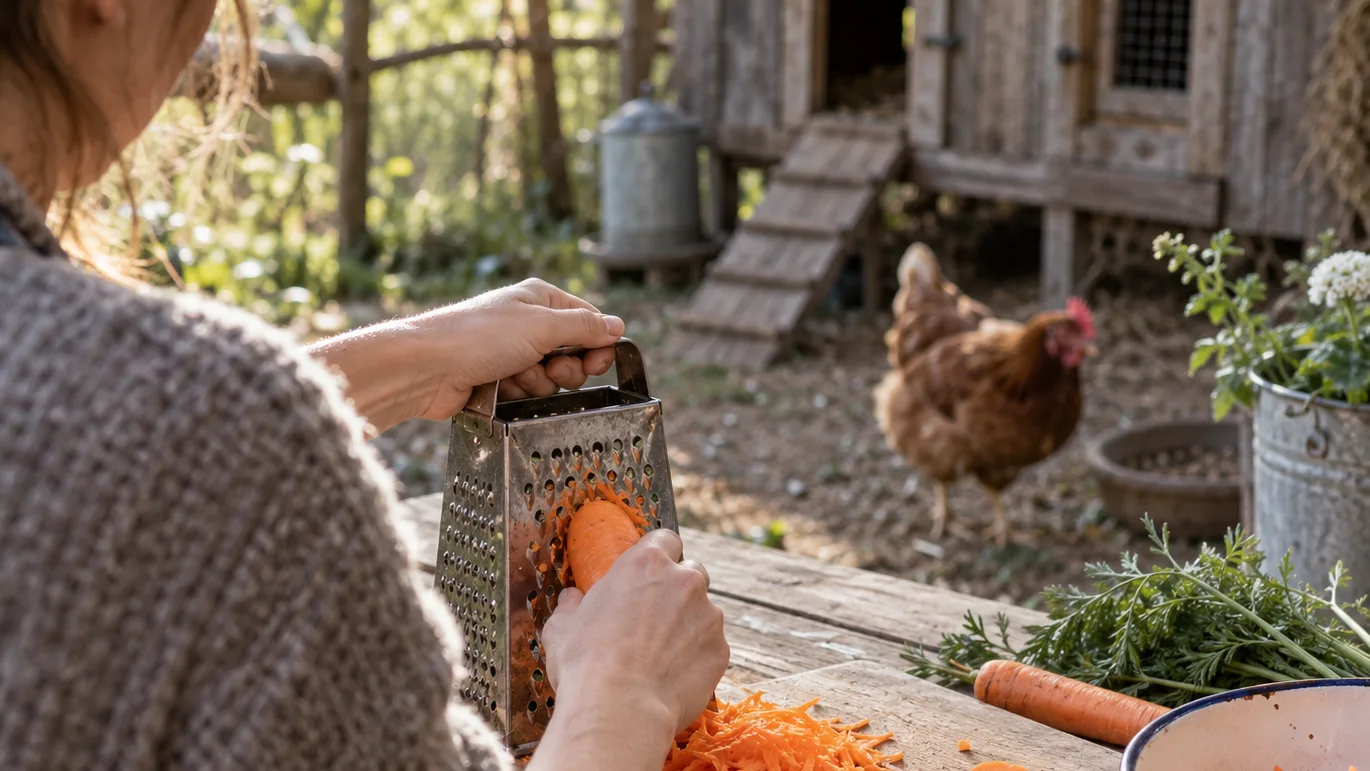
A whole carrot can be offered as something for adult birds to investigate, but I wouldn’t make it the default way to serve a treat. It can take longer to eat, and access may be uneven. For a small flock, chopping or grating is the straightforward option. Watch the first few minutes: if a piece is ignored, too large for the birds to manage, or being monopolized by one hen, take it away and offer smaller bits another time.
The concern here is practical access, not a need to cook every carrot. Raw is fine when your birds can peck at the pieces comfortably.
Cooked carrots belong in the treat bowl plain and cooled
Steaming or boiling softens carrots, so plain cooked pieces can be easier to peck than a hard raw root. Let them cool fully before offering them. A warm pot of vegetables isn’t a reason to rush a serving into the run; wait until the pieces are comfortable to handle and no longer steaming.
Keep the preparation plain. Don’t add salt, butter, oil, sauce, or seasoning for your flock. Those additions don’t make the carrot a better chicken treat, and they make it harder to keep the serving simple. If the carrots came from a dish prepared for people, check what went into it; when you don’t know, leave that dish off the treat menu.
Cooking changes the texture, not the role carrots play in the diet. A soft carrot is still an extra, not a substitute for complete feed. Offer a small amount, then notice whether your birds go back to their normal ration.
Root, peel, tops: what to do with the rest of the carrot
You don’t have to peel a carrot for chickens if you wash it well and the skin is clean. Clean peelings and carrot tops can also be offered in small amounts. Treat them as another bit of variety, not a way to use up a whole bowl of kitchen trimmings at once.
Skip anything moldy, rotten, or heavily caked with soil. If a scrap smells off or you wouldn’t want it in your own kitchen, don’t put it in the run. Washing can remove ordinary dirt; it doesn’t turn spoiled food into a suitable treat.
Fresh scraps don’t belong on the ground all day. Pick up what the flock hasn’t eaten while it’s still fresh, especially in warm or damp weather, when wet food left in a run can turn unpleasant quickly. The useful test is simple: offer a little, watch the birds, and remove the rest rather than leaving a pile for them to return to later.
How much? Start small; don’t chase a grams-per-hen rule
There isn’t one sensible grams-per-hen carrot portion for every backyard flock. Birds vary in size, their main ration differs by age and purpose, and your hens may already be getting other treats. A number that ignores those details can sound precise while telling you very little about whether your own birds are eating enough of their normal feed.
Start with a few small pieces for the flock, after the regular ration is available. That is a cautious trial, not a measured daily allowance. If the birds eat the carrot readily and still eat their usual feed, you can offer a small amount again later. If carrot becomes the main event and feed sits untouched, reduce the extras.
For example, with four adult hens, grate a small amount of carrot and scatter it where all four can reach it. Don’t add a second round just because one bird ate quickly. Check the feeder afterward: the point is to see whether the treat fits around the ration, not to make every hen eat an identical portion. On another day, if the flock is already getting fruit or another treat, count those extras in the same overall limit.
Use about 10% of the daily diet as a practical upper planning cap for all treats combined, not as a target to fill. Your complete feed should remain the nutritional base. If you need to review the regular ration itself, compare it with guidance on how much feed per chicken per day for laying hens.
Frequency is a flock-management choice, not a weekly carrot quota
There’s no universal number of carrot days per week that works for every flock. The more useful question is whether treats are crowding out the complete ration. A small serving now and then is easier to fit into the diet than a daily habit of offering extras without checking how much feed your birds are eating.
Make the decision by watching the pattern. If the feeder is being used normally and the birds are keen on their regular feed, an occasional carrot treat can fit. If they wait for scraps, leave feed behind, or are already getting several extras, pause the treats and let the usual ration take priority. That’s a more useful signal than following a calendar rule that doesn’t account for everything else in the run.
My judgment is that variety is less valuable than a predictable feed routine. Carrots don’t need to appear on a schedule. Save them for a small treat serving, and adjust based on what your flock actually eats.
Chicks and a busy run need a different serving approach
Chicks should have chick starter as their main food. If you offer them carrot, keep the pieces especially small and easy to peck; a firm chunk that an adult hen can manage may be a poor choice for much smaller birds. If the pieces aren’t manageable, don’t offer them.
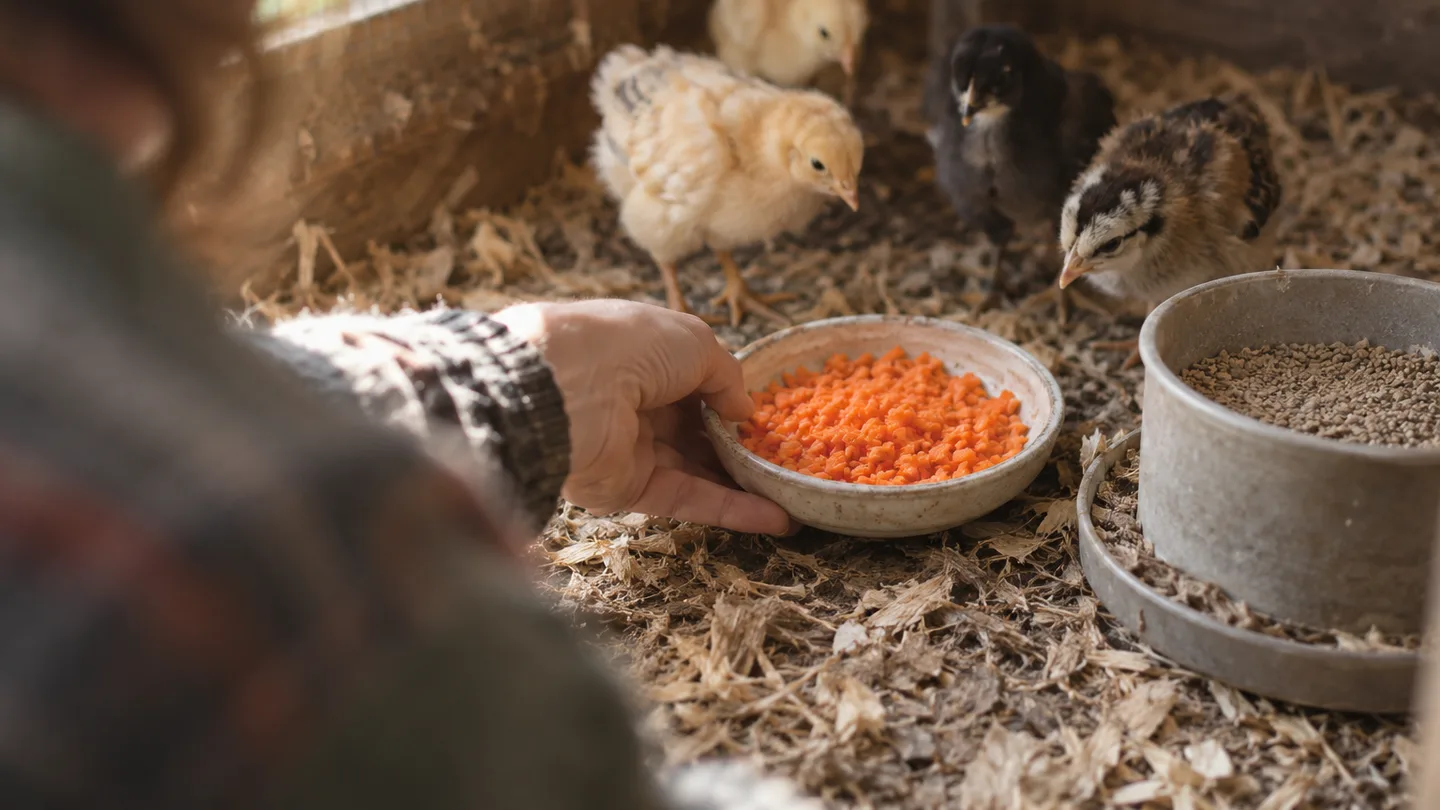
When chicks eat foods beyond their starter that need grinding, they may need access to appropriately sized insoluble grit. The right grit depends on the birds’ age and what they’re eating; don’t assume adult-sized grit is suitable for chicks. If you’re unsure what size to provide, check a reliable guide to grit for chickens or ask a poultry professional familiar with young birds.
For adult hens in a crowded run, scattering a small amount in more than one spot can give quieter birds a chance to get some. Keep the portions modest. The aim is to make a treat accessible, not to create a scramble or turn the carrot into a meal. If one bird guards the food, remove it and try a calmer arrangement next time.
For another treat comparison, the guide to can chickens eat apples can help you think through how fruit fits alongside a complete ration.
Try one small serving this week, then check what your birds actually eat
Put out your birds’ normal feed first. Then offer a few grated or finely chopped carrot pieces and watch how the flock responds. Notice whether the hens can manage the texture, whether one bird blocks the others, and whether any scraps remain. Remove leftovers rather than letting fresh food sit in the run.
Afterward, check that your birds are still eating their regular ration. If they ignore the carrot, there’s no need to persuade them; it’s an optional treat. If they enjoy it, keep the next serving small and count it with every other extra they get that day.
Your next step this week: try that single small serving after the feeder is stocked, then adjust based on what you see. If you’re still building a feeding routine, compare your flock’s normal intake with the laying-hen feed guide before adding more treats.
Can chickens eat frozen carrots?
Let frozen carrots thaw fully, then offer manageable pieces. Don’t give your birds hard, icy chunks. If the thawed pieces are still too large or firm, grate or chop them before serving.
Can chickens eat canned carrots?
You can offer a small amount of plain canned carrot after draining it. Check the label and skip products with added salt, sauce, or seasoning. Keep it an occasional extra, just like fresh or cooked carrot.
Can carrots make egg yolks more orange?
Carotenoid-containing foods can contribute to yolk color, but carrots won’t reliably create a particular shade. The overall diet matters, so don’t use carrots as a color-control plan or increase treats at the expense of complete feed.
Frequently Asked Questions
Can chickens eat frozen carrots?
Let them thaw fully and serve them in manageable pieces; don’t offer hard, icy chunks.
Can chickens eat canned carrots?
Plain canned carrots can be offered sparingly; drain them and avoid products with added salt, sauces, or seasoning.
Can carrots make egg yolks more orange?
Carotenoid-containing foods can contribute to yolk color, but carrots won’t reliably produce a particular shade; the overall diet matters.