Can Chickens Eat Pumpkin? Safe Portions, Seeds, and Prep
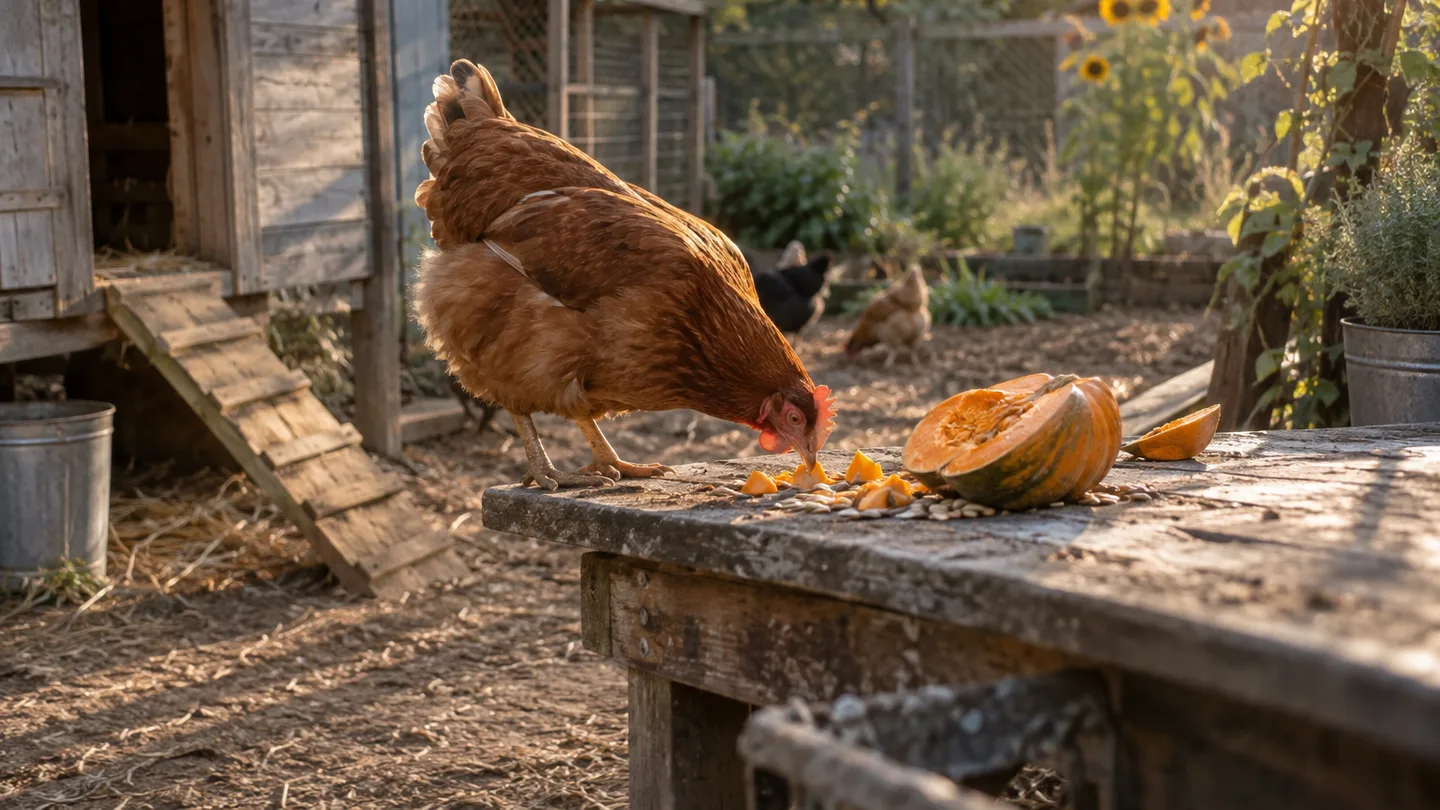
One tablespoon of chopped pumpkin per hen is a cautious first taste, not a pumpkin-specific safety limit. Yes, chickens can eat plain pumpkin flesh, seeds, and stringy pulp; offer it as an occasional treat and keep a complete layer ration as the main meal.
The useful question isn’t whether your hens can peck pumpkin. It’s how much you can offer without crowding out the feed that does the nutritional heavy lifting, and how to tell a sound pumpkin from one that should go in the bin.
Yes, chickens can eat pumpkin—but start with a small serving
For a first offering, try about 1 tablespoon of chopped pumpkin per hen. Treat that as a cautious starting point, not an official dose or a proven safety threshold. A small hen, a bird that’s never seen pumpkin, or a flock already getting scraps may need less. If the birds eat it calmly and still come to their regular feed, you can offer a little more another time.
Pumpkin belongs in the treat column, not the ration column. Your layer feed is formulated to provide a balanced mix of nutrients. Pumpkin is an extra food, so a large serving can take up space in a bird’s appetite without supplying the same balance. If hens fill up on treats and eat less complete feed, their overall intake can become less balanced. That’s why excessive treats can matter to egg production: they may displace the nutrients the bird would otherwise get from its regular ration. It doesn’t mean one pumpkin snack will stop a hen laying.
I use about 10% of the diet as a practical upper limit for treats overall, not as a pumpkin allowance to add on top of everything else. It’s a rough planning rule. You probably won’t weigh every scrap your flock eats, so use it as a reminder to keep extras modest. Count pumpkin alongside kitchen scraps, scratch grain, and any other treats you’ve offered that day.
If you want to check the regular-feed side of the calculation, compare your routine with how much layer feed per chicken per day. A how much feed per chicken per day calculator can help you scale the amount to your flock, but remember that treats should not quietly reduce the complete feed your hens actually eat.
My preference is to start small and watch what happens at the feeder rather than put out a big half pumpkin because it looks generous. A treat is useful when your birds enjoy it without making the main meal an afterthought.
Seeds, stringy pulp, and rind: what can stay in the feeder?
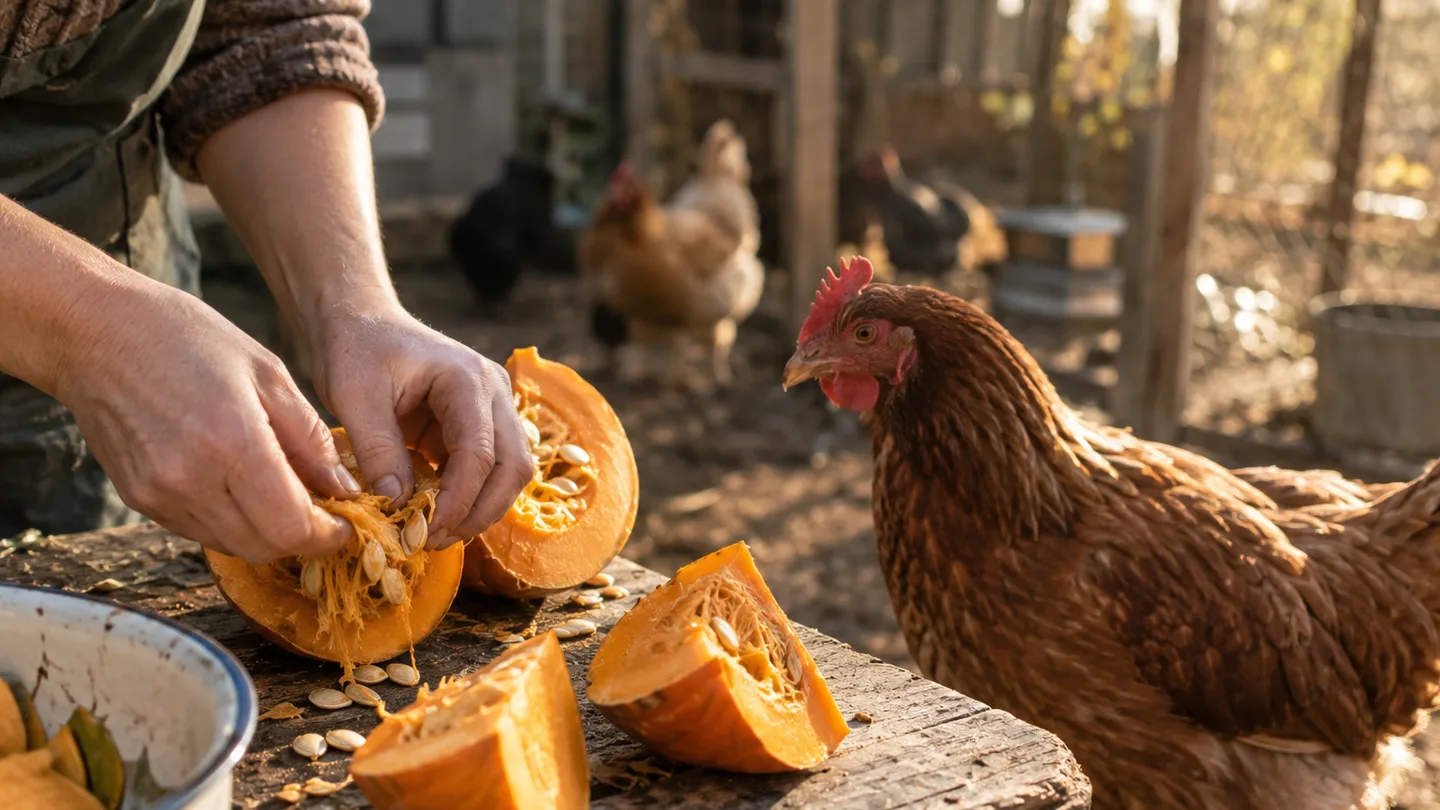
You don’t need to scrape out the seeds or the stringy interior before offering fresh pumpkin. Your hens can peck at the flesh, seeds, and pulp. There’s no special seed preparation needed for an ordinary small serving. Cut the pumpkin into pieces your birds can manage, especially if the rind is firm and they’re leaving it untouched.
Seeds are food, not a worming plan. You may hear claims that pumpkin seeds deworm chickens, but don’t use a handful of seeds as a substitute for diagnosing a parasite problem or following veterinary advice. Changes in droppings, condition, or laying can have more than one cause. If you suspect worms, ask a poultry veterinarian or local extension office what to check and what treatment is appropriate for your flock.
The rind is a matter of practicality. Some hens will work at it; others may peck the softer centre and leave a hard outer piece. If yours are struggling, cut the pumpkin into smaller wedges or remove the rind rather than expecting them to tackle a large, tough section. Don’t leave a big piece where one confident bird can guard the best bits while the rest wait.
Freshness matters more than whether every seed has been removed. I’d discard pumpkin that is moldy, slimy, or smells spoiled instead of trimming off the obvious patch and serving the rest. The visible mark doesn’t give you a reliable boundary for everything that may be happening in the softened food, and you can’t inspect every peck-sized piece once the birds start tearing it apart. With a low-cost treat, guessing at the edge of spoilage isn’t a worthwhile trade.
For a parasite concern, look for veterinary or extension guidance on diagnosing and treating intestinal parasites in chickens rather than relying on a food remedy. Seeds can still be part of an occasional snack; they just shouldn’t be presented as medicine.
Raw, cooked, or roasted: prep it plain and easy to peck
Raw pumpkin is convenient, and cooking it is optional. Either way, offer it plain. Cooked pumpkin should be cooled before it reaches the feeder, and it doesn’t need salt, oil, sugar, or seasoning. Those additions don’t make the treat more useful to your birds.
Here’s a simple prep sequence for fresh pumpkin:
- Check the outside and inside for mold, soft decay, or a spoiled smell. If you find those signs, don’t serve it.
- Rinse the outside before cutting, so dirt on the skin is less likely to transfer to the flesh as your knife goes through.
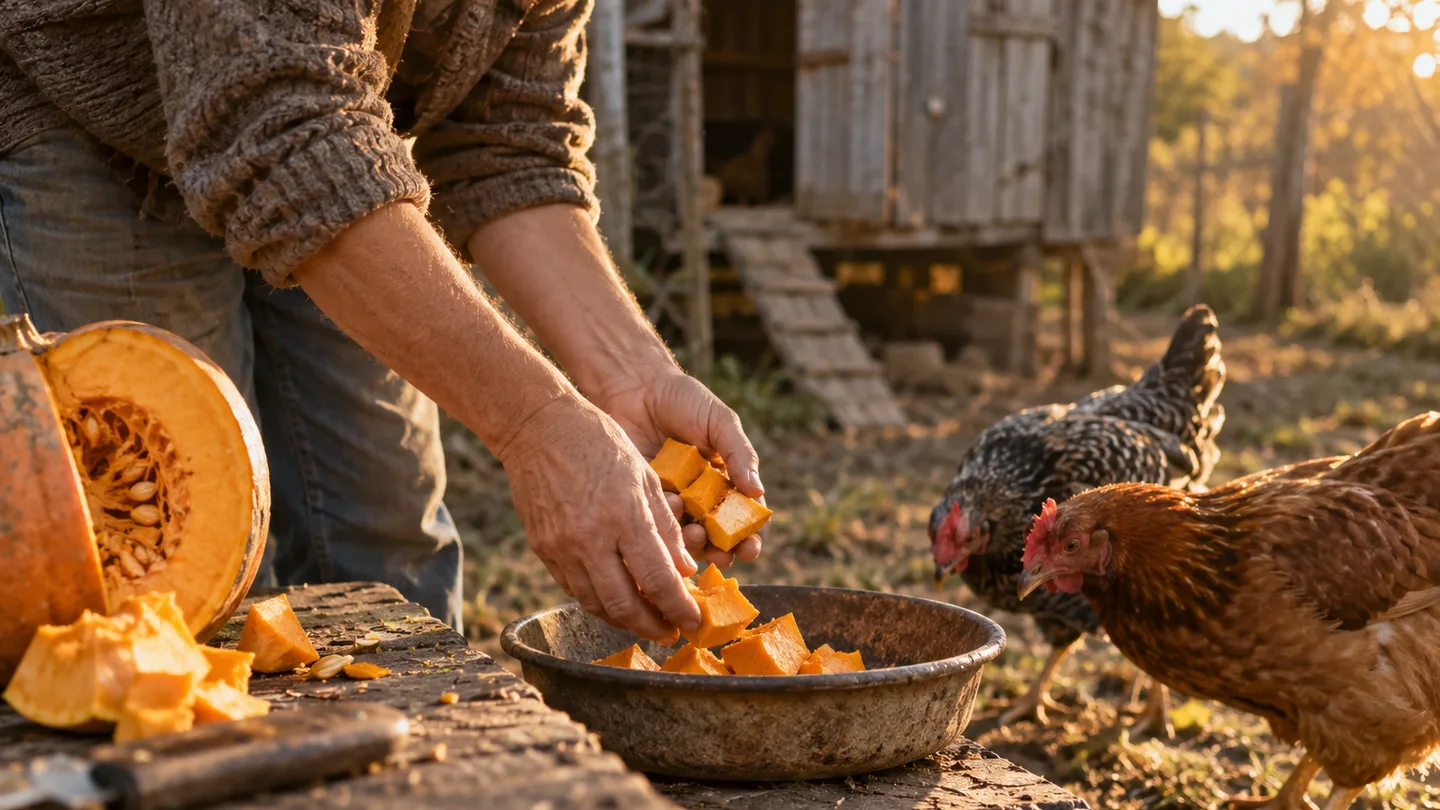
- Cut a small amount into pieces your hens can peck. If the rind is too hard for them, make smaller pieces or remove it.
- If you’re using cooked pumpkin, let it cool and check that it’s plain before offering it.
- Set out a modest portion where more than one bird can reach it, then pick up uneaten pieces before they deteriorate.
Roasting doesn’t create a special benefit that makes a larger serving appropriate. It’s simply another way to soften the pumpkin. Keep the flesh free of the seasoning, oil, or sweet glaze that might be on a portion prepared for people. If you’ve roasted a plain piece, cool it and offer a small amount.
Soft cooked pumpkin can be messy. If it smears into bedding or gets trampled underfoot, serve it in a washable dish or stick with firmer raw chunks next time. The best preparation is the one that lets your flock eat a little without leaving a damp patch of food where you have to clean it up later.
Scale the serving to 3, 6, or 12 hens without crowding the feeder
Using the cautious first taste of about 1 tablespoon per bird, the arithmetic is straightforward: 3 hens get about 3 tablespoons total, 6 hens about 6 tablespoons, and 12 hens about 12 tablespoons. These are starter examples, not official limits. They help you avoid putting out a whole pumpkin by default when you’re only trying the food.
| Flock size | First-offering example | What to watch |
|---|---|---|
| 3 hens | About 3 tablespoons total | Can each bird get a turn? |
| 6 hens | About 6 tablespoons total | Is anyone guarding the dish? |
| 12 hens | About 12 tablespoons total | Can the flock spread out to eat? |
This table scales the same small first taste. It doesn’t mean every flock needs that amount, or that pumpkin should appear every day. Appetite varies with bird size, the rest of the day’s treats, and whether your hens are already eating their normal ration. If you’re offering several kinds of extras, reduce the pumpkin portion rather than treating each snack as a separate allowance.
For a practical six-hen example, measure roughly 6 tablespoons of chopped pumpkin into a dish, set it where the birds can gather without bottlenecking, and watch the group rather than just the quickest hen. If two birds monopolize the dish, split the same small total between two spots instead of adding more food. That changes access, not the amount of treat available to the flock.
Check the regular feeder later. If it’s clear the pumpkin has displaced the birds’ usual feed, make the next offering smaller or skip it. Use the how much feed per chicken per day calculator as a planning aid for the main ration, not as a reason to increase treats. The important signal is whether your hens are still eating their complete feed as usual.
A treat should also be easy to clean up. Put out less if there’s a pile left uneaten, and don’t leave a heap where only a few birds can reach it. You can offer another small taste on a different day if the first one goes well; there’s no need to make a single serving do the work of a whole meal.
Carved, stored, or past its best? Know when pumpkin belongs in the bin
An intact pumpkin that’s been kept clean and still looks and smells sound is different from a carved one that has sat outdoors and started to deteriorate. Check it before feeding. Discard pieces that are moldy, slimy, soft with decay, or unpleasant-smelling. Don’t assume that a pumpkin is safe just because most of it still looks firm.
Skip any part contaminated by candle wax, paint, glitter, or decorations. A carved display may have picked up materials you don’t want your birds pecking at, even if the pumpkin itself began as plain produce. When you’re unsure what touched it, choose a fresh piece instead.
After serving, remove leftovers before they spoil. Be especially prompt in warm weather, when a damp, cut surface sitting in the run can become an unattractive mess. There isn’t one universal clock for every backyard: temperature, shade, the size of the pieces, and how much birds have trampled all change how quickly food deteriorates. Check the actual leftovers rather than assuming yesterday’s food is fine today.
If you’re composting suitable scraps, keep the setup managed so your birds aren’t encouraged to rummage through questionable food. You can read more about chicken manure compost when you’re planning how to handle coop waste and garden material; composting is separate from deciding whether a particular scrap is fit to feed.
This week, offer one small portion of plain pumpkin, make sure the birds can reach it, and check afterward that their usual feed remains the main meal. That simple trial tells you more about your flock’s interest and feeder dynamics than putting out a whole carved pumpkin and hoping for the best.
Quick answers about pumpkin products and seeds
Can chickens eat canned pumpkin? A small amount of plain pumpkin with no added ingredients can be offered as a treat. Read the label rather than relying on the front of the can; products that include sweeteners, salt, or seasoning aren’t the plain option.
Can chickens eat pumpkin pie filling? I’d skip it. Check the ingredient list: if it includes sugar, spices, or other additions, it’s not the simple pumpkin treat your flock needs. Plain pumpkin is an easier choice.
Do pumpkin seeds deworm chickens? Don’t count on them to treat worms. Offer seeds as food if you like, but suspected parasites call for veterinary or local extension guidance, not a seed-based treatment plan.
Frequently Asked Questions
Can chickens eat canned pumpkin?
Plain 100% pumpkin with no added ingredients can be offered as a small treat; check the label and avoid sweetened or seasoned products.
Can chickens eat pumpkin pie filling?
Recommend skipping it because it commonly contains added sugar and spices; offer plain pumpkin instead.
Do pumpkin seeds deworm chickens?
No reliable treatment claim should be made. Seeds are food, not a proven dewormer; suspected parasites call for veterinary or local extension guidance.