Can Chickens Eat Popcorn? Plain Is Fine, but Skip the Toppings
A bowl of plain, fully popped popcorn is okay as an occasional snack for adult chickens. Keep it small, let your birds finish their complete feed, and skip the salt, butter, sugar, and seasoning. The useful rule is about the whole treat budget, not a magic number of popcorn kernels.
Yes—adult chickens can eat plain popcorn, but it’s a treat
If you’re asking, “Can chickens eat popcorn?” the practical answer is yes, provided it’s plain, fully popped, and offered now and then. Think of it as a bit of enrichment, not a meaningful part of the ration. Popcorn doesn’t provide the balanced mix of nutrients your birds need from a complete chicken feed, so it shouldn’t displace that feed.
A simple planning rule is to get roughly 90% of the diet from complete feed and keep all treats combined to about 10% or less. That’s a cautious guide, not a sharp biological boundary or a guarantee that every flock needs exactly the same split. A handful of popcorn, kitchen scraps, fruit, and other extras all draw from the same treat allowance.
That distinction matters on a small backyard scale. If you toss popcorn after the flock has already had access to its normal ration, it’s easier to keep it an extra. If the snack becomes the exciting part of feeding time and your birds leave their ration behind, cut back. I’d rather have a modest treat that keeps its place than a bigger serving that changes what the flock eats for the rest of the day.
My practical call: offer a little, watch what happens to the regular feed, and don’t turn popcorn into a daily routine just because the birds rush over for it. Eagerness is not a nutrition test.
Pop it fully, let it cool, and remove the hard kernels
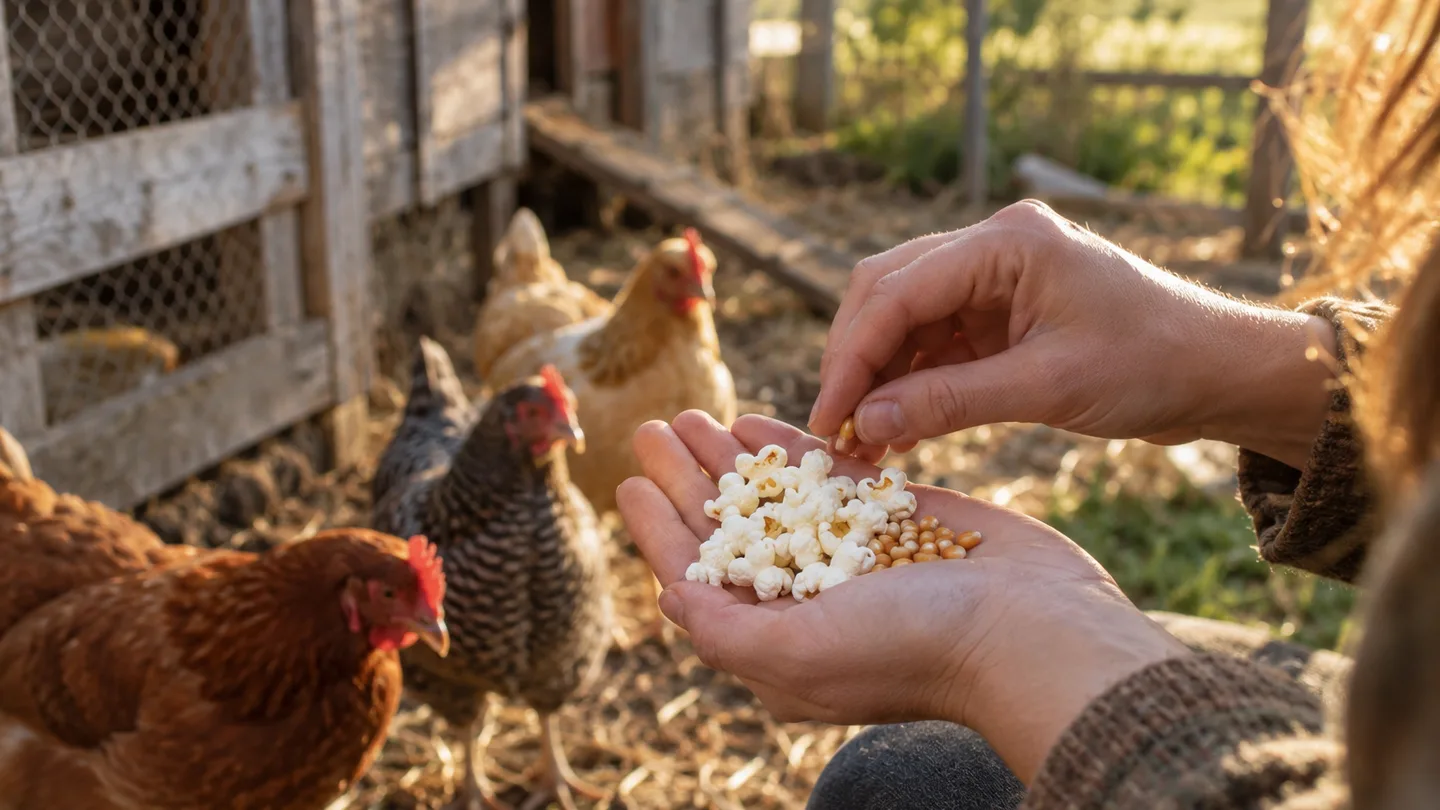
Preparation is straightforward. Start with plain popcorn, pop it without toppings, let it cool to room temperature, then look through the batch and remove kernels that haven’t popped. Break up any large clumps so birds can peck at separate pieces instead of trying to swallow a wad.
- Choose plain. Use unseasoned popcorn rather than a flavored microwave bag or a ready-to-eat snack mix.
- Check the batch. Pick out the hard, unpopped kernels. They add no useful treat value, and there’s no reason to offer the hardest pieces.
- Cool it completely. Don’t put warm popcorn straight into the feeder area. Let it reach room temperature first.
- Offer a small scatter. Spread a few pieces where several birds can reach them, or use a shallow dish. Treat the first serving as a sample, not a target portion.
Fully popped pieces are light and easy to scatter around a run. The hard kernels are different: they’re dense, and a bird may gulp one rather than peck it apart. Removing them is a simple precaution, not a claim that every unpopped kernel will cause a problem. Likewise, cooling the snack is easy enough that there’s no upside to serving it hot.
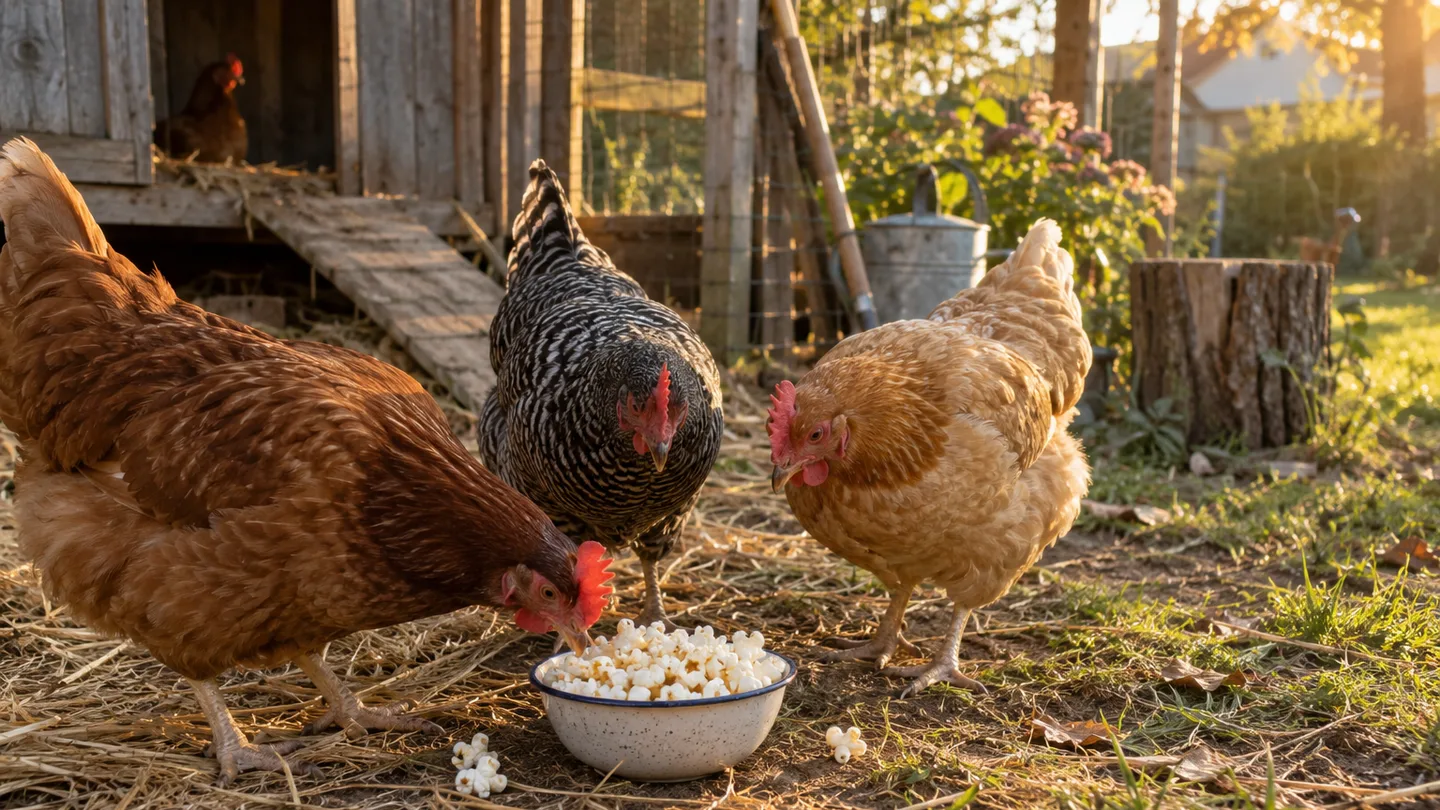
You don’t need to weigh a serving to make this decision. A cup can look generous in a bowl while being light in your hand, and serving size still depends on what else your flock gets that day. If you want a precise nutrition comparison, search for the plain, air-popped entry in USDA FoodData Central and check that it matches the popcorn you’re offering. Packaged products can differ, which is another reason to read the label rather than assume every popcorn snack is the same.
For a backyard flock, the best portion is the one that gives birds a brief snack without leaving them full of extras when their regular feed is available. If you’re unsure, start smaller. You can always offer another little scatter on a different day; you can’t undo a treat-heavy meal once the feeder has been ignored.
Butter, salt, sugar, and seasoning change the answer
Plain popcorn and movie-style popcorn aren’t interchangeable. Buttered, salted, caramel-coated, cheese-flavored, and heavily seasoned versions bring extra ingredients that your birds don’t need from a treat. I’d pass on all of them and choose plain popcorn instead. There’s no useful reason to work out a chicken-specific salt or seasoning threshold for a snack you can simply leave out.
Check the ingredient list, especially on microwave popcorn and packaged snack bags. A product can look like ordinary popcorn while including oil, salt, sweeteners, flavor powders, or several of those together. “Lightly seasoned” is still seasoned. If you can’t tell what’s in it, don’t make it a flock treat.
Butter and oil can make kernels greasy and sticky; sugary coatings make a sweet snack rather than a plain one. Seasoning powders can cling to beaks and feathers, and a strong flavor is no advantage to the birds. Those are practical reasons to keep the treat simple, not a claim that one accidental peck at a flavored kernel automatically causes harm. If your birds get into a small amount by mistake, remove the rest and return to their normal ration rather than offering more.
Unseasoned popcorn from a plain batch is the easy choice. If you’re looking for variety, use a food you already know is suitable for chickens instead of trying to make a human snack fit by scraping off its coating. For another treat question, see can chickens eat rice; the same useful habit applies: consider the food as an extra, not a substitute for balanced feed.
A flock-size check: keep popcorn inside the treat budget
There isn’t one exact popcorn dose that fits every hen. Breed, body size, time of year, access to forage, and the other extras offered all affect the practical choice. Start with the flock’s normal feed, then decide whether there’s room for a small treat. Don’t calculate a popcorn allowance by taking 10% of a scoop of feed by weight: the guide concerns the diet’s overall contribution, and different foods don’t provide the same energy or nutrients per gram.
For a simple planning exercise, assume an adult hen eats about 100–120 g of complete feed per day. Treat that as a rough working estimate to check against your feed label, the birds’ actual intake, and local guidance—not as a promise about what every hen will eat. Multiplying that assumption gives these flock totals:
| Adult hens | Illustrative complete-feed total per day | What the figure means |
|---|---|---|
| 3 | 300–360 g | Planning estimate for the regular ration |
| 6 | 600–720 g | Planning estimate for the regular ration |
| 12 | 1.2–1.44 kg | Planning estimate for the regular ration |
Those are feed-intake examples, not popcorn allowances. Use them to picture the scale of the flock’s regular ration, not to convert a portion of that ration into a scoop of popcorn. To adjust the example, multiply the per-hen estimate by your bird count: six hens times 100–120 g gives 600–720 g. Then check whether your own birds consistently leave feed behind or need more, rather than treating the arithmetic as a measured result.
Here’s a concrete case. Say you keep six adult hens and have already offered a few other treats that day. The example feed total is 600–720 g for the flock, but that number doesn’t mean you can now serve a fixed number of grams of popcorn. The treat budget is shared. If the birds have had scraps, fruit, or another snack, skip popcorn or make the sample especially small. If they’ve had no extras, a small scatter is a reasonable choice; there’s still no need to turn the rule into a precise popcorn quota.
For a feed-planning breakdown by bird count, see how much feed per chicken per day for laying hens. Keep that calculation separate from treats. Your goal is to keep a dependable complete ration at the centre of the day’s feeding, then make extras small enough that they don’t compete with it.
After the snack, check that your birds still eat their regular ration
Offer popcorn after your birds have access to their normal ration, or alongside the routine rather than instead of it. Watch the next feeding: do they return to their usual feed, or are they waiting for another snack? If popcorn seems to crowd out the ration, reduce the treat or stop offering it. That simple check is more useful than trying to guess a universal serving from the flock’s head count.
Small flocks also have a social wrinkle: the boldest birds may reach a dish first. Scatter a little in more than one spot or use a wider, shallow dish so you can see whether quieter birds get a chance. I’d treat access as part of portion control. A single bowl can make one snack look like a flock-wide treat when only a few birds got most of it.
Pick up leftovers once the birds have lost interest, particularly if the pieces are getting damp or soiled. You want to avoid leaving food sitting in the run. If a bird ignores one new snack but otherwise eats and behaves normally, there’s no need to coax it. If you see a persistent change in appetite, unusual behaviour, or signs of distress, stop the treats and contact a poultry veterinarian for advice. Popcorn isn’t a way to diagnose or treat a bird that seems unwell.
For a small flock, that’s the whole test: plain, cooled, fully popped pieces; a small serving; and a normal appetite for the regular ration afterward. If you want to offer a different snack another day, check the ingredient and the role it plays first. And if your birds eat foods beyond complete feed, make sure they have access to suitable insoluble grit; popcorn itself doesn’t do that job. See grit for chickens for the separate question of what grit is for.
Three quick questions
Can baby chicks eat popcorn?
Skip it for chicks. Their starter ration is designed for the growth stage, and popcorn doesn’t replace that balanced feed. Keep the brooder routine simple and offer the starter feed and clean water your chicks need.
Does popcorn count as grit?
No. Popcorn is food, not insoluble grit. If your birds eat treats or other foods beyond complete feed, provide access to appropriate grit rather than expecting a snack to perform that function.
Does popcorn keep chickens warm in winter?
Don’t rely on it for warmth. Popcorn remains a treat in cold weather; it doesn’t replace a complete ration, clean water, or a dry, well-ventilated coop. If you’re planning winter care, check your birds’ normal feed and water routine before adding snacks.
This week, check the popcorn label, set aside a plain batch, and offer a small cooled scatter only after your birds have access to their regular feed. Then watch whether they return to the ration as usual.
Frequently Asked Questions
Can baby chicks eat popcorn?
It’s best to skip it for chicks. Their starter ration is formulated for growth, and popcorn adds little that they need.
Does popcorn count as grit for chickens?
No. Popcorn is food, not insoluble grit; birds eating treats or other foods beyond complete feed may need access to appropriate grit.
Does popcorn help keep chickens warm in winter?
No special warming effect should be expected. It’s still only a treat, not a substitute for complete feed, water, or a dry, well-ventilated coop.