Can Chickens Eat Rice? Cooked, Raw, and Safe Portions
Yes: a healthy adult hen can eat plain rice, cooked or uncooked. Offer it as a small, occasional extra, not as a replacement for layer feed; rice is a grain, not a complete ration.
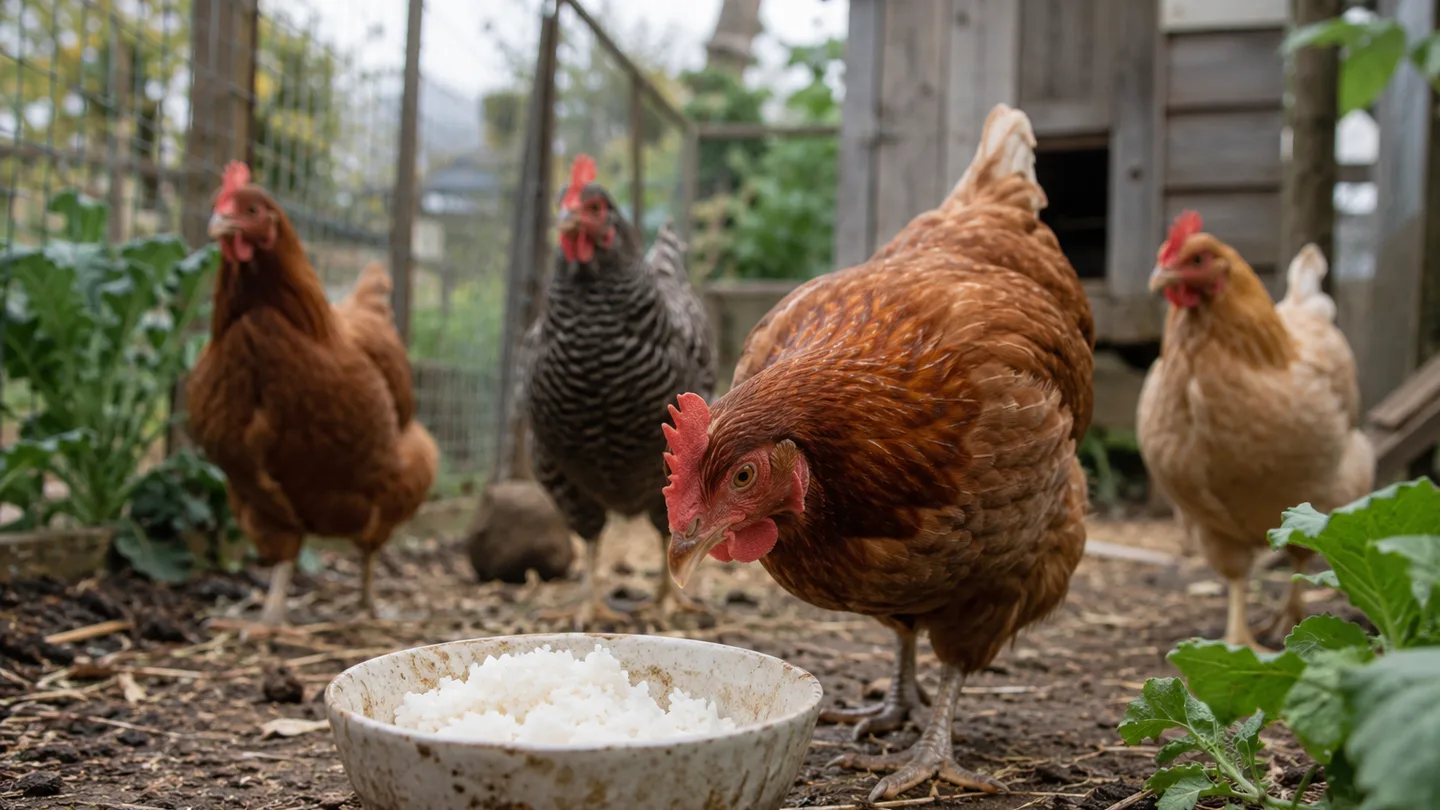
The useful distinction isn’t raw versus cooked so much as plain versus seasoned, and treat versus staple. A spoonful of plain rice is a simple snack. A bowl of salty, oily dinner leftovers is a different proposition.
The short answer: plain raw and cooked rice are both safe, but neither is a complete ration
If you’re asking can chickens eat rice, the practical answer is yes, in modest amounts, for healthy adult birds. Keep the rice plain: no sauce, seasoning mix, excess salt, or added oil. Cooked rice should be cooled before it goes into the run.
Rice can be part of a treat rotation, but it shouldn’t crowd out the feed designed to be your hens’ main diet. Complete layer feed is formulated as a ration; a single grain doesn’t provide that same balance. If birds fill up on extras, they may eat less of their regular feed. That’s the trade-off to watch, not a special danger unique to rice.
Think of the feeder as the meal and rice as a taste. If you’re comparing portions with your flock’s ordinary intake, the guide to how much feed per chicken per day for laying hens can help you keep the difference clear. Your own birds’ feed use changes with factors such as size, laying status, weather, and access to forage, so one treat serving won’t fit every flock.
Rice also doesn’t need to be a routine addition. There’s no nutritional prize for giving it daily, and a treat that’s easy to serve can quietly become a large share of what your birds eat. My preference is to keep rice occasional and let a complete feed do the dependable work.
Raw vs. cooked: what changes in the grain—and what the swelling myth gets wrong
Plain dry rice and plain cooked rice are both reasonable treat options for healthy adult chickens. Cooking softens the grain and adds water; it changes texture and serving volume, not the basic question of whether plain rice can be offered. Choose the form that’s easiest to portion and least likely to be wasted.
The familiar warning that raw rice will swell dangerously inside a chicken doesn’t describe what happens when a bird eats dry grain. Rice isn’t being boiled in the crop. It gets moistened and processed along with other feed. That’s why there’s no need to cook plain rice solely to prevent a dramatic expansion inside the bird. Still, dry rice can be dusty or awkward to scatter, so cooked rice may be easier to offer in a small, visible portion.
Here’s the practical comparison:
| Form | What to do | Useful caution |
|---|---|---|
| Plain, uncooked rice | Offer a small amount where the flock can reach it. | Keep it dry and free of seasoning or mixed-in ingredients. |
| Plain, cooked rice | Cool it first and serve a modest portion. | It’s moist food, so don’t leave uneaten leftovers sitting around. |
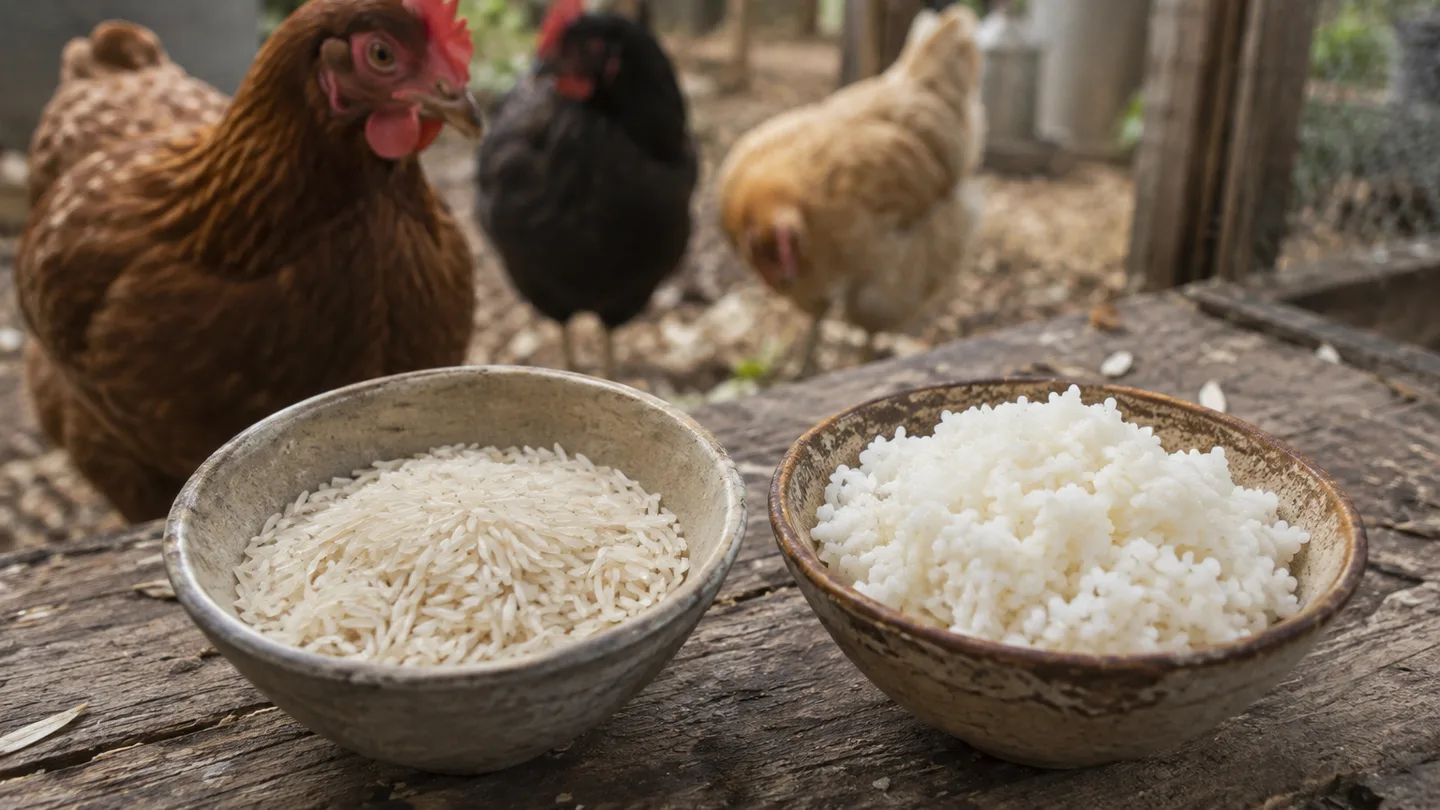
When I’m deciding between the two, convenience matters more than trying to make one form sound healthier. If there’s a little plain rice already cooked, cooling a spoonful is simple. If not, there’s no need to cook a batch just for the hens. The grain’s role stays the same: an extra, not their feed base.
Don’t confuse “plain rice” with a mixed dish. Fried rice, seasoned rice, and sauced leftovers can contain ingredients you can’t judge by looking at the grains. If you can’t tell what’s in the dish, skip it and offer a known, plain option instead.
A cautious serving: start with 1 tablespoon per adult hen and count every treat
For a first try, use about 1 tablespoon of cooked rice per adult hen. That’s a cautious starting portion, not a proven safety limit or a daily allowance. Serve it occasionally, and keep the usual complete feed available. If you have three hens, that works out to about 3 tablespoons total; for six, 6 tablespoons; for twelve, 12 tablespoons, or three-quarters of a cup.
Those are serving calculations, not a promise that every bird will eat the same amount. A confident hen may grab more while a shy bird hangs back. Scatter the rice over a little space or use more than one small dish if one bird tends to guard food. Watch the flock long enough to see whether everyone gets a chance, and don’t add more just because a few grains remain.
You may have heard the rule of keeping treats to around 10% of daily calories. Treat that as a broad planning ceiling for all extras combined, not a rice-specific conversion chart or a measured safety threshold. A tablespoon of cooked rice contains water and isn’t interchangeable, spoon for spoon, with dry feed or uncooked rice. And your hens’ feed intake isn’t fixed: breed, body size, laying status, weather, and foraging can all change how much they eat.
For a small backyard flock, the decision rule is straightforward: offer a little, keep the complete feed central, and notice whether the birds return to their regular ration. If you’re regularly serving a range of treats, add them up rather than treating each snack as if it gets its own allowance. A bird that starts ignoring its normal feed is your cue to cut back on extras.
A concrete example: for a six-hen flock, measure 6 tablespoons of cooled rice as the total starting portion, not 6 tablespoons per bird. Put it out in two or three separated spots if competition is an issue. If one hen takes over, change where and how you offer it next time; don’t solve the problem by leaving a larger pile in one place.
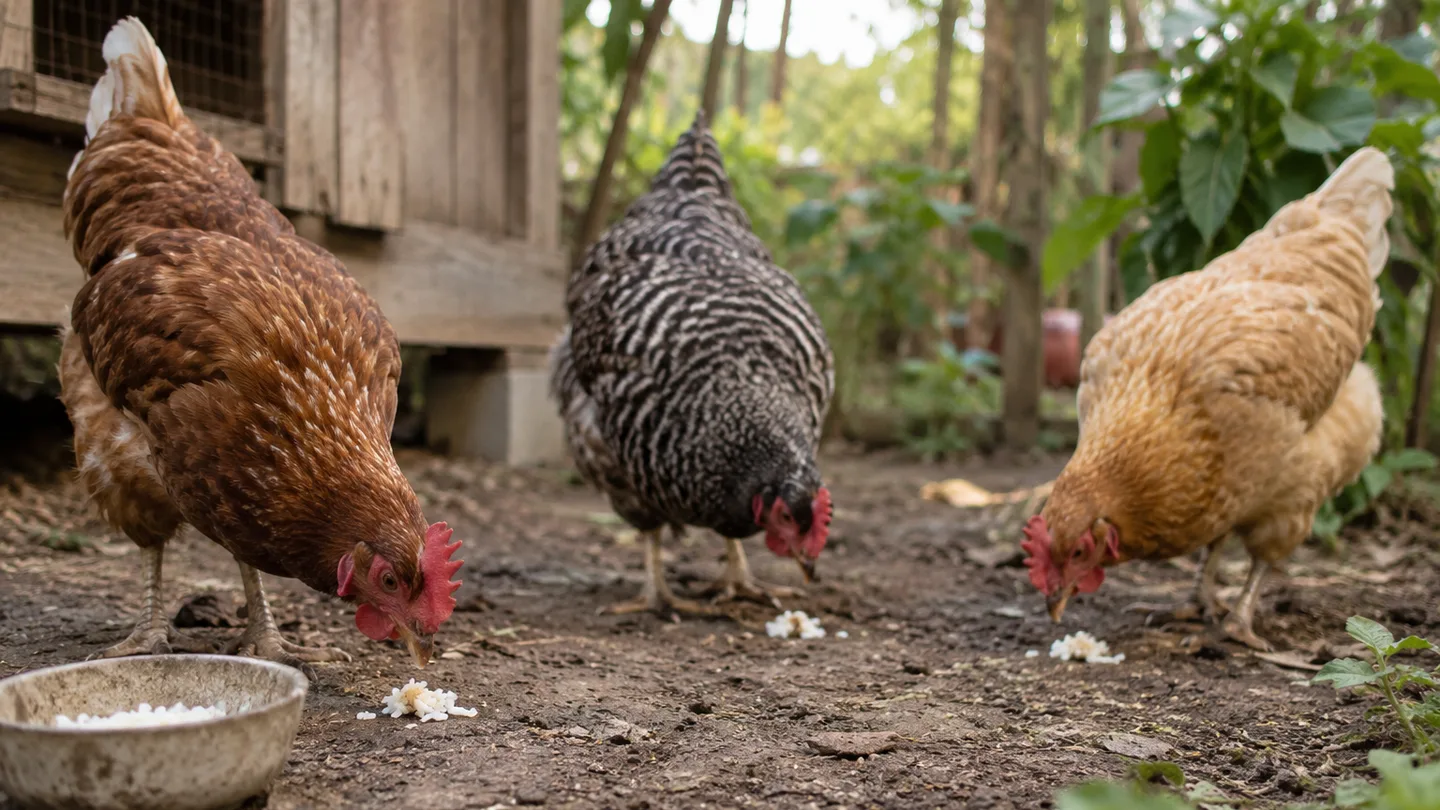
Rice shouldn’t displace grit or regular feed. If you’re reviewing what your flock needs alongside treats, see the guide to grit for chickens. For chicks, use a different baseline: their chick starter should remain the main food, and the how much feed per chick per day guide is a better starting point than an adult-hen treat portion.
When rice belongs in the bin: mold, heavy seasoning, and leftovers left outside
Skip rice that smells off, looks moldy, or has been sitting in conditions where you can’t confidently judge its freshness. Don’t try to make questionable leftovers safe by mixing them into feed. When in doubt, bin them.
Be cautious with rice from a human meal. Heavy seasoning, salty sauces, oily preparation, and ingredients you can’t identify are all reasons to choose something else. The plain grains may look harmless, but the dish’s other ingredients and added salt can’t be assessed by appearance alone. Keep a separate spoonful aside before seasoning if you want to share a little with your birds.
Cool cooked rice before offering it. Put out only what the flock is likely to eat in one short feeding, then remove what’s left rather than letting warm, damp food sit in the run. Heat and moisture make a poor combination for leftovers, and uneaten food can also attract pests. How quickly food spoils depends on conditions, so use the weather and the state of the rice as your guide rather than relying on one universal clock.
If you want to check handling advice beyond this basic backyard rule, look up your local extension poultry-feeding guidance and the government food-safety advice for cooked rice where you live. I’m not linking to a specific page here because the right source depends on your location, and I haven’t verified a particular address.
Brown rice can be offered plain in the same occasional, small way as white rice. Its whole-grain character doesn’t turn it into complete feed or justify a bigger serving. A plain, unsalted rice cake can also be crumbled into a small treat; avoid flavored, sweetened, or salty versions, and don’t let it become a regular meal.
FAQ
Can baby chicks eat rice?
Chick starter should remain a chick’s main food. Rice isn’t needed for a balanced start, so I’d leave it out of a young chick’s routine. If you offer any treat as chicks grow, keep it tiny and make sure they have access to age-appropriate grit. If you’re unsure whether a chick is ready for treats, ask a poultry-savvy veterinarian or local extension office.
Can chickens eat brown rice?
Yes, plain brown rice can be offered as an occasional treat, much like plain white rice. Keep the portion modest. It’s still a single food, not a substitute for a complete ration.
Can chickens eat rice cakes?
A small crumble of a plain, unsalted rice cake is a possible occasional extra. Avoid sweetened, flavored, or salty cakes, and don’t offer a large piece that a bird may gulp down. When the ingredient list is unclear, choose plain feed instead.
This week, measure one small serving before you put it in the run, and check that your birds return to their regular feed afterward. That simple habit keeps rice in its proper place: a treat, not the menu.
Frequently Asked Questions
Can chickens eat brown rice?
Plain brown rice can be offered as an occasional treat like plain white rice; its whole-grain character does not make it a complete feed or justify a larger portion.
Can chickens eat rice cakes?
A small amount of plain, unsalted rice cake can be crumbled as an occasional treat, but avoid flavored, sweetened, or salty varieties and keep the portion small.
Can baby chicks eat rice?
Chick starter should remain their main food. Rice is unnecessary for chicks; if a keeper offers any treat, it should be a tiny amount and age-appropriate grit should be available.