Can Chickens Eat Peanuts? Shells, Salt, and Serving Size
Yes—healthy adult chickens can have a small amount of plain, fresh peanuts now and then. Keep the shells off, break the kernels into pieces, and skip salted, sweetened, flavored, damp, or moldy peanuts. For a cautious first serving, offer 1–2 shelled peanuts per adult hen, not as a daily ration.
That portion is a practical starting point, not a scientifically established peanut dose. Peanuts are a snack, not a substitute for complete feed.
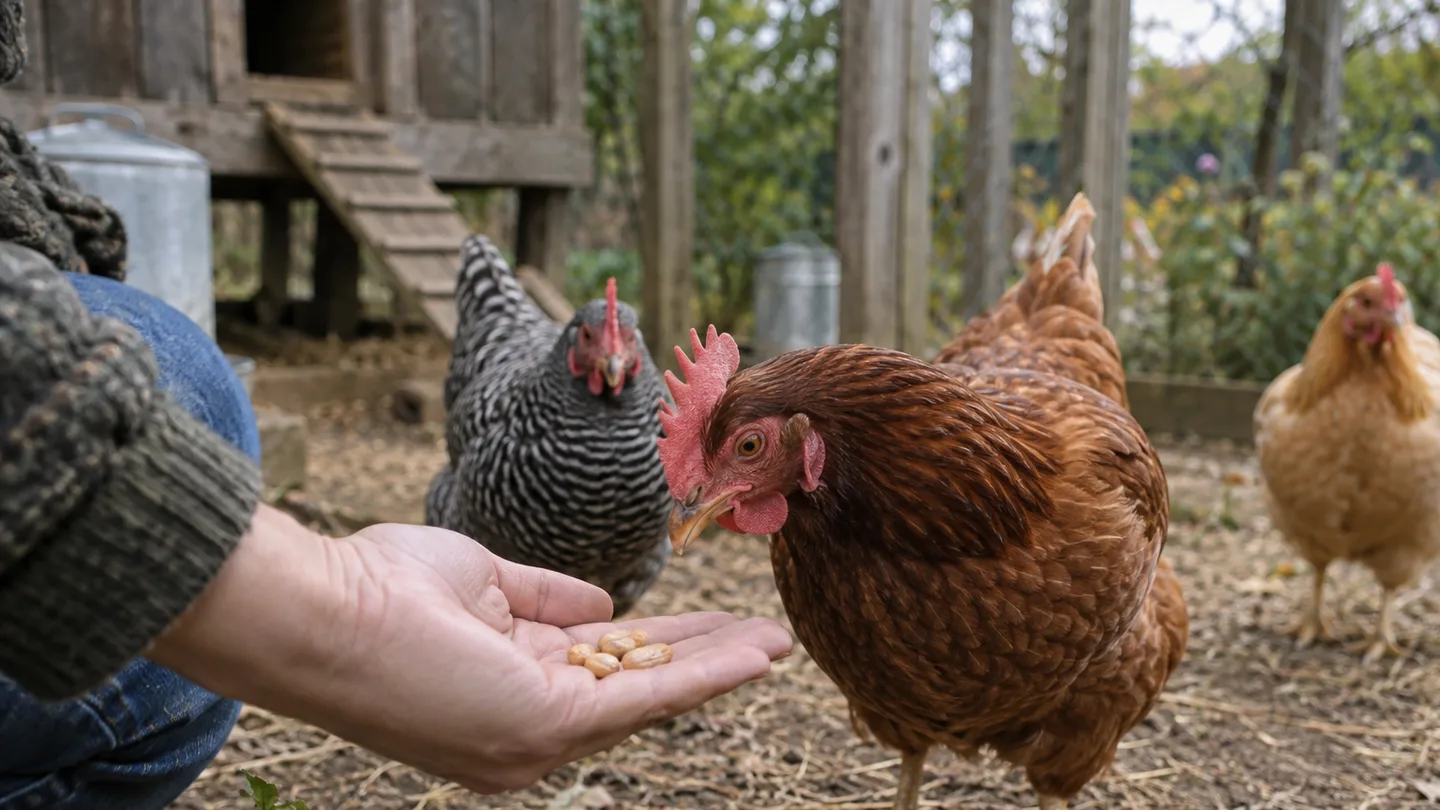
Can chickens eat peanuts? Yes—if they’re plain, fresh, and occasional
Yes, healthy adult chickens can eat peanuts as an occasional treat. Choose plain kernels, whether raw or dry-roasted without added ingredients. A peanut’s protein content doesn’t make it a complete chicken ration: your birds still need a feed formulated for their age and purpose, with the nutrients and balance a peanut snack doesn’t provide.
Read the ingredient list. Ideally, it says only “peanuts.” Salt, honey, sugar, spices, and oil coatings turn a simple kernel into a less suitable snack. If you can’t tell what’s in the product, choose something else. A plain peanut is a much easier call than a flavored party mix.
The familiar “10% for treats” guideline is a rough ceiling for all extras combined, not a peanut-specific safety limit. I’d use it as a reminder to keep the feed in charge, not as permission to fill a tenth of the feeder with snacks. Treats can crowd out a balanced ration even when each individual item seems harmless. If your hens already get table scraps, scratch, or other snacks, count those too.
My judgment for a small backyard flock: peanuts are worth offering only if they’re already on hand and plainly labeled. They’re not a special feed, and there’s no need to buy a bag just for your hens.
A practical portion: 1–2 shelled peanuts per adult hen
For an adult hen, start with 1–2 shelled peanuts in one offering, broken into small pieces. That is a cautious serving suggestion, not a researched dose. Peanut size varies, and so does what makes sense for a bird that has been foraging all morning versus one getting several extras in the run.
The arithmetic is simple, but it helps prevent a generous handful from becoming the default:
- 3 hens: 3–6 peanuts total.
- 6 hens: 6–12 peanuts total.
- 12 hens: 12–24 peanuts total.
For a concrete example, say you keep six hens and want to try peanuts on Saturday. Break six to twelve shelled kernels into small pieces, scatter them across a clear patch of ground, and watch whether all six birds get a chance. If they’ve already had other treats that day, skip the peanuts or offer less. There’s no flock-health benefit to reaching the top of the range.
Keep peanuts occasional rather than making them a daily serving. A snack offered every day is no longer a small surprise in the diet; it can steadily take up space that should belong to complete feed. Body condition, access to forage, weather, breed, and the rest of the treat menu all affect what is sensible. If one hen is getting heavy, don’t give her a separate peanut allowance just because the flock total looks modest.
Watch the flock, too. If bolder birds rush the treat and timid ones hang back, reduce the pile or spread it farther apart next time. The useful measure isn’t just how many peanuts you brought outside. It’s whether the serving stays small and the birds can share it without a scramble.
Shells, skins, and whole kernels: make the texture fit the bird
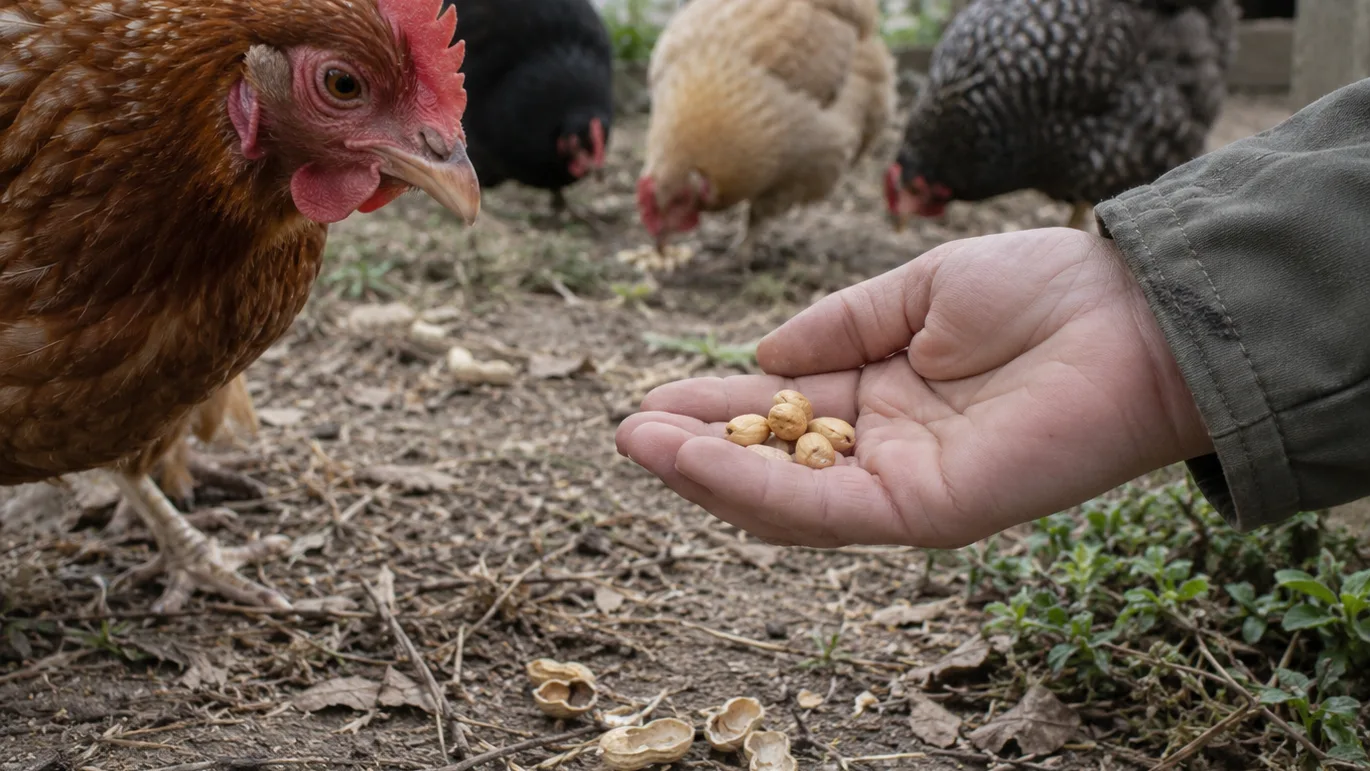
Peanut shells are not a useful feed portion. They’re tough and fibrous, and they don’t add the kernel’s food value. Take the peanuts out of their shells before serving; don’t count a shell-on peanut as a complete treat just because it looks larger in your hand.
For adult birds, crack or chop the kernels so the pieces are easy to pick up. You don’t need to turn them into powder. Just avoid tossing out whole large kernels when smaller pieces will do, especially if several birds are eating together. Peanut skins can stay on the kernel; the main practical job is to remove the hard outer shell and break up the nut.
Young chicks are a different case. Their starter feed should do the nutritional work while they grow, so a peanut snack is an unnecessary distraction from a ration designed for that stage. As a rough orientation, think of the first six weeks as a typical starter-feed period, but follow the age and stage directions on your specific feed label. Feed programs can differ, so don’t change rations by calendar alone.
If older chicks are given foods other than their crumble, they may need appropriately sized insoluble grit to help grind those foods. Grit is not a substitute for feed, and oyster shell is not grit: oyster shell supplies calcium, while insoluble grit serves a different purpose. Before offering treats to growing birds, check the guide to grit for chickens and make sure the product suits their age. For chicks still relying on starter, the simplest choice is to leave peanuts off the menu.
Salt, flavorings, and mold: three reasons to put the bag back
Use this quick test at the cupboard: if the peanuts are seasoned, coated, sticky, damp, rancid-smelling, or visibly moldy, don’t feed them to your flock. There’s no single sodium cutoff I’d use as a universal safe amount for every bird and ration. Choosing an unsalted, unflavored product avoids turning a tiny treat into a guess about added ingredients.
| Peanut product | Backyard-flock choice | Why |
|---|---|---|
| Plain, fresh, shelled kernels | Small occasional portion | Simple to inspect and portion. |
| Salted or spicy peanuts | Skip | Added salt and seasonings aren’t needed in a treat. |
| Honey-roasted or chocolate-coated peanuts | Skip | Coatings add ingredients that don’t belong in a routine flock snack. |
| Peanut butter | Usually skip | It can be sticky and often contains added salt or sweeteners, making a small serving harder to judge. |
| Damp, rancid, or moldy peanuts | Discard | Don’t try to rescue a questionable batch by picking out one kernel. |
Mold deserves a firm response. Some molds can produce toxins such as aflatoxins, and you can’t reliably judge a batch’s safety by trimming one visibly bad spot. If peanuts smell musty, feel damp, or show mold, discard the whole questionable portion rather than feeding the rest. For background, consult FDA material on aflatoxins in food and feed; the practical flock decision remains simple: don’t put suspect nuts in the feeder.
Peanut butter is easy to overestimate as a convenient treat. A smear may look small, but the product can be concentrated, sticky, and mixed with ingredients you’d otherwise avoid. I’d choose a few plain kernel pieces instead. If you want a different snack, the guide to can chickens eat pumpkin covers another option, and can chickens eat popcorn explains the plain, unseasoned version of that treat.
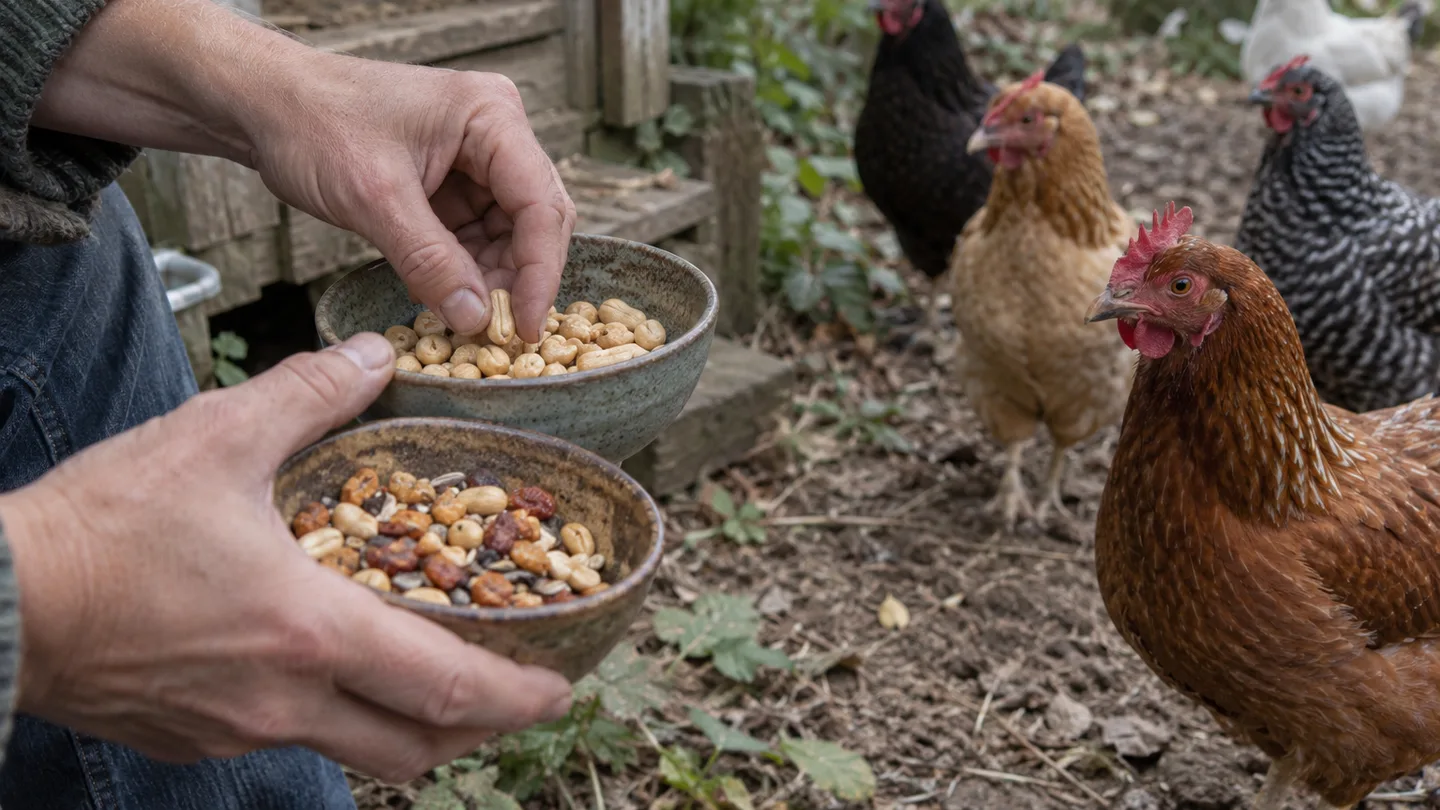
Keep the layer ration first; peanuts don’t replace feed or grit
A laying hen’s main food should be a complete layer ration, not a collection of high-protein snacks. Peanuts can add variety, but they don’t supply the complete balance your feed is made to provide. If your hens are filling up on treats, the first practical correction is to cut back the extras, not to add more peanut protein.
As a planning estimate, an adult layer may eat about 100–120 g of feed a day. Treat that as context, not a peanut allowance: bird size, weather, forage, feed type, and individual appetite can move intake up or down. Check the label on your own feed and notice whether your birds are leaving it behind after treats arrive. The point is to keep the complete ration available and central to the day’s feeding routine.
Grit and oyster shell are easy to confuse because both may be offered separately. Insoluble grit helps birds grind whole foods in the gizzard. Oyster shell is a calcium source, often offered to laying hens. One doesn’t replace the other. If your birds eat only a complete ration, follow the feed maker’s directions; if they eat whole foods or forage, review what grit access makes sense for your setup.
For a second opinion on ration balance and treat limits, look for university extension guidance on complete poultry rations. Use that kind of guidance to check your overall feeding plan, rather than trying to turn a snack portion into a substitute for a nutritionally complete feed.
A simple serving routine for a 3–12-hen backyard flock
Make the peanut treat a small, deliberate event. First, make sure your flock has access to its regular feed. Then count the shelled portion: 1–2 peanuts per adult hen is a cautious place to start. Break the kernels into small pieces, scatter them so timid hens can reach some, and remove anything left behind instead of leaving a snack pile in the run.
For a three-hen flock, that means three to six peanuts total; for twelve hens, twelve to twenty-four. If those numbers feel fussy, use the lower end or skip the treat. A serving doesn’t need to be exact to the kernel, but deciding the amount before you step outside is better than adding handfuls while the birds crowd around your boots.
Skip peanuts that day if your birds have already had several treats, if the package lists salt or flavorings, or if a hen is gaining excess condition. Keep the feed label handy, particularly for young birds, and don’t use a treat to distract yourself from feed left uneaten or a change in appetite. A snack is not a fix for a feeding problem.
This week, check the peanut package for added salt, coatings, and signs of spoilage. If it passes, try a small portion after your hens have access to their normal feed. If it doesn’t, choose a plain alternative and keep the ration first.