When Do Chickens Stop Laying Eggs? Age, Breed, and Molt
Four-year-old hen can still leave a fresh egg in the nest box. Most backyard hens don’t stop laying on one birthday. Their output usually tapers with age, with pauses layered over the top of it. Many pullets start around 18–24 weeks, the first laying year is often the strongest, and some hens still produce occasional eggs at four to six years or beyond.
For a flock of three to twelve hens, don’t call a bird finished because one nest is empty. Record eggs for 14 days, then check breed, molt, daylight, feed, and health. That gives you a useful forecast instead of a guess.
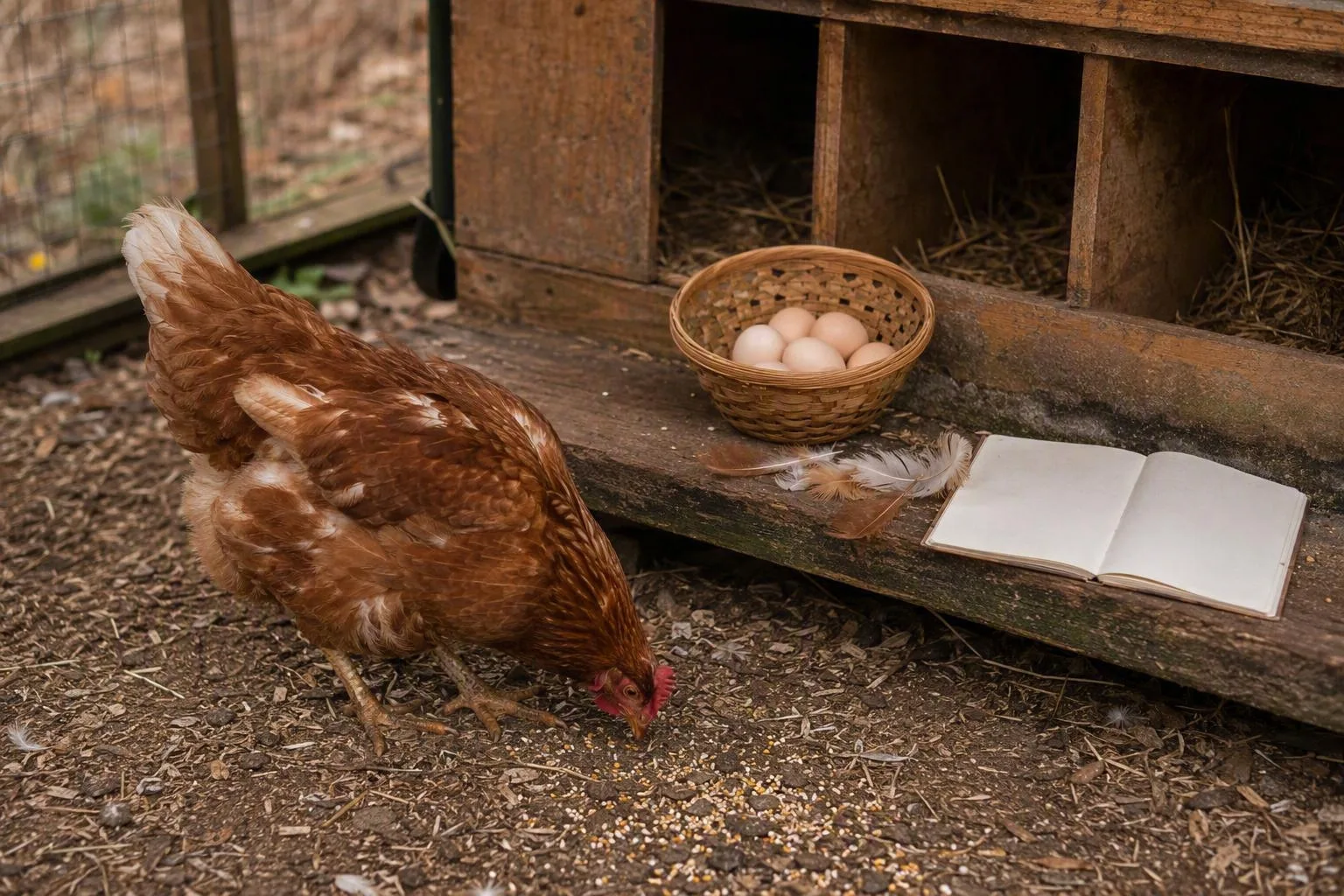
There is no fixed stop-laying age: use 18–24 weeks and the first five years as landmarks
Use 18–24 weeks as a planning window for a pullet’s first egg, not as a deadline. Smaller, early-maturing layer strains may start sooner. Larger, slower-maturing breeds may take longer. Short days, a move, heat, poor nutrition, or illness can push the first egg back.
Once laying begins, treat the first 12 months as the main production window. Many hens then lay less consistently through years two and three. By years four to six, an older hen may lay occasionally, seasonally, or not at all. That range is wide because genetics and individual health matter more than the number on the calendar.
The useful question isn’t simply when do chickens stop laying eggs? Ask whether the hen’s current output makes sense for her age and circumstances. The question do hens lay eggs every day has the same answer: some do for stretches, but a skipped day doesn’t prove anything by itself.
Read laying as a curve: first-year output, year-two decline, and occasional eggs after year three
Think of laying as a curve rather than a switch. A hen may build from her first egg to a steady pattern, reach her best stretch during the first laying year, and then decline unevenly. She can also pause for molt, short winter days, broodiness, or stress before resuming.
- First laying year: plan for the strongest and most regular output, especially in a selected egg strain.
- Years two and three: expect a lower average, with more skipped days and sharper seasonal changes.
- Years four to six: treat eggs as a bonus unless your own records show that a particular hen remains productive.
To calculate a flock laying rate, count the eggs collected during a set period. Multiply the number of hens by the number of days to get hen-days. Then divide eggs by hen-days and multiply by 100.
For example, five hens observed for 14 days give you 70 hen-days. If you collect 42 eggs, the calculation is 42 ÷ 70 × 100, or a 60% laying rate for that period. It’s a planning number, not a breed score. Hidden eggs, broken eggs, a broody bird, or a hen recovering from molt can move it quickly.
In my own small-backyard record keeping, I use a pencil at the coop door rather than memory. I check the nest, scan the shrub line for a hidden clutch, and mark the day’s collection before I make a judgment about any hen. That simple order stops one quiet morning from becoming a retirement decision.
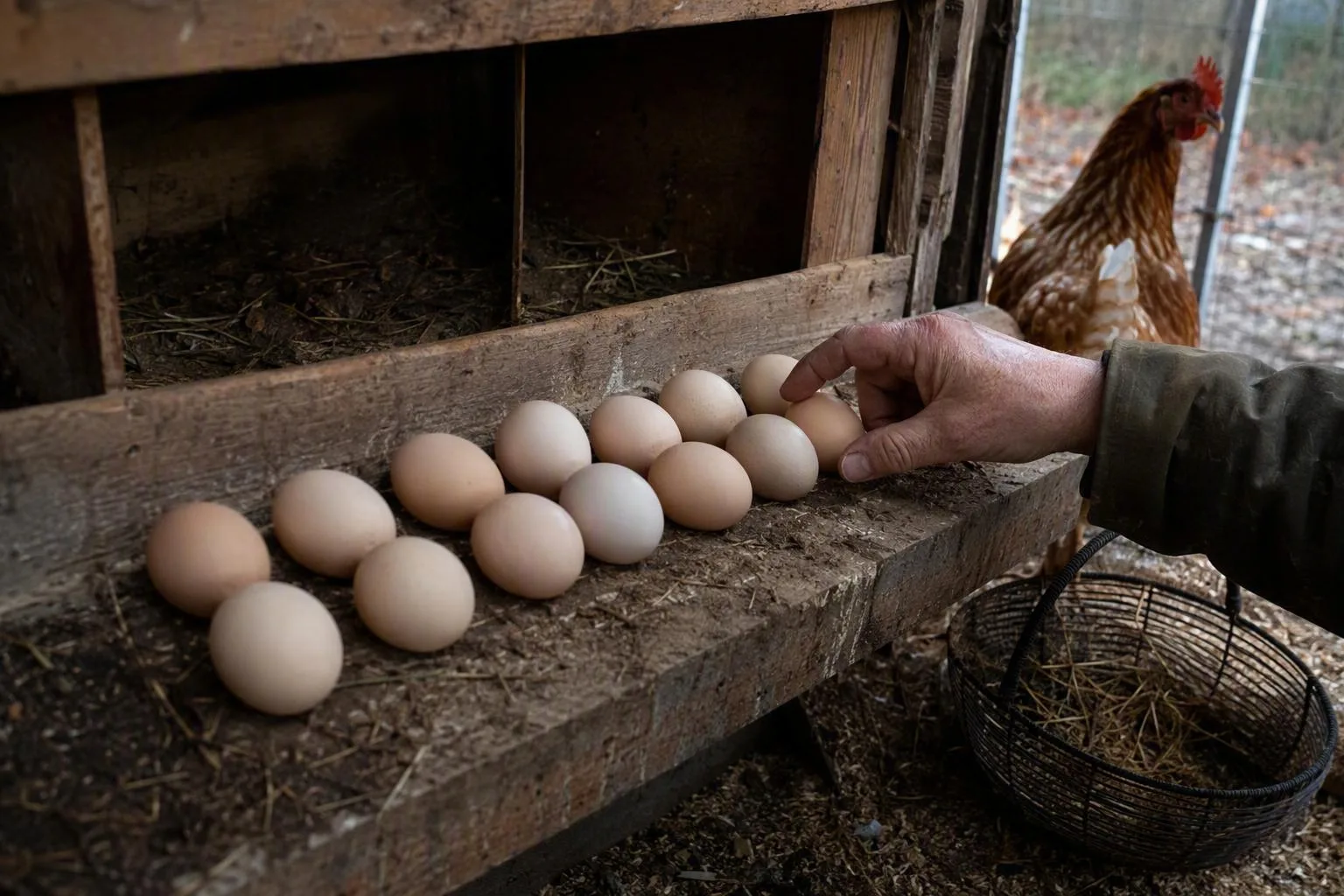
Breed changes the finish line: hybrid layers versus heritage and dual-purpose hens
For planning, many high-output hybrid layers fit a rough first-year band of about 280–350 eggs. Many heritage or dual-purpose hens fit a lower band of about 150–250. These are broad working ranges, not promises for every hatchery line or individual bird.
The trade-off is straightforward. Selection for high early production can give you a full basket sooner, but the later decline may be more noticeable. Heritage and dual-purpose birds often give you fewer eggs per year while bringing different body types, maturity speeds, broodiness tendencies, and seasonal patterns.
Body size and broodiness shift the timeline too. A large, slow-maturing bird may start later. A hen that repeatedly goes broody spends weeks focused on sitting rather than laying. Two birds sold under the same broad breed name can still differ because their breeding line and management differ.
Before ordering, compare Backyard chickens breeds by mature size, expected temperament, broodiness, and the kind of laying pattern you want. For a more specific shopping check, compare breed association and hatchery production profiles rather than relying on a single impressive egg number.
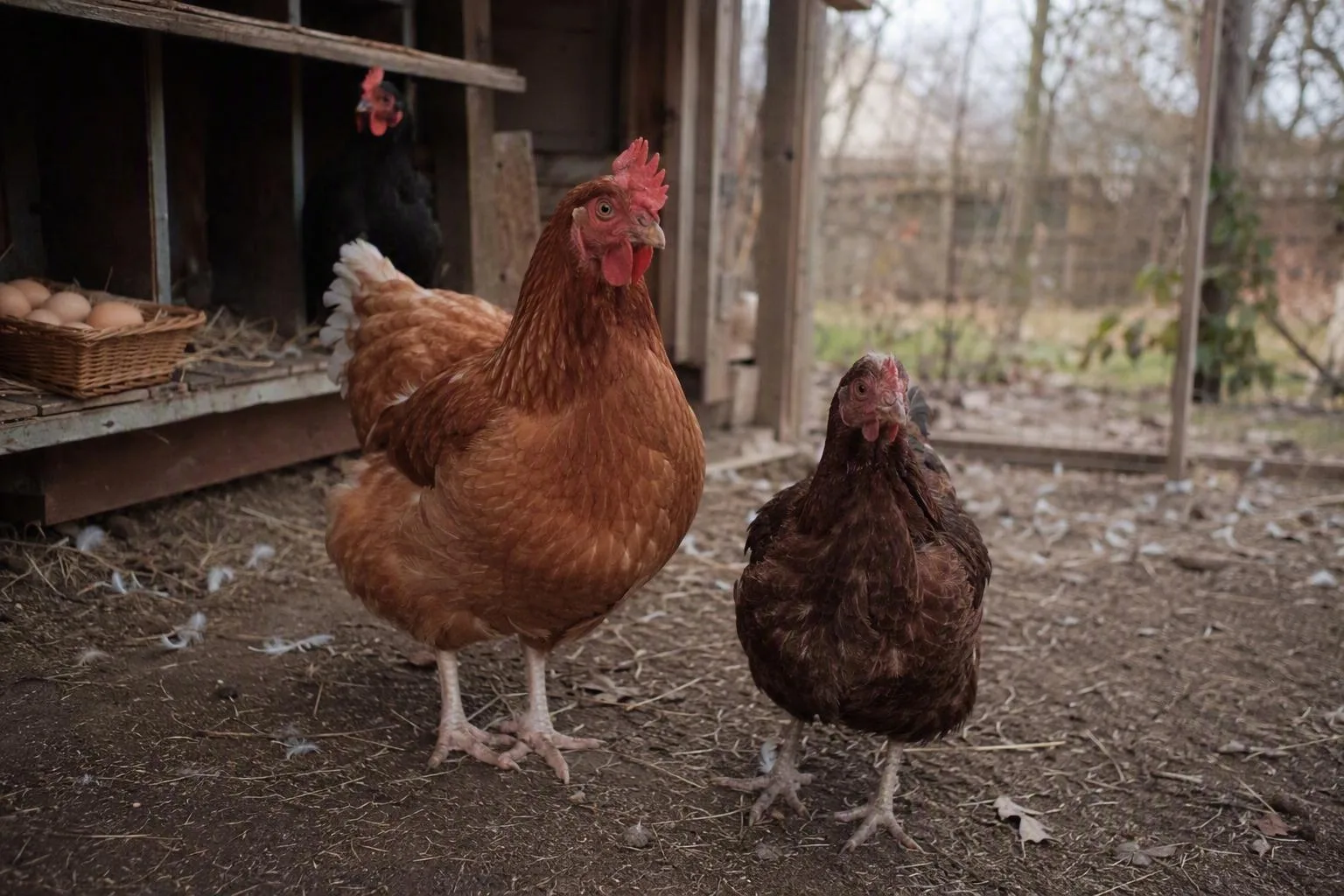
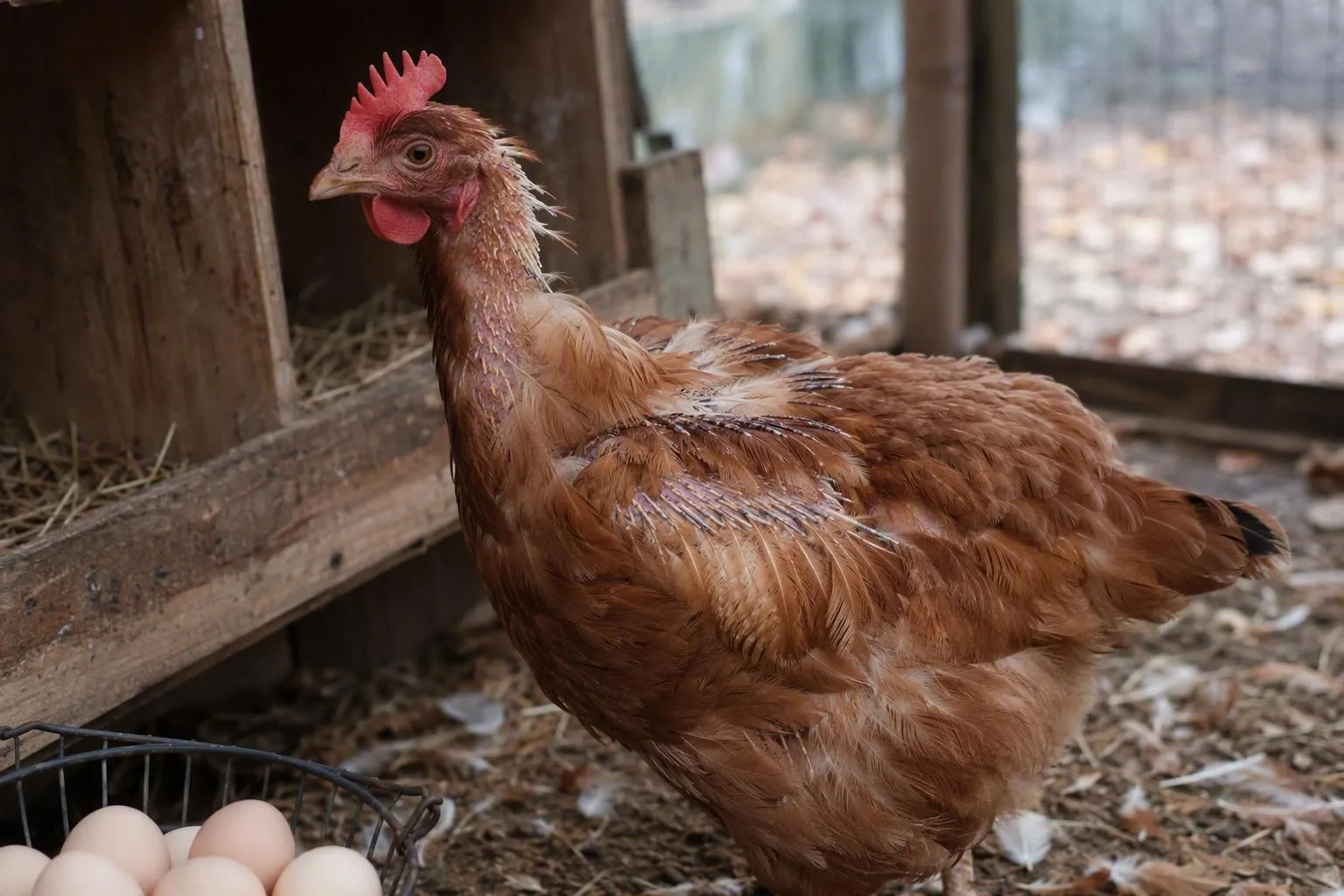
Molt can look like the end—but a normal pause is usually measured in weeks
The first adult molt often arrives around 12–18 months, although hatch timing and daylight can move it. Later molts may follow a seasonal pattern. A hen can look genuinely ragged during this change. Pin feathers appear along the neck, saddle, and tail. Feathers collect under the roost. Egg production falls or pauses while the bird replaces plumage.
Use one practical planning band: a laying pause of roughly 4–12 weeks. A hard molt may stretch toward 12–16 weeks. Those ranges overlap because molt intensity, weather, daylight, breed, and body condition all alter the timetable. Don’t keep adding weeks to a normal estimate without checking the bird herself.
A normal molt usually leaves you with an alert bird that eats, drinks, walks, and reacts normally. Refusing feed, ongoing weight loss, severe weakness, or breathing trouble points away from an ordinary molt. A little reduced appetite can happen during change, but a hen that stops eating needs a closer health check.
Comb color can change with laying status, season, stress, and individual variation. Keepers use it as one clue, but it isn’t a reliable diagnosis on its own. The return to laying is often gradual rather than a full nest box appearing overnight: the first eggs may be intermittent before the bird settles into a new pattern.
Before blaming age, check daylight, broodiness, hidden nests, and recent stress
When one hen suddenly stops, walk through this order:
- Look for hidden eggs. Check under shrubs, behind stored materials, and in corners of the run. Collect at the same time each day for several days. A hen with access to a secret nest may be laying normally somewhere you aren’t looking.
- Check daylight. For many hens, natural day length dropping toward or below roughly 12–14 hours reduces reproductive activity. A winter slowdown is not automatically a problem. Supplemental light is optional for a backyard flock, not a requirement for keeping a hen healthy. If you choose it, decide first whether extra winter eggs are worth the timer, wiring, and management trade-offs.
- Check for broodiness. A broody hen stays in the nest, fluffs her feathers, growls or pecks when approached, and returns after being moved. Broody behavior is a pause in laying, not proof of old age. Use the site’s broody hen guide for the next decision.
- Review recent stress. A housing move, predator scare, heat wave, flock bullying, dog activity, or a new bird can interrupt laying. The more sudden the change, the more useful this recent-event check becomes.
- Compare the flock. If every hen slows together, look first at daylight, feed, water, weather, or a shared stressor. If one bird changes while the others continue, inspect that bird closely.
A winter slowdown and a sick hen can overlap. Judge the bird’s behavior and body condition, not the egg count alone.
The 16–18% layer-ration check: feed, calcium, water, and body condition
For active adult layers, make a complete layer ration in the usual 16–18% protein range the main food. Avoid replacing much of it with scratch, corn, or kitchen scraps. Those extras can dilute the nutrients a hen needs to maintain body condition and produce eggs.
Plan around 100–120 grams of feed per adult hen per day, then adjust for breed size, cold weather, forage, waste, and how much feed is scattered. Six hens at 110 grams each use about 660 grams per day. Over 30 days, that is about 19.8 kilograms before waste. Use your actual bag price and local feed availability for the budget.
Fresh water must be available and easy to reach. Offer oyster shell separately so hens can choose it as needed. Don’t mix a large amount into every bird’s ration, because calcium needs vary between birds and non-laying flock members.
If a hen is losing weight, carrying parasites, producing abnormal droppings, or acting ill, a feed change alone is not a treatment. Extension guidance on complete layer nutrition and warning signs can help you prepare questions, but a sick bird may need a poultry veterinarian.
At four to six years, the choice is flock management—not a mandatory retirement date
An older hen with low output still has value as a flock companion, a familiar bird in the pecking order, and sometimes a reliable broody or alert bird. My judgment is to assess welfare and flock behavior before counting eggs. Age alone is a poor reason to remove a calm, healthy hen.
Keep her with the flock if she eats, moves, roosts, and avoids bullying. Separate her only when illness, injury, or sustained persecution makes that necessary. If you want more eggs, add replacement pullets gradually rather than waiting for every older hen to fail at once.
Use a 30-day egg count for the individual bird where possible. Pair it with the 100–120-gram daily feed planning figure. That lets you decide whether the bird’s contribution matters to your household without pretending that every hen has the same value. Include the replacement decision in your wider cost of chickens calculation.
A two-week health check separates a normal slowdown from a problem needing a vet
Use the following table as a checking order, not a diagnosis.
| What you see | What it may fit | Your next step |
|---|---|---|
| Loose feathers, pin feathers, alert behavior | Normal molt | Keep feed and water available; monitor weight and activity. |
| Several hens slow as days shorten | Seasonal daylight effect | Check feed, water, body condition, and housing before considering light. |
| One hen stays in the nest and objects when moved | Broodiness | Check her condition and use a broody-hen plan. |
| Gradual decline in an otherwise active older bird | Age-related reduction | Keep records and assess welfare rather than chasing a target egg count. |
| Weight loss, marked lethargy, straining, swelling, prolapse, breathing trouble, lameness, or abnormal droppings | Possible illness or injury | Contact a poultry veterinarian or local extension office promptly. |
A pale comb by itself doesn’t tell you whether a hen is molting, resting, stressed, or ill. Look at appetite, droppings, breathing, posture, weight, and flock interaction together.
Repeated straining, abdominal swelling, prolapse, severe breathing difficulty, inability to stand, or a sudden flock-wide drop paired with illness signs is beyond a home feed fix. Don’t guess at medication or dosage. Use the product label and professional advice.
Your practical forecast: count eggs for 14 days before calling a hen finished
Start this week with a simple notebook or phone note. Write down:
- each hen’s approximate age and breed or cross;
- molt status, body condition, and any bullying or recent disturbance;
- daily daylight conditions and whether you use supplemental light;
- main feed, estimated daily intake, water access, and oyster shell access;
- eggs collected each day, including cracked eggs and any hidden nest you find.
Count for 14 days. At the end, compare the total with the hen’s previous 30-day pattern if you have one. A flock-wide dip that matches shorter days is likely seasonal. A pause alongside pin feathers is likely molt-related. A slow decline in an active older hen is likely age-related. A one-bird collapse or an unexplained flock-wide drop deserves a health check.
The most useful result is not a promise that your hen will lay again. It’s a clear next decision: adjust expectations, find the stressor, improve the ration, or call for help.
This week, mark Day 1 on a sheet beside the coop and begin the 14-day count. When it’s finished, use the record to rebuild your next season’s feed plan with how much layer feed per chicken per day rather than estimating from an empty nest box.