Vent Gleet in Chickens: Signs, Causes, and Safe Next Steps
Give an alert hen one gentle 5–10-minute lukewarm soak, then watch her droppings and behavior through the next day. That is reasonable first aid when the vent is dirty but there is no prolapse, bleeding, maggots, collapse, or trouble passing droppings. It isn’t a diagnosis, and it isn’t a reason to reach for a random antifungal.
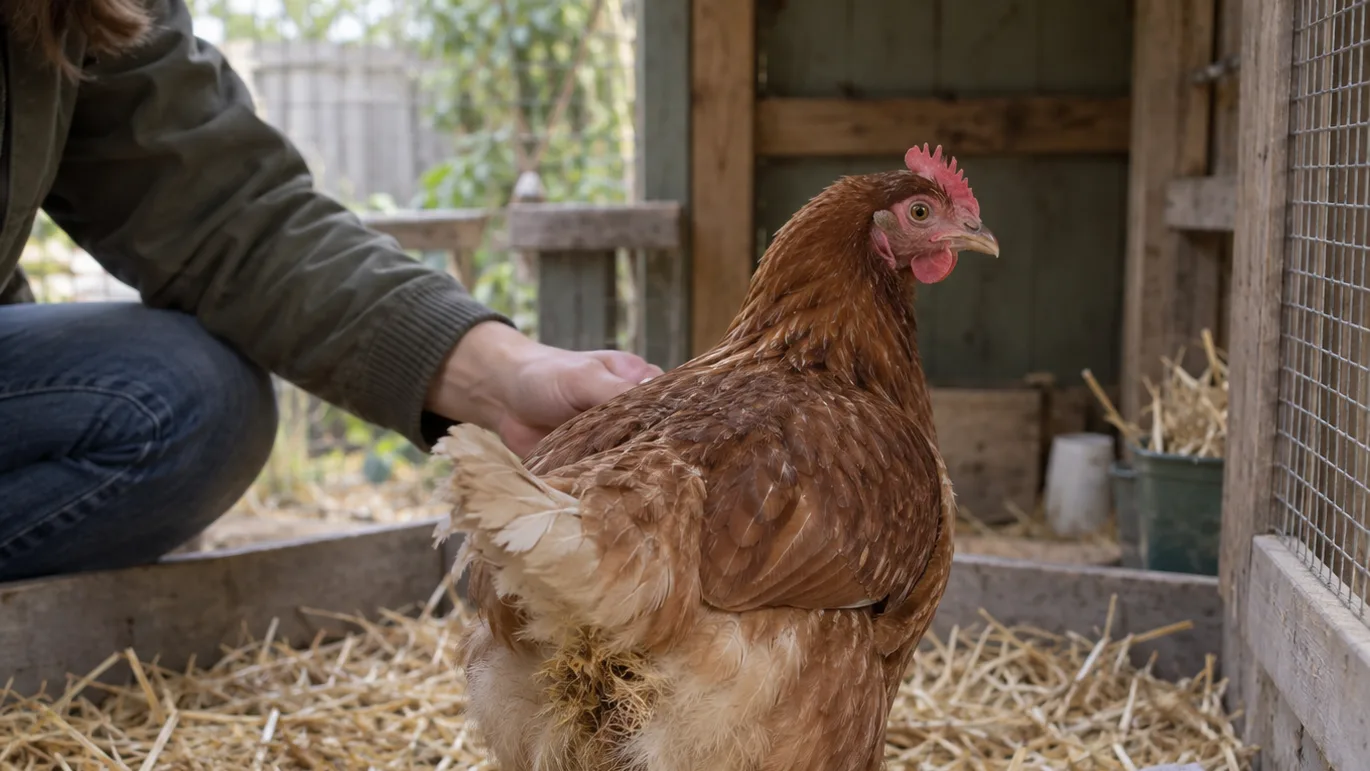
Vent gleet is a symptom pattern, not a diagnosis: the signs to check first
Vent gleet is a keeper’s term for a soiled, wet, irritated, or foul-smelling vent. It describes what you can see around the cloaca. It doesn’t tell you whether the starting problem was loose droppings, external parasites, inflammation, an egg-related issue, or another illness.
Look for a pattern rather than one dirty feather. The useful signs to record are:
- Droppings pasted onto the vent feathers or skin.
- Redness, swelling, wet discharge, or an unusual odor.
- Repeated straining or frequent trips to the nest box.
- Changes in appetite, drinking, posture, energy, or the look of the droppings.
A soft dropping can soil a clean hen once. I start treating it as a persistent problem when the mess returns, the skin stays irritated, or the bird’s behavior changes over the next 12–24 hours.
In my own six-hen backyard flock, I once found a normally bright hen with a damp, pasted vent and a sharp sour smell at the morning check. She was eating and walking normally. I took a photo, watched several droppings through the day, gave her a seven-minute lukewarm soak, dried her, and moved her into a clean crate. The vent looked better for a few hours, then fresh discharge returned. That was the useful lesson: cleaning changed the surface, not the cause. I called a poultry-capable veterinarian instead of escalating home remedies.
A prolapse is a different visual problem. Red or purple tissue protruding from the vent is not just a dirty feather coat. Don’t push it back inside. Keep the hen quiet, prevent pecking, and use the red-flag section below to decide how quickly to call.
Your first 30 minutes: isolate one hen, then check four things
If the hen is alert and has no emergency sign, make the first half-hour boring and methodical. Move her to a clean, dry, predator-safe isolation space where you can see what she eats, drinks, and passes. A dog crate or small covered pen can work if the floor is secure and the bird cannot be pecked through the bars.
- Separate her calmly. Use a towel if she is difficult to catch. Keep the space close enough for easy checks but separate from the flock.
- Offer normal feed and fresh water. Don’t fast her, force water into her beak, or add medicine simply because the vent looks dirty.
- Inspect the vent and the bird’s general condition. Check for stuck material, redness, swelling, discharge, moving insects, broken feathers, tissue outside the opening, breathing trouble, and repeated straining.
- Start a short record. Write down when you noticed the problem, what the droppings looked like, whether she ate and drank, and whether she is laying.
One dropping can mislead you. Watch the next 12–24 hours if the bird remains alert, keeps drinking, and has none of the red flags below. If another bird develops the same signs, stop thinking of this as one hen’s dirty feathers. Inspect shared water, bedding, feed access, and the rest of the flock, then ask a poultry-capable veterinarian whether the group needs evaluation.
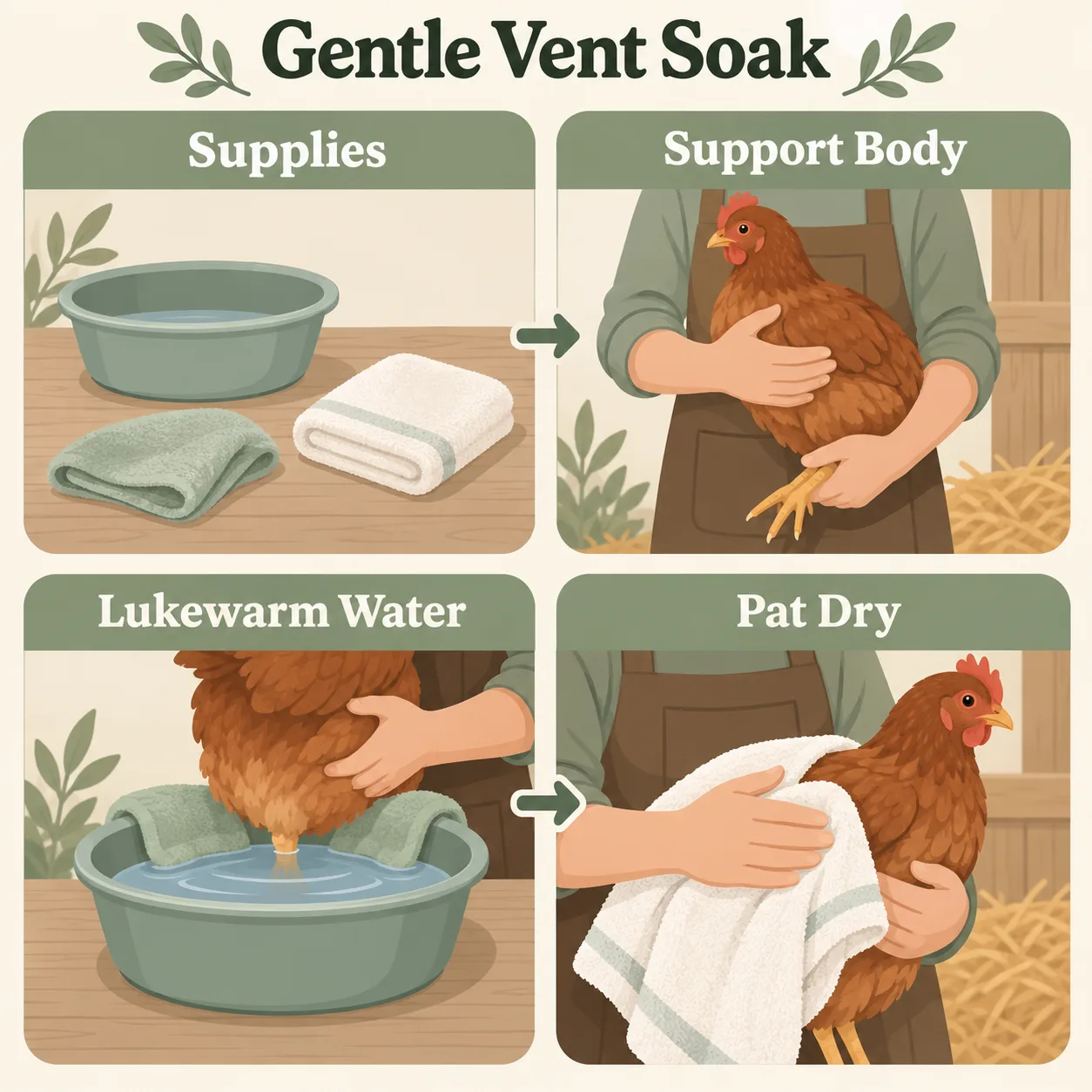
Clean the vent gently: one 5–10-minute lukewarm soak, no scraping
Use one gentle cleaning session as first aid. Fill a basin with hand-warm water. It should feel neutral-warm on the inside of your wrist, not hot. Support the hen’s body and keep her head well above the water. Let the soiled feathers around the vent soften for about 5–10 minutes.
After the soak, wipe only the material that releases easily. Use a soft cloth or your fingertips with a light touch. If a hardened crust resists, soak rather than pull. Scraping can damage already irritated skin, and pulling can tear feathers or skin. Don’t force tissue back into the vent.
Pat the feathers and skin fully dry with a clean towel. Put the hen onto dry bedding and keep her in a quiet, comfortable space. Wash the basin, towel, and your hands after the job. If the bird becomes distressed, cold, weak, or short of breath, stop and call for veterinary advice.
Cleaning is first aid, not a cure. Don’t use bleach, strong disinfectant, essential oils, human creams, or human antifungals on the bird’s skin without veterinary direction. A cleaner-looking vent can simply mean that the visible material has been removed.
Match the look to the likely cause: a four-way symptom sort
Use this table to decide what to inspect next. It is a sorting tool, not a diagnosis. Several patterns can overlap in one bird.
| What you see | It may suggest | What to check next |
|---|---|---|
| Watery or unusually loose droppings with pasted feathers | Diet upset, intestinal irritation, or another illness affecting droppings | Feed changes, treats, water intake, droppings over the next day, and overall energy |
| Persistent thick discharge, redness, swelling, or strong odor | Cloacal inflammation or another infection | Whether the discharge returns after cleaning, whether the hen is straining, and whether appetite or posture changes |
| Black specks, moving insects, scabs, or broken feathers around the vent | Mites or lice affecting the skin and feathers | Inspect the vent, under the wings, and roosting areas in good light; compare with the chicken mites treatment guide |
| Straining, a bulge, red or purple tissue, active bleeding, or maggots | Prolapse, obstruction, tissue injury, or flystrike | Skip home treatment and contact a poultry-capable veterinarian the same day |
Loose droppings can explain soiling, but they don’t prove why the droppings changed. A strong odor can accompany inflammation, but smell alone cannot identify the organism or treatment. Likewise, a clean-looking vent doesn’t rule out a deeper problem.
A good-light inspection and a 12–24-hour droppings check are reasonable only when the hen is alert, drinking, and free of red flags. If she is deteriorating, the observation window is over.
Red flags that make this a same-day veterinary case
Home cleaning has a narrow role. Contact a poultry-capable veterinarian the same day if you see:
- Red or purple tissue protruding from the vent.
- Tissue that is darkening, drying, or being pecked.
- Active bleeding or severe swelling.
- Maggots or a strong fly presence around damaged tissue.
- Repeated straining with little or no droppings.
- Collapse, marked weakness, trouble breathing, or refusal to eat and drink.
A prolapse, maggots, or a collapsing bird may need faster emergency advice than a routine appointment can provide. Keep the hen quiet and protected from flock-mates while you call. Don’t wait through a 24–48-hour observation period when one of these signs is present.
Supportive care versus medication: where home treatment stops
Supportive care means making it easier for the bird to rest, drink, eat, and stay clean while you work out what is happening. That usually means dry bedding, quiet housing, ordinary feed, fresh water, and brief checks rather than repeated handling.
Don’t choose antibiotics, antifungals, dewormers, human creams, or leftover flock medication from the phrase “vent gleet” alone. The phrase covers several possible causes. An antibacterial product won’t solve every parasite problem. An antifungal won’t correct an obstruction. A dewormer is not a general treatment for every dirty vent.
A veterinarian may select an antibacterial, antifungal, antiparasitic, or another treatment when the findings support that choice. Dose, duration, route, and egg-withdrawal instructions depend on the product and the diagnosis. Follow the prescribing veterinarian and the label. Never borrow a dose from another bird.
If the terminology is confusing, a poultry-veterinary reference can help you understand words such as cloacitis, prolapse, and reproductive-tract disorders. For medicine use, check official poultry medication label guidance and ask the veterinarian or dispensing pharmacy about egg use. Background reading can explain terms, but it cannot examine your hen.
Stop the problem moving through the coop: the 7-day hygiene reset
Sanitation is a containment plan, not a guaranteed cure. The goal is to reduce fresh contamination, keep the isolated hen’s skin dry, and notice quickly if another bird becomes affected.
- Today: Set up the isolation space with fresh bedding. Wash the affected bird’s feeder and waterer separately. Remove visibly soiled litter from the main coop.
- Each morning and evening: Look at every bird’s vent, posture, droppings, and appetite. You don’t need to catch every hen if a good-light visual check is possible.
- Every day while signs are active: Clean shared drinkers and remove wet or heavily soiled bedding. Dry surfaces before adding fresh litter.
- Handle towels and manure carefully: Keep used towels out of the clean supply. Wash your hands after handling the bird, bedding, or droppings.
- Keep notes through day seven: Record new birds affected, discharge returning, loose droppings, parasite findings, and any product used.
If you need a broader coop cleanout sequence, use the same practical order described in how to clean a chicken coop: remove soiled material first, then wash, rinse, dry, and replace bedding. Don’t respond to a second sick bird with more disinfectant alone. Two birds with similar signs are a reason to ask for veterinary guidance.
If the vent looks cleaner but the hen still struggles: the 24–48-hour reassessment
Real improvement is more than white or clean feathers. Look for less fresh discharge, droppings that are returning toward normal for that bird, steady eating and drinking, normal posture, and no repeated straining.
Use 24 hours as a practical checkpoint after gentle cleaning and supportive care. It is not a promise that vent gleet will clear in one day. If there is no clear improvement by then, arrange veterinary evaluation. If the signs return within 48 hours, or the hen loses body condition, don’t keep repeating soaks while hoping the surface will settle.
Ask the veterinarian about persistent diarrhea, mites or lice, reproductive-tract problems, an egg-related obstruction, and other illness that a dirty vent may only be revealing. If straining or nest-box behavior is part of the picture, compare your notes with egg bound hen symptoms. If the issue seems to involve the crop near the base of the neck, it may be a separate problem; chicken sour crop is not another name for vent gleet.
What to write down before you call the vet—and the one action to take this week
A short, tidy handoff saves time. Write down:
- Bird identification, age, breed, and whether she is laying.
- When you first noticed the dirty vent, discharge, odor, or straining.
- What the droppings looked like and whether appetite and drinking changed.
- Photos taken in consistent light before and after cleaning.
- Whether any flock-mates are affected.
- Recent feed, treat, bedding, water, or housing changes.
- Any insects, black specks, broken feathers, swelling, or tissue outside the vent.
- Every product already used, including the date and amount shown on its label.
Take one brief note or photo per day instead of repeatedly handling an irritated vent. That gives the veterinarian a clearer trend and keeps the bird calmer.
Is vent gleet contagious to other chickens?
Not necessarily. Vent gleet describes a group of signs, not one confirmed disease. Isolation, separate cleaning supplies, and close flock observation are sensible until the cause is clearer, especially if a second bird develops similar signs. Shared water, damp bedding, parasites, or a common feed issue can matter even when direct contagion is not established.
Can you eat eggs from a hen with vent gleet?
Don’t eat visibly soiled or cracked eggs. If the hen receives medication, follow the exact egg-withdrawal instructions on the product label or from the prescribing veterinarian. If those instructions are unclear, keep the eggs out of the kitchen and ask before using them.
Is vent gleet the same as sour crop?
No. Sour crop involves the crop near the base of the neck. Vent gleet describes contamination, irritation, or discharge around the cloaca. A bird can have either problem, or both, so check each area separately.
Your concrete action this week is simple: prepare a clean isolation crate with dry bedding, a towel, and separate feed and water dishes, then inspect every bird once in good light. Save this checklist beside the coop. If you find insects or black specks, move next to the chicken mites treatment guide rather than treating every dirty vent as the same disease.
Frequently Asked Questions
Is vent gleet contagious to other chickens?
Not necessarily, because “vent gleet” describes a group of signs rather than one disease. Isolation, separate cleaning supplies, and careful flock observation are sensible until the underlying cause is clearer, especially if more than one bird is affected.
Can you eat eggs from a hen with vent gleet?
Do not eat visibly soiled or cracked eggs. If the hen receives medication, follow the exact egg-withdrawal instructions from the product label or veterinarian and check local food-safety guidance; ask a poultry vet if the instructions are unclear.
Is vent gleet the same as sour crop?
No. Sour crop involves the crop near the base of the neck, while vent gleet describes irritation, discharge, or contamination around the cloaca. A bird can have either problem or both, so the signs need to be assessed separately.