Chicken Sour Crop: Signs, Causes, and When to Call a Vet
At dawn, before a hen has eaten, her crop should be flat or nearly empty. If it still feels like a soft water pouch and smells fermented, you may be looking at chicken sour crop rather than a normal full crop. That distinction matters because sour crop describes a symptom pattern, not one confirmed disease.
In my own small backyard setup, I once found a normally busy hen standing back from the feeder. Before breakfast, her crop felt loose and fluid-filled instead of lightly filled with feed. I moved her upright into a clean crate, noted the last time I saw her drink and pass droppings, and called for veterinary advice. I did not try to empty it. The useful lesson was simple: notice the change early, then avoid turning a sign into a home diagnosis.
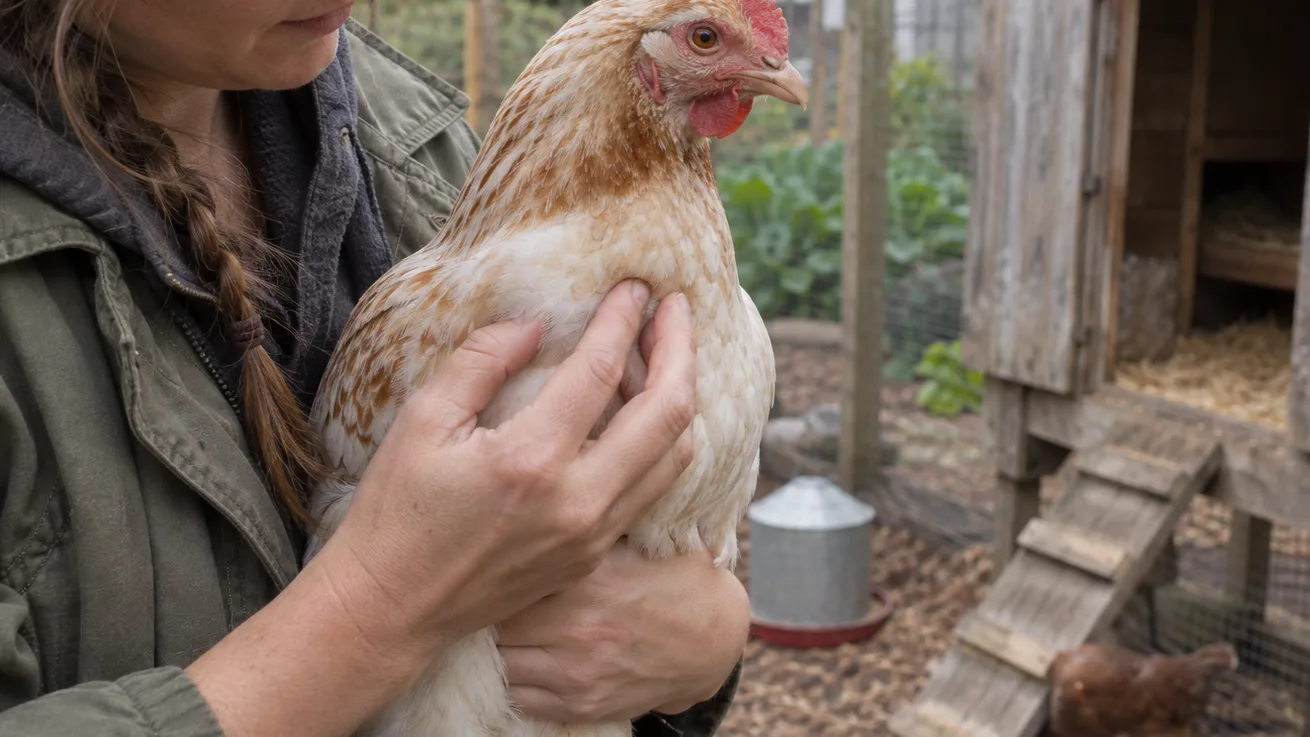
Start with the morning crop check: what “sour crop” actually looks and feels like
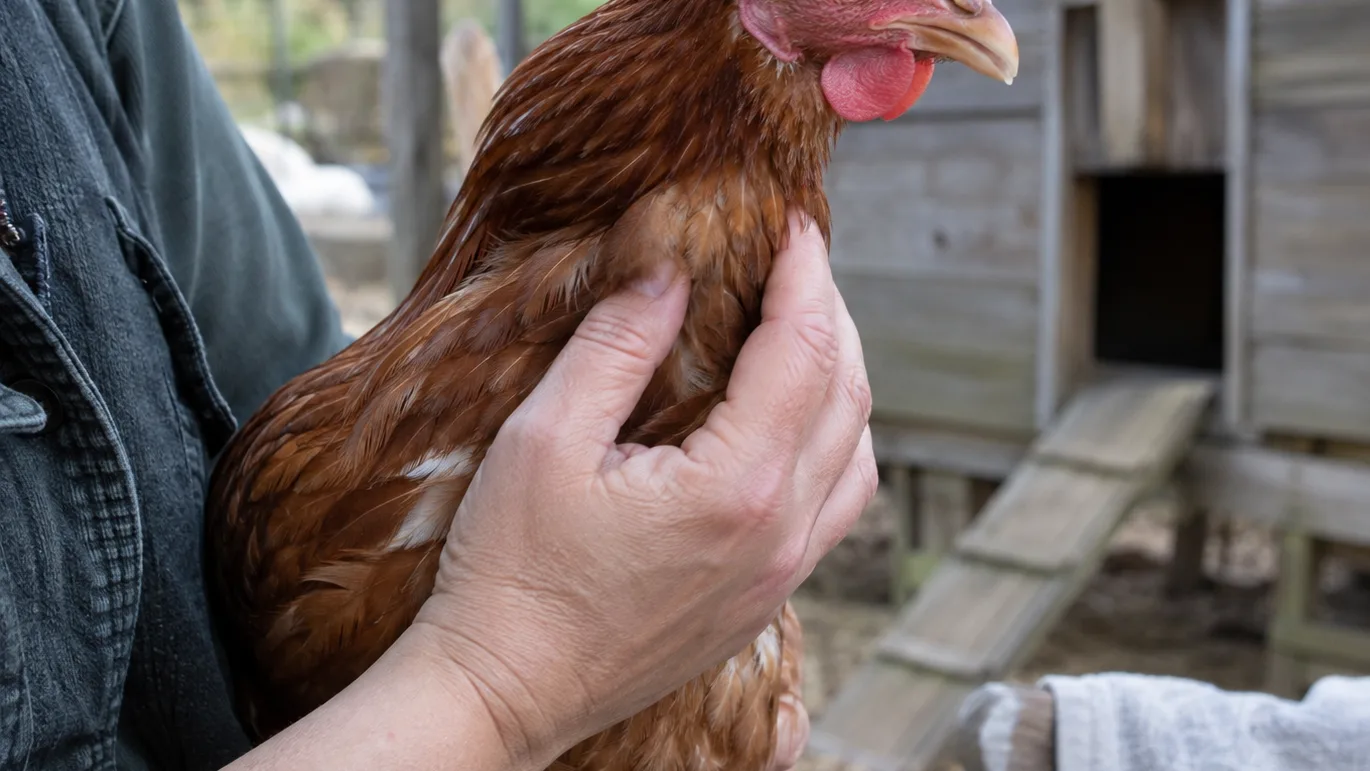
The crop sits at the lower front of the neck, just above the breast. It is a temporary storage pouch. A hen’s crop normally enlarges as she eats, then becomes small or empty as feed moves onward.
Check it before the first meal, ideally after the bird has had roughly 8–12 hours without feed. The exact interval varies with daylight, artificial lighting, and whether food was left available overnight, so treat this as a practical morning check rather than a stopwatch test.
A normal dawn crop may feel flat, soft, or contain only a small amount of material. A crop that remains enlarged, squishy, fluid-filled, or unusually loose after the overnight pause deserves attention. A sour or fermented smell supports the pattern, but smell by itself does not prove sour crop. Feed type, a recent meal, and other digestive problems can change the odor.
The symptom pattern: sour smell, fluid, regurgitation, and the signs that raise the stakes
Look for a cluster rather than one isolated sign. Sour crop may involve a soft, water-balloon-like crop, fermented odor, repeated swallowing, stretching the neck, fluid or food coming back up, reduced appetite, lethargy, weight loss, dehydration, or fewer droppings.
A large crop shortly after eating is not automatically abnormal. The more useful question is whether it stays full through one overnight fast and whether the hen’s behavior is changing. A bright bird with a normal appetite is a different situation from a hen that is quiet, losing condition, and repeatedly bringing fluid up.
| What you see | How I’d treat it |
|---|---|
| Full, soft crop after an overnight fast with sour odor | Ask for same-day veterinary advice. |
| Repeated regurgitation or inability to keep water down | Call urgently, especially if breathing changes. |
| Reduced droppings with poor appetite or marked weakness | Do not rely on a home remedy; arrange prompt care. |
| Open-mouth breathing, collapse, blue or purple comb tissue, or blood | Seek urgent veterinary help rather than waiting for morning. |
Sour crop, impacted crop, pendulous crop, or a normal full crop?
These crop problems can overlap. A home check can tell you what to report and how quickly to act, but it cannot reliably identify an obstruction or the disease behind delayed emptying.
| Pattern | Feel and timing | Clues and caution |
|---|---|---|
| Normal full crop | Full and pliable after eating; smaller by morning | Usually no fermented odor or repeated regurgitation. |
| Impacted crop | Firm, doughy, or hard and still full after the overnight pause | May follow swallowed material, dense feed, or long forage. It can become painful or remain difficult to empty. |
| Sour crop | Soft, squishy, or fluid-filled, often with a fermented smell | May include fluid coming back up and poor appetite. It can occur behind an impaction. |
| Pendulous crop | Hangs low and may stay enlarged or loose | The shape alone does not establish souring. Odor, timing, and the hen’s condition still matter. |
The counterintuitive point is that sour crop and impacted crop are not always competing labels. Retained feed behind a blockage can ferment. That is why repeatedly squeezing a soft crop may make the situation worse without fixing what stopped it emptying.
What sets it off: yeast overgrowth, slow emptying, and common backyard triggers
Feed and fluid that remain in the crop too long can stagnate and ferment. The slow emptying may follow an obstruction, long fibrous grass, string, plastic, spoiled feed, damp feed, a sudden diet change, or another illness that slows normal digestion.
Fungal overgrowth such as Candida may be involved, but sour crop is not a laboratory diagnosis. The same soft, smelly crop can sit alongside impaction, injury, crop stasis, or a broader digestive problem. That is why an antifungal product is not a universal answer.
If two or more birds develop similar signs after sharing a feeder, waterer, damp feed, or moldy area, treat that as a flock clue. Isolate the sick bird, remove the suspected feed, refresh water, and review the whole setup while arranging advice. One affected hen does not prove a contagious disease, but several affected birds make a shared exposure or flock-level problem more plausible.
In the first hour: isolate the hen and avoid the risky home fixes
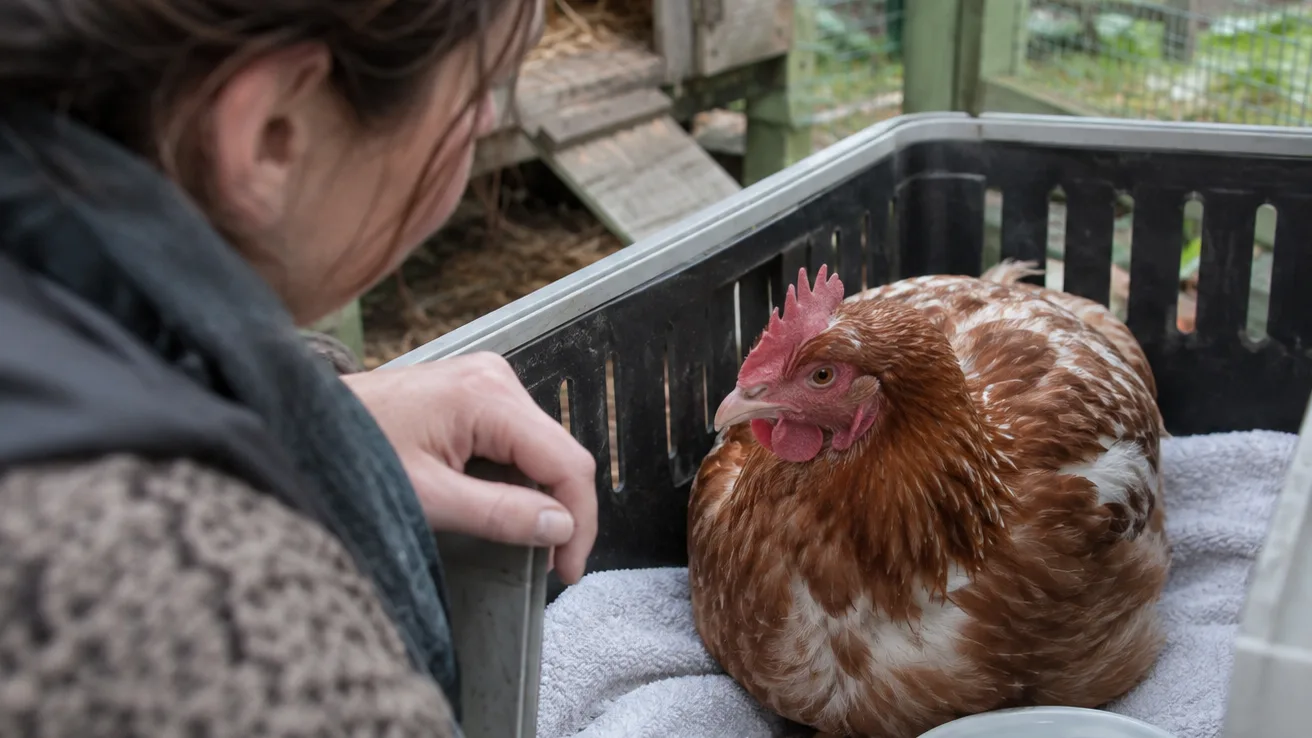
Move the hen to a clean, quiet, draft-free space where you can watch her without flock pressure. Keep her upright. A towel-lined crate or small carrier is easier to monitor than a dark nest box, and it keeps you from guessing whether she has passed droppings.
- Record when you last saw her eat, drink, pass droppings, or bring fluid up.
- Watch her breathing, swallowing, alertness, posture, and crop size without repeatedly handling it.
- Call a poultry or avian veterinarian if she is weak, cannot swallow normally, or is repeatedly regurgitating.
Do not turn her upside down, forcefully massage or squeeze the crop, or pour water, oil, vinegar, yogurt, or medicine into her mouth. Those actions can trigger regurgitation. Fluid or feed entering the airway creates an aspiration risk, particularly in a bird that is already struggling to swallow or breathe.
A short observation period is only reasonable for a bright, stable bird with normal breathing and swallowing. It is not a substitute for care when the hen is collapsing, choking, or unable to keep fluids down.
Emergency now, same-day call, or morning recheck?
Use this decision order:
- Urgent help now: open-mouth breathing, choking, collapse, blue or purple comb tissue, blood, repeated regurgitation, or severe weakness. Keep the bird upright and call while arranging transport.
- Same-day veterinary advice: the crop remains full after the overnight fast; sour odor comes with lethargy or poor intake; droppings have sharply decreased; or the problem keeps returning.
- Morning recheck: only when the hen is alert, standing normally, breathing quietly, swallowing normally, and has not repeatedly brought fluid up. If the crop is still full at that recheck, the waiting plan is over and the bird needs same-day advice.
If you cannot find a poultry specialist, an avian veterinarian or local referral service is a better next call than a social-media recipe. University extension guidance on isolating sick backyard chickens and recognizing emergency signs may also help you prepare questions and locate regional support.
Diagnosis and treatment are cause-specific, not one “sour crop” recipe
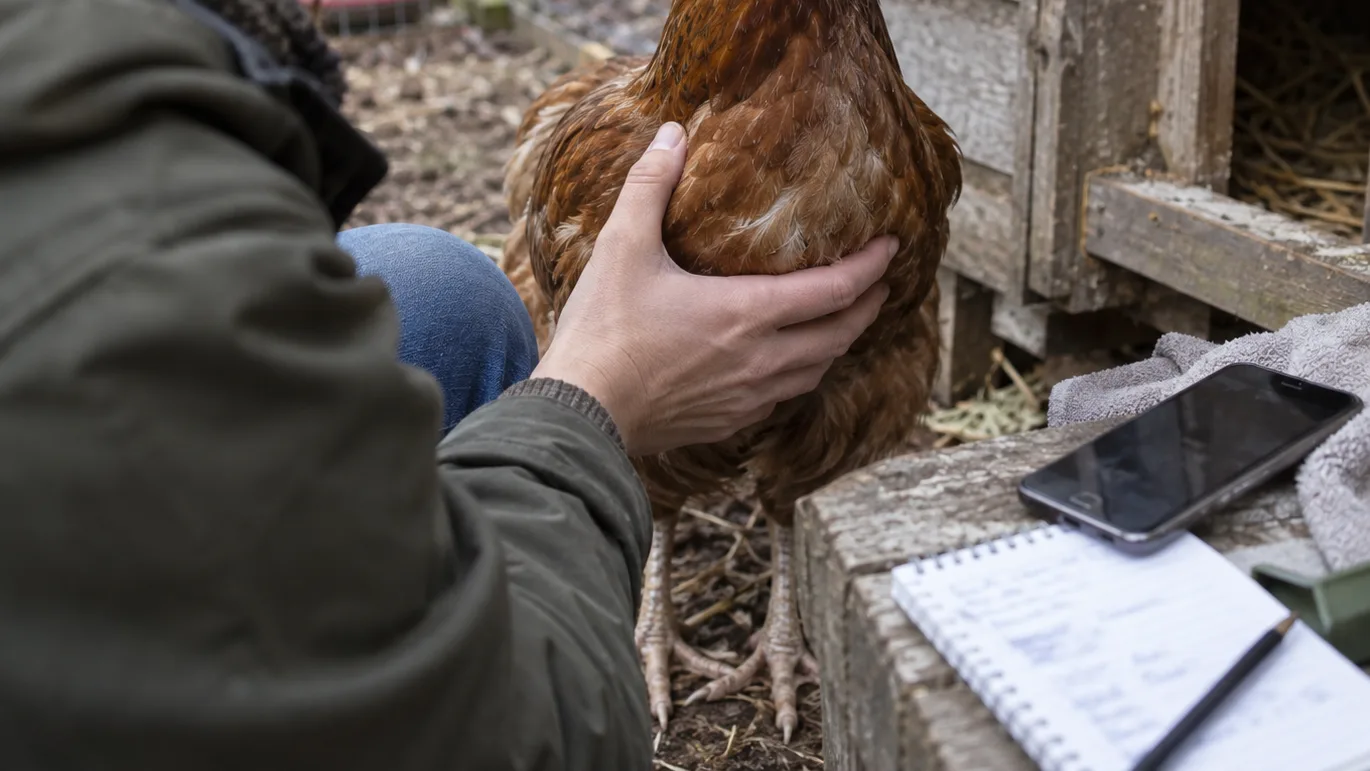
A veterinarian may palpate the crop, weigh the bird, inspect the mouth and throat, review the diet and droppings, and decide whether further testing or imaging is needed. The aim is to separate impaction, obstruction, crop stasis, fungal overgrowth, injury, and another digestive or systemic illness.
Treatment may involve fluids, supervised crop care, management or removal of an obstruction, an antifungal medicine when that is actually indicated, or treatment for the underlying illness. The right option depends on what is found. Do not use human medication, leftover flock drugs, or an improvised dose. Medication choice, administration, and any egg-withdrawal period belong with the veterinarian and the product label.
For clinician-level background, use avian veterinary references on crop disorders, candidiasis, and aspiration risk rather than treating a single online recipe as a diagnosis.
Prevent a repeat in a 3–12 hen flock: feed, forage, grit, and daily checks
Prevention is mostly about reducing the things that make a crop sit full for too long:
- Keep complete feed dry and fresh. Remove clumped, damp, moldy, or foul-smelling feed and clean spills.
- Keep treats modest so they do not displace the main ration, especially when birds are already eating long grass or whole grains.
- Inspect the run for stringy grass, twine, plastic, baling material, and other swallowable debris.
- Offer appropriate insoluble grit separately when your birds eat forage or whole grains. Grit supports grinding in the gizzard; it is not a cure for sour crop.
- Check shared water and feed if more than one bird develops signs. A simple how to clean a chicken coop routine also helps remove wet litter and spoiled feed before they become recurring hazards.
After a hen has recovered, I give her a quick once-over, maybe a minute, before feed for three to five mornings. I check posture, appetite, droppings, and whether the crop feels empty or nearly empty. If the coop smells stale or stays damp, review chicken coop ventilation as part of the investigation rather than focusing only on the bird.
Three questions that come up at the coop door
Can I turn a chicken upside down to empty sour crop?
No. Inversion and forceful squeezing can bring fluid or feed into the airway. Keep the hen upright and contact a veterinarian, especially if she is repeatedly regurgitating or having breathing trouble.
Will apple cider vinegar, yogurt, or oil cure chicken sour crop?
There is no dependable home cure for every cause. Do not force oil, vinegar, yogurt, water, or human medicine into the bird. Treatment depends on whether the problem is obstruction, stasis, fungal overgrowth, or another illness.
Is sour crop contagious to the rest of the flock?
Sour crop is a symptom pattern, not automatically a contagious disease. A shared feed, water, mold source, or underlying illness can affect multiple birds, so isolate the hen and investigate the flock if more than one bird shows signs.
Keep this short rule by the coop: check before breakfast, take a full crop seriously, keep the bird upright, and escalate quickly for breathing trouble, repeated regurgitation, collapse, or severe weakness.
This week, make a simple sick-hen note for your flock: last feed, last drink, last droppings, crop feel, and breathing. Then pair it with your how to clean a chicken coop routine so you can remove damp feed and litter before the next morning check.
Frequently Asked Questions
Can I turn a chicken upside down to empty sour crop?
No. Inversion and forceful squeezing can cause regurgitation and aspiration. Keep the bird upright and contact a veterinarian, especially if she is repeatedly bringing fluid up or having breathing trouble.
Will apple cider vinegar, yogurt, or oil cure chicken sour crop?
There is no dependable home cure for every cause of sour crop. Do not force oils, vinegar, yogurt, water, or human medication into the bird; treatment depends on whether the problem is obstruction, stasis, fungal overgrowth, or another illness.
Is sour crop contagious to the rest of the flock?
Sour crop is a symptom pattern, not automatically a contagious disease. One shared feed, water, mold, or underlying illness can affect multiple birds, so isolate the hen and investigate the flock if more than one bird shows signs.