Egg Bound Hen Symptoms: 7 Signs and What to Do Next
One missed egg is not, by itself, an egg-bound hen. The concern rises when a hen repeatedly strains, pumps her tail, stands upright like a penguin, develops a wet or swollen vent, or starts looking ill. Those changes matter more than the empty nest.
Collapse, open-mouth breathing, active bleeding, visible tissue, or a suspected broken egg move this out of the home-care category. Contact a poultry-capable veterinarian the same day, and treat those severe signs as urgent rather than waiting for a laying schedule to explain itself.
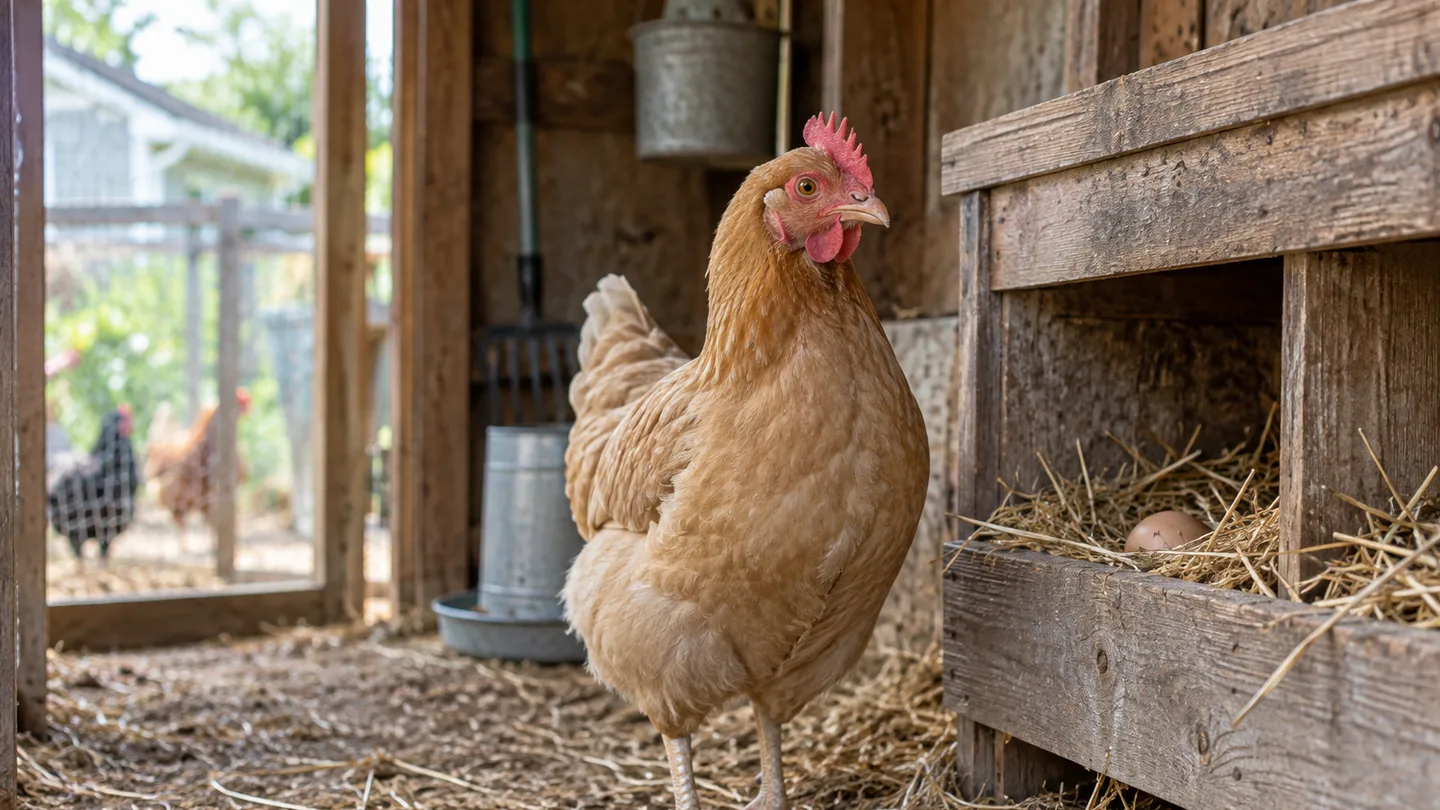
A missed laying day isn't the diagnosis—these changes make it urgent
Hens can pause laying during molt, broodiness, heat, stress, illness, or a change in routine. A hen that misses one day but remains bright, mobile, hungry, and free of straining may simply be having an ordinary break.
Egg binding becomes more plausible when several signs arrive together or worsen over a short period. Persistent effort is the key change: repeated trips to the nest, abdominal contractions, an abnormal stance, and a hen that looks uncomfortable rather than merely unproductive.
Do not wait overnight if she is weak enough to collapse, breathing with her beak open, bleeding, or showing red tissue from the vent. Visible shell, yolk, or damaged tissue also deserves prompt veterinary help because a retained or broken egg can injure the cloaca and surrounding tissue.
The 7 signs to check—without treating the list as a scorecard
These are the seven observations worth checking. No single one confirms egg binding. You are looking for a pattern and for a change from your hen's normal behavior.
- Repeated straining or nest visits. She may squat, push, leave the nest, and return minutes later without producing a normal egg.
- Tail pumping and abdominal contractions. The tail may move sharply up and down while the abdomen tightens. This can look like repeated effort rather than normal settling in a nest.
- A penguin-like stance or wide-legged walk. She may stand taller than usual, carry her tail low or high, and take short, careful steps.
- A swollen, red, wet, or protruding vent. Moisture, staining, irritation, or tissue at the opening raises the urgency. Do not dismiss visible tissue as simple mess.
- Fluffed feathers, half-closed eyes, or reluctance to move. A sick hen often stops behaving like a bird that is merely waiting to lay.
- Reduced appetite or drinking. Refusing food or water adds a whole-bird concern to what might otherwise look like a laying problem.
- Scant, watery, mucous, or absent droppings. A hen may still pass some material, so droppings alone cannot clear her when other signs are present.
| What you observe | What it may mean | Practical response |
|---|---|---|
| One quiet day, normal posture, bright behavior | Not enough information to call it egg binding | Watch closely and check feed, water, heat, molt, and broodiness |
| Straining plus tail pumping or an upright stance | Possible retained egg or another painful reproductive problem | Isolate calmly and contact a poultry veterinarian today |
| Abnormal vent, visible tissue, bleeding, or severe weakness | Possible prolapse, injury, rupture, or serious illness | Seek urgent veterinary help; avoid probing or squeezing |
The useful question is not whether your hen matches a certain number of signs. Ask whether her posture, effort, vent, and general condition are changing in the same direction.
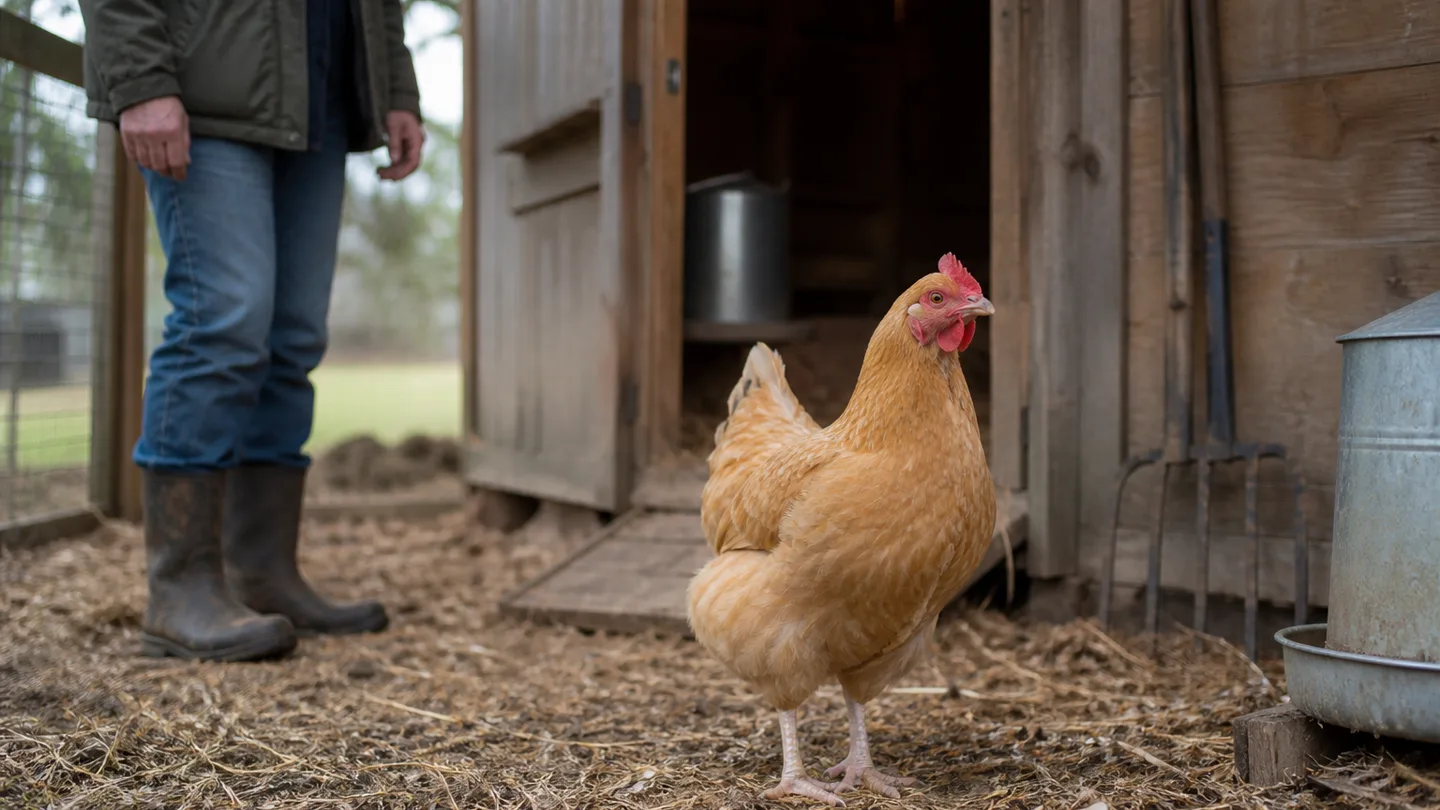
Use a 10-minute hands-off check before you move her
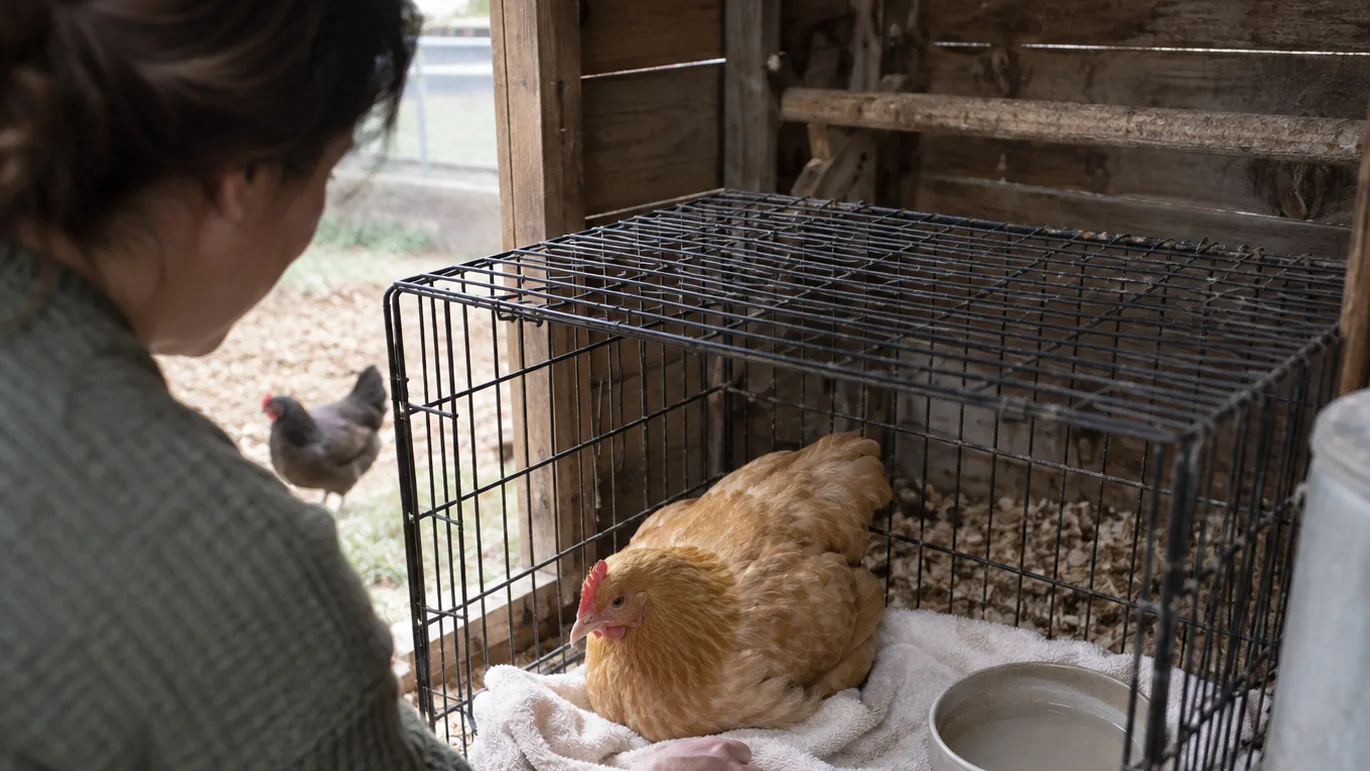
Start with observation, not examination. Move her away from flock pressure into a clean crate or small pen with good footing. Keep the area quiet. Watch for about 10 minutes and note what happens without touching the abdomen or vent.
- Can she stand and walk without repeated stopping, crouching, or falling?
- Is her breathing quiet, or is she panting and holding her beak open?
- Does the vent look normal from the outside, or is it wet, swollen, red, bleeding, or protruding?
- Does she pass any droppings, and are they roughly normal for her?
- When did you last see a normal egg, and when did the first unusual behavior begin?
A concrete scenario helps set the threshold. Suppose a 20-month-old brown hen leaves the nest at 7:30 on a cool November morning, stands upright, makes three short straining motions over the next 10 minutes, and takes only a few sips of water. Even if she can still walk, that combination earns a same-day veterinary call while she stays isolated. A bright hen walking normally, eating, and showing no straining or vent change can be watched more briefly.
Do not squeeze the abdomen, insert a finger, or probe the vent at home. A hands-off check is a triage step, not a substitute for an internal examination.
Choose the next step: monitor briefly, call today, or go now
Use the bird's condition to choose the branch. Do not build your decision around an exact number of hours; there is no universally safe waiting period for every hen, cause, or flock.
Go now or seek urgent help: collapse, open-mouth breathing, active bleeding, severe weakness, a large prolapse, visible shell or yolk, or tissue that looks torn or damaged. Put her somewhere quiet and warm enough to avoid chilling while you arrange care.
Call a veterinarian today: persistent straining, a swollen or abnormal vent, worsening lethargy, refusal of food or water, repeated trips to the nest, or no clear improvement after one gentle first-aid attempt. Tell the clinic the last normal egg, the symptom start time, and whether you saw a prolapse or shell material.
Monitor briefly: only when she is bright, mobile, breathing normally, eating or drinking, and showing no straining or vent change. Keep her under observation rather than returning her immediately to a busy flock where a subtle decline can be missed.
My judgment here is simple: condition beats the clock. A hen who is getting worse needs help even if the symptoms began recently. A hen who remains completely normal may not need an emergency response merely because the nest is empty.
The warm-bath stopgap: 10–15 minutes, then dry and reassess
A warm, not hot, bath can be a limited stopgap for a stable hen with no severe weakness, active bleeding, major prolapse, or breathing trouble. The aim is relaxation and warmth. It is not a way to extract an egg.
- Use a shallow container with comfortably warm water. Keep the hen's head and nostrils well above the water.
- Support her body without pressing on the abdomen. Keep the bath to about 10–15 minutes.
- Lift her out carefully and towel-dry her completely, including beneath the wings.
- Place her in a quiet, draft-free crate with clean bedding, water, and easy access to feed.
- Reassess her posture, breathing, appetite, droppings, and straining. If she is not clearly better, call the veterinarian rather than repeating baths.
Do not add soap or essential oils. A bath may relax muscle tension, but it cannot correct every cause of egg retention, reproductive disease, prolapse, or abdominal illness. It must not delay same-day care for a hen already showing concerning signs.
Free-choice oyster shell belongs in prevention, not as an improvised emergency cure. If a veterinarian recommends an emergency calcium product, follow that product's label and the clinician's directions. Do not invent a dose from a human supplement or a recipe found online.
Three tempting fixes that can injure a hen
Inserting a finger or object: this can tear delicate cloacal tissue, introduce contamination, or push a damaged shell farther inside. Safer alternative: inspect only from the outside and arrange veterinary care.
Squeezing the abdomen or trying to crush and pull an egg: pressure can break the shell, leave sharp fragments behind, or worsen internal injury. Safer alternative: keep her quiet and let a veterinarian decide whether an internal procedure is needed.
Forcing oil, laxatives, water, food, or human medication: a struggling hen can aspirate liquids, and a human product may have the wrong ingredients or concentration. Safer alternative: offer normal access to water and feed while seeking advice.
When it looks like egg binding but isn't
Several backyard problems overlap with egg-bound hen symptoms. The differences below are clues, not home diagnoses.
| Look-alike | Clues that point away from simple egg retention | What still needs attention |
|---|---|---|
| Broodiness | She stays in the nest, may growl or flatten herself, remains alert, and usually passes droppings when she leaves. The behavior can follow an incubation-length period of about 21 days. | Straining, abnormal posture, a dirty or swollen vent, weakness, or poor appetite are not explained safely by broodiness alone. |
| Molt | Feather loss and reduced laying develop over days or weeks rather than appearing as a sudden effortful episode. | A hen in molt can still become ill, so new straining or a vent change deserves a separate check. |
| Vent irritation or vent gleet | Wet feathers, staining, irritation, or odor may be more obvious than repeated whole-body effort. | Protruding tissue, bleeding, worsening pain, or lethargy needs veterinary assessment. |
| Vent prolapse | Red or pink tissue protrudes from the vent. | Prolapse and egg retention can happen together. Visible tissue is a reason to act, not a reason to dismiss egg binding. |
| Internal laying or egg-yolk peritonitis | A swollen abdomen, poor condition, penguin-like posture, or recurring reproductive trouble may develop without a normal egg appearing. | These problems are veterinary cases because a bath cannot identify or correct the underlying cause. |
| Constipation or another illness | Straining and scant droppings are nonspecific and can occur with digestive or systemic disease. | Use the whole-bird picture: appetite, breathing, posture, vent, droppings, and progression. |
Feather loss and irritation can also distract you from parasites or another illness. If the vent looks dirty but the bird is otherwise stable, compare the pattern with chicken mites treatment and chicken worms symptoms guidance. Those checks do not replace a vet when the hen is weak, straining, or showing tissue.
Questions readers usually ask at this point
Can you feel an egg inside a hen? Not reliably or safely at home. Pressing the abdomen or examining internally can injure tissue and may turn a difficult case into a damaged one. A poultry veterinarian should handle suspected retained or broken eggs.
Can an egg-bound hen still poop? Yes. She may pass small, watery, or mucous droppings. Passing droppings does not clear her when straining, abnormal posture, or vent changes are present.
How long can you wait before calling a vet? There is no dependable safe waiting period that fits every case. Persistent symptoms deserve same-day contact, while collapse, breathing trouble, bleeding, major prolapse, or suspected shell rupture needs urgent help.
Is a prolapsed vent the same as egg binding? No. A prolapse means tissue is protruding from the vent. It can occur alongside egg retention, so it needs prompt attention rather than treatment as a minor laying problem.
Afterward, fix the conditions that raise the risk
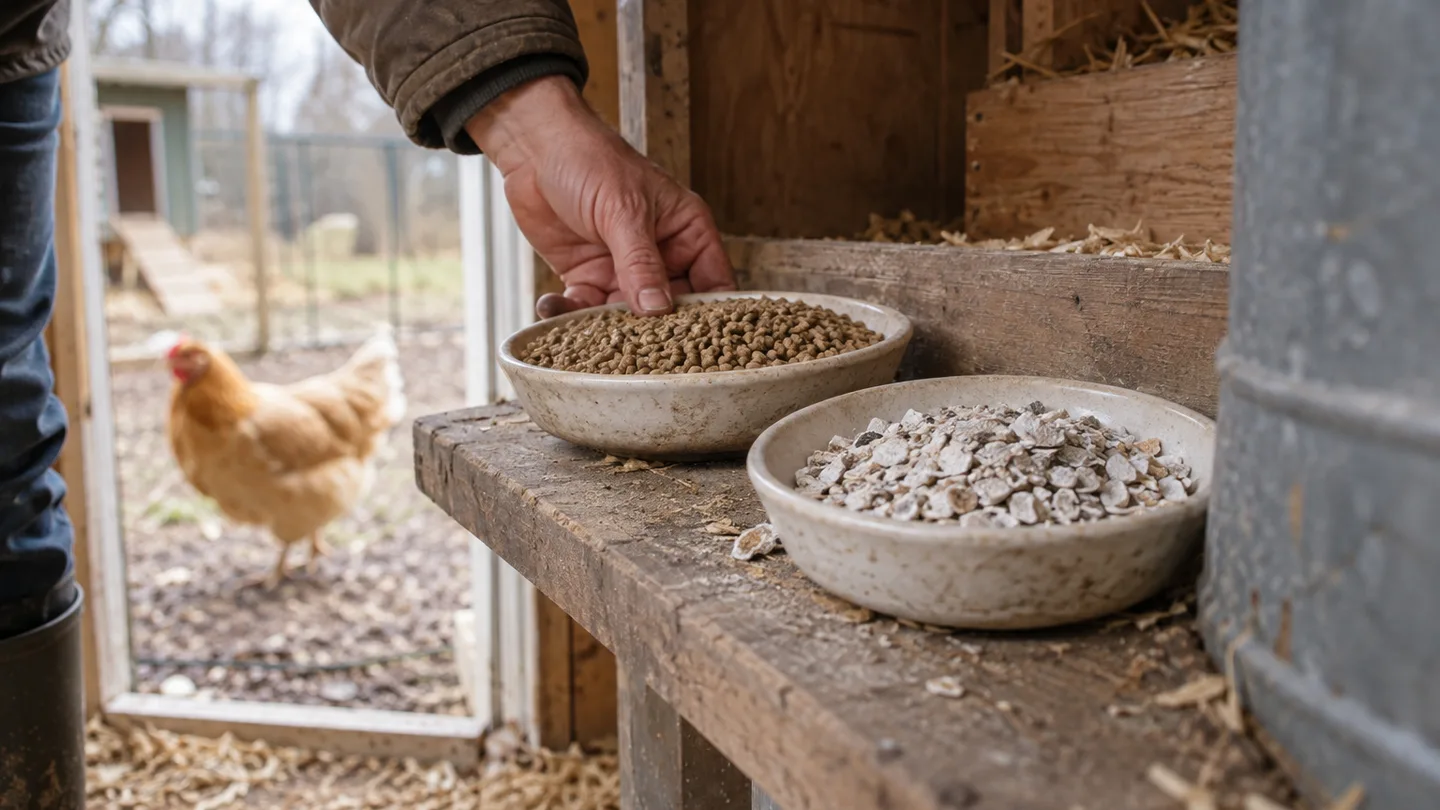
Prevention is mostly ordinary husbandry, which is good news because ordinary husbandry is repeatable. Start with a complete layer ration and read the current feed label rather than relying on an old bag or a generic chart. As a practical label-reading checkpoint, complete layer feeds commonly sit around roughly 3.5% to 4.5% calcium, but the product label and your veterinarian's advice take priority.
Offer oyster shell separately and free choice so hens can take what they need. Keep treats to about 10% or less of the overall diet; large amounts of scratch, kitchen scraps, or low-calcium extras can displace the balanced ration. For current feeding principles, the extension guidance on layer rations is a useful place to start, then check prices and labels available in your area.
Risk can rise around young pullets beginning to lay, unusually large eggs, obesity, sudden lighting or routine changes, poor shell quality, and underlying reproductive disease. A calendar alone cannot tell you whether a pullet is healthy; the guide at what age do chickens start laying eggs is better used for expectations than for diagnosis.
If the episode recurs, eggs are repeatedly misshapen, shell quality stays poor, or the hen does not return to normal behavior, arrange veterinary review. A repeated problem is a reason to investigate the bird and the flock's management, not simply to repeat the same bath.
For a clinical reference, the Merck Veterinary Manual is a useful starting point for discussing avian reproductive emergencies with your veterinarian.
Build a one-page plan before your next sick-bird call
This week, spend 15 minutes preparing a small hospital setup. Put a clean crate, towel, gloves, water dish, spare bedding, and a working flashlight in one place. Save the contact details for a poultry-capable veterinarian before you need them.
Make a one-page record for each bird. Include her name or leg mark, approximate age, last normal egg, last normal droppings, regular feed, first unusual sign, and any first-aid step already tried. That short record helps a clinic hear the sequence instead of receiving a vague report that she seems off.
Keep the rule visible: quiet isolation and observation are reasonable first steps for a bright hen, but straining, vent changes, or whole-bird decline move the decision toward veterinary care. Once the kit is ready, audit your current layer ration and monthly feed spending so the prevention plan is as practical as the emergency one.
Frequently Asked Questions
Can you feel an egg inside a hen?
Not reliably or safely at home. Explain why internal examination and abdominal pressure can injure tissue, and why a poultry veterinarian should handle suspected retained or broken eggs.
Can an egg-bound hen still poop?
Yes. She may pass small, watery, or mucous droppings, so passing droppings does not rule out egg binding when straining, abnormal posture, or vent changes are present.
How long can you wait before calling a vet for an egg-bound hen?
There is no dependable safe waiting period. Recommend same-day veterinary contact for persistent symptoms and immediate help for collapse, breathing trouble, bleeding, major prolapse, or suspected shell rupture.
Is a prolapsed vent the same as egg binding?
No. A prolapse is tissue protruding from the vent, but it can happen alongside egg retention and needs prompt veterinary attention rather than being treated as a minor laying problem.