How Long Can Chickens Go Without Water? The Safe Limit
You open the coop at seven and hear the usual rush of feet. Then you see the drinker: empty, tipped, or packed with bedding. If you’re asking how long can chickens go without water, the safest answer is zero hours. Your birds should have clean water available all day. A same-day outage is an urgent husbandry problem; 24 hours without water is an emergency, not a safe target.
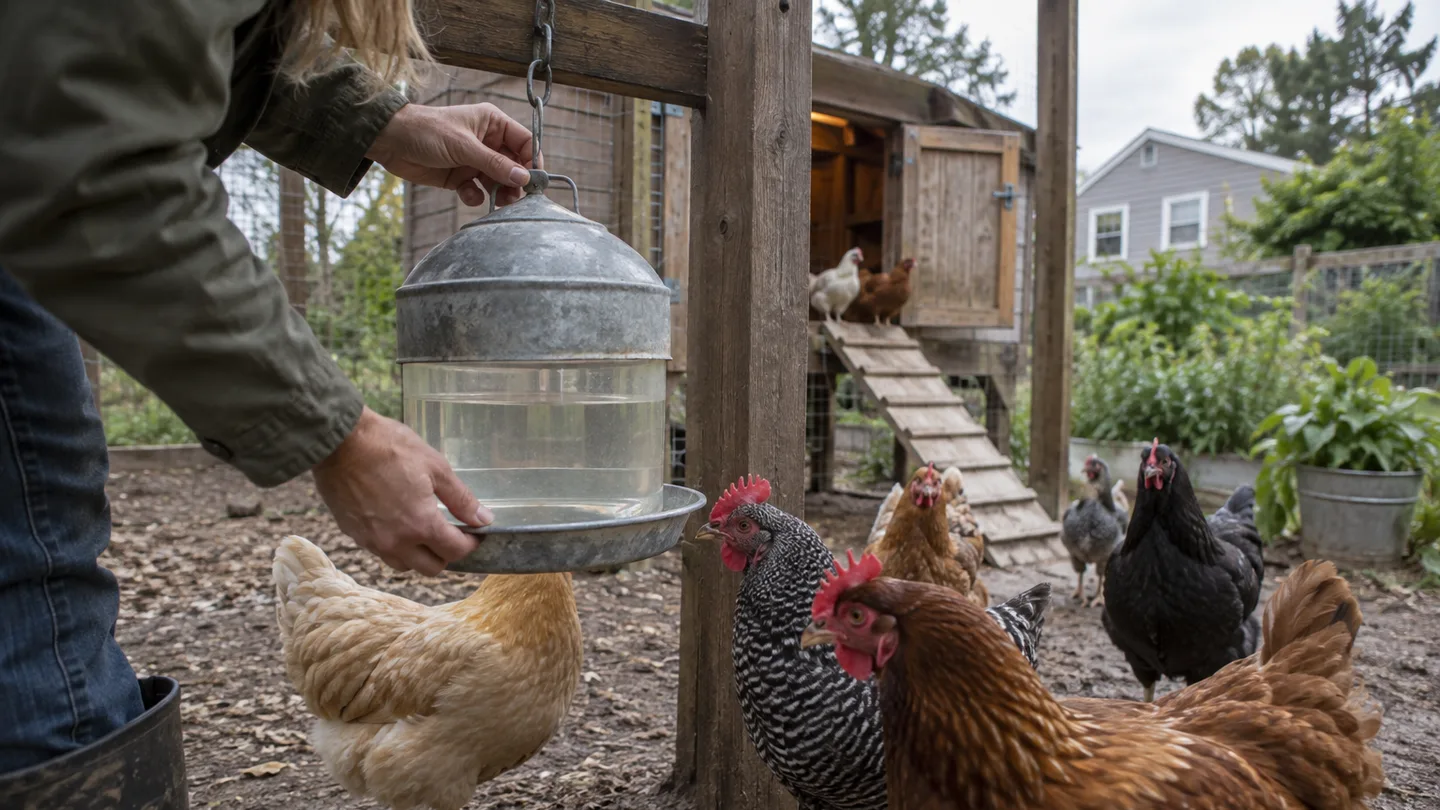
Zero Hours Is the Safe Limit; 24 Hours Is an Emergency, Not a Target
There isn’t a dependable number of hours that works as a safe limit for every flock. A healthy adult hen in mild weather may look normal for a while after a drinker runs dry. That doesn’t make the gap harmless. Heat, direct sun, active laying, illness, age, and the bird’s access to shade can all shorten the margin.
Think of the clock this way:
- At zero hours: continuous access is the goal. Check the water at every routine visit, not just once in the morning.
- Later the same day: treat an empty drinker as an urgent fix. Refill it with clean, cool water, move it out of direct sun, and check that every bird can reach it.
- At 24 hours or beyond: stop treating the problem as a missed chore. Birds may be dehydrated, overheated, weak, or unable to compete at the water point. Begin first aid while deciding whether veterinary help is needed.
The mistake I’d avoid is treating this as a stopwatch question. Water loss isn’t a straight line. A hen standing quietly in shade on a cool morning and a laying hen panting in a hot run are not starting from the same place.
In my own small-backyard routine, I once treated a tipped drinker as a nuisance rather than a water-system failure. I refilled it, wiped the wet litter, and carried on with chores. Later that morning, I found the replacement cup empty again because a hen could kick bedding straight into it. The result wasn’t a dramatic rescue. It was a better habit: I now check that each drinker is both full and usable, and I keep a spare vessel where I can reach it before opening the run.
If you find a dry drinker, don’t wait to see whether the birds “seem thirsty.” Refill it, provide shade, and watch the flock for several minutes. A bird that is collapsed, unable to stand, markedly weak, or still panting hard after being moved to a cool area needs more than casual observation. Contact a veterinarian, especially if more than one bird is affected.
Calculate the Water Budget: About 0.5–1 Pint per Adult Hen per Day
For planning a small flock in moderate weather, use about 0.5–1 US pint, or roughly 240–480 ml, per adult laying hen per day. That is a starting allowance, not a hard ceiling. Hot weather, dry feed, active laying, illness, and poor-quality or dirty water can push demand higher.
Here’s the simple arithmetic:
| Flock size | Moderate-weather planning range |
|---|---|
| 3 hens | 1.5–3 pints per day |
| 6 hens | 3–6 pints per day |
| 12 hens | 6–12 pints per day, or about 0.75–1.5 gallons |
This is why the question how much water do chickens drink in a day needs a flock-size and weather qualifier. A single figure can make a three-hen setup look overprepared or leave a twelve-hen setup short.
Remember that water disappearing from the container is not automatically water consumed by your birds. A leaking seam, a tipped cup, a nipple that drips, or bedding kicked into the drinker can account for part of the loss. Fouled water may be technically present but functionally unavailable if your hens refuse it.
To measure your flock instead of guessing, use this 24-hour check:
- Fill the drinker with a known volume at the same time each morning.
- Write down the starting amount. If the container has no useful markings, fill it from a measuring jug.
- After 24 hours, measure what remains before topping it up.
- Inspect for wet bedding, drips, splashes, algae, or droppings. Record those separately from likely drinking.
- Repeat on a couple of mild days and compare the result with a hot day. Use the higher practical demand when planning your reserve.
The value of this exercise is not false precision. It tells you whether your current drinker is large enough, whether the flock is wasting water, and how much your backup supply should hold. On a hot day, I would rather see unused water than a container that runs dry before the next chore.
Empty Drinker? Use a Symptom-First Response in the First Hour
When a drinker is found empty, start with the birds rather than the equipment. The container can be repaired later. Your first job is to make water available and identify any bird that cannot recover without help.
- Provide clean, cool water immediately. Use a clean second container if the original is slimy, dirty, leaking, or full of litter. Put it in shade where the flock can gather without crowding.
- Move birds out of direct heat. Improve shade and airflow. Don’t chase weak birds around the run or force them to walk a long distance to the drinker.
- Watch individual birds. A dominant hen may drink first while a timid bird hangs back. Look for whether each bird can stand, walk, reach the water, and settle after drinking.
- Do not force water into a weak bird’s mouth. Pouring water down the beak can send liquid into the airway. If a bird cannot hold its head normally or cannot swallow reliably, seek professional help rather than improvising.
- Escalate for red flags. Collapse, inability to stand, severe weakness, persistent heavy panting after shade and water, or refusal to drink should move the situation toward a poultry veterinarian. If several birds show signs at once, make that call sooner.
A poultry-labeled electrolyte product may have a place as short-term supportive care, but use it exactly according to its label. It should not delay plain water, shade, or veterinary advice. I would not mix salt or sugar by guesswork. A homemade solution can be too concentrated, unevenly mixed, or unsuitable for a bird that has another illness.
Restored water also doesn’t guarantee that every consequence disappears immediately. A hen may drink, settle, and still lay less for a while after heat or dehydration stress. That is a reason to monitor her, not a reason to keep adding products to the water. If appetite, posture, droppings, breathing, or activity remains abnormal, get help.
For a second reference point, compare your plan with University extension guidance on poultry water consumption and hot-weather care and Merck Veterinary Manual guidance on dehydration and heat stress in poultry. The useful part is the same in both cases: water access and the bird’s condition matter more than a single survival number.
Build a 24–48-Hour Backup for a Flock of 3–12 Hens
Once the daily allowance is clear, build a backup that still works when you are late, the weather changes, or one drinker fails. For 12 hens in moderate weather, the planning range is about 0.75–1.5 gallons per day. A 48-hour reserve therefore starts at roughly 1.5–3 gallons before you add a margin for heat, spillage, or extra demand.
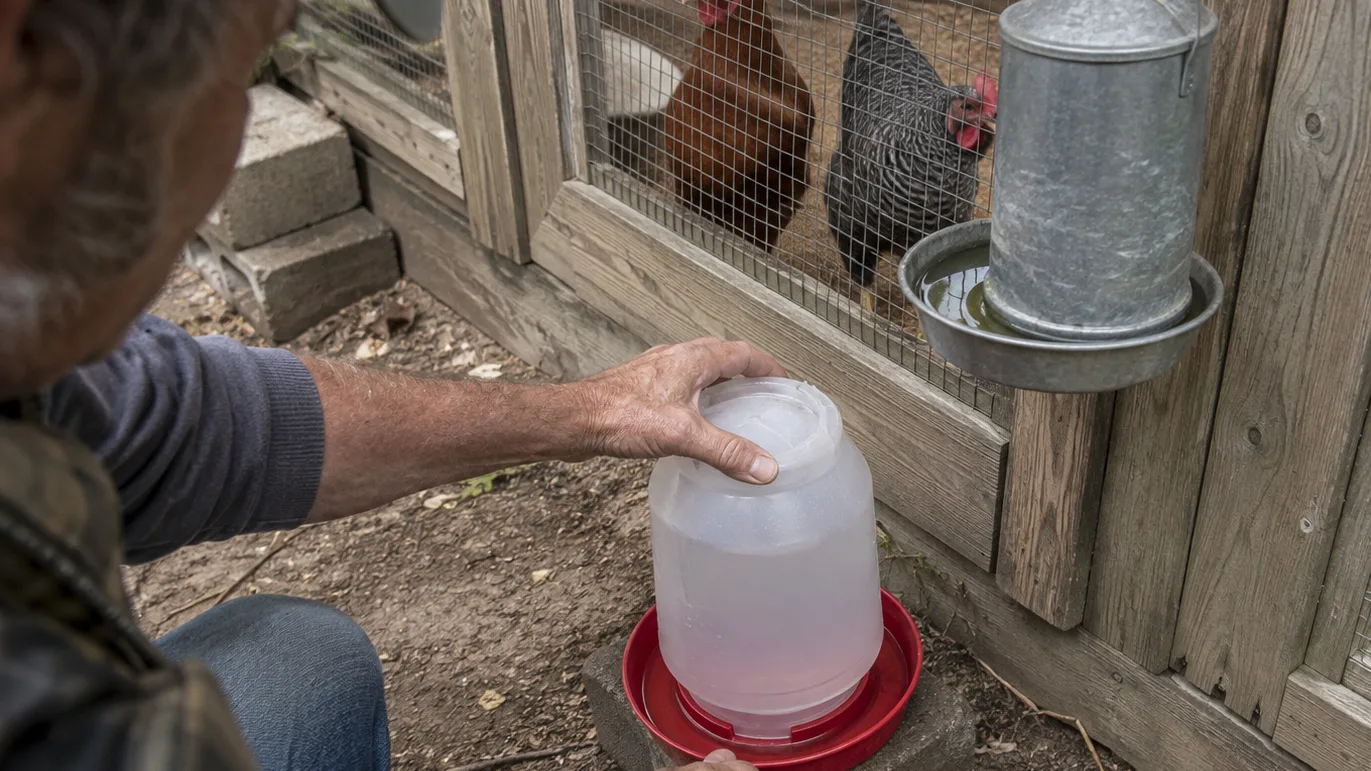
For three hens, that same two-day baseline is about 0.375–0.75 gallon. For six hens, it is about 0.75–1.5 gallons. Those numbers are arithmetic from the per-hen allowance, not a promise that your flock will use the same amount in every season. If your measured use is higher, plan from your measurement.
My preferred small-flock arrangement has two separate drinkers rather than one large point of failure. Put them in different parts of the run, or keep one clean and filled as a ready spare. If one gets tipped, frozen, fouled, or blocked, the flock still has another route to water. The second container should be genuinely usable, not stored empty on a shelf.
Placement does more work than many keepers expect:
- Use shade during the warmest part of the day. Direct sun warms water and can make a container harder to monitor.
- Raise the drinker enough that birds can drink comfortably without stepping into it or kicking bedding directly inside.
- Keep it away from the most heavily used roosting and dust-bathing spots.
- Check the ground beneath it for dampness. A slow leak can empty a reservoir while leaving the flock with no obvious sign that the water disappeared.
Different failures need different checks. Freezing is a temperature problem, so a winter setup needs more frequent checks and a safe, manufacturer-approved solution if you use a heated base. A leak is a hardware problem. Algae and slime mean the vessel needs emptying, scrubbing, drying, and refilling. Droppings or bedding are a placement and cleaning problem. Don’t solve all four by simply adding a bigger container.
Your best bedding for chicken coop choice also affects how quickly a drinker becomes unusable. Loose, dry bedding is easier to manage than a wet patch that gets carried into the water. Whatever material you use, the practical test is simple: can you see clean water at the drinker, and does the surrounding area stay reasonably dry?
Once a week, run this water-system check:
- Fill both drinkers and inspect seams, valves, nipples, handles, and bases.
- Place them where the birds will actually use them, then confirm shade at the hottest part of the day.
- Look for leaks, wet bedding, algae, droppings, and blocked drinking points.
- Check the reserve containers for cracks and make sure you can lift them when full.
- Write the flock’s current daily water use on a note near the feed bin so you can update the 24- or 48-hour reserve after a weather change.
Your concrete job this week is to measure one ordinary 24-hour period, fill a clean backup container, and test both drinkers before the next hot spell. Then compare the result with how much feed per chicken per day; dry feed and hot weather are exactly the combination that makes a forgotten water check costly.