Gapeworm in Chickens: Signs, Treatment, and Prevention
Open-mouth breathing at rest changes the plan. If your hen is gasping, stretching her neck, showing a blue or purple comb, collapsing, or unable to perch, contact a poultry-experienced vet the same day. Move her to a quiet, well-ventilated space while you arrange care. Do not probe down her throat.
In my own small backyard flock, one hen began opening her beak between breaths on the roost. I filmed her, checked the other birds, and took fresh droppings and her treatment history to the vet. The vet did not find a worm in her throat, and the fecal check did not confirm gapeworm. The working diagnosis was irritated upper airways, probably worsened by dusty litter. After we corrected the litter and followed the supportive-care plan, she ate that evening and returned to normal perching over the next few days.
That case changed my order of operations. I now treat breathing trouble as a triage problem first and a parasite question second. Gapeworm can be serious, but gaping by itself cannot identify the cause.
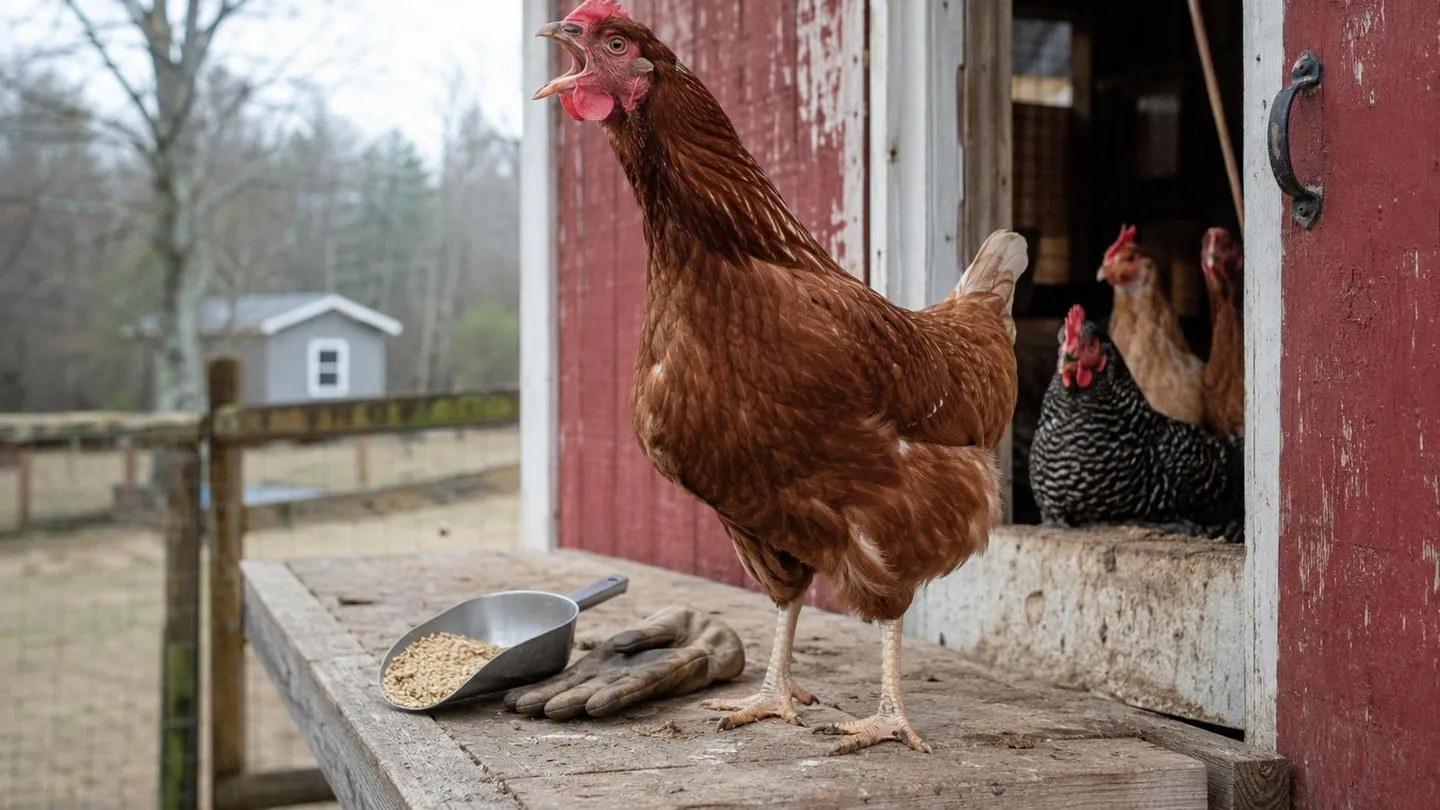
A chicken gasping at rest needs triage before you assume gapeworm
A chicken that is gasping while sitting quietly is working too hard to breathe. Give that bird space, shade or shelter from weather, clean air, and easy access to water. Keep handling brief. If she is weak, falling over, unable to perch, or developing a dark blue or purple comb, same-day veterinary advice is the sensible threshold.
Use a separate carrier, dog crate, or small pen if you have one. Keep it away from the flock, but do not seal it in an unventilated box. A calm, clean environment lets you see whether breathing changes with rest and prevents other birds from crowding her.
Heat stress, a blocked airway, dust, contagious respiratory disease, fungal disease, and gapeworm can overlap in appearance. The first useful information is a short video of the breathing pattern. The second is the flock history: age, recent arrivals, wet ground, free-ranging, medications, and whether any other bird is affected.
The gapeworm pattern: gaping, neck stretching, cough, and trouble swallowing
Gapeworm becomes more plausible when several signs appear together. The parasite, Syngamus trachea, lives in the bird's airway. Irritation and obstruction can produce repeated gaping, neck extension, coughing, head shaking, swallowing trouble, reduced appetite, and weight loss.
Use the table as a sorting tool, not a diagnosis. The pattern matters more than one dramatic movement.
| What you see | Why it can fit gapeworm | What else belongs on the list |
|---|---|---|
| Repeated gaping while resting | The bird may be trying to move air past an irritated or narrowed airway. | Heat, airway blockage, infectious disease, dust, and other respiratory problems. |
| Neck stretching, head shaking, or coughing | These movements can follow airway irritation or trouble clearing material. | Mycoplasma, infectious bronchitis, infectious laryngotracheitis, or a foreign body. |
| Repeated swallowing or trouble eating | Airway discomfort may make swallowing difficult, and a sick bird often loses interest in feed. | Mouth lesions, crop problems, throat injury, or another illness affecting appetite. |
| Weight loss or a fluffed, quiet posture | Ongoing breathing effort and reduced intake can pull body condition down. | Worms elsewhere, chronic disease, poor feed intake, or a flock-management problem. |
| One bird affected | A single exposed bird may show signs first. | Individual airway injury, a lodged object, or a problem unrelated to the rest of the flock. |
| Several birds affected | Shared soil, hosts, feed, or water can give multiple birds the same exposure. | Contagious respiratory disease, poor ventilation, heat, dust, or a toxin. |
Young birds can become severely affected faster because a narrowed airway leaves less room for error. Adult hens can also develop infection after exposure, especially if they spend time on damp ground where intermediate hosts are active. For a wider symptom comparison, the site's chicken worms symptoms guide can help you sort respiratory signs from digestive ones.
From damp soil to the trachea: the roughly 2–3-week gapeworm cycle
Gapeworm begins outside the bird. Adult worms produce eggs in the airway. The chicken coughs or swallows material from the airway, and eggs leave the body in droppings. Under suitable conditions, infective larvae develop in contaminated soil or inside hosts such as earthworms, slugs, and snails.
A chicken can then become infected by eating those hosts or by picking up infective material from contaminated ground. After ingestion, the larvae move through the bird and reach the trachea, where the developing worms irritate the airway. The cycle eventually produces more eggs that return to the ground in droppings.
For backyard planning, the route from ingestion to egg shedding is roughly 2–3 weeks under favorable conditions. Temperature, soil moisture, the host involved, and the exact route of exposure can shift the timing. Use that window to organize quarantine, cleaning, and a veterinary recheck. It is a planning estimate rather than a stopwatch.
Free-ranging on wet soil raises exposure opportunities, but an earthworm is not automatically infected. The practical goal is to reduce repeated contact with wet, manure-heavy ground. You cannot inspect every worm in a suburban yard.
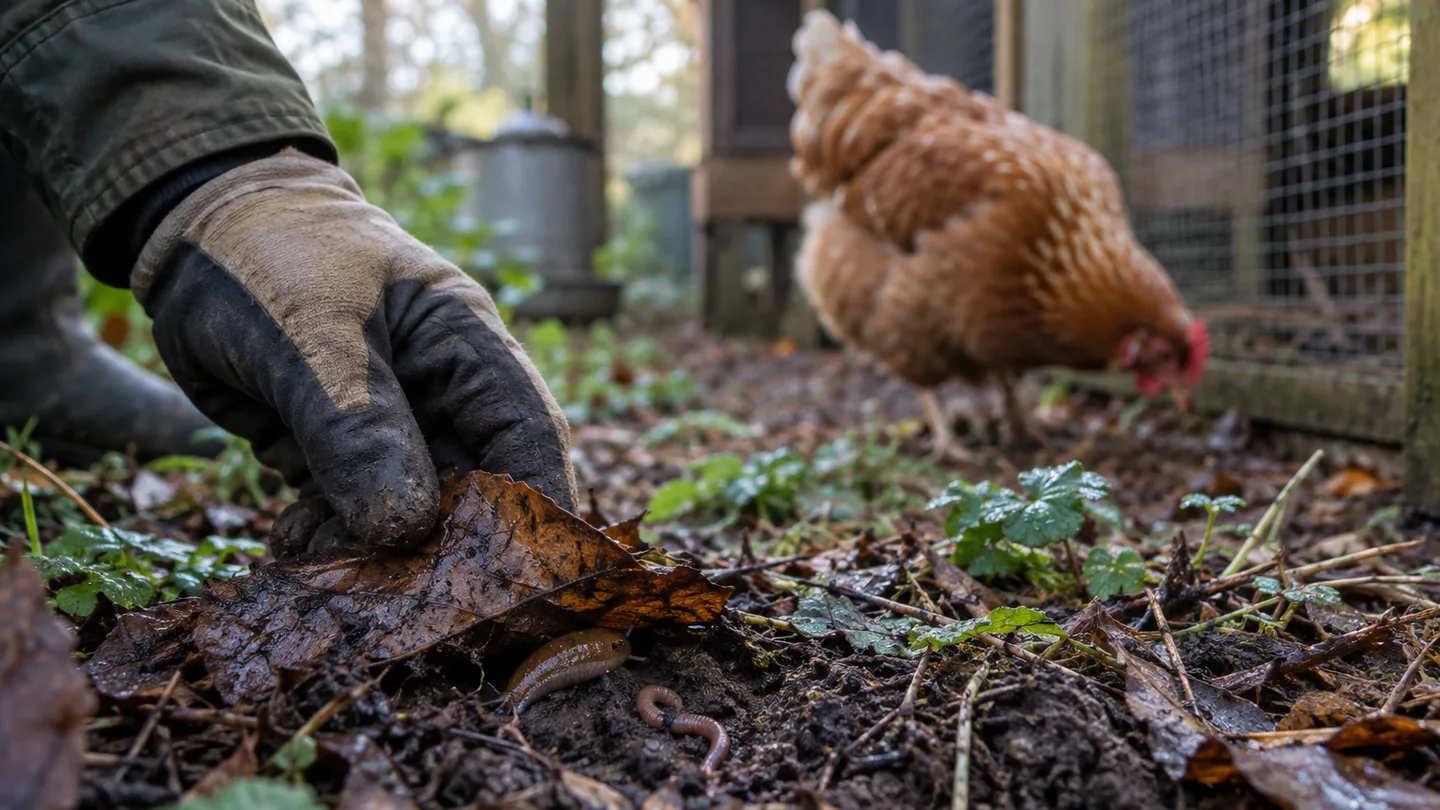
A negative poop check does not settle it: how diagnosis is confirmed
Diagnosis usually works best as a ladder. Your vet may begin with the bird's age, symptoms, flock history, and exposure to damp soil or earthworms. A fecal parasite test can add evidence. Depending on the bird's condition, the vet may examine the mouth and upper airway, use a scope or other clinical method, or recommend a necropsy if a bird dies and the cause remains unclear.
A negative fecal result does not settle the question. Eggs may be missed because shedding and sampling do not line up, the sample is small, or the worms are present before eggs are being passed. A negative test should be interpreted beside the breathing pattern and flock history.
Several conditions can look similar. Infectious bronchitis, infectious laryngotracheitis, mycoplasma-related disease, aspergillosis, heat stress, dust irritation, and a lodged foreign body all deserve consideration. Sudden spread across the flock especially deserves a wider respiratory investigation.
Take these items to the appointment:
- A short video showing the bird breathing at rest.
- The bird's age, breed, and approximate body condition.
- The date the signs began and whether they are getting worse.
- Fresh droppings if the vet asks for them, collected as directed.
- A list of dewormers, antibiotics, supplements, and recent treatments.
- Details about free-ranging, wet soil, earthworms, new birds, and shared equipment.
Do not use a feather, needle, tweezers, or your fingers to pull at a suspected worm. A frightened bird can be injured quickly, and you may push material deeper or cause bleeding.
Treatment is a label-and-vet problem, not a DIY dose
Treatment starts with a poultry-labeled or veterinarian-directed anthelmintic. The exact product, dose, route, duration, repeat timing, and egg or meat withdrawal period depend on the formulation and the bird's status. Follow the label or the vet's written instructions precisely.
For a laying flock, withdrawal instructions matter. If the product is not clearly labeled for your birds, do not assume the eggs can go straight to the kitchen. Ask the vet how to handle eggs during treatment and for the required number of days afterward. The FDA/CVM animal-drug guidance is a useful place to check the general principles, while your vet or local authority should answer the flock-specific question.
Do not borrow an ivermectin schedule from a dog, horse, goat, or poultry forum. Formulation strength, route, legal status, and withdrawal requirements can differ. Herbal mixtures and apple cider vinegar may be discussed among keepers, but they do not replace a diagnosis or a properly selected anthelmintic.
Support the affected bird while treatment is being arranged. Keep her warm enough to avoid chilling without adding unnecessary heat, reduce dust, provide water within easy reach, and offer familiar feed. A shallow drinker can help a weak bird reach water, but check it often so it stays clean and cannot be tipped.
Your vet may recommend treating exposed flock mates, especially if several birds share the same soil and more than one has signs. That decision depends on the diagnosis, the product, the flock's age, and the risk of continued exposure. A second course depends on the parasite's development and the product instructions. Worsening breathing or a lack of clear improvement within the vet's stated window calls for a recheck, not a stronger home dose.
For background before the appointment, Merck Veterinary Manual's poultry respiratory guidance is a useful reference to discuss with your vet.
The cleanup window: reset litter, waterers, and contaminated ground for 2–3 weeks
Start with the wettest, dirtiest parts of the setup. Remove damp litter and heavily soiled bedding promptly. Scrub and dry feeders and waterers. Keep feed and water off bare soil, and fix leaks before adding fresh bedding. If possible, place affected birds in a clean temporary pen while the treatment and recheck plan runs.
Use the 2–3-week period as a practical exposure-management window. During that time, keep birds away from the muddiest section, remove droppings from high-traffic areas, and watch for new breathing signs. The ground outside will not become sterile simply because the coop was washed, so avoid promising yourself that one deep clean has ended the risk.
Drainage changes often matter more than a stronger-smelling disinfectant. A roof over the feeding strip, a layer of clean dry bedding, and a way to move birds off a saturated patch can reduce repeated contact. The site's guide on how to clean a chicken coop can help you plan the indoor portion without turning wet litter into a dusty cloud.
Recurrence can follow if treated birds return to wet, manure-heavy ground while infective material or host animals remain available. The cleanup job is therefore two parts: remove contamination where you can, then change where and how the birds feed and scratch.
Make the run less worm-friendly: dry footing, covered feed, and about 10 square feet per hen
Prevention starts with the run surface. About 10 square feet of run space per hen is a useful backyard baseline, with more room needed when the climate is wet, the flock is active, or the ground drains poorly. For six hens, that baseline works out to about 60 square feet. If your plan gives them 36 square feet, you are asking six birds to keep one small patch of soil dry, which is a difficult job in rainy weather.
Space alone does not solve parasite exposure. Cover the busiest feeding area with a roof, pavers, gravel, or another surface you can keep dry and clean. Raise feeders and waterers so birds cannot rake soil into them. Remove standing water. Move leaf piles and damp compost away from the run. If you free-range, restrict access to the wettest corners during prolonged rain.
My practical judgment is that dry footing is a better first upgrade than another supplement. A covered feeding strip changes the birds' daily contact with mud; a bottle additive usually does not change where they scratch, peck, and swallow.
Rotation can help. Divide the run if your property allows it, move birds before one section becomes a manure-slicked mud patch, and give the rested section time to dry. Free-ranging still offers enrichment and exercise, but ordinary soil and earthworms keep exposure possible. Total elimination is an unrealistic backyard target.
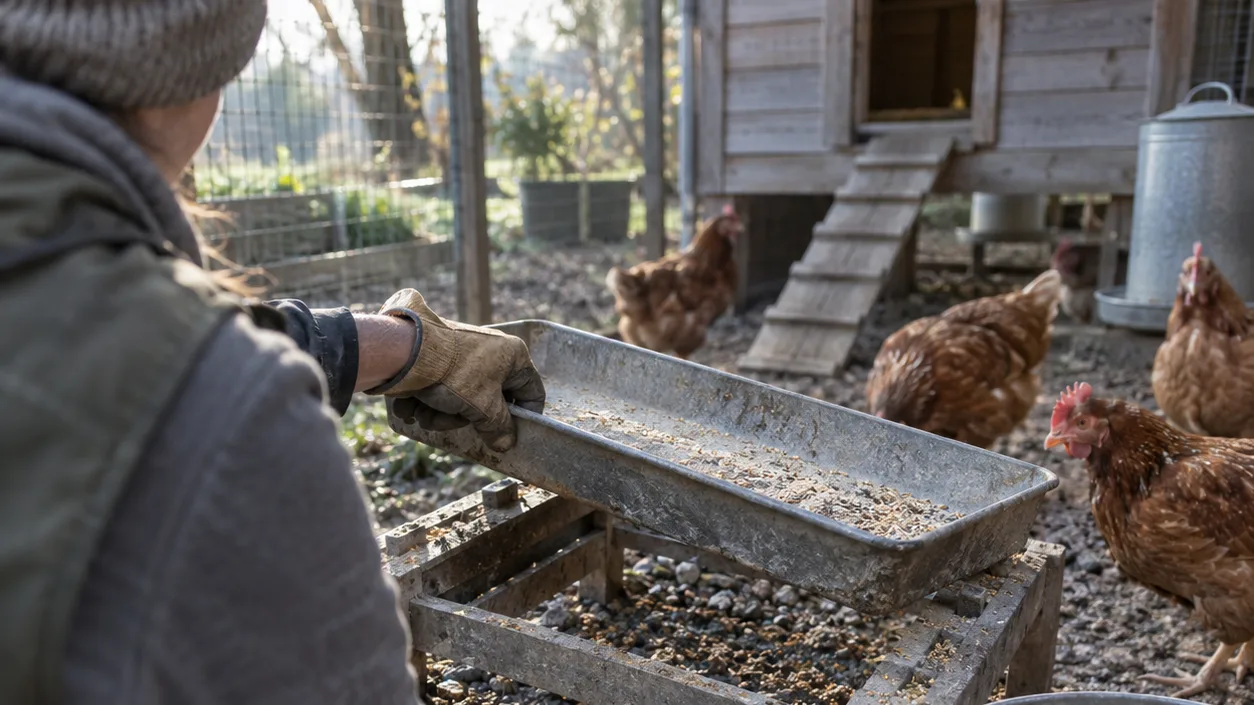
The 30-day new-bird quarantine that catches more than gapeworm
A new bird gets its own airspace for 30 days before joining the flock. A shed, secure isolation pen, or separate run is better than a wire partition that lets the newcomer share droppings and run soil with the resident birds.
Use separate feeders, waterers, scoops, and footwear where practical. Handle the established flock first and the newcomer last. Wash your hands between groups. Watch the new bird's breathing, appetite, droppings, posture, feather condition, and body weight or body condition. A written log makes a gradual change easier to spot.
Thirty days gives you observation time that reaches beyond the roughly 2–3-week gapeworm development window. It also lets you notice illnesses that do not show up on arrival day. Quarantine cannot guarantee a parasite-free bird, especially if the main flock already uses contaminated outdoor soil, so release should follow a sensible health check rather than the calendar alone.
Ask your vet whether fecal testing is useful before release. If the newcomer has coughing, repeated gaping, weight loss, or abnormal droppings, extend separation and get advice before mixing. The cost of a second pen is easier to manage than rebuilding a whole flock's exposure picture.
One bird, two or more birds, or the whole flock? Choose the next move
Use the number of affected birds to decide how widely you investigate. It does not identify the cause by itself, but it changes the practical response.
- If one bird is in acute distress: isolate her, film the breathing, and contact a vet the same day. Look for a blocked airway, heat, injury, and infectious disease alongside gapeworm.
- If two or more birds have similar signs: separate the visibly sick birds, stop sharing equipment with other groups, and ask the vet whether the shared soil exposure makes flock-level treatment worth discussing.
- If breathing trouble appears across the flock quickly: check ventilation, heat, dust, fumes, moldy feed, and recent chemical exposure while seeking veterinary advice. Rapid spread can fit a contagious or environmental problem better than one isolated worm burden.
Keep a simple record with each bird's ID, age, onset date, breathing at rest, appetite, droppings, exposure history, and treatment date. Add a note whenever a new bird starts coughing or gaping. That record gives your vet a timeline instead of a vague report that everyone seemed sick sometime last week.
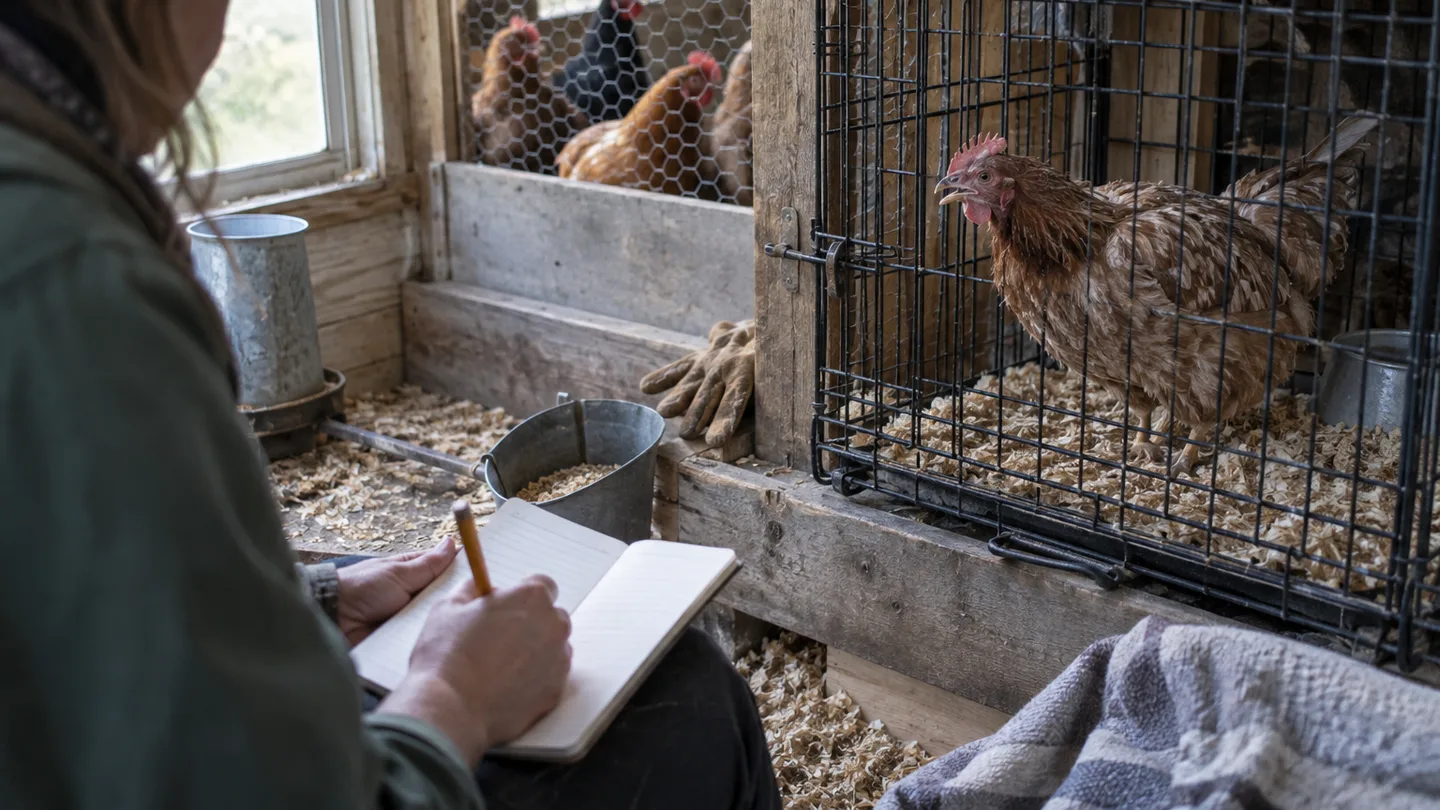
Recovery check: what should change over 7–14 days, and when to call back
For the next 7–14 days, check the affected bird at rest rather than judging her only after she has run across the yard. Note breathing effort, appetite, drinking, droppings, posture, alertness, and body condition. Short daily notes are enough:
- Breathing quieter, unchanged, or harder?
- Eating and drinking without being encouraged?
- Perching normally or sitting on the floor?
- New gaping, coughing, head shaking, or swallowing trouble?
- Any new bird showing similar signs?
There is no fixed recovery promise. A bird may look brighter before lost body condition returns, and a parasite treatment cannot undo every airway injury immediately. Follow the time window your vet gives you.
Call back sooner for worsening breathing, collapse, a blue or purple comb, repeated gaping after treatment, new cases, refusal to drink, or no meaningful improvement within that veterinary window. If the first diagnosis was uncertain, a recheck may need a different test or a broader respiratory work-up.
Can humans catch gapeworm from chickens?
Poultry gapeworm is not typically treated as a routine human-health concern, though normal handwashing after handling birds, droppings, litter, or contaminated soil is still sensible. Anyone with unusual human symptoms should speak with a medical professional rather than self-diagnose.
Can you see gapeworm eggs in chicken droppings?
No. The eggs are too small to identify by eye. A laboratory fecal test may detect them, but one negative sample does not rule out worms in the trachea. The result needs to be read beside the bird's signs and exposure history.
Does apple cider vinegar prevent gapeworm in chickens?
I would not use apple cider vinegar as a substitute for diagnosis, a labeled or veterinarian-directed anthelmintic, and exposure control. Keeping the run dry and reducing contact with manure-heavy soil addresses the route that matters more directly.
Is ivermectin safe for laying hens with suspected gapeworm?
There is no universal answer. Safety and egg handling depend on the product, formulation, route, dose, legal directions, and withdrawal requirements. Ask a poultry-experienced vet before using it, and follow the product information they identify.
Your action this week: if a bird is gasping at rest, isolate her in a quiet ventilated space, film one minute of breathing, and contact a poultry-experienced vet. For less urgent respiratory clues, compare the clip with the site's chicken sneezing guide and review chicken coop ventilation before you change the medication plan.
Frequently Asked Questions
Can humans catch gapeworm from chickens?
Gapeworm affecting poultry is not regarded as a routine human infection, but normal hand hygiene still matters; anyone with unusual human symptoms should ask a medical professional rather than self-diagnose.
Can you see gapeworm eggs in chicken droppings?
The eggs are not visible to the naked eye. A laboratory fecal test may detect them, but one negative sample does not rule out worms in the trachea.
Does apple cider vinegar prevent gapeworm in chickens?
There is no reliable home-additive substitute for diagnosis, a labeled or veterinarian-directed anthelmintic, and reducing exposure to contaminated wet soil.
Is ivermectin safe for laying hens with suspected gapeworm?
There is no universal yes; product approval, formulation, dose, and egg withdrawal requirements vary, so use should be veterinarian-directed rather than copied from an online recipe.