Chicken Sneezing: 7 Causes and When to Isolate a Bird
One dry sneeze or a sick bird? Start with the 24-hour pattern
One dry sneeze from one hen is not automatically a crisis. Repeated chicken sneezing, wet discharge, hard breathing, or a second bird joining in is a different job: stop watching casually and start triaging.
Use a 24-hour watch window only for the mildest pattern: one bird, one or two dry sneezes, normal appetite, normal droppings, normal activity, and no eye or nose discharge. During that window, count affected birds, note when it began, and inspect the coop. If sneezing repeats or a second sign appears, isolate the bird.
In my own small backyard setup, I once changed dusty bedding on a dry morning and heard a hen sneeze as she scratched. I assumed illness and reached for the isolation crate. Then I noticed fine material hanging around the roost. I removed the worst of it, opened the high vent, and watched through the afternoon; the extra sneezing stopped. That did not prove every sneeze is dust. It taught me to inspect the air before I label the bird.
- Is it one bird or several?
- Is the sneeze dry, or is there discharge?
- Are breathing, eating, drinking, and activity normal?
- What changed just before the sneezing began?
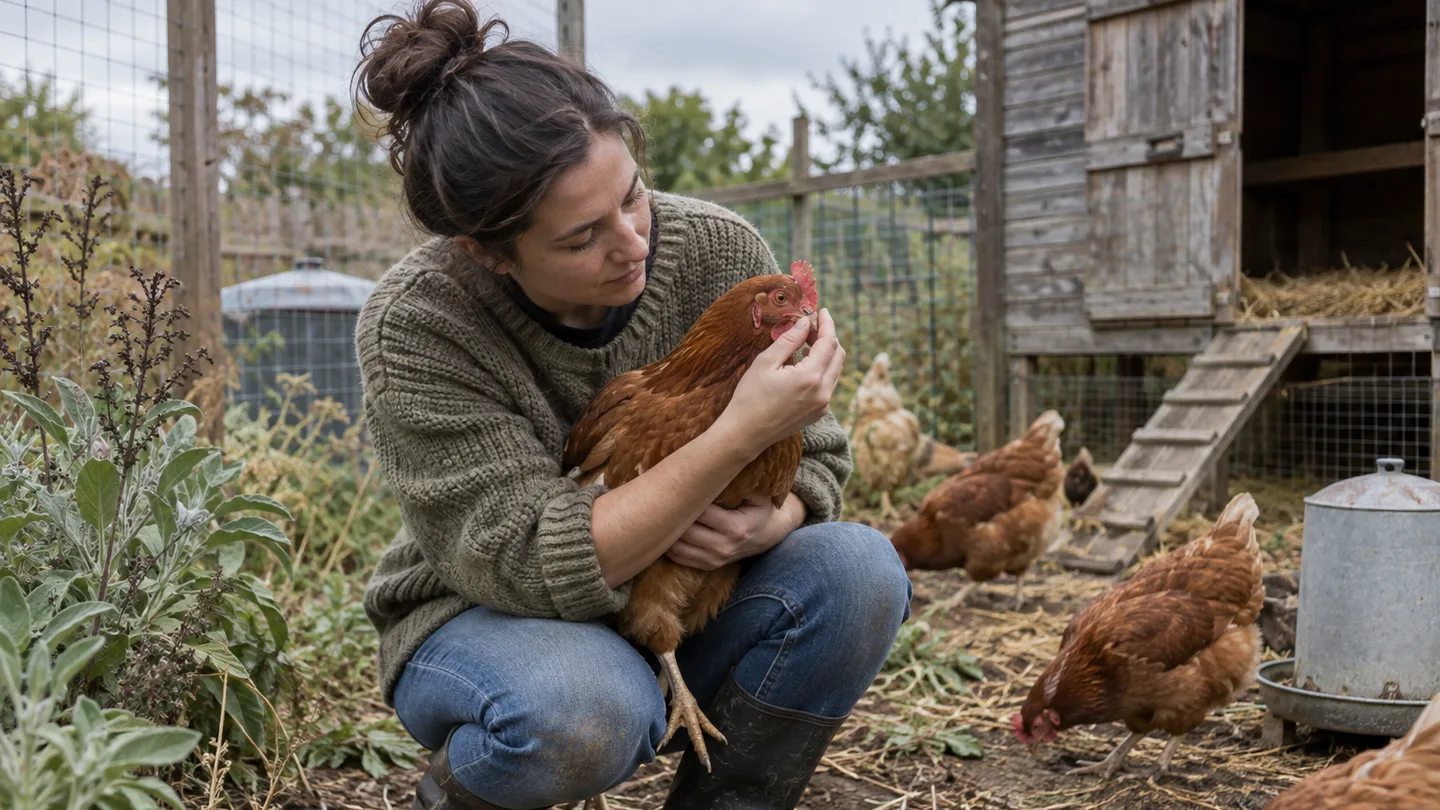
The seven causes, from dusty bedding to contagious respiratory disease
Chicken sneezing has a wide range of causes. The table below is a checking order, not a diagnosis. Sneezing by itself cannot tell you whether the problem is dust, irritation, fungus, a virus, or bacteria. Look at the number of birds affected and the signs that travel with the sneeze.
| Possible cause | Pattern to notice | Other clues | What to inspect | First response |
|---|---|---|---|---|
| Dusty bedding or feed | One or several birds sneeze soon after bedding or feed is disturbed. | Dry sneezes, dusty nostrils, or watery eyes. | Fine dust in the feed bin, dry litter, and dust hanging at bird height. | Remove the dusty source, improve airflow, and watch closely. Isolate if signs continue or change. |
| Ammonia from wet litter | Several birds share the same low, damp roost air. | Sharp odor, eye watering, coughing, or sneezing. | Wet bedding under the roost and the smell where your birds breathe. | Remove wet litter, dry the area, and correct ventilation. Persistent signs need veterinary advice. |
| Smoke, sprays, or chemical fumes | Signs begin suddenly after smoke, aerosol spray, paint, or disinfectant use. | Eye irritation, coughing, avoidance of the area, or harder breathing. | Recent cleaning, spraying, burning, or vehicle exhaust near the coop. | Move birds away from the fumes and provide clean air. Call a vet if breathing stays abnormal. |
| Mold or aspergillosis | One or more birds remain affected even after obvious dust is removed. | Dullness, weight loss, persistent sneezing, or increased breathing effort. | Musty feed, damp bedding, moldy corners, and spoiled stored grain. | Remove the suspected source and seek veterinary care. Do not assume a home remedy will fix a fungal problem. |
| Foreign material or local nasal irritation | Usually one bird has a sudden or persistent problem. | Head shaking, rubbing the face, or discharge from one side. | Look at the nostril opening without probing or pushing material deeper. | If it does not settle promptly, or breathing changes, have the bird examined. |
| Infectious bronchitis | Several birds develop respiratory signs over a short period. | Coughing, watery discharge, voice change, reduced appetite, or a drop in laying. | When each bird became ill, recent flock additions, and contact with other birds. | Separate obvious sick birds, tighten biosecurity, and contact a poultry veterinarian or extension office. |
| Mycoplasma or infectious coryza | One or more birds show nasal and facial signs, with spread possible through the flock. | Thick discharge, swollen sinuses or face, conjunctivitis, and sometimes an unpleasant odor. | Eyes, nostrils, facial swelling, and the number of birds affected. | Separate affected birds and get veterinary advice. Do not diagnose coryza by smell alone. |
Less common problems can sit behind a similar sound. Gapeworm moves up the checking list when you see repeated gaping, neck stretching, or trouble drawing breath. Infectious laryngotracheitis deserves urgent attention when there is severe respiratory effort or bloody mucus. Those are clues for a veterinary call, not home diagnoses.
Use this isolation rule: one bird, two birds, or the whole flock
Isolation is a decision about exposure, not just distance. Use the number of affected birds as your first fork.
- One bird, one brief dry sneeze, no other change: watch for 24 hours while you inspect the air, litter, feed, and recent chemical exposure.
- One bird with recurring sneezing or any second symptom: separate the bird promptly. A second symptom includes discharge, reduced appetite, lethargy, voice change, facial swelling, or abnormal breathing.
- Two or more birds showing signs on the same day: treat it as a flock-level problem until proven otherwise. Separate the most affected birds, stop moving birds between groups, and ask for veterinary or extension guidance.
- Any bird with severe breathing trouble or collapse: skip the watch window and seek same-day veterinary help.
A crate beside the flock is not full isolation. Shared air, dust, droplets, hands, shoes, feeders, and tools can still carry contamination. Use a separate room or enclosure when you can, with feed and water that stay in that space. Handle healthy birds first, then isolated birds. Wash your hands and change footwear or outer clothing before returning to the main flock.
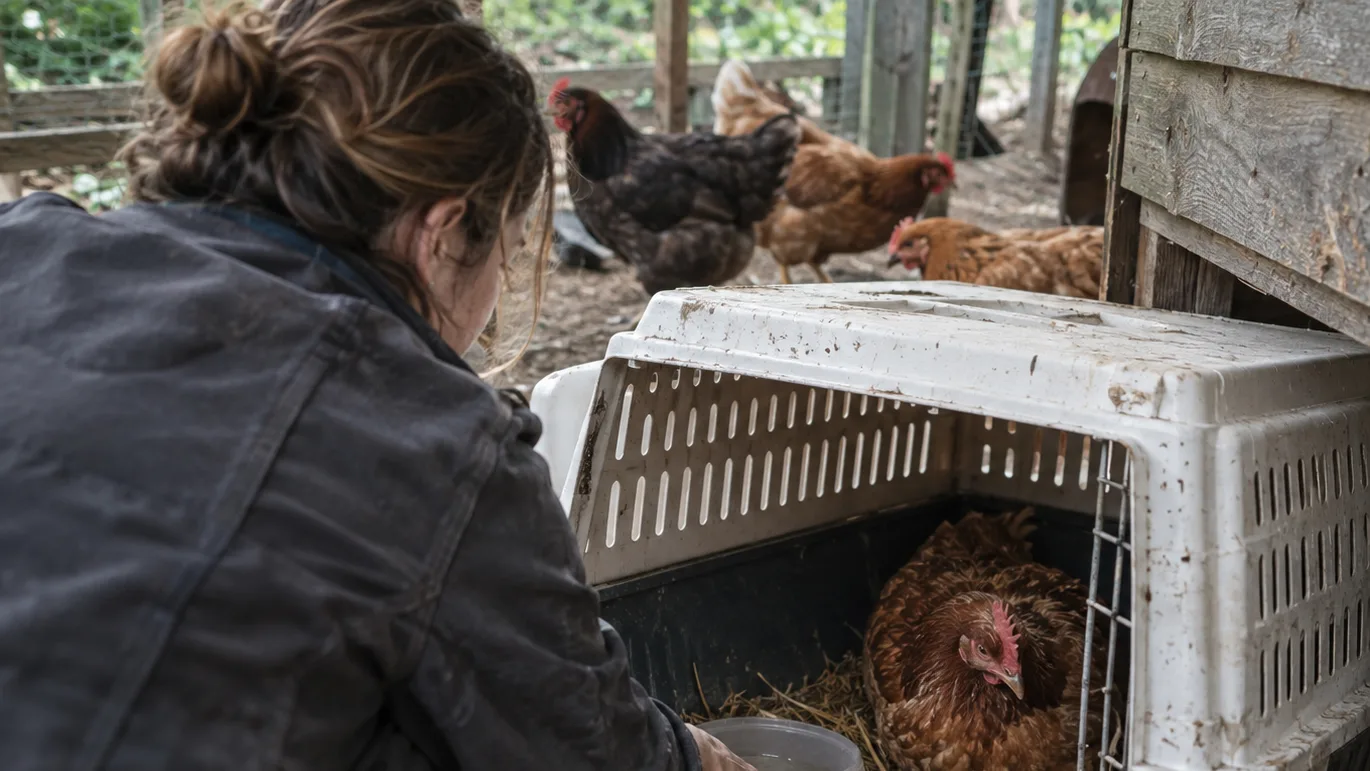
There is no universal seven-day release rule. Some causes are irritants that settle after cleanup. Some infections can persist or return. The right return-to-flock decision depends on the suspected cause, the bird's recovery, any treatment instructions, and veterinary guidance.
Before medicine, inspect the air, litter and feed at bird height
Before reaching for medicine, inspect what every bird is breathing. Your first stop should be chicken coop ventilation, not the cabinet of leftover products.
- Check the roost at bird-head height. Look for damp litter and a sharp ammonia smell. Air that seems fine while you stand up can be irritating where your birds sleep.
- Disturb the bedding gently. If scratching sends a visible cloud through the coop, remove the dustiest material rather than simply adding another layer.
- Inspect feed and stored bedding. Musty smells, clumps, damp corners, or visible mold are reasons to discard the affected material.
- Review the last 24 hours. Note disinfectants, fly sprays, paint, smoke, heating equipment, and any product used near the coop.
- Look at the vents and roost. Blocked vents trap damp air. A direct stream of cold air across the roost is a draft, not good ventilation.
Timing gives you useful evidence. Sneezing that starts immediately after a bedding change points your inspection toward dust. Several birds becoming ill over successive days points toward a shared exposure or infection. Improvement after removing an irritant supports an environmental explanation, but it does not rule out infection. Birds can have both a respiratory illness and a poor coop environment. If you need a deeper cleanup plan, use the steps in how to clean a chicken coop after you have moved any visibly sick bird away from the flock.
These red flags make it a vet or report, not a wait-and-see problem
These signs move the decision from waiting to calling. A sneeze is a minor clue beside a bird that cannot move air normally.
- Open-mouth breathing, gasping, or repeated tail bobbing.
- Blue, gray, or purple-looking comb or facial tissue.
- Marked swelling around the face, eyes, or sinuses.
- Thick, bloody, or heavily colored nasal discharge.
- Inability to eat or drink, collapse, or severe weakness.
- Neurological signs such as loss of balance, twisting, or unusual head position.
- Sudden deaths or several birds becoming ill quickly.
Call an avian veterinarian the same day for severe breathing changes, collapse, bloody discharge, or rapid flock spread. Do not diagnose avian influenza, Newcastle disease, infectious laryngotracheitis, or another reportable disease from sneezing alone. If the pattern warrants it, contact your veterinarian, local extension office, or state animal-health authority. The USDA APHIS backyard-flock guidance can help you find the right reporting and biosecurity route for your area.
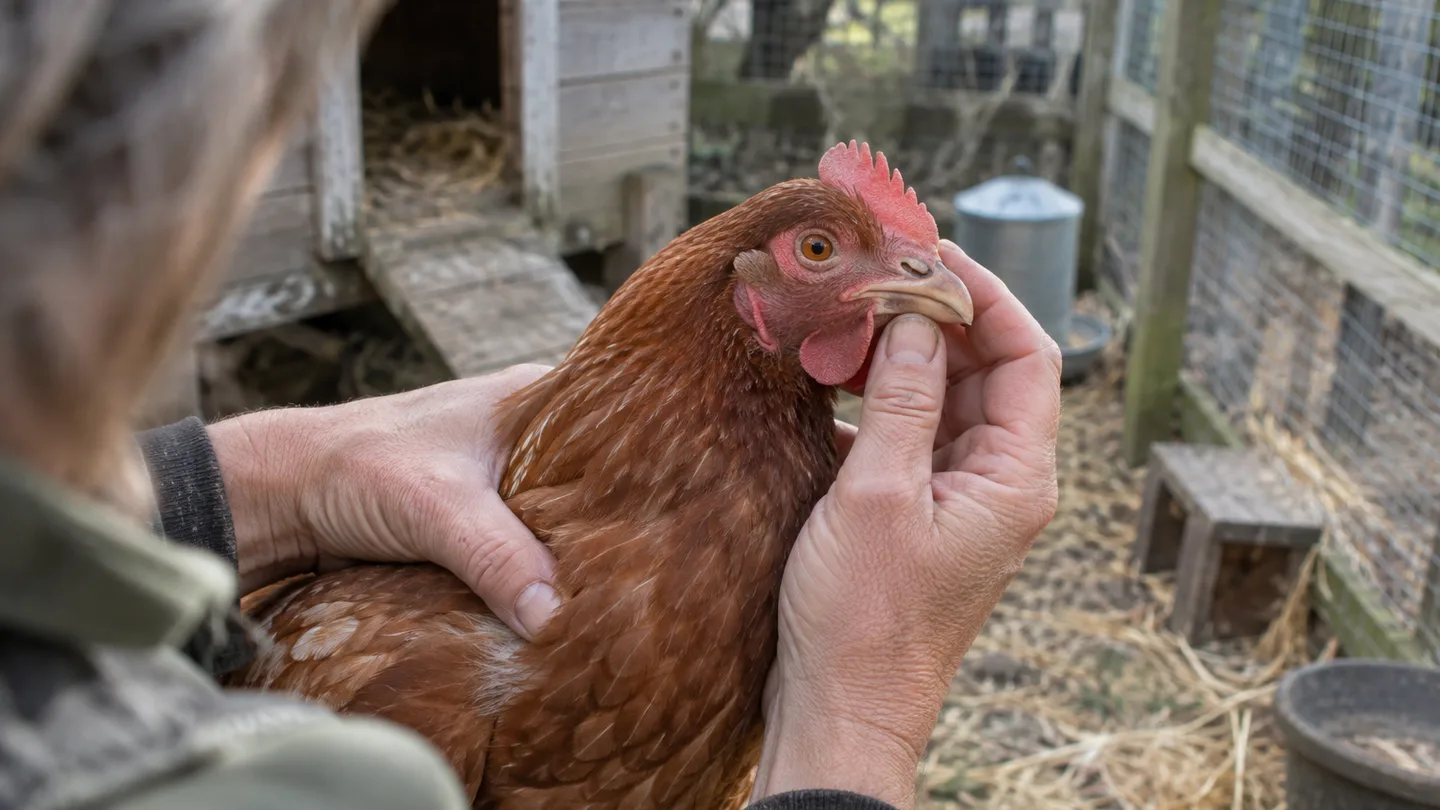
For a single mild sneeze, calm observation is sensible. For a bird that is working to breathe, waiting is not a useful experiment.
Track the next seven days without guessing at treatment
Keep a simple log for the next week, unless red flags already mean the bird needs care sooner. A written record stops the flock from becoming one blurry story.
- Bird ID and the date and time signs began.
- How often you notice sneezing and whether it is dry or wet.
- Eye or nasal discharge, facial swelling, or a voice change.
- Breathing effort, including any open-mouth breathing or tail movement.
- Appetite, water intake, activity, and droppings.
- The total number of birds affected each day.
Do not use human cold medicine as a shortcut. Do not guess at an antibiotic course from a leftover bottle. The wrong product can miss the cause, delay proper care, or create food-safety questions for eggs and meat.
Follow a poultry veterinarian's direction and the product label exactly. Egg or meat withdrawal periods must come from the label or prescribing professional for that product and species. If you cannot confirm the direction, do not invent a number. The FDA poultry medication guidance is a useful place to check the food-animal medication rules that apply to your situation.
Some respiratory infections can persist, recur, or leave a bird as a carrier after the obvious sneezing stops. That is why return to the flock should follow the suspected diagnosis and veterinary or extension guidance, not an arbitrary symptom-free period.
Can people catch the respiratory illness causing a chicken to sneeze?
Many common backyard poultry respiratory infections are bird-specific, but that is not a reason to skip hygiene. Wash your hands, avoid touching your face while handling birds, keep sick-bird tools separate, and change footwear when you can. If a person develops symptoms after an unusual exposure, seek medical and veterinary advice.
Should you wear a mask when cleaning a dusty or moldy coop?
Reduce airborne dust first by improving ventilation and lightly dampening dusty material before removal. A well-fitting particulate mask and eye protection can add protection during cleanup. They do not replace isolating a sick bird or keeping contaminated tools away from the flock.
Can a chicken remain a carrier after the sneezing stops?
Yes, some respiratory infections can persist or flare again under stress. The safe release decision depends on the suspected cause and professional guidance. A fixed symptom-free number is not a reliable rule for every respiratory problem.
This week, label an isolation crate, set aside a dedicated feeder and waterer, and inspect your coop at bird height for wet litter, dust, fumes, and blocked vents. Then review chicken coop ventilation before the next sneeze gives you a harder decision.
Frequently Asked Questions
Can people catch the respiratory illness causing a chicken to sneeze?
Explain that many common backyard poultry respiratory infections are bird-specific, but readers should still wash hands, avoid face contact, separate footwear and tools, and seek public-health or veterinary advice if a human develops symptoms after unusual exposure.
Should I wear a mask when cleaning a dusty or moldy chicken coop?
Recommend reducing airborne dust by improving ventilation and dampening dusty material before removal; a well-fitting particulate mask and eye protection can add protection during cleanup, but they do not replace flock isolation or biosecurity.
Can a chicken remain a carrier after the sneezing stops?
Note that some respiratory infections can persist or flare again under stress, so return-to-flock decisions should follow the suspected diagnosis and veterinary or extension guidance rather than a fixed symptom-free period.