Egg Float Test Results: Sink, Stand, or Float Explained
Put an egg in water and it will usually do one of three things: lie flat on the bottom, tip up on one end, or rise to the surface. The egg float test is useful because those positions reflect a changing air cell. It is not a safety certificate. A sinking egg is usually the freshest clue, a standing egg is older, and a floating egg is older still—but storage history and shell condition matter more than buoyancy when you decide whether to eat it.
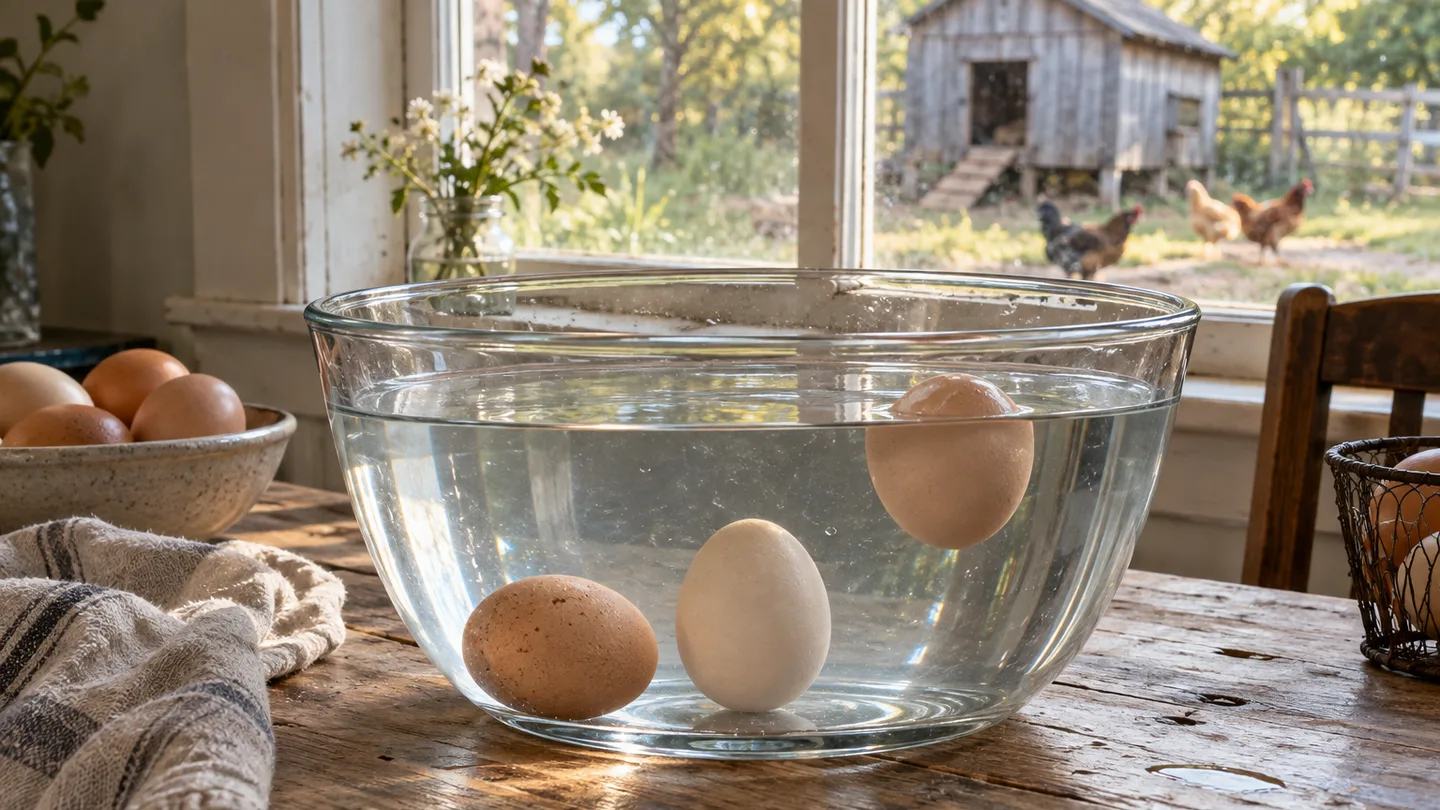
Egg float test results at a glance: sink flat, stand, or float
Here is the practical reading of your egg float test results:
| Position | Likely meaning | Next check |
|---|---|---|
| Sinks and lies flat | Smaller air cell; usually the freshest of the three | Check the shell and storage history |
| Sinks but stands upright | Larger air cell; older egg with a possible quality change | Crack it separately if the history is sound |
| Floats or reaches the surface | Largest air cell; usually older | Review storage, shell condition, smell, and appearance |
The important distinction is simple: floating tells you that the egg has become more buoyant. It does not tell you whether the egg contains bacteria, whether it was kept cold enough, or whether the shell was damaged before you found it.
The air cell is the reason an older egg rises
The test works through buoyancy, not a hidden freshness clock. An egg has a small air pocket inside the shell. As the egg sits, moisture and gases gradually move through the shell. The air pocket becomes larger, changing the egg’s balance in water.
That is why a newer egg tends to rest flat. Its internal air space is smaller, so more of the egg sits below the water line. As the air cell expands, the narrow end may tip upward. With a still larger air pocket, the egg can rise far enough to float.
Do not turn that sequence into an age calculator. Two eggs collected on the same day can produce different results after storage in different places. Refrigerator temperature, room humidity, shell condition, washing, and temperature swings all affect how quickly the result changes. The float test gives you a relative freshness clue, not a dependable number of days.
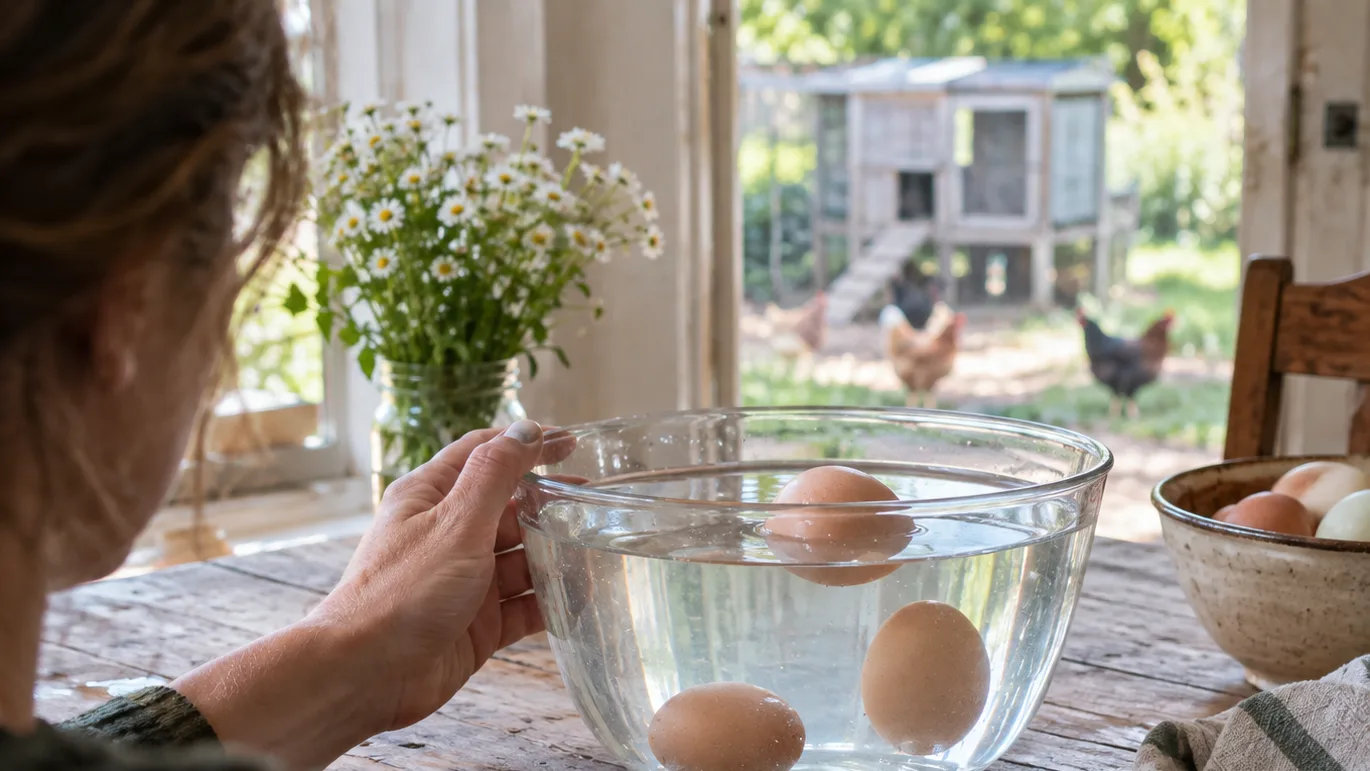
Set up the water test without turning it into a safety problem
Use a clean bowl with enough cool or lukewarm water to let the egg move freely. You need several inches of depth, not a shallow saucer. Test one intact egg at a time so the positions are easy to see.
- Fill the bowl with clean, cool-to-lukewarm water.
- Lower one intact egg into the bowl without dropping it.
- Watch whether it lies flat, tilts upward, or reaches the surface.
- Remove it promptly, dry it, and return it to your normal storage routine if you plan to use it.
I avoid hot water. In my judgment, a hot bath can begin changing the egg’s texture at the surface before you cook it. Prolonged soaking also wets the shell unnecessarily, and scrubbing can change the shell’s natural surface coating. A cracked egg should not be “tested” this way at all; handle it as a questionable egg instead.
In my own small backyard routine, I once tested a clean-looking nest-box egg before writing down its collection date. It stood upright, so I put it aside for a hard-boiled batch. When I cracked it later, the white spread thinly across the pan. The test had given me a useful quality clue, but it had not answered the storage question. Now I date the carton first and use the water test only when I need another clue.
Read the three positions as freshness clues—not verdicts
A flat-sinking egg generally has the smallest air cell of the three results. That usually makes it the better choice for preparations where you want the white to hold its shape, such as frying or poaching. It still deserves the same shell and storage checks as any other egg.
An egg that sinks but stands on one end is older. Its white may be looser, and the yolk may not sit as neatly once cracked. That is a quality change, not an automatic spoilage verdict. If the shell is intact and the storage history is known, it may still be useful in baking or another fully cooked dish.
An egg that floats has a larger air cell and is usually older still. That raises a quality question because the white may be thin and the egg may be past its best texture. It does not prove rot or contamination. The float test is measuring buoyancy, not inspecting the inside of the egg.
Imagine six eggs collected on the same Monday morning. Four sink flat, one stands, and one floats. I would not sort them into “safe” and “unsafe” from that pattern alone. I would keep the collection dates together, inspect the shells, crack the standing egg separately if its history is sound, and treat the floating egg as the one needing the strictest review. Different positions can mean different ages or quality, even within one carton.
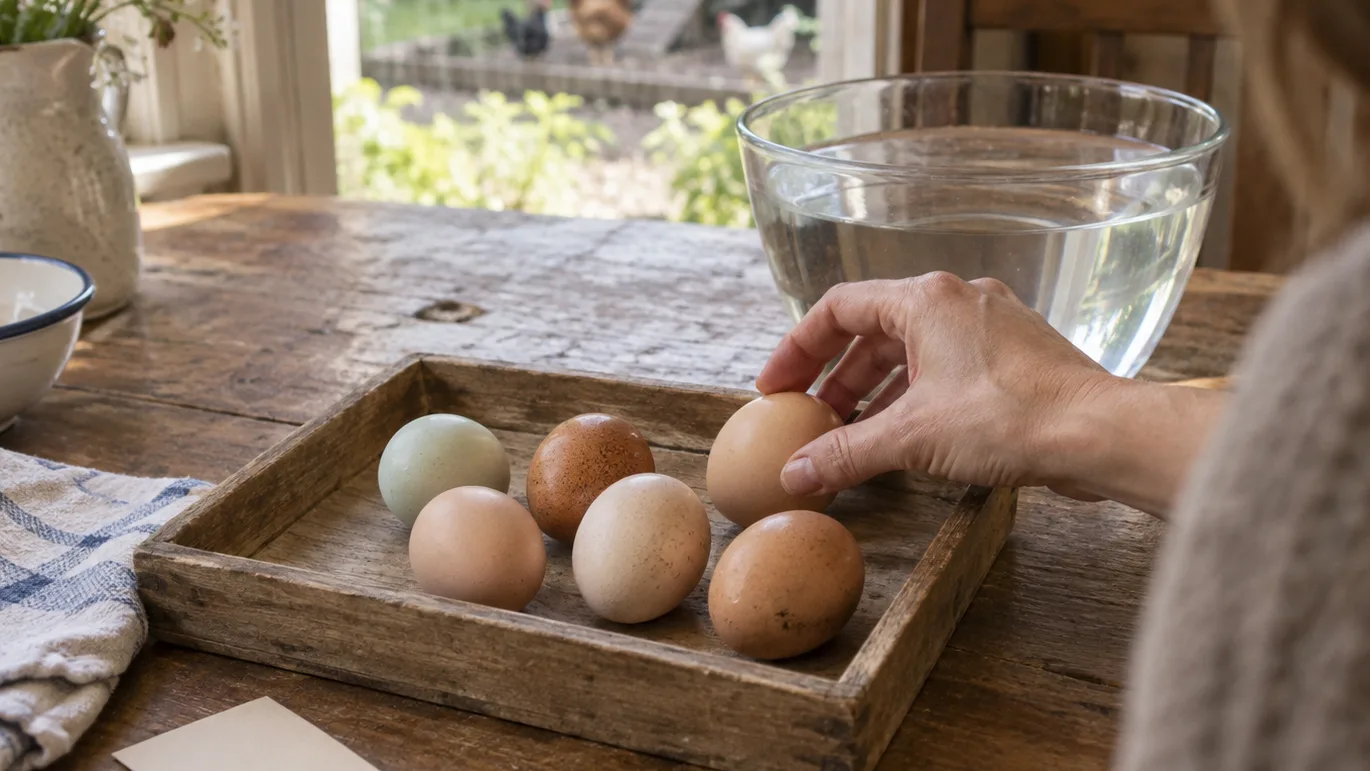
Freshness is not food safety: the checks that outrank buoyancy
The water tells you about density. It does not tell you how the egg was handled before it reached the bowl. For exact current U.S. numbers on refrigerator temperature, refrigerated storage windows, and cooking endpoints, check the USDA egg-safety guidance and FDA shell-egg safety guidance rather than relying on an old rule copied from a calendar.
Use the carton date and your own collection record together. Discard an egg with a cracked shell. If an intact egg has an uncertain history, crack it into a separate bowl instead of dropping it straight into a pan or mixing bowl. Look for an abnormal smell or appearance, and do not taste an uncooked egg to settle the question.
A clean shell, a normal smell, or a favorable egg float test result cannot answer the Salmonella question. The test does not examine the egg’s interior, so proper storage and the current cooking advice matter more than whether the egg sank.
Backyard eggs behave differently when the bloom, wash water, and storage history change
Nest-box eggs bring extra variables. An unwashed egg may still have its natural surface coating, often called the bloom. Washing changes that surface, so it should be part of a deliberate storage routine rather than something you do casually before every float test.
The question should you wash fresh eggs is really a storage question, not a buoyancy question. If you wash eggs, dry them and keep the storage method consistent. If you leave them unwashed, keep dirt and visibly soiled eggs separate from clean eggs and still follow a dependable refrigeration routine where that is your local practice.
Temperature swings make the result harder to interpret because they change the storage history. A backyard egg that spent time on a warm counter is not equivalent to one that went straight into a stable refrigerator, even if both sink. Record the collection date, avoid moving eggs repeatedly between warm and cold conditions, and use the guide on how to store fresh eggs when you set up your refrigerator routine.
What to do next: cook, separate, or discard
A floating egg should be treated as a decision point, not a verdict. Use this order:
- Discard first if the shell is cracked. A crack changes the handling risk, and the float result cannot repair it.
- Check the history. If you do not know when the egg was collected or how it was stored, uncertainty is a valid reason not to use it.
- Use flat-sinking eggs for delicate cooking. Their whites generally hold together better, so they suit frying, poaching, and similar preparations when your storage checks are satisfactory.
- Use standing eggs for older-egg jobs. Baking and hard-boiling are often more forgiving of a looser white than a neat poached egg would be.
- Handle a floating egg separately. If its shell and storage history are acceptable, crack it into a small bowl and assess it before it joins other ingredients. If the smell, appearance, or history is wrong, discard it.
The useful line to remember is this: the egg float test is an age clue, not a permission slip.

A five-minute routine for eggs from the carton or nest box
Make the test part of an egg routine instead of a last-minute rescue:
- Date each backyard egg when you collect it.
- Inspect the shell before it goes into storage.
- Keep eggs under one consistent storage system.
- Use the oldest dated eggs first.
- Use the float test only as an age-and-quality clue.
- Crack questionable eggs into a separate bowl.
This week, label your next carton with collection dates and check the refrigerator temperature with a thermometer. That small record will tell you more about an egg’s history than its position in a bowl. Then keep the oldest eggs at the front and reserve the freshest ones for the dishes where a firm white actually matters.