Can You Eat Fertilized Eggs? Safety, Taste, and Storage
One fertilized egg in a breakfast carton is still breakfast—not a chick in disguise. If it was collected cleanly, kept cold, and cooked properly, you can generally eat it just as you would an unfertilized shell egg.
In my own small backyard setup, I mark hatching eggs with a pencil and keep them in a separate carton. I once found a marked egg tucked under a broody hen after it had been sitting warm; it went back to the hatching group, not the frying pan. The dividing line was heat and time, not the mere presence of a rooster.
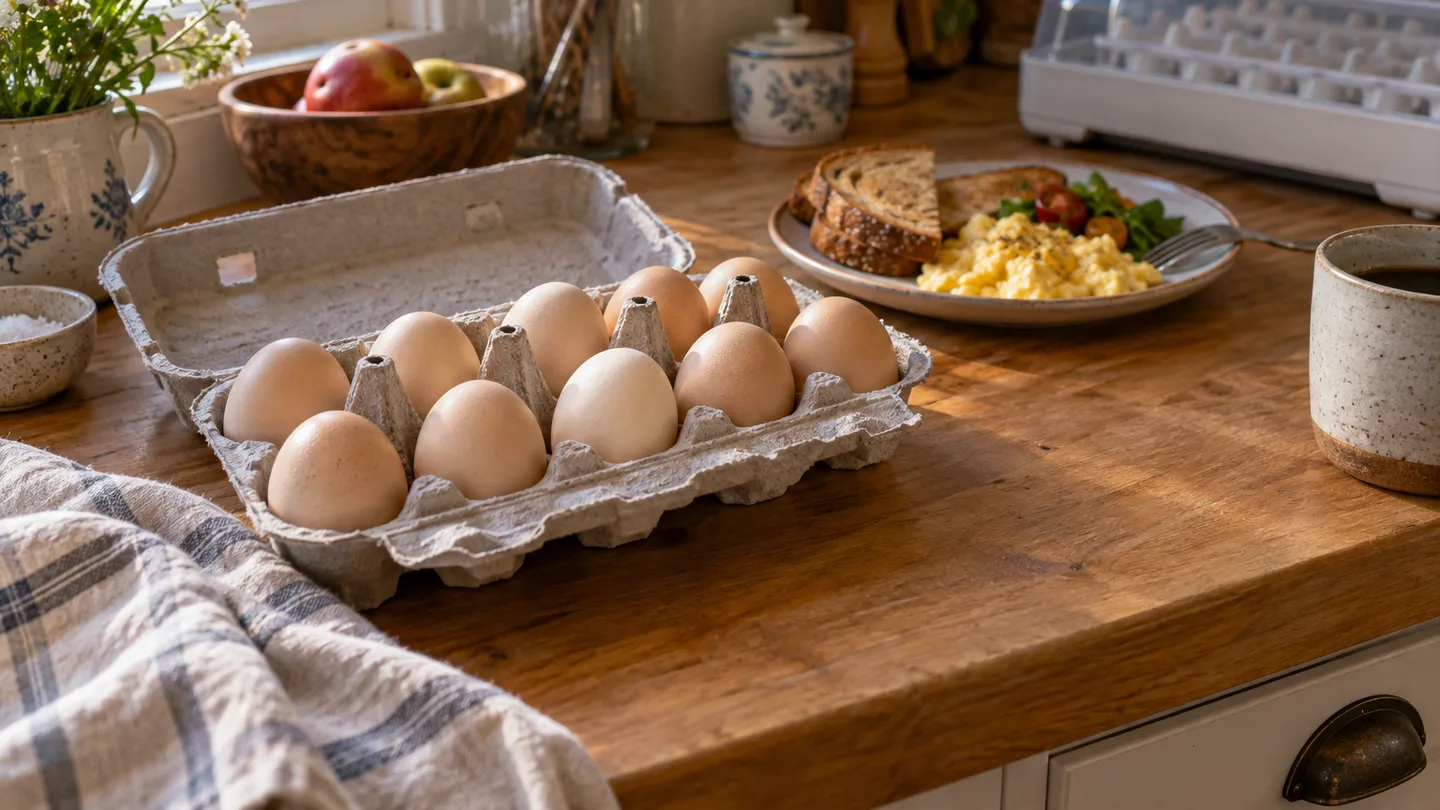
Fertilized Doesn’t Mean Developing: The Direct Safety Answer
Yes, you can eat fertilized eggs in most ordinary backyard situations. Fertilization changes the egg’s reproductive status. It does not create a special food-safety hazard by itself.
The conditions that change the answer are the familiar ones: a cracked shell, heavy contamination, poor refrigeration, long storage, or undercooking. A fertile egg that was collected from a clean nest, placed in a refrigerator, and cooked thoroughly is handled like any other shell egg.
- Cold storage: Keep table eggs at 40°F/4°C or below.
- Cooking: Cook egg dishes to 160°F/71°C. For people at higher risk from foodborne illness, serve whole eggs with firm whites and yolks rather than runny centres.
- Shell condition: Do not treat a cracked egg as a normal stored egg. Cracks give contamination a route through the shell.
- Hatching status: Once an egg has been deliberately held warm under a hen or in an incubator, keep it separate from breakfast eggs.
A rooster can fertilize an egg before the hen lays it, but the egg does not start developing simply because sperm reached the yolk. Development needs the right warmth for a sustained period. That is why a fresh fertile egg can sit in a cold carton without turning into a chick.
My practical rule is simple: fertility alone is not a reason to throw out a fresh egg. Incubation history is the reason to stop treating it as a routine table egg.
The 21-Day Clock: Where Refrigeration Ends and Incubation Begins
A hen can lay fertile eggs for a flock with a rooster, but fertility and development are separate steps. An embryo needs sustained warmth. A broody hen supplies that warmth naturally; an incubator is normally operated around 99–101°F/37.2–38.3°C, depending on the equipment and whether it is calibrated for forced-air or still-air operation.
In a normal chicken hatch, the working timetable is about 21 days. That is a useful planning clock, not a promise that every egg will hatch on the same morning. Temperature swings, handling, fertility, shell quality, and the embryo’s own viability can move the result.
- At collection: A newly laid fertile egg may look completely ordinary. Candling it immediately does not reliably prove that an embryo is developing.
- During cool storage: Keeping the egg cool prevents normal incubation from progressing. This is why a fertile egg chosen for breakfast can remain a breakfast egg if it has not first spent sustained time under heat.
- After warming under a hen or in an incubator: Development can begin. If you do not know how long an egg has been warm, move it out of the food carton rather than guessing.
- Around day 7: Candling may show a dark spot with branching veins in a developing egg. Day 14 gives you another useful check as the embryo fills more of the shell.
- Around day 21: A normally developing chick may hatch around this point, although late hatches happen.

Here is the decision point I use: if an egg has been under a broody hen or in an incubator long enough that development could have started, it does not go back into the breakfast carton. That does not mean it is automatically poisonous. It means you no longer have the same storage history as an ordinary table egg, and the sensible choices are to continue the hatch or dispose of it.
If you are managing both purposes, mark hatching eggs with a pencil and keep them in a separate container from the start. That small bit of organisation prevents the common mistake of returning a warmed egg to the kitchen carton.
Taste, Texture, and Red Spots—What Actually Changes
A fresh fertilized egg that has not been incubated usually has no reliable taste difference from a fresh unfertilized egg. The more useful predictor is storage history. As an egg ages, the white tends to lose some of its thick, springy texture, and the yolk membrane becomes less firm. Those changes are easier to notice than fertility.
The inside may still show marks that make a new keeper hesitate. A normal germinal disc is a small pale spot on the yolk. In a fertile egg, it can look more like a small target or ring, but that appearance varies and is not a dependable kitchen test for development.
A blood spot is a tiny blood-vessel rupture associated with the yolk being released. A meat spot is a small tissue fragment. The chalazae are the twisted strands of thick albumen that hold the yolk roughly centred. Those three things are easy to confuse, but none is a chick embryo. An embryo requires sustained warmth and organised development, not just one red mark in a fresh egg.
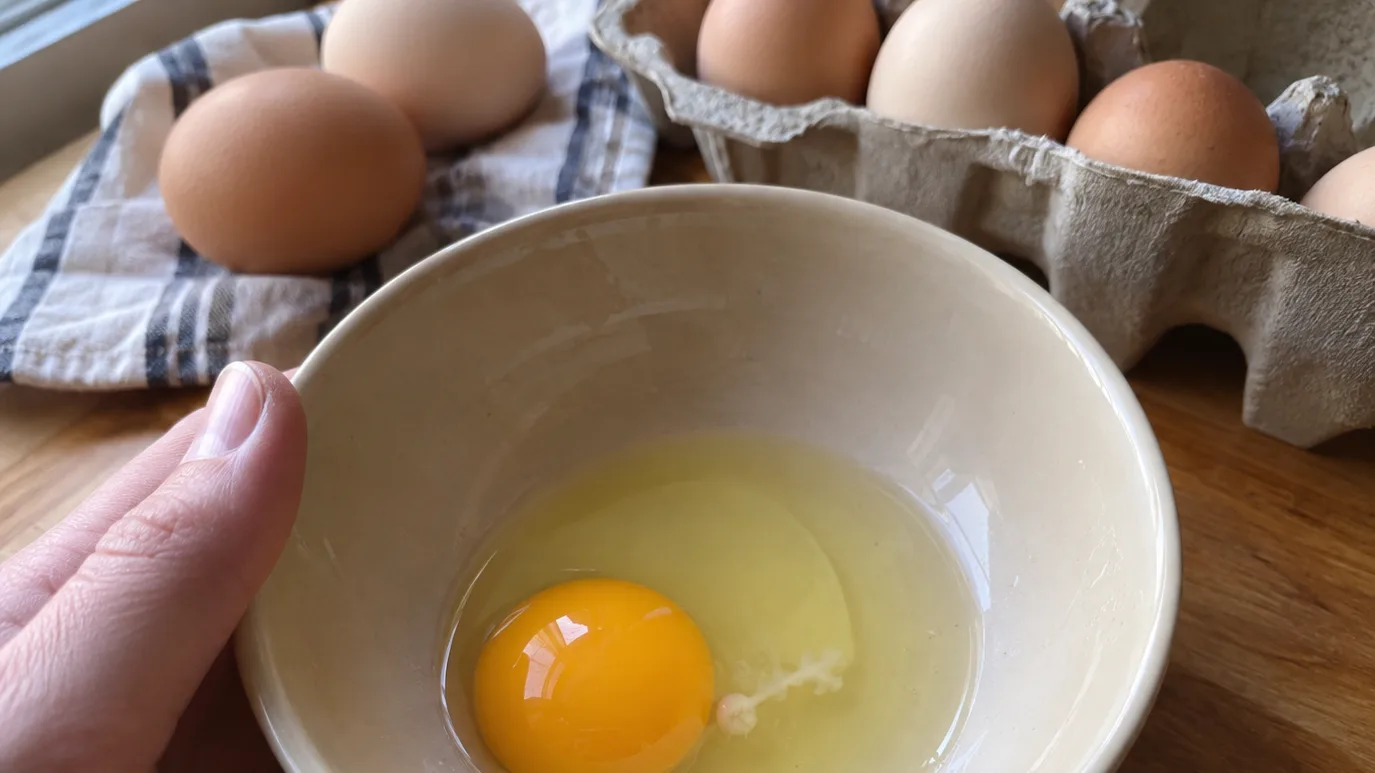
A blood spot by itself does not make an otherwise sound egg unsafe. If the shell is intact and the egg smells normal, you can remove the spot with a clean utensil and cook the egg. If the smell is off, the contents look unusually discoloured, or the shell was cracked, discard it instead of trying to rescue breakfast.
My blunt version is this: fertility is a poor quality test. The egg’s age, temperature history, shell condition, and cooking matter much more.
From Nest to Fridge to Pan: A Backyard-Egg Storage Decision Tree
A repeatable routine matters more than trying to identify fertility by sight. Start at the nest, not at the frying pan.
- Collect regularly. Collect table eggs at least daily. In hot weather, I prefer a second collection when I can manage it, especially if the nest box is exposed to sun.
- Sort before storing. Keep cracked eggs out of the normal carton. Separate eggs with heavy manure or obvious contamination. If an egg cannot be handled safely under your local cleaning rules, discard it.
- Choose your washing method deliberately. Washing and storage practices differ by country because regulations and commercial handling systems differ. If you are unsure, read how to store fresh eggs and compare it with local food-safety advice.
- Refrigerate table eggs. Use a clean carton and keep the eggs at the refrigeration line given earlier. Avoid leaving a carton on the counter while you cook and then returning it to the fridge repeatedly.
- Mark the carton. A date tells you which eggs should be used first. Food-safety guidance commonly discusses a roughly three-to-five-week refrigerated quality window, but that is a planning range, not a magic expiration boundary for every backyard egg.
- Use the float test carefully. The egg float test can help you judge age because the air cell grows as an egg loses moisture. It does not prove that an egg is safe, fertile, incubated, or free from bacteria.
- Cook with the people eating in mind. Cook egg dishes to 160°F/71°C. If you are serving someone at higher risk from foodborne illness, cook whole eggs until the whites and yolks are firm. The USDA FSIS egg-safety guidance is a useful second reference for handling and cooking details.
For a normal fertile egg that has stayed cold, this routine is enough. For an egg that was warm under a hen, the decision changes at step five: do not use the quality window as permission to eat an egg that has begun incubation. Sustained warmth creates a different history, so keep it with the hatching eggs or discard it.
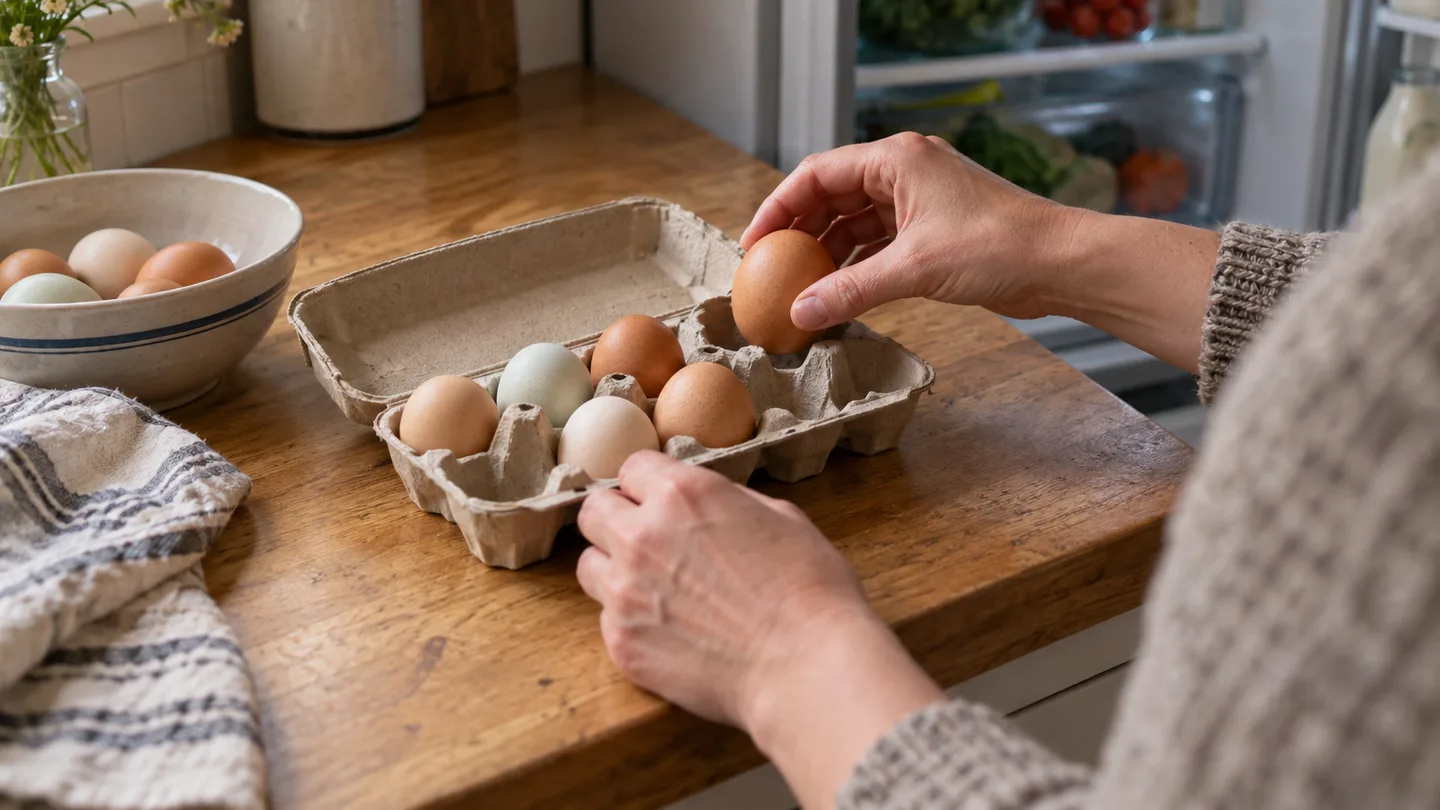
Use the discard decision without debate if the shell is cracked, the egg has an off smell after cracking, contamination is obvious and cannot be handled safely, or the egg has spent an uncertain length of time warm for incubation. Do not taste-test a questionable egg. A bad smell is useful information, but a normal smell is not a guarantee that every storage mistake was harmless.
Do you need a rooster to produce a fertilized egg?
Yes. A hen can lay eggs without a rooster, but mating is required for fertilization. The presence of a rooster also does not make every egg visibly different at collection. You usually need the flock history, not the shell, to know whether an egg may be fertile.
Can you tell whether a fresh egg is fertilized before cracking it?
Usually not with confidence. The shell gives you no dependable visual sign, and immediate candling cannot confirm normal embryo development. Candling becomes useful after an egg has spent sustained time at incubation warmth.
Are fertilized eggs more nutritious than unfertilized eggs?
Do not treat fertility as a nutritional upgrade. The practical comparison is the whole egg, the laying hen’s diet, the egg’s storage history, and how thoroughly you cook it. Fertilization alone is not a reason to pay more, keep an egg longer, or serve it undercooked.
This week, make the system easy to follow: mark hatching eggs with a pencil, give them their own carton, and write the set date on the lid. Keep breakfast eggs cold and separate. If you decide to hatch, prepare the brooder setup guide before the 21-day clock runs out; a successful hatch still leaves you with chicks that need heat, feed, water, and a safe place to grow.
Frequently Asked Questions
Do you need a rooster to produce a fertilized egg?
Yes. A hen lays eggs without a rooster, but mating is required for fertilization; the presence of a rooster does not make every egg visibly different at collection.
Can you tell whether a fresh egg is fertilized before cracking it?
Usually not reliably from the shell. A fresh egg may show no useful external sign, and candling can reveal development only after sustained incubation, not immediately after laying.
Are fertilized eggs more nutritious than unfertilized eggs?
Do not treat fertility as a nutritional upgrade. The useful comparison is the whole egg, along with the bird’s diet, storage history, and how the egg is cooked.