Can Chickens Eat Spinach? Safe Portions and What to Watch
Yes—healthy adult chickens can eat plain spinach, but treat it as a small extra, not a feed replacement. Start with 1–2 tablespoons of loosely packed, chopped leaves per hen, offered occasionally; there isn’t a proven spinach-specific safe-dose cutoff. The reason to keep portions modest is spinach’s oxalates, which can bind some calcium in the digestive tract.
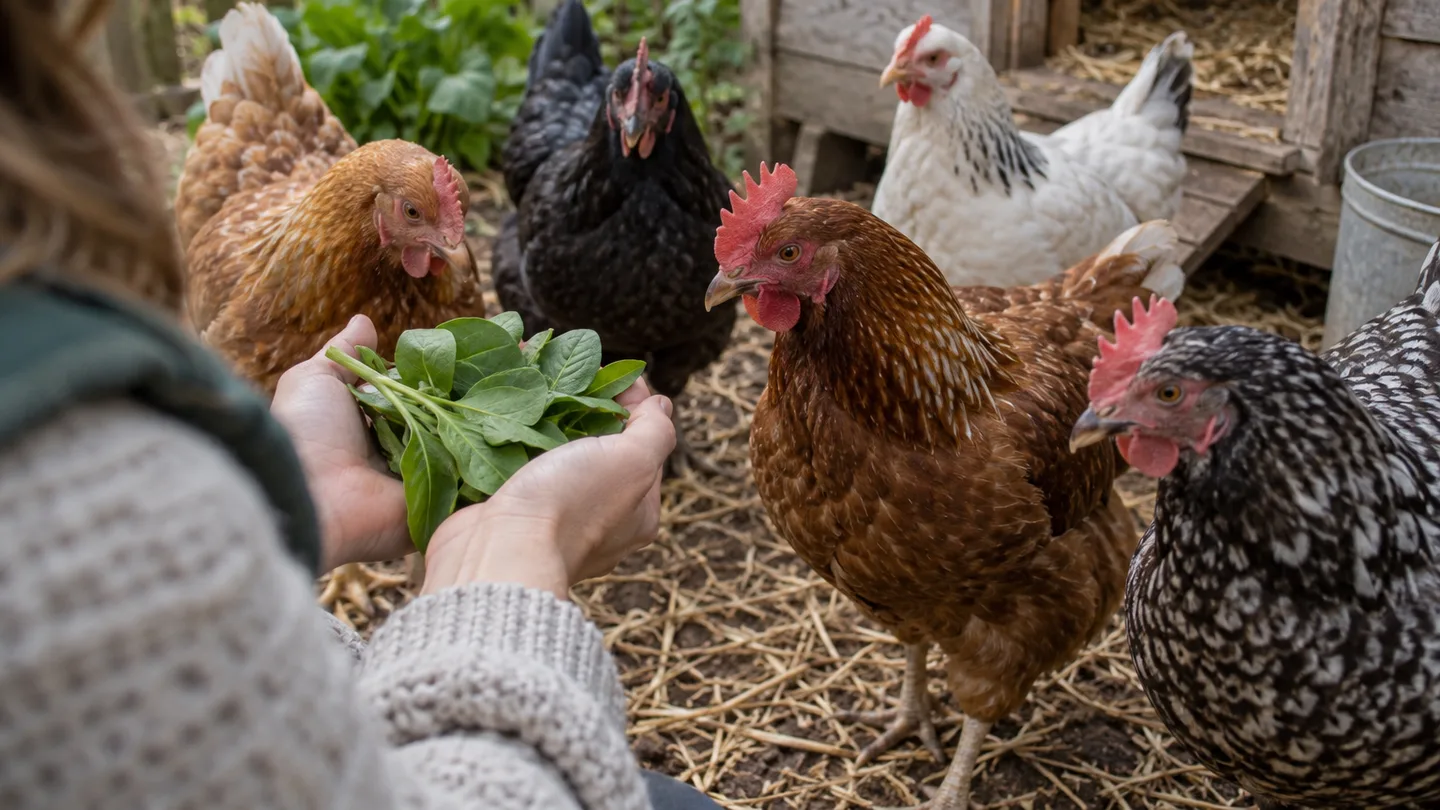
Yes, but keep spinach on the treat side of the feeder
Your hens can have spinach now and then. They don’t need it, though, and a bowl of greens shouldn’t take the place of a complete ration. That feed is the dependable base of the diet; spinach is a change of pace.
The answer also depends on which birds you’re feeding and what else is on offer. A healthy adult hen with free access to her usual feed is a different case from a growing chick, a bird on a prescribed diet, or a flock already getting scraps most days. In those situations, there’s less reason to add another treat.
For a first try, use plain leaves and keep the serving small. If the flock ignores them, don’t keep adding more until the dish is empty. The point is to offer a little, not persuade your birds to eat a food they don’t want.
Oxalates explain the limit; they don’t make a leaf poisonous
Spinach contains oxalates. These compounds can bind some calcium in the digestive tract, which is why repeated large servings are a poor way to build a hen’s diet. The concern is the overall pattern: spinach crowding out balanced feed, or becoming a frequent substantial part of what your birds eat.
That’s different from saying one leaf is poisonous or that an occasional modest serving will cause egg binding. A small treat is not a substitute for a veterinary diagnosis, and the mechanism alone doesn’t tell you that a particular portion will harm a particular bird. It does give you a sensible reason not to make spinach a daily staple.
Keep a laying hen’s complete layer feed available as her main ration. If you provide a separate calcium source or your veterinarian has recommended a specific diet, don’t use spinach to replace it. For flock-specific decisions, consult poultry extension guidance on complete rations or veterinary poultry nutrition guidance on calcium balance.
Start with 1–2 tablespoons of chopped spinach per hen
There’s no established spinach dose that marks the boundary between safe and unsafe. As a cautious first serving for an adult hen, try 1–2 tablespoons of loosely packed, chopped spinach. That’s a practical starting suggestion, not a proven threshold or a measured nutritional requirement.
Chop the leaves before measuring. Whole leaves vary in size, and a spoonful of tightly packed greens contains more than a spoonful of loose pieces. A small handful is not a precise unit either, so think of this as a way to begin modestly, not a laboratory measure.
For a flock of three hens, that starting range works out to 3–6 tablespoons total. For six, it’s 6–12 tablespoons; for twelve, 12–24. Those totals simply multiply the individual suggestion by the number of adult birds. They are still treat portions, not a meal, and you can offer less if other extras are already on the menu.
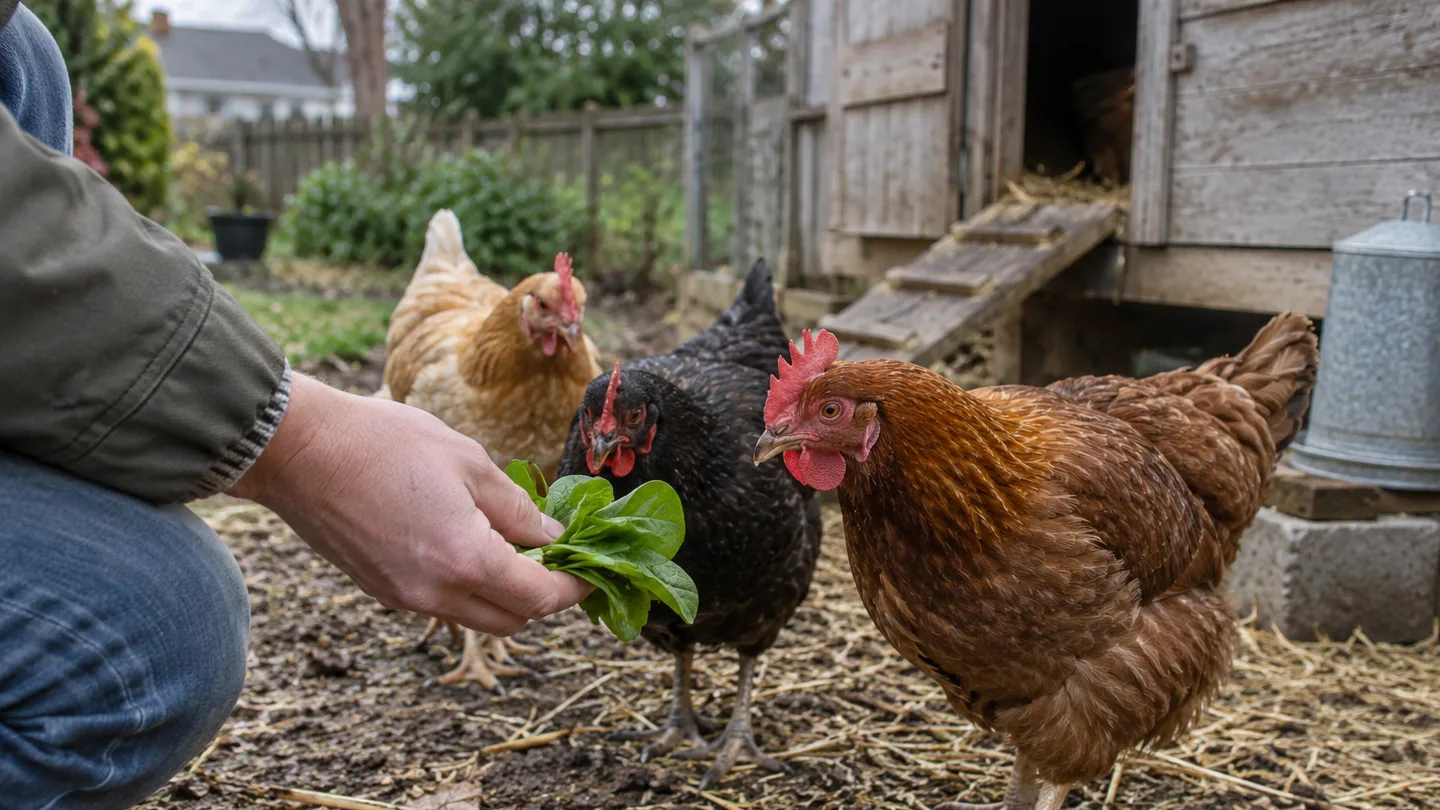
In a six-hen example, I’d put out about 6 tablespoons of loosely packed chopped leaves for the first try. I wouldn’t top up the dish if two hens eat more quickly than their flockmates; that can turn a small shared treat into an uneven serving. Instead, offer it where all six can reach, watch whether they’re interested, and keep the regular feed available.
Once a week is a practical routine, not a proven toxicity threshold
Once a week is an easy household rhythm if you want to share spinach. It isn’t a research-defined maximum, and it doesn’t mean that spinach becomes harmful on a particular day. The useful distinction is occasional versus routine: don’t let a leafy extra become a regular share of the diet.
One planning rule I’d use is to keep all treats together to around a tenth of what the flock eats, rather than giving each treat its own allowance. That’s a conservative budgeting heuristic, not a spinach-specific nutrition result. If your birds already get kitchen scraps, fruit, or other extras, count those first. Give spinach a smaller place in the treat budget—or skip it that week.
My practical judgment: a modest treat now and then is easier to manage than trying to calculate a precise daily allowance for every leftover. The complete ration stays available; the extras stay extras.
Raw, cooked, or thawed: plain spinach works; seasoning doesn’t
You don’t have to cook spinach for your chickens. Plain raw leaves are fine to offer, and plain cooked spinach is another option if it has cooled. You can also thaw plain frozen spinach and serve a small amount. In each case, the portion still matters; cooking or thawing doesn’t make unlimited servings appropriate.
Keep the food plain. Salt, oil, sauces, and mixed dishes can add ingredients and quantities that are hard to judge, especially when spinach is only one part of the recipe. A spoonful from a seasoned casserole isn’t the same choice as a few plain leaves.
If you’re comparing greens or other produce, the guides to can chickens eat broccoli and can chickens eat cabbage cover those foods separately. Don’t assume that because one plant is suitable as an occasional treat, every prepared dish containing it is a good feed choice.
From garden bed or bag to feeder: wash, chop, and clear leftovers
Rinse fresh leaves to remove visible dirt, then chop them into pieces your birds can pick up easily. Check bagged salad for dressing or other additions, and don’t use garden leaves if you can’t tell whether they’ve been exposed to a pesticide or other treatment that isn’t appropriate for feed.
Fresh spinach stems can be offered with the leaves if they’re tender and chopped into manageable pieces. If a stem is tough or stringy, leave it out rather than asking a hen to work through a mouthful she may not handle comfortably. The same basic rule applies to the leaves: make the pieces easy to peck and swallow.
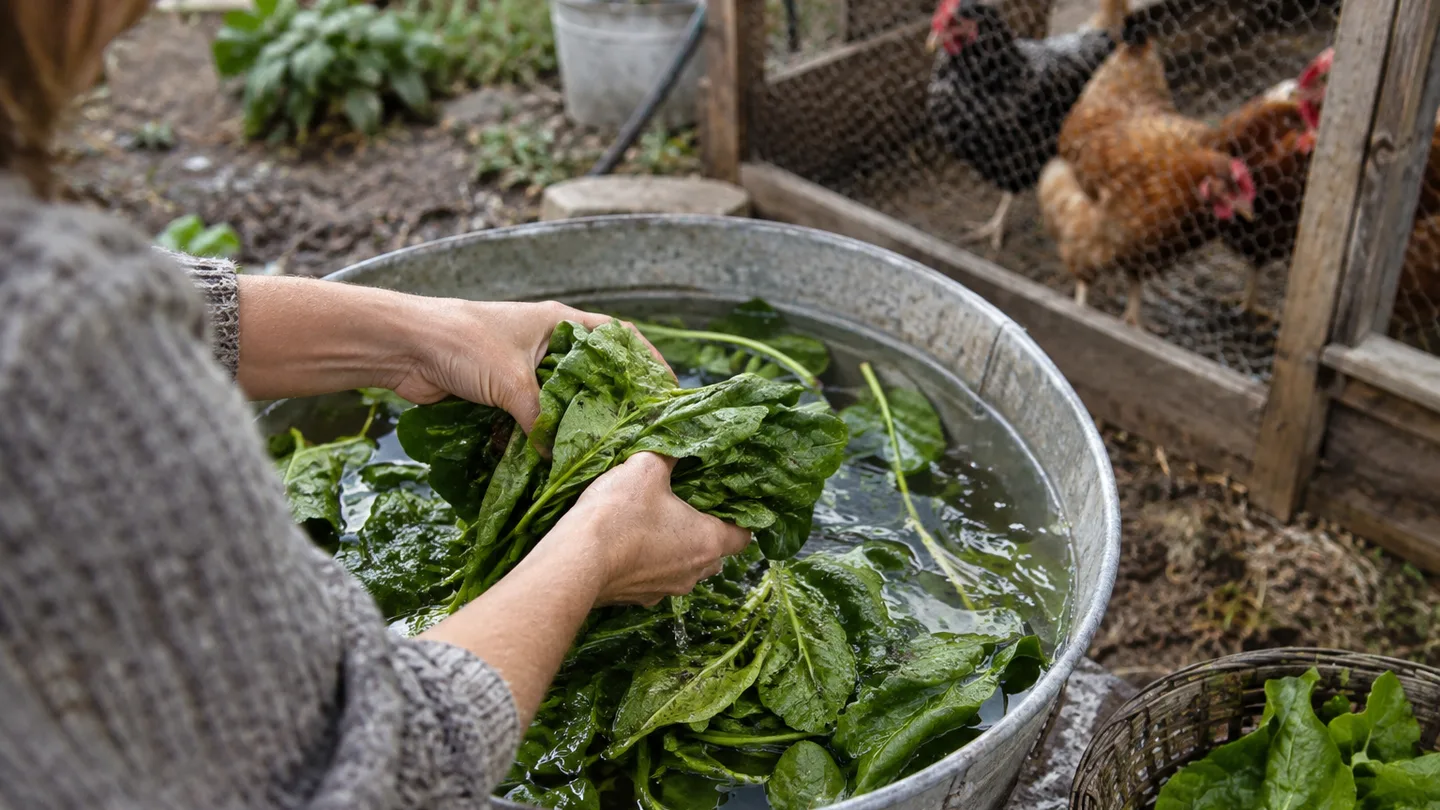
Offer only what the flock is likely to eat promptly, then clear away what remains. Slimy, spoiled, or unpleasant-smelling spinach belongs in the compost or bin, not in the feeder. Wet greens left sitting in a dish are also an easy mess to avoid: use a small serving and clean up after the snack.
Chicks, layers, and birds on calcium need different priorities
For growing chicks, keep age-appropriate starter feed at the center of the diet. They’re growing quickly, and a treat can take up room without doing the job of a complete starter ration. I’d wait on spinach rather than make greens a regular part of a chick’s meals.
For laying hens, protect access to their complete layer feed and any appropriate calcium source you already provide. Spinach can be a small extra, but it shouldn’t be the way you try to fix a calcium concern or improve laying. If a bird has a health problem, is on a prescribed diet, or you’ve been told to manage calcium, ask your veterinarian before adding treats.
A mixed-age flock calls for a little extra care. If chicks and adult birds share a space, make sure the young birds can still reach their proper feed and don’t rely on a shared treat dish to meet anyone’s nutritional needs.
Watch the flock’s overall response, not one green dropping
After leafy greens, a dropping may look different from what you usually see. One green-looking dropping, on its own, isn’t enough to diagnose illness. Look at the bird and the pattern instead: is she eating her normal feed, behaving normally, and producing usual droppings again?
Remove uneaten spinach and return to the normal ration if a bird seems uninterested in food. Contact a veterinarian for persistent appetite loss, ongoing abnormal droppings, weakness, straining, or another worrying change. Don’t try to treat those signs by adding more spinach or guessing at a medication.
A treat can be part of the context, but it can’t tell you what’s wrong. If a symptom continues, worsens, or comes with a bird that seems unwell, getting veterinary advice is a better next step than changing the menu repeatedly.
Fit spinach into the treat budget without crowding out feed
Keep the complete ration available, offer a small amount of plain chopped spinach occasionally, and count it alongside every other extra. If the flock already has plenty of treats that day, spinach can wait. There’s no benefit in using up a spinach bag at your birds’ expense.
This week, try a small serving—about 1–2 tablespoons per adult hen—where the flock can reach it. Notice whether it’s eaten, clear away leftovers, and use that observation to decide whether to offer the same amount next time. Don’t increase the portion just because the first serving disappeared quickly.
For another produce-by-produce comparison, see can chickens eat pumpkin. The useful habit is the same: keep the main ration first, make the extra modest, and let the flock’s overall diet—not one interesting leaf—guide your choices.