Wry Neck in Chickens: Causes, First Aid, and When to Call a Vet
A crooked neck is the sign on the door; it isn’t the name of the house. If your hen suddenly folds her head under, tilts to one side, or rolls when she tries to stand, treat the first minutes as triage: get her safe, check breathing and swallowing, and start a clean timeline.
Wry neck in chickens can follow nutrition trouble, injury, toxins, ear problems, infection, or progressive neurological disease. You can’t sort those causes from posture alone.
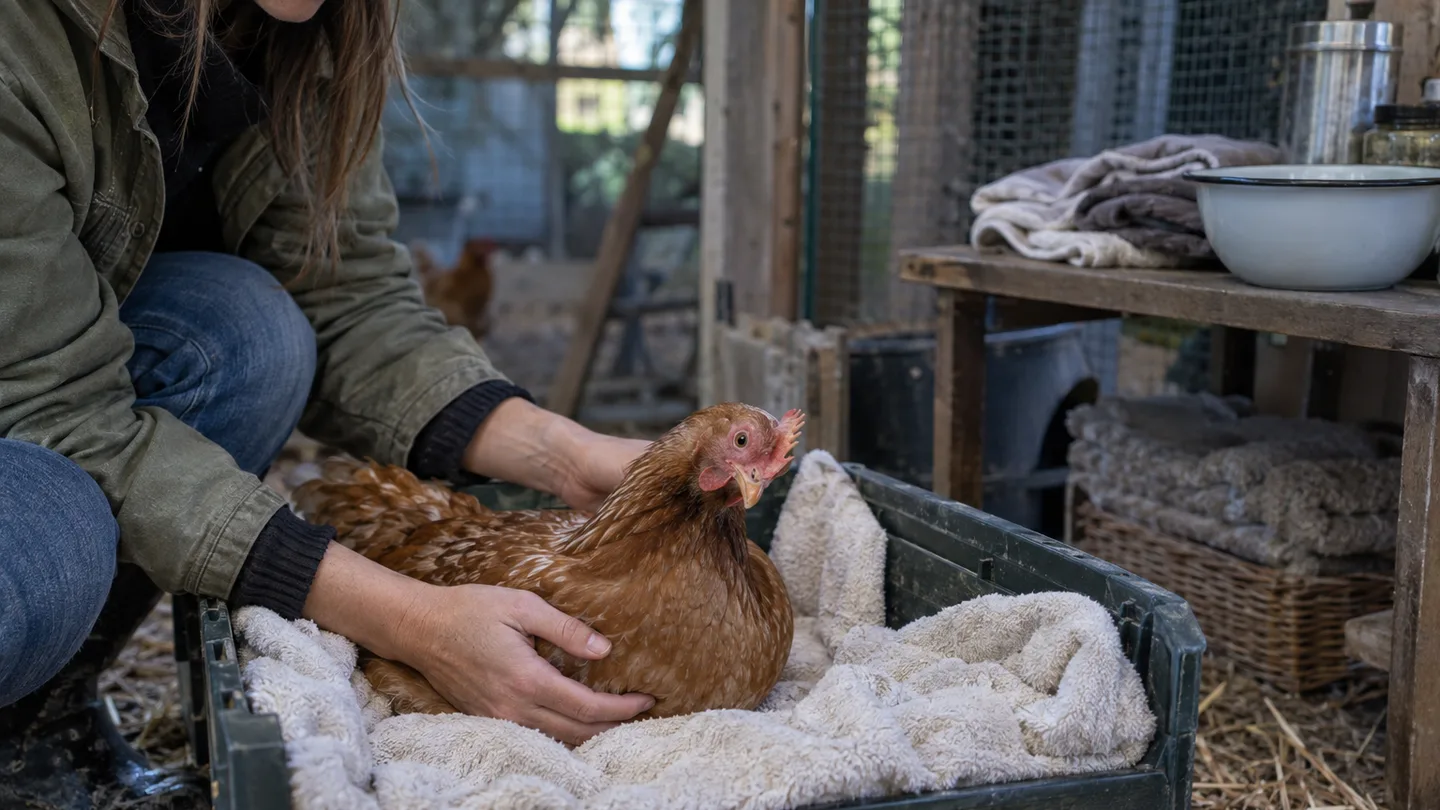
The first 15 minutes: separate the bird and check three basics
Move the bird away from the flock into a quiet, padded, floor-level hospital space. A small crate or dog carrier works if the floor is covered with a nonslip towel. Remove perches. Keep the light calm and the sides partly covered, but leave enough ventilation for easy breathing.
- Watch breathing. Look for open-mouth breathing, obvious effort, repeated gasping, or a bird that cannot settle.
- Check standing. Can she stay upright, or does she fall, roll, or paddle when she tries to move?
- Observe swallowing. Offer a shallow lid of water only if she is alert and able to aim her beak. Watch for a normal peck and swallow.
- Place familiar feed within reach. Use her usual complete feed. Don’t make her walk across the crate to find it.
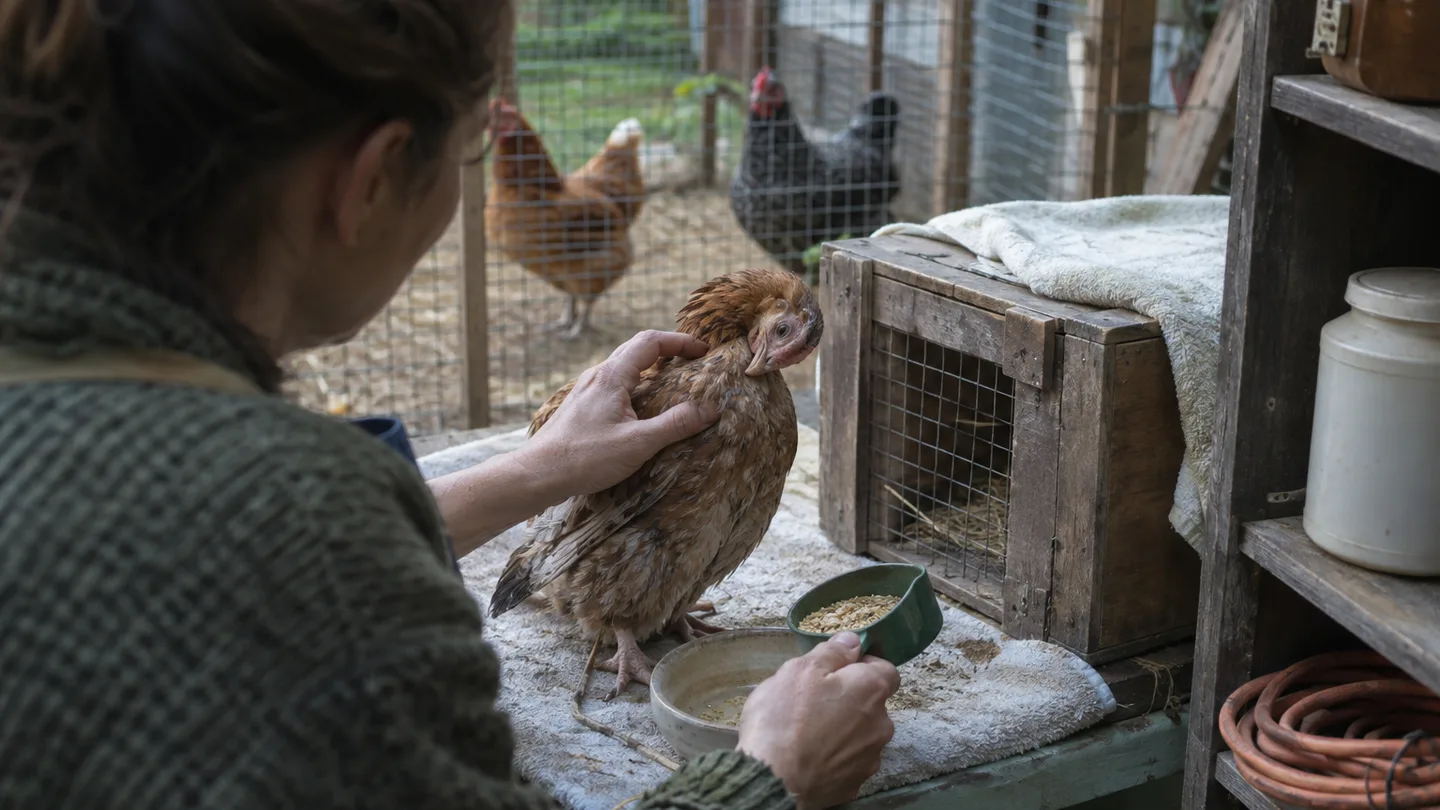
On one of my own small-flock checks, I started with the feed cup because the bird looked as if she needed food. That was the wrong first move. Her neck was folding back, and she couldn’t line up with the cup. I stopped trying to make her eat, moved her onto a towel-lined floor, and changed the task to checking whether she could swallow. The result was a safer bird and a much clearer note for the vet.
Do not syringe water, liquid food, or supplements into a bird that cannot swallow normally. Forced liquid can enter the airway. Breathing trouble, collapse, repeated seizures, major trauma, or rapid deterioration calls for urgent veterinary help rather than a home remedy.
Wry neck is a symptom, not a diagnosis: read the pattern before naming the cause
First decide what you are seeing. A twisted neck is an involuntary bend or rotation. A head tilt is usually a steady lean to one side. Loss of balance looks like falling, rolling, or circling. Tremors are shaking movements. A seizure may involve collapse, stiffening, paddling, or a period when the bird does not respond normally.
These signs can overlap. A hen with a severe head tilt may look as if her neck is twisted, while a weak bird may fall because she cannot balance rather than because the neck itself is the main problem. Posture alone cannot prove a vitamin deficiency.
Before calling, write down three comparisons:
- One bird or several? A second affected bird changes the concern from an individual injury toward a shared feed, exposure, or infectious problem.
- Sudden or gradual? A change within hours makes a recent injury, toxin, or acute disease worth checking first. A slower decline keeps nutritional, ear-related, and progressive neurological causes in view.
- Chick or adult? Age changes the feed history, brooder conditions, injury risks, and the way weakness shows up.
Make a short video if the movement comes and goes. For terminology, compare your notes with Merck Veterinary Manual guidance on avian neurological signs, then show the recording to a poultry-capable veterinarian.
Cause map: match age, onset, and flock pattern to the likely problem
The useful clues are age, timing, flock pattern, and access to things the bird should not eat or touch.
| Possible cause | Clues worth recording | Practical next move |
|---|---|---|
| Nutritional problem | Recent diet change, homemade ration, stale feed, or several birds showing weakness | Save the feed label, inspect storage, and ask a vet whether nutrition testing or a diet correction fits |
| Injury | One bird affected after a fall, collision, rough pecking, or a sharp perch | Look for swelling, blood, pain, or a wound without repeatedly handling the neck |
| Toxin or spoiled feed | Sudden signs, more than one bird affected, or access to chemicals, metal, moldy feed, or bait | Remove access, keep the original packaging, and call before discarding possible evidence |
| Infectious disease | Several birds affected or neurological signs paired with respiratory, digestive, or severe weakness signs | Separate the sick bird and seek same-day flock advice |
| Ear or inner-ear problem | Persistent head tilt, circling, falling toward one side, or visible ear-area changes | Ask the vet to examine balance and the ear rather than assuming a feed deficiency |
| Progressive neurological disease | Worsening coordination, repeated episodes, or decline despite supportive care | Arrange veterinary assessment instead of extending home treatment |
This is a sorting tool, not a home diagnosis. The same neck position can sit on top of very different problems. If the change is sudden and another bird becomes abnormal, move suspected feed, chemicals, and flock exposure higher on your list. Follow state diagnostic laboratory guidance for suspected poultry poisoning before sending feed, tissue, or other samples.
Supportive care for the next 24–72 hours: make eating and drinking possible
The next 24–72 hours are a support window, not a promise that the bird will recover without treatment. Keep the bird on low bedding with no perch. Use a shallow water dish that cannot be tipped easily, and place familiar complete feed close to the head.
- Keep the bird protected from trampling and from a sudden fall.
- Check voluntary drinking, eating, droppings, posture, and new symptoms at consistent times.
- Write down what changed instead of relying on memory.
- Stop oral treatment if the bird coughs, gurgles, cannot coordinate a swallow, or becomes less responsive.
If she can swallow normally, softened familiar feed may be easier for some birds to pick up. It is not a substitute for diagnosis. Avoid messy oral treatments that leave liquid around the beak or require you to force the head into position.
Chicks need a separate temperature decision. A first-week chick commonly starts with a warm zone around 90–95°F, with enough room to move away from it. Huddling and piling suggest the warm area is not meeting the chick’s need; panting, wings held away from the body, or staying at the far edge suggest excess heat.
An adult hen with a neurological sign should not receive fixed brooder heat by default. That is a different question from do chickens need heat in winter. Give the adult bird a dry, draft-controlled space and check chicken coop ventilation rather than trying to cover a diagnosis with heat.
Vitamin E and selenium: supplement only when the cause fits
Vitamin E and selenium belong on the cause list, especially when the feed history or diet is questionable. They do not belong in every case of wry neck. An injury, toxin, ear problem, or infection will not be corrected simply because a supplement was added.
Before supplementing, check the bird’s age, the exact feed type, the feed’s freshness, storage conditions, and any recent switch in diet. A complete ration may already be formulated to provide these nutrients when fed as directed.
- Use a poultry-labeled product according to its label or a veterinarian’s plan.
- Do not stack a multivitamin, fortified water product, and separate selenium product without professional direction.
- Do not guess a selenium dose. My judgment is that selenium deserves extra respect because an improvised dose can create a second problem while you are still trying to identify the first.
If more than one bird is affected, treating one bird with drops can distract you from the feed, storage, or exposure issue affecting the flock.
Same-day vet or urgent help now? Use observable thresholds
Here is the decision rule I use for triage: if the bird cannot protect her airway, stay upright, or avoid rapid decline, home care has run out.
Urgent help now
- Breathing is difficult, noisy, or open-mouthed.
- The bird collapses, becomes unresponsive, or has repeated seizures.
- She cannot swallow normally.
- There is major trauma, uncontrolled bleeding, or severe rapid deterioration.
Same-day veterinary contact
- The bird cannot stand or reach water without falling.
- You suspect a toxin, spoiled feed, chemical, metal, or bait exposure.
- More than one bird develops an abnormal neck, balance problem, tremor, or weakness.
- The bird is worsening or shows no clear improvement during the short support window.
Brief monitoring while arranging advice
Short monitoring is reasonable only when the bird is alert, breathing normally, swallowing voluntarily, able to stay upright, and not joined by sick flock mates. It means checking closely while arranging advice, not waiting several days to see what happens.
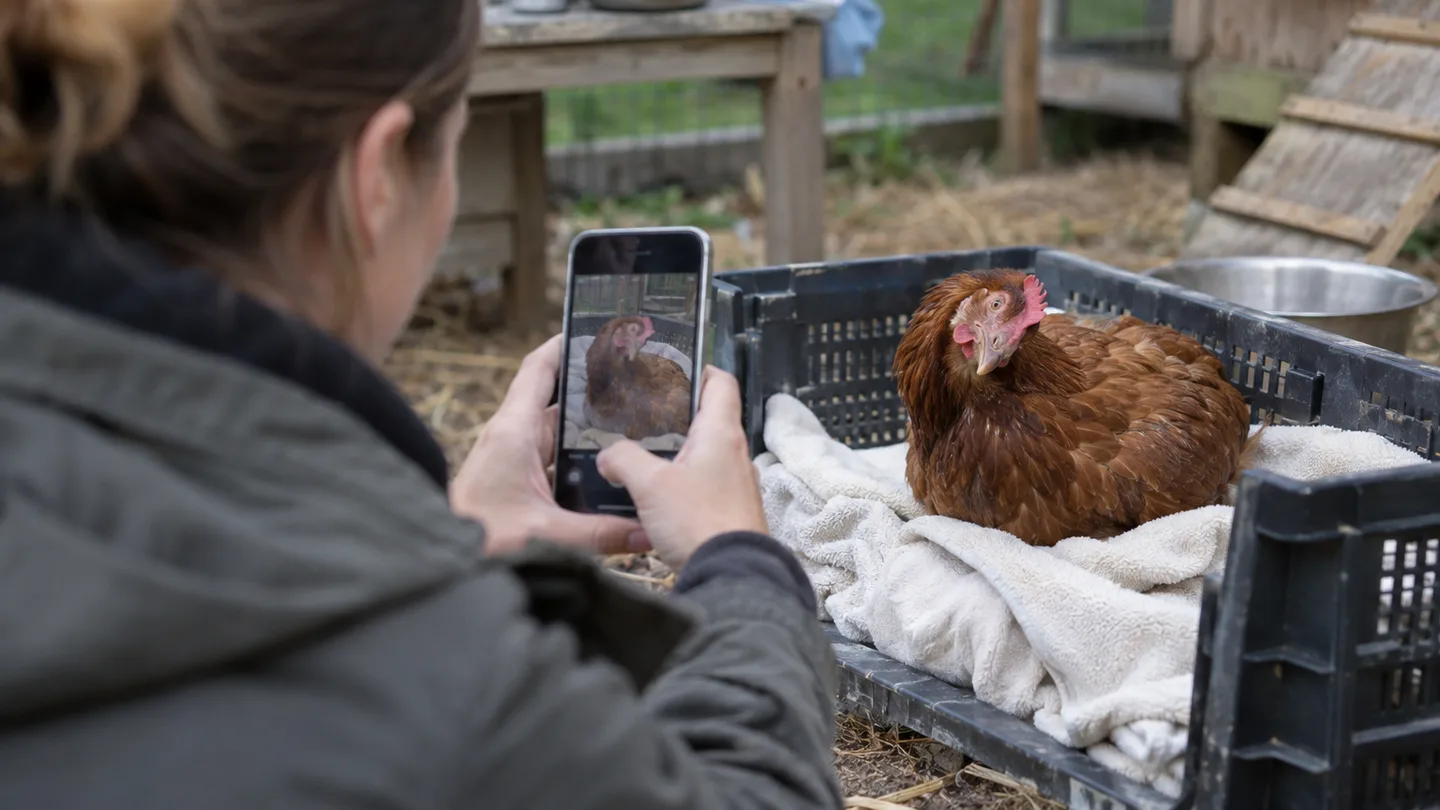
Take a timeline to the appointment. Include the first time you noticed the sign, a video, the feed label and lot information, recent diet changes, possible chemical or metal access, and any samples the clinic specifically requests. Do not guess at a treatment history. Write down exactly what was given and when.
After the neck straightens: a 7-day recovery check and flock follow-up
A straighter neck is encouraging, but it is not the same as a safe recovery. Keep the bird separated until she can stand, eat, drink, and move away from a flock mate that shoves her. A bird that still rolls or cannot reach the drinker is not ready to rejoin the run.
Use seven days as a practical trend check. Record posture, balance, appetite, drinking, and droppings. I would expect steady improvement to show up as more controlled movement and easier access to feed and water. If the neck improves and then twists again, or if balance stays poor, that observation is useful evidence for the vet rather than a reason to keep adding supplements.
Before returning the bird, inspect feed storage, chemical access, sharp perches, fall hazards, and the rest of the flock. Check chicken coop ventilation and revisit how to clean a chicken coop so the recovery space is not carrying avoidable contamination or dampness.
This week, prepare one labeled hospital crate with a towel, shallow dish, notebook, and the phone number for a poultry-capable veterinarian. Add the date of the last feed change to your flock records. A calm setup and a precise timeline will help more than a shelf full of unlabelled drops.