Do Chickens Need Heat in Winter? A Safe Decision Tree
At dawn, a healthy hen on a dry roost can look puffed up and uncomfortable even when she’s coping normally. So, do chickens need heat in winter? For a healthy, fully feathered adult flock, usually not: start with a dry coop, high ventilation, and protection from direct drafts at roost level before you plug in a heater.
The answer changes for chicks, sick or thin birds, missing feathers, a recent move from a heated room, or housing that stays wet and exposed. Use the branches below instead of treating one forecast number as a magic cutoff.
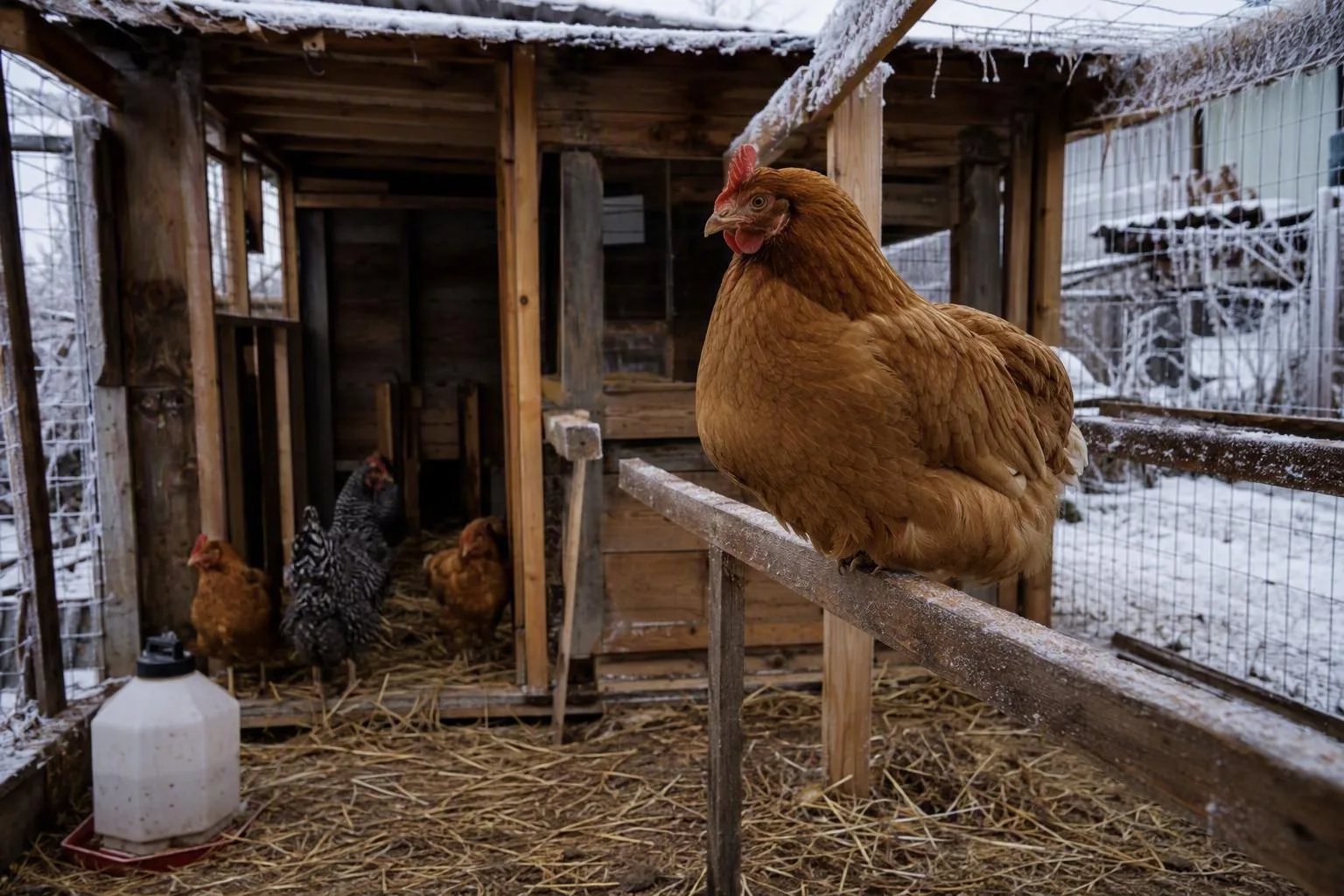
The default branch: healthy adult hens usually stay unheated
For healthy, acclimated adult hens, an unheated coop is the sensible default. Mature feathers trap a layer of air around your birds. A dry shelter that blocks wind lets that insulation do its job. Your birds can also huddle together and settle on a roost, where they lose less heat than they would standing on a damp floor.
“Draft-free” doesn’t mean sealed shut. It means air isn’t blowing directly across the birds while they sleep. You still need high openings to carry damp air out. Moisture from droppings, wet bedding, and breath is the winter problem to solve first.
Unnecessary heat adds another failure point. A powered heater can be knocked into bedding, fail during an outage, or make a sudden temperature drop harder on birds that have been kept artificially warm. That doesn’t make every heater wrong. It means the need should come from a vulnerable bird or a housing problem, not from the calendar alone.
Before you check the forecast, sort the birds into the right branch
Start with the birds, not the forecast. Sort the flock by age, health, feather coverage, and recent living conditions.
- Chicks: They belong in a brooder or controlled chick space, not in the adult winter decision. They have little insulating feather coverage.
- Healthy adults: Fully feathered hens that have lived outdoors through a gradual seasonal change usually have the widest margin.
- Vulnerable adults: A thin, sick, injured, weak, or poorly feathered bird may need a dry recovery pen and veterinary advice.
- Recently moved birds: A hen coming from a heated shed or indoor room may need a slower transition than an established outdoor flock.
For chicks, use a chick-level thermometer. A practical starting point is about 90–95°F (32–35°C) in week one, then reduce the warm-zone target by roughly 5°F each week as feathering develops. The warm area should have a cooler escape area, too. Use the site’s guide to brooder temperature for chicks for that separate timeline.
My working rule is plain: I sort the birds before I read the weather app. I’d rather give one weak hen a dry, observable recovery space than heat a whole flock that doesn’t need it. Breed can alter the margin, especially with very small-bodied or unusually feathered birds, but a breed name alone shouldn’t make the decision for you.
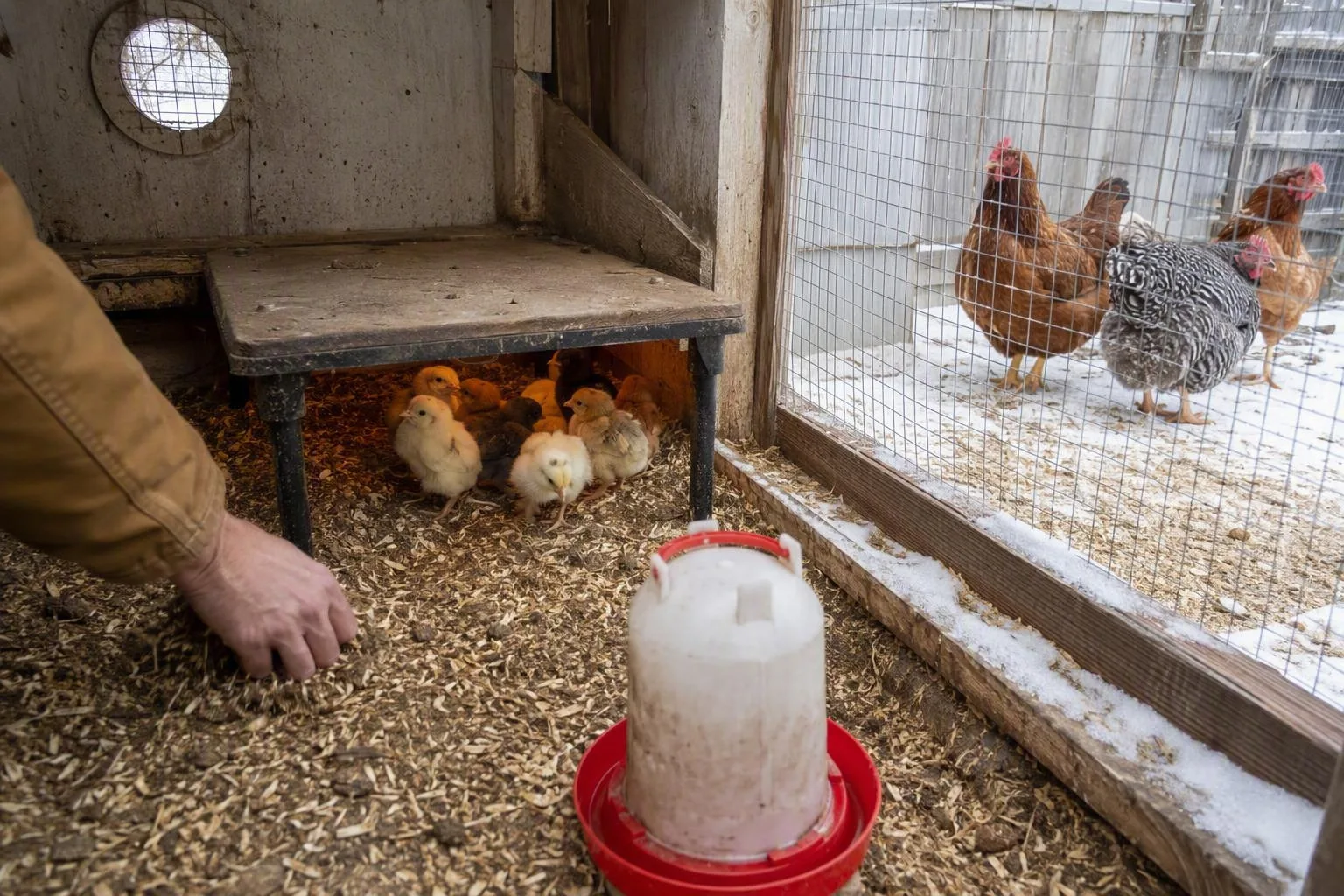
Run the coop test: dry litter, high vents, and no roost-level draft
The coop test is a four-part inspection. Do it in daylight, then repeat the moisture and draft checks near dawn.
- Look at the bedding. Replace wet patches around drinkers and doors. Bedding that feels cool and damp under the surface is not doing the insulating work you want.
- Check the roof and walls. A leak, driving rain, or melting snow can defeat an otherwise good coop. Find the wet source before adding warmth.
- Inspect the air above the roost. You want clean air without a sharp stream hitting sleeping birds. A strong ammonia smell or regular condensation on walls and roof points to trapped moisture.
- Check roost space and access. Every bird needs to settle without being forced onto a wet floor or into a tight, stressed pile. Water and feed must remain reachable during the coldest part of the day.
As a starting planning estimate, allow about 1 square foot of high ventilation opening for each 10 square feet of coop floor. This is not a building code or a universal answer. Climate, flock size, roof height, and how wet your bedding gets can move the requirement. Count the usable screened opening, not the full size of a framed vent that is partly blocked by mesh or a flap.
For example, a 4-by-6-foot coop has 24 square feet of floor. Dividing 24 by 10 gives a starting estimate of about 2.4 square feet of high opening, distributed so rain can’t blow straight onto the roost. If the air is damp, the flock is crowded, or condensation keeps returning, increase useful airflow while shielding the birds from direct wind. If crowding is part of the problem, revisit how much space do chickens need before blaming winter.
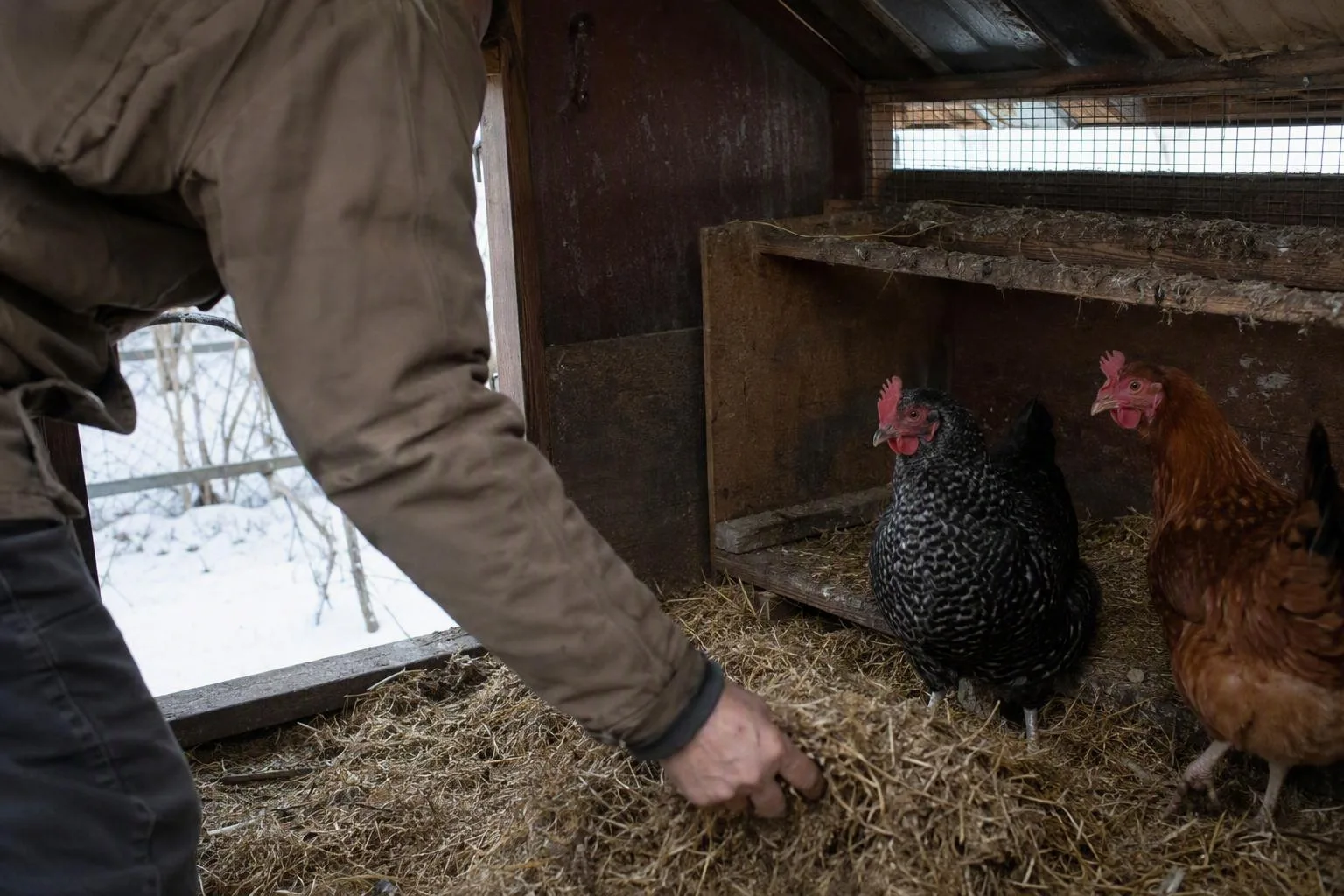
Use the thermometer as a warning signal, not a magic cutoff
Place a min/max thermometer near roost height. Keep it out of direct airflow, sunlight, and any heater’s warm plume. Check it near dawn, when the coop has had the longest cold period, for several cold nights rather than relying on one afternoon reading.
- Around 32°F (0°C): Inspect bedding, vents, drafts, and bird condition. Don’t treat this reading alone as an instruction to add heat.
- Around 20°F (-7°C): Make a closer check for condensation, wet feet, crowding, and a bird that cannot reach water or feed.
- Near 0°F (-18°C) or below: Make a specific cold-snap plan. That may still mean an unheated coop for a healthy acclimated flock, but you should know what you’ll do if a bird starts failing or the water freezes.
Wind exposure, humidity, feather loss, body condition, and acclimation all change the practical answer. That’s why a fixed “too cold” temperature is unreliable for every flock.
The branch that flips the answer: watch the flock, not just the number
Cold-weather posture has a normal range. Temporarily puffed feathers, a tucked head, and quiet roosting can simply mean your birds are conserving warmth. The pattern matters more than one glance.
| What you see | First action |
|---|---|
| The flock is puffed up but settled, eating, drinking, and moving normally | Keep the coop dry and monitor at dawn |
| Several birds stay in a tight huddle or avoid the roost | Check for a roost-level draft, wet bedding, crowding, and frozen water |
| One bird is isolated, weak, or repeatedly lifts a foot | Assess that bird separately for illness, injury, wet feet, or poor condition |
| A bird cannot stand, reach water, or remain alert | Move it to a safe recovery space and contact a poultry veterinarian |
A whole-flock reaction points you toward housing or weather. A single affected bird deserves a separate health assessment. Heat may make an unwell bird more comfortable, but it doesn’t treat the reason the bird is weak.
Seek professional help for respiratory distress, collapse, inability to stand, severe frostbite, or weakness that is getting worse quickly. For a second opinion, look for poultry veterinarian guidance on frostbite, respiratory distress, and signs requiring care rather than trying several home treatments at once.
If heat is justified, make it targeted, secured, and temporary
If the branch flips, make warmth targeted, secured, and temporary. Your goal isn’t to warm every cubic foot of the coop. It’s to give a specific vulnerable bird a stable, dry place while you correct the cause and get advice.
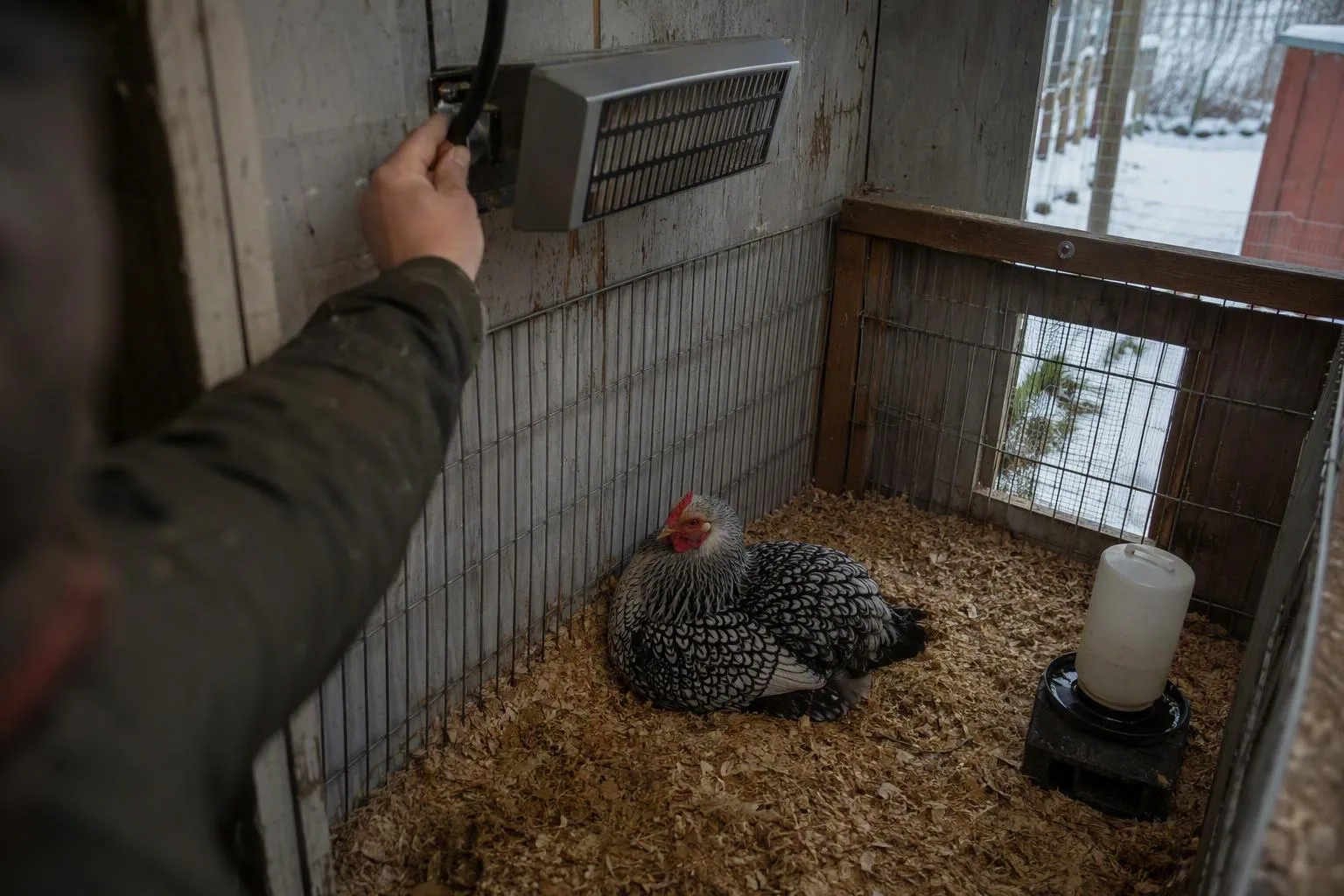
A purpose-built radiant panel or poultry heater is my preference over an unsecured heat lamp because it can be installed as a fixed unit rather than hanging above loose bedding. That doesn’t make a panel risk-free. Follow the product instructions exactly, and don’t adapt an indoor device for a damp outdoor space.
- Mount the heater firmly so a bird, scratching hen, or loose cord can’t move it.
- Keep it clear of bedding, feathers, curtains, roosts, and water. Leave the clearance specified by the product maker.
- Protect cords from pecking and moisture. Use the electrical protection required by your local rules and the device instructions.
- Keep the warmed area ventilated. Warm, stale, damp air is not a healthy recovery environment.
- Test what happens if the heater stops. A backup dry pen, extra bedding, and a plan for checking water are more useful than assuming the power will stay on.
Don’t use an open flame, a fuel-burning heater, a dangling improvised bulb, or a homemade heating element inside the coop. Never run a generator inside the coop, shed, garage, or another enclosed space. Exhaust and fire hazards don’t belong where your birds sleep.
For one sick or weak bird, a separate recovery pen is usually easier to observe than a heated flock room. Give that bird clean water, accessible feed, dry footing, and quiet separation. Ask a veterinarian how to handle the underlying problem, especially if the bird has breathing trouble or cannot stand.
The 24-hour cold-snap decision tree
Use this routine when a cold night is coming. It keeps the decision tied to conditions you can actually inspect.
- Afternoon: Check the roof, high vents, bedding, drinkers, feed, and door latches. Confirm that wind-driven rain or snow can’t reach the roost. Review your chicken run predator protection before an early winter close-up leaves gaps unnoticed.
- At dusk: Count every bird. Confirm that each one can roost dry and out of direct airflow without being pushed aside.
- At dawn: Read the low temperature, then look for condensation, wet feet, abnormal huddling, weakness, and access to water and feed.
- Choose the response: Leave a healthy acclimated flock unheated; fix moisture or drafts and monitor when housing is the issue; or use a secured targeted-heater plan and seek veterinary advice for a vulnerable bird.
If the power fails, don’t improvise with candles, open flame, or indoor combustion equipment. Keep generators outdoors, well away from doors and vents, and follow their instructions. The safest whole-flock outage plan is usually a dry coop that your adult birds were not made dependent on.
Choose your setup this week and write down the trigger to change it
Choose one of these setups before the next cold snap:
- Unheated adult setup: Healthy, acclimated hens in a dry, ventilated, draft-protected coop.
- Targeted-heater setup: A secured purpose-built device for a specific vulnerable bird or exceptional housing condition, with a failure plan.
- Separate chick or recovery setup: A brooder for chicks, or a dry monitored pen for an unwell, injured, thin, or poorly feathered bird.
This week, hang a min/max thermometer at roost height and record three dawn checks: low temperature, condensation or wet bedding, and flock behavior. Change the plan because you observed a housing failure or a struggling bird, not because a universal cutoff told you to panic. If body condition and winter feed use are your next questions, compare your notes with how much feed per chicken per day for laying hens.
Can bantam chickens handle winter without supplemental heat?
Many healthy, fully feathered, acclimated bantams can manage cold in a dry, well-ventilated coop. Smaller body size and unusual feathering can reduce their margin, though, and damp conditions make any bird harder to keep comfortable. Use posture, water access, body condition, and the coop test rather than the breed name alone.
How can you keep chicken water from freezing without heating the whole coop?
Rotate waterers, insulate them where safe, or use a purpose-built heated drinker or base installed according to its instructions. Keep electrical parts away from bedding and standing water. Check water at least morning and evening during a freeze. Never place an improvised heating element inside the coop.
Do chickens need extra heat during a molt?
A normal molt doesn’t automatically call for supplemental heat. Focus on dry shelter, easy access to feed and water, and body condition. A molting bird that is weak, thin, ill, or losing feathers in an unusual pattern needs individual assessment and possibly veterinary care.
Frequently Asked Questions
Can bantam chickens handle winter without supplemental heat?
Many healthy, fully feathered, acclimated bantams can manage cold in a dry, well-ventilated coop, but smaller body size, unusual feathering, poor body condition, and damp conditions reduce their margin. Use bird behavior and housing checks rather than breed name alone.
How can you keep chicken water from freezing without heating the whole coop?
Use a practical water rotation, insulation, or a purpose-built heated drinker or base placed and wired safely outside bedding. Check water at least morning and evening during a freeze, and never improvise a heating element inside the coop.
Do chickens need extra heat during a molt?
A normal molt does not automatically require supplemental heat. Focus on dry shelter, easy access to feed and water, and body condition; a bird that is weak, thin, ill, or losing more than expected needs individual assessment and possibly veterinary care.