Rooster Attacks: How to Stop Them Without Making It Worse
One charge is enough to change the job from training to safety. During a rooster attack, turn sideways, protect your face and eyes, put a solid barrier in front of your shins, and leave through a planned gate. Don’t kick, chase, or try to win a wrestling match.
That is the immediate answer. The next step is finding out whether you’re dealing with a predictable trigger, a crowded setup, or a bird that simply isn’t safe around people.
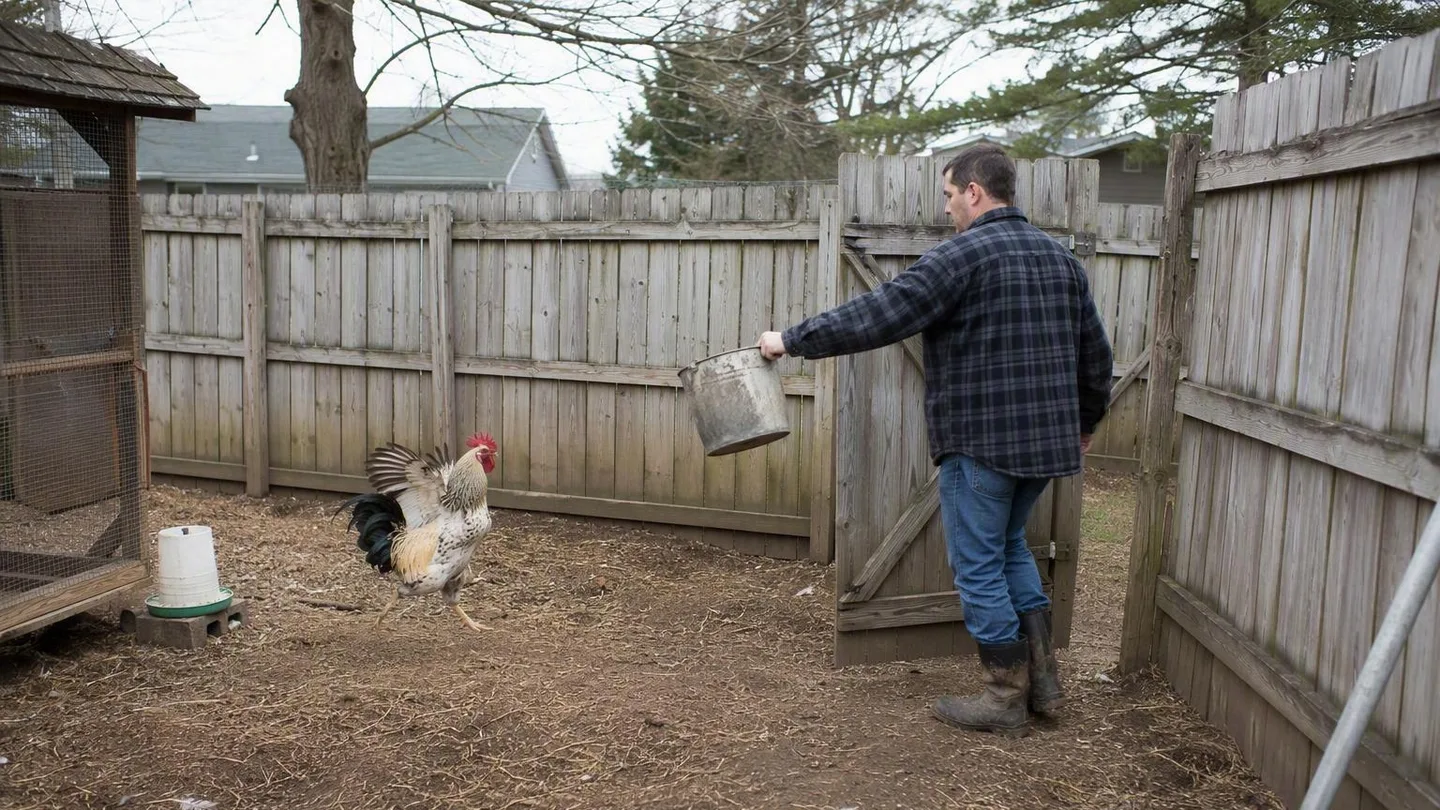
The first 10 seconds: make the next rooster attack safe
Keep your movements deliberate. A running person can turn a short charge into a pursuit, while a cornered rooster has fewer ways to disengage.
- Turn slightly sideways. Keep your eyes on the bird without presenting your legs straight on.
- Protect your face and eyes. Raise a forearm, hat, or other sturdy object without waving it at him.
- Use a barrier. Hold a feed bucket, tote lid, board, or gate panel low in front of your shins.
- Move toward your exit. Back or step sideways through the route you already planned.
- Close and latch the gate. Don’t stand outside arguing with the bird or go back in to prove a point.
If he follows you, keep the barrier between you and him until a door or gate is closed. If he knocks someone down, the person should curl onto their side, cover the head and neck, and call for help rather than trying to stand while the rooster is still within reach. A spur puncture, eye injury, deep wound, or fall with a head, neck, or joint injury deserves prompt medical advice. Get urgent help for uncontrolled bleeding or a serious eye injury.
Children, visitors, delivery workers, and anyone unsteady on their feet shouldn’t handle an attacking rooster alone. Put a second barrier between them and the run before you start diagnosing the behavior.
A seven-day trigger log separates territory from fear, mating, and flock stress
For the next seven days, record every incident in one line. Don’t rely on memory. The useful detail is often what happened in the half-minute before the charge.
- Time and location.
- Person involved, including whether it was the same person each time.
- Nearby hens, chicks, nests, feeders, waterers, or tools.
- What the rooster did: charged, struck, spurred, blocked, or pursued.
- What happened immediately beforehand, such as bending, lifting a hen, opening the coop, or carrying feed.
- What ended the incident and whether anyone was hurt.
For example, imagine a cockerel that charges at 7:15 a.m. when someone reaches near the nest boxes, but ignores that same person at the feeder in the afternoon. I’d check a territory or hen-protection trigger first. A bird that crosses the run to follow someone is a different management problem from one that reacts only when a hand enters his space. If the pattern started after introducing new chickens, flock stress belongs in the log too.
A useful planning window is around four to six months, when many cockerels are reaching sexual maturity and may become more territorial or insistent around hens. Breed, individual development, and housing can shift that timing. Maturity may explain when a pattern appears; it doesn’t excuse unsafe behavior.
One calm response, every time: handling rules that do not turn a charge into a fight
Mixed household rules can make an already difficult bird harder to read. If one person runs, another kicks, and a third person grabs the rooster, each encounter becomes a different contest. Use one response sequence instead.
My own small-flock rule is to move the human exit before I try to change the bird. If I have to step past his reach to open the gate, I treat that as a layout failure, not a test of courage.
- Use one calm handler when possible.
- Enter and leave by the same route.
- Carry a barrier before opening the gate.
- After an attack, separate the rooster behind a secure panel or pen so the handler can leave without wrestling him.
Chasing, cornering, striking, or holding a rooster down may stop the immediate movement, but it doesn’t show that the next encounter will be safer. Dominance displays are an unreliable training plan because the bird can appear quiet while restrained and still charge when the next person bends near the hens.
A short, controlled reset is safer than carrying an agitated bird through the yard. If a catch is necessary, plan it with a crate, a second adult, and a clear route rather than improvising after a charge. Management may make attacks less frequent or more predictable, but it cannot guarantee a change in temperament. Judge the result by repeated behavior over time, not one calm interaction.
Space and flock pressure: check 4 square feet inside, 8–10 outside, and 1 rooster per 8–12 hens
Room won’t cure a rooster that targets people, but crowding creates more conflict around feed, hens, doors, and corners. Start with about 4 square feet of usable indoor space and 8–10 square feet of run space per standard-size bird. Treat those as starting points, not a promise that every flock will thrive at the minimum.
Large breeds, wet climates, poor ventilation, and long periods of confinement all argue for more room. If the floor stays damp, hens cannot get away from the rooster, or one bird controls the only feeder, the written square footage is not telling you enough.
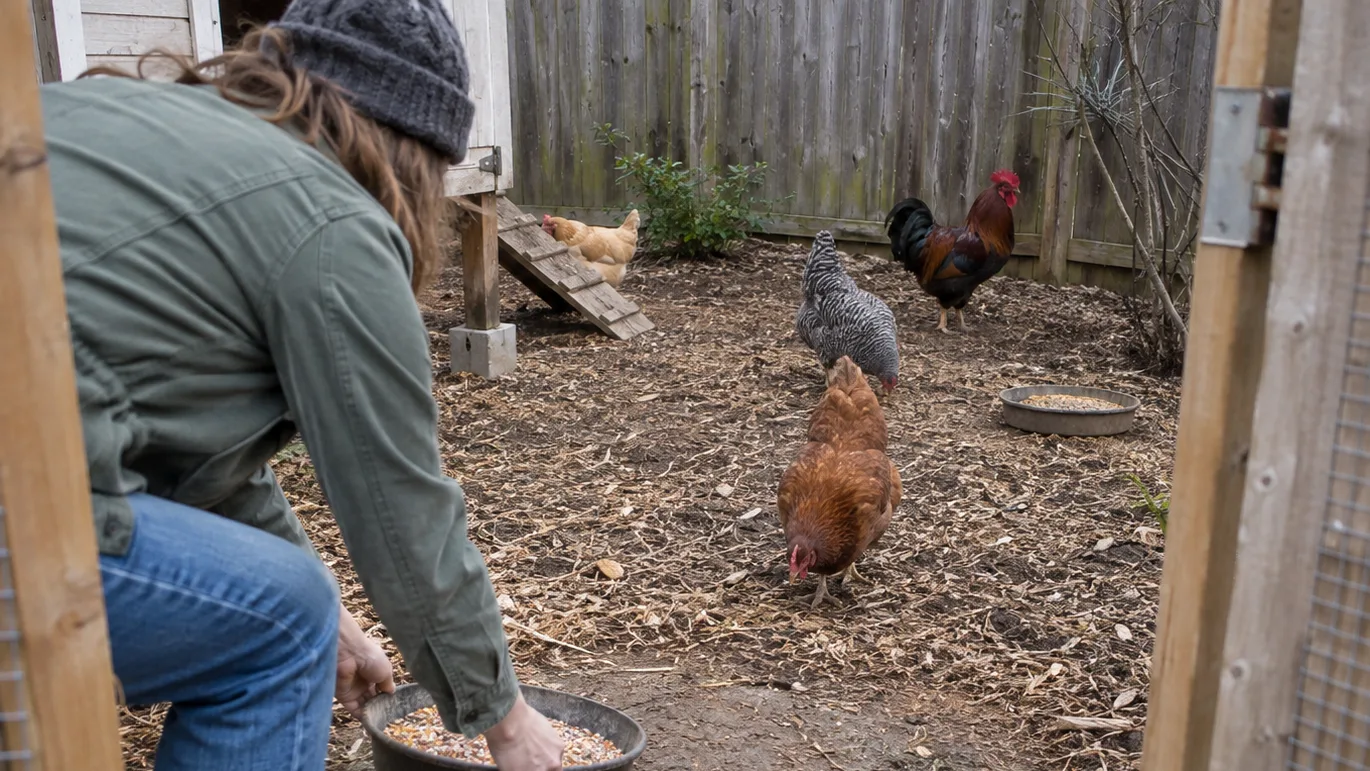
- Put feed and water in more than one location so one bird cannot guard the supply.
- Give hens a route around the rooster, with visual breaks that don’t create dead-end corners.
- Check that nest boxes, roosts, and doors don’t force a hen to pass within striking distance.
- Open the people gate from outside the rooster’s reach if the layout allows it.
A commonly used starting range is roughly 1 rooster per 8–12 hens. That ratio may reduce mating pressure and give hens more chances to move away, but it is not a cure for human-directed aggression. One calm rooster with fewer hens can be easier to manage than a crowded flock with the same ratio.
If you’re still working out the space your chickens need, audit the usable routes rather than measuring only the outside dimensions. For a separate predator and gate check, compare your layout with a predator-proof coop design. A secure run is useful only if you can enter and leave it without stepping into the rooster’s reach.
Children, spurs, and open gates: the safety line that changes your plan
The plan changes as soon as children, visitors, delivery workers, or an unsteady adult might enter the run. Use a latched physical separation. Don’t rely on a warning sign, a quick introduction, or the hope that the rooster will behave for someone who has never met him.
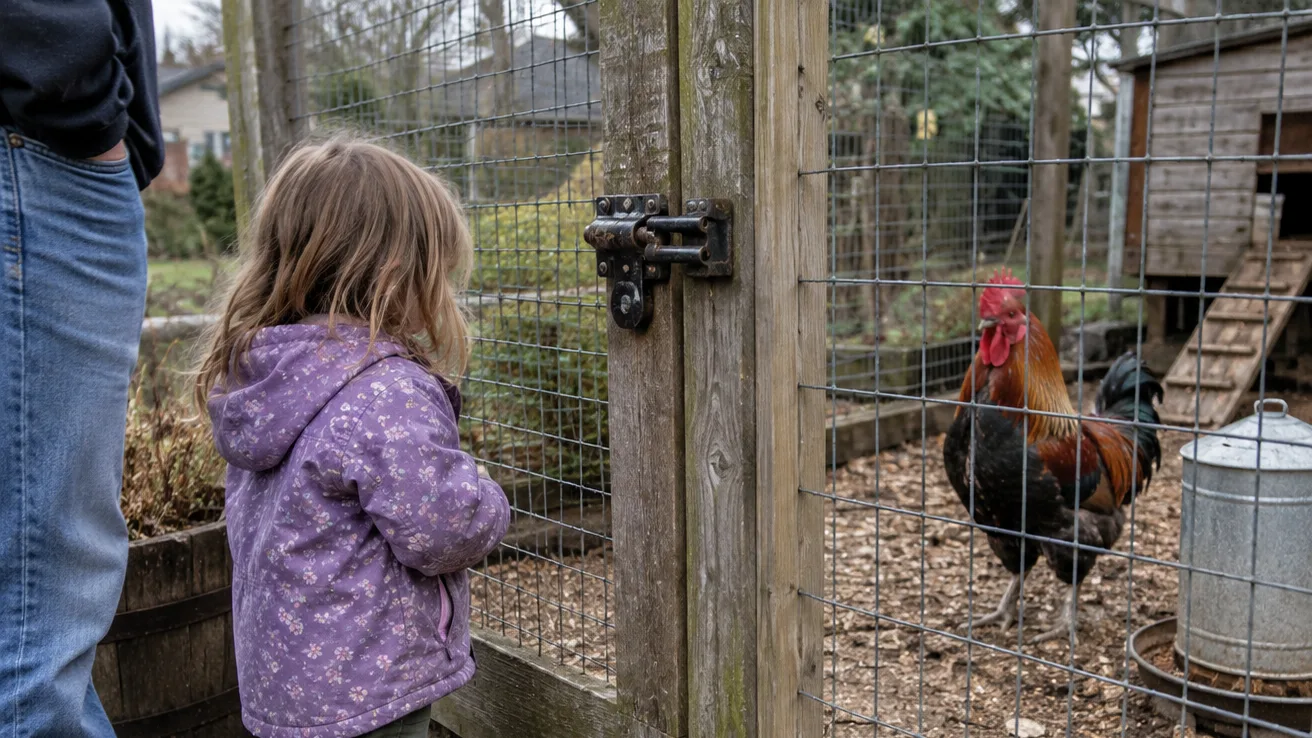
Long trousers, boots, gloves, and eye protection can reduce exposure during necessary handling. They do not make an unsafe rooster suitable for casual contact, and they don’t protect every part of the body from a fast strike. Personal protective equipment is a backup layer, not permission to let a child carry feed through the pen.
Spur care is a separate issue from aggression. A shorter or blunted spur does not remove the charge, pursuit, or targeting behavior. Don’t dig into the living center of the spur or attempt an unfamiliar removal method at home. Ask an experienced poultry keeper or avian veterinarian for a safe plan. For injury-specific details, check avian-veterinary guidance on rooster spur injuries and human wound care.
After a puncture, wash the area and seek medical advice promptly, especially if the wound is deep, painful, contaminated, or worsening. An eye strike, a fall, or a wound that keeps bleeding should move the decision away from home care.
After 2–4 weeks, make the hard call: manage, rehome, or ask about humane euthanasia
Give a management plan two to four weeks only when no one is being repeatedly injured and every person who enters the area can follow the safety rules. Don’t wait out a serious attack pattern just to complete a trial period.
At the review point, ask three plain questions:
- Are attacks stopping, becoming less frequent, or at least predictable enough to avoid?
- Can an adult handler reach the gate, feed, and water without entering the rooster’s striking range?
- Can children and visitors remain completely separated without relying on luck?
If the answers are yes, an adult-only arrangement may be workable. Keep the rooster in a secure setup, continue the barrier and gate routine, and don’t turn one quiet week into permission for casual handling.
If the answers are no, rehoming may be the more honest option. Tell the next keeper exactly what happened: who was targeted, whether he pursued, whether spurs made contact, what triggers you observed, and what barriers were tried. Passing an attacking rooster to an unsuspecting household simply moves the risk.
When repeated human-directed attacks make safe placement unrealistic, discuss humane euthanasia with a qualified person and check local animal-control or municipal rules first. That is not a punishment decision. It is a welfare and safety decision made when a secure, suitable home cannot be found.
Your action this week is simple: start the seven-day log today, then inspect the run gate before the next handling session. If you keep the rooster only for fertile eggs, revisit whether you need a rooster for eggs at all; hens can lay without one, while hatching requires a separate breeding decision.
Three questions that come up after the first charge
Can you train an aggressive rooster to stop attacking?
You may be able to reduce predictable attacks by removing triggers and using the same calm handling routine. A rooster that repeatedly targets people may still never become reliably safe. Judge the pattern over several weeks, not by whether he stays quiet during one controlled interaction.
Should you trim or remove a rooster’s spurs?
Spur care can reduce the damage from contact, but it does not change the reason for the attack. Don’t attempt deep trimming or removal without experienced guidance. A shorter spur is not the same thing as a safe bird.
At what age do rooster attacks usually start?
Many keepers notice aggression around four to six months, near sexual maturity, but breed and individual temperament vary. If a younger bird is already charging, start the safety plan now rather than waiting for age to solve it.
Frequently Asked Questions
Can you train an aggressive rooster to stop attacking?
Consistent handling and removing triggers can reduce some predictable attacks, but a rooster that repeatedly targets people may never become reliably safe. Judge the result by actual behavior, not by whether he seems calm for one interaction.
Should you trim or remove a rooster's spurs?
Spur care is separate from aggression. Do not dig into the quick or attempt an unfamiliar removal method at home; ask an experienced poultry keeper or avian veterinarian. A shorter spur does not make a human-directed attacker safe.
At what age do rooster attacks usually start?
Aggression often becomes more noticeable around sexual maturity, commonly around 4–6 months, but breed and individual temperament vary. Do not wait for a dangerous pattern to pass if the rooster is already charging people.