Do You Need a Rooster for Eggs? What Backyard Keepers Should Know
You’re standing at the feed store with six pullets and wondering whether one more bird is essential. It isn’t. You can keep a small flock of hens, collect breakfast eggs, and never house a rooster. The eggs will be unfertilized, but they’ll still be ordinary eating eggs. A rooster changes the hatching question; he doesn’t switch a hen’s laying cycle on.
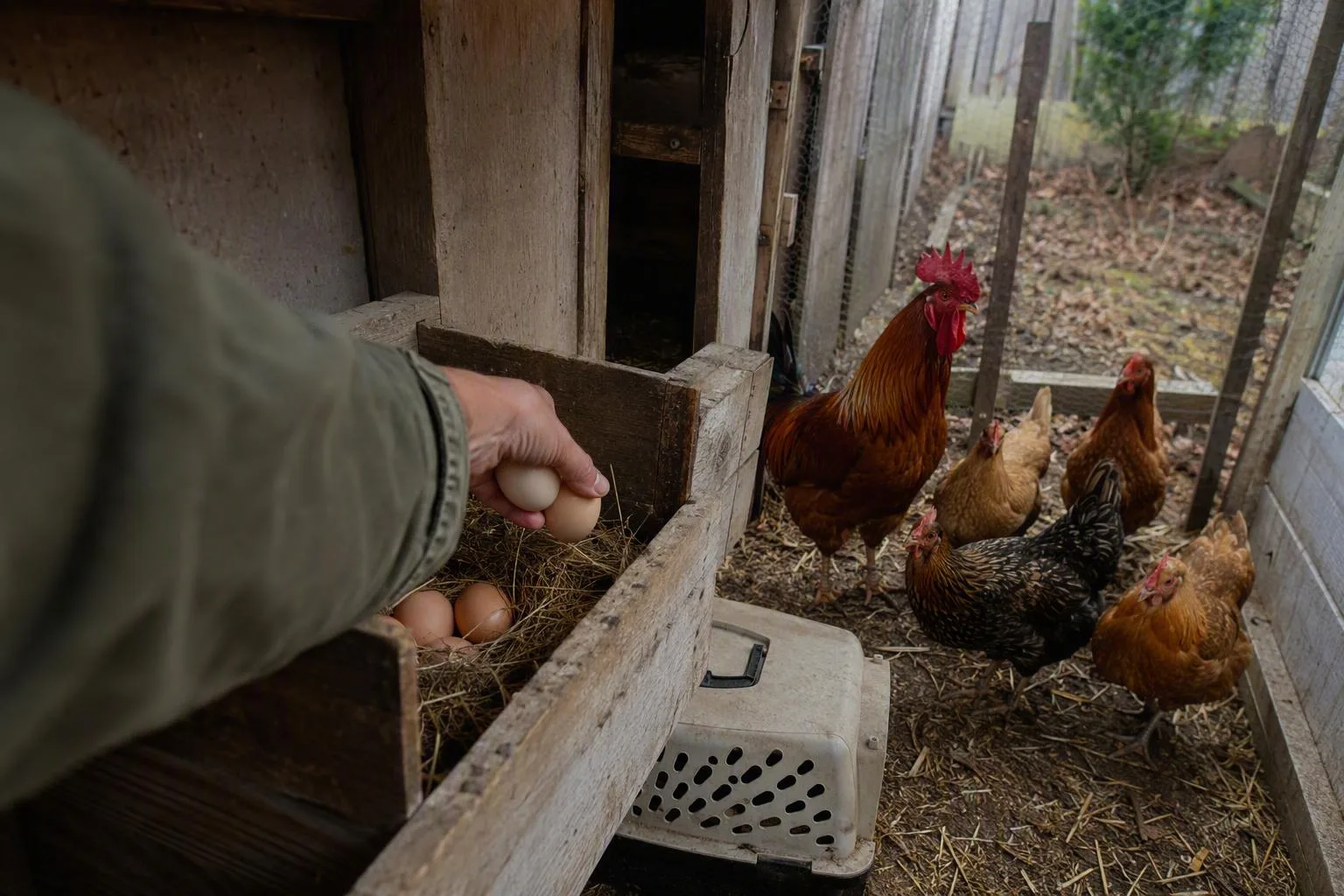
Start with the egg: hens lay without a rooster
A hen’s egg-making cycle begins inside the hen. An ovum develops, then the egg gains its white, membranes, and shell as it moves through the reproductive tract. A male bird has no required part in that sequence. His sperm matters if you want that ovum to become fertile.
That gives you two useful categories: unfertilized eggs from a hen-only flock and fertile eggs from hens with access to a rooster. On the kitchen counter, they can look the same. A fertile egg only begins embryo development when it is held under suitable incubation conditions. If you collect eggs for eating and follow your local handling guidance, a rooster in the flock doesn’t make those eggs unsuitable for breakfast.
For flock planning, I use roughly 18–24 weeks as a first-lay window. Treat it as a calendar range rather than a promise. Breed maturity sets the starting point, while daylight helps cue the reproductive system. A pullet reaching maturity as days shorten may begin later. Nutrition, illness, transport, heat, stress, and an adult bird’s molt can move the date too.
In my own small-yard setup, I started with four pullets because breakfast eggs were the whole point. I resisted adding a rooster just in case I might hatch chicks someday. When the first egg appeared in the nest box, the plan worked exactly as intended: I had food, four birds to house, and no extra noise or male behavior to manage.
If a pullet is otherwise bright and growing, a late first egg can be a timing issue. Weight loss, repeated straining, severe lethargy, breathing trouble, or an obvious injury deserves a poultry veterinarian or local extension office rather than a guess at the feed store.
The only job that requires him is hatching: choose your flock’s end goal
Decide what you want the flock to do before you decide whether it needs a male. This compact path covers the usual backyard choices:
| Your goal | Rooster plan | What else you need | Main trade-off |
|---|---|---|---|
| Table eggs | Hens only | Coop, run, feed, nest boxes | Simplest daily setup |
| Hatch your own chicks | Hens with a compatible rooster | A broody hen or incubator, plus chick housing | Crowing, space, and flock-management work |
| Hatch occasionally | Buy or borrow fertile eggs | A broody hen or incubator | You arrange an egg source when needed |
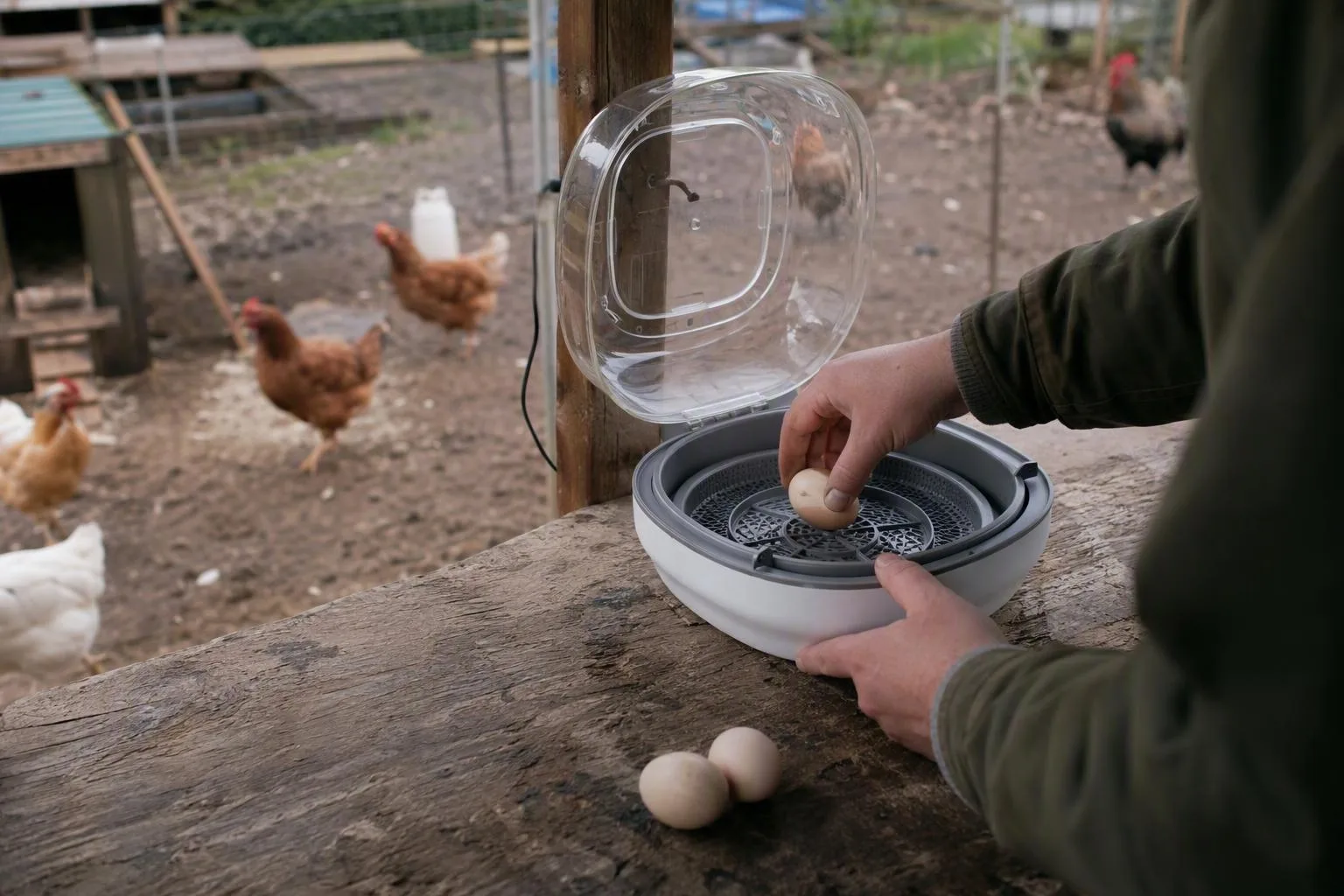
To hatch chicks, you need a fertile egg and a controlled incubation process. Chicken eggs usually have a roughly 21-day incubation clock. A broody hen supplies steady warmth and turns the eggs. An incubator takes over those jobs with equipment you control. A fertile egg sitting in a collection basket won’t become a chick simply because a rooster fertilized it.
You can buy hatching eggs from another keeper or arrange a temporary source without keeping a rooster on your property. For a flock of three to twelve hens, that can be the cleaner answer if you want chicks once but don’t want a permanent male. My judgment call is simple: if your goal is eggs, start hen-only; if your goal is chicks, choose the egg source and brooder plan before adding a bird.
One male changes the math: 8–12 hens, 100–150 g of feed, and enough room
Count the rooster in every flock calculation. I use one rooster for roughly eight to twelve hens as a starting ratio. That spread gives one male more hens over which to distribute mating attention. It doesn’t override temperament, breed size, individual behavior, or the condition of your hens.
With only three hens, I would be cautious. I’d watch for worn or broken back feathers, bare skin, scratches, hens hiding from him, or a bird that cannot get away from repeated attention. If you see wounds or a hen’s behavior changes sharply, separate the rooster while you decide on rehoming or veterinary care.
For feed budgeting, I reserve 100–150 g per adult rooster per day. That is the allowance I plan around, not a universal ration. The reasoning is practical: an adult dual-purpose-sized male needs a maintenance share, while body size, cold weather, foraging, and feed spilled at a shared feeder move the actual amount.
Over a 30-day month, that allowance is 3–4.5 kg per rooster. If your current feed price works out to $0.80 per kilogram, the calculation is 3–4.5 kg multiplied by $0.80, or $2.40–$3.60 before you adjust for waste. Use the price per kilogram from your current local bag rather than an old dollar figure from an article.
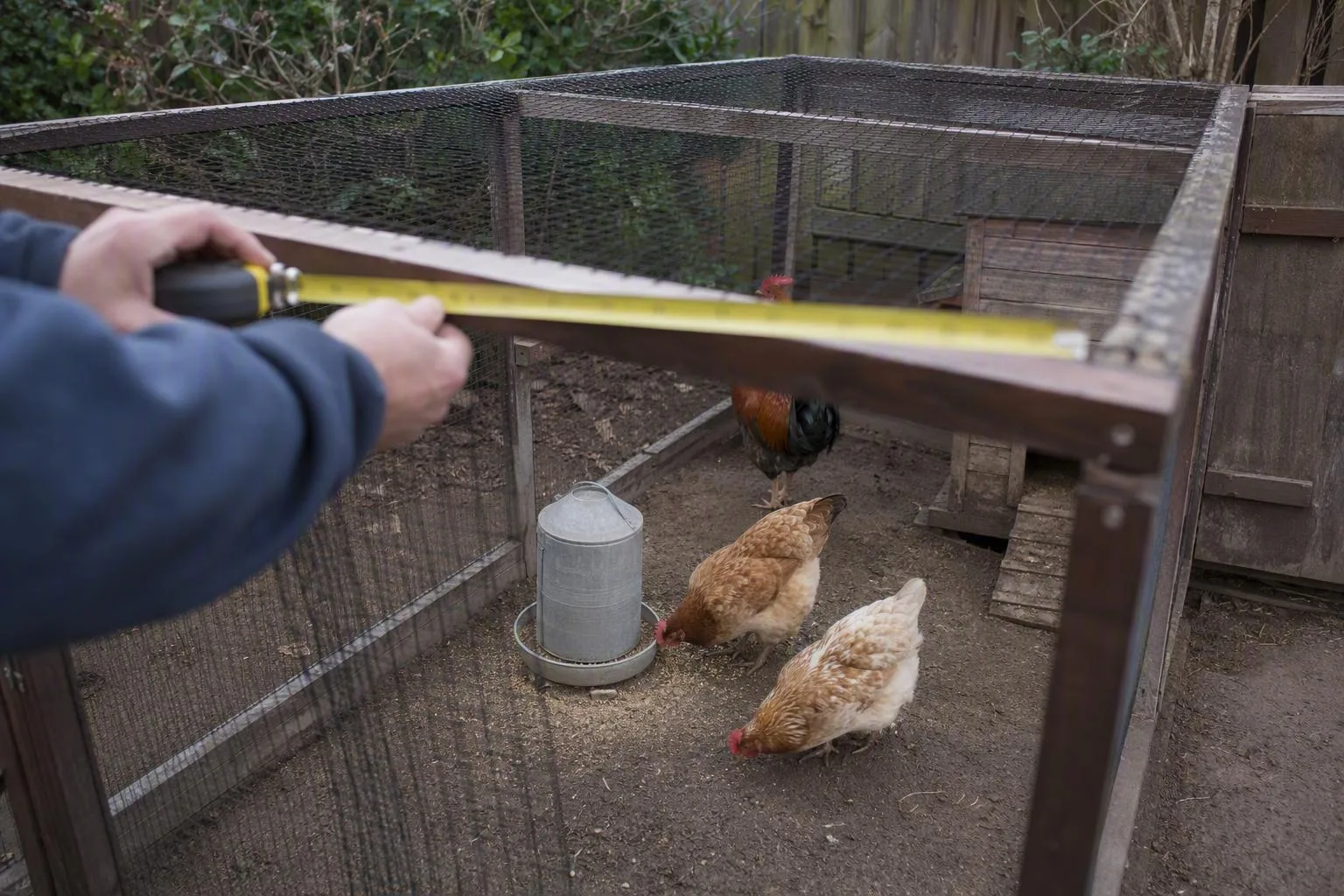
For housing, the planning floor I use is about 4 square feet of indoor space and 8–10 square feet of run space per bird. The mechanism matters more than the slogan. Indoor floor area lets birds turn, stretch, reach feed and water, and step away from pecking. Run area gives a subordinate bird somewhere to move when the rooster approaches. Wet ground, snow, long periods of confinement, and a small run all argue for more room.
Here’s the arithmetic for three common backyard plans:
| Flock plan | Total birds | Indoor area at 4 sq ft per bird | Run area at 8–10 sq ft per bird |
|---|---|---|---|
| 3 hens plus 1 rooster | 4 | 16 sq ft | 32–40 sq ft |
| 6 hens plus 1 rooster | 7 | 28 sq ft | 56–70 sq ft |
| 6 hens, no rooster | 6 | 24 sq ft | 48–60 sq ft |
A three-hen, hen-only flock would use 12 square feet indoors and 24–30 square feet of run at the same planning floor. These figures are starting points for a small residential flock. They don’t turn a poorly ventilated, muddy, or predator-exposed run into good housing.
Before a rooster enters the run: rules, crowing, and aggression
The biology is straightforward. The daily fit takes more thought. Use this go/no-go check before you bring home a male.
- Check permission first. Read your municipal animal code, zoning rules, lease, and HOA documents. A rule that permits hens may still restrict roosters, flock size, or nuisance noise. Save the exact wording and check again if you move.
- Assume crowing will travel. A rooster may crow before sunrise and may continue during daylight. A dark coop can manage light exposure, but it is not soundproofing. If your run sits beside a neighbour’s bedroom, plan for that sound rather than hoping the fence will absorb it.
- Judge the individual bird. Breed reputation can offer a clue, but it cannot promise a docile rooster. Handle him calmly, supervise children closely, and remember that spurs can scratch or puncture skin. A bird that repeatedly charges people needs separation and an honest rehoming plan.
- Let the run do the predator work. A rooster may give an alarm call or confront a threat. That can alert hens, but it isn’t dependable protection against hawks, dogs, raccoons, or other predators. Use a roof, strong mesh, secure doors, and latches you actually close. The best chicken predator protection starts with the structure.
- Plan introductions. An adult male is not a plug-and-play flock accessory. Keep a new bird separate while you assess health, then use a gradual, supervised introduction. The same principle applies if you add a companion for a lone rooster.
Can you eat eggs from a flock that has a rooster?
Yes, provided you collect and handle them under appropriate local guidance. Fertilization itself doesn’t make an egg unsafe. The practical difference is its hatching potential. An embryo develops when a fertile egg receives suitable incubation conditions, so normal kitchen collection keeps it in the food part of your routine. Check current backyard egg food-safety guidance if your storage or selling rules are unclear.
Will a rooster protect hens from hawks, raccoons, or dogs?
He may sound an alarm, herd hens toward cover, or confront a threat. I would treat those behaviors as useful warning signals, not a security system. A covered, securely latched run remains your dependable first layer of protection.
Can a rooster live alone without hens?
A rooster can remain alive by himself for a period, but I wouldn’t make solitary housing the long-term plan. Chickens are social flock animals, and isolation gives you a welfare problem without solving the original rooster question. Arrange compatible company or responsible rehoming. Don’t add a random bird without separation and a gradual introduction.
Do roosters need layer feed?
I avoid making high-calcium layer feed the sole ration for a nonlaying male. For a mixed flock, I prefer a complete all-flock ration suited to the birds’ stage, with oyster shell offered separately so laying hens can choose it. Read the product label, and ask a poultry nutrition professional about a product-specific choice if your feed is unusual or your birds have health problems.
Your action this week: Count the hens you genuinely intend to keep, multiply the total bird count by the space figures above, and write down the current feed price per kilogram. Then choose one clear plan: hens only for eating eggs, or a named hatching route with fertile eggs, incubation space, and a brooder ready. If you choose chicks, review the brooder temperature for chicks guide before you set eggs or place an order.
Frequently Asked Questions
Can you eat eggs from a flock that has a rooster?
Yes. Fertilization itself does not make an egg unsafe to eat. Explain normal collection, storage, and local egg-handling guidance, and note that an embryo develops only when a fertile egg is kept under incubation conditions.
Will a rooster protect hens from hawks, raccoons, or dogs?
A rooster may give alarm calls or confront a threat, but he cannot reliably stop predators. Covered, securely latched housing and appropriately sized hardware cloth remain the primary protection.
Can a rooster live alone without hens?
A rooster can survive physically on his own, but chickens are social and isolation is not a good long-term flock plan. Recommend keeping compatible birds or arranging a responsible rehoming option rather than adding a random bird without quarantine and gradual introduction.
Do roosters need layer feed?
Avoid making high-calcium layer feed the sole ration for a nonlaying male. Explain the common all-flock approach and offering oyster shell separately to laying hens, while directing readers to the feed label or a poultry nutrition professional for product-specific guidance.