Introducing New Chickens to Your Flock: A 30-Day Plan
Day 30 is a checkpoint, not the first face-to-face meeting. When you're introducing new chickens to your flock, run two clocks: a 30-day quarantine, then a staged introduction that may take another 3-7 days or longer. A healthy-looking bird can pass a visual check and still need more observation, so don't let a calendar date open the gate by itself.
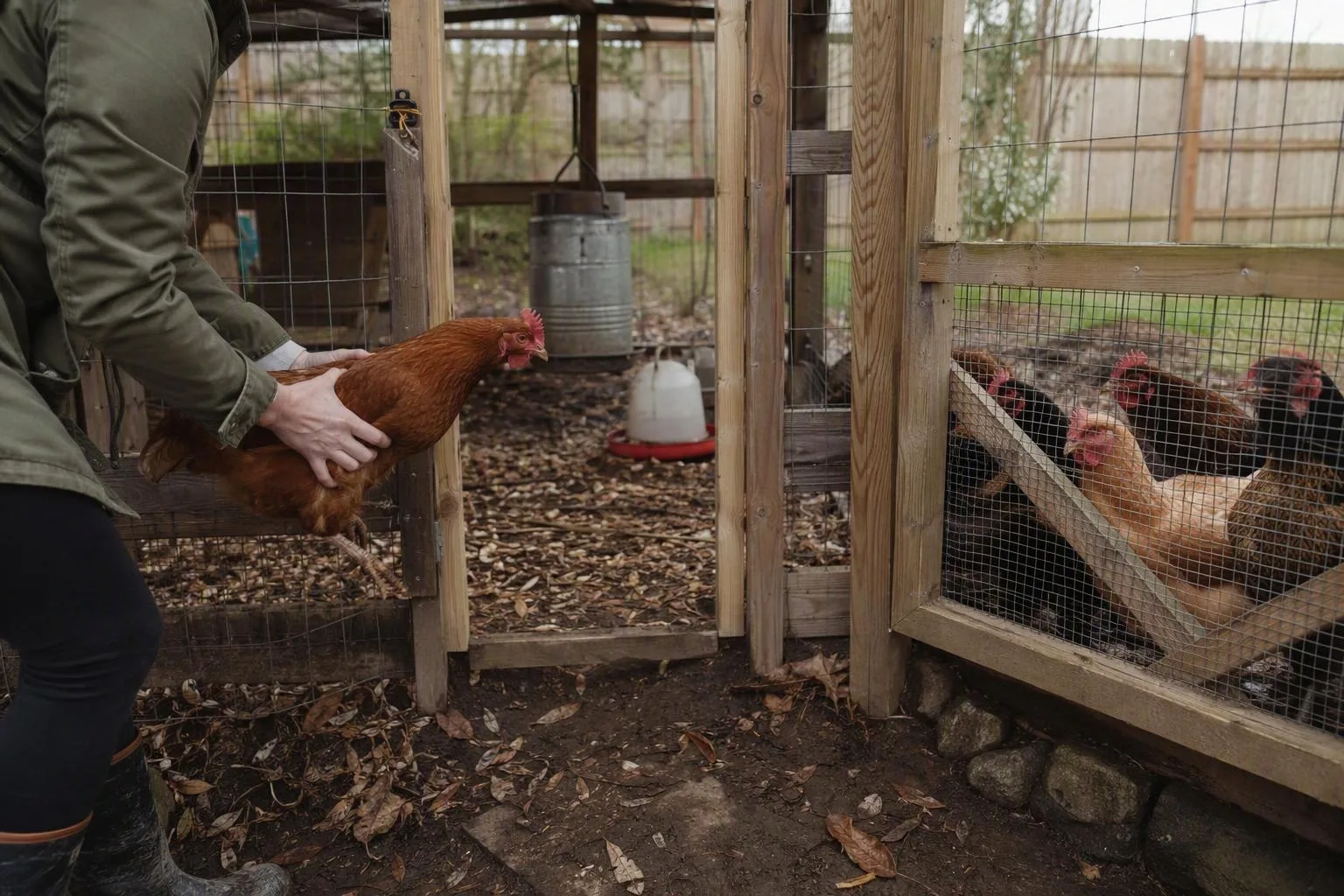
Day 30 is a checkpoint, not the first face-to-face meeting
For similar-size adult hens or pullets, use this calendar:
- Day 0: Bring the newcomers into a separate, secure pen. There is no direct contact with your resident flock.
- Days 1-7: Establish a health baseline. Watch appetite, droppings, breathing, movement, and activity.
- Days 8-21: Keep the barrier in place. Repeat the same checks even if the first week looks uneventful.
- Days 22-30: Review the health log and prepare the shared run, feeders, waterers, roost, and hiding breaks.
- Day 31 onward: Start supervised contact. Move through a barrier stage, short mingling sessions, and then longer shared access.
I use 30 days as a minimum risk-reduction window, not as proof that a bird is disease-free. The point is to give illness, parasites, transport stress, and poor body condition time to become visible before exposure works in both directions.
If symptoms appear at any point, pause the countdown. Chicks are a separate case because their brooder needs, size, and vulnerability don't match an adult-hen introduction.
Quarantine space starts with 4 square feet inside and 8-10 outside per adult
Build the quarantine pen as if the newcomer might need to stay there longer than planned. For each adult bird, allow at least 4 square feet of indoor floor space and 8-10 square feet in the outside run. Large breeds, hot weather, and extended confinement all justify more room.
That gives two newcomers about 8 square feet indoors and 16-20 square feet outside. Four newcomers need about 16 square feet indoors and 32-40 square feet outside. These are usable areas, not measurements that include a nest box, feeder, or bulky shelter taking up the floor.
When your property allows it, put the quarantine pen 30-50 feet from the main flock and give it separate airspace. A different building is preferable to a wire divider in the same coop. If distance is impossible, keep the equipment separate and understand that the arrangement offers less protection from shared dust, droppings, and air.
Give the pen its own feeder, waterer, scoop, and bedding tools. Wash your hands after handling the newcomers, change footwear or use dedicated boots, and care for your resident flock before you enter quarantine. That order reduces the chance of carrying contamination from the new birds back through the main run.
In my own small-backyard routine, I once treated the quarantine pen as temporary storage and put the feeder beside the only easy exit. The newcomer could eat, but a nervous bird had no comfortable way to move past it. I shifted the feeder, added a second retreat route, and stopped thinking of quarantine as a waiting box. It is housing, and the bird still needs to feel safe there.
Check the roof, latch, mesh, and ground edge before arrival. A separate pen is useful only if it is also predator-secure. The practical details in chicken run predator protection are worth borrowing for this temporary setup.
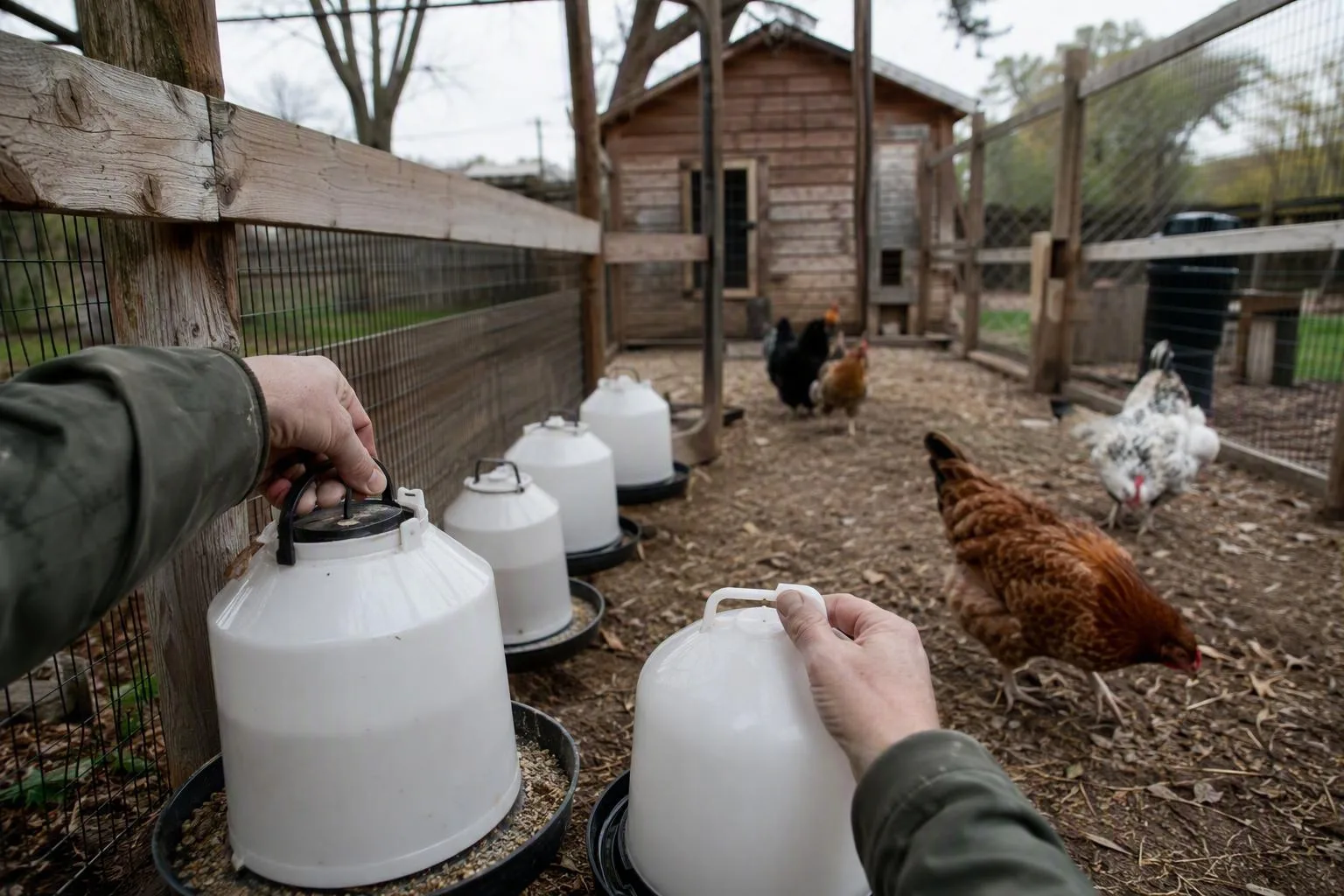
Days 1-7: write down normal before you interpret abnormal
For the first week, inspect for a baseline rather than hunting for a dramatic symptom. Make at least one written check each day. If you visit the pen at feeding times, use those visits to notice changes instead of relying on memory.
- Did each bird approach feed and water?
- Are the droppings broadly consistent in amount and appearance for that bird?
- Is breathing quiet, with no persistent sneezing, coughing, or open-mouth effort?
- Are the eyes clear, and are the nostrils free of discharge or swelling?
- Is the comb colour reasonably consistent with the bird's normal state?
- Does the bird walk evenly, grip the perch or ground, and use both legs?
- Is it alert and moving, rather than repeatedly sitting apart?
- Does the breast muscle and body condition feel stable rather than sharply reduced?
When the bird is calm, part feathers around the vent and look along feather bases for moving insects, pale clusters, irritation, or soiling. Check the skin without turning the examination into a wrestling match. For cleaning and parasite-control decisions, use chicken mites treatment as a separate reference rather than guessing from one speck of dust.
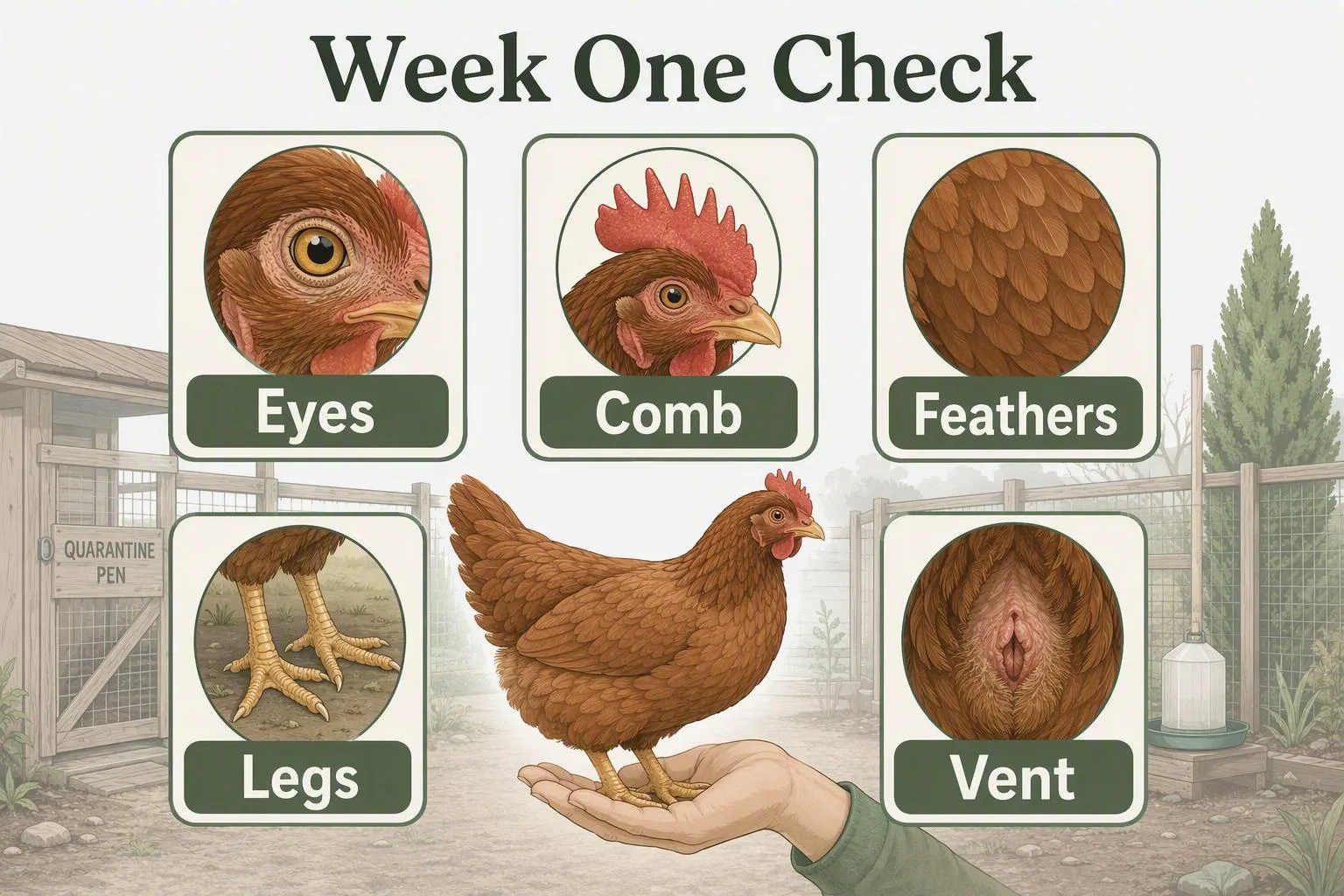
Stop the quarantine countdown and contact a poultry veterinarian or local extension office for persistent breathing trouble, facial swelling, marked lethargy, repeated abnormal droppings, weight loss, neurological changes, or a parasite burden that is increasing. The USDA APHIS backyard poultry biosecurity guidance can help you frame the biosecurity questions, while your state or provincial animal health office can direct you toward local testing contacts.
Days 8-21 are the quiet stretch—keep the barrier up
Days 8-21 are deliberately boring. A newcomer that eats well for a week has cleared an observation step, not the entire decision. Keep the birds fully separated, with no shared tools, bedding, feeders, waterers, or casual handling between pens.
Repeat the same checks through day 21. Progress stops for worsening droppings, weight loss, persistent sneezing or coughing, facial swelling, laboured breathing, lethargy, neurological signs, or a growing mite or lice problem. You don't need to diagnose the cause before you stop.
A veterinarian may suggest a fecal examination, other diagnostic testing, or a labelled treatment based on the signs and local disease risks. Don't medicate the whole flock by assumption. The right product, withdrawal instructions, and legal use can depend on the bird, the diagnosis, and the label.
Days 22-30: recalculate for the combined flock before you open a gate
Use the final week as a health gate and a space audit. I move forward only after at least 30 days with normal appetite, droppings, breathing, and activity, plus no new parasite or illness signs. If anything was abnormal, let a veterinarian guide the next step instead of treating day 30 as an appointment.
Calculate for every bird. Six resident hens plus two newcomers means eight birds. At 4 square feet each, that is about 32 square feet indoors. At 8-10 square feet each, the run needs about 64-80 square feet. The guide how much space do chickens need can help you check the rest of the layout, but the combined total is the figure that matters at the gate.
Allow 8-12 inches of roost space per bird. Set up at least two separated feed and water points so one dominant hen can't control the whole supply. Add a sight break, such as a low panel or wide perch structure, and make sure there is more than one way out of a corner. If the combined flock cannot fit comfortably, postpone introduction. More chasing will not create more floor space.
After quarantine, use three stages instead of one big release
Once the health gate is clear, make contact gradual. The goal isn't to prevent every peck. It is to give the birds room to sort out access without turning one newcomer into a trapped target.
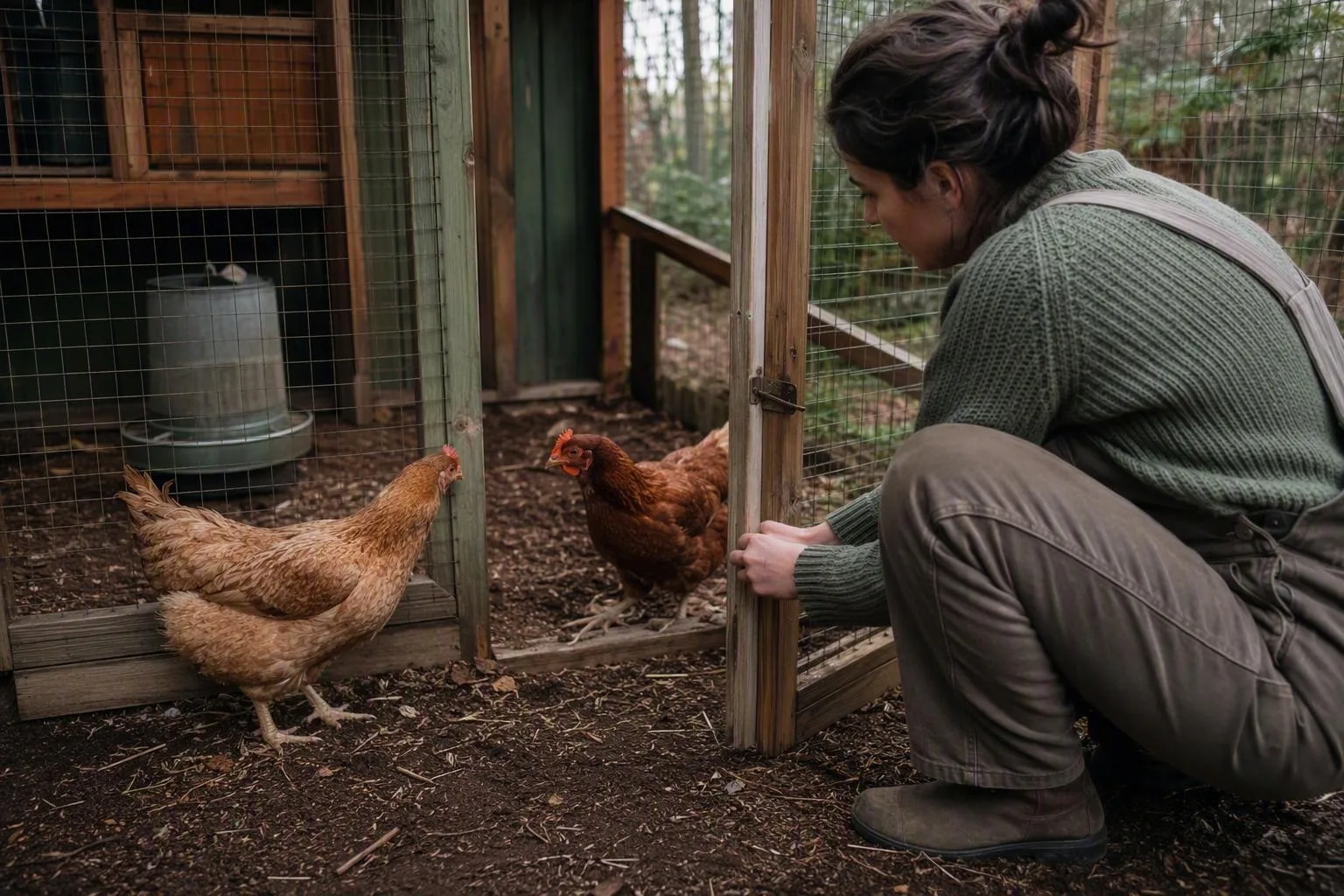
- Barrier stage: Put the groups beside each other behind secure wire for 1-3 days. They should see and hear one another but not reach through to grab toes, combs, or feathers. Check that both groups can eat, drink, perch, and retreat without being pinned against the barrier.
- Short mingling stage: I start the first session at around 15-30 minutes. That's my planning allowance, not a magic threshold. Use the largest or most neutral safe area available, stay present, and end the session while you can still separate birds calmly. Lengthen the next session when the birds can move away, reach feed and water, and stop pursuing after brief contact.
- Shared-access stage: Move toward shared daytime access after several calm sessions. I wait for 3-7 calm days before trusting shared nights, and I use the longer end when the run is cramped, one bird is alone, or there is a major age or size gap.
Adding two similar-size newcomers together can spread social pressure across more than one target, but it doesn't guarantee a smooth result. A single hen needs extra attention because every chase and peck is directed at her. Putting the new birds on the roost after dark may make the first evening look peaceful; it is not a substitute for watching the next morning, when feed and territory become contested.
The stop rules: blood, cornering, blocked resources, or illness
Use one practical test during every session: can each bird move away, reach feed and water, and settle somewhere out of sight? Brief pecks, short chases, raised hackles, and temporary squawks can occur during flock sorting when every bird still has an exit.
Separate birds immediately when you see blood, an open wound, pinning, repeated attacks to the head or vent, cornering, collapse, or a newcomer being prevented from eating or drinking. Remove the injured bird to a quiet enclosure and inspect it under good light. Don't return it just because the wound looks small; a bird that has become a fixed target may be attacked again.
Seek veterinary guidance for deep wounds, eye or vent injuries, heavy bleeding, laboured breathing, severe lethargy, neurological signs, multiple sick birds, or sudden unexplained illness. If you cannot make the run safe with more space, another exit, and separated resources, stop the introduction and rebuild the setup.
Four side cases that need a different decision
Can I introduce chicks to adult hens using the same 30-day plan?
No. Keep chicks in a separate brooder with chick-level warmth. My starting plan is around 90-95°F in week one, then lowering the warm area by about 5°F each week while watching chick behaviour. Wait until the young birds are fully feathered and much closer to the adults in size before direct meetings. The guide brooder temperature for chicks covers that separate stage.
Can I add just one new hen?
You can, but design for one bird being the obvious target. Use a longer barrier phase, extra space, separated feed and water, and supervised sessions. Don't rely on a second bird appearing to distract the flock; adjust the setup you have.
Do I still need quarantine from a reputable breeder?
Yes. A trusted source can improve your starting confidence, but it doesn't erase transport stress, exposure before purchase, or a problem that has not shown itself yet. Keep the bird separate for at least 30 days and extend the plan if signs appear.
Can I quarantine new chickens in the same coop with a wire divider?
A divider prevents direct contact, but it does not create full separation from shared air, dust, droppings, or equipment. A separate building and airspace are safer. If a divider is your only option, use dedicated tools, increase cleaning discipline, and ask a veterinarian or extension office how much protection that arrangement provides locally.
This week, measure the quarantine pen and the shared run before you buy or move a bird. Write day 0 and day 30 on your calendar, set aside dedicated equipment, and check chicken run predator protection before the crate arrives. That small bit of planning gives your flock a safer path from quarantine to shared space.
Frequently Asked Questions
Can I introduce chicks to adult hens using the same 30-day plan?
No. Chicks need a separate brooder, starting around 90-95°F at chick level in week one and dropping about 5°F per week, and they should not meet adult birds until they are fully feathered and much closer in size.
Can I add just one new hen to an established flock?
You can, but one newcomer is often easier to target than two or more similar-size birds added together. Use a longer barrier phase, extra space, multiple feeding points, and supervised sessions.
Do I still need to quarantine a chicken from a reputable breeder?
Yes. A trusted source lowers some uncertainty but does not remove transport stress, latent illness, or exposure before purchase. Keep the bird separate for at least 30 days and extend the plan if signs appear.
Can I quarantine new chickens in the same coop with a wire divider?
A divider helps prevent direct pecking but does not provide full separation from shared air, dust, droppings, or equipment. A separate building and airspace are safer; if that is impossible, explain the reduced protection and consult a poultry veterinarian or extension office.