Prolapsed Vent in Chickens: Causes, Care, and Vet Signs
When you lift a hen and see red or pink tissue protruding from the vent, treat it as a same-day problem. It may start with straining to lay, but once tissue is exposed, drying, bleeding, and flock pecking can make the situation worse quickly.
Here’s the useful distinction: a dirty vent leaves material on the feathers; a prolapse leaves tissue outside the opening. Your first job isn’t to identify the exact cause. It’s to get her away from the flock and arrange veterinary advice.
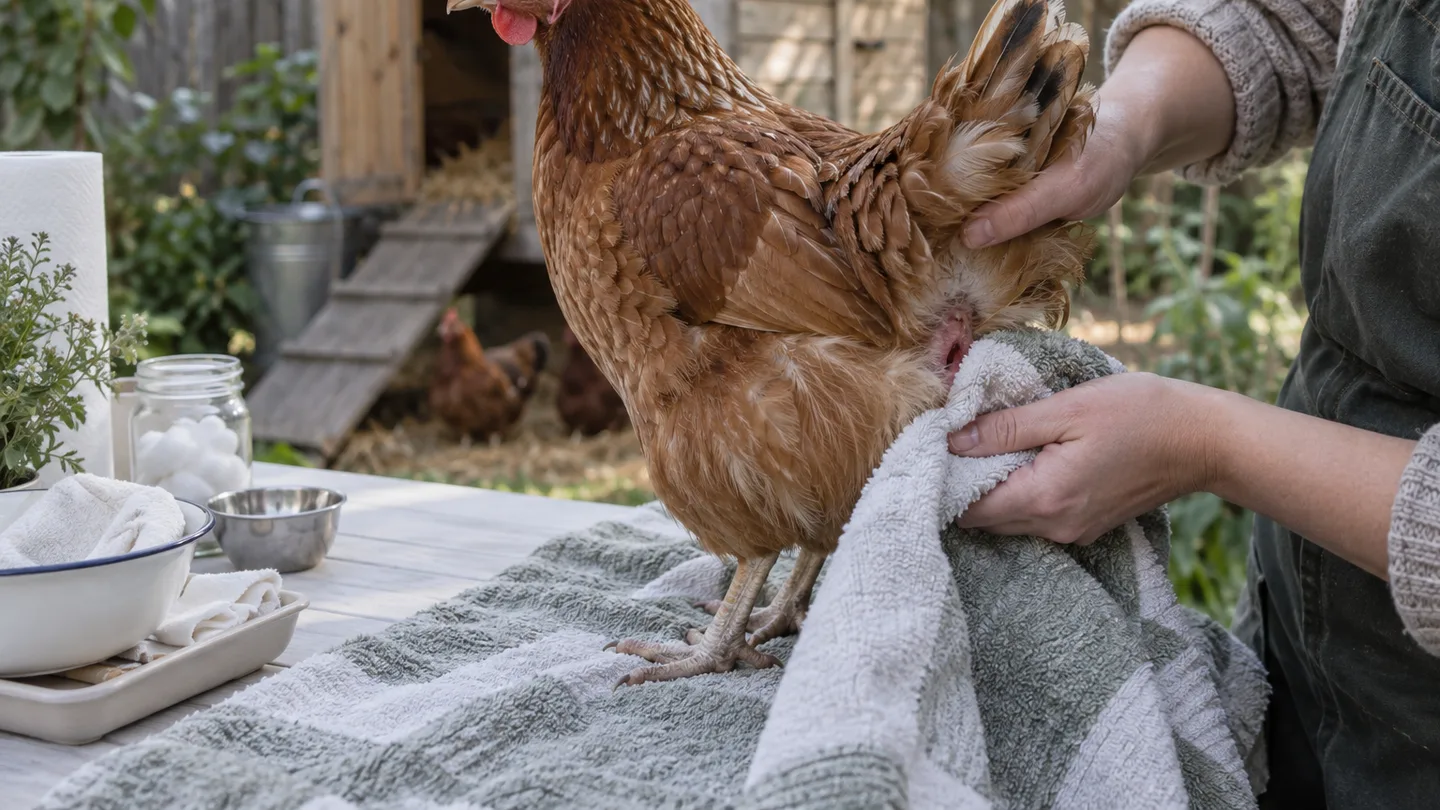
The red tissue tells you this is a same-day problem, not a wait-and-see laying issue
What keepers call a prolapsed vent may involve cloacal tissue, the lower oviduct, or both. You don’t need to identify which structure is exposed before calling a poultry or avian veterinarian. Look for a moist red, pink, or swollen mass protruding from the vent, often with repeated pushing or a tail held low.
- Likely prolapse: tissue itself is outside the opening. It may look folded, tubular, swollen, or damp.
- Vent gleet or a dirty vent: droppings, wet feathers, or crusting surround the vent, but there may be no tissue protruding.
- Egg at the opening: you may see a smooth pale shell rather than soft tissue. Don’t pull on it.
These signs can overlap. A hen with diarrhea may have a dirty, inflamed vent and then begin straining. Mites can also irritate the area; if you see crusts, restless roosting, or irritation in several birds, compare the pattern with chicken mites treatment. Still, visible tissue is the point at which I stop treating this as a cleaning problem.
A visible prolapse deserves same-day veterinary advice. Seek emergency help for active bleeding, tissue that is purple, grey, brown, or black, severe straining, collapse, marked weakness, inability to pass droppings, or an egg that appears stuck. Don’t wait for the tissue to darken before acting. Darkening can mean the exposed tissue is drying or losing healthy circulation.
The first 30 minutes: isolate her, stop pecking, and protect the exposed tissue
While you’re making the call, your job is containment and protection. Keep handling brief. A prolapsed hen needs a clean, dim, quiet place where flock mates can’t see or peck at the exposed tissue.
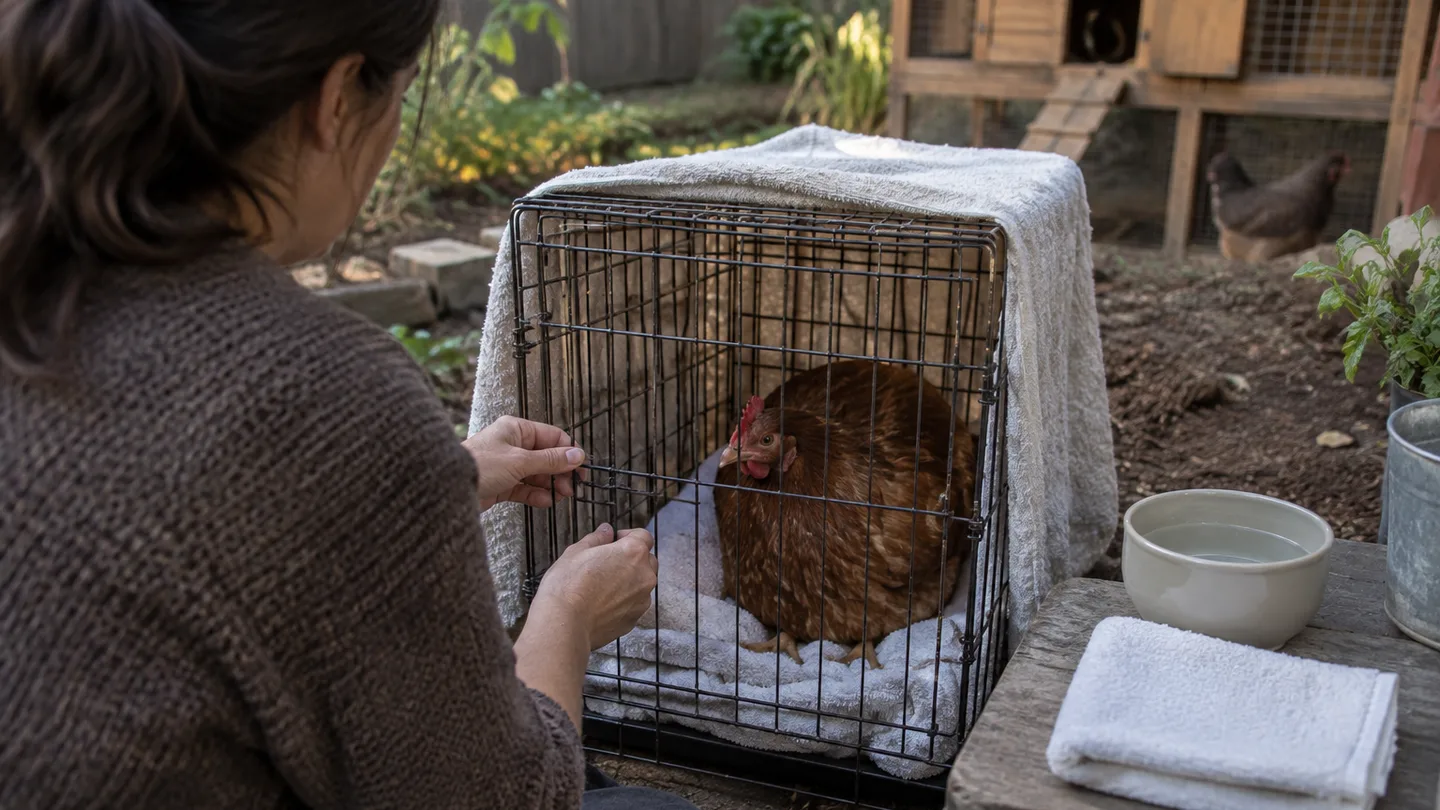
- Move her gently. Use a small pet carrier or box with a clean towel. Support her body without pressing on the vent.
- Reduce stimulation. Cover part of the carrier so she settles, but leave plenty of airflow. Keep her away from direct heat and drafts.
- Rinse, don’t scrub. If the tissue is dirty, use sterile saline if you have it. Clean lukewarm water is a temporary alternative. Let the liquid loosen debris rather than rubbing the tissue.
- Ask before lubricating. A veterinarian may advise a small amount of plain, water-soluble lubricant to prevent drying. Don’t use a product containing anesthetic, fragrance, steroid, or other active ingredients unless a vet specifically directs you to.
- Offer water within reach. If she is alert, make water easy to access. Don’t force water, food, or supplements into her mouth.
In my own backyard setup, I once left a newly isolated hen in a crate where the flock could still crowd the wire. She kept turning toward them and straining. I moved the crate into a quiet utility room, covered three sides, and replaced loose bedding with a folded towel. That did not cure the prolapse, but it stopped the social pressure and made it easier to watch her without repeatedly handling her.
Do not pull tissue, cut it, apply unlabelled medication, or repeatedly force the prolapse back inside. A brief attempt at cleaning is bridge care. It isn’t a multi-day treatment plan. If a vet recommends replacement or another procedure, follow that instruction rather than improvising from a home remedy.
Find the pressure behind it: large eggs, onset of lay, straining, and repeat prolapse
A prolapse usually has a trigger plus a hen who is vulnerable to that trigger. The trigger may be reproductive, digestive, nutritional, or flock-related.
- Onset of lay: a young hen beginning production may strain during an early laying attempt, especially if the first eggs are large for her body.
- Large or misshapen eggs: an oversized egg can increase pressure as it passes. Egg binding or a retained egg can keep the hen pushing.
- Digestive upset: constipation, diarrhea, or another condition that causes repeated straining can irritate the vent and surrounding tissue.
- Nutrition and body condition: a complete layer ration is a sound starting point. Panic-mixing extra calcium or supplements is not a substitute for finding the actual cause.
- Flock pecking: pecking may not start the prolapse, but once tissue appears it can turn a small problem into a damaged one.
My own caution on body size is that obesity or poor body condition may make movement and laying less forgiving, but body size alone doesn’t explain every prolapse. Check the hen’s age and laying stage, recent abnormal eggs, droppings, appetite, drinking, access to complete feed, and whether another hen has similar digestive or reproductive signs.
If you’re unsure whether she is straining around an egg, use the warning signs in egg bound hen symptoms as a comparison, but don’t delay a vet call while trying to make the distinction at home.
Use a 24–48-hour log to judge improvement—not a single glance
A monitoring window makes sense only after a veterinarian has spoken with you or examined the hen and has specifically advised observation. It should never be used to postpone the first call.
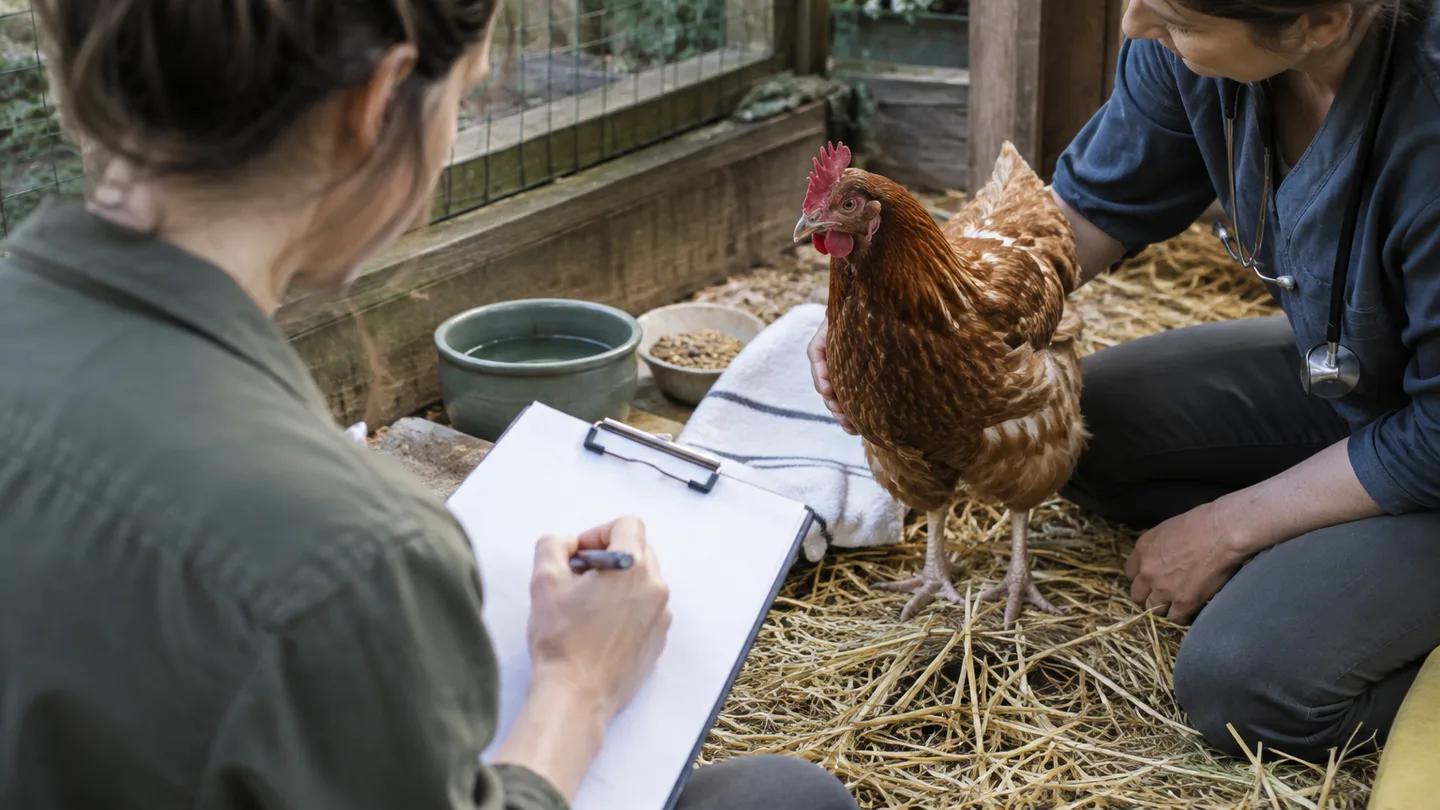
Keep the log short and factual. Note:
- Whether the tissue is moist, less swollen, bleeding, or changing colour.
- Whether it retracts and stays inside without renewed straining.
- Whether she is standing normally, alert, drinking, and eating.
- Whether she is passing normal droppings.
- Whether an egg passes, appears stuck, or is followed by more pushing.
Improvement should look like less swelling, healthy-looking moist tissue, normal posture, and less straining. A tissue mass that briefly retracts and then comes back out is not recovery. It means the underlying pressure or damage is still present.
If there is no clear improvement within 12–24 hours, contact the vet again rather than extending home observation. Escalate sooner for recurrence, worsening swelling, drying tissue, new bleeding, inability to pass droppings or an egg, weakness, or refusal to eat. The 24–48-hour window is a way to organize follow-up after professional advice, not a safe waiting period for every hen.
Vet now, vet today, or bridge care only? The signs that decide—and how to reduce recurrence
Use this decision split:
- Emergency care now: active bleeding, purple or black tissue, collapse, severe weakness, severe straining, suspected egg binding, or inability to pass droppings.
- Same-day veterinary care: any visible prolapse, even if the hen is still eating and the tissue is pink.
- Bridge care only: a clean, quiet isolation space and gentle moisture protection while you follow a vet’s instructions. Bridge care is not permission to manage a recurring prolapse indefinitely at home.
A veterinarian may assess tissue viability, look for an egg or infection, replace the tissue, use temporary support or retention sutures, prescribe labelled medication, or recommend a procedure if the tissue is badly damaged or the prolapse keeps returning. The right option depends on what is physically present when the hen is examined. For a named reference to discuss at the appointment, the Merck Veterinary Manual entry on egg binding in poultry is a useful starting point, but it doesn’t replace an examination of your hen.
To reduce recurrence, keep her separate until the tissue is fully retracted and she is eating, drinking, and passing droppings normally. Then review the flock setup before reintroduction:
- Block flock mates from pecking at her during recovery.
- Provide private, clean nest space so she is not repeatedly disturbed while laying.
- Keep a complete layer ration and clean water available.
- Avoid sudden increases in lighting intended to push laying.
- Check body condition without making rapid feed changes.
- Clean soiled bedding and surfaces before return; the practical sequence in how to clean a chicken coop can help.
My strongest judgment from backyard-scale keeping is this: a repeat prolapse deserves a new veterinary and flock-management decision. Don’t simply push it back in again because that worked for a few minutes last time. The recurrence may be telling you that an egg, infection, tissue injury, or production pressure has not been addressed.
Four questions keepers ask about a prolapsed vent
Is a prolapsed vent contagious to other chickens? No. The prolapse itself is a mechanical reproductive problem, not something that spreads by contact. But diarrhea, parasites, feed problems, or lighting changes can affect more than one hen, so check the rest of the flock if similar signs appear.
Can you eat eggs from a hen with a prolapsed vent? Discard eggs that are cracked, heavily soiled, or contaminated. If a veterinarian prescribes medication, follow the product label and the vet’s withdrawal instructions rather than using a generic waiting period. The FDA Animal & Veterinary withdrawal guidance is a useful official reference for why product-specific instructions matter.
Can a hen lay eggs again after a prolapsed vent? Some hens resume laying after treatment, but recurrence is possible and the outcome cannot be promised. Ask your veterinarian when, or whether, she should return to the laying flock. Don’t use extra light to push her back into production.
Does every prolapsed vent need surgery? No. Treatment depends on how long the tissue has been exposed, whether it is still viable, whether an egg or infection is involved, and whether the prolapse returns. A veterinarian decides whether replacement, support, medication, or a procedure is appropriate.
This week, put a clean carrier, towel, saline, and your poultry vet’s number in one easy-to-reach place. If you keep laying hens, read egg bound hen symptoms next so you can recognize straining before it becomes a vent emergency.
Frequently Asked Questions
Is a prolapsed vent contagious to other chickens?
No. Prolapse itself is a mechanical reproductive problem, but diarrhea, parasites, diet issues, or production-management changes can affect more than one hen, and flock mates can injure the exposed tissue by pecking.
Can you eat eggs from a hen with a prolapsed vent?
Discard cracked, heavily soiled, or contaminated eggs. If a veterinarian prescribes medication, follow the product label and the vet’s withdrawal instructions rather than using a generic waiting period.
Can a hen lay eggs again after a prolapsed vent?
Some hens resume laying after treatment, but recurrence is possible. Do not push production with extra light, and ask the veterinarian when or whether returning her to the laying flock is appropriate.
Does every prolapsed vent need surgery?
No. Treatment depends on how long the tissue has been exposed, whether it is viable, whether an egg or infection is involved, and whether the prolapse keeps returning. A veterinarian decides whether replacement, support, medication, or a procedure is needed.