Plants Toxic to Chickens: 12 Backyard Dangers to Remove
Four places deserve a careful walk before you pull anything. A hen can reach a suspect plant through a run gap, a dropped berry, a dug-up bulb, or a bag of fresh clippings. Here are 12 backyard plants and plant groups I would keep outside chicken reach, plus the removal and vet-call rules that matter more than memorising a list.
My own small-flock rule is blunt: if I can’t name a plant, I don’t let a hen sample it. That isn’t a claim that every unknown weed is poisonous. It’s a judgment about timing. A temporary barrier is easier to manage than identifying plant material after a bird becomes weak.
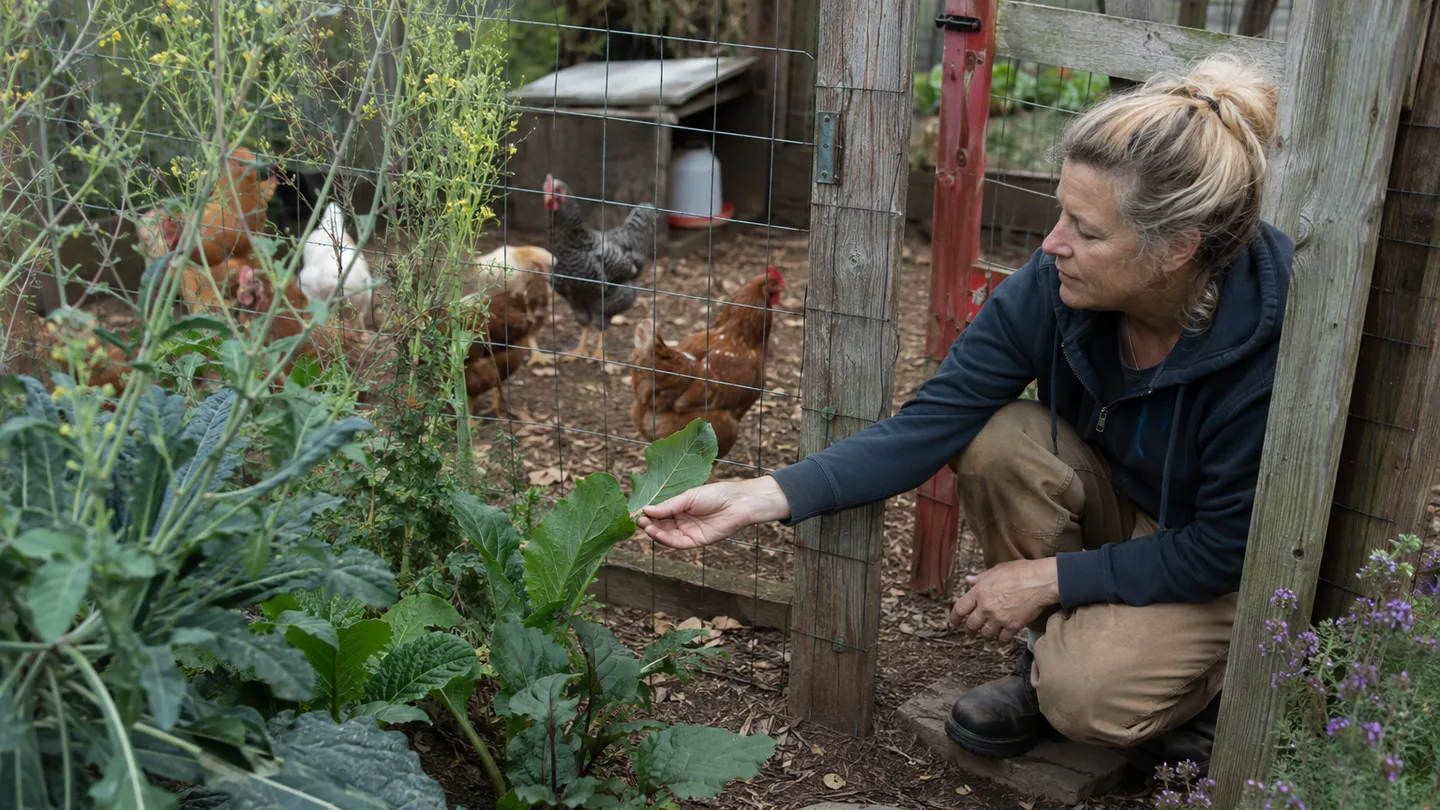
Before you pull anything: inspect the four ways a hen reaches a toxic plant
Start with access, not Latin names. Walk the yard slowly and check these four zones:
- Inside the run: Look for low leaves, fallen fruit, exposed bulbs, and plants growing through wire.
- The fence line: Check overhanging branches, hedge clippings, berry drop, and plants growing on the neighbour’s or roadside edge.
- Compost and scrap areas: Inspect pulled weeds, roots, garden trimmings, and bags left open near the flock.
- The transition zone: Check gate gaps, open doors, and the few feet your free-ranging chickens explore beyond the run.
Photograph an unfamiliar plant before digging it up. Include the whole plant, a close view of the leaves, the stem, and any flower, berry, bulb, or seed head. Common names change from one region to another, so use a local identification service before deciding whether the plant needs removal, a fence, or a vet call.
Keep this inspection beside your chicken coop requirements. A sound coop does not make an overhanging hedge or an open compost bin safe.
Plants 1–6: oleander, azalea, foxglove, yew, castor bean, and lily of the valley
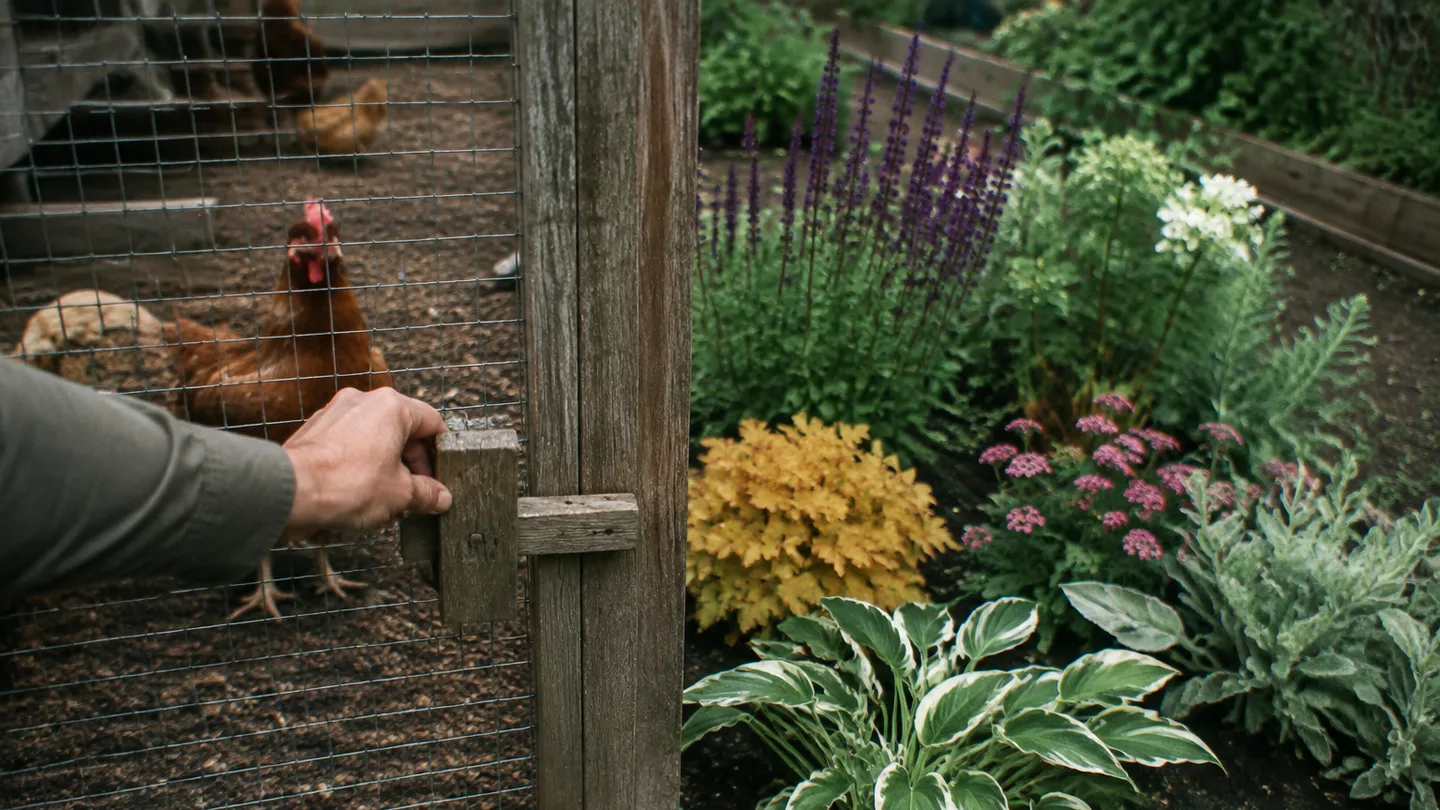
These six ornamentals deserve a do-not-sample rule. Chickens may ignore a shrub for months, then investigate it after confinement, boredom, rain, pruning, or a change in available forage.
| Plant and botanical search name | Material I would keep away | Look-alike warning and practical action |
|---|---|---|
| Oleander, Nerium oleander | Leaves, flowers, stems, sap | Can resemble other narrow-leaved hedge shrubs. Remove it or use full exclusion. |
| Azalea or rhododendron, Rhododendron spp. | Leaves and flowers | Garden cultivars vary in appearance. Keep the whole shrub outside bird access. |
| Foxglove, Digitalis purpurea | Leaves, flowers, seed heads | Rosette foliage can be confused with other broad leaves. Remove before seed heads mature. |
| Yew, Taxus spp. | Needles, bark, and seeds inside red arils | It can look like an ordinary evergreen hedge. Block the hedge and collect fallen material. |
| Castor bean, Ricinus communis | Seeds, seed pods, leaves, sap | Large leaves make it easy to spot, but dropped pods are the concern. Use full exclusion. |
| Lily of the valley, Convallaria majalis | Leaves, flowers, and berries | Spring foliage can be mistaken for other woodland plants. Remove or fence the entire patch. |
Use these names as search terms, not proof of identity. If the plant is beside a neighbour’s fence, don’t trespass or destroy it. Photograph it, block your birds’ access, and compare the images with regional Cooperative Extension plant identification resources.
Plants 7–12: pokeweed, jimsonweed, poison hemlock, daffodil, autumn crocus, and tomato plants
The second group is easier to meet casually. Weeds appear in disturbed soil, bulbs surface after scratching, and tomato beds shed leaves into a run. I treat all six as a reason to control access until the species and plant part are clear.
| Plant and botanical search name | Material I would keep away | Look-alike warning and practical action |
|---|---|---|
| Pokeweed, Phytolacca americana | Berries, roots, seed heads, unprepared leaves | Young plants can resemble edible greens. Dig it out before berries drop. |
| Jimsonweed, Datura stramonium | Leaves, flowers, and seeds | It is a broadleaf weed with showy flowers. Bag the plant rather than mowing it. |
| Poison hemlock, Conium maculatum | Foliage, stems, and seeds | Parsley-family weeds can be difficult to separate by memory. Keep birds away and confirm locally. |
| Daffodil, Narcissus spp. | Bulbs, leaves, and flowers | Bulbs can be exposed by scratching. Remove bulbs from the run edge, not just the flowers. |
| Autumn crocus, Colchicum autumnale | Whole plant material | It is not a true crocus and may be confused with other bulb plants. Use full exclusion. |
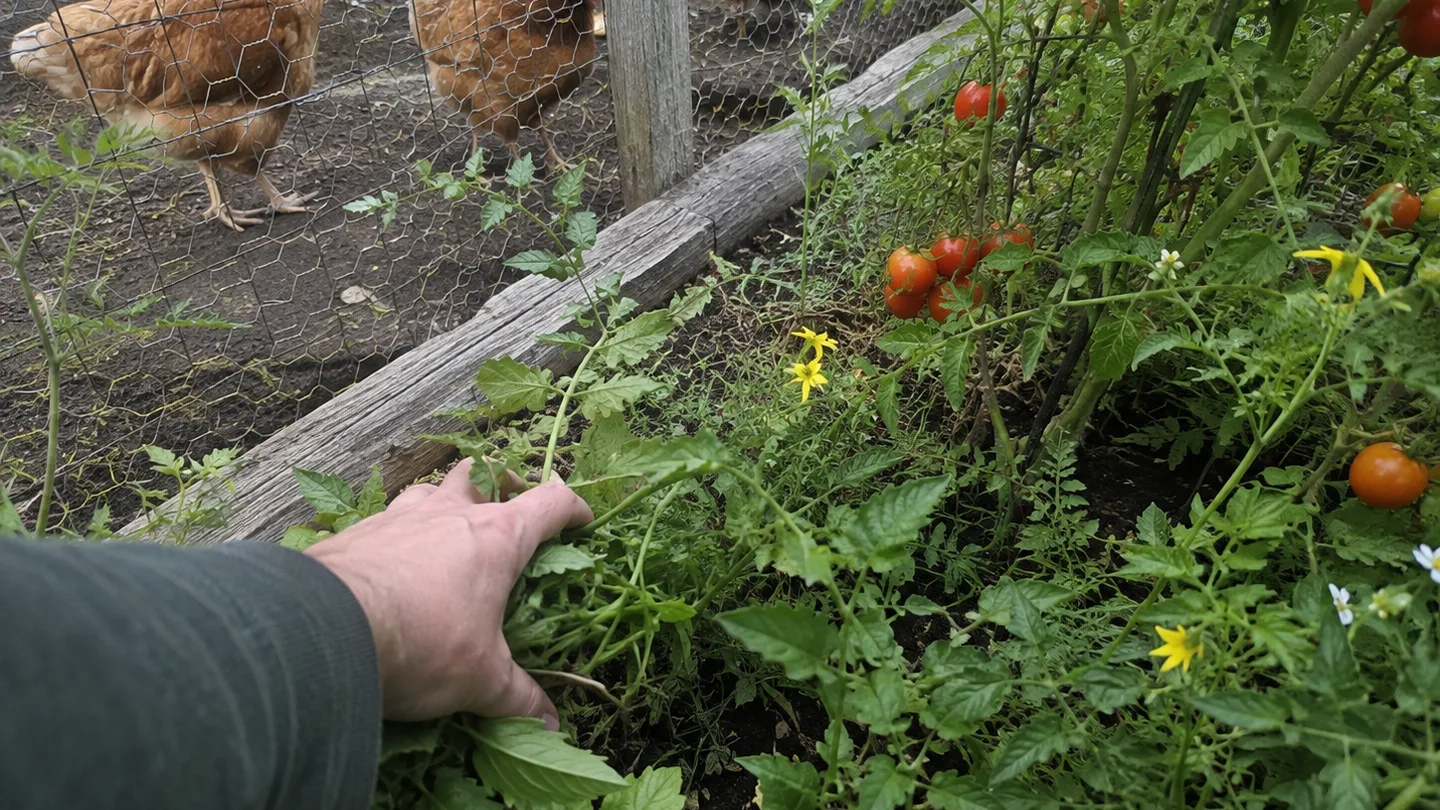
| Tomato, Solanum lycopersicum | Leaves, stems, and unripe green fruit | Keep the plant out of the run. Handle ripe red fruit separately as a limited treat. |
Tomato plant parts are a useful reminder that the plant name alone is not enough. A ripe red tomato is commonly offered to hens in small pieces, while I keep leaves, stems, and unripe fruit out of the flock’s feed and scratching area.
The risky part changes the answer: berries, bulbs, seeds, sap, and clippings
There is no universal safe-bite rule for a suspect plant. A bulb is not the same exposure as a fallen leaf. A seed head is not the same as a clipped stem. Plant part, maturity, species, and preparation can all change the risk, and you usually won’t know the dose a hen swallowed.
Fresh and dried material both deserve caution. Drying is not a reliable safety test. Fallen berries are still available to a scratching bird, and a bulb dug up by a hen becomes a small object she can peck repeatedly. Sap also creates a handling problem for you, especially if it gets on skin or into an eye.
Mower clippings are a particularly poor place to guess. They mix several plants together, hide berries and seed heads, and spread material across the whole run.
Rule worth pinning: if you can’t name it, don’t feed it; if you can’t remove it, block the beak and recheck the ground.
A 30-minute removal plan: confine birds, clear roots, and block the regrowth
Use the first 30 minutes for containment. This is a triage window, not a promise that every root can be cleared before lunch.
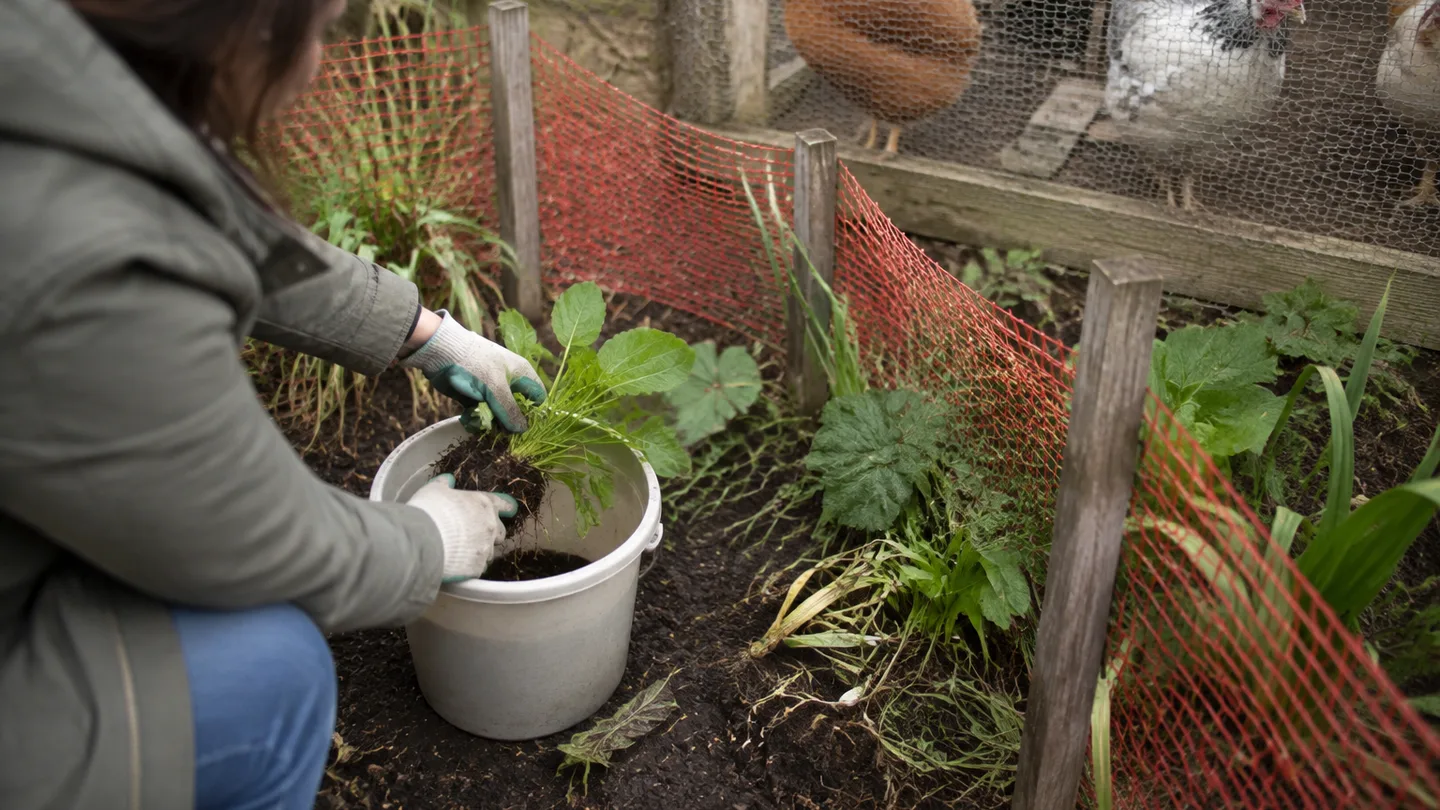
- Confine the flock. Shut the pop door or move the birds to a clean section. Don’t pull a plant into the run while hens are watching and pecking at the pieces.
- Photograph before disturbing it. Capture the plant’s shape, leaves, flowers, berries, and stem. Save the photos with the date and location.
- Put on protection. Use gloves and long sleeves. Add eye protection if the plant is sappy or you may be cutting it. Keep children and pets away from the work area.
- Clear the visible material. Collect leaves, flowers, berries, seed heads, and clipped stems. Bag them as you go instead of laying them on the soil.
- Deal with the underground part. Dig bulbs or substantial roots where relevant. Don’t use a mower or rototiller to scatter a suspect plant into smaller pieces.
- Dispose of it out of reach. Follow local green-waste rules. An open compost bin is not disposal if your hens can scratch through it.
- Clean up and recheck. Wash tools and boots, remove gloves carefully, and inspect the original spot for shoots, berries, or roots left behind.
For a six-hen side run beside a hedge, I’d use a temporary panel made from 1/2-inch hardware cloth or a solid sheet while the plant is being identified. That blocks beak access from the bird side, but it does not solve berries falling from above or roots pushing back through the soil. For the fence itself, compare the trade-offs in hardware cloth vs chicken wire before buying materials.
After the plant is gone, add the debris check to how to clean a chicken coop. Boots and tools can carry leaves into the area you just cleared.
Symptoms by urgency: when a hen needs a same-day vet call
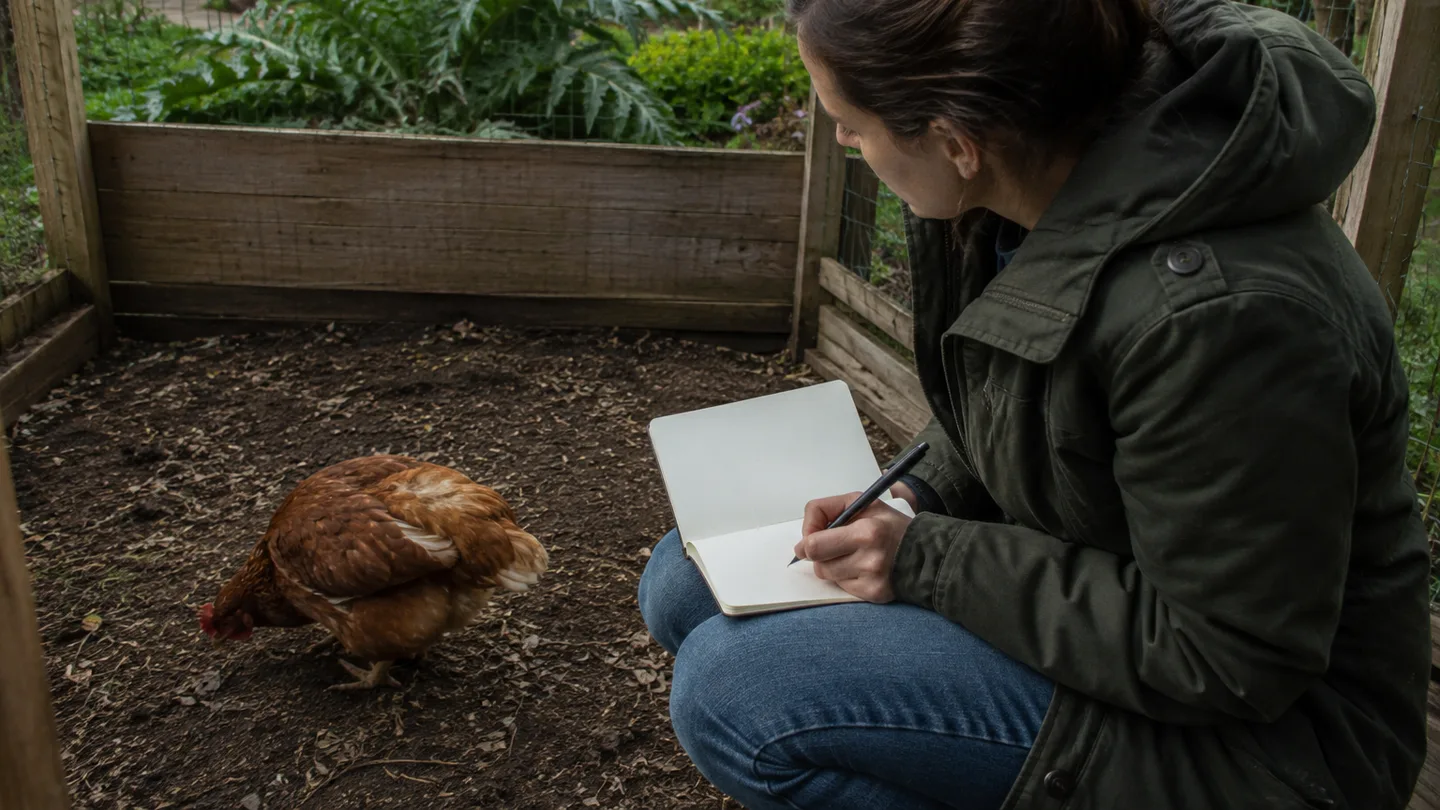
A suspected exposure changes the job. Symptoms can overlap with heat stress, injury, infection, or other feed problems, so a sign cannot identify the plant by itself. But severe neurologic or breathing changes are not wait-and-see signs.
| What you see after possible access | Action |
|---|---|
| Tremors, severe wobbling, seizures, or collapse | Emergency call to a poultry veterinarian or available veterinary poison-control service. |
| Breathing effort, open-mouth breathing, or sudden inability to stand | Emergency guidance now. Move the bird away from the source while you call. |
| Weakness, unusual salivation, diarrhea, or refusal of feed or water | Same-day call when a suspect plant was accessible, especially if more than one bird is affected. |
| Known ingestion but no signs yet | Call promptly. Don’t wait for symptoms to decide whether the exposure matters. |
Onset may be rapid or delayed, and a quiet bird is not automatically a safe bird. Tell the vet what changed, keep the flock away from the source, and follow the instructions you receive. Do not try to balance a home antidote from internet advice.
If a chicken ate a suspect plant: the five details to collect in the first 30 minutes
Good information makes the first call more useful. Collect these five details without delaying urgent care:
- End access. Move the whole flock away from the plant and keep the suspect material in place if removing it would create more exposure.
- Get clear identification material. Take photos of the whole plant and close-ups. ASPCA’s toxic and non-toxic plant database can help with an ornamental plant cross-check, but it is not a substitute for poultry-specific veterinary advice.
- Preserve a sample safely. If you can do so without bare-hand contact, place a small sample in a sealed bag. Never carry loose berries or sap-covered pieces in your pocket.
- Write down the exposure. Record which bird was involved, which plant part was eaten or pecked, the estimated amount, and the time. If you don’t know the amount, say that plainly.
- Call the vet and follow directions. Ask where to take the bird and whether the service wants the sample or photos. Keep the bird quiet during transport.
Don’t induce vomiting. Don’t force fluids, charcoal, oils, or medication unless a veterinarian specifically directs it for that bird and exposure. Irritating sap should be handled with gloves, and exposed skin should be washed promptly.
Recheck at four seasonal trigger points: spring bulbs, summer clippings, fall berries, and winter access
A safe yard can become unsafe without a new plant being purchased. Seasonal work changes what is on the ground and where a hungry or bored hen spends her time.
- Spring: Inspect new shoots, flowering bulbs, and soil disturbed by scratching. Mark patches before the leaves disappear.
- Summer: Keep pruning piles and mower bags away from the run. Don’t toss mixed clippings over the fence as bedding or entertainment.
- Autumn: Clear fallen berries, seed heads, and leaf piles where hens forage. Check beneath hedges, not just the open lawn.
- Winter: Inspect stored bulbs, houseplant cuttings, greenhouse scraps, and temporary fencing. Birds often explore corners they ignored during the busy season.
This week, walk the fence line with this 12-plant list on your phone. Photograph the first plant you can’t name, then remove it or block access before letting the flock range there again. Once the plant check is done, add that route to your normal coop-cleaning day.
Common questions about plants toxic to chickens
Do chickens know which plants are poisonous?
No reliable avoidance instinct should be assumed. Hunger, novelty, confinement, and individual behaviour can change what a hen samples. Physical exclusion is safer than asking the flock to make the identification for you.
Are ripe tomatoes safe if tomato leaves are on the remove list?
Plant part matters. Ripe red tomato fruit is commonly offered in small pieces, but leaves, stems, and unripe fruit should stay out of the run and feed. Don’t leave tomato vines where hens can strip them.
Can I compost toxic plant trimmings?
Only if the compost is completely inaccessible to your chickens and local disposal rules allow it. Suspect trimmings should not become bedding, run mulch, or an open pile that birds can scratch through.
Frequently Asked Questions
Do chickens know which plants are poisonous?
No reliable avoidance instinct should be assumed. Hunger, novelty, confinement, and individual bird behaviour can all change what a hen samples, so physical exclusion is safer than relying on self-selection.
Are ripe tomatoes safe if tomato leaves are on the remove list?
Explain that plant part matters: ripe red tomato fruit is commonly fed in small amounts, while leaves, stems, and unripe fruit should stay out of the run and feed.
Can I compost toxic plant trimmings?
Only if the compost is completely inaccessible to chickens and local disposal rules allow it. Do not use suspect trimmings as bedding, run mulch, or an open compost pile that birds can scratch through.