How to Treat Frostbite on a Chicken Comb—and When to Call a Vet
If your hen’s comb is pale, waxy, or gray after a freezing night, the first treatment is not ointment. Move her to a dry, draft-free space above 32°F/0°C and let the tissue thaw gradually. Rubbing, hot water, a hair dryer, or a heat lamp can add damage before you know how much of the comb may recover.
That is the short answer to how to treat frostbite on a chicken comb. The longer answer has two parts: protect the bird during the first hour, then watch both the comb and the bird for signs that home monitoring is no longer enough.
My own rule in a small backyard flock is to treat the comb as a warning light, not a diagnosis. I write down the time, take one clear photo, and check the bird’s behavior before reaching for a product. I don’t try to make a comb look normal by morning. I try to prevent a second injury.
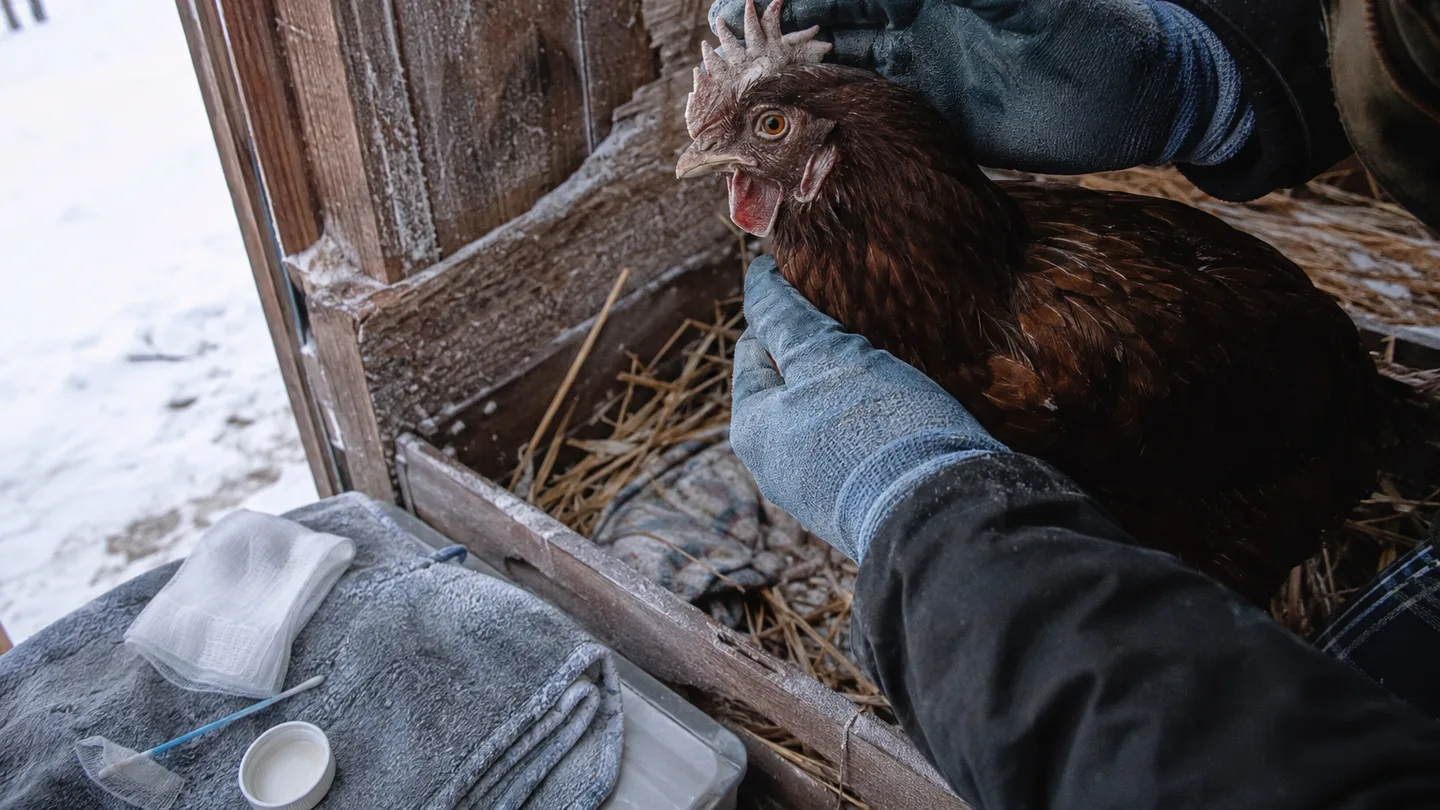
First aid in the first hour: warm the bird slowly and leave the comb alone
Move the chicken to a dry, quiet space that stays above 32°F/0°C. A towel-lined carrier or crate works well. Keep it away from a radiator, stove, heat lamp, hair dryer, or other direct heat source. The room can be comfortable for you, but the comb should warm through the surrounding air rather than being blasted from one direction.
If her body feathers are wet, gently blot the feathers around the comb. Don’t rub the comb itself. Check three things before you do anything else:
- Is she alert enough to respond to you?
- Is she breathing normally, without open-mouth effort or obvious distress?
- Can she stand, swallow, and drink on her own?
Offer clean water and her normal feed. Don’t force water into a dull or poorly coordinated bird. If she cannot swallow normally, that is a veterinary problem rather than a hydration project for the kitchen.
Take one clear photograph from the side and write down when you found her. That gives you a baseline without repeated handling. Once she is settled, check her again after the tissue has thawed and once more before bed. Look at the whole bird, not just the comb. A bird that is bright, breathing normally, and willing to drink gives you more room for careful monitoring than one that is weak or withdrawn.
Leave these off the comb: ice, hot water, massage, rubbing, peroxide, alcohol, essential oils, numbing creams, and household antiseptics. Don’t pick at a blister or pull on a dark flap of tissue. Rapid heating and friction can add a new injury to tissue that is already stressed, while direct heat can burn skin that has lost normal sensation.
This first-hour approach is deliberately plain. Your job is to stop ongoing exposure, prevent pecking, keep the bird dry, and collect useful information. You cannot reliably decide tissue survival by looking at the comb immediately after thawing.
A comb can look worse before it looks better: the frostbite timeline from thawing to healing
The comb’s appearance can move through several stages after thawing. While it is still frozen, affected areas may look pale, waxy, gray, or unusually firm. As circulation returns, the comb can become red or swollen. Over the next several days, damaged areas may turn gray, purple, brown, or black, then form a dry scab.
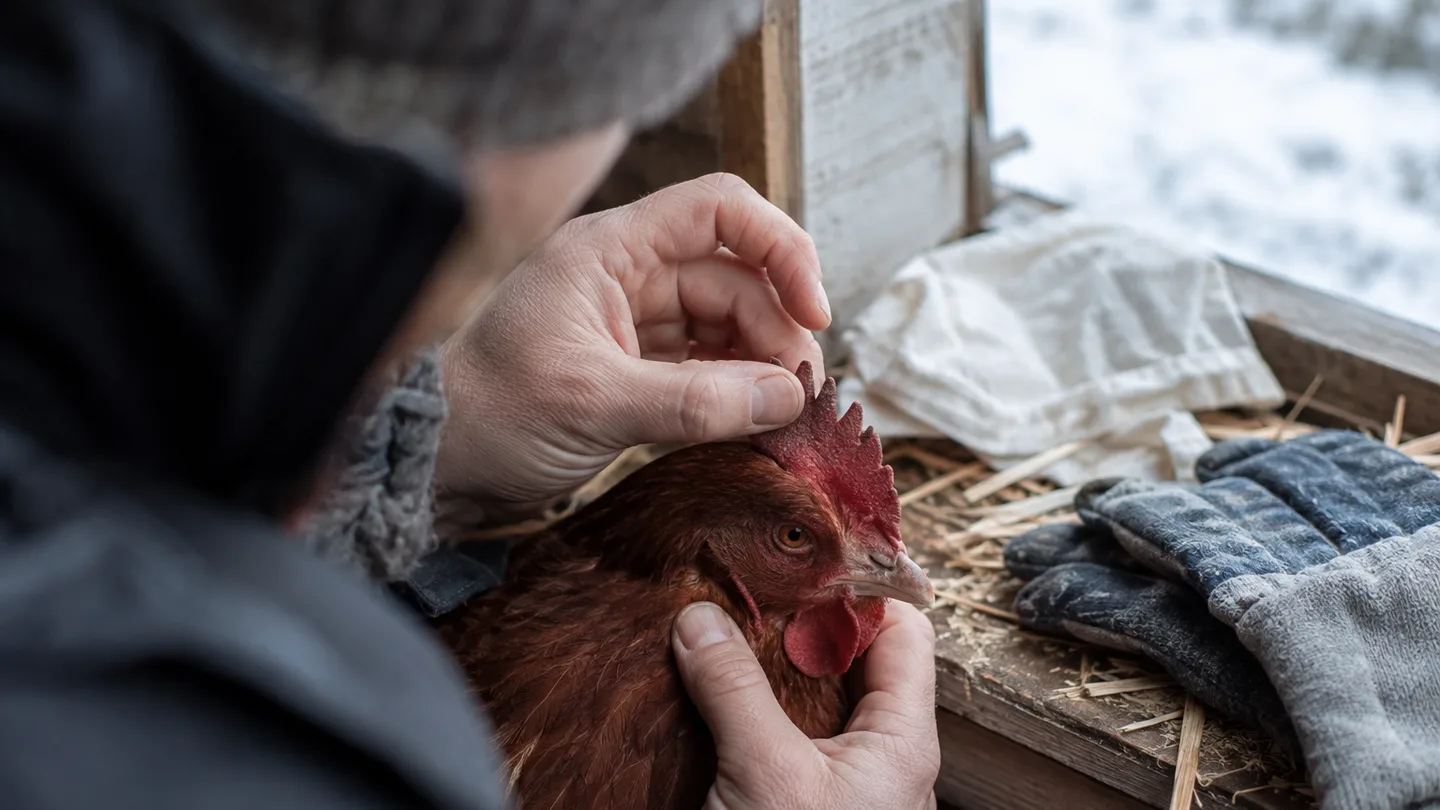
That progression can be unsettling, but the first-day color is a poor guide to the final result. A dark area is not automatically infected, and a red or swollen area is not proof that the entire comb will be lost. Tissue can declare its condition slowly over the following one to two weeks. Mildly affected skin may settle with discoloration or scabbing. More severely damaged tissue may dry and separate later. There is no honest way to promise which path a particular comb will take from one early photograph.
Take one photograph per day from roughly the same angle, with similar room light. This is more useful than handling the comb repeatedly. Note appetite, drinking, activity, droppings, and whether another bird is pecking at the area. A change in behavior often matters more than a small change in color.
Cold exposure is not the only reason a comb can look abnormal. A fresh pecking wound is more likely to have ragged skin or active blood. Fowl pox can create raised scabs or lesions that do not fit a simple cold-exposure story. If the comb is changing color without a believable cold, moisture, or wind event, widen the question instead of assuming frostbite. Unexplained discoloration belongs in a call to a poultry or avian veterinarian.
Do not peel a black section to see what is underneath. The surface may be dry damaged tissue, but black color alone does not tell you whether infection is present or whether deeper tissue can recover. Cutting or pulling at it creates an open wound and removes the vet’s ability to assess the original injury.
What belongs on the comb—and what should stay off it
Most clean, intact frostbitten combs need protection and observation more than a long list of products. If the skin is visibly dirty but not open, you can gently rinse it once with packaged sterile saline or clean lukewarm water. Pat the surrounding area dry with a clean cloth. Do not keep wetting a clean comb in the hope that moisture will speed healing.
When a barrier may make sense
Some keepers use a very thin layer of petroleum jelly as a barrier on clean, intact comb tissue before a forecast cold snap. That is a preventive practice. It may reduce direct exposure to moisture on the surface, but it cannot thaw frozen tissue, restore damaged blood supply, or reverse frostbite that has already happened.
Don’t smear petroleum jelly over dirt, an open wound, active bleeding, or foul-smelling discharge. A greasy layer can hold contamination against damaged skin and make the area harder to inspect. If the comb is clean and unbroken, a thin barrier may be reasonable before another cold night. If it is broken, contaminated, blistered, or wet with discharge, ask a veterinarian what product belongs there.
Why household remedies are a poor shortcut
Peroxide and alcohol can irritate injured tissue. Essential oils can be unsafe if a bird ingests them while preening. Numbing creams can be risky when the product is not labeled for poultry, and an unlabelled antibiotic may create egg-withdrawal questions that you cannot answer from memory.
If medication is needed, ask the poultry or avian veterinarian for the product class, application instructions, and any egg-withdrawal requirements. Follow the current label and the veterinarian’s directions. Don’t borrow a tube from a human first-aid kit or use leftover livestock medicine because the name sounds familiar.
Basic chicken comb frostbite first aid should leave the skin cleaner, drier, and easier to monitor. It should not leave a thick layer of products that hides the tissue from you or from the person who may need to examine it.
Use the red flags to choose home monitoring, a same-day call, or urgent care
Use the bird’s general condition to choose the next step. A damaged comb can look dramatic while the bird remains stable. The reverse is also true: a small-looking lesion on a weak, dehydrated, or poorly breathing bird should not be dismissed.
| Situation | What to do |
|---|---|
| Home monitoring may be reasonable |
|
| Call a veterinarian the same day |
|
| Seek urgent veterinary care |
|
If bleeding starts, place clean gauze over the area and use gentle, continuous pressure while you contact the clinic. Don’t keep lifting the gauze every few seconds to inspect it. If blood continues through the material or the bird becomes weak, treat that as urgent.
Black tissue by itself is not a reason to cut, peel, or amputate part of a comb at home. A veterinarian can decide whether the area is dry damaged tissue, an open wound, or an infection that needs treatment. The same caution applies to severe swelling. Swelling around the eyes, face, or airway deserves a faster response than an isolated color change at the comb tip.
Before you call, gather the details that change the decision: the lowest temperature you know, how long the bird may have been exposed, whether she was wet, when you moved her, photographs from the first day onward, appetite, drinking, droppings, and every product already applied. A short timeline is more useful than a guess about whether the comb is permanently lost.
Prevent the second freeze: dry air, high ventilation, and no heat-lamp shortcut
Prevention starts with the air inside the coop, not with a jar of ointment. Moisture, condensation, wet bedding, and a draft blowing directly across a roost can make a cold night harder on exposed comb tissue. A damp coop can be risky even when it is not experiencing the lowest outdoor temperature of the season.
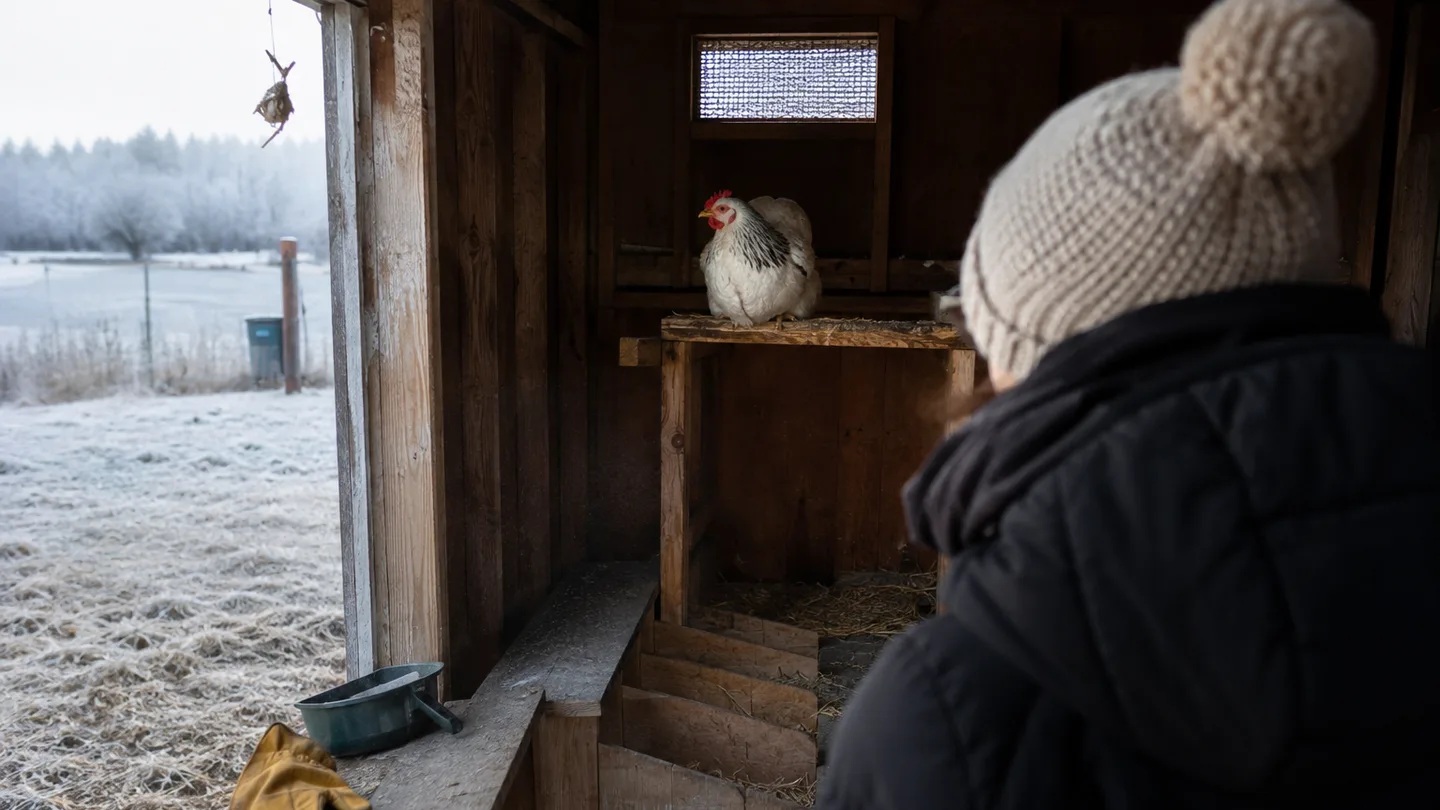
Move moisture out without putting wind on the birds
Look for condensation under the roof, damp bedding near the waterer, wet patches beneath a leaking seam, and air that feels stale at bird level. Ventilation openings should be high on the walls or near the roof, with the roost positioned below and away from the direct path of incoming air. You want warm, wet air to leave without creating a steady stream across sleeping birds.
Start with chicken coop ventilation if you need to rethink the openings. Do not solve condensation by sealing every gap around the coop. That can trap moisture and make the bedding wetter. Instead, redirect the airflow high, repair leaks, move the waterer away from the sleeping area, and remove damp bedding before nightfall.
Use the right winter roost, then question the heat lamp
A broad, flat roost around 3 to 4 inches wide gives many adult chickens a way to cover their toes with their breast feathers. That mainly protects feet rather than combs, but it is still a useful winter housing change. The roost should be stable, dry, and high enough to keep birds off a damp floor, without placing them against a cold wall or directly under an open vent.
Supplemental heat is not the default fix for acclimated adult hens. A heat lamp can introduce fire and power-outage risks, and it does not correct wet bedding or humid air. It may also create a sharp change between the heated coop and the outside if the power fails. If a bird is sick, underweight, unable to perch, or unable to reach a sheltered roost, deal with that individual problem and ask a veterinarian rather than improvising a whole-coop heating system.
If you’re still weighing do chickens need heat in winter, use this order: check moisture, drafts, bedding, roost access, body condition, and health first. A healthy adult bird in a dry, well-ventilated shelter is a different case from a wet, ill, or poorly feathered bird. Large single-comb breeds also have more exposed surface than birds with small pea or rose combs, so the same coop conditions may not affect every bird equally.
Some keepers apply a thin barrier to clean, intact combs before a forecast cold snap. That can be part of a prevention routine, but it is not a substitute for dry housing. For clinical background, the Merck Veterinary Manual is a useful reference to cross-check, while University of Minnesota Extension offers practical housing guidance to compare with your own setup. Neither replaces a poultry veterinarian examining an open, painful, or infected-looking comb.
Three quick questions
Will a frostbitten chicken comb grow back?
Mildly damaged tissue may heal with a change in color or a scab. Severely damaged tissue can dry and slough away. Do not expect lost comb tissue to regrow in its original form, and do not pull or cut it yourself. Let a veterinarian decide whether any intervention is needed.
Is frostbite on a chicken comb contagious?
No. Frostbite comes from cold exposure and the conditions that accompany it, such as moisture and airflow. Several birds can develop it at once because they share the same coop. That pattern points you toward a housing check, not an assumption that the comb injury is spreading between birds.
Can I put petroleum jelly on a frostbitten chicken comb?
Some keepers use a thin layer on clean, intact combs before cold exposure. Petroleum jelly cannot reverse frozen-tissue damage. Avoid using it to seal dirt, an open wound, or discharge unless a veterinarian advises it.
This week, inspect your coop from roost height after dark. Feel for moving air, look for condensation, check the bedding around the waterer, and note whether every bird can reach a dry perch. Fix one moisture or draft problem before the next cold snap, then pair that check with how to clean a chicken coop and the separate guidance on do chickens need heat in winter.
Frequently Asked Questions
Will a frostbitten chicken comb grow back?
Mildly damaged tissue may heal with discoloration or scabbing. Severely damaged tissue can dry and slough away, but new comb tissue should not be expected to regrow in the same form. Never pull or cut it; let a vet decide whether any intervention is needed.
Is frostbite on a chicken comb contagious?
No. Frostbite comes from cold exposure, moisture, and airflow, not from an infectious organism. Several birds can develop it at once because they share the same coop conditions.
Can I put petroleum jelly on a frostbitten chicken comb?
Some keepers use a thin barrier on clean, intact combs before cold exposure, but petroleum jelly cannot reverse frozen-tissue damage. Avoid using it to seal dirty or open wounds unless a veterinarian advises it.