How Cold Is Too Cold for Chickens? Know the Warning Signs
A dry 15°F/-9°C night can be easier on a flock than a damp, windy 30°F/-1°C night. So how cold is too cold for chickens? For healthy, fully feathered adult hens, there is no single outdoor cutoff: start paying closer attention below 20°F/-7°C, and treat around 0°F/-18°C as a high-alert range, especially for small, old, molting, ill, or underweight birds.
Those are planning bands, not promises. In my own small backyard setup, I once closed a high vent before a cold snap because the coop felt too exposed. The next morning, the bedding was dry but the air was clammy and the birds’ combs felt colder than they had the day before. I reopened the vent, moved the roost out of the airflow, and stopped trying to make the coop airtight. Fresh air above the birds mattered more than a warmer reading.
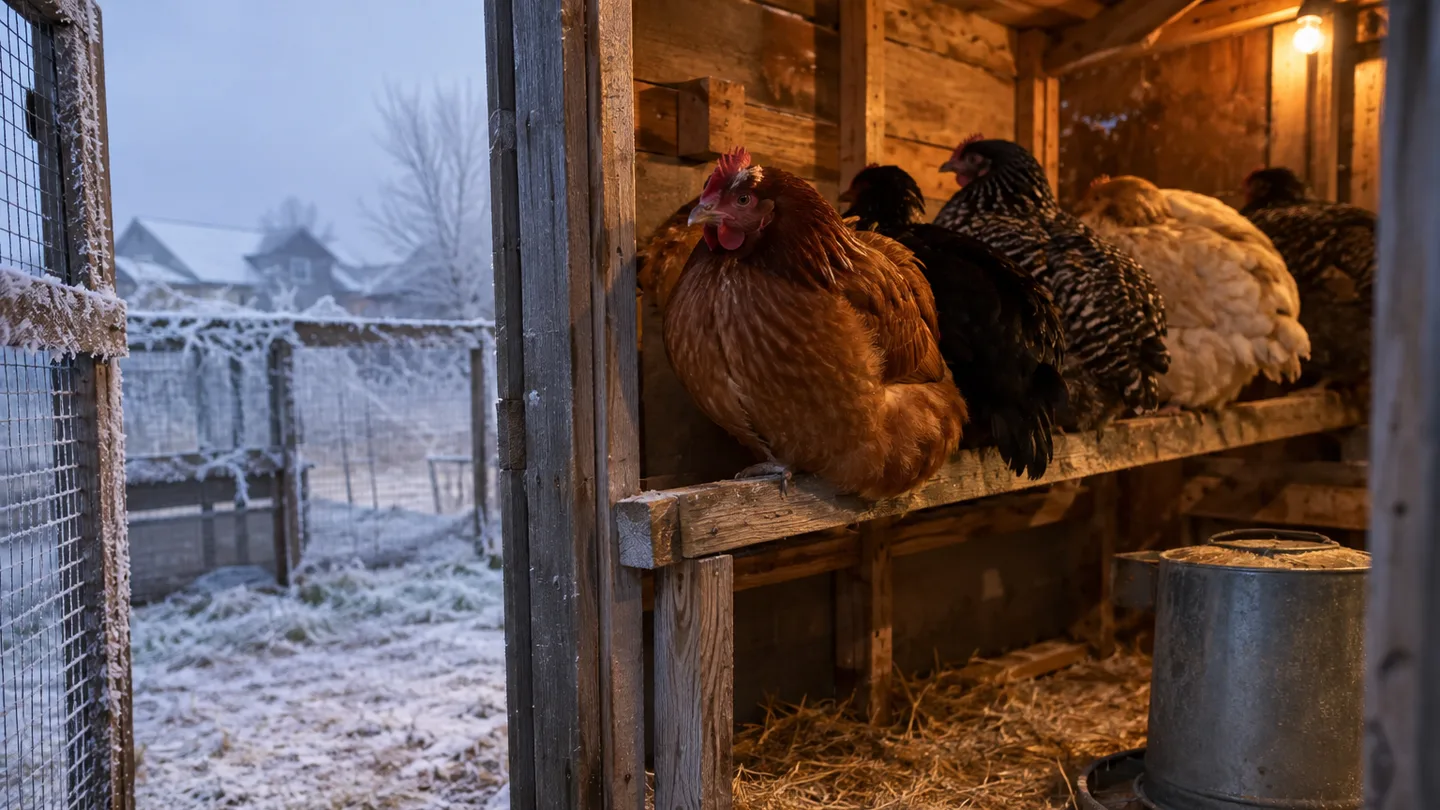
The first hard freeze: a practical temperature map for adult hens
Use the thermometer as a prompt, then check the birds and the coop. Healthy, fully feathered, acclimated standard-size adults often handle below-freezing weather when they stay dry, sheltered, fed, and supplied with liquid water.
| Overnight band | Practical response |
|---|---|
| 32°F/0°C to about 20°F/-7°C | Usually a planning range for healthy adults in dry housing. |
| Below 20°F/-7°C | Check at dawn and during feeding; inspect feet, combs, and wattles. |
| Around 0°F/-18°C and lower | High alert. Vulnerable birds and housing flaws need prompt attention. |
Breed size, age, molt, illness, body condition, wind, moisture, and acclimation can move the answer. These are risk bands, not guaranteed safe or unsafe limits.
Read the bird, not just the thermometer: cold-stress warning signs
Cold behavior is not automatically cold stress. Compare each bird before roosting, at first light, and during feeding.
| What you see | How to read it |
|---|---|
| Fluffed feathers, tucked head, feet under the breast, normal roosting | Often normal heat-conserving behavior if the bird returns to eat and drink. |
| Long inactivity, floor huddling, repeated foot-lifting, wet feathers, pale comb or wattles | Watch closely and correct wetness, drafts, water access, and crowding. |
| Gray or darkening tissue, weakness, inability to stand, refusal to eat or drink, labored breathing, or unresponsiveness | Move the bird to a stable dry space and contact a veterinarian promptly. |
One sign alone does not diagnose frostbite or hypothermia. A bird that cannot stay upright, breathe normally, or drink is beyond a wait-and-see home check.
Four things that make the same temperature more dangerous
Outdoor temperature is only one part of the exposure. I check these four conditions first:
- Wet feathers: moisture flattens insulation and chills skin.
- Moving air at roost height: a direct draft strips heat from resting birds.
- Condensation: poor ventilation can leave combs, bedding, and walls damp.
- A sudden cold change: give a flock roughly 7–14 days to adjust rather than expecting overnight acclimation.
Small-bodied birds, birds in molt, older hens, sick birds, thin birds, and an overcrowded flock have less margin. That is why a dry 15°F/-9°C night may be easier than a wet, windy 30°F/-1°C night. National Weather Service cold-weather guidance is useful context for moving air, but it is not a chicken-specific safety cutoff.
Build a dry windbreak: coop space, ventilation, and roost dimensions
Your coop’s job in a freeze is simple: keep birds dry, let stale moisture escape, and block direct airflow across the roost.
- Plan around about 4 square feet of indoor floor space per standard adult bird. Give large breeds or birds confined indoors for long periods more room where you can.
- Allow about 8–12 inches of roost length per bird, with enough width for birds to settle without being pushed onto the edge.
- As a starting design check, use roughly 1 square foot of high-level ventilation per 10 square feet of floor area, then verify it against local guidance and your actual condensation.
- Put vents above roost height. Avoid a strong stream of air at the birds’ backs, but do not seal every opening.
For more on vent placement, compare your plan with chicken coop ventilation. Keep bedding dry, remove wet patches, and use predator-resistant mesh on openings. Good chicken coop predator protection is a separate job from blocking drafts; mesh keeps animals out, while ventilation manages moisture.
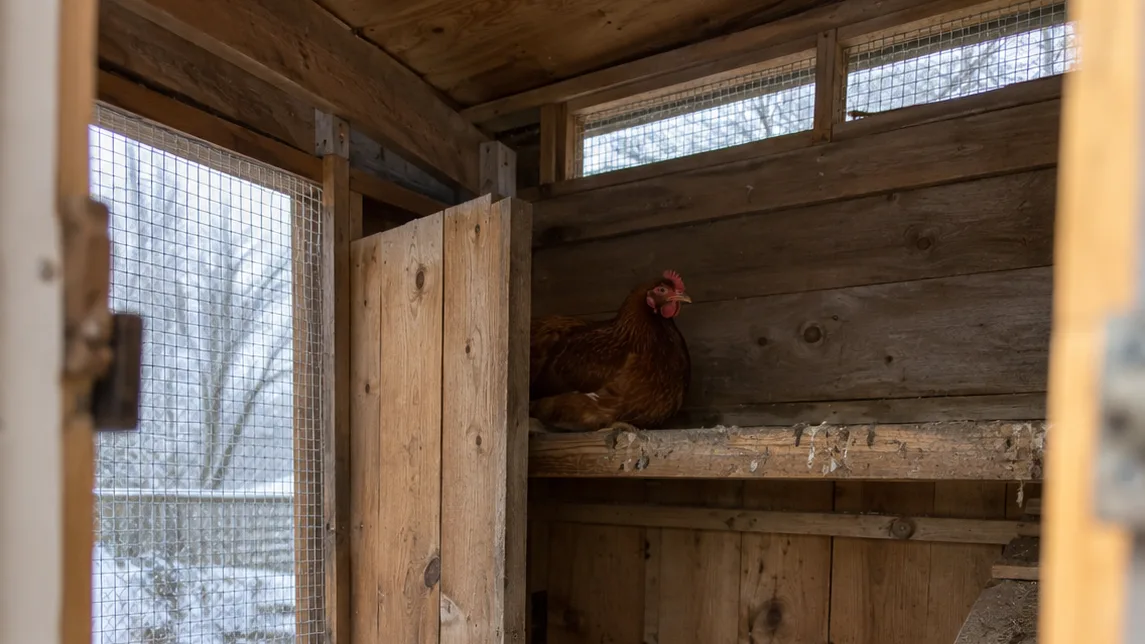
Winter fuel line: feed, water, and the twice-daily freeze check
Cold weather is not a reason to ration a balanced layer ration. Keep it available free-choice. Keep treats near 10% of daily intake so scraps do not displace the feed that supplies protein, minerals, and energy.
- Check water at least in the morning and late afternoon during freezing weather.
- Use a second drinker if one container regularly freezes before your next visit.
- Snow can be pecked, but it is not a dependable replacement for liquid water, particularly for laying hens.
If you are watching costs, record how much feed the flock uses during a cold spell and multiply the extra pounds by your current local price. Do not assume a fixed winter increase or promised savings. A simple log gives you a better monthly feed-cost calculation.
Chicks are different: 90–95°F in week one, then 5°F less each week
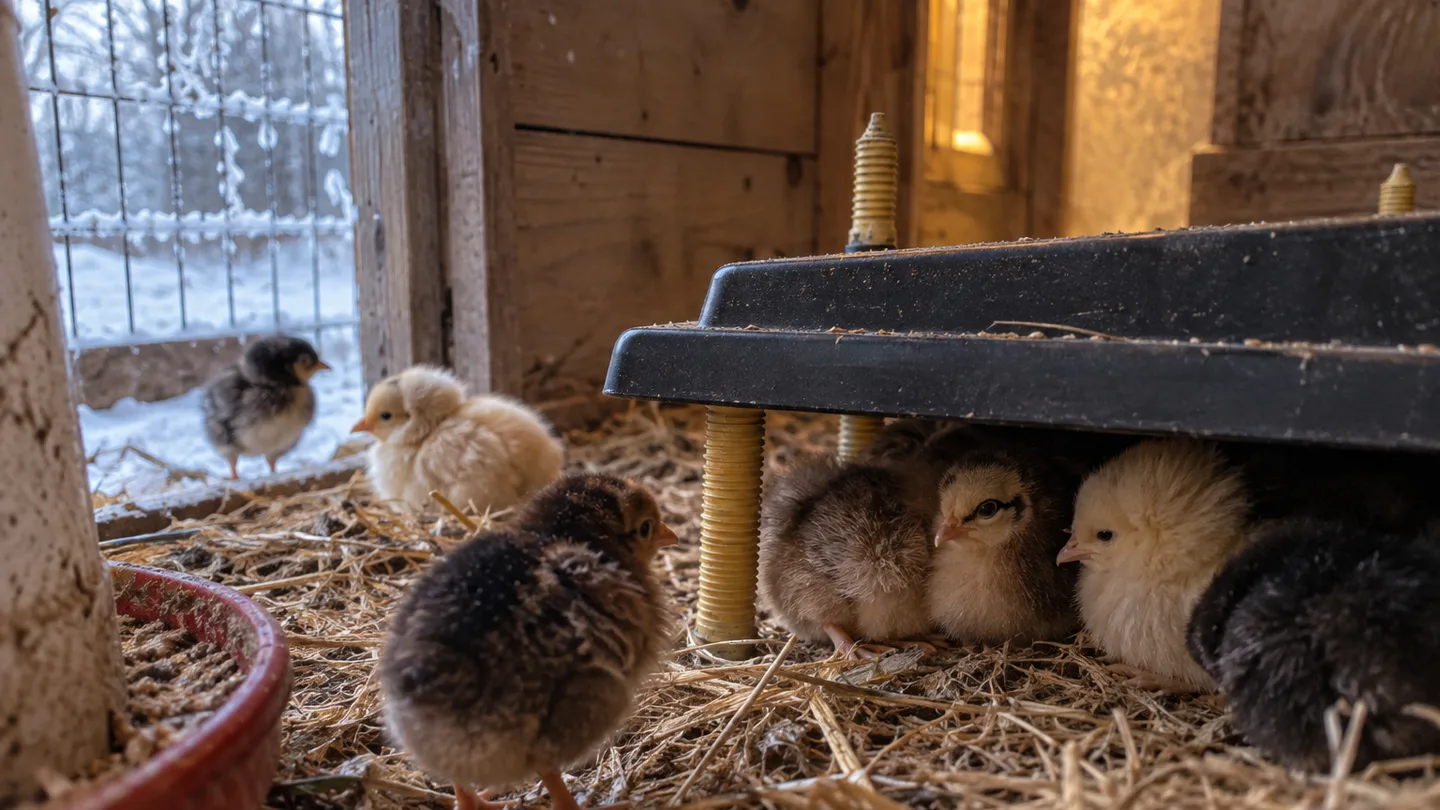
Chicks are not small adult hens. Set brooder temperature at chick height, not beside the heat source, at about 90–95°F during week one. Reduce it by roughly 5°F each week.
- Huddling tightly beneath the heat suggests the brooder is too cold or the chicks are chilled.
- Spreading far away, panting, or pressing against the brooder edge suggests excess heat.
- Many chicks are ready for a sheltered outdoor transition when fully feathered, often around 5–6 weeks, depending on breed, season, and housing.
A cold adult coop is not a brooder. Chicks need a smaller, controlled warm zone until their feathers and behavior can regulate exposure.
Do you need supplemental heat? Use this decision tree
At 32°F/0°C, don’t let the thermometer make the decision. Start with the bird, then the housing.
- If healthy, fully feathered adults are dry, active, eating, drinking, and roosting normally, no added heat is my baseline.
- If a bird is underweight, ill, injured, newly exposed to a sharp weather change, or unable to stay dry, address that defined vulnerability. Isolation and veterinary advice may matter more than heating the whole coop.
- If the coop cannot stay dry and draft-controlled, fix ventilation, leaks, roost placement, and bedding before treating heat as the solution.
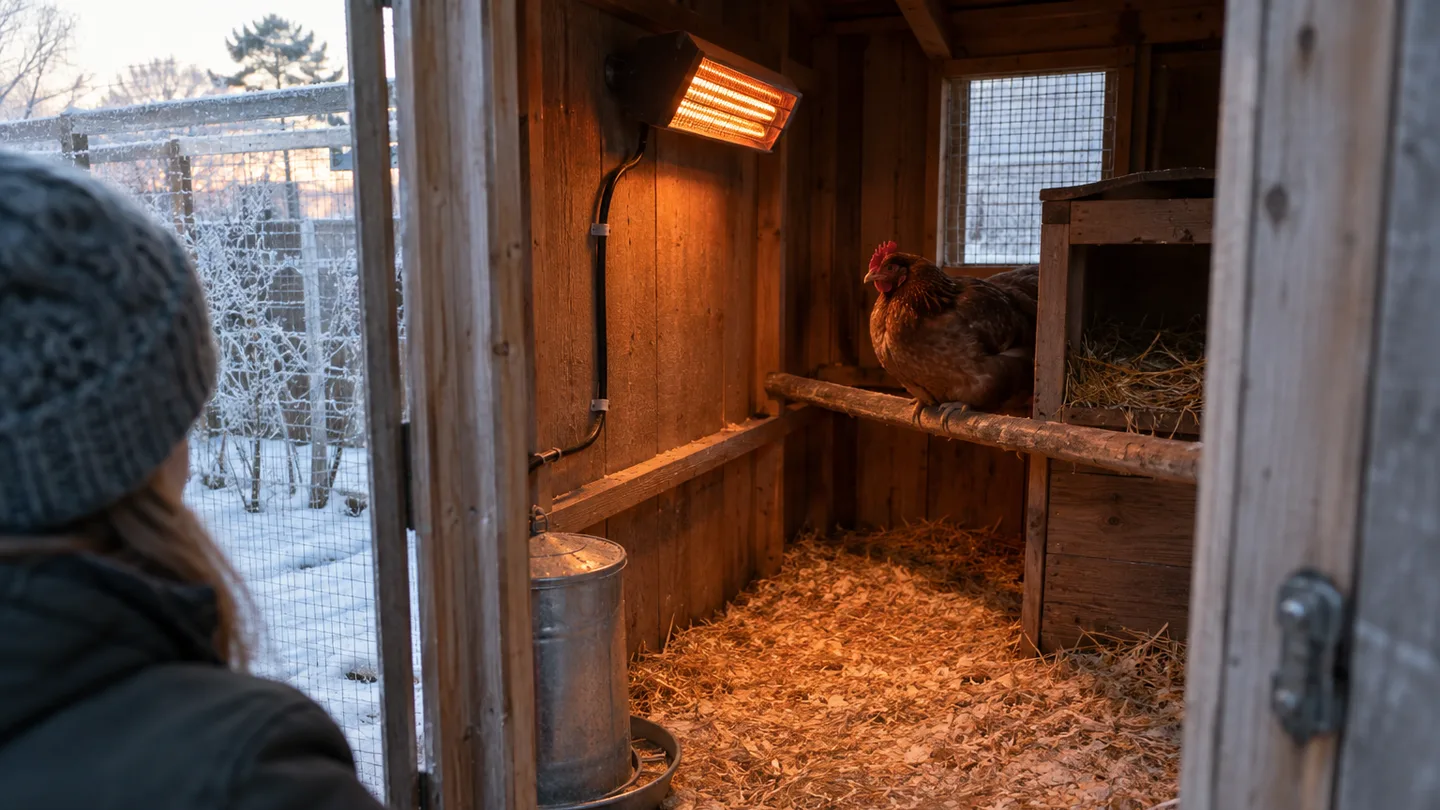
A properly installed heat plate generally exposes the coop to fewer hot-bulb and ignition hazards than a heat lamp, but neither is risk-free. Secure cords, keep bedding away, follow the device instructions, and plan for a power loss. Heat is not a treatment for a sick or injured bird. If heat is your next question, read do chickens need heat in winter before buying equipment.
When pale turns gray: frostbite and hypothermia first aid
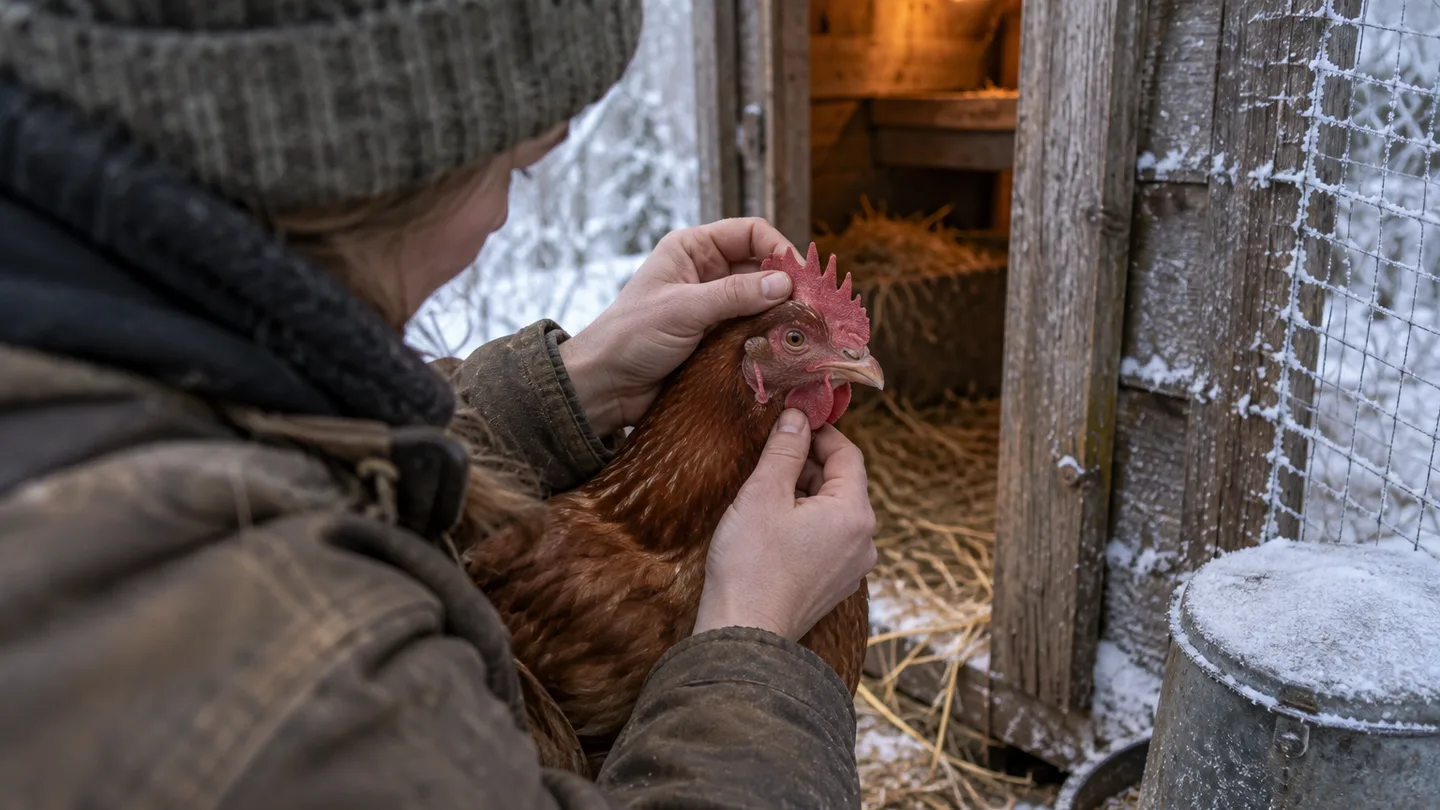
Frostbite is a local cold injury, not the same thing as whole-bird hypothermia. Check combs, wattles, and toes for tissue that becomes pale, gray, swollen, blistered, unusually firm, or darker over time. General cold-injury references describe a similar pattern: the full extent of tissue damage may become clearer after the initial exposure.
If a bird is cold-stressed, move it to a dry, stable, draft-free space and warm it gradually. Keep the temperature steady and prevent the bird from being chilled again.
- Do not rub or massage cold tissue.
- Do not puncture blisters.
- Do not apply direct high heat or improvise medication.
Seek urgent veterinary help for collapse, inability to stand, breathing trouble, unresponsiveness, severe tissue damage, or failure to eat and drink. Even when the bird remains bright, swollen or darkening tissue deserves a prompt professional opinion.
Your seven-day cold-weather setup plan
Turn the next cold forecast into a short inspection rather than a late-night scramble.
- Day 1: record the forecast low and the coop temperature at roost height.
- Day 2: inspect vents, corners, walls, and bedding for condensation.
- Day 3: close predator gaps without blocking high ventilation.
- Day 4: check floor space, roost length, and whether any bird is being pushed aside.
- Day 5: arrange unfrozen water and enough balanced feed for the forecast period.
- Day 6: inspect combs, wattles, feet, and feather condition in good light.
- Day 7: watch the flock at dawn and dusk, when cold behavior is easiest to compare.
This week, start the log with the forecast low, roost temperature, water status, and feed used. Those notes will give you a useful starting point for monthly feed costs and make your next winter decision less of a guess.
Quick answers to three winter questions
Can chickens use snow as their water source?
No. Snow does not replace reliable liquid water. Keep drinkers unfrozen and check them at least twice daily during freezing weather; a second drinker provides backup.
Is a heat plate safer than a heat lamp?
A properly installed heat plate generally reduces exposed-hot-bulb and ignition exposure compared with a lamp, but neither device is risk-free. Secure cords, control bedding, and keep ventilation working.
Should you put petroleum jelly on a frostbitten comb?
Do not make a topical product the first response. Keep the bird dry, warm it gradually, avoid rubbing or direct heat, and ask a veterinarian about any product if tissue is swollen, blistered, or darkening.
Frequently Asked Questions
Can chickens use snow as their water source in winter?
No. Snow does not replace reliable liquid water, especially for laying hens. Keep drinkers unfrozen and check them at least twice daily during freezing weather; a second drinker or safe heated base can provide backup.
Is a heat plate safer than a heat lamp for chickens?
A properly installed heat plate generally reduces exposed-hot-bulb and fire risks compared with a lamp, but neither device is risk-free. Follow the manufacturer’s instructions, secure cords, keep bedding away, and never use heat as a substitute for dry ventilation.
Should you put petroleum jelly on a frostbitten chicken comb?
Do not make a topical product the first response. Keep the bird dry, warm it gradually, avoid rubbing or direct heat, and ask a veterinarian about any product if tissue is swollen, blistered, or darkening.