Fowl Pox in Chickens: Signs, Spread, and What to Do
A hen with a pea-sized scab on her comb does not automatically need an emergency trip. A pale plaque in her mouth, noisy breathing, or trouble swallowing is a different problem. With fowl pox, the first useful split is dry skin lesions versus wet mouth or throat lesions. That split tells you whether to monitor closely, isolate, or call a veterinarian the same day.
On my own small-flock setup, I put a suspect hen in a wire pen beside the run rather than across the yard. My first arrangement was too far away, and I kept postponing the evening check. Moving the pen beside the gate meant I noticed her water level, breathing, and droppings every time I passed. That boring bit of layout mattered more than searching for a miracle product.
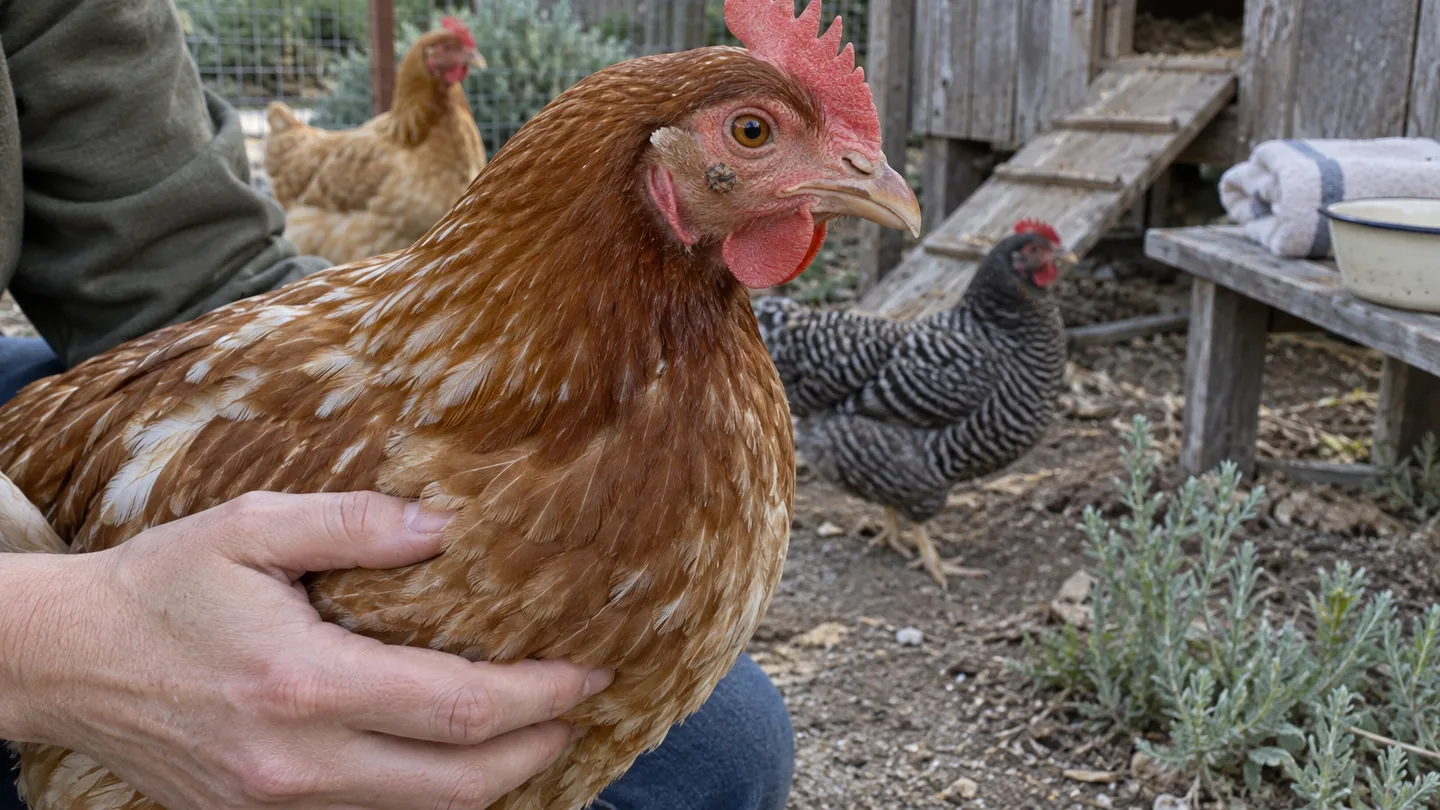
Dry pox or wet pox? Match the lesions to the risk
Dry pox and wet pox are the first useful split. Dry pox usually appears on featherless skin: the comb, wattles, eyelids, face, legs, or skin around a pecking wound. Small raised spots can thicken into brown, gray, or black scabs. One scab may look like an injury. Several lesions on exposed skin make fowl pox more plausible, especially if new spots appear over the following days.
Wet pox affects moist surfaces inside the mouth or farther back toward the throat. You may see pale plaques, cream-colored material, excess saliva, repeated swallowing, or a bird that drops feed after trying to eat. The concern is not how unattractive the plaque looks. It is whether the bird can keep air moving and get enough water down.
Keepers and vaccine labels commonly cite roughly two to four weeks for dry lesions to dry, shrink, and separate. Treat that as a working window, not a finish date stamped on the bird. A deep lesion, repeated irritation, poor weather, or new mosquito exposure can stretch the process.
For a second clinical description, compare your notes with MSD Veterinary Manual guidance on fowlpox signs, transmission, and supportive care. Do not scrape a mouth plaque to see what is underneath. You can create bleeding and make swallowing harder.
Your first 24 hours: a triage decision tree
Your first job is not to diagnose the bird perfectly. It is to make the next few hours safer and easier to observe.
- Separate the suspect. Use a dry, sheltered pen with its own feeder and drinker. Keep it close enough for regular checks, but far enough that birds cannot share equipment or peck through the wire.
- Watch before handling. Look for open-mouth breathing, repeated swallowing, weakness, a hunched posture, or a bird that cannot reach the water. A calm minute of observation often tells you more than chasing the bird around the run.
- Use a small light for a brief mouth check. If the bird resists hard, stop. Do not force open the beak of a struggling bird or put fingers into the throat.
- Inspect the flock. Check combs, wattles, eyelids, and exposed skin on every bird. Note fresh lesions with a dated photograph so you can tell whether the pattern is expanding.
Arrange same-day veterinary advice if the bird is gasping, cannot swallow water, is becoming dehydrated, has plaques that seem to obstruct the mouth or throat, or is too weak to stand and feed. Home care is a reasonable discussion only for a bird that can breathe, swallow, drink, and eat. Picking scabs, applying harsh household liquids, or repeatedly restraining a distressed bird can add injury without treating the infection.
Mosquitoes are the bridge: how fowl pox moves through a small flock
Fowl pox can move through a flock in more than one way. A biting mosquito can feed on an infected bird and then bite another. A bird can also contact virus-bearing material in a scab, feeder, drinker, perch, or keeper’s gloves and boots. Direct pecking matters because damaged skin gives contaminated material an easier route into the next bird.
A mosquito does not need to bite the same hen twice for isolation to fail. If the sick pen and the main run share the same active mosquito area, the insect can cross the distance for you. Isolation still reduces pecking and shared equipment, but it is not a complete barrier while mosquitoes are active.
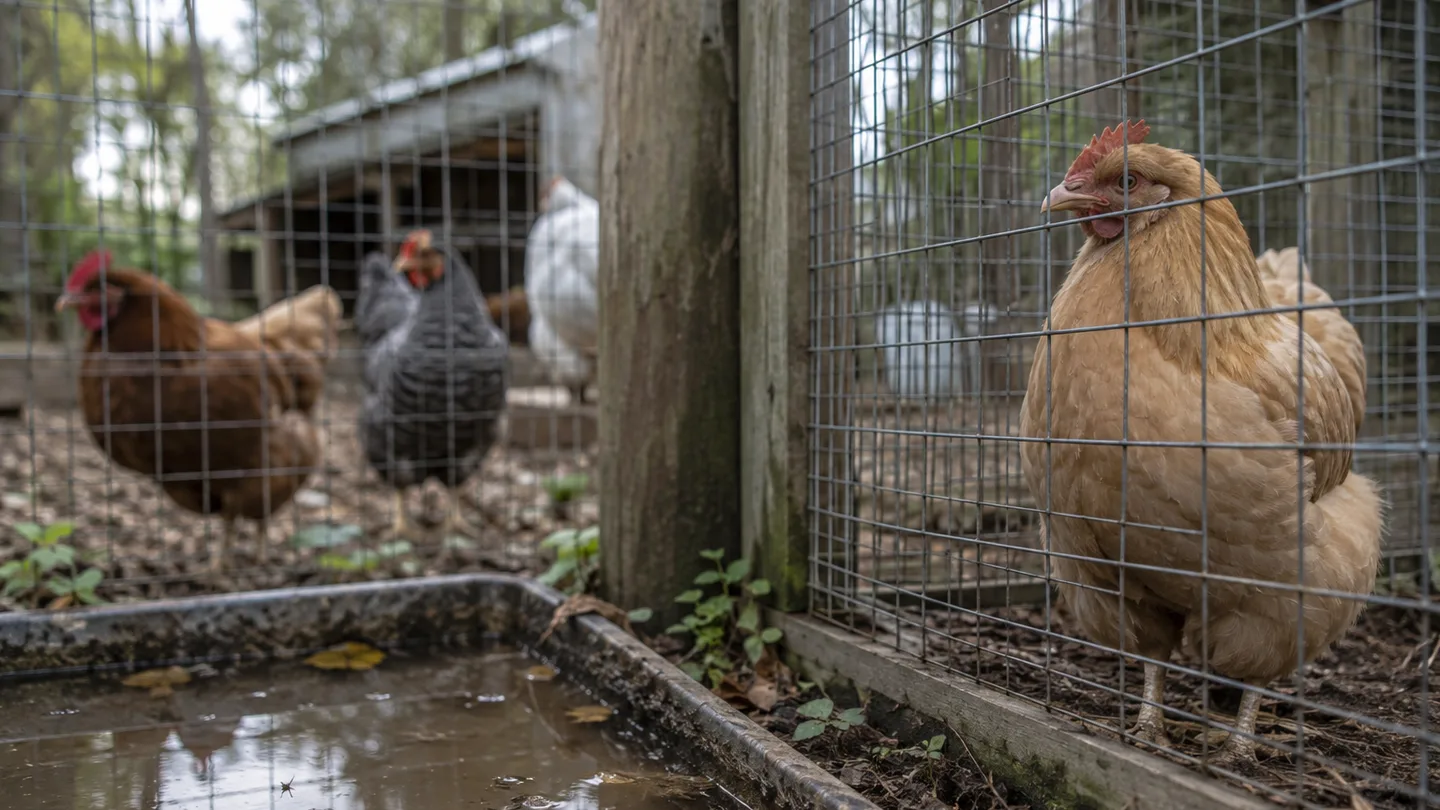
My practical inspection rhythm is simple: check for standing water after rain, then make at least one mosquito-season pass each week. Tip out water trapped in plant saucers, toys, buckets, drinker lids, and folded tarps. Check gutters and low places where a small flock’s run stays damp. The point is not to create a perfect insect-free yard. It is to remove the easy breeding spots you can control.
Do not spray birds, feed, or housing with an insecticide unless the product is labelled for that setting and you can follow its instructions. If mosquitoes remain heavy or several birds develop lesions, ask a local veterinarian or extension office for advice that fits your climate and products.
Supportive care across the next 2–4 weeks
There is no routine drug that directly clears the fowl pox virus. Supportive care gives a stable bird the best chance to keep drinking and eating while the lesions settle. It is not a cure, and it is not enough for a bird that cannot breathe or swallow.
Keep fresh water and the normal ration available at all times. Check the bird twice daily, morning and evening, at roughly the same times. Look at the water level, feed interest, droppings, breathing effort, posture, and the condition of the lesions. A short written note prevents you from relying on memory when several birds are involved.
If moving the beak seems uncomfortable, offer the usual feed softened with clean water. A mash can be easier to pick up than dry pellets, but do not force food into the mouth. Keep the pen shaded, dry, and quiet. Maintain chicken coop ventilation so damp air does not build up, while avoiding a strong draft directly across a weak bird.
Do not peel dry scabs away. Let them loosen on their own. Keep an eye on the eyelids, because a lesion that prevents the bird from seeing the feeder or drinker creates a practical welfare problem even if breathing is normal. Increasing weakness, dehydration, repeated open-mouth breathing, bleeding, or a sudden inability to eat or drink is the point to stop experimenting at home.
Medication for a suspected secondary bacterial infection needs veterinary direction and label compliance. The presence of a crust does not tell you which product, if any, is appropriate. If scratching is also present, compare the signs with the chicken mites treatment guide rather than assuming every crust is pox.
Clean the right things in the right order
Cleaning will not remove every mosquito, but it can reduce contaminated scabs and equipment moving between birds. The how to clean a chicken coop guide covers the everyday sequence; for a suspected pox case, add separation and damp handling.
Clean the pen in this order: remove the sick bird first, then take out feed and water equipment. Put on gloves. Lightly dampen dusty litter before lifting it so you are not sending fine particles through the pen. Bag visible shed scabs and heavily contaminated litter. Do not pick scabs from the bird itself.
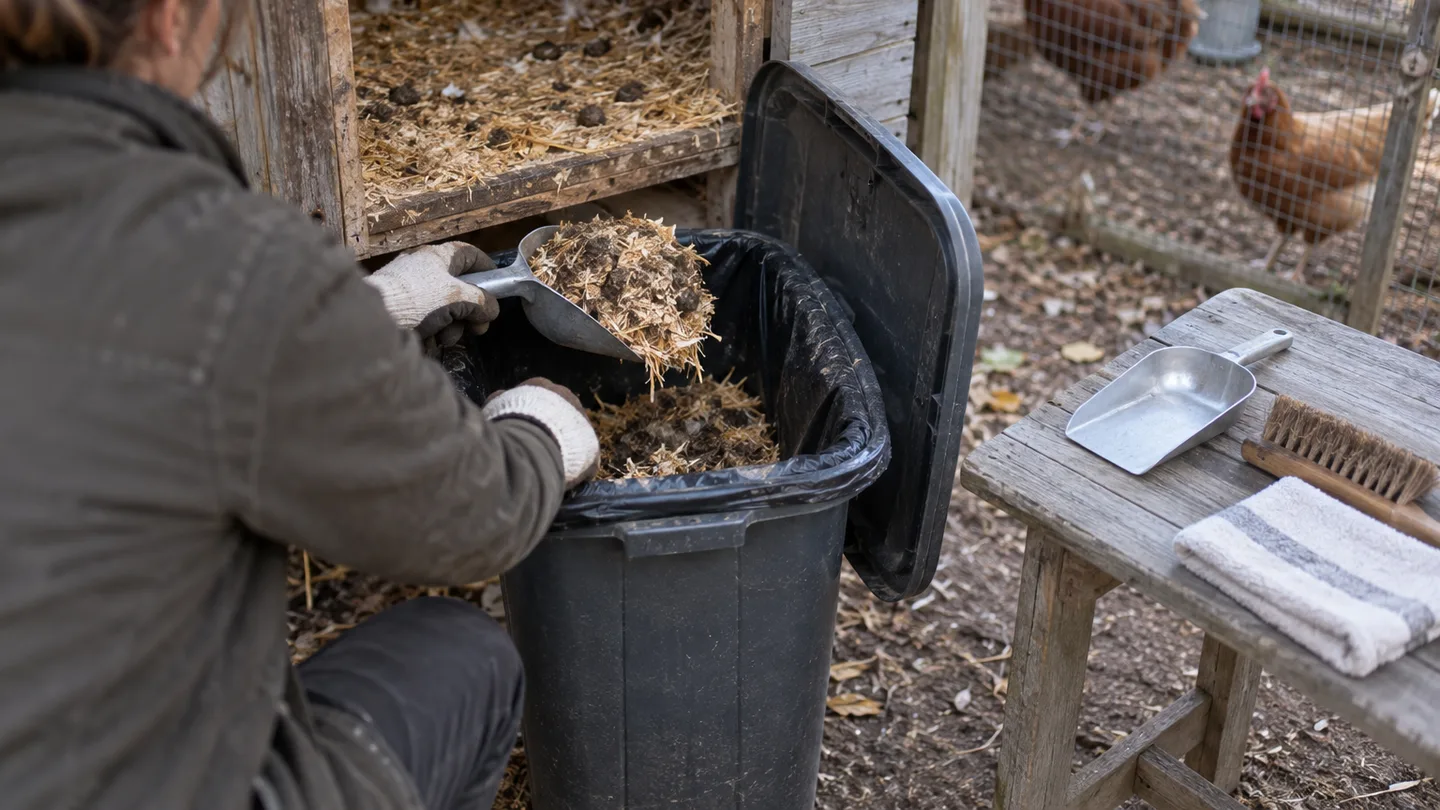
- Wash feeders, drinkers, and hard surfaces with detergent and water.
- Rinse away loosened dirt. Disinfect only after the surface is visibly clean.
- Follow the disinfectant label for dilution, contact time, rinsing, and safe re-entry.
- Let equipment dry before returning it to a bird.
- Keep the sick pen’s tools separate, or clean them before they go back to the main flock.
Change small water containers every few days during the outbreak, and check gutters, tarps, and low spots after rain. Sanitation can reduce the amount of contaminated material available to a bird or biting insect. It cannot replace mosquito control, and it cannot make a sick bird safe to return before the bird is clinically well.
Vaccination is prevention, not treatment
Fowl pox vaccination is a prevention decision for healthy birds. It is not a rescue treatment for a hen already covered in lesions. Many products use a wing-web application, but the product label controls the route, handling, age, and follow-up check.
Six to ten weeks is the planning window I work from when reviewing a pullet schedule, not a universal appointment date. Breed, local disease pressure, previous vaccination, product instructions, and the condition of the flock can all change the answer. Read the label and ask a veterinarian before vaccinating during an active outbreak, especially if exposed birds are already showing signs.
For new arrivals, I use 30 days as a conservative quarantine baseline. That gives you repeated observation time and keeps newcomers from immediately sharing air, tools, feeders, and mosquito exposure with the established flock. A quarantine pen beside the main run is not much of a quarantine if birds share drinkers or insects move freely between them.
Keep records of bird identity, vaccine product, date, route, and any label-specified observation. If the flock has a history of fowl pox or several healthy birds are exposed, local veterinary guidance is more useful than copying a schedule from a different climate or hatchery.
The flock is recovering when these checkpoints line up
Recovery is a pattern, not a single day. Dry lesions should be drying and shrinking rather than enlarging. The bird should breathe normally, drink without hesitation, eat enough to maintain strength, and show ordinary alert behavior. You also want no new lesions appearing on that bird or elsewhere in the flock.
The rough two-to-four-week lesion window is useful for planning, but there is no universal all-clear day. Wet pox deserves more caution because a bird can look brighter while still struggling with mouth or throat lesions. Ongoing mosquito exposure can also make the flock’s timeline harder to read.
I would return a bird only when it is clinically well, feeding and drinking reliably, breathing normally, and no longer showing active wet lesions. If you are unsure whether a mouth plaque is gone or whether new spots are still forming, keep the bird separate and call the vet. A cautious extra period is easier to manage than restarting the exposure cycle.
Three practical questions
Can fowl pox spread from chickens to people?
Avian fowl pox is treated as a bird disease rather than a routine human infection. You should still wash your hands, change or clean footwear, and keep sick-bird equipment away from kitchen areas. Those habits limit contaminated material moving between birds and around your home.
Can you eat eggs from a hen that has fowl pox?
The infection itself is not usually treated as a human foodborne route, but discard cracked or heavily dirty eggs. If a veterinarian prescribes medication, follow the exact egg withdrawal period on the prescription or product label. Do not guess from the name of the medicine.
Can a hen keep laying while she has fowl pox?
Some hens continue laying, while stress, reduced feed intake, or illness lowers production for a time. Egg numbers are less useful than the basics: breathing, drinking, eating, and alert behavior. A hen that stops laying but remains comfortable may need observation. A hen that cannot drink needs help regardless of her laying record.
This week, make a one-page pox plan: mark an isolation pen, store a torch and gloves nearby, empty standing water after the next rain, and write down the vaccine label timing for your flock. If that check exposes stale or drafty housing, make chicken coop ventilation your next fix.
Frequently Asked Questions
Can fowl pox spread from chickens to people?
Avian fowl pox viruses are not generally considered a human infection, but handwashing, separate equipment, and sensible hygiene still reduce movement of contaminated material between birds.
Can you eat eggs from a hen that has fowl pox?
The infection itself is not usually treated as a human foodborne route, but discard cracked or heavily dirty eggs and follow every medication withdrawal period if a veterinarian has prescribed treatment.
Can a hen keep laying while she has fowl pox?
Some hens continue laying, but stress, reduced feed intake, and illness can lower production temporarily; drinking, eating, and breathing matter more than maintaining normal egg numbers.