Coccidiosis in Chickens: Signs, Causes, and Safe Next Steps
A three-week-old chick that stops eating, drinks more than usual, and sits fluffed beside the drinker deserves a coccidiosis check—not a guess based on one dropping. In chickens, the useful clue is the pattern: age plus appetite, posture, hydration, and whether several birds are changing at once.
Loose droppings by themselves are not a diagnosis. Heat, a sudden feed change, worms, bacterial gut disease, and plain stress can look similar. If a bird cannot stand or drink, has repeated bloody droppings, or several birds go off feed, treat that as same-day veterinary territory.
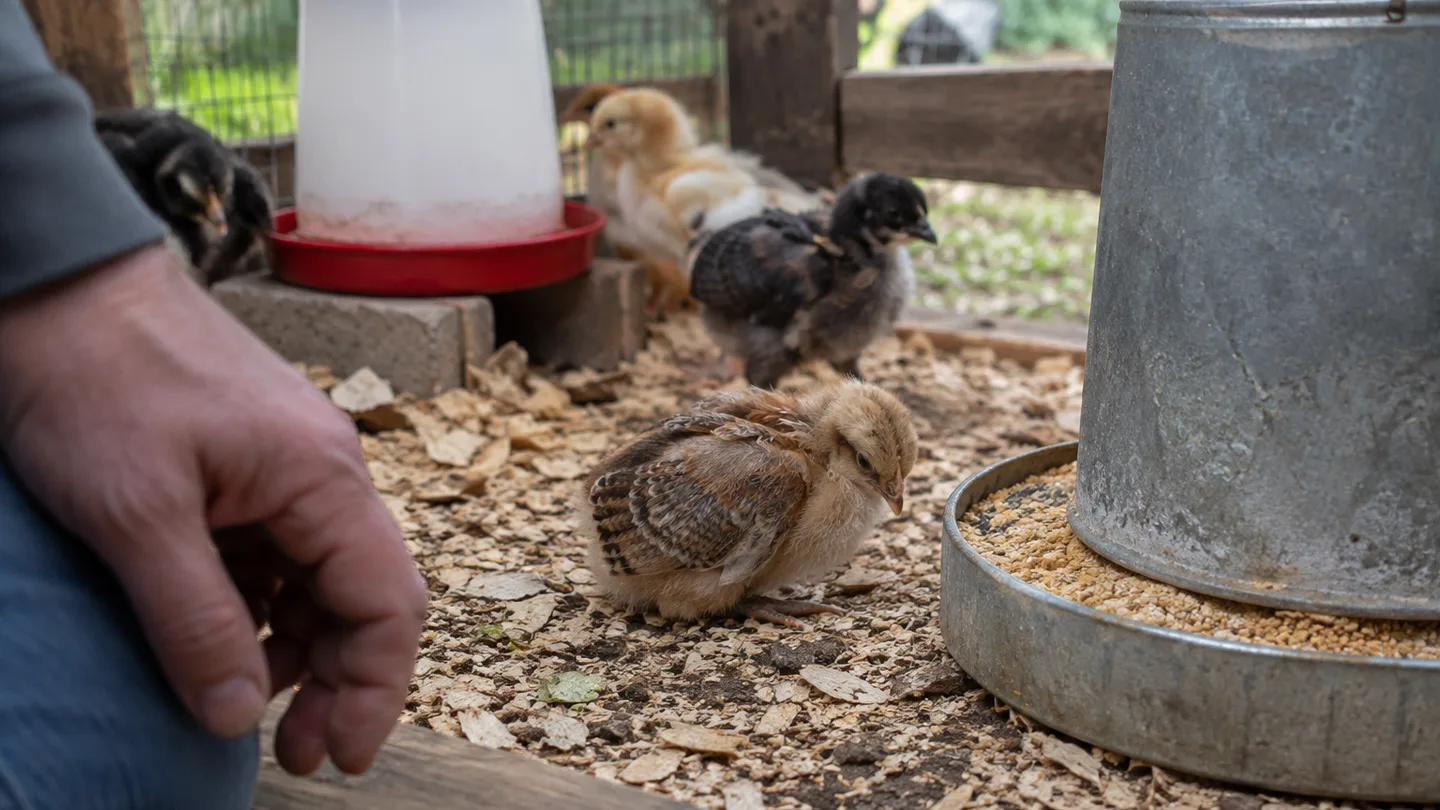
First 24 hours: signs that make coccidiosis a real concern
Chicks around 3–6 weeks deserve faster attention when illness signs appear together. Coccidiosis in chickens can irritate the intestine and leave a bird eating less, drinking differently, losing condition, or becoming dehydrated. You may see huddling, ruffled feathers, a pale comb, straining, mucus, watery droppings, or visible blood.
Blood raises the urgency, but it does not prove coccidiosis. A vent injury, another intestinal problem, or severe irritation can also produce blood. The same caution applies to loose droppings. Compare what you see with the flock’s recent feed, weather, and behaviour, and remember that chicken worms symptoms can overlap with coccidiosis.
| What you see | What to do now |
|---|---|
| One loose dropping, but the bird is alert, eating, and moving normally | Provide clean water, check recent feed or heat changes, and watch closely. |
| Huddling, ruffled feathers, reduced appetite, mucus, weight loss, or dehydration | Separate the bird from bullying, improve its access to water, and contact a poultry veterinarian or local extension office. |
| Cannot stand or drink, repeated bloody droppings, collapse, or several birds off feed | Seek same-day veterinary guidance. Do not wait for a home treatment to prove itself. |
That last row is the decision point. Droppings can tell you that something is wrong, but they cannot identify the cause on their own. A fecal examination and an examination of the bird may be needed to separate coccidiosis from worms, bacterial enteritis, heat stress, or a sudden diet change.
Why a wet brooder turns one oocyst into a flock problem
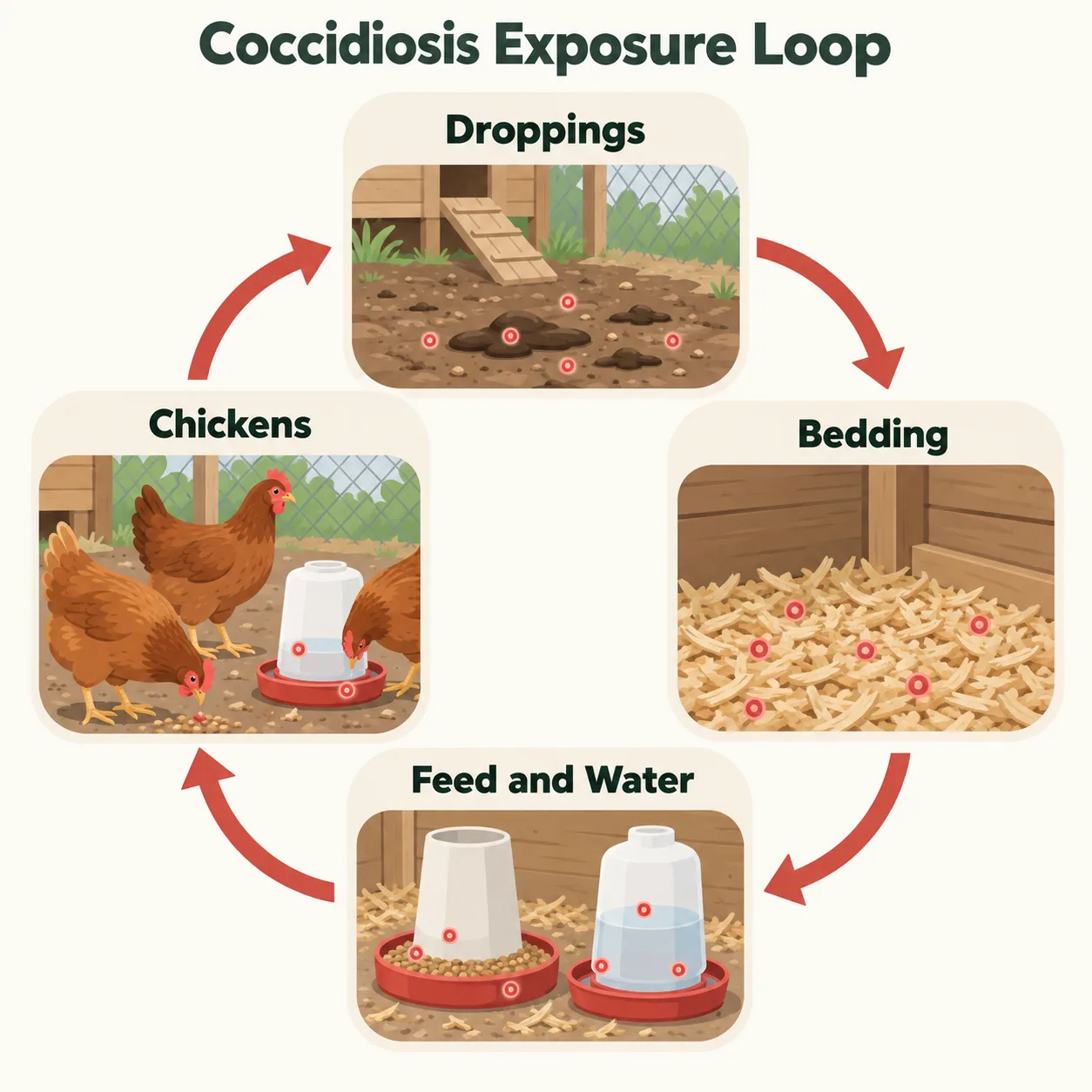
Coccidiosis follows a fecal–oral loop. Eimeria parasites leave a bird in droppings as oocysts. Those oocysts can become infective in the environment, and a chick picks them up while scratching through bedding, pecking at dirty surfaces, or drinking from a contaminated drinker.
Keepers often cite roughly 1–2 days for sporulation under warm, damp, oxygenated litter. Treat that as commonly reported practical guidance, not a universal stopwatch. Cool or dry conditions can slow development, while wet bedding gives contaminated material more opportunity to stay in contact with young birds.
That is why a leaking drinker can matter more than a single dirty corner. Crowding increases contact with droppings. Mixing young chicks with older birds can bring more contamination into the brooder. Older birds may look normal while still contributing contaminated droppings to a shared environment.
One deep cleaning also does not instantly reset the space. Fresh droppings can contaminate clean surfaces again, and material can remain in cracks, under drinkers, or in damp bedding. In a small flock, removing the wettest material and keeping the area dry is usually a more useful first move than spraying cleaner over manure.
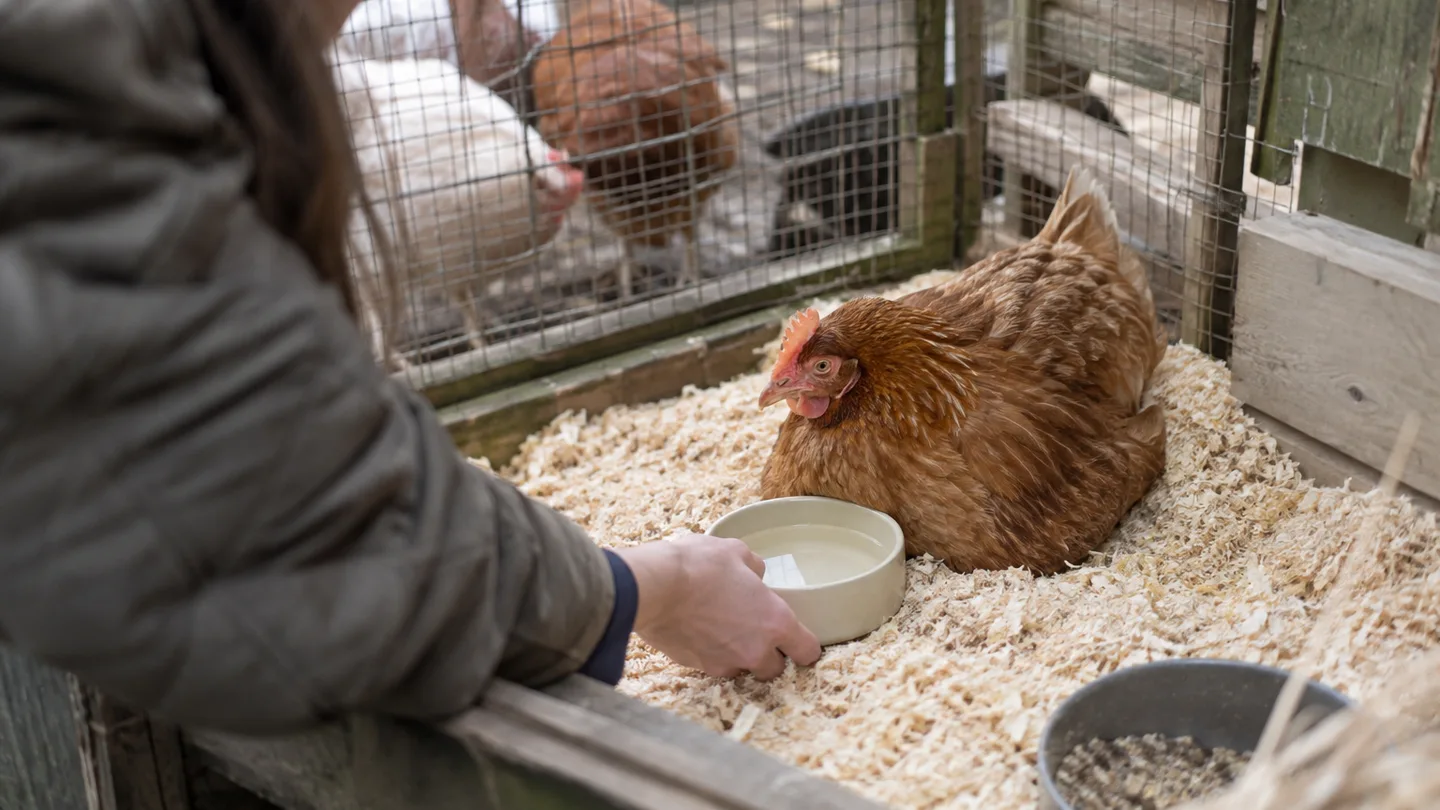
The next six hours: triage, fluids, and a usable fecal sample
Use the next few hours to reduce exposure and gather information. Do these steps in order.
- Separate the weak or bullied bird. Put it in a clean, quiet box or small pen where it can reach water without being pushed away. Use the age-appropriate brooder temperature you would normally provide for that bird’s age. Do not add arbitrary heat to a bird that is already panting or spreading its wings.
- Offer fresh water without forcing it. A sick chick needs access to water, but pushing liquid into the beak can send it into the airway. If the bird will not drink, cannot swallow normally, or is too weak to reach the drinker, that is a reason to escalate rather than keep experimenting.
- Collect a fresh sample. Place several recent droppings in a clean, sealed container. Write down the collection time and the bird’s age. Ask a poultry veterinarian or local extension office whether a fecal test is appropriate and how the sample should be handled.
- Check the rest of the flock and the brooder. Look at each bird’s posture, appetite, droppings, and access to water. Remove wet bedding around the drinker before you return to the sick bird.
My practical rule for a backyard flock is to use 4–6 hours as a close-observation checkpoint, not as permission to delay care. I write down the bird’s age, whether it can stand, the last time I saw it drink, what the dropping looked like, and the exact medication labels available. That small record makes a veterinary call much more useful.
Do not give human anti-diarrheal medicines, leftover antibiotics, or a mixture of anticoccidial products. If water medication is being considered, remember that a bird that has stopped drinking may receive little or none of the intended treatment.
Medication is not a dosing contest: match the product to the label and withdrawal plan
Anticoccidial products are not interchangeable. A safe choice depends on the bird’s age, the product concentration, whether it is given in water or feed, how much the flock is actually consuming, local approval, and whether eggs or meat could enter the food chain.
Products based on amprolium or other approved anticoccidial classes may be used in some poultry situations, but the label is the starting point. Follow one product’s directions exactly. Do not combine products because the first one has not worked quickly, and do not use a leftover bottle simply because the name sounds familiar.
Egg and meat withdrawal instructions deserve the same care as the treatment directions. If the label does not clearly address laying hens or the intended food product, stop and ask a veterinarian or check national veterinary drug regulator guidance for your country. Never guess a withdrawal period from a dose used for a different bird.
For background on the parasite and treatment decisions, the Merck Veterinary Manual guidance on avian coccidiosis is a useful reference point. Get immediate professional help for collapse, inability to drink, repeated bloody droppings, or rapid spread through the flock. If there is no clear improvement within 24 hours, seek veterinary advice rather than switching products at random.
The days after treatment: reset litter, drinkers, and flock management
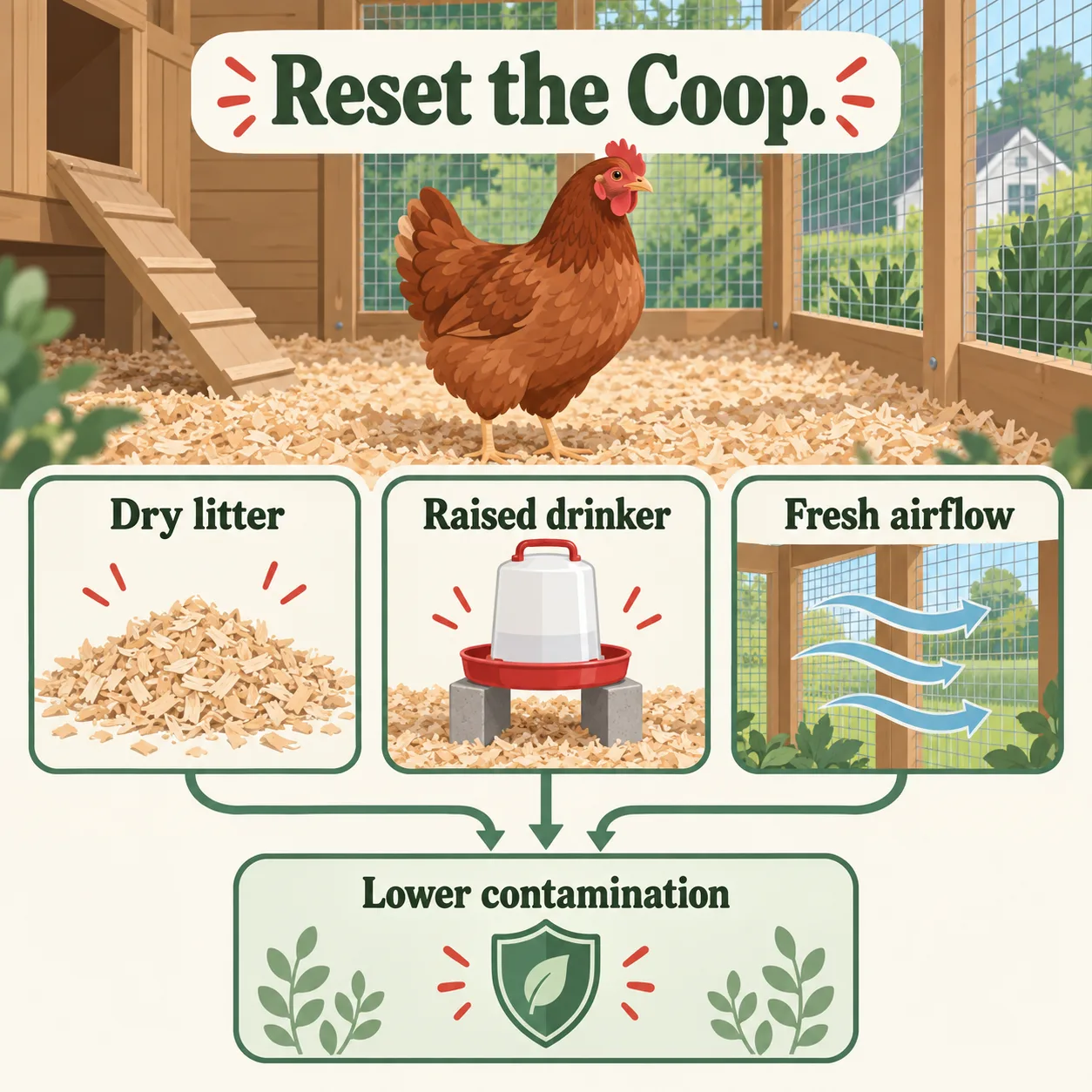
Once the bird is stable, reset the environment that allowed repeated exposure. Remove wet litter physically instead of spraying disinfectant over manure and calling the job finished. Some coccidia oocysts are difficult for routine cleaners to eliminate, so drying and removing contaminated material matter more than making the coop smell clean.
- Remove wet patches the same day, especially below drinkers.
- Clean drinkers at least daily, raise them enough to limit bedding being kicked inside, and let the surrounding surface dry.
- During wet weather, check litter in the morning and evening. Improve airflow using the principles in chicken coop ventilation, but keep drafts off chick level.
- Keep age groups separate where you can, reduce crowding, and add fresh bedding before the old material becomes damp and compacted.
For the physical reset, the practical sequence in how to clean a chicken coop is more useful than a strong-smelling spray: remove manure and wet bedding, wash equipment, dry the area, then replace bedding. Watch every bird for the next seven days. A recovering chick that still loses weight, isolates itself, or stops drinking needs another professional assessment.
Three side questions that come up
Can coccidiosis in chickens spread to people?
Chicken Eimeria are generally treated as host-specific, so human coccidiosis is not the usual concern from handling chicken droppings. Good hygiene still matters. Wash your hands, use dedicated coop footwear, and keep drinkers, feeders, and dirty equipment away from food-preparation areas.
Can you eat eggs from a hen treated for coccidiosis?
Only follow the specific product label or a veterinarian’s withdrawal instruction. Rules vary by active ingredient and country. If the label is unclear about eggs, do not guess and do not assume that a meat-bird instruction applies to a laying hen.
Does medicated chick starter prevent coccidiosis?
Medicated starter can help control exposure when it is appropriate for the chicks and used exactly as labeled. It does not replace dry litter, clean drinkers, age separation, reasonable space, and daily observation. Feed is one management tool, not a substitute for removing contamination.
This week, inspect every drinker, remove the wettest litter patch, and write down each bird’s age, appetite, water intake, posture, and symptoms. Keep the medication labels beside those notes before you call for advice. That is the safest next step when coccidiosis in chickens is possible but the droppings alone cannot tell you why.
Frequently Asked Questions
Can coccidiosis in chickens spread to people?
Chicken Eimeria species are generally host-specific and are not considered a usual cause of human coccidiosis, but handwashing, dedicated footwear, and keeping coop equipment away from food-preparation areas still matter.
Can you eat eggs from a hen treated for coccidiosis?
Only follow the specific product label or veterinary withdrawal instruction; rules vary by active ingredient and country, so do not guess if the label does not clearly address eggs.
Does medicated chick starter prevent coccidiosis?
It can help control exposure when appropriate for the chicks and used exactly as labeled, but it does not replace dry litter, clean drinkers, age separation, adequate space, and daily monitoring.