Chicken Sounds and Meanings: What Each Call Tells You
A cluck from behind the nest box can mean “where are you?” A similar cluck beside a feeder may be part of a food call. The useful answer to chicken sounds and meanings is that a call is a clue, not a one-word translation: listen to the sound, notice what just happened, and read the bird’s posture before you decide what to do.
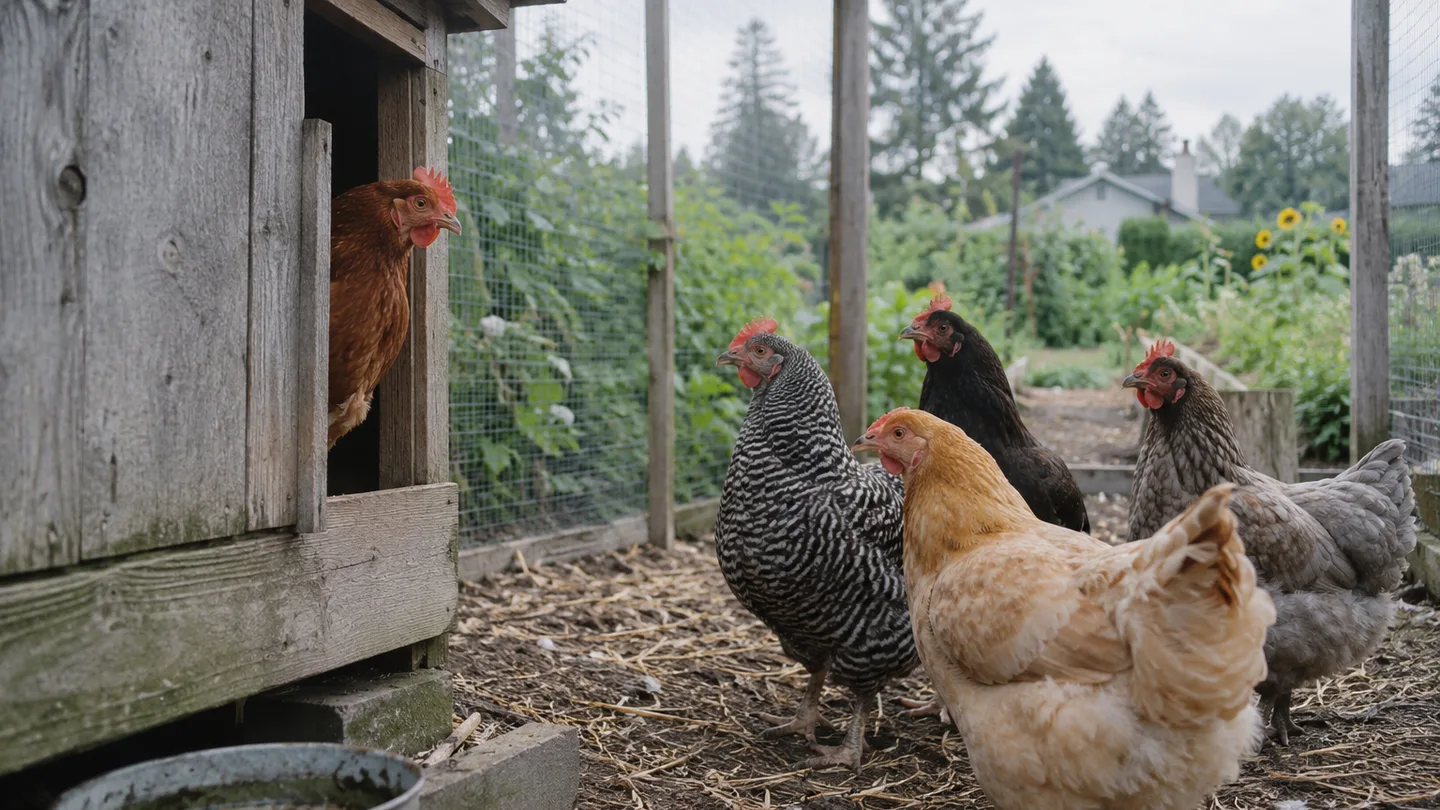
A chicken call needs three clues: sound, setting, and body language
Start with three observations: what the call sounds like, what happened just before it, and what the bird is doing. Is it a soft, repeated cluck or a sudden, sharp squawk? Did you just open the feed bin, lift a hen from the nest, or hear a gate bang? Is the caller relaxed and walking, stretched tall and still, or crouched low with feathers held close?
That quick check is more useful than trying to memorize a dictionary of chicken noises. A hen may use similar notes in different situations, and individual birds can sound different from one another. Context narrows the possibilities; it doesn’t turn a sound into a guaranteed diagnosis.
Build a baseline before something seems unusual. For a few days, notice what your flock sounds like at ordinary moments: when you arrive, scatter feed, collect eggs, and close the coop. You don’t need a notebook full of every cluck. Just learn the difference between the flock’s everyday chatter and a call that makes several birds stop what they’re doing.
A simple record can help: note the time, the event just before the call, which bird called, and what its body looked like. If you record audio, include a few seconds of the surrounding activity. A sound clip without its setting can be surprisingly hard to interpret later.
Here’s a practical example to picture, not a report from a particular keeper’s flock: three hens are scratching near the coop when one gives a short, repeated call. If the other two answer and keep foraging, check whether they’ve become separated or whether you’ve just appeared with food. If the caller stiffens and the others freeze, look around before deciding it’s ordinary chatter. The change in the group’s behavior tells you what to check next.
My preference is to look first and label the sound second. That order keeps you from treating every unfamiliar note as an emergency—or ignoring a real change because you’ve decided it’s “just a cluck.”
Four everyday hen calls: contact clucks, food calls, egg songs, and broody growls
These patterns are useful starting points, not translations that fit every hen. Watch what the bird does around the call, then check the likely cause.
| Call pattern | Common setting and body language | What to check next |
|---|---|---|
| Soft contact clucks | Low, intermittent notes while birds move around or forage; another hen may answer. | Check whether a bird is out of sight, separated, or simply moving to a new spot. |
| Food-related calls | A hen that has found something may make repeated, excited notes and peck at or pick up the item. | Look at what she’s pointing out. Make sure it’s a suitable feed or treat, not a piece of litter or something unsafe. |
| Egg song | A louder, repeated series of notes may happen around a hen’s visit to the nest. Other hens may join in. | Check the nest boxes and the hen’s recent routine, but don’t use the call as a countdown to an egg. |
| Broody warning sounds | A hen settled in a nest may growl, hiss, or make a low, firm cluck when you approach. | Look for prolonged nest-sitting and whether she leaves to eat, drink, and move about. Give her a calm exit rather than repeatedly startling her. |
Egg songs are especially easy to overread. A hen may call before laying, after laying, or around the time she leaves the nest. Hens that are laying regularly often have a laying interval in the neighborhood of 24–26 hours, but that rhythm shifts and a call doesn’t tell you exactly when an egg will arrive. Check the nest instead of waiting for the song to finish before planning your day.
For broody sounds, the setting matters as much as the noise. A hen that gives a warning from a nest and then settles back down is different from a bird that is distressed, weak, or struggling to move. Avoid turning a normal nest warning into a contest: approach slowly, keep your hands clear of a defensive beak, and decide whether you actually need to move her.
If you’re still learning your hens’ patterns, keep the observations low effort. A note such as “loud call, left nest, egg present later” is more useful over time than a confident translation based on one morning.
A rooster’s crow is a call, not a clock or a threat report
A rooster’s crow can punctuate the morning, but it isn’t confined to sunrise. You may hear it after a disturbance, when the flock is active, or at another time of day. The call itself doesn’t tell you that a predator is nearby, that a pecking-order dispute has happened, or that the rooster is unwell. Look at what the flock is doing and what changed around them.
Some roosters also make lower, repeated calls while showing food to hens. You may see him pick up an item, drop it, and call while nearby hens investigate. Check the item before letting the flock eat it. A rooster’s presentation is a cue to inspect the food, not a safety label.
When you hear a sudden burst of crowing, take a quick look at the run and the birds. Are they moving normally, feeding, and spreading out? Or have they all gone still, gathered tightly, or rushed toward cover? The scene gives you a better reason to intervene—or carry on—than crowing alone.
If crowing is your immediate concern, the separate guide to hen crowing covers the less common case of a hen making crow-like calls. For the everyday rooster, I’d judge a call by the flock’s response and the setting, not by the hour on the clock.
That’s also a useful place to consider your neighbors and setup. A rooster calling repeatedly may be normal behavior, while your response may still depend on local rules and your household’s tolerance. Check the rules that apply to your property rather than assuming that a familiar sound is automatically permitted.
When an alarm call starts, scan the run before guessing what triggered it
A sharp, sudden call followed by alert posture is a good reason to pause and look. The caller may stretch upright, freeze, or move quickly toward cover; nearby birds may stop scratching, bunch together, or follow. Those reactions tell you the flock has noticed something. They don’t reliably identify what it is.
Use a short scan, in this order:
- Look up. Check open sky, roof edges, and nearby trees for movement or a shadow passing overhead.
- Check the perimeter. Look along the run fence, gate, and coop openings. Notice a loose panel, an animal outside, or a sudden movement beyond the wire.
- Check close disturbances. A dropped tool, a barking dog, a person appearing suddenly, or a gust moving a tarp can all change the flock’s behavior.
- Watch the birds again. If they resume foraging and spread back out, keep monitoring. If they remain alert or keep calling, inspect the area more carefully.
Different birds and situations can produce different alarm patterns. That makes a call worth noticing, not a dependable predator-identification system. Confirm what’s actually around the run before you decide whether to move the flock, secure a gate, or simply let them settle.
For example, imagine you hear repeated squawks while the hens are near the fence. First check overhead, then the fence line, then the nearest source of commotion. If you find a loose gate, secure it; if there’s no visible trigger and the birds return to normal, keep an eye on them rather than inventing a predator to match the sound. The useful result of the scan is a better next action, even when you never learn exactly what started the call.
A flock that has safe places to retreat and useful things to do is easier to observe calmly. If you want ideas for giving birds more to investigate in their run, see chicken enrichment ideas. Enrichment isn’t a substitute for sound fencing or a secure coop; it’s part of making ordinary time in the run less dull.
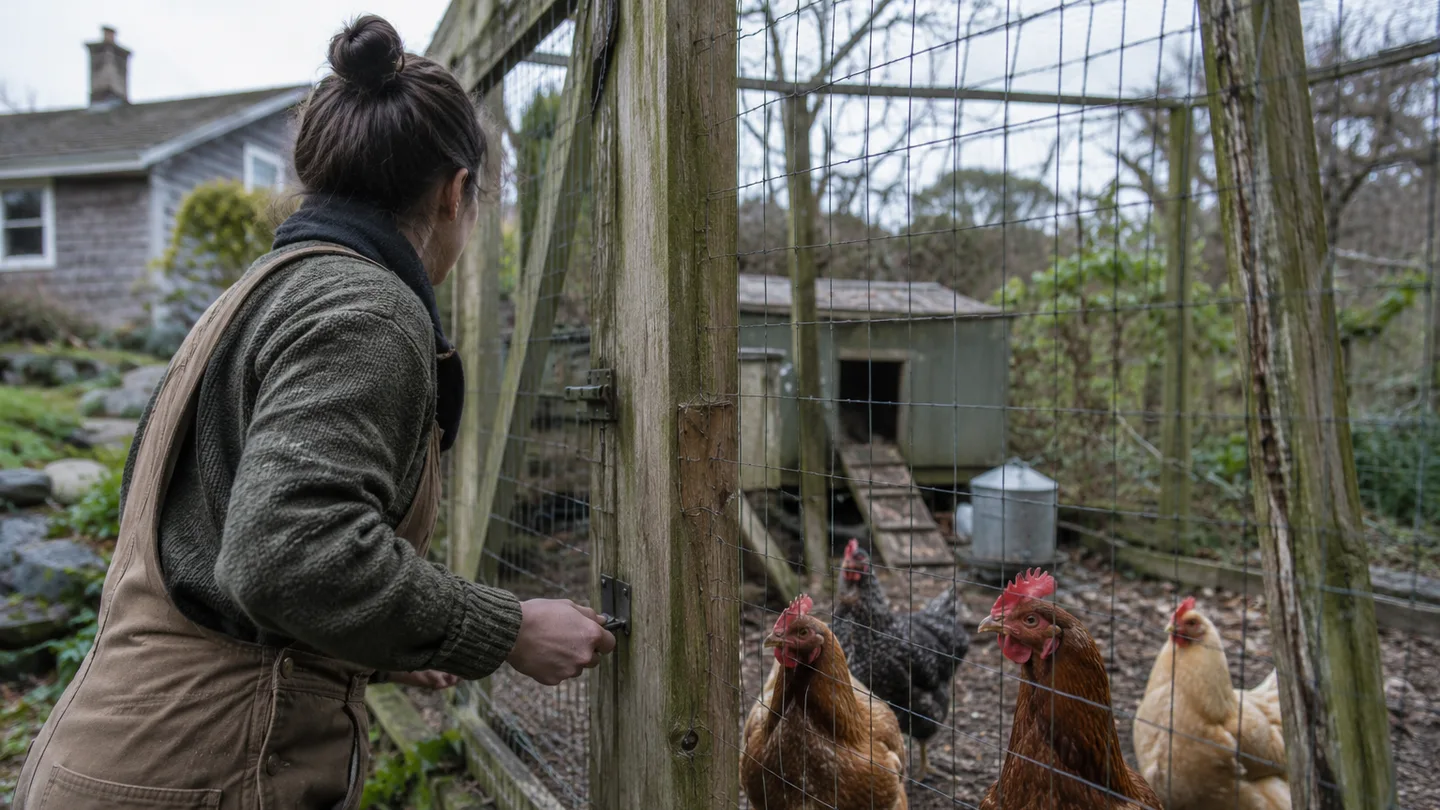
Chick peeps and unusual breathing sounds: when to adjust the brooder or call a vet
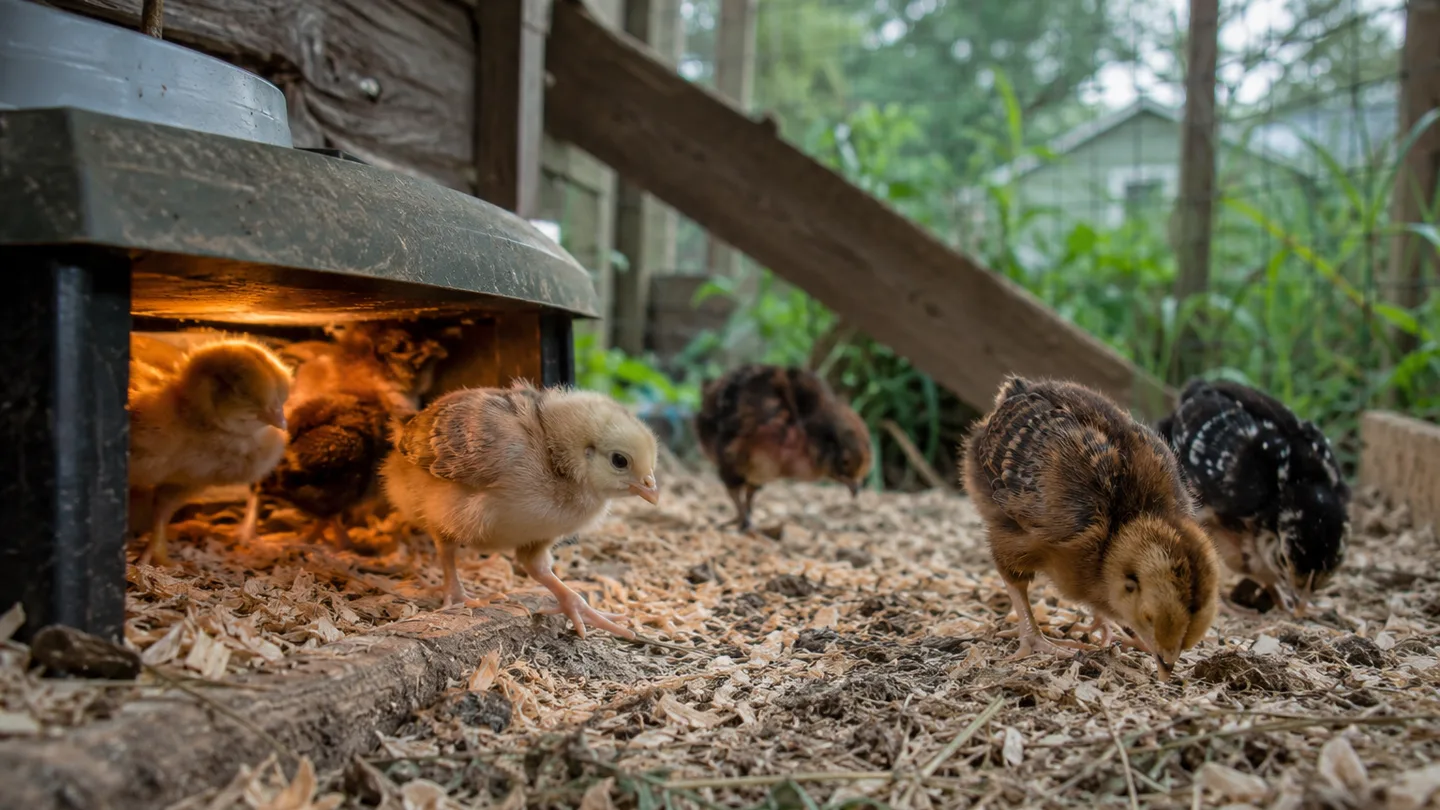
Quiet, intermittent peeping is part of a chick’s ordinary chatter. Persistent, loud peeping deserves a check of the brooder, especially the temperature at chick height. Look at the chicks as a group: are they spread around the space and moving about, or tightly huddled and reluctant to move? Are they avoiding the warm area, panting, or pressing against its edge? Pair what you see with a thermometer; don’t try to read comfort from volume alone.
A commonly used starting point is about 95°F at chick height during week one, then roughly 5°F less each week as chicks grow and feather. Treat that as a starting guide, not an automatic setting that overrides the birds. Keep a cooler area available so chicks can move away from the heat. If they pile together and peep insistently, check for a cold spot, a draft, or an incorrect thermometer position. If they crowd the far edge or seem too hot, check that the warm area isn’t excessive and that they can get away from it.
Place the thermometer where the chicks actually stand, not high on a wall or beside a heat source. Check the bedding and waterer too: wet patches, a tipped waterer, or a draft across the floor can make a brooder uncomfortable even when the displayed temperature looks right. For more on the practical setup, start with the site’s guide to best bedding for chicken coop and confirm brooding advice with your local extension’s chick-care guidance.
Breathing sounds need a different response from ordinary peeping. Wheezing, labored breathing, repeated gasping, or a sudden change in a chick’s voice—especially alongside weakness or a bird that is getting worse—calls for prompt advice from a poultry veterinarian. Don’t wait for a sound to match a label you found online, and don’t start medication without veterinary direction and the product label. A veterinarian can assess the bird and advise whether the rest of the flock needs attention.
My judgment call: make a temperature adjustment when the thermometer and the chicks’ positions point in the same direction, then watch what changes. Moving a heat source because one chick chirped once can create a new problem if the rest of the group is comfortable. If the chicks remain distressed or the temperature reading conflicts with what you see, recheck equipment placement and contact a knowledgeable poultry professional.
This week, write down one call with its time, what happened just before it, and the caller’s posture. For chicks, add the thermometer reading at chick height and where the group settled. That small record gives you something concrete to compare the next time a sound seems unfamiliar—and helps you decide whether to adjust the brooder or ask a vet.