Hen Crowing? 5 Reasons Your Hen Sounds Like a Rooster
At fourteen weeks, a bird you’ve called Hazel gives a broken, two-note crow from the perch. Before you move her, sell her, or order a rooster to “fix” the flock, pause: the sound alone cannot prove sex. Start with age, body shape, feathering, and what was happening just before the call.
A genuine hen can make a rooster-like noise, but that doesn’t make every crowing bird a hen either. The useful question isn’t “does it sound male?” It’s “what other changes arrived with the sound?”
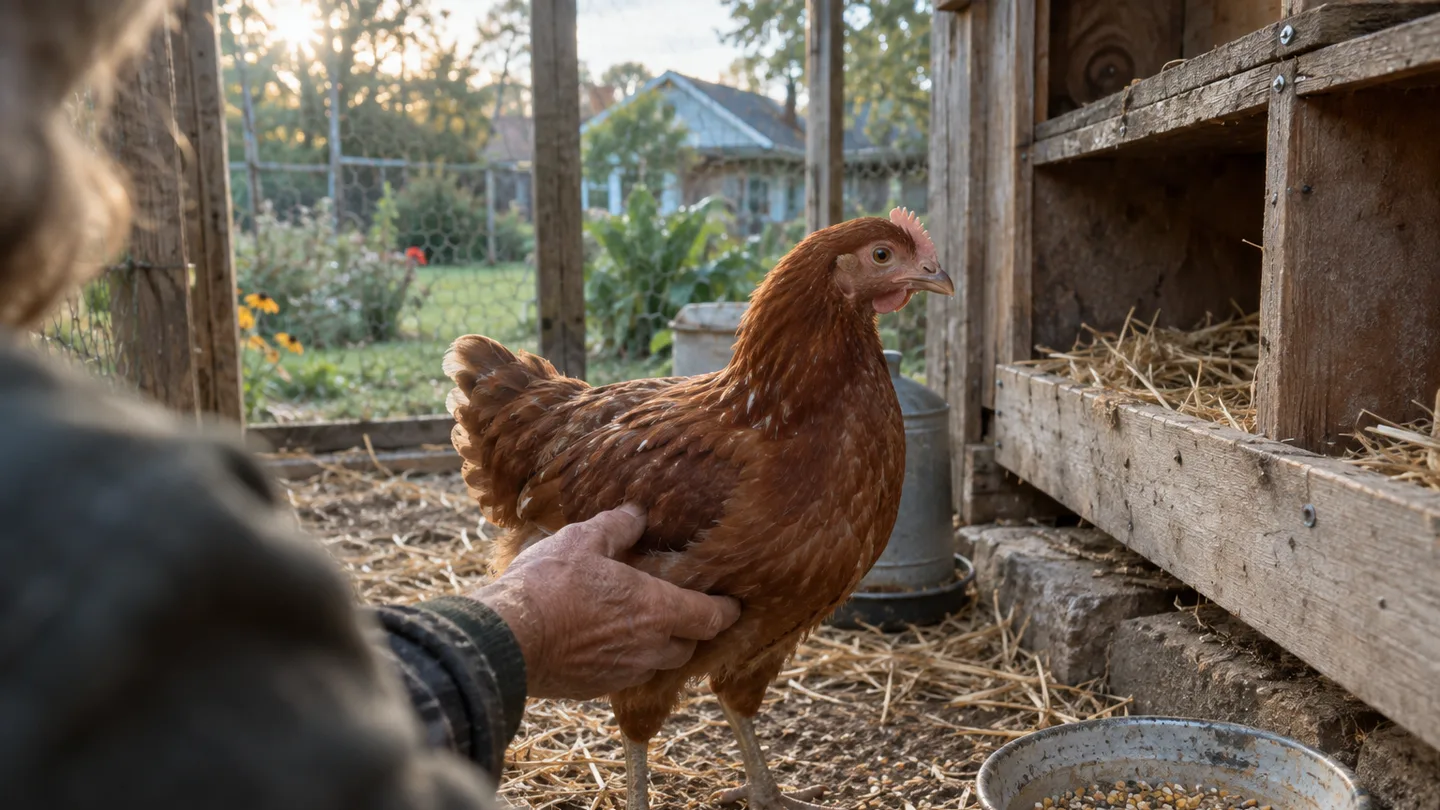
Start with the 8–20-week check: is your “hen” actually a cockerel?
Use 8–20 weeks as a check-in window, not a deadline. A young cockerel may begin testing a crow during this stretch, but breed, individual development, and the bird’s early sexing can move the timing. A voice gives you a reason to inspect the bird. It doesn’t give you a final answer.
- Comb and wattles: rapid growth and early reddening can support a cockerel diagnosis, although pullets also redden as they approach laying.
- Hackle and saddle feathers: narrow, pointed feathers are more suggestive than the rounded feathers you’d expect on many pullets, but breed variation matters.
- Tail shape: long, curved sickle feathers can appear as a male trait. They may not be obvious yet in a young bird.
- Legs and spurs: thick legs or developing spur buds add context. Hens can also grow prominent spurs, so don’t use this clue alone.
- Posture and flock behavior: chest-forward standing, mounting, sparring, or alerting may lean male, but a dominant hen can show some of the same behavior.
Look for a bundle of clues. If the only evidence is a rough sound, keep observing. If the voice arrives alongside pointed feathers, fast comb growth, a changing tail, and mounting behavior, treat the bird as a probable cockerel until a poultry expert gives you a better answer.
Color can complicate the picture. A sex-linked cross may let you use down or feather color, but only if you know the exact cross and which traits it passes on. For a second opinion, compare the bird with extension guidance on chick sexing and secondary sex characteristics rather than a random photograph on social media.
Five explanations, from a sexing mix-up to a health change
Work through these five routes in order. Start with the ordinary explanation, then move toward health concerns if the call is new, persistent, or paired with physical changes. A real hen can crow, but the reason and urgency depend on what else is happening in the coop.
1. A sexing mistake: the “hen” is a late-developing cockerel
If the bird came from a straight-run batch, the seller didn’t promise you a sexed pullet. An uncertain source may also have made a visual estimate that was difficult to confirm at hatch. In either case, a crow-like call can be the first obvious clue that your “hen” is a cockerel whose other traits are only now becoming clear.
Check the comb, feather shape, tail, legs, and behavior together. Early comb growth plus pointed hackle feathers tells you more than a single dawn call. Mounting behavior strengthens the case, but it still isn’t conclusive by itself. I wouldn’t make a flock decision until at least three clues point in the same direction.
2. She has filled a rooster-shaped social role
A hen doesn’t need to become male to become prominent in the flock. After a rooster is removed, or when a flock has no male, one assertive hen may take on more alerting, patrolling, or flock-directing behavior. Keepers commonly describe a deeper call in this situation, but social role is a possibility to test, not a guaranteed diagnosis.
Watch whether the sound began after a flock change. Does she stand watch while the others feed? Does she call when a dog appears, a gate opens, or a bird leaves the group? If so, the context may matter more than the pitch.
Adding a rooster isn’t a dependable crowing cure. It can change noise, breeding, flock space, and local legal questions. If you’re asking do you need a rooster for eggs, remember that a hen can lay an unfertilized egg without one. Add a male because you have a breeding plan and suitable housing, not because you hope he will silence a hen.
3. A hormonal or ovarian change is shifting her behavior
This is the health branch. It shouldn’t be your first conclusion from one strange noise, but it deserves attention when crowing arrives with other changes. An ovarian or reproductive problem can alter the bird’s hormone balance. That may occur alongside male-type feathering, a changing comb or wattle, a sharp reduction in laying, abdominal enlargement, weight loss, or general illness.
Those signs overlap with other chicken health problems. You can notice the pattern at home, but you can’t diagnose an ovarian disorder by looking at feathers or listening to a call. Don’t try human hormone products, leftover livestock medicine, or an improvised treatment. For background reading, use veterinary references on avian ovarian disease, then arrange a poultry-experienced vet if the pattern is persistent or accompanied by illness.
4. Breed and individual temperament may be part of the pattern
Some birds are simply more vocal than their flockmates. A hen’s normal call may also become rougher or deeper with age, social position, or excitement. That doesn’t make her a rooster, and it doesn’t prove that her breed is responsible.
Backyard chickens breeds can help set expectations about size, temperament, and general activity, but a breed label is a clue rather than a verdict. Compare the sound with that bird’s earlier calls. A gradual change in an otherwise bright, eating, laying hen points in a different direction from a sudden vocal change paired with weight loss or a swollen abdomen.
5. The “crow” is really an egg, alarm, or contact call
Before you call it crowing, sort the sound by timing and body language. Start with three practical categories:
- Dawn or post-laying call: some birds vocalize around the start of the day or after visiting the nest. Note whether the sound follows an egg rather than a flock disturbance.
- Alarm call: a bird may stretch tall, fix her gaze on a noise or movement, and call while other birds pause, look up, or move closer.
- Contact call: a separated bird may call toward the flock. The sound often stops when she can see or rejoin the others.
Record a short clip on your phone. Include the bird’s posture, the trigger, the time, and the reaction of the flock. Pitch is difficult to judge through a coop wall. Context gives you something you can actually compare.
In my own small backyard setup, I once misread a rough note from a pullet at dawn as a first crow. I left my phone recording near the run for two mornings and found that the sound followed the gate latch snapping or another bird flying up, not a consistent sunrise routine. When those triggers stopped, the call stopped too. The best clue wasn’t how rooster-like the sound was. It was what happened immediately before and after it.
Run a 7-day observation before you change the flock
Don’t make a one-morning diagnosis. The useful record is boring on purpose: two brief checks each day, plus an extra note whenever the call happens. You’re looking for a pattern, not trying to catch the bird performing on command.
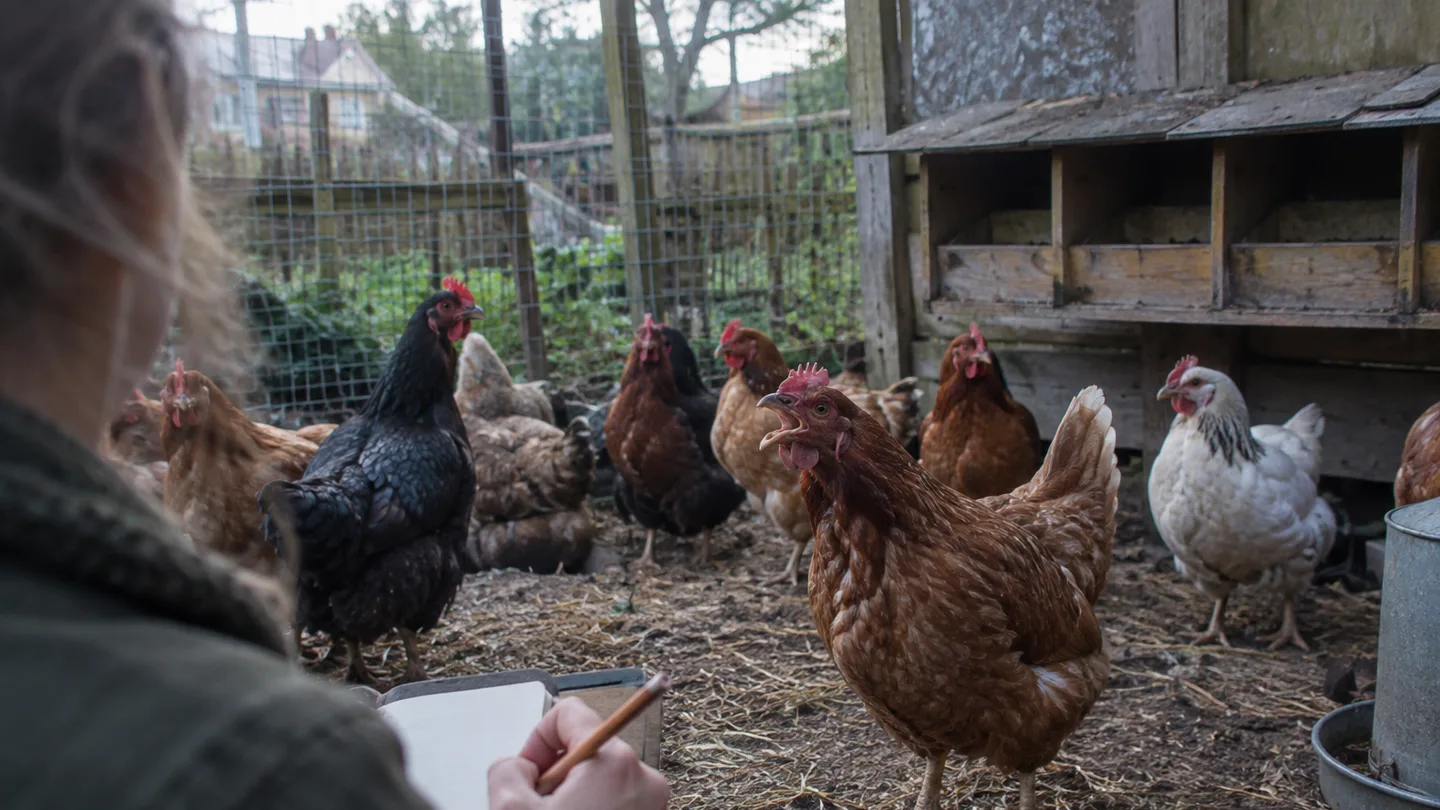
- Write down the exact time. Note when the call starts, whether it repeats, and how long the episode lasts.
- Record the likely trigger. Check for sunrise, laying, a gate or vehicle, a predator-shaped shadow, a new person, flock separation, or another bird’s call.
- Mark her position. Was she on the roost, at the nest box, in the middle of the flock, at the run edge, or apart from the others?
- Check basic condition. Note appetite, water intake, droppings, stance, activity, and whether she is fluffed up or struggling to move normally.
- Check reproductive and physical changes. Record eggs, comb and wattle changes, abdominal swelling, new pointed feathers, tail changes, or spur growth. Note whether other birds respond.
Example: imagine a 14-week straight-run bird. On days 1 and 2, she calls at 6:15 a.m. from the perch but eats normally and shows no new feathers. On day 3, there is no dawn call, but she calls after a hawk shadow passes over the run. On days 4 through 7, she calls only when separated from the flock. That pattern would make me investigate alarm and contact behavior before declaring her male.
The opposite pattern deserves more urgency. A new call that starts alongside stopped laying, a fluffed posture, reduced appetite, weight loss, abdominal swelling, or male-type feathering moves the question out of the “noisy hen” category. Don’t add a rooster, isolate a healthy bird, or give medication based on one sound.
The line between harmless and concerning: when a vet should see her
A healthy hen with a stable, context-linked voice can usually be observed while you gather better information. An unusual call by itself doesn’t automatically need treatment. The decision changes when the bird looks unwell or the change is sudden and persistent.
I’d treat these as same-day veterinary concerns:
- collapse or inability to stand normally;
- breathing difficulty or obvious respiratory distress;
- active bleeding that doesn’t stop with gentle pressure and prompt care;
- a severe injury, sudden loss of coordination, or marked weakness.
Arrange a poultry-experienced vet for persistent new crowing paired with lethargy, weight loss, reduced appetite, abdominal swelling, repeated straining, a marked laying change, or sudden male-type physical traits. Those combinations don’t identify one disease. They do tell you that listening to the call is no longer enough.
Bring the seven-day notes and the video. Tell the vet when the sound began, whether the flock changed, what the bird is eating and drinking, and whether eggs or droppings changed. If you can’t find a poultry vet, a local extension office may help you locate one familiar with backyard birds.
This week, film one complete call without chasing the bird, then start the seven-day log. That small record will help you separate a late-developing cockerel, a socially assertive hen, a harmless vocal habit, and a health change that deserves professional attention. If you’re still building your first flock, raising backyard chickens for beginners is the sensible companion read for housing, feeding, and daily checks.