Chicken Limping? 7 Causes and What to Check First at Home
Ten quiet minutes can tell you more than a chase across the run. Put the bird on level ground, watch several full strides, and inspect both feet before you decide whether chicken limping can be watched at home or needs a same-day call.
A mild, improving limp with normal eating and no visible wound gets a short home-monitoring window. Non-weight-bearing, an obvious deformity, active bleeding, exposed tissue, severe swelling, or whole-bird illness moves the problem beyond a casual home check.
Before you treat anything: the 10-minute limp check
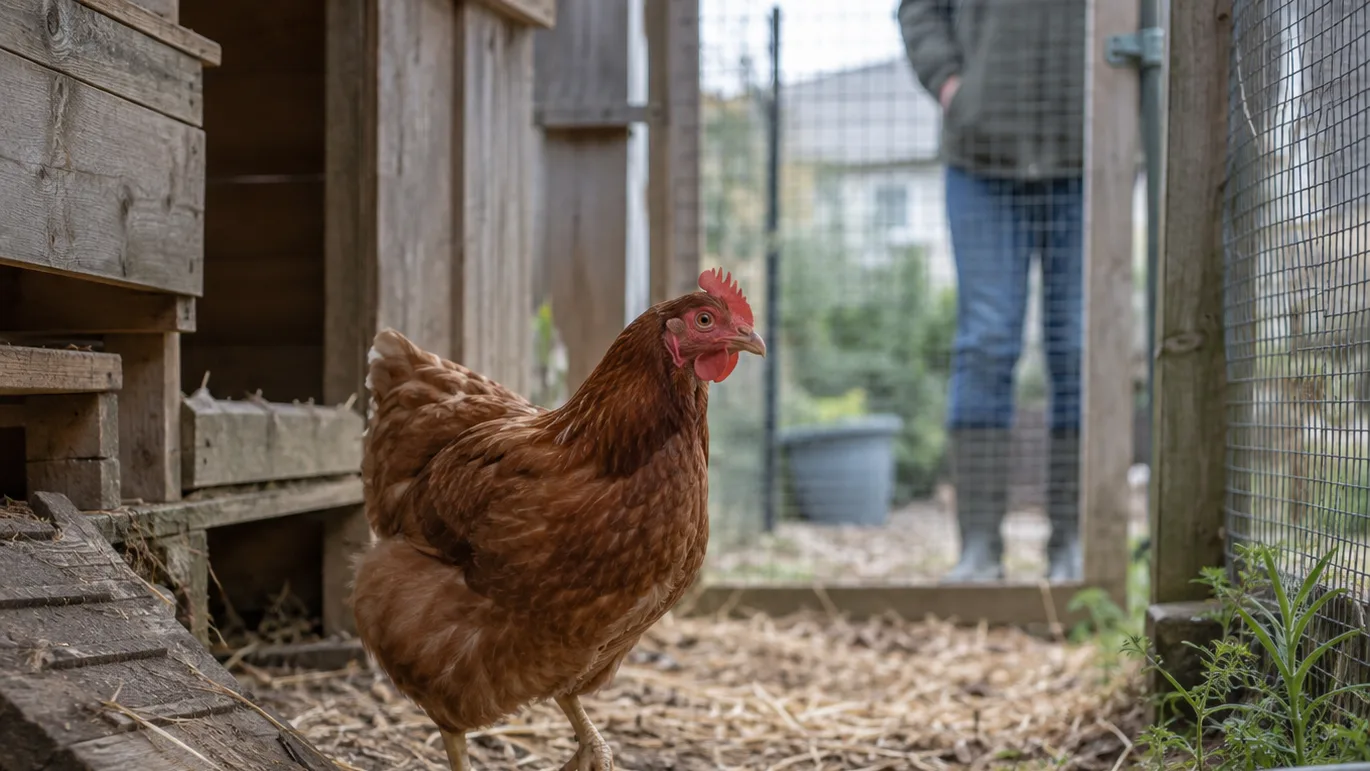
Start before you catch her. Stand quietly and watch the bird walk for about 10 minutes on level, dry ground. Look for a shortened stride, a toe that barely touches down, a leg held forward or tucked up, or a reluctance to turn. A hen that bears some weight but walks stiffly gives you a different starting point from one that refuses to use the leg.
When I check a hen in a small backyard setup, I use a low crate or dog carrier with a towel on the floor after that first observation. Food and water stay at floor level. This prevents a chase from turning a mild injury into a harder-to-read one. I also make a quick note of which leg looks affected, whether she eats, and whether droppings look broadly normal.
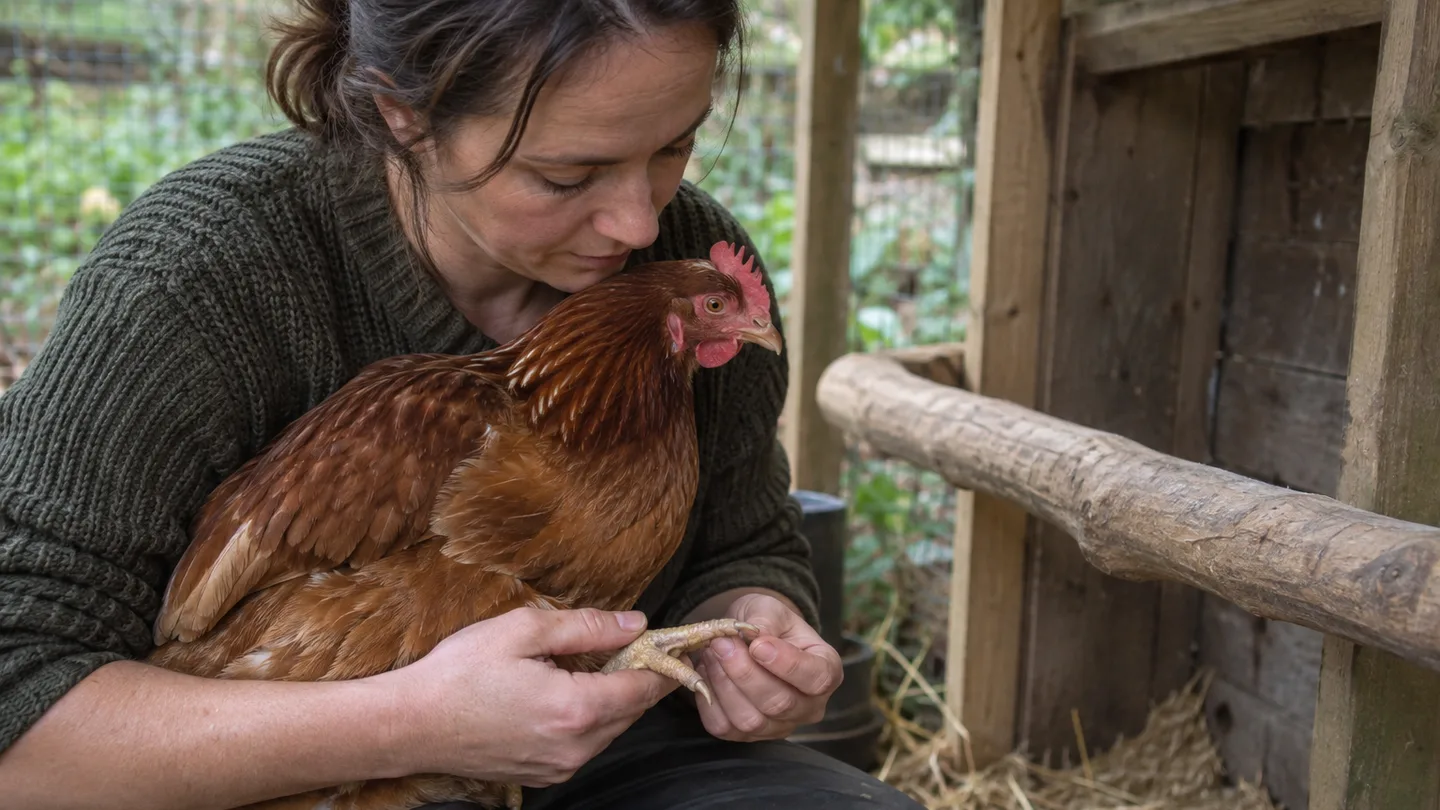
Then compare both sides under bright light. Look from the hip down to the toes without forcing a joint straight. Check the footpad, webbing, nails, leg scales, hock, and the skin around each joint. A short walking video can help a veterinarian see several full strides and a turn before handling changes the gait.
- Monitor for up to 24 hours only if the limp is mild, improving, and the bird is eating and drinking.
- Seek same-day veterinary advice for zero weight-bearing, a crooked or dangling leg, active bleeding, exposed tissue, marked swelling, or rapid worsening.
- Escalate promptly if the limp comes with weakness, breathing trouble, major appetite loss, weight loss, or unusual droppings.
Cause 1 — Bumblefoot shows up under the foot, not just in the gait
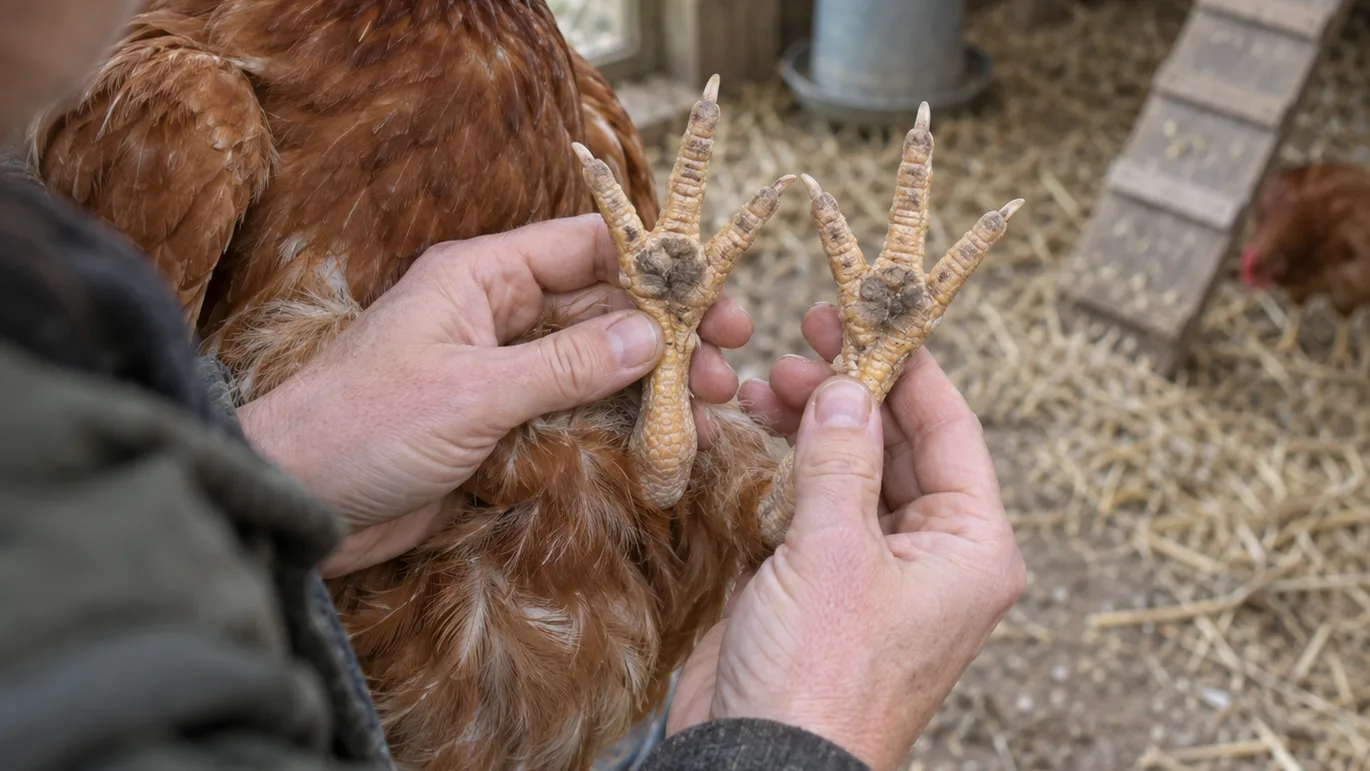
Bumblefoot is a footpad problem, so turn your attention under the foot rather than judging the walk alone. Check both pads for a black scab, firm swelling, heat, redness, a split in the pad, or drainage. Compare left and right. The unaffected foot gives you a useful baseline for size and temperature.
A dry, small-looking scab does not tell you how deep the problem goes. A hot, swollen, soft, or draining foot deserves more caution than a dry spot with no swelling. If the bird is still walking but the pad is becoming warmer or larger over the next day, I would not keep extending home observation.
Do not cut, squeeze, or dig into a foot when you cannot see the depth of the lesion. That can create more tissue damage and make a veterinary examination harder. Give the bird clean, dry bedding and remove high or rough perches while you arrange advice. The longer guide to bumblefoot in chickens is useful for comparing a simple-looking scab with a foot that needs hands-on care.
Cause 2 — A tiny thorn, torn nail, or cracked pad can be enough
A small injury can hurt every time the bird puts weight down. Inspect toe tips, nail beds, the webbing between toes, and the front edge of the pad. Look for a thorn, splinter, sharp straw, cracked skin, or a nail torn partly away. A bird may limp hard even when the wound is too small to see from standing height.
For minor surface bleeding, apply steady, direct pressure with clean gauze for five to ten minutes without lifting it every few seconds to look. If the bleeding stops, a gentle rinse with clean lukewarm water or sterile saline can remove surface dirt. Do not dig for a deep object, pull at tissue that is firmly embedded, or pour harsh chemicals into a deep wound.
A nail torn back toward the base, bleeding that continues after sustained pressure, or a puncture you cannot inspect properly is a same-day veterinary question. Keep the bird on clean, dry footing while you make the call. A deep object can be pushed farther in by repeated home attempts.
Cause 3 — After a jump: sprain, fracture, or dislocation
Jumping from a roost, slipping on a ramp, or being knocked by another hen can produce a soft-tissue injury, fracture, or dislocation. Partial weight-bearing with a fairly normal leg angle and modest swelling can fit a sprain, but it does not rule out a small fracture.
Zero weight-bearing is more serious. So is a leg that hangs loosely, points at an odd angle, rotates strangely, or becomes rapidly swollen. Those signs belong in the same-day veterinary category. Do not pull the leg into place, test it by bending it repeatedly, or guess at a splint from an online photograph.
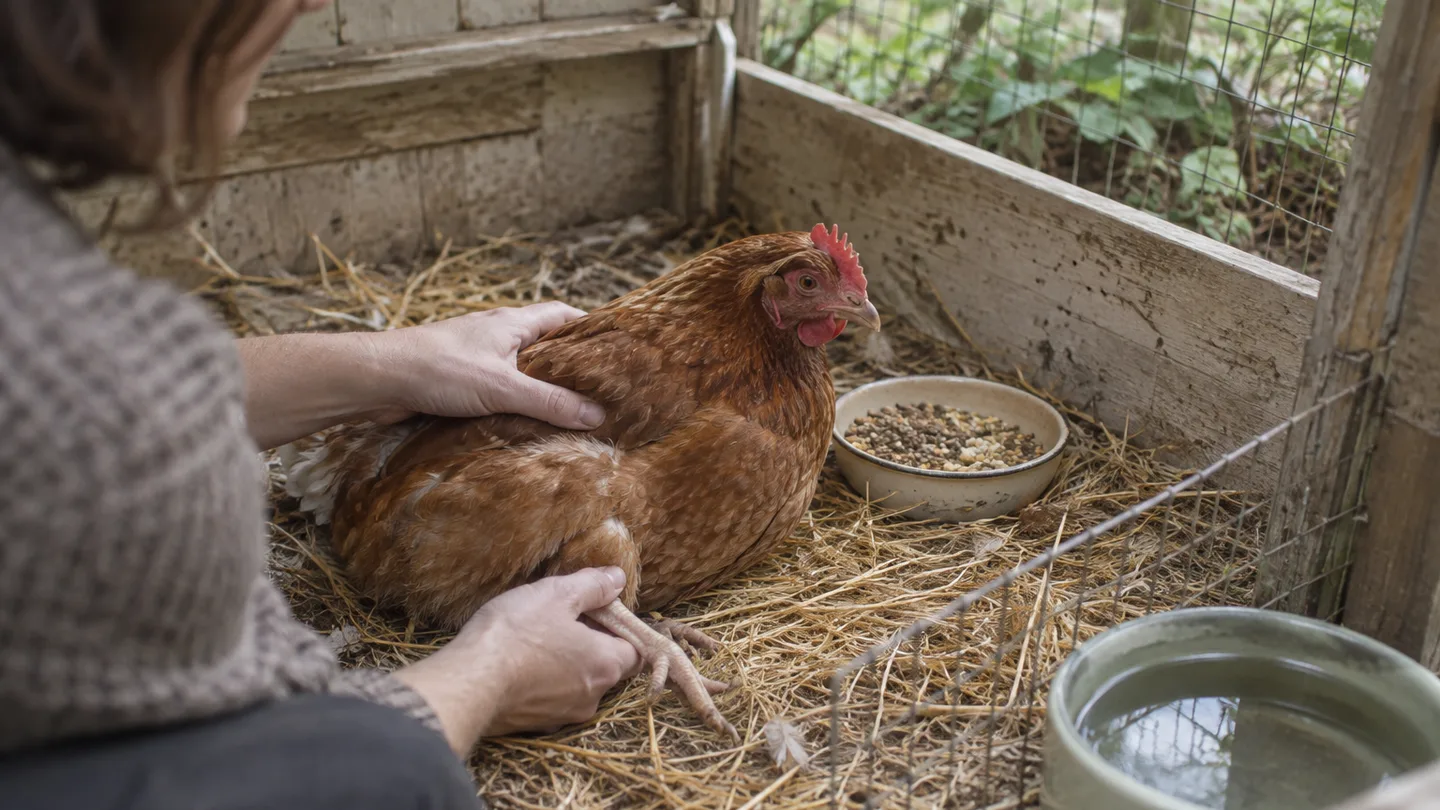
For a bird with a mild, stable limp and no deformity, use a low recovery pen for 24 to 48 hours. Keep food and water on the floor, remove the perch, and provide dry, nonslip bedding. The aim is to stop more jumping while you watch the trend. If she worsens, stops bearing weight, or becomes dull, stop home monitoring.
Cause 4 — Raised leg scales and a slow limp point to mites
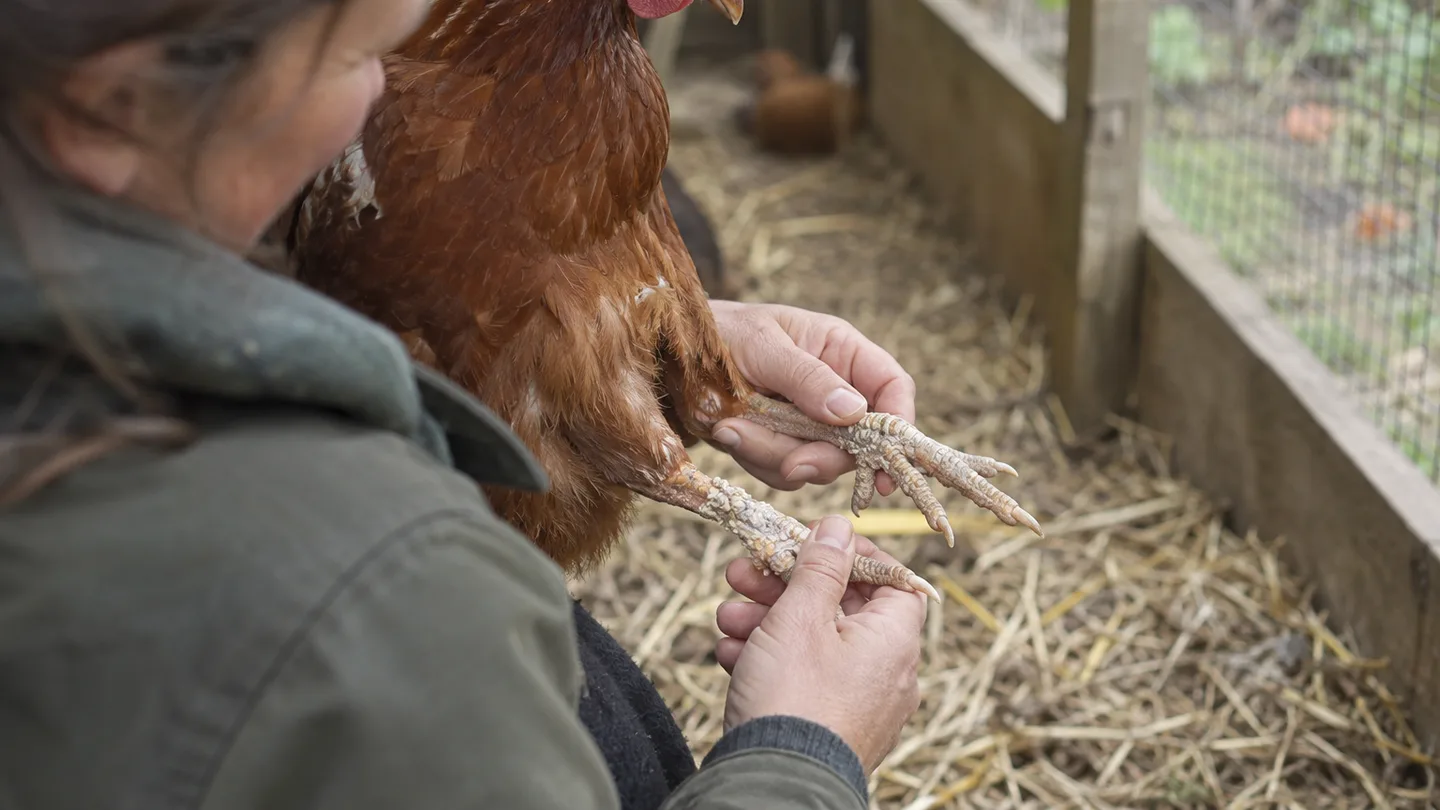
Scaly-leg mites change the texture of the leg over time. Scales may lift, crust, or look ridged instead of lying flat. Both legs are often worth checking, along with the legs of flockmates. A gradual limp paired with raised, crusted scales points me toward an external-parasite problem before I assume one sudden sprain.
Do not peel the scales off or scrub the legs hard. That can open small cracks and add a second problem. Clean the coop and inspect cracks, perch ends, and sheltered surfaces, but use a poultry-labeled product exactly as its label directs. Follow the repeat schedule rather than inventing a stronger dose. The first application may not deal with every egg or protected life stage, which is why a single treatment may not finish the job.
Check the whole flock, not just the bird that limps. For the treatment sequence and cleanup details, use the site’s guide to chicken mites treatment. A sudden one-sided limp with smooth leg scales still sends me back to the foot and joint inspection first.
Cause 5 — Nails, toes, and perch diameter can change the gait
Overgrown nails can catch on bedding and change how a hen places her foot. Curled toes can shift pressure onto the wrong part of the pad. A perch with sharp edges, too little grip, or an awkward diameter can add strain without leaving a dramatic wound.
For many standard-sized hens, a rounded perch around 1.5 to 2.5 inches in diameter is a practical starting range. Bantams may manage better with a smaller perch. Heavier breeds may prefer a broader surface. The edges should be smooth, and the perch should not wobble when a bird lands.
Trim long nails in small increments. Stop before the quick, especially when the nail is dark and the centre is hard to see. If the nail is split, painful, or impossible to trim safely, get help rather than forcing it. This week, check the three places your flock uses most: the favourite perch, the landing area, and the route to feed and water.
Cause 6 — When both legs are weak, stop treating it as a foot problem
Weakness can look like limping. Watch for curled toes, hock-sitting, tremors, a wide stance, repeated falling, or both legs becoming unreliable. Progressive inability to stand is not a routine foot injury, even if one side looked worse at first.
Check that the base diet is a complete, age-appropriate ration rather than mostly scratch, scraps, or treats. I keep treats around 10% of intake as a conservative household rule. Correcting an unbalanced diet is sensible, but it should not delay veterinary advice when the bird is weak or deteriorating.
Nutritional and neurologic problems can look similar from the outside. Marek’s disease is one possible veterinary-level explanation among several, not a diagnosis you can make from curled toes alone. The Merck Veterinary Manual poultry reference and University of Minnesota Extension poultry guidance are useful background resources, but a bird that cannot stand needs an actual clinical decision.
If more than one bird develops weakness, or if signs spread through the flock, record which birds are affected and contact a veterinarian or local extension office promptly.
Cause 7 — A hot joint or an unwell bird needs a veterinary decision
A hot, swollen joint deserves a different response from a sore nail. Note whether the swelling is at the hock, toe, or another joint. Chalky or crusty deposits can look gout-like, but appearance alone cannot confirm the cause. Appetite loss, weight loss, altered droppings, unusual thirst, or a generally dull bird raises the stakes further.
Use this decision rule: a bird that is not eating or drinking, is rapidly worsening, or has whole-body signs needs same-day veterinary or local extension guidance. Do not run a home medication experiment with human painkillers, leftover antibiotics, or an unlabelled product. Dose and safety depend on the bird, the product, and the actual cause.
Your concrete action this week is simple. Photograph both feet from the same angle, then log weight-bearing and appetite twice daily for 24 hours. Write down whether the bird can turn, reach food, and settle without falling. Review how to clean a chicken coop for bedding and hazard checks, then look at chicken coop ventilation so damp footing does not keep irritating the feet.
That record gives you a better next step than a guess. If the trend is improving and no red flag appears, continue protecting the leg from jumps and rough footing. If the trend is flat or worse, make the veterinary call before the bird has spent another day compensating.