Can Chickens Fly? How High and Far Your Birds Really Go
Yes, chickens can fly. Most backyard hens don't sustain graceful, level flight, but a fit bird can clear a low fence in a few hard wingbeats and travel across part of a yard. The useful question isn't whether your bird flies like a wild bird; it's whether your enclosure gives it a launch point and a clean route out.
For backyard planning, treat roughly 3 to 6 feet as a realistic fence-clearing range for many ordinary birds, then allow for a few to a few dozen yards if the bird is motivated and starts from a stump, roof, feeder, or raised perch.
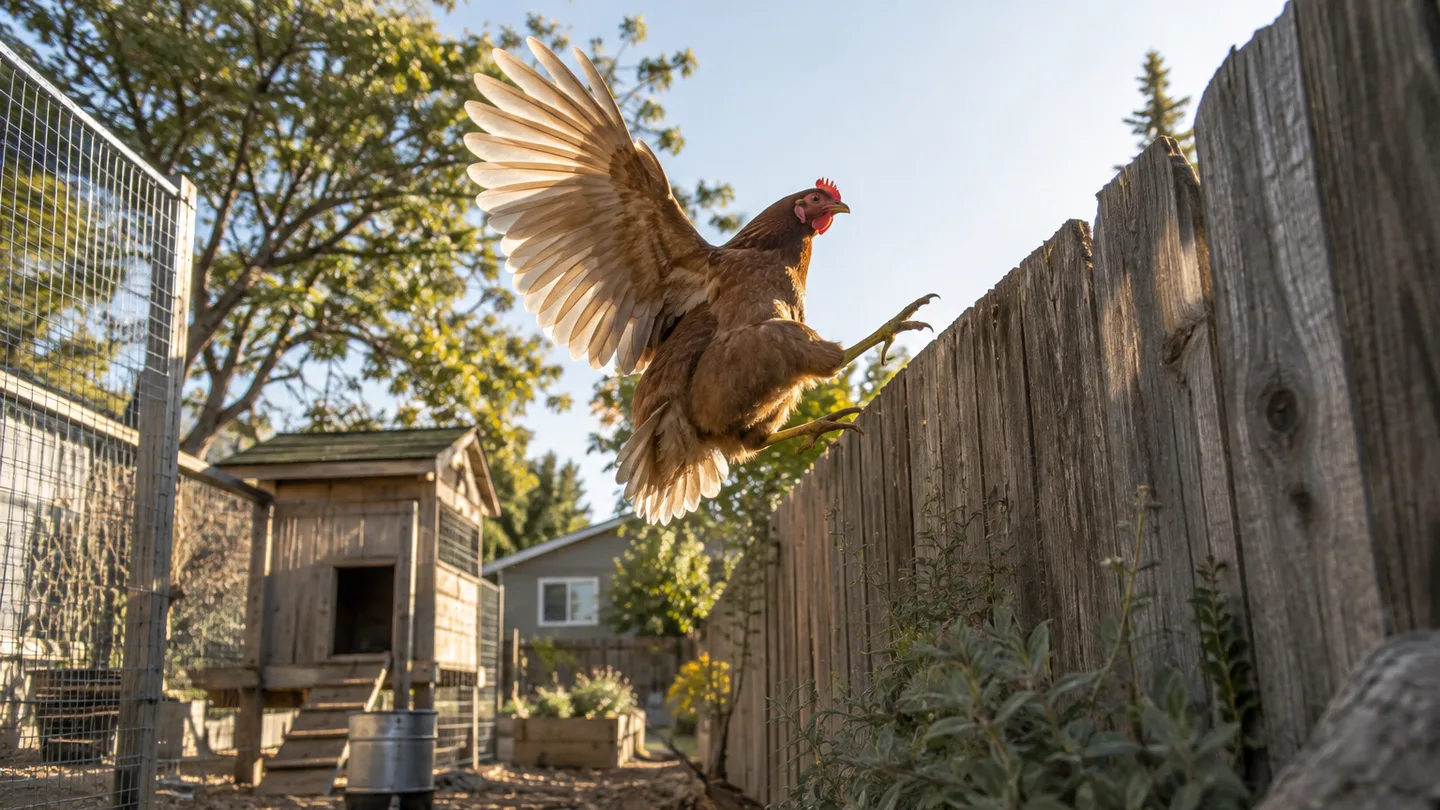
Can chickens fly? The backyard answer is yes—but usually in short bursts
Chicken flight is best understood as a short-burst escape tool. Your hen may use it to reach a roost, get onto a feeder, cross a fence, or move away from a dog. She isn't usually trying to stay airborne for long.
There are three separate questions here. Lift asks whether the bird can get off the ground. Height asks whether it can get over the barrier. Distance asks how long it can keep beating or gliding before landing. A bird may have enough lift to clear a fence without having the stamina or control to travel far beyond it.
For a small backyard flock, I use two planning bands. A healthy, reasonably light bird may clear about 3 to 6 feet from a level takeoff. A motivated bird with a clear launch point may cover a few to a few dozen yards in one burst. Those are enclosure-planning ranges, not universal breed limits.
Most birds land quickly, then walk, scratch, and carry on. That matters because an escape doesn't have to look like a dramatic flight across the whole yard. A hen only needs one clean route over the wall.
Height first: what 4-, 6-, and 8-foot barriers actually change
A 4-foot fence is a weak containment choice for an active light-bodied chicken. Many birds can clear it from the ground, and a nearby object makes the task easier. A 6-foot fence reduces casual escapes, especially when the inside edge is clear, but it isn't a guarantee. An 8-foot barrier blocks more direct attempts, yet it can still fail if the bird starts halfway up a roof or woodpile.
In my own six-hen backyard flock, the run fence was 6 feet tall. One blue-egg hen used a roughly 20-inch stump beside the inside fence as her launch point. She cleared the top, landed in the mulch bed on the garden side, and immediately started scratching as if nothing unusual had happened. I removed the stump and covered that section of the run. The lesson wasn't that a 6-foot fence was useless. It was that fence height measured from the ground was the wrong measurement.
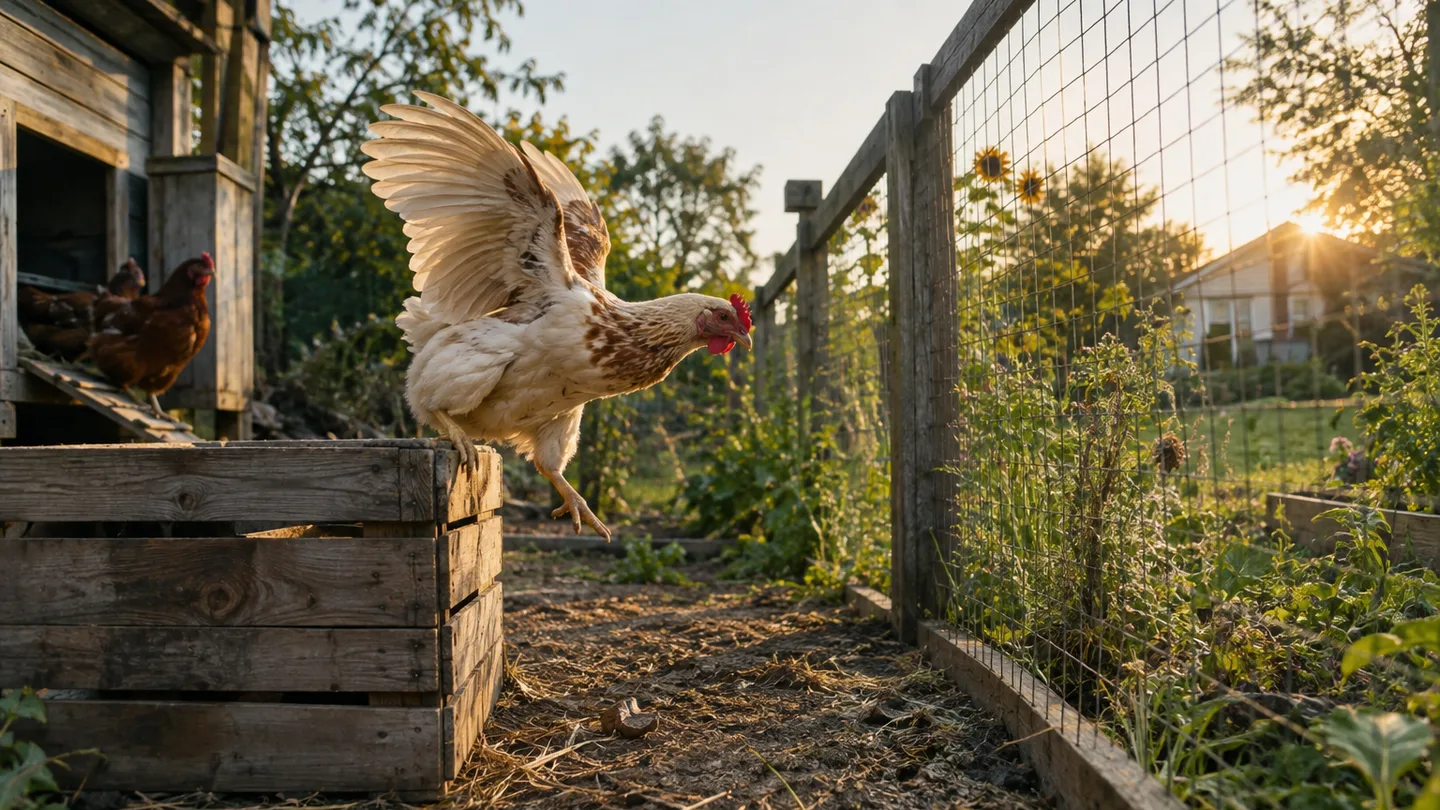
That is the distinction many new keepers miss: jumping onto a surface is not the same as clearing it, but a surface can turn a difficult jump into an easy launch. A raised feeder, sloped coop roof, stacked firewood, or low stump effectively shortens the barrier.
Think in terms of the height from the bird's feet to the escape edge. If that distance is only 4 feet because the hen is standing on a box, an 8-foot wall has become a 4-foot problem.
If you are choosing between an open run and a covered one, start with chicken coop requirements rather than the fence panel alone. The roof, gate, corners, and objects inside the run all change the answer.
Distance and takeoff: why 10 yards is a different problem from 100 feet
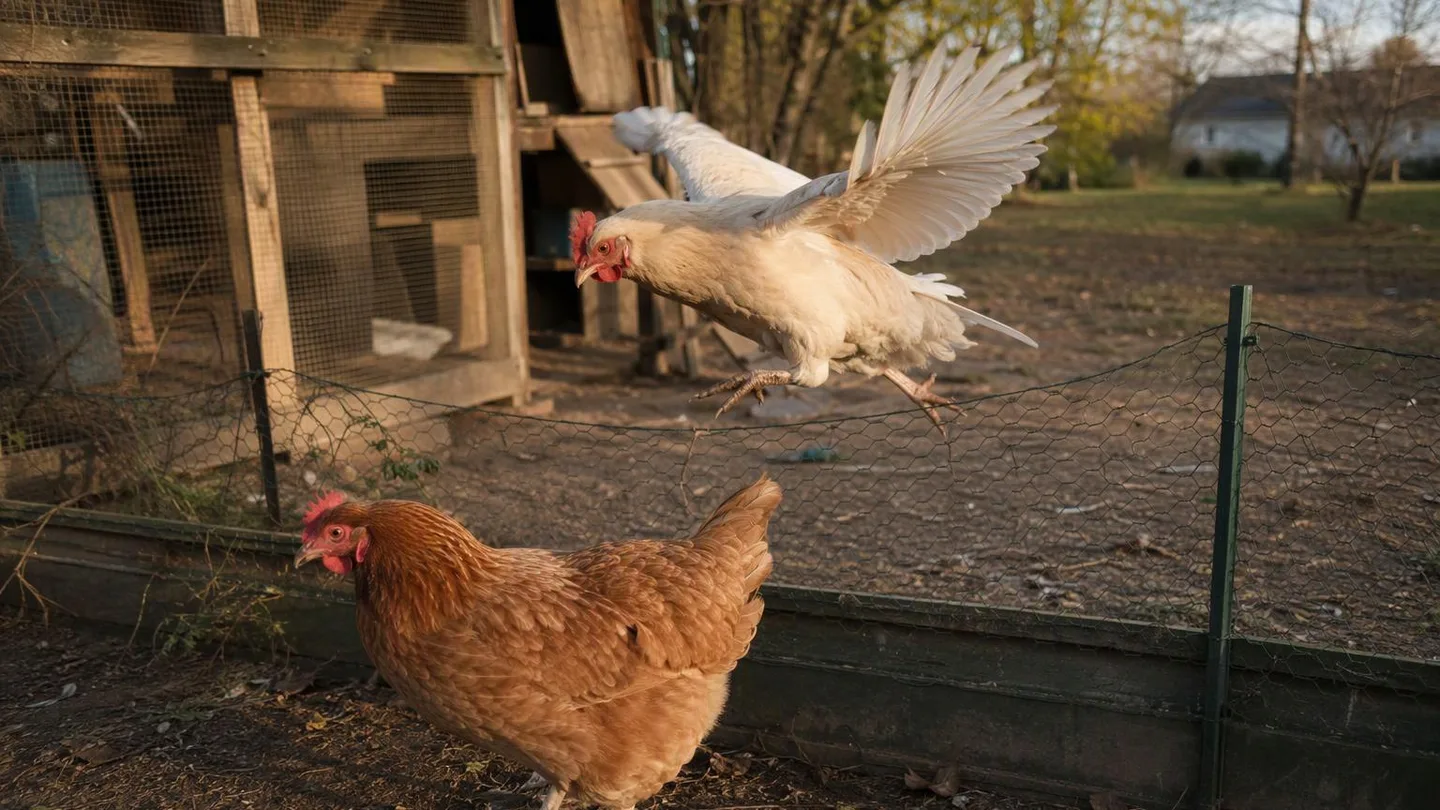
Height is usually the first escape question because the fence is visible. Distance is harder to predict. A hen that flaps over a barrier may travel only far enough to land safely, while a bird starting from a coop roof can use its extra height to glide downhill and arrive much farther away.
Ten yards is a practical backyard problem. It can put a bird from the run into a vegetable bed, driveway, or neighbour's side of the hedge. One hundred feet is a different problem because the bird must remain controlled for longer, and the landing matters more. I would not design an enclosure around the farthest distance a bird might manage on a panicked day. I would design around the first fence, roof, or raised bed it can reach.
Wind can alter the route. Panic can produce a stronger burst than normal, especially when a dog or person rushes toward the bird. Fatigue, a heavy body, wet feathers, and an awkward landing shorten the useful flight. A downhill path does the opposite by giving the bird more time before it reaches the ground.
That is why a chicken appearing to fly 20 or 30 yards doesn't mean it has the endurance of a pigeon. It may have made one hard takeoff, used a little glide, and then walked the rest of the way.
Light, heavy, young, or moulting: which birds are most likely to get over the fence?
Body shape changes the practical answer more than a breed name on its own. A light bird with a good wing-to-body ratio can be surprisingly nimble. A heavy bird may still clear a fence, but it usually needs a better launch point and produces a shorter, less controlled burst.
The table below is planning guidance, not a universal maximum for every breed or individual.
| Bird or condition | Likely flight ability | Enclosure implication |
|---|---|---|
| Light-bodied or bantam | Often quick off the ground and agile around obstacles | Use a roof or a taller, launch-point-free run |
| Medium dual-purpose bird | Usually capable of short fence-clearing bursts | Don't rely on a low open fence |
| Heavy dual-purpose or meat-type bird | More dependent on height, footing, and a clear takeoff | Remove raised objects near the boundary |
| Bird in full molt | Flight may be less coordinated while primary feathers are being replaced | Keep containment in place; don't treat temporary awkwardness as permanent |
| Young, fit bird with complete feathers | Can become more capable as strength and coordination develop | Build for the bird it may become, not the chick you have today |
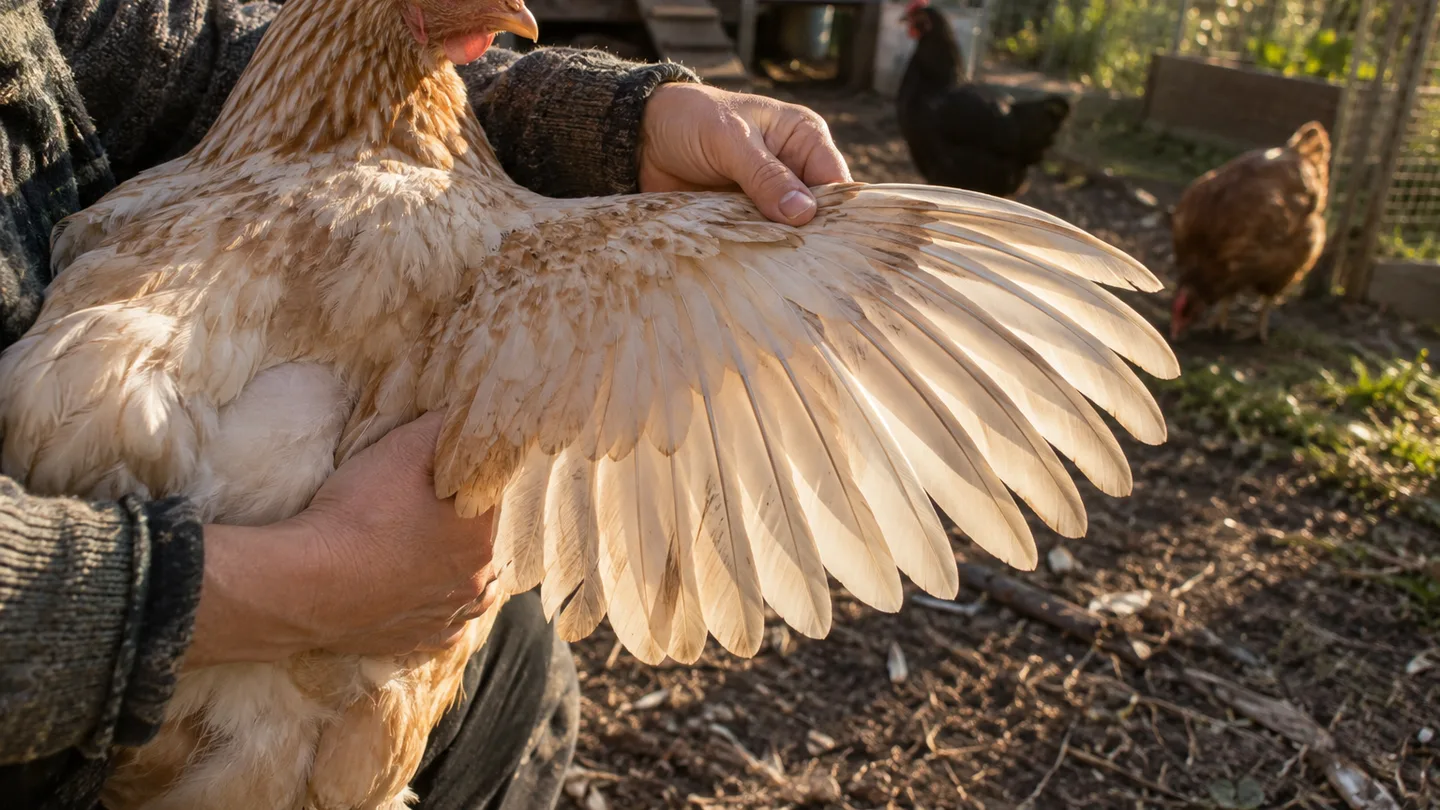
Full, undamaged primary feathers give a bird more useful wing surface. An injury, poor body condition, or active molt can reduce lift and control. None of those conditions should be used as a permanent containment plan. Feathers grow back, injuries heal, and a young bird can become much more confident around the run.
Build around flight: roof netting, launch points, and predator-safe mesh
Most escape problems start with a ladder that nobody meant to build. A feeder lid, woodpile, stump, low roost, raised bed, or sloping coop roof can give a hen the extra height she needs.
Here is how I think about the three common run designs:
- Open 4-foot run: suitable only when your birds are poor flyers, the area is carefully managed, and an escape is acceptable. It offers little margin for a light or motivated bird.
- Open 6-foot run: a meaningful improvement for casual containment, but still vulnerable to launch points and determined birds.
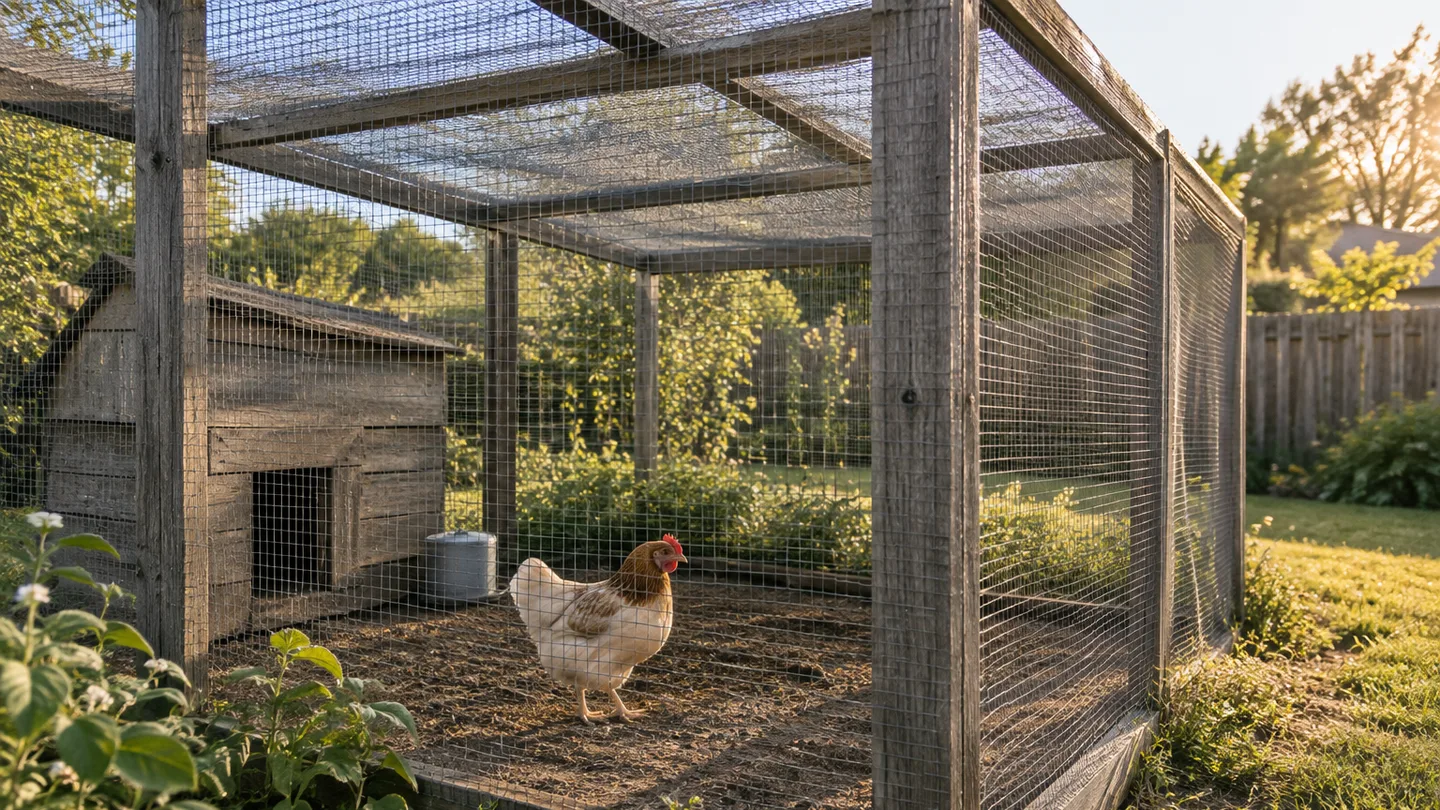
- Covered run: the most dependable choice for keeping birds inside and reducing access from above. Use netting for containment where appropriate, or a rigid roof when climbing or falling predators are part of the local problem.
I use 1/2-inch hardware cloth on my own run, including the lower wall sections and gate, because the small openings make reach-through harder and give the structure more rigidity than light chicken wire. I don't treat that mesh as magic. A secure frame, fastened seams, a roof, and a gate that closes properly matter just as much.
My rule of thumb is simple: chicken wire can help keep chickens in, but I would not call it a raccoon-proof barrier. Its larger, flexible openings can allow reach-through or create a weak point when a climbing animal pushes against it. A small-aperture hardware-cloth panel is a better starting choice for predator exclusion, but no material makes a poorly fastened run safe by itself.
Before you buy materials, walk inside the run and look up from the bird's point of view. Move anything that creates a launch step. Check the gap under the gate, the corners where wall meets roof, and the point where a sloped roof approaches the fence. The same roof decision sits beside how much space do chickens need, because a larger run is still not secure if its sides and top leave an easy route out.
- Measure from the highest object a bird can stand on, not from the ground.
- Raise, remove, or relocate that object before adding height to the fence.
- Cover the run if a light-bodied bird can still reach the top edge.
- Test every gate and roof seam by looking for a gap wider than the smallest bird's head.
That four-step check is more useful than buying the tallest fence panel you can find. Height above a launch point matters more than height from bare ground.
Wing clipping changes the odds—not the need for a proper enclosure
A clipped hen may still hop onto a feeder, run across a yard, and reach a low fence before you notice. Clipping changes the balance of the wings; it doesn't remove the bird's legs, climbing ability, or need for shelter.
If you choose it as a temporary management tool, the usual approach is to trim the outer primary flight feathers on one wing so the bird has less symmetrical lift. I would only work on fully grown feathers that are clearly safe to cut. A growing feather can contain a blood supply, so don't cut an unfamiliar shaft just because it sticks out. If you're unsure, use veterinary guidance on blood feathers rather than guessing.
Clipped feathers are not a permanent fix. They can be replaced after a molt, and a bird that was temporarily grounded may regain enough balance to clear the same barrier later. My expectation is that containment becomes less reliable after a bird completes its first full molt if the enclosure was relying on clipping. That projection would be wrong if the same bird regrew its primary feathers yet still could not clear the same tested barrier from the same launch point.
Clipping is most defensible as a short bridge while you remove a launch point or finish a roof. It is a poor substitute for a covered, predator-conscious run. If you are weighing free range chickens against a contained setup, decide first whether you can supervise the route, protect the flock from local predators, and accept that one bird may travel farther than the others.
This week, take a tape measure into the run and record the highest place a bird can stand. Measure from there to the lowest escape edge. Remove that launch point or cover the run before you reach for scissors. Then revisit chicken coop requirements and your free range chickens plan with the bird's actual flight path in mind.