Can Chickens Eat Tomatoes? Safe Parts, Portions & Risks
A ripe tomato from your garden can be a small, occasional treat for your chickens. The answer changes when the fruit is green, or when the pecked part is a leaf or stem: keep those out of the feed bowl, and keep your birds away from the vine if they can reach it.
Yes—ripe tomato flesh is an occasional treat, not a complete feed
When people ask, “Can chickens eat tomatoes?” the useful answer is ripe tomato flesh, in a modest amount, is a reasonable occasional extra for adult hens. That doesn’t make every part of a tomato plant suitable food. Ripeness matters, and so does whether you’re offering a piece of clean fruit or letting birds forage through the foliage.
Keep the distinction simple: offer ripe fruit flesh; leave green fruit, leaves and stems out of the treat dish. A tomato also can’t take the place of a complete layer ration. It’s an extra alongside the feed your hens rely on for balanced nutrition.
My practical judgment is that a tomato is easiest to manage as a planned treat rather than an open invitation to forage among the plants. You control which part reaches the birds, how much they get and whether they’re still eating their regular ration.
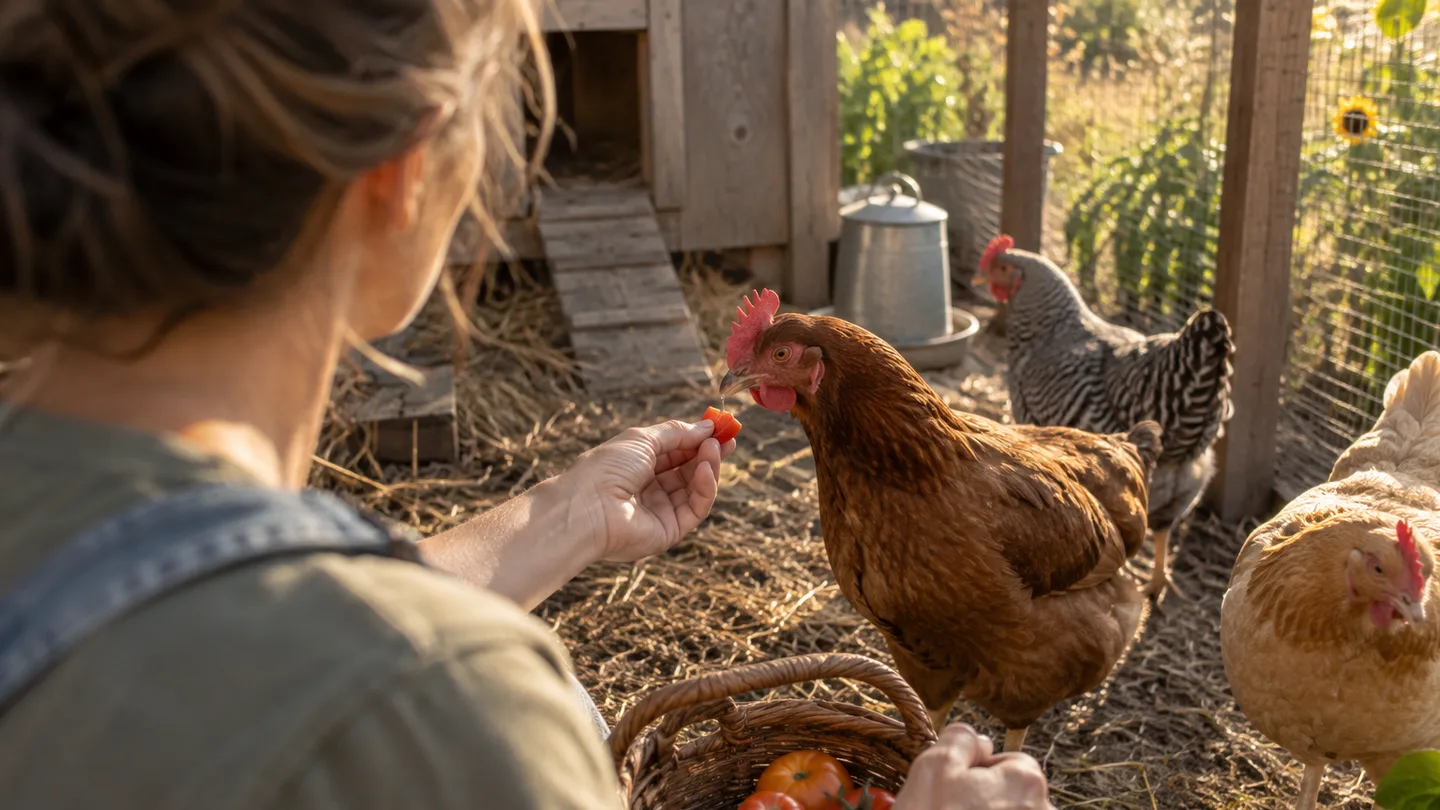
Ripe fruit, green fruit, leaves and stems are not interchangeable
Tomatoes belong to the nightshade family. Tomato plants contain glycoalkaloids, including tomatine; the level can vary with the part of the plant and the fruit’s maturity. In general, green plant material is the part to treat cautiously, while ripening changes the fruit’s chemical profile. That’s why “it’s a tomato” is too broad a rule for deciding what to feed.
| Part or preparation | Backyard feeding choice | Practical reason |
|---|---|---|
| Fully ripe tomato flesh | Small occasional treat | Choose clean fruit and remove the stem and leaves. |
| Green or unripe fruit | Keep it out of the treat bowl | It has not reached the ripe-fruit stage; don’t assume it’s interchangeable with ripe flesh. |
| Leaves and stems | Keep them away from your birds | These are plant material, not ripe tomato flesh. |
| Rotting or moldy fruit | Discard it | Don’t use spoiled scraps as chicken feed. |
This table is a feeding decision aid, not a claim that one peck of green fruit will produce a predictable outcome. There isn’t a serving size I can responsibly give you for unripe fruit or foliage. The safer call is to prevent access rather than try to calculate a dose.
If your hens share a yard with a vegetable bed, remember that they won’t reliably sort the appealing fruit from the foliage you’d rather they leave alone. I’d put the barrier between the flock and the vine, instead of asking a curious bird to make that distinction.
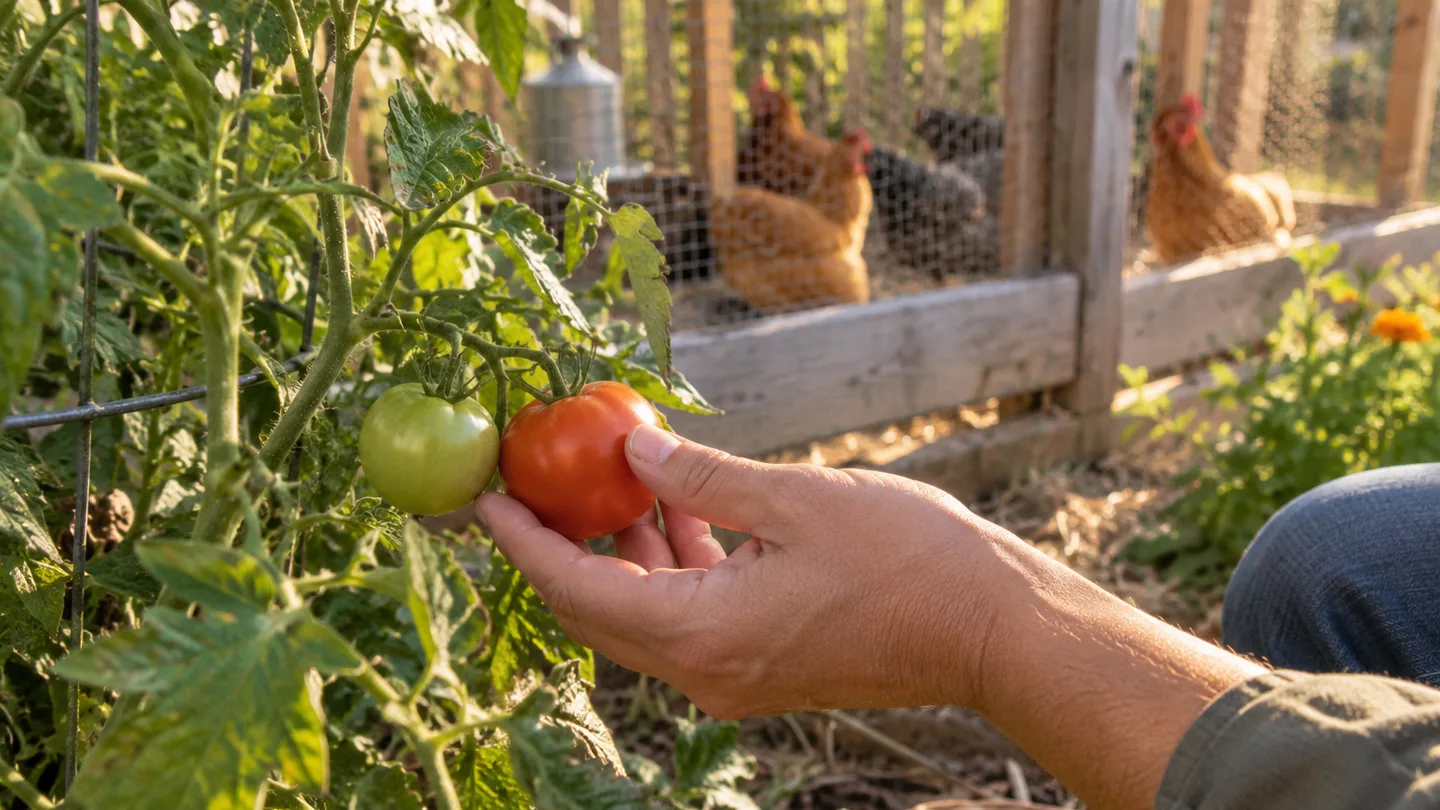
A cautious first serving: 1–2 cm pieces, with treats kept in check
For an adult hen, start with one small piece of ripe tomato flesh, roughly 1–2 cm across. That’s a cautious serving suggestion, not a tested toxicity limit or a precise tomato allowance. It lets you see whether your bird wants the treat without putting a large pile in front of the flock.
For a concrete example, say you have six hens and want to share one ripe medium tomato. Cut it into small pieces and offer a few first. Watch whether the birds take the pieces while still showing interest in their regular feed. If the tomato disappears quickly, that tells you it was popular; it doesn’t tell you that a larger serving is better. Put any remainder away rather than turning a treat into the main event.
A widely used feeding rule of thumb is to keep treats to around 10% of the diet, with complete feed making up the rest. Treat that as a broad ceiling for extras, not a tomato-specific dose. Tomatoes are only one of the foods that might compete with a balanced ration, and the practical check is whether your birds are still eating their feed normally.
Chicks are a different case. Keep chick starter as their food and skip tomato treats, especially while they’re very young and learning to eat. A small flock can make sharing feel harmless, but a treat isn’t worth displacing the feed designed for a growing chick. If you’re comparing routine portions, see how much layer feed per chicken per day and adjust for your own feed label and flock.
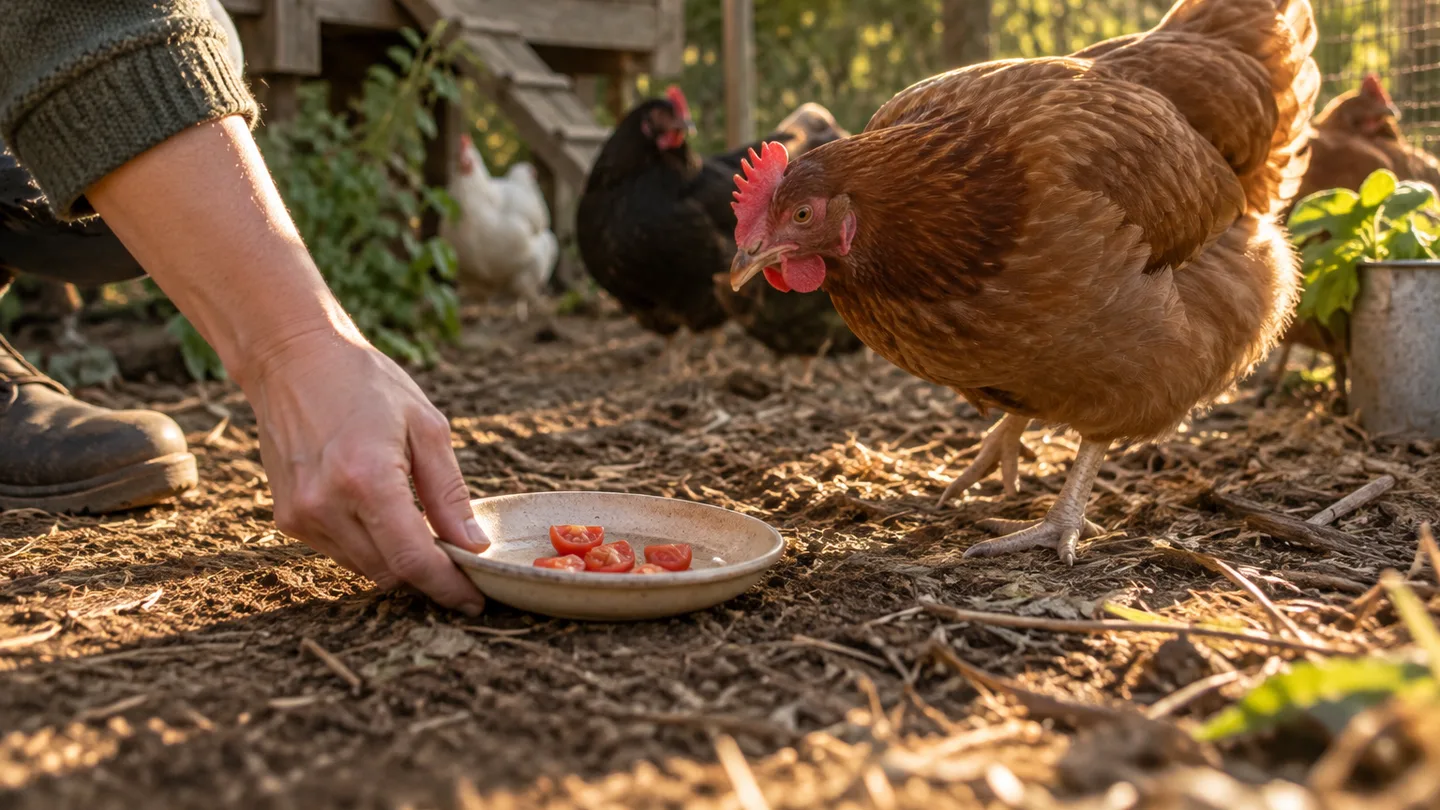
Wash, remove the stem and cut the fruit for easy sharing
Give the tomato a rinse under clean water. Remove the stem and any attached leaves, then cut the fruit into pieces your hens can pick up without wrestling with a whole slippery tomato. Halve cherry tomatoes; cut larger fruit into manageable pieces. The 1–2 cm size above is a practical starting point, not a proven safety cutoff.
Offer the pieces on a clean surface or in a dish rather than tossing them into dirt or bedding. That makes it easier to see what’s left and pick it up. Remove uneaten scraps after the birds have had a chance to eat, particularly in warm weather, when damp fruit can quickly become messy. Don’t leave a forgotten tomato half under the roost or tucked into litter.
If you’re feeding several hens, spread a few pieces out instead of dropping one large chunk where a dominant bird can guard it. That’s a flock-management choice, not a special tomato rule. It simply makes it easier to see whether more than one bird gets a turn.
Plain cooked tomato is different from salty sauce or seasoned scraps
A little plain, cooked tomato can be treated much like a little ripe fresh tomato, provided it’s cooled and unseasoned. Cooking doesn’t make a heavily dressed dish a good chicken treat. Before offering leftovers, check the ingredients and skip sauce or scraps containing added salt, sugar, oil, onion or garlic.
That’s a cautious kitchen rule: the more ingredients in a dish, the harder it is to know what your birds are getting, and the less control you have over portions. Canned tomato products vary, so read the label instead of assuming a can contains only tomato. If it’s salty, seasoned or oily, choose a simpler treat.
For a useful comparison when planning scraps, read can chickens eat apples and can chickens eat pumpkin. Keep the same basic habit with any extra: offer a small amount, use foods you can identify clearly, and make sure treats don’t crowd out the regular ration.
If a hen eats green fruit or foliage, remove access and watch for illness
If you spot a hen pecking a green tomato or tomato leaf, first remove the plant material and block access to the rest of the vine. Note what part was eaten and roughly how much appears to be missing. If you think a bird ate a substantial amount, call a poultry veterinarian for advice rather than trying a home remedy.
Get veterinary guidance promptly if a bird becomes unusually quiet or weak, stops eating, or develops digestive signs. Those signs don’t identify the cause on their own, so don’t assume a tomato is responsible—or assume the bird will simply recover without help. Tell the vet what you saw, when it happened and whether other birds had access.
Don’t induce vomiting, force-feed, or give a supposed antidote based on a social-media tip. A poultry vet can help you decide what to do based on the bird and the exposure. If you can’t reach one, a local veterinary clinic or extension office may be able to point you toward appropriate regional help.
For more context, consult veterinary toxicology references on glycoalkaloids in tomato plants and University extension guidance on poultry treats and complete-feed nutrition. Those are useful places to compare general guidance with your own situation; a reference cannot estimate how much your particular hen ate.
During tomato season, check the bed once a day for fallen fruit
When your flock can reach the garden, harvest ripe tomatoes before they drop and make a quick daily pass for fallen fruit. Pick up green fruit, too. If hens can get to the vines, use a barrier that actually separates birds from the plants; a low edge they can step over won’t change their access.
There’s a useful difference between garden access and a controlled treat. In the garden, you may not know whether a hen sampled foliage, a green tomato or a fallen fruit. At the feeding dish, you choose the ripe piece and can watch what gets eaten. I’d make that control the priority, especially if your birds are enthusiastic foragers.
On a Saturday check, for example, you might find one ripe tomato on the ground and several green ones still on the vine. Pick up the fallen fruit, leave the green ones out of reach, and only set aside a clean ripe piece if you want to offer a treat. That small routine is more useful than trying to judge each peck after it happens.
Keep the layer ration first: a hen may eat roughly 100–120 g of feed daily
You may see 100–120 g per adult laying hen per day used as a rough planning range. Treat it as a number to check against the feeding directions on your own bag, not a guaranteed intake for every bird. Body size, weather, activity and production can change how much a hen eats. If the label’s guidance differs, follow the product directions and watch what your flock actually consumes.
The point of the range is perspective: a piece of tomato is an extra beside a substantial daily ration, not a substitute for it. Tomato is a watery fruit and doesn’t provide the full nutrient balance of a formulated layer feed. Your best everyday signal is whether the birds are eating their complete feed as usual. If they fill up on treats and leave the ration, cut back on extras.
For flock-specific planning, compare the feed label with how much layer feed per chicken per day. It’s also worth checking how much feed per chicken per day if you’re working out the amount for a mixed or changing flock. The aim is to keep the complete ration available and use treats in a way that doesn’t disrupt it.
A quick yes-or-no check before you offer a tomato
Before you put a tomato in the run, ask three questions. Is it fully ripe fruit? Is it clean, fresh and plain? Can you offer a small amount while your birds continue eating their usual feed? If the answer is yes to all three, a modest piece is a reasonable occasional treat.
If it’s green, leafy, spoiled or heavily seasoned, skip it. If your hens have free access to the tomato bed, check the plants and add a barrier rather than relying on the feeding bowl to control what they find. And if a bird has eaten a substantial amount of green plant material or shows concerning signs, contact a poultry vet.
This week, check the garden for fallen tomatoes and make sure your flock can’t reach the vines. If your hens are eating their normal ration, set aside one small piece of ripe tomato for an occasional treat. That’s enough to answer the question without turning a garden surplus into a new staple.