Can Chickens Eat Raisins? Safe Portions, Sugar, and Risks
Can chickens eat raisins? Yes, plain raisins can be an occasional treat for adult hens. Keep the portion small: a cautious starting suggestion is 1–2 raisins per hen, offered now and then, not every day. That’s a serving choice, not a proven safe-dose limit; a small hen, a bird with a full crop, or a flock already getting treats calls for less.
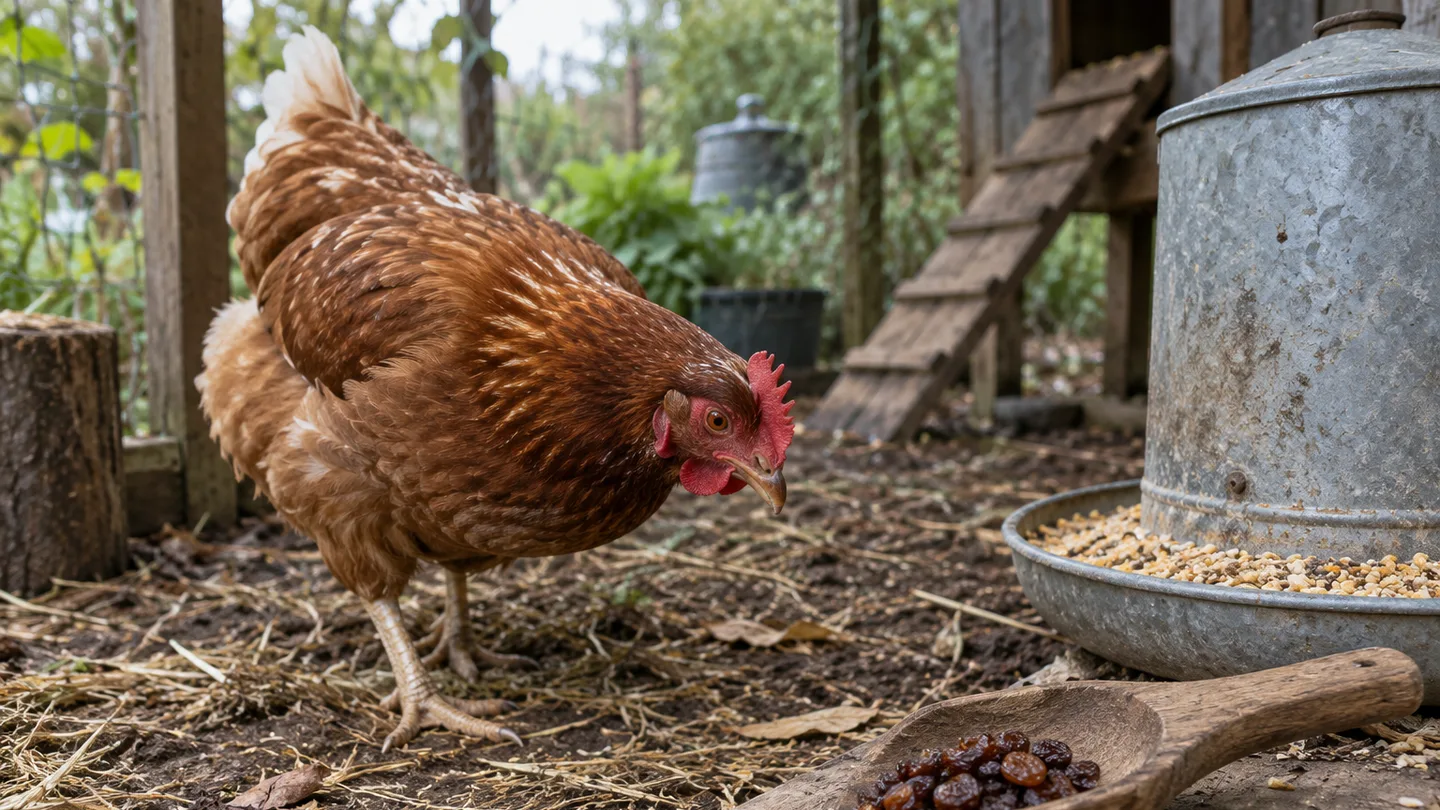
Yes—but keep raisins a small, occasional treat
Think of raisins as a sweet extra, not a feed ingredient. Your birds still need their normal complete ration available, and a raisin shouldn’t take the place of it. If you’re wondering whether raisins are on a strict no-go list, I wouldn’t treat plain raisins as an inherently poisonous food for chickens. The practical question is how much you offer and what else is in the snack.
My judgment call is to count raisins before you step into the run. One or two per adult hen is easy to keep small and easy to share fairly. If your birds are bantams, young, or already filling up on other treats, stay at the low end or skip them that day. Treats vary in size, and a bird’s appetite varies too, so this is a cautious serving suggestion rather than a chicken-specific toxicology threshold.
Offer them occasionally, with the usual feed still available. If you’re comparing dried fruit with plain grape treats, remember that drying changes the bite: a raisin is smaller and less watery than a grape, so it’s easy to offer several without noticing.
Why a dried grape is a different treat from a fresh one
A raisin starts as a grape and loses much of its water as it dries. The sugars and other solids are left in a smaller piece. That means raisins can deliver a concentrated sweet bite without the volume of a fresh grape. It doesn’t make one raisin an emergency; it does make “just a handful” a poor way to judge the serving.
For exact nutrition figures, check the seedless-raisin entry in USDA FoodData Central and the package in your kitchen. Products and serving sizes vary, and a database value describes the food, not a chicken’s personal sugar limit. The useful takeaway is the mechanism: drying reduces water, so a small dried piece can carry more of the grape’s solids per mouthful than a similarly sized piece of fresh fruit.
There’s also a practical difference from grain treats. Grain-based extras bring carbohydrates too, but raisins are notably sweet and sticky; neither belongs in place of a formulated ration. Your hen’s crop can only hold so much at a time. If she fills up on extras, she may walk away from the feed that supplies the balanced mix of nutrients intended for her daily diet. The first sign you may notice is less interest in the feeder after treat time, not a dramatic reaction to one bite.
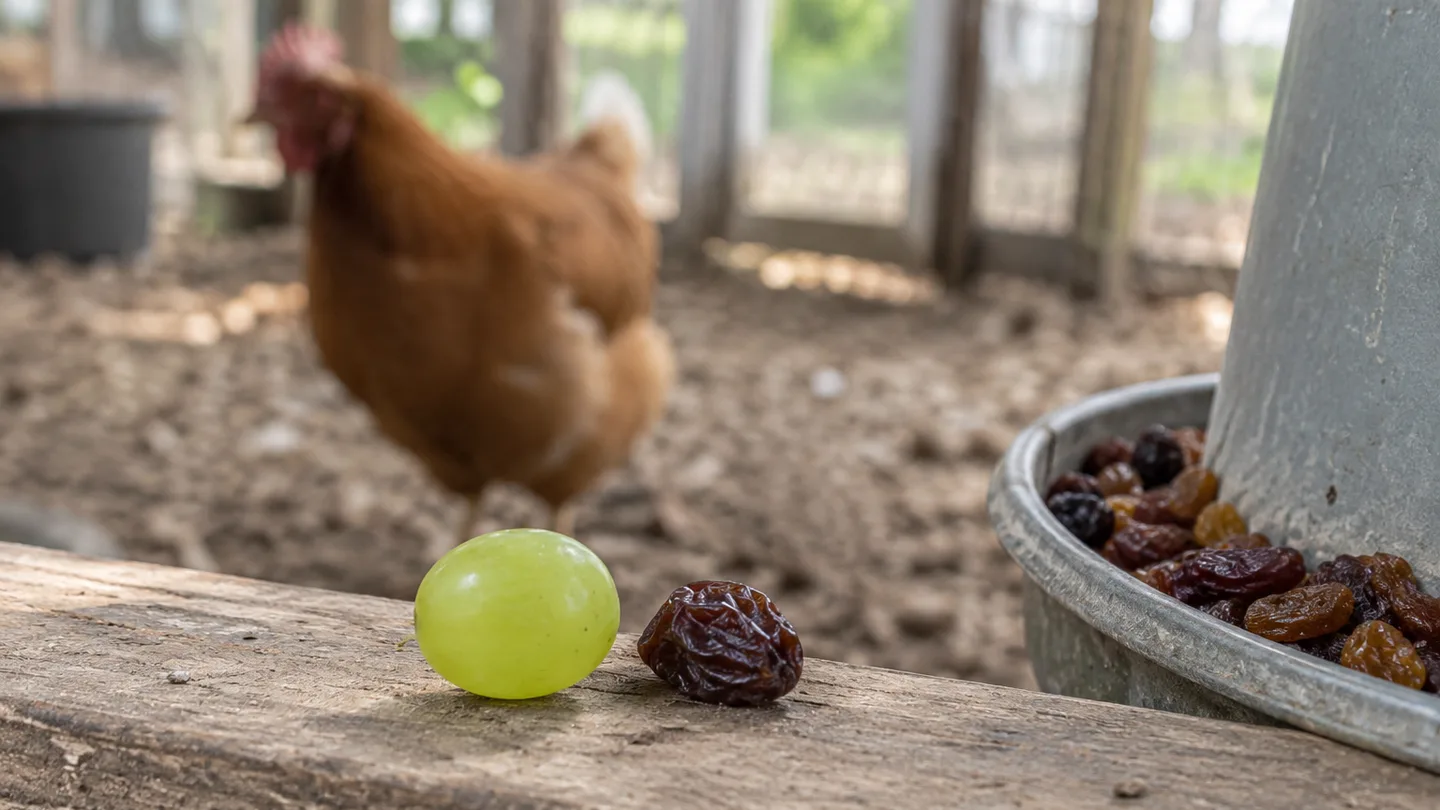
A cautious portion: count raisins per hen, not by handful
Use the bird count as your starting arithmetic. At 1–2 raisins per adult hen, a 3-hen flock gets 3–6 raisins total; a 12-hen flock gets 12–24. Those totals are suggested occasional portions, not a tested safe-dose range. If you can’t tell which birds are getting the raisins, choose the smaller total and offer them where you can watch.
That count also helps you avoid the classic treat-time imbalance: the boldest hen gets most of the snack while a quieter bird hangs back. Don’t scatter a large handful and assume it divided evenly. Put a few pieces in separate spots, or offer them in a shallow dish where you can see who reaches it. If one bird is particularly pushy, separate the serving into a couple of small spots rather than adding more raisins.
You may have heard a 10% treats guideline. If you use that rule of thumb, it applies to all extras together, not to raisins alone. Raisins, scratch, fruit, and kitchen scraps share the same treat budget. It isn’t a license to give each treat its own allowance, and it doesn’t replace the complete feed as the flock’s main diet.
For a mixed flock, portion for the birds actually present rather than the number on your coop sign. If a hen is inside nesting or being kept apart, don’t count her portion as though she’ll receive it. That small adjustment makes the ration visible instead of turning a sensible per-bird suggestion into an unmeasured pile.
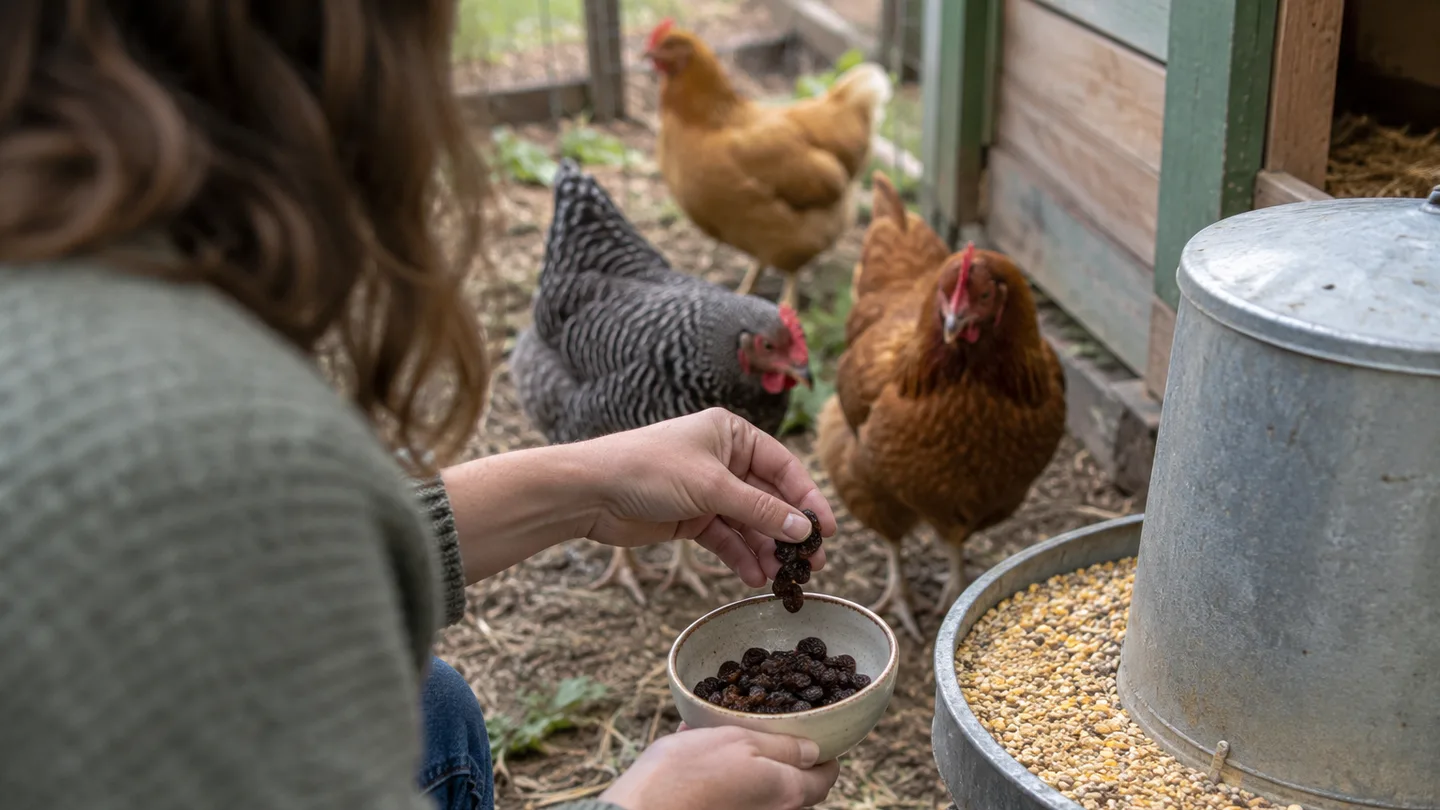
How often? Occasional means not part of the daily feed routine
There isn’t a well-established weekly raisin schedule I can give you. Keep raisins as an occasional extra, not a daily snack. The frequency matters because a little treat can become a routine, and a routine can quietly crowd out the balanced feed your hens are meant to eat most of the time.
Look at the whole day, not just the raisin. If your flock has already had scratch, fruit, or other scraps, skip the raisins or make them the only extra. In a small flock, it’s especially easy to over-serve because a few pinches feel harmless and there are only a handful of birds to feed. My preference is to make treat days deliberate: decide what the extra is before you open the container.
Watch the feeder after treat time. If your birds leave their usual ration sitting while they search the ground for more snacks, pause the extras and return to the regular feed routine. That’s a more useful cue than trying to turn one treat into a precise daily percentage for each hen.
The real risks are excess, texture, and spoilage—not a hidden poison rule
For plain raisins, the sensible concerns are over-serving and displacement of the normal ration. A bird that eats a pile of sweet treats may be less interested in her feed. I can’t name a raisin count at which that becomes dangerous, because a reliable chicken-specific cutoff isn’t established here. Don’t turn the suggested portion into a promise that every bird will respond the same way.
Raisins can be sticky and chewy. Cutting larger pieces into smaller bits is a sensible precaution for small birds or birds that gulp food, but it doesn’t guarantee that choking or swallowing problems can never happen. If a hen struggles to swallow, stop offering the food and pay attention to her breathing and behavior rather than trying to push more food or water into her.
Check the raisins before serving. Dampness, visible mold, or a stale, spoiled smell are reasons to discard them rather than feed them to your flock. Keep the serving dish clean, and clear away leftovers before they get dirty or mixed into bedding. There’s no need to set an arbitrary cleanup timer; remove food when it’s no longer clean and dry.
Raisins are also not a substitute for a varied, properly formulated ration. If a bird is repeatedly ignoring feed, losing condition, or acting unwell, don’t assume raisins explain it. Remove treats and contact a poultry veterinarian if the change persists or seems marked.
Plain raisins only: check the ingredient list on packaged snacks
A plain raisin is not interchangeable with every snack that happens to contain raisins. Chocolate-coated raisins are a different product, and trail mix or raisin bread can bring extra sugar, salt, fat, seasonings, or other ingredients. The package name doesn’t tell you enough; read the ingredient list before deciding what goes in the run.
When the label lists ingredients you can’t identify or evaluate for chickens, leave the product out. Don’t pick raisins out of a chocolate or seasoned mix and assume the surrounding coating or crumbs aren’t part of the serving. If you want a simple fruit option, look at our guide to can chickens eat grapes or choose another plain food you already know is suitable for your flock.
Raisin bread deserves the same caution. It isn’t merely a raisin with a different shape: it includes the bread ingredients as well, and sweetened or seasoned versions vary. A small piece of an unknown snack is still an unknown snack. For a treat, a few plain raisins are easier to assess and portion.
Serve a counted portion, then clear away what’s left
- Leave the regular ration available. Treats shouldn’t arrive as a replacement meal.
- Count for the birds present. Start with the cautious 1–2-raisin suggestion per adult hen and reduce it if the flock has already had other extras.
- Break up large raisins if needed. Smaller pieces can be easier to share among small birds, but supervise rather than assuming size removes every risk.
- Offer the pieces where you can see them. A few separate spots help you notice whether one hen is taking the lot.
- Remove leftovers when they’re dirty or damp. Don’t leave them to disappear into litter or bedding.
This routine takes less judgment than tossing a handful and trying to estimate afterward. It also gives you a quick way to notice a change: if a bird stops eating her normal feed after treat time, make the next treat smaller or skip it. For another occasional protein treat, read about black soldier fly larvae; the same principle applies: extras sit alongside the ration, not in its place.
If one hen eats more than intended, check the amount and the bird
First, work out what she ate. Identify the bird if you can, estimate the amount, and check the package for chocolate, seasoning, or other ingredients. Don’t invent a toxic dose from the number of raisins, and don’t assume a bird is fine solely because she looks normal in the first few minutes.
Remove the remaining snack and make the regular feed and clean water available. Then watch the hen’s appetite, activity, and breathing. If she has persistent loss of appetite, marked lethargy, difficulty breathing, or another concerning change, contact a poultry veterinarian. If the product included an ingredient you suspect may be harmful, call promptly for veterinary advice instead of waiting for symptoms.
For help thinking through feed and treat balance, local poultry extension guidance on complete rations can offer regionally relevant advice. Use a veterinarian for an individual bird’s symptoms; a general feeding guide can’t assess a hen you’re watching in the run.
This week, set aside a small number of plain raisins before you open the run gate, then offer only that counted portion with the normal ration available. It’s a simple way to keep a sweet treat occasional, visible, and fair to the quieter birds.